博客

  • US judge voids Donald Trump’s $1.8bn settlement with IRS that gave him immunity from tax audits

    US judge voids Donald Trump’s $1.8bn settlement with IRS that gave him immunity from tax audits

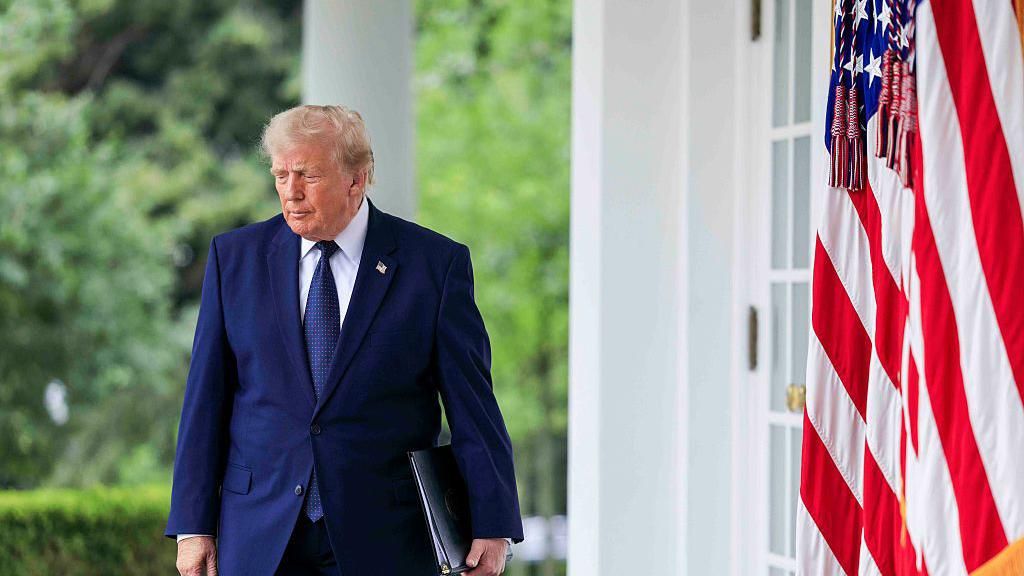
    In a landmark legal ruling that has sent shockwaves through U.S. political circles, a federal district judge has struck down a controversial agreement between sitting President Donald Trump and federal agencies that would have granted him broad immunity from Internal Revenue Service (IRS) tax audits and authorized an abandoned $1.8 billion fund for alleged political targeting victims. The proposed “anti-weaponization” fund, which was introduced back in May as part of a deal to drop Trump’s $10 billion personal lawsuit against the IRS, was rejected by U.S. District Judge Kathleen Williams on the grounds that the underlying lawsuit was filed for an improper purpose. Beyond voiding the entire settlement, Williams also referred one of Trump’s personal attorneys to state regulatory authorities to investigate potential ethics violations and consider disciplinary action.

    The 2026 lawsuit at the center of the ruling was brought by Trump, two of his sons, and the Trump Organization against the nation’s tax collection agency. In her scathing 15-page ruling, Judge Williams rejected the framing of the case as a traditional adversarial legal dispute. Instead, she argued that the lawsuit was coordinated between Trump-aligned attorneys and individuals claiming to have been targeted by the federal government, with no genuine intention of resolving a legitimate legal or factual conflict between Trump and the IRS — an agency that Trump currently controls as President. Williams wrote that the entire settlement was a deliberate attempt to legitimize an arrangement that grants legal immunity to Trump and his affiliated associates, while siphoning billions of taxpayer dollars to address grievances that are not even recognized under existing federal law.

    As part of the ruling, Williams barred all parties involved in the case, including Trump and his sons, from referencing the terms of the voided settlement in any future legal proceedings. The decision paves the way for the IRS to resume long-stalled audits of Trump’s personal and business tax returns, a development that carries significant legal and political risk for the sitting president.

    The origins of the original lawsuit trace back to a high-profile 2020 tax leak, just weeks before that year’s presidential election, which Trump lost. A former IRS contractor named Charles Littlejohn leaked Trump’s confidential tax records to *The New York Times*, which published an investigation revealing that Trump paid just $750 in federal income taxes in 2016, the year he was first elected president, and paid no federal income taxes at all in 10 of the 15 years preceding his first victory. Notably, Trump did not move forward with his legal claims over the leak until he returned to the White House after the 2024 election, when he appointed allies to top roles at the Department of Justice (DOJ), including a former attorney who represented individuals that stood to benefit from the proposed anti-weaponization fund.

    “These officials then negotiated on behalf of the United States, with his current lawyers, including his former White House Counsel to reach a ‘settlement.’ It is risible to suggest that there was ever adverseness between the Parties,” Williams wrote in her ruling.

    Alongside voiding the settlement, the judge imposed professional sanctions on two of Trump’s legal team members. Lead attorney Alejandro Brito was referred to the Florida Bar for potential disciplinary action over ethics violations, while a second attorney, Daniel Epstein, was banned from representing clients in the U.S. Southern District Court of Florida for a minimum of one year.

    In a written statement provided to the BBC, a spokesperson for Trump’s legal team defended the President’s actions, arguing that the IRS “wrongly allowed a rogue, politically-motivated employee to leak private and confidential information” to the media. The statement added that “President Trump continues to hold those who wrong America and Americans accountable.”

    Legal and tax policy experts have widely condemned the original settlement as an unprecedented example of presidential self-dealing. Brandon DeBot, Policy Director at the New York University-based Tax Law Center, described the deal as a “sweetheart deal” that granted Trump unauthorized and historically unprecedented exemptions from standard IRS audit rules, undermining core safeguards designed to prevent political interference in the U.S. tax system. DeBot noted that while the court’s ruling is a critical step forward, Congress still needs to pass formal legislation to fully invalidate all provisions of the deal and block future attempts at self-serving political action by a sitting president. “The court’s decision is important, but does not remove the need for congressional action to nullify the entire deal and to prevent any similar attempts at presidential self-dealing in the future,” DeBot told the BBC.

    Plans for the $1.8 billion anti-weaponization fund were already scrapped in early June, just seven days after a separate federal judge issued a temporary order blocking the DOJ from moving forward with its implementation. That preliminary injunction came in response to a separate lawsuit filed in Virginia by two men who alleged the fund’s eligibility rules were discriminatory. The two plaintiffs claimed they had been targeted for political retribution by the Trump administration but would be barred from accessing compensation through the fund.

    From its announcement, the fund drew fierce criticism from lawmakers across both major political parties, with Democrats and a faction of Republicans raising alarms that the fund could be used to pay compensation to individuals charged and convicted in connection with the January 6, 2021 U.S. Capitol riot, including those who were found guilty of assaulting police officers during the insurrection.
  • More than 53,000 immigrants have been deported or repatriated by South Africa in a crackdown

    More than 53,000 immigrants have been deported or repatriated by South Africa in a crackdown

    JOHANNESBURG – In a sweeping month-long government crackdown on undocumented migration that has unfolded alongside a wave of violent anti-immigrant demonstrations across the country, South Africa has expelled or repatriated more than 53,000 African migrants, officials have confirmed. In a public briefing Sunday, Justice Minister Mmamoloko Kubayi disclosed that over 80 percent of the migrants returned to their home countries originated from Malawi, though officials have not yet published a breakdown separating forced deportations from cases of voluntary repatriation.

    The operation comes amid a sharp rise in anti-immigrant sentiment across South Africa that has erupted in targeted attacks on foreign-born residents, leaving multiple communities on high alert. Several African nations have deployed aircraft and ground transportation to retrieve their citizens from South Africa amid the unrest.

    Local law enforcement reports that 350 people have been taken into custody on charges linked to public violence, intimidation, and extrajudicial immigration checks – a dangerous practice where civilian vigilante groups stop migrants to demand proof of legal residency. Investigations are currently underway into the deaths of at least three migrants: two from Mozambique and one from Malawi. Nigerian officials have said two of their citizens were killed during anti-immigrant demonstrations, a claim that South African authorities reject, saying there is no evidence linking the deaths to the protests.

    Officials confirmed that while the vast majority of repatriated and deported migrants were from Malawi, Zimbabwe, and Mozambique, the group also included citizens of Nigeria, Uganda, Kenya, and other African nations.

    The current crackdown and unrest follow an announcement last month by South African President Cyril Ramaphosa of new plans to bolster border security and enforce existing immigration laws in Africa’s most industrialized economy. Ramaphosa openly acknowledged growing public tensions around migration, caving to political pressure from anti-migrant groups that have spread unsubstantiated claims that undocumented immigrants are responsible for South Africa’s persistently high unemployment rate and widespread violent crime. The president has publicly warned South African citizens against engaging in vigilante justice following reports of targeted attacks on migrant communities.

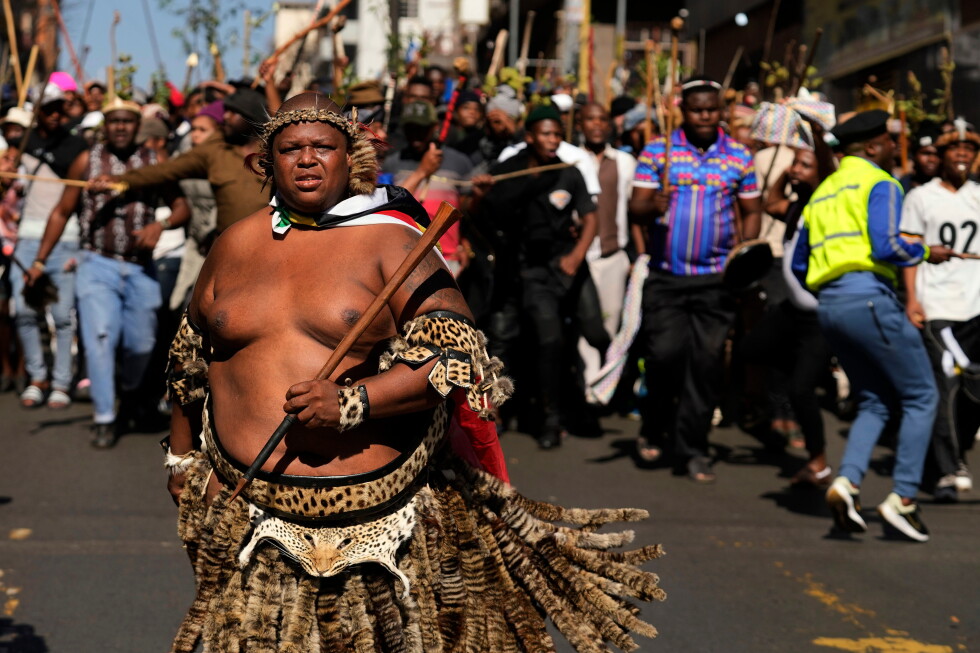
    The most recent large-scale anti-immigrant protest was held on June 30, a date the groups framed as a self-imposed deadline for all undocumented migrants to leave South Africa. The national government rejected the unofficial deadline, but the threat still drove thousands of Malawian migrants to gather at a temporary immigration processing site in the eastern coastal city of Durban to request voluntary repatriation. South African officials note that while some migrants chose to leave voluntarily, many others were formally deported after being found to lack valid residency documentation. Separately, more than 20,000 migrants have been expelled or repatriated from another temporary processing center set up in the northern border town of Musina, according to government data.

    South Africa has long drawn migrants from across the African continent, drawn by the country’s relative economic prosperity compared to many neighboring nations. This steady inflow of migration has been a recurring source of social tension for decades. In 2008, a major outbreak of xenophobic violence left more than 60 foreign-born residents dead, and smaller waves of anti-immigrant violence have erupted periodically in the years since.

    Immigrant rights advocates say the current climate of fear has pushed even legally residing migrants to flee the country. Sabina Tadera, who works with the Southern Africa Network for Immigrants and Refugees, a regional organization that defends migrant rights, told the Associated Press that many Malawian migrants who recently gathered at temporary repatriation camps actually held valid documentation to stay in South Africa, but left out of fear of becoming targets of violence. “There is a widespread misconception that every person moving across borders in the region is undocumented,” Tadera explained.

    The crackdown and accompanying violence have also sparked diplomatic friction with several origin countries, which have publicly condemned South Africa for allowing what they describe as a growing culture of xenophobia to take root. Laura Freeman, an independent human rights and migration consultant based in the region, noted that for generations, South Africa has been viewed as a land of opportunity for migrants from poorer neighboring countries who cannot find stable work at home. “However, repeated waves of xenophobic violence, including this current outbreak, have shifted that reputation dramatically, and South Africa is increasingly seen as an unwelcome place for foreign-born workers,” Freeman said.

  • US judge voids ‘improper’ Trump tax deal

    US judge voids ‘improper’ Trump tax deal

    In a landmark legal ruling that has sent ripples through Washington’s political and legal circles, a federal judge overturned a controversial settlement between sitting U.S. President Donald Trump and the Internal Revenue Service (IRS) on Monday, concluding the lawsuit that spawned the deal was filed for an illegitimate purpose.

    The legal dispute originated when Trump, his two oldest sons, and the Trump Organization launched a $10 billion lawsuit against the IRS, arguing that a former agency contractor improperly leaked confidential tax records to major news outlets. The case concluded in May with a heavily debated agreement that granted sweeping protections to Trump, his family members, and all their affiliated business entities, shielding them from ongoing tax audits and potential legal claims related to past tax filings.

    As part of the original settlement, a $1.8 billion program funded by U.S. taxpayers was created to compensate individuals who claimed they had been targeted by politically biased government investigations. Critics quickly lambasted the initiative as a “slush fund for criminals,” and the program was ultimately scrapped before it could be implemented.

    Writing in her official ruling, District Judge Kathleen Williams argued that no genuine legal conflict ever actually existed between Trump and the IRS. She noted that as president, Trump exercises executive control over both the IRS and the U.S. Treasury Department, creating an inherent conflict that voids any pretense of an adversarial legal dispute.

    “Because this fact was so obvious and so insurmountable, the court finds that this matter was brought for an improper purpose — to gain the imprimatur of judicial legitimacy for a ‘settlement’ that had no viable basis in law or fact,” Williams wrote.

    The judge also issued sharp criticism against the Department of Justice (DOJ), accusing agency officials of abdicating their core responsibility to protect public interest. She claimed DOJ leaders ignored existing federal policies and pursued goals that went far beyond their legal authority, in some cases crossing into outright violation of federal law.

    The ruling carried significant disciplinary consequences for legal representatives involved in negotiating the settlement. Williams referred one of Trump’s private attorneys to national legal disciplinary oversight bodies, and ordered copies of her ruling to be sent to both the New York State Bar and the District of Columbia Bar — the professional licensing bodies for acting Attorney General Todd Blanche and Associate Attorney General Stanley Woodward, respectively. She also imposed a one-year ban barring another of Trump’s personal attorneys from practicing in her South Florida courtroom.

    As of Tuesday morning, neither Trump nor the DOJ had issued an official response to requests for comment on the ruling. However, a spokesperson for Trump’s private legal team told CNN that the president would continue his efforts to “hold those who wrong America and Americans accountable” moving forward.

  • Why the fastest-growing Ebola outbreak in history is becoming more challenging

    Why the fastest-growing Ebola outbreak in history is becoming more challenging

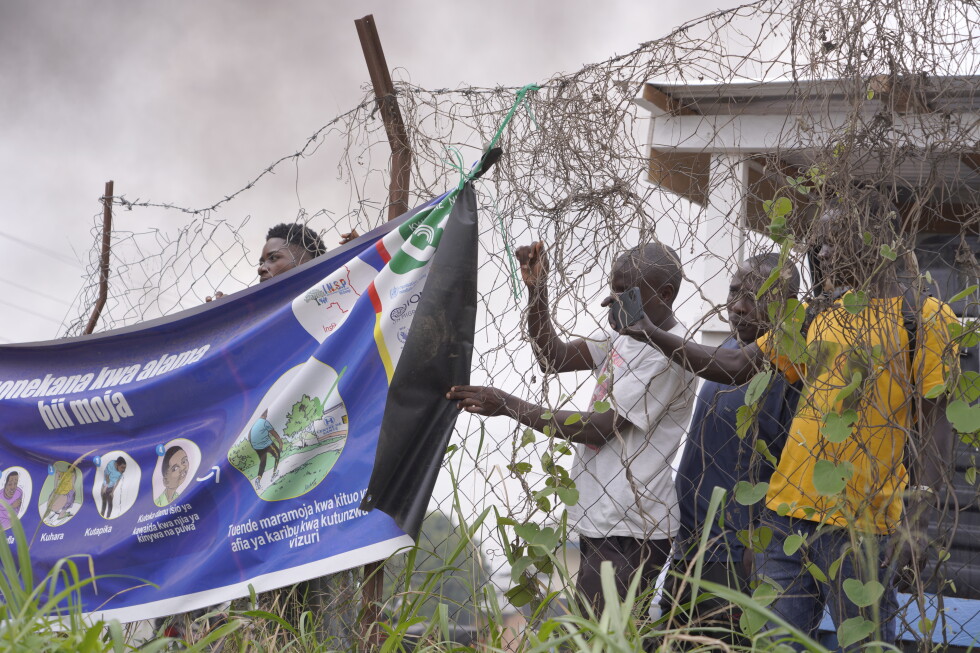
    What is already the fastest-expanding Ebola outbreak in recorded history is pushing response teams to their breaking point in eastern Democratic Republic of the Congo, where overlapping security, logistical and social crises have collided just as researchers launch the first clinical trial for life-saving treatments targeting this rare, untreatable strain of the virus.

    The outbreak, driven by the little-studied Bundibugyo Ebola virus, a subtype with no licensed vaccines or proven treatments, has already reached a grim milestone: the DRC Ministry of Health has confirmed nearly 2,000 cases and 702 deaths to date. Worse, suspected cases have now been detected in two additional provinces, including Kisangani, one of the country’s largest urban centers, leaving responders scrambling to map the full scope of the outbreak. Experts now confirm the initial spread went undetected for weeks, as health teams initially tested for more common Ebola subtypes, and the outbreak’s zoonotic origin remains a mystery.

    Unlike better-documented Ebola strains, Bundibugyo is a rare variant that spreads through direct contact with infected bodily fluids—including blood, vomit, and semen—or contact with contaminated materials such as bedding and clothing. Like other Ebola variants, it causes severe, often fatal symptoms ranging from high fever, muscle pain, vomiting and diarrhea to internal and external bleeding. Outbreaks of this strain have historically been limited to remote Central African villages near tropical rainforests, and public health guidance has restricted traditional local funeral practices that involve close contact with deceased loved ones—a measure that has sparked significant anger among local communities.

    Compounding every challenge of this outbreak is the volatile, conflict-ravaged landscape where it is unfolding. Decades of violence by armed rebel groups have left local populations traumatized and deeply distrustful of outside authorities, leading to widespread misinformation that claims the Ebola outbreak is a hoax. Community outreach workers have faced threats and abuse while trying to spread prevention information, and attacks on health facilities have repeatedly disrupted response work. A portion of the outbreak is centered in Goma, a major humanitarian hub and key city that was seized by Rwanda-backed rebel forces more than a year ago, creating further barriers to coordinated relief efforts.

    The latest and most urgent threat to containment efforts came this week, when unpaid frontline workers at the outbreak’s epicenter Ituri province walked off the job. The strike shuttered a core treatment center, with workers blocking access to the facility and burning tires to protest weeks of unfulfilled pay from the Congolese government, after weeks of high-risk work. Striking staff include epidemiologists, contact tracers, drivers, and gravediggers—all critical roles in stopping transmission. Congolese health officials have confirmed they are currently negotiating with workers to resolve the dispute, but public health experts warn that if the strike spreads to other overstretched, underfunded facilities across the region, it could deliver a catastrophic blow to already strained containment efforts. Infrastructure across the affected area is already extremely limited, leaving even fully staffed facilities struggling to operate.

    This unrest has erupted at an exceptionally vulnerable moment for the response. Just weeks before the strike, researchers officially launched the first clinical trial for two promising experimental treatments targeting Bundibugyo Ebola, and have already begun enrolling the first participants.

    The two candidate therapies are remdesivir, a broad-spectrum antiviral developed by Gilead Sciences that is already approved for COVID-19 treatment and has shown preliminary antiviral activity against Bundibugyo in laboratory testing, and MBP134, an experimental monoclonal antibody therapy developed by Mapp Biopharmaceutical that is specifically engineered to target multiple Ebola strains, including Bundibugyo.

    Under the trial protocol overseen by the World Health Organization, patients will be randomly assigned to receive either the current standard of care alone, standard care plus remdesivir, standard care plus MBP134, or standard care plus both investigational treatments. The WHO has cautioned that it could take months of data collection and up to 1,000 trial participants before researchers can confirm whether either treatment is effective. Currently, the trial is only being run at one Ituri province treatment center—an unaffected facility separate from the strike site—and officials plan to expand the trial to additional sites only once security and staffing conditions allow.

  • Briton tells of surviving Spain wildfire in car as wife and friends died trying to run to safety

    Briton tells of surviving Spain wildfire in car as wife and friends died trying to run to safety

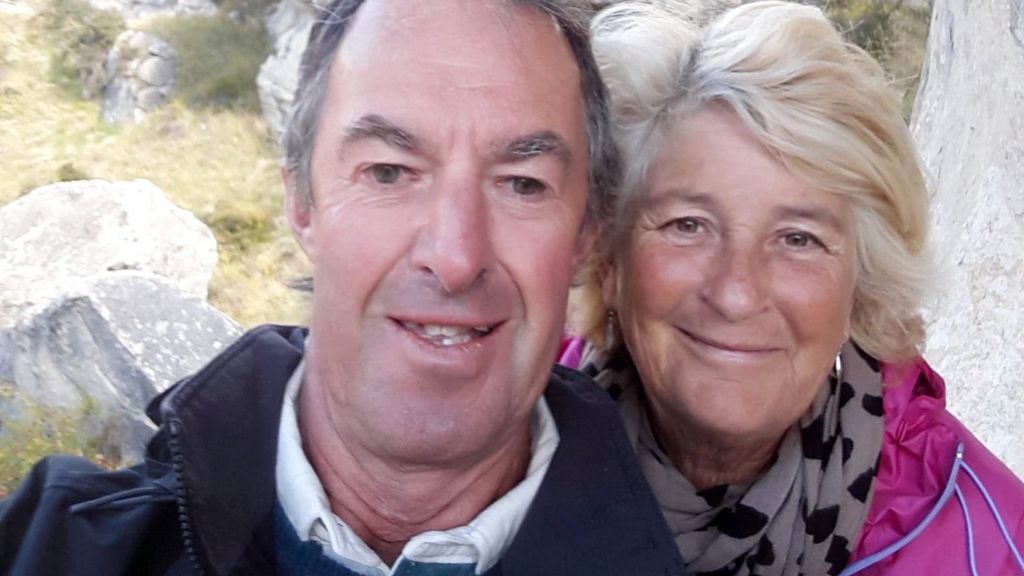
    The quiet, sun-drenched hillside village of Bédar in Spain’s Almeria province was reduced to a charred, ash-covered wasteland last Thursday, when one of the deadliest wildfires in Spanish history swept through the community, leaving 13 people dead and a 70-year-old British expat to grapple with unfathomable loss. Malcolm Timbrell, the sole survivor of his group of friends and neighbors who tried to outrun the advancing blaze, has shared his harrowing account of the disaster that stole his wife of 17 years, Annette Kilgore, 69, and a dozen loved ones from their close-knit expat community.

    Timbrell and Kilgore first fell in love with their Bédar home after appearing on the British Channel 4 property show *A Place in the Sun*, drawn to the quiet tranquility of the Andalusian countryside after years of sailing the world together. Both had previously lost their first partners to terminal illness, and built a new life centered on travel, friendship, and quiet joy. “She was such a happy, outgoing person,” Timbrell told the BBC from the scorched foundation of what was once his home. “We have had an amazing life together – and now it’s stopped.”

    The disaster unfolded rapidly on Thursday, when a wind-fueled wildfire pushed by gusty winds, soaring temperatures, and months of dry vegetation exploded across the region. Timbrell, Kilgore, and their neighbors made the split-second decision to flee their hillside properties by car before the flames cut off escape routes. As the group prepared to leave, Timbrell turned back to rescue the couple’s two pet cats, Charlie and Lilly – a choice that saved his life, but separated him from the people he loved. “If we’d have done the sensible thing and gone the other way and let our cats die, we both would be alive. But when you’ve got animals, you don’t think like that,” he reflected.

    By the time Timbrell had secured the cats and set off to rejoin the group, the fire had advanced too far. He watched in horror as his wife and seven other members of the group ignored his screams to stay back, deciding the only safe path was to cross the advancing fire wall on foot. “I’ve subsequently heard that that fire wall was moving at 20 kilometres per hour, plus. They had no chance,” Timbrell said.

    Trapped alone, Timbrell took shelter in one of the abandoned vehicles the group had left behind. Of six cars parked in the area, four burst into flames almost immediately, forcing him to move from car to car to escape the heat. By a twist of fate, the last remaining car survived, its paint bubbled and its body singed, and Timbrell waited out the blaze inside with one of his cats. When the fire passed, emergency crews pulled him from the wreckage alive.

    In the days after the fire, rescue teams recovered eight bodies on a path leading down from Timbrell’s hillside property, including Kilgore. Four additional victims, found in a right-hand drive vehicle, are confirmed to be British, bringing the total of confirmed British fatalities to three; other victims include one national each from France, Belgium, and Spain, including a 93-year-old British woman who succumbed to her injuries in hospital on Sunday. Not all remains have been formally identified, and Timbrell is currently awaiting DNA confirmation to formally confirm his wife’s death.

    Many British expats in Bédar have criticized local emergency response officials for failing to issue a mandatory mobile phone alert to warn residents of the advancing blaze, but Timbrell has declined to assign blame. He noted that high winds and thick smoke grounded water-bombing aircraft, and seaplanes could not reach the area before darkness fell. With the combination of extreme heat, parched vegetation, and powerful gusts, Timbrell argues the disaster was unstoppable. “It’s nobody’s fault. Nobody can be blamed for this,” he said.

    In the wake of his loss, Timbrell said he has been overwhelmed by the outpouring of support from local residents and friends of all nationalities, and praised local police for keeping him updated on the identification process. Still, he faces an uncertain future, grieving the life the couple planned to spend together in their Andalusian retreat. While he holds a tiny spark of hope that some miracle might have occurred, he acknowledged that the hard evidence points to the loss of everyone he left behind. “There’s just that little spark of hope, even though I know a body has been found clutching a cat. Hard cold facts are pointing to the bodies they’ve found,” he said. Looking ahead to the days after formal identification is complete, Timbrell said he is bracing for the full weight of his loss to hit. “So we are just waiting now for DNA clarification. And after that, I will probably just fall apart.”

  • She was told her missing fiance was killed in Gaza. A year later, he returned alive

    She was told her missing fiance was killed in Gaza. A year later, he returned alive

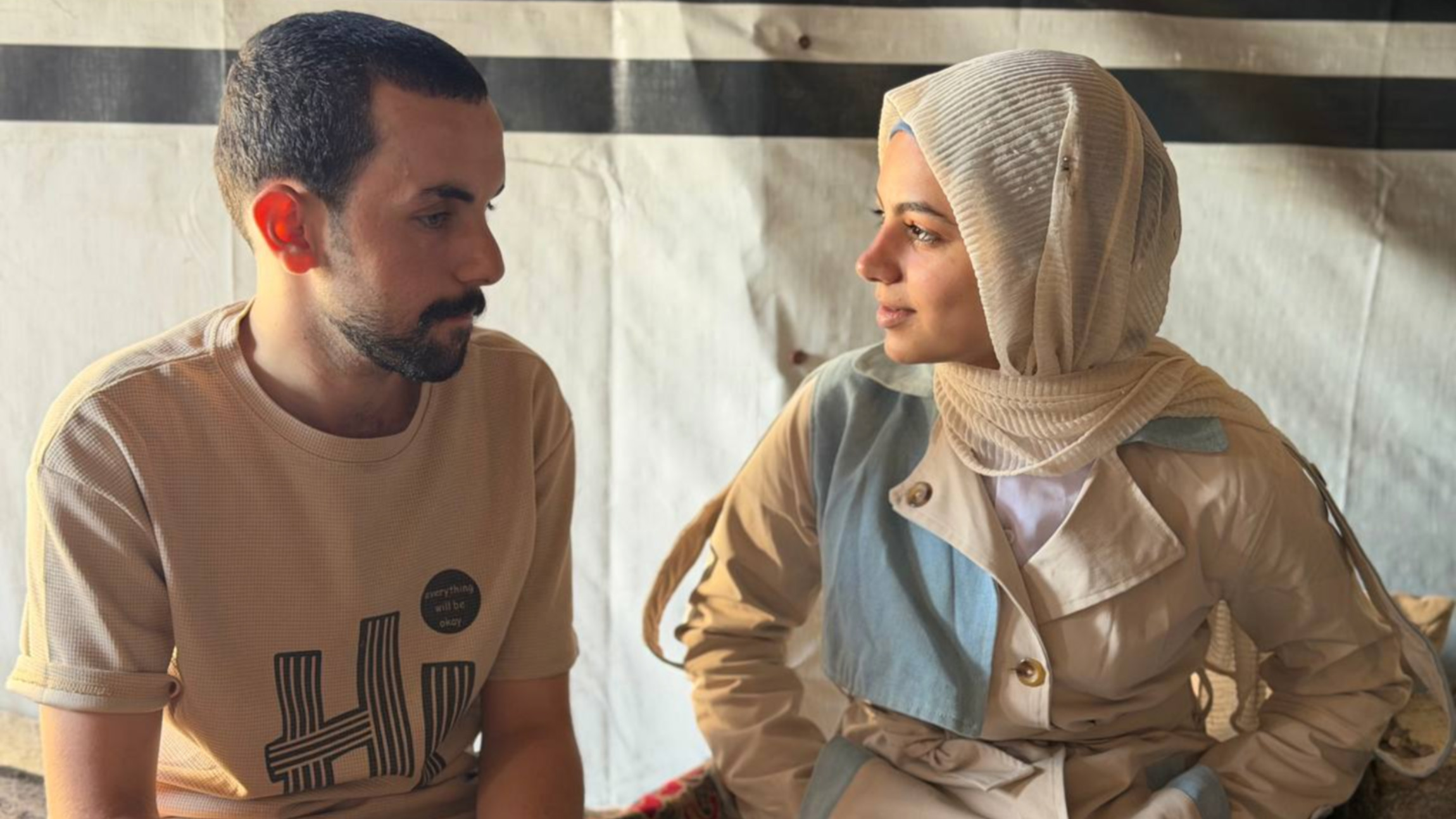
    It has been nearly a year since 23-year-old Hamada al-Banna stepped toward Israeli aid convoys near Zikim in northern Gaza, chasing a single sack of wheat flour to feed his family amid widespread starvation. What followed was a nightmare of forced disappearance, torture, and a long, agonizing separation that tested the unbreakable resolve of his 18-year-old fiancee, Reem Jadallah. Today, after months of false news and abandoned searches, their bittersweet reunion has cast a harsh light on the growing crisis of forcibly disappeared Palestinians in Israel’s ongoing campaign in Gaza.

    On August 9, 2025, Banna set out for Zikim alongside his brother Adham, joining thousands of desperate Gazans who risk their lives to access limited humanitarian aid amid crippling food shortages. After securing his sack of flour, Banna learned Adham had been killed by Israeli forces. Dropping his flour to search for his brother, he unknowingly wandered close to an Israeli military outpost. Troops opened fire, a shell exploded, hurling him 10 meters through the air, and he woke with severe leg and chest wounds, with no memory of who he was or how he had arrived.

    In an account shared exclusively with Middle East Eye, Banna described waking from a six-month coma in Israel’s Soroka Hospital, suffering from profound amnesia. As his memory slowly returned, a soldier entered his room and began verbally abusing Banna’s mother. Enraged, Banna threw his IV bag at the soldier, triggering a violent assault that ended with his transfer to Sde Teiman, the notoriously abusive Israeli prison widely condemned for the mistreatment of Palestinian detainees.

    For four months, Banna was held in solitary confinement, where he endured systematic torture at the hands of Israeli prison guards. “They would suddenly enter my cell and beat me brutally for no reason. They sprayed me with pepper spray, beat my genitals, and threw stun grenades into my cell,” he recalled. On one occasion, he was held for six straight days in what Palestinian detainees call a “disco room”: a purpose-built space where prisoners are subjected to constant, deafening noise designed to break mental and physical resilience through extreme sleep deprivation and psychological torture.

    While Banna was held incommunicado, his family in Gaza held out little hope of finding him alive. After months of no contact, Israeli authorities incorrectly notified the family that Banna had been killed while in custody, a death officially attributed to torture. For most of the family, the search ended there. But Jadallah refused to accept the news.

    The couple had met after both their families were displaced from northern Gaza to a shared shelter in Gaza City, as Israeli attacks intensified across the enclave. Banna had proposed to Jadallah shortly before he disappeared, and the pair had been preparing for their wedding, lost when their planned home was destroyed in the conflict. When Banna failed to return from his trip for flour, Jadallah began what would become a months-long search against all odds.

    Across the Gaza Strip, Banna’s case is far from unique. According to the Palestinian Centre for the Missing and the Forcibly Disappeared (PCMFD), roughly 8,000 Palestinians have been registered as missing since Israel launched its military campaign in Gaza in October 2023, including nearly 2,900 children. While most are believed killed and buried under rubble from Israeli airstrikes and ground operations, hundreds are suspected of being secretly detained by Israeli forces during incursions, at checkpoints, or while seeking aid near Israeli military zones. Israeli authorities have routinely blocked access to information about detained Palestinians, even refusing requests from the International Committee of the Red Cross (ICRC) to confirm their whereabouts or conditions.

    Jadallah held onto the one clue that Banna might still be alive: Israeli legal aid group HaMoked confirmed he was in Israeli custody, but refused to share additional details without a privately hired lawyer. Unable to afford legal fees, Jadallah made the painful decision to sell all of her gold, the only valuable asset she owned, to secure legal representation. Months later, her lawyer returned with the devastating false confirmation that Banna was dead, listed on an official registry of prisoners killed in custody in February 2025.

    While the rest of Banna’s family abandoned their search, Jadallah pressed on alone. “Everyone kept telling me to give up hope, but I never did. Deep inside, I always felt that he was still alive,” she told Middle East Eye. For months, she visited every hospital in Gaza, checking newly arrived bodies to confirm it was not Banna. Every time a group of Palestinian detainees was released by Israel, she brought Banna’s photo to the release site, asking every freed prisoner if they had seen him. Because Banna had spent most of his detention in a hospital and then solitary confinement, no one had seen him – but still, she did not stop.

    Her unwavering hope finally paid off on July 7, when the ICRC called Banna’s family with an unexpected message: Banna was alive, and had just been released from Israeli custody. He was calling from an ICRC phone to confirm he was coming home. “When his family called to tell me, I was in complete shock. I started laughing. I said, ‘I don’t understand. What do you mean?’” Jadallah said. “I couldn’t believe it. I was afraid to believe it because I thought it might be another false piece of news. I didn’t truly believe it until I saw his photograph with the released prisoners.”

    When Jadallah rushed to meet her fiance, she found he had already been asking everyone around him to bring his fiancee to him. But the reunion, while joyful, quickly revealed the deep scars left by a year of abuse. “The Hamada who came out of prison was not the same person I had been waiting for all this time,” Jadallah said. “I noticed how much he had changed. Sometimes, in the middle of a conversation, he suddenly stares into space and begins reliving memories of his detention. He has become irritable, and even the slightest sound bothers him.”

    The trauma of his detention shapes every part of Banna’s daily life even after release. He cannot sleep lying down, as most people do; he only sleeps sitting upright, a habit forced on him by his prison conditions. He eats barely any food, his body accustomed to the tiny rations provided to him in detention. The couple’s planned wedding, scheduled just before Banna’s disappearance, has been postponed indefinitely: all of their savings, their furnished home, and the wedding preparations were destroyed in the conflict. For Jadallah, however, none of that loss matters compared to getting Banna back alive. “We lost everything, but I got him back. That is what matters most,” she said.

  • Neither France nor Spain has trailed at this year’s World Cup, but only one can reach the final

    Neither France nor Spain has trailed at this year’s World Cup, but only one can reach the final

    ARLINGTON, Texas — As the 2026 FIFA World Cup enters its final stretch, two of the tournament’s most in-form sides prepare to face off in the first semifinal clash on Tuesday, with only one earning a spot in the sport’s biggest championship match.

    Both France and Spain are making their 17th World Cup appearances, but this will mark just their second ever meeting on soccer’s global grandest stage, with their only prior matchup coming in the 2006 World Cup round of 16. Tuesday’s showdown will kick off at AT&T Stadium, the home of the NFL’s Dallas Cowboys, bringing together two powerhouse teams stacked with generational talent and momentum heading into the contest.

    Entering the tournament as the world’s top-ranked side per FIFA, France has dominated its path to the semifinals, outscoring all opponents by a combined 14-2 margin. Leading the charge is 27-year-old Kylian Mbappé, the 2022 World Cup Golden Boot winner, who has already netted eight goals in this tournament — tying him with Argentina’s Lionel Messi for the tournament’s scoring lead. Mbappé now sits just one goal behind Messi’s all-time World Cup career record of 21, holding 20 goals across just 20 World Cup matches dating back to his historic 2018 performance, when he became just the second teenager ever (after Pele) to score in a World Cup final during France’s title-winning run against Croatia.

    Questions briefly emerged over Mbappé’s fitness after he was substituted off in the 77th minute of France’s 2-0 quarterfinal victory over Morocco, immediately after scoring the side’s opening goal, but the French star has confirmed he is fully fit and ready to compete. The match will hold extra symbolic meaning for France, as it falls on Bastille Day, the country’s national holiday. A win would also make French football history: Didier Deschamps’ side would join Brazil (five-time champions) and Germany (four-time champions) as the only nations to qualify for three consecutive World Cup finals, a feat last achieved by Brazil between 1994 and 2002, and by West Germany ahead of its 1990 title win.

    Standing in France’s path is a Spain side that, like France, has yet to trail at any point in this tournament. Leading La Roja’s young core is 19-year-old winger Lamine Yamal, who celebrated his birthday on Monday, and already has two prior head-to-head wins over France to his name. Just days before his 17th birthday, Yamal scored in Spain’s 2-1 semifinal win over France at the 2024 European Championship, and the Spanish side earned another victory over Les Blues in Nations League play last year. Confident heading into the rematch, Yamal made his stance clear after Spain’s quarterfinal win over Belgium: “I believe if France has to fear anyone, it should be us, in my opinion. We were the ones that knocked them out before.”

    Yamal entered the World Cup recovering from a nagging left hamstring injury that forced him to miss the final weeks of the Barcelona club season, but he has still notched one goal and put 10 shots on target through Spain’s run to the semifinals. Spain’s path has been defined by more than just Yamal’s young stardom: substitute striker Mikel Merino has emerged as the side’s unlikely clutch hero, netting late winning goals in both of La Roja’s last two knockout matches. The Arsenal forward scored in the first minute of second-half stoppage time to secure a 1-0 round of 16 win over Portugal at AT&T Stadium, and followed that up with an 88th-minute match-winner in the 2-1 quarterfinal defeat of Belgium.

    Spain’s defense and goaltending have also been historically impressive, with keeper Unai Simón setting a new World Cup record for the longest shutout streak at 650 minutes, which only ended when Belgium found the net in the 41st minute of the quarterfinal. Overall, Spain has outscored opponents 10-1 through the tournament, after a surprising opening-group scoreless draw against underdog Cape Verde.

    This 2026 World Cup marks the first time since 1990 that all four semifinalists are former World Cup champions. The second semifinal will take place Wednesday in Atlanta, where 2022 champion Argentina led by Messi faces off against England. The championship match is scheduled for Sunday at MetLife Stadium in East Rutherford, New Jersey, while the third-place match will be held this Saturday in Miami Gardens, Florida.

    Looking back at prior history between the two sides: their only World Cup meeting was a 3-1 France win in the 2006 round of 16 in Germany. Both nations have lifted the trophy since that matchup: Spain claimed its first (and to date only) World Cup title in 2010, while France won its second trophy in 2018. France is making its seventh semifinal appearance, its fifth in the last eight World Cup tournaments, while Spain has only reached the semifinal stage twice before, in 1950 and during its 2010 title run.

    Tuesday’s match will be the ninth 2026 World Cup contest held at AT&T Stadium, more than any other venue in this expanded 48-team tournament. The North Texas arena, which has previously hosted a Super Bowl and NCAA championships for college football and men’s basketball, has already seen no shortage of iconic moments during this month-long tournament: Messi broke the all-time World Cup career scoring record here in a group stage win over Austria, while 41-year-old Portuguese legend Cristiano Ronaldo played what is widely expected to be his final World Cup match here in Spain’s 1-0 round of 16 win.

  • Xabi Alonso moves fast at Chelsea, holding private talks with Enzo Fernandez

    Xabi Alonso moves fast at Chelsea, holding private talks with Enzo Fernandez

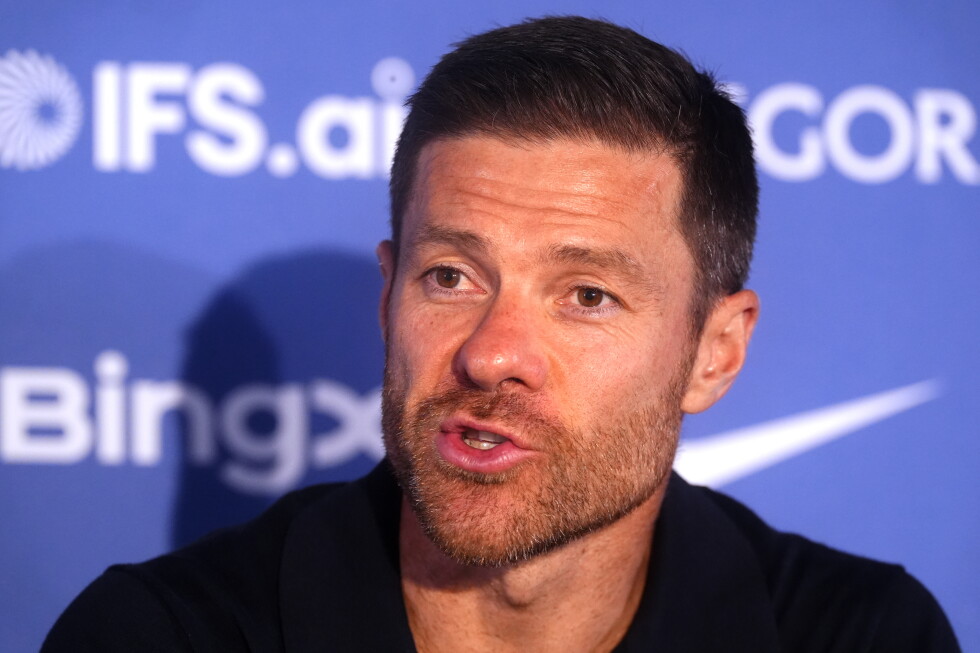
    LONDON – Fresh off officially stepping into the role at Chelsea on July 1 following his May appointment, new Blues head coach Xabi Alonso opened up about his plans, squad priorities, and season goals during his first official press conference at Stamford Bridge on Monday.

    One of the biggest questions hovering over Chelsea’s summer rebuild has surrounded the future of Argentine midfielder Enzo Fernandez, whose position at the club has been uncertain for months. The playmaker landed an internal two-game suspension back in April after he commented in a podcast that he would welcome the chance to live in Madrid, which fueled widespread speculation of an imminent transfer to Spanish giants Real Madrid. Real Madrid has publicly denied any interest in acquiring Fernandez this transfer window, but the uncertainty around his future has lingered.

    When pressed on whether he wants Fernandez to stay at Stamford Bridge, Alonso gave a clear, direct answer: “Yes.” The new manager confirmed that the pair have already held private conversations, but declined to share details of their discussion, noting that the talks will remain confidential.

    Currently, Fernandez is not with the Chelsea squad for pre-season preparations – he is competing at the 2025 Club World Cup (note: context adjusted for ongoing tournament timing) with Argentina, who are set to face England in a semi-final clash in Atlanta on Wednesday. He is one of four Chelsea players still active in the tournament, joining England defenders Reece James and Trevoh Chalobah, and France full-back Malo Gusto.

    Alonso’s appointment comes after a brutal 2023/24 Premier League campaign for Chelsea, which saw the club plummet to 10th place in the table after finishing fourth the season prior. This poor result marked another underwhelming campaign for the Blues, who have not lifted the Premier League title since Antonio Conte led them to victory in 2017. In fact, Alonso is the eighth permanent manager the club has appointed in the eight years since that 2017 triumph, a stark reflection of the club’s recent instability in the dugout.

    When asked about his primary targets for the upcoming season, the 44-year-old Spaniard – who previously managed Bayer Leverkusen and played and coached at Real Madrid – confirmed that qualifying for European competition is a non-negotiable top goal. “For sure that’s a goal,” he said. “But to reach that goal you need to do many right things, and that starts with building clarity around how we want to play, how we want to see ourselves, and how we want to approach every single game, no matter where we play.”

    “That’s my job. That’s why I am really looking forward to having the whole squad back together. We are ambitious, and everyone at Chelsea needs to share that energy, that ambition, as well as that hunger to want to deliver success,” he added.

    Questions around long-term job security, a persistent issue for recent Chelsea managers, were put to Alonso during the press conference. He side-stepped speculation around whether the club’s ownership would grant him enough time to build a title-challenging side, instead focusing on the immediate task ahead. “What I am sure is that we have the ambition to want to win a lot of games, to be competitive,” he said. “I’m not going to say what will happen in May. It’s absolutely too early to say that but I am confident, I am optimistic that we can have a great season.”

  • Israeli government funnels millions of shekels to sanctioned settlement group

    Israeli government funnels millions of shekels to sanctioned settlement group

    Israeli media has broken news of a controversial planned funding transfer: Israel’s Ministry of National Security, led by far-right politician Itamar Ben Gvir, is set to disburse 4 million shekels, equivalent to roughly $1.31 million, to Ahavat Gilad — an organization already sanctioned by multiple Western governments for its ties to illegal settler activity in the occupied West Bank.

    The group was placed on sanctions lists in June this year by France, the United Kingdom, Canada, Norway, Australia and New Zealand. The international sanctions came after investigations confirmed Ahavat Gilad played a key role in enabling and funding a sharp rise in violent attacks by Israeli settlers against Palestinian communities in the occupied territory. Specifically, the organization was found to channel donations from the Farms Union, a body that provides financial and logistical support to settler agricultural operations, directly to unauthorised, illegal settler outposts that are established outside of Israeli government-approved boundaries.

    According to documents obtained by Israeli newspaper Haaretz, which were submitted to relevant bodies by the Ministry of National Security, the allocated funding is officially framed as a resource to “reduce incidents of violence” and build “a network of mentors to accompany youth staying on farms throughout Judea and Samaria” — the Israeli term for the occupied West Bank. The 4 million shekel sum will be distributed over an 18-month period, with a built-in option to extend the funding agreement if the ministry chooses to do so.

    This controversial funding move follows the Israeli government’s approval of a “national plan” in May, launched to address what officials described as a “negative phenomenon among youth” in the occupied West Bank. The announcement of the plan came as the country has faced growing international pressure to rein in the escalating wave of settler violence targeting Palestinian civilians and property. The national plan itself was officially designed to “prevent youths from entering cycles of violence”, according to official documents.

    Per the ministry’s paperwork, Ahavat Gilad was selected as the recipient of public funds specifically because of its deep existing connections to “farmers, the army, the police and government ministries” operating in the West Bank. In a statement justifying the selection, the ministry argued that “providing an effective response to the youth requires relying on ‘responsible adults’ who come from the field, are figures familiar to the youth, share their living space with them and hold their trust”.

    The ministry added that the initiative is intended to build a “professional system” that aligns on-the-ground conditions in the West Bank with the policy priorities of the National Security Ministry, a step it says is necessary “to ensure effective prevention” of youth violence.

    Responding to Haaretz’s reporting on the funding allocation, the ministry pushed back against criticism. It stated: “It is very unfortunate that instead of praising the ministry for leading the move to reduce and prevent violence and risky behaviors among youth, Haaretz newspaper (which ironically would have attacked the ministry if such a plan had not been implemented at all) chooses to rely on baseless claims by anti-Israel elements”.

  • Pro-Palestine activist Fergie Chambers arrested in Spain after US extradition request

    Pro-Palestine activist Fergie Chambers arrested in Spain after US extradition request

    In a high-profile arrest that has reignited debates over political activism and the criminalization of pro-Palestinian speech, American activist and Cox family fortune heir Fergie Chambers has been taken into custody in Spain’s Ibiza at the request of U.S. law enforcement, which accuses him of money laundering, conspiracy, and riot-related charges tied to his support for pro-Palestinian direct action.

    The arrest unfolded at approximately 10:45 a.m. Friday in Ibiza’s quiet, secluded Morna Valley, according to eyewitness accounts obtained by Middle East Eye. As Chambers pulled into a private driveway, a black SUV blocked his path, with two additional unmarked vehicles quickly surrounding the area. Seven Spanish law enforcement officers — five men and two women — displayed official badges, detained the activist, cuffed him, and notified him he was being held under an active international arrest warrant issued at the U.S. government’s request. Later that same day, Chambers appeared before a local Spanish judge, who ordered him held without bail as extradition proceedings move forward.

    Over the past decade, Chambers has become one of the most high-profile private backers of pro-Palestinian direct action across the United States and United Kingdom, drawing on his nine-figure inherited fortune to fund activist groups, legal defense funds, bail funds, and grassroots campaigns. Most notably, he is the founder and primary financial backer of Unity of Fields, which previously operated under the name Palestine Action US. Significantly, the group does not appear on the U.S. State Department’s Foreign Terrorist Organizations list, nor has it been designated a Specially Designated Global Terrorist entity by U.S. regulators.

    The 15-count U.S. indictment lays out allegations centered on a supposed coordinated campaign Chambers led between October 2023 and April 2025 to disrupt operations at Elbit Systems of America, an Israeli defense contractor that supplies military equipment to the Israeli armed forces. Prosecutors claim Chambers transferred roughly $7.5 million out of the United States after he left the country in 2023, alleging the funds were intended to provide material support to Hamas. Additional charges include conspiracy to riot, riot itself, and international money laundering. If extradited to the U.S. and convicted on the lead money laundering charge, Chambers faces a maximum sentence of 20 years behind bars.

    Prosecutors further allege that Chambers’ personal credit card was used to purchase 18 colored smoke bombs, heavy-duty U-locks, chains, and cables ahead of a direct action protest at an Elbit facility, and that he covered costs for paint and other protest equipment. The indictment also cites a public YouTube interview from October 23, 2023, in which Chambers stated, “We are going to disrupt business and we are going to disrupt business constantly and we are going to use any means that we need to get that point across… I’m very hopeful that we can mount a successful campaign to start shutting down Elbit centres in all of the different states where they’re located.”

    Chambers’ associates and supporters have universally denounced the arrest as a politically motivated act of repression, explicitly framing it as a targeted attack by the Trump administration against a prominent voice for Palestinian human rights. In a statement following the detention, they argued, “This extradition is part of a much broader campaign to suppress global movements for emancipation and liberation, particularly those expressing solidarity with people in the formerly colonised world. Fergie has dedicated significant resources to humanitarian causes, human rights, justice and dignity, and this prosecution is another manifestation of that wider effort to intimidate and silence political activism.”

    Chambers has long been open about his political beliefs, describing himself as a supporter of anti-colonial resistance and universal self-determination, principles he says anchor all his activist work. Long before his current legal troubles, he covered legal fees and bail for UK-based Palestine Action activists who conducted direct action against Elbit Systems sites. The UK’s Labour government implemented a controversial move in July 2025 to proscribe Palestine Action as a terrorist organization under British law, placing the group in the same legal category as the so-called Islamic State. The ban drew widespread condemnation from global human rights groups, including Amnesty International, which warned that the designation effectively criminalizes peaceful pro-Palestinian protest. Since the ban took effect, more than 3,300 people across the UK have been arrested for publicly expressing support for Palestine Action, a crackdown campaigners describe as one of the largest sustained targets of civil disobedience in modern British history. In a separate high-profile case earlier this year, four Palestine Action activists received prison sentences ranging from four years and eight months to seven years and eight months after a judge ruled that property damage at an Elbit factory carried a “terrorist connection.”

    Beyond his work supporting pro-Palestinian causes, Chambers, a self-identified Marxist-Leninist, has a long history of involvement in domestic U.S. protest movements. When he learned his own family’s company had donated to Atlanta’s controversial Public Safety Training Center — widely known to opponents as “Cop City” — he redirected a portion of his wealth to fund bail and legal defense for protesters opposing the facility. He also participated in the 2014 Black Lives Matter uprisings following the police killing of Michael Brown in Ferguson, Missouri, and joined the 2017 Standing Rock protests opposing the construction of the Dakota Access Pipeline.

    As of the latest updates, Chambers remains in custody at a jail on Ibiza, where people close to him say poor detention conditions are taking a toll. “He’s in jail. It’s very hot. There’s no fan, no books and he has no spare clothes,” a person who has been in contact with Chambers since his arrest told reporters, noting he is currently sharing a cell with one other inmate.

    The case is currently being processed by Spain’s Audiencia Nacional, the national court that handles all international extradition requests. As of publication, requests for comment on the status of proceedings, upcoming hearing dates, and the bail ruling have gone unanswered. The U.S. Department of Justice has also not responded to requests for comment on the case.