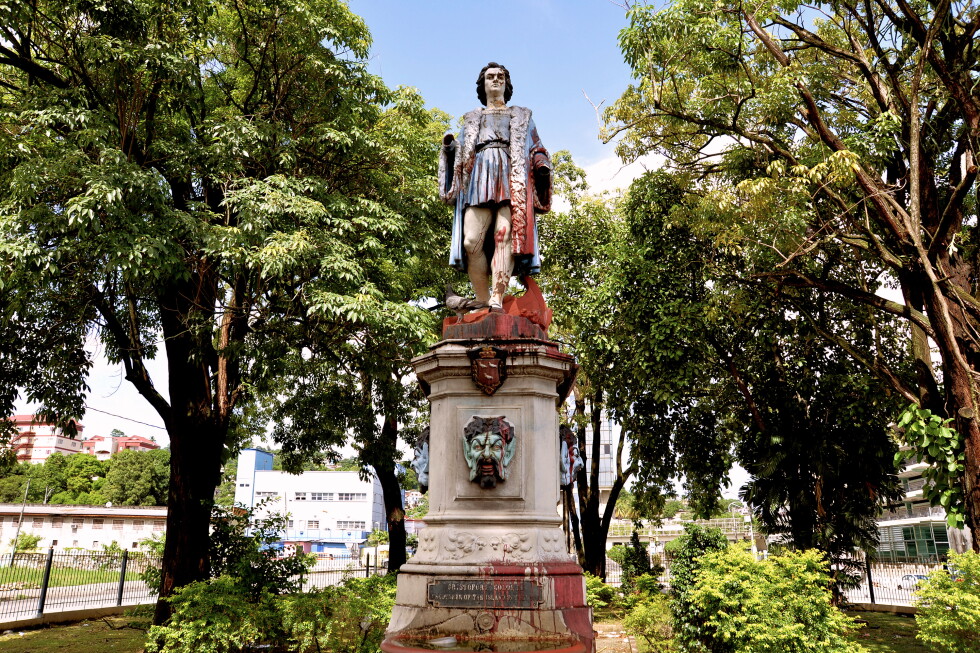
LONDON — As global momentum for reparations for the transatlantic slave trade grows, a high-level delegation from the Caribbean Community (Caricom) Reparations Commission has returned to the United Kingdom for a four-day official mission, holding talks with senior Church of England clergy this week ahead of scheduled meetings with British parliamentarians. This marks the commission’s second official visit to the UK since November, as regional leaders move past symbolic gestures to push for formal, binding negotiations over centuries of systemic harm inflicted by colonial slavery.
Hilary Beckles, chair of the Caricom Reparations Commission and vice chancellor of the University of the West Indies, opened the trip’s press briefing by emphasizing the urgency of the Caribbean’s demands. The region remains the most heavily colonized part of the globe today, with at least 20 territories still holding formal ties to the United Kingdom, France, the Netherlands, and the United States, Beckles noted. Activists are not only seeking financial compensation for slavery, but also an end to ongoing colonial occupation and full sovereignty for all remaining non-self-governing territories across the Caribbean.
The London meetings come on the heels of a controversial remark from a British lawmaker, who suggested former British colonies should repay the UK for historical infrastructure investments — a comment that drew sharp pushback from Caribbean leaders, who argue the proposal ignores the massive wealth extracted from the region through enslaved labor that fueled Britain’s industrial revolution.
Commission members reported that their opening meeting with three senior Church of England clerics was productive, framing the institution as a potential ally in the reparations movement. David Comissiong, Barbados’ ambassador to Caricom, echoed the call for full decolonization as a foundational first step toward reparatory justice, stressing that national sovereignty and self-determination cannot be separated from demands for redress.
Comissiong acknowledged King Charles III’s previous statements of personal sorrow over the suffering caused by slavery and his recognition of its ongoing, intergenerational impact. But he pointed to a critical gap between rhetoric and action: the UK was among the major powers that abstained from a United Nations resolution passed in March that labeled the transatlantic trafficking of enslaved people “the gravest crime against humanity” and called for global reparations. All 27 European Union member states also abstained, while the United States, Argentina, and Israel voted against the measure.
While some European governments have offered preliminary gestures such as official apologies, public memorials, museums, and preservation of slavery-era infrastructure along West Africa’s coast, Comissiong said these steps do not go far enough. “These are some preliminary gestures that we appreciate,” he said. “But those gestures are not negotiations. … The damage that was done and that still exists today was so consequential, so deeply rooted, that it goes way beyond, way beyond gestures of memorialization.”
Historians estimate that between the 16th and 19th centuries, European powers forcibly trafficked an estimated 12 million African people across the Atlantic. Survivors of the deadly middle passage were forced into chattel slavery on Caribbean plantations, enduring brutal conditions that created generational poverty and structural inequality that persists in the region today.
The commission is currently developing a formal framework to launch official negotiations, with Beckles noting that the global community has waited far too long to address the foundational harm of colonial slavery. Leaders are now waiting to see if King Charles III will take formal action to advance discussions of sovereignty, decolonization, and reparatory justice for the crimes of the slavery era.
When asked if the commission would outline formal eligibility rules for reparations recipients, leaders noted details are still being finalized for the Caribbean. However, Ron Daniels, head of the U.S.-based National African-American Reparations Commission, pointed to ongoing discussions in the United States that center on tangible reparations measures including land redistribution, targeted economic development, and investment in Black community healthcare and communications infrastructure — a model Daniels called a working blueprint for the global movement.
Caricom’s formal demands for the UK and other former colonial powers include a full official apology for slavery, targeted investments to improve Caribbean education and public health systems, development support for Indigenous communities, support for repatriation and resettlement for descendants of enslaved people seeking to return to ancestral homelands, full cancellation of Caribbean sovereign debt, and direct monetary compensation for intergenerational harm.
In the coming weeks, Jamaica is set to take a major step forward in the movement: early September will see the Jamaican government file a formal petition asking King Charles III to refer legal questions on slavery reparations to the Privy Council, Jamaica’s final court of appeal, setting up a landmark legal test for reparations claims against the British Crown.