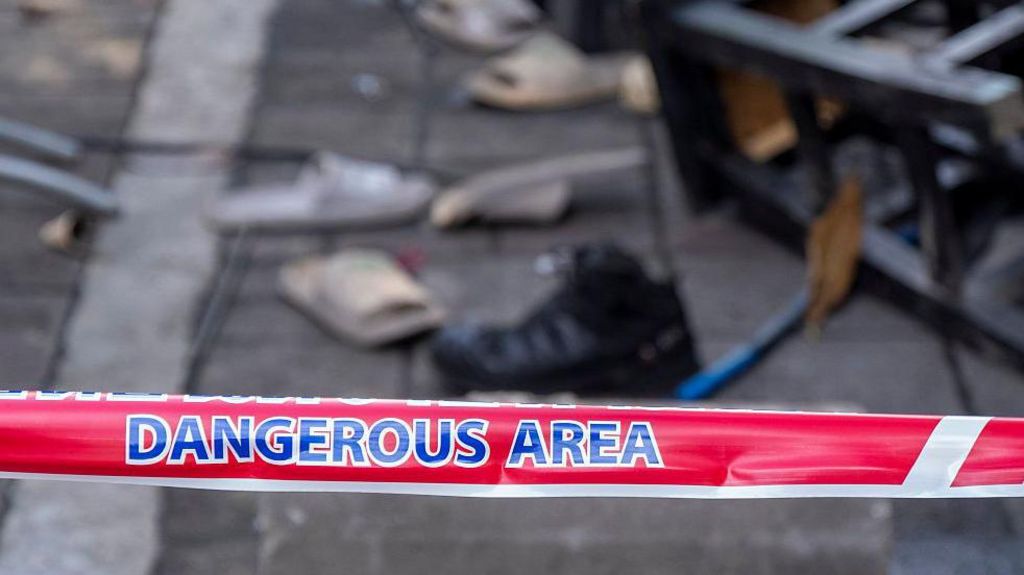
On a crowded Sunday night in central Bangkok, chaos unfolded inside Rong Beer Na Ladprao pub when a sudden fire erupted. Panicked partygoers rushed toward the venue’s only narrow main exit, their path blocked by thick, toxic smoke that rapidly filled the space. Bodies of those who had already succumbed to smoke inhalation trapped those still alive behind them, turning a manageable small fire into one of Thailand’s deadliest public venue tragedies in recent years. As of the latest update, 32 people have been confirmed dead, matching the grim pattern of two similar catastrophic nightclub fires that shocked the nation over the past 15 years.
This is not an unprecedented disaster. In 2009, a New Year’s Eve blaze at Bangkok’s Santika Club claimed 67 lives, and four years ago an inferno at Mountain B, a coastal nightclub in Sattahip, killed 26 people. In each case, experts issued urgent warnings after the tragedy, calling for sweeping safety reforms to prevent identical losses. Now, Worsak Kanok-Nukulchai, a leading expert from the Asian Institute of Technology who called for change after the Mountain B fire, is forced to repeat the same warnings.
Professor Worsak notes that despite differences in location, timing, and initial cause, all three disasters follow an identical deadly template: multiple fatalities in overcrowded indoor venues, rapid fire spread through ceiling or stage structures, thick smoke that eliminates visibility and blocks access to exits, and most deaths caused by toxic smoke inhalation rather than direct burns. For the recent Rong Beer Na Ladprao fire, he says preliminary evidence points to an electrical fault as the likely ignition source, with fire spreading rapidly through flammable acoustic sound insulation installed inside the venue.
The dramatic bursts of flame seen roaring out of the front entrance, he explains, were likely fueled by fresh oxygen rushing in once the door was opened by fleeing guests. The intense heat and fire at the main entrance drove many patrons to the back of the pub, where two secondary exits were reportedly partially blocked and became impossible to locate once the fire cut power to the building. Most of the victims’ bodies were recovered from this rear area.
In the wake of the 2009 Santika Club disaster, Thai authorities introduced sweeping updates to nightclub safety regulations. Starting in 2012, venues were required to use fire-resistant materials for sound insulation, install wider outward-opening exits, maintain backup power for illuminated exit signs, and fit sprinkler systems in any space holding more than 500 guests. However, a critical regulatory loophole leaves most of Thailand’s entertainment venues unprotected by these rules: the stricter standards only apply to establishments located in officially designated entertainment zones.
Bangkok has just three official entertainment zones, meaning the vast majority of pubs and clubs across the city are registered as “restaurants with live music” to avoid the stricter safety requirements. Both Rong Beer Na Ladprao and Mountain B fell into this unregulated category. The loophole, which has now been linked to more than 50 deaths, has been formally acknowledged by Bangkok Governor Chadchart Sittipunt, who revealed the Rong Beer Na Ladprao pub was inspected and declared safe just three months before the fire.
In response to the tragedy, Governor Chadchart has ordered city officials to begin unannounced random safety inspections of all venues classified as restaurants that operate as de facto pubs or clubs. “From now we will apply the stricter standards to venues like these,” he stated during a recent press briefing. “Even if we do not have full legal powers we will make suggestions. If they don’t follow these, we will try to find ways to stop them from operating. We must be able to shut them down if there’s a risk.”
Yet serious questions remain about whether the city can follow through on this pledge. There are thousands of unregulated entertainment venues operating across Bangkok, and it remains unclear if the Bangkok Metropolitan Administration has enough trained staff to carry out widespread unannounced inspections. Industry analysts also expect fierce pushback from venue owners if authorities move to close large numbers of non-compliant establishments.
Compounding these challenges is Thailand’s long-standing open secret of widespread corruption among local officials and police. It is common practice for unregulated entertainment venues to make regular off-the-books payments to law enforcement and inspectors to overlook safety violations. Even if new rules are introduced, experts doubt they will be consistently enforced. This pattern of impunity has played out after previous disasters: after the Mountain B fire, five police officers were suspended on suspicion of turning a blind eye to the venue’s unregulated status, but no further action has been taken against them. The venue owner and three other staff were convicted of safety violations and sentenced to up to 10 years in prison, but they remain free on bail during an appeals process that can take years to resolve in Thailand’s overloaded court system. In the 2009 Santika Club case, the owner and the event organizer convicted of starting the fire remained free on appeal for six years before their sentences were upheld by the Supreme Court, and no public officials have ever been prosecuted for their role in the tragedy.
This repeated cycle of tragedy, official promises, and little meaningful change extends far beyond public venue safety. Thailand suffers from systemic safety failures across multiple sectors: road fatalities per capita are 10 times higher than in the United Kingdom. In October 2024, a bus fire caused by illegally installed gas canisters killed 23 people, 20 of whom were schoolchildren. Earlier this year, 32 passengers died when an improperly secured construction crane collapsed onto a passing passenger train, and just weeks before the Bangkok pub fire, 10 Buddhist monks were killed by a pickup truck driven by an 11-year-old boy. Every one of these incidents was followed by pledges of reform, yet preventable deaths continue to occur at alarming rates.