博客

  • Startups bet on AI — and a leaner future

    Startups bet on AI — and a leaner future

    Across the global startup ecosystem, a quiet revolution is unfolding in how software is built, driven by a new wave of artificial intelligence-powered coding tools that are rewriting the rules of tech hiring and product development. Where startups once relied on large rosters of entry-level coders to grind out line-by-line code, today’s companies are leaning on AI to deliver more output with smaller, more experienced teams — leaving early-career programmers facing a shrinking job market.

    At Giftory, an online gifting platform run by Eric Lauer, the shift in hiring priorities could not be clearer. Lauer no longer prioritizes newly graduated junior coders; instead, he seeks out what he calls “smart lazy mid-career architects”: experienced developers who know how to leverage AI tools to amplify their output, rather than writing every line of code manually. “To be an architect, you need that previous world experience, and you need to know all the workflows,” Lauer explained in an interview with AFP. Candidates unfamiliar with end-to-end development workflows simply do not fit the needs of the modern lean startup model, he added.

    This new approach is not an isolated trend — it is becoming the industry standard. AI coding assistants including Anthropic’s Claude Code and OpenAI’s Codex have fundamentally redefined the role of programmers, shifting their work from manual line-by-line typing to strategic project oversight. With a simple text prompt, AI can now draft, test, and debug large blocks of code instantly, allowing small teams to build complex products that once required dozens of additional employees.

    Industry data underscores how widespread this shift has become. A recent survey of developers at small startups conducted by leading tech newsletter *The Pragmatic Engineer* found that 75% of respondents already use Claude Code in their daily work. Jared Friedman, Managing Partner of prominent startup accelerator Y Combinator, added that a quarter of all companies in the accelerator’s Winter 2025 cohort built their core products using code that is 95% generated by AI.

    For startup leaders, the economic case for AI adoption is overwhelming. At Giftory, which employs roughly 30 people, the company covers a $200 monthly premium AI subscription per employee — a cost Lauer calls “peanuts” compared to the $100,000 average annual salary for a new hire. The cost savings are so substantial that offshoring development work to lower-wage regions is now “uncompetitive,” he said.

    Other startup founders echo this logic. Haitham Mengad, co-founder of Stems Labs, noted that his company already operated with a small, highly skilled team before integrating AI tools. “We already had a pretty lean team and very talented engineers, so the approach I took was, let’s do more with the people that we have,” Mengad explained. At enterprise software firm Espresa, Lindsay Euller, vice president of customer success, said AI adoption has already cut the company’s annual costs by millions of dollars. Looking ahead, Euller predicts any future request for new headcount will require teams to first prove they have fully optimized AI tools before new hires are approved.

    While the efficiency gains are clear for existing companies and workers, the trend has cast a long shadow over the next generation of aspiring software developers. Recent economic research has documented steep declines in entry-level tech employment as more companies adopt generative AI.

    A study from the Stanford Digital Economy Lab, which analyzed payroll data from millions of U.S. workers, found that employment among 22- to 25-year-olds in AI-exposed occupations including software development fell nearly 20% from its late 2022 peak. Separate research from Harvard University, which examined resume and job posting data covering 62 million U.S. workers across 285,000 firms, found that junior employment at companies using generative AI dropped roughly 9% relative to non-adopting firms over a year and a half, even as senior-level hiring held steady.

    Many startup leaders have openly acknowledged the slowdown in entry-level hiring. Ian Amit, CEO of cybersecurity startup Gomboc AI, said widespread hesitation around hiring new junior workers is pervasive across the industry. “I’m hearing of a lot of companies that are interviewing multiple candidates across the board but are not pulling the trigger on actual hiring decisions,” Amit said.

    Not all industry leaders agree that cutting entry-level roles is a sustainable long-term strategy. Matt Garman, CEO of Amazon Web Services, one of the world’s largest cloud computing providers, has called the idea of replacing junior developers with AI “one of the dumbest things I’ve ever heard.” Garman warned that the industry is risking its own future by cutting off the pipeline that培养 the next generation of tech leaders.

    So far, the impact of that shrinking pipeline is already visible. The Computing Research Association reports that computer science enrollment has begun to slide across the United States, dropping 6% across the entire University of California system and falling at two-thirds of all computing programs nationwide.

    For now, however, the economic pressure pushing startups to adopt leaner, AI-powered team structures shows no sign of reversing. Lauer, whose Giftory remains in a hyper-growth phase, summed up the trade-off facing most modern startups: when deciding whether to add resources or add people, the answer increasingly favors AI over new headcount. In the heart of the tech sector, the future is increasingly defined by more artificial intelligence and fewer human employees.

  • Landslide in southwest China traps people, rescue efforts underway

    Landslide in southwest China traps people, rescue efforts underway

    A devastating landslide struck a residential area in Pengshui County, Chongqing Municipality in southwestern China on Friday morning, leaving multiple residential structures buried and an unknown number of people trapped under debris, according to official Chinese state media reports.

    The geological disaster occurred at approximately 9:08 a.m. local time in the mountainous county, which sits in the southeastern corner of Chongqing and shares borders with China’s Hubei and Guizhou provinces. State-owned national broadcaster China Central Television (CCTV) confirmed that emergency response teams have already pulled at least eight survivors from the rubble of the collapsed structures.

    Footage and photos released by the broadcaster show a large section of a mountainside breaking off and sliding down onto the populated residential zone. Several adjacent buildings remain located close to the edge of the collapse site, while trained search and rescue crews can be seen methodically combing through broken concrete and rubble in search of additional survivors. As of the latest official update, rescue and search operations are still ongoing, with emergency crews working around the clock to clear debris and reach any people still trapped.

  • Power of Siberia 2 deadlock belies Russia-China ‘no-limits’ pact

    Power of Siberia 2 deadlock belies Russia-China ‘no-limits’ pact

    Negotiations over the Power of Siberia 2, a flagship cross-border natural gas pipeline designed to connect Russia’s vast Arctic gas reserves to China, have reached an impasse, driven by a yawning gap in price expectations that has led Beijing to formally request Moscow stop pushing for a quick deal. While neither government has officially pulled out of the project, no timeline for a final agreement or the start of construction has materialized, exposing the shifting bargaining dynamics between the two global energy powers.

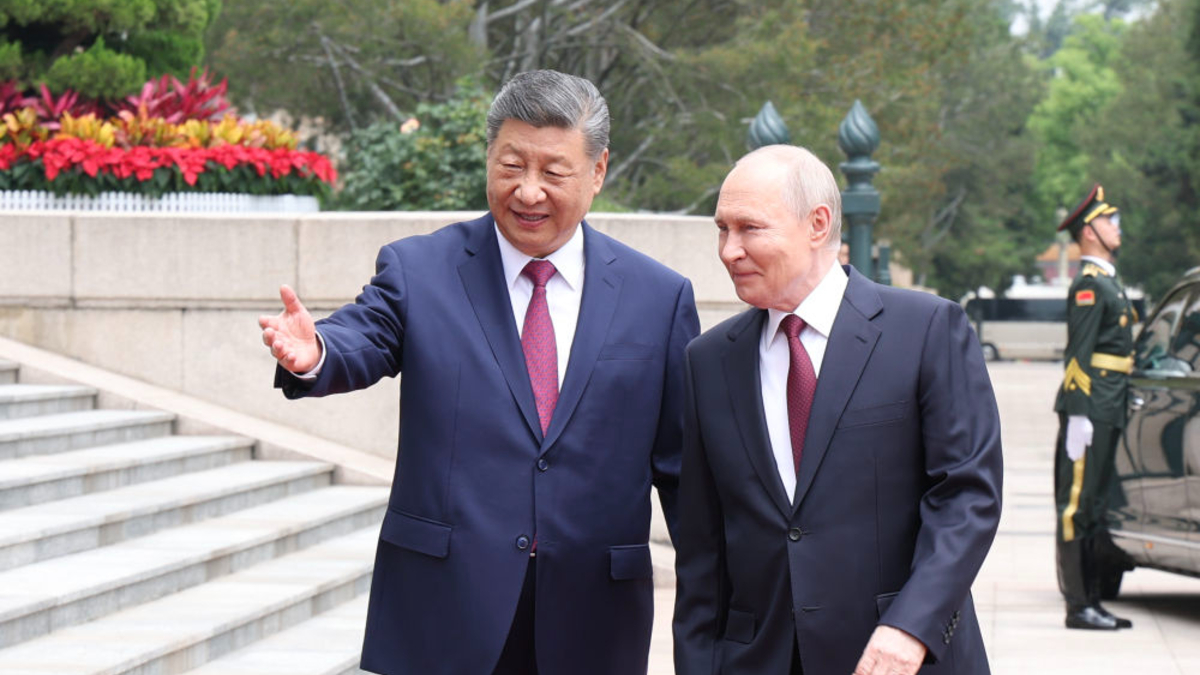
    First proposed years ago, the pipeline won conditional approval from both governments in September last year. The project plans to transport up to 50 billion cubic meters of natural gas annually from Russia’s Yamal Peninsula fields, routing through Mongolia before reaching Chinese consumer markets. According to reporting from The Wall Street Journal, Chinese officials made clear months before Russian President Vladimir Putin’s May visit to Beijing that a deal was unachievable on the terms Moscow had put forward, and asked Russian negotiators to avoid raising the topic during the high-profile summit. The Kremlin has acknowledged that informal discussions are still ongoing at the corporate level, but no substantive progress has been reported.

    The core of the dispute centers on staggering differences in the proposed gas price. China has opened negotiations with an offer of $50 per thousand cubic meters, matching the heavily subsidized domestic rate Russian consumers pay within Russia — a price far below standard commercial export terms. For its part, Russia is demanding roughly $250 per thousand cubic meters, a figure aligned with current global market benchmarks for pipeline gas.

    Publicly available trade data puts this gap in context. China already imports Russian natural gas via the operational Power of Siberia 1 pipeline at a rate between $240 and $280 per thousand cubic meters, while it purchases pipeline gas from Central Asian suppliers at approximately $200 per thousand cubic meters. Before the 2022 Russian invasion of Ukraine, Moscow sold pipeline gas to European buyers and Turkey at rates between $275 and $340 per thousand cubic meters.

    China’s opening bid has drawn attention for its stark mismatch with Beijing’s public rhetoric of a “no-limits” strategic partnership with Moscow. Chinese policy commentators argue that the hardline negotiating position reflects mounting external pressure on Russia across multiple fronts, which has shifted the balance of power firmly in China’s favor. Ukraine has ramped up long-range drone attacks on Russian energy infrastructure, while the European Union has passed legislation to phase out all imports of Russian liquefied natural gas by 2026 and implement a full ban on Russian pipeline gas starting in October 2027. At the same time, China has restored large-scale purchases of American LNG, adding another reliable supplier to its energy portfolio. Last week, the first U.S. LNG cargo in 12 months arrived at a Chinese import terminal, following a resumption of purchases after a mid-May meeting between Chinese President Xi Jinping and U.S. President Donald Trump.

    “In 2025, China paid an average of roughly $258 per thousand cubic meters for Russian pipeline gas, already far below the rates Europe once paid,” wrote Hebei-based commentator Riyue Xhige. “Beijing’s new demand pushes for a far steeper discount. Even Belarus, Moscow’s closest ally, has never received terms this close to Russia’s domestic regulated price.” The columnist added that the gap goes far beyond routine commercial haggling, noting “This reflects a fundamental shift in who holds the power at the negotiating table.”

    Where Russia once operated in a seller’s market when supplying Europe, where buyers had little alternative to Russian gas, that dynamic has completely reversed, commentators note. Today, China holds all the cards as a buyer with a diverse array of energy supply options to draw from.

    China’s diversified energy portfolio is the foundation of its strong negotiating position, analysts point out. Domestic natural gas production hit 262 billion cubic meters in 2025, a 6.2% year-on-year increase that marked the ninth consecutive year of output growth exceeding 10 billion cubic meters. Four existing cross-border pipelines from Central Asian nations — Turkmenistan, Uzbekistan, Kazakhstan and Tajikistan — already have a combined annual capacity of more than 85 billion cubic meters, with additional expansion projects in the planning stages. Offshore, LNG tankers from Qatar, Australia and Malaysia deliver consistent cargoes to Chinese import terminals, leaving Russian gas as one of many available options rather than a critical necessity.

    “China wants to expand energy imports from Russia as part of a broader diversified supply strategy, but that does not mean Russian gas is irreplaceable,” Riyue Xhige explained. “This strategic composure gives Beijing unprecedented leverage at the negotiating table. No matter how Russia adjusts its position, it will have to come back to meet Chinese terms.”

    Jiangsu-based commentator New Day Student summed up the dynamic: “Russia is like a cat on a hot tin roof because of the war in Ukraine, while China has no shortage of gas sources. If Russia does not want to sell, we will simply keep buying from Central Asia, Australia and Qatar.” He noted that the $50 opening bid is simply an opening negotiating anchor, not a final take-it-or-leave-it offer, but emphasized that any final deal for Power of Siberia 2 will require a lower price than the existing Power of Siberia 1 contract.

    The project has faced hurdles long before the current price impasse. After Gazprom, Russia’s state-owned energy giant, approved a feasibility study in 2021, negotiations over the route created years of tension. Moscow long pushed for a route through Mongolia, arguing it would cut infrastructure construction costs compared to a direct pipeline across the Russia-China border. Beijing resisted the proposal, and its concerns deepened in August 2023 after Mongolia signed an open skies agreement with the United States and began discussing a rare-earth development partnership with Washington. Chinese leaders worried that a transit route through Mongolia could leave the pipeline vulnerable to political disruption that would threaten China’s energy security. Beijing ultimately relented and approved the Mongolia route in September last year, but only on the condition that Moscow agree to substantial price cuts for the gas supply.

    Since that agreement in principle, the global energy landscape has shifted even further in China’s favor. After China resumed U.S. LNG purchases in May, the U.S. Treasury issued a 60-day sanctions exemption in June that allows Iran to sell oil and petroleum products using U.S. dollars, expanding China’s access to affordable crude imports and helping replenish strategic reserves that were strained after earlier disruptions to shipping through the Strait of Hormuz.

    When Putin met Xi in Beijing in May, he found China’s pricing demands remained unchanged. Shortly after the summit, Putin traveled to Kazakhstan to explore an alternative transit route that would send Russian gas to China via Central Asia, bypassing Mongolia entirely. But commentators argue that changing the route will not resolve the core dispute.

    “Switching the pipeline route will not solve anything,” said another Hebei-based political columnist. “This is fundamentally a question of price and cost. It is true that Russia needs the Chinese market, and China needs a stable energy supply. But China has plenty of options and no reason to rush. We simply hold the stronger hand.”

    The commentator added that time is running out for Russia, not China, as the EU’s ban on Russian pipeline gas is set to take effect in autumn 2027. “Whether the Kazakhstan route can actually be realized depends on whether Russia is willing to show good faith on price and financing to China. If Moscow still clings to the old thinking of selling its energy at premium prices and passing all infrastructure costs onto buyers, this detour will lead nowhere either.”

    Shandong-based commentator Shan Hai argued that the impasse presents an opportunity for long-term reform of Russia’s energy-dependent economy. “Since the collapse of the Soviet Union in 1991, Moscow has relied on selling energy at high prices to fund government spending, importing most manufactured goods and failing to develop a diversified domestic industrial ecosystem,” Shan wrote. He suggested that Russia could reset its economic relationship with China by agreeing to competitive gas prices for the Power of Siberia 2 project and opening its market to Chinese manufacturing investment. Shan also noted that energy cooperation between the two nations is already becoming more reciprocal: after multiple Ukrainian drone attacks damaged Russian oil refining capacity, several Russian regions have begun importing refined petroleum products from China, expanding the scope of bilateral energy ties beyond Russian raw material exports to China.

  • Japan relaxes royal succession rules – but ban on female emperors remain

    Japan relaxes royal succession rules – but ban on female emperors remain

    Japan’s national parliament has signed off on a landmark bill revising the country’s imperial succession framework, a change crafted to address a growing crisis of shrinking royal membership that threatens the world’s oldest continuous hereditary monarchy. Yet the reform stops short of meeting widespread public demand to open the throne to women, leaving Emperor Naruhito’s only child, Princess Aiko, still barred from ascending to the highest royal position.

    The upper house of the Diet passed the bill on Friday, one week after the lower house gave its approval. The legislation will now complete final administrative formalities before entering into force. This marks the first major amendment to the core text of the 1947 Imperial House Law since 1949, representing the most sweeping shakeup of Japan’s imperial system in more than seven decades.

    Under the terms of the new law, two key changes are introduced. First, the imperial household will now be permitted to adopt male relatives from distant cadet branches who are aged 15 or older, bringing them back into the official royal family. These 11 branches were stripped of their imperial status after World War II by Allied occupation reforms, and their descendants could now replenish the shrinking pool of eligible succession candidates. Second, female imperial members who marry commoners will no longer be required to renounce their royal titles and leave the household – a policy change that follows high-profile cases like that of Princess Mako, who gave up her status in 2021 to marry her civilian college partner.

    Japan’s imperial lineage traces its claimed origins back more than 2,600 years, making it the longest unbroken hereditary monarchy in recorded history. But the current line of succession is extremely narrow. After Emperor Naruhito, first in line is his 60-year-old younger brother Crown Prince Fumihito. Second in line is Fumihito’s 19-year-old son Prince Hisahito, and the third eligible heir is the emperor’s 90-year-old uncle. Without reform, if Prince Hisahito does not father a male heir, the official line of succession would be broken, forcing a constitutional crisis.

    Despite the changes, the bill leaves intact the longstanding legal ban on female succession, despite overwhelming public support for ending the male-only rule. Opinion polling consistently shows broad majority backing for allowing women to become emperor. A June Mainichi Shimbun survey of more than 2,000 Japanese adults found more than 70% of respondents supported a female monarch, while a separate Kyodo News poll put support as high as 83%.

    Prime Minister Sanae Takaichi and other conservative political leaders have pushed to retain male-only succession, arguing that the centuries-old patrilineal system is core to the imperial institution’s legitimacy. The compromise reform, which addresses the shrinking royal pool but rejects changing gender succession rules, has resolved the immediate threat of a broken succession line while leaving the gender debate unresolved for future legislative action.

  • A simple pair of glasses is helping productivity gains in some Bangladesh garment factories

    A simple pair of glasses is helping productivity gains in some Bangladesh garment factories

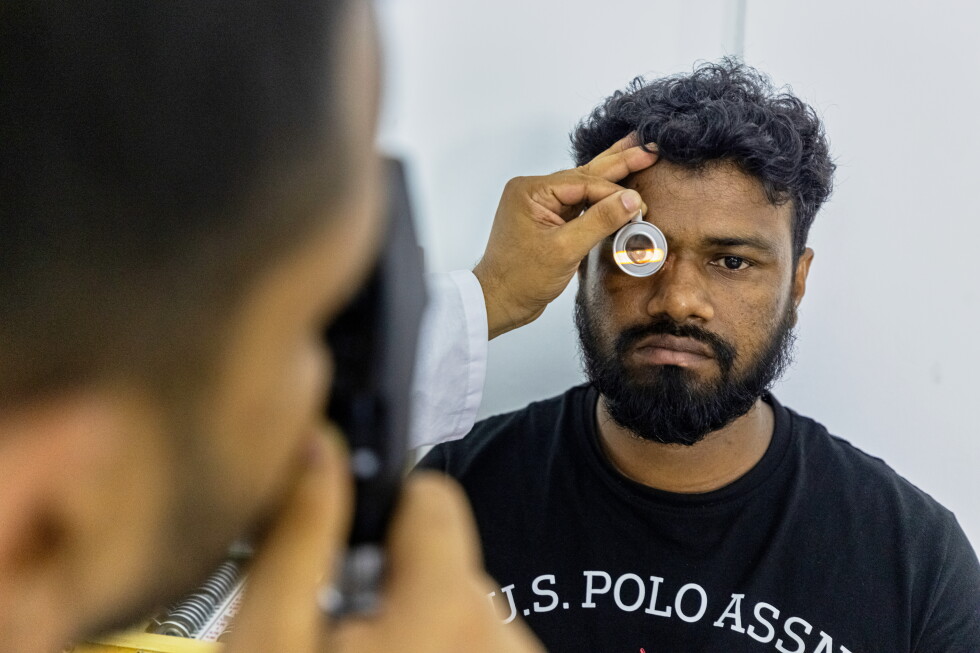
    Bangladesh’s $45 billion ready-made garment sector, the second-largest globally behind only China, has uncovered a surprisingly simple, low-cost intervention to boost worker output, reduce waste, and improve quality of life for its 4 million strong workforce: affordable reading glasses. For thousands of frontline sewing operators like Ruma Aktar, this small, $10 tool has already transformed both their daily work and long-term professional stability.

    Aktar’s role demands extreme precision: every worker is tasked with producing thousands of individual garment pieces each day, and even minor missteps can slow entire production lines or result in full batches of rejected product that require costly rework. Before receiving her free pair of reading glasses through the new workplace program, Aktar struggled for minutes to thread a single needle on her machine, a repetitive task that left her with constant headaches and persistent eye strain. Today, she threads needles in seconds, makes far fewer mistakes that require alterations, and works far more comfortably through her full shift.

    “Before I got the glasses, it took me a long time to thread the needle. Now I can thread it in just a short time. I make far fewer alterations than before,” Aktar explained.

    Industry data estimates that roughly one in three Bangladeshi garment workers need corrective vision to do their work properly, yet lack access to affordable glasses, according to VisionSpring, a global non-profit social enterprise dedicated to delivering low-cost eyecare to low-income communities in developing nations. To address this gap, the organization has partnered with the Bangladesh Garment Manufacturers and Exporters Association (BGMEA), the country’s leading factory industry group, to deliver on-site vision screenings and glasses that cost less than $10 per pair to participating factory workforces.

    Early results from the program have been immediate and striking, according to VisionSpring CEO Ella Gudwin. Workers who receive glasses can consistently meet production and quality targets, and the reduction in common errors like skipped stitches, uneven hems, and misplaced buttons cuts down the hours of rework that factories must schedule to fix flawed products. The program has also revealed that most workers do not report undiagnosed vision problems to management, leaving widespread unaddressed impairment invisible to factory leadership for years.

    That aligns with the experience of Masco Group, one of Bangladesh’s leading garment manufacturers, which has already rolled out screenings to 5,000 of its over 25,000 total employees. Fahima Akhter, a director at Masco Group, told reporters that roughly 30% of screened workers required reading glasses, and the company now plans to expand the program to all remaining employees. For Masco, the initiative is not an unnecessary expense, but a high-return core investment.

    “We don’t consider it a cost. It is an investment. If the workers are working with better vision, their productivity and workplace safety will improve, and eventually this will translate into better productivity and profit for the company,” Akhter said.

    Data from independent academic research backs up that claim. A randomized controlled trial co-authored by Gudwin, focused on sewing operators in India, found that workers who received free reading glasses saw a 6% jump in overall productivity alongside a measurable drop in error rates. The study, published in April in the *British Journal of Ophthalmology*, calculated that every $1 spent on combined vision screenings and glasses generated $3.37 in net productivity gains for employers over just 12 weeks.

    Scaled across the entire global garment and textile industry, researchers estimate that rolling out similar low-cost programs could unlock as much as $27 billion in additional annual global output, a massive gain for an industry that relies on thin profit margins and incremental efficiency improvements.

    Gudwin explained that the issue of unaddressed vision impairment in garment factories has flown under the radar for decades because corrective eyeglasses were incorrectly framed as a personal luxury rather than an essential workplace tool. Many frontline workers, who often develop age-related near-vision impairment in their late 30s and early 40s, assume that glasses will be too expensive for them to afford, so they delay seeking care and continue struggling with impaired vision on the job. Bringing screenings and low-cost glasses directly onto factory floors eliminates the financial and logistical barriers that keep workers from accessing the care they need.

    Akhter added that Bangladesh’s garment sector should formalize the practice by making on-site vision screening and affordable glasses a standard mandatory workplace benefit. For the millions of workers who power the country’s biggest export industry, clear vision is no longer a luxury—it is a basic work necessity that benefits both employees and employers.

  • Asian shares sink, with Tokyo down nearly 5% as slumping AI stocks drag world markets lower

    Asian shares sink, with Tokyo down nearly 5% as slumping AI stocks drag world markets lower

    BANGKOK – Global financial markets faced significant downward pressure on Friday, led by a sharp sell-off across Asian exchanges that was triggered by plummeting valuations in artificial intelligence-linked stocks and amplified by growing geopolitical tensions in the Middle East.

    Tokyo’s benchmark Nikkei 225 bore the brunt of the selling, closing down 5.8% at 62,945.97, a drop of more than 5 percentage points that saw AI and semiconductor stocks leading the decline. While South Korean markets were closed for trading Friday, Taiwan’s key index also fell by more than 5%, mirroring the downward trend across East Asian financial hubs. Other major Asian indexes also recorded notable losses: Hong Kong’s Hang Seng Index shed 2% to settle at 24,514.29, mainland China’s Shanghai Composite dropped 1.6% to 3,818.59, and Australia’s S&P/ASX 200 edged 0.7% lower to close at 8,775.70.

    The sell-off in AI-related equities is not an isolated one-day event. For weeks, the sector has faced growing downward pressure as investors increasingly question the stretched valuations that have propelled AI stocks to historic gains over the past year. Core concerns center on whether the explosive rally in chipmakers and AI infrastructure providers is justified, with market participants weighing the risk that projected demand for semiconductors, memory chips, and AI processing hardware may not hold up if the sector fails to deliver the outsized profits and productivity gains that have been widely promised to investors.

    The market downturn was compounded by a sharp spike in global crude oil prices, which climbed to near one-month highs Friday amid intensifying military conflict in the Middle East. Fears are growing that escalating tensions involving Iran could disrupt shipping through the Strait of Hormuz, a critical chokepoint through which a large share of global crude oil exports from the Persian Gulf pass. A closure or disruption to shipping through the strait would cut off global supply and push energy prices even higher. On Friday, international benchmark Brent crude rose 1.1% to settle at $85.13 per barrel, while U.S. benchmark West Texas Intermediate crude climbed 1.3% to $79.95 per barrel. U.S. stock futures also edged lower in pre-market trading following the Asian session.

    The downward momentum for AI stocks carried over from Wall Street’s previous trading session. On Thursday, the Nasdaq Composite, which is heavily weighted toward technology and AI stocks, dropped 1.5% even as a majority of S&P 500 components recorded gains. The S&P 500 overall fell 0.5%, while the Dow Jones Industrial Average dipped 0.2%, despite better-than-expected quarterly earnings from roughly three-quarters of the large U.S. companies that reported results this season.

    Industry giant Nvidia, the biggest single driver of the global AI stock rally over the past two years, fell 2.4% on Thursday, making it the largest single drag on the S&P 500 and erasing some of the stock’s stellar year-to-date gains. Other major semiconductor and memory chip firms also suffered steep losses: Micron Technology dropped 5.6%, pulling its 2024 gain below 199%; Western Digital sank 9.2% but remains up 171% for the year; and SanDisk plummeted 12.6%, even with its year-to-date gain still holding at 494%.

  • High-profile business figure in Melbourne facing rape trial after not guilty plea

    High-profile business figure in Melbourne facing rape trial after not guilty plea

    A high-profile Australian businessman facing rape and sexual assault charges has had his alleged controversial response to his former personal assistant’s accusation aired publicly during his ongoing trial at the County Court. The defendant, whose identity remains protected by a court-ordered suppression order, has entered a plea of not guilty to two counts of rape and one count of sexual assault, stemming from an alleged incident in 2023.

    Prosecutors have laid out their case against the accused, arguing that the businessman, who is decades older than his accuser, assaulted the woman after the pair met to discuss her potential return to work for him. The meeting followed a prior period of employment during which prosecutors say the woman repeatedly rejected his romantic and sexual advances. Before the alleged assault, the two had spent an evening drinking, watching an Australian Football League match at a friend’s home, and using cocaine, according to prosecution claims.

    Following the alleged attack, the woman confronted the defendant, calling him a rapist and punching him in the face. In that confrontation, the businessman is claimed by prosecutors to have responded, “it’s not rape, I was using my fingers,” while also complaining that the punch had broken his nose.

    The trial resumed in open court on Friday after multiple days of closed hearings held to allow the alleged victim to give her evidence in private. Law enforcement officers took the stand to recount their response to the initial report of the incident, which came in the early hours of the morning when the woman’s mother contacted police after receiving distressing text messages from her daughter.

    Detective Senior Constable James Redman told the jury he first contacted the woman at 2:51 a.m., at which point she declined to share details of what had happened, only confirming she was hiding safely in a spare bedroom at the property. Roughly an hour later, the woman called back to change her mind, and Redman attended the home with two other officers. Redman told the court the accused did not appear to be impaired by alcohol or drugs at the time of their arrival, describing him as a “very charming, charismatic man.” The defendant also told investigators he had previously employed the woman, that she had occasionally stayed overnight at his home in the past, and that he had repeatedly offered to call her a ride home on the night of the incident. Redman added that the defendant did not show any visible signs of injury consistent with the reported punch to the face.

    Senior Constable Jordan Frizell, who spoke with the woman after officers arrived, testified that she appeared visibly intoxicated and impaired by substances when first interviewed.

    Multiple witnesses also took the stand on Friday to lay out context for the encounter between the defendant and his accuser. A close friend of the accused and his wife told the court the pair had visited their home earlier that same evening to watch the AFL match, leaving around 10:30 p.m. The friend recalled that at one point during the game, the woman rested her left hand on the defendant’s thigh, and he made no move to respond to the gesture. He added that the woman appeared happy and relaxed for the entirety of the visit, and that the defendant had fallen asleep toward the end of the match before being woken up for the pair to leave.

    A former friend of the alleged victim also gave evidence, telling the jury the two had a falling out while the woman was employed by the defendant. The former friend said the accuser had become extremely upset when she refused to facilitate an introduction between the defendant and her, sharing a text message from the woman that read, “F–k you, I’ve been so supportive and never asked for anything in return, this meant a lot to me.” Under cross-examination by the defense, the witness denied ever telling the accuser that she felt unsafe around the defendant, and also denied claims that she had regularly socialized and drunk alcohol with him.

    In opening remarks to the jury, prosecutor Matthew Fisher explained that the woman first began working for the defendant several years before the alleged incident, and repeatedly turned down his sexual advances before ultimately leaving her role. Fisher told the court the woman had explicitly stated to the defendant, “I don’t want that to be the role I play in your life, I’m not sexually attracted to you. I don’t want to have sex with you, the sooner you understand this the better.”

    According to Fisher, the defendant eventually extended a new work offer to the woman, telling her he “missed you not being around,” which prompted the meeting to discuss the role on the night of the incident. After returning from the friend’s home, Fisher said the defendant began kissing and touching the woman against her will, even after she pushed him away and told him she did not consent. Prosecutors claim the defendant continued his advances, telling the woman “you’re so sexy,” “I can’t stop,” and “I need your help to sleep, help me,” before raping her with his fingers and penis.

    Around 30 minutes after the alleged assault, the woman approached the defendant to discuss moving past the incident, but fled and slammed a door shut when he reportedly began masturbating in front of her, Fisher added.

    Defense barrister Dermot Dann KC, representing the accused, has refuted all prosecution claims, saying his client denies using cocaine and never made any unwanted sexual advances toward the woman. Dann told the jury the defendant was actually trying to convince the woman to return home on the night in question, and that she appeared determined to stay at his property. He also pointed to text messages the woman sent her mother that referenced “recompense” and “trying to resolve things,” and noted that the prosecution’s case relies entirely on accepting the accuser as a credible and truthful witness, a claim the defense disputes.

    The trial before the County Court is ongoing.

  • Trump alleges ‘shocking vulnerabilities’ in US election security ahead of midterms

    Trump alleges ‘shocking vulnerabilities’ in US election security ahead of midterms

    In a primetime televised address from the White House Thursday, former President and 2024 presidential candidate Donald Trump reiterated a series of unproven allegations that China interfered in the 2020 U.S. presidential election and claimed there are “shocking vulnerabilities” in the nation’s voting infrastructure. The address came three months ahead of November’s midterm elections that will determine congressional control for the remainder of his current term.

    During the 30-minute speech, delivered to an audience of senior administration members with no opportunity for press questioning, Trump claimed he had declassified hundreds of intelligence documents to back up his assertion that Beijing sought to tilt the 2020 election outcome toward Joe Biden, who ultimately defeated Trump in the contest. Trump also claimed that China had illegally obtained 220 million voter records containing sensitive personal information, alleging that voter data across 18 U.S. states had been “bought, stolen or hacked by China.” He further accused officials who had uncovered this alleged activity of failing to alert executive branch leaders or members of Congress. At no point during the address did Trump present tangible evidence showing China used the purloined data to manipulate voting systems or alter election results.

    These claims directly contradict long-standing conclusions from the entire U.S. intelligence community. A 2021 declassified assessment from the U.S. National Intelligence Council stated with high confidence that China did not engage in any interference efforts targeting the 2020 presidential election, and only considered but ultimately rejected influence operations designed to change the vote outcome. The report noted the decision stemmed from China’s calculation that neither candidate’s victory offered enough strategic benefit to justify the risk of major diplomatic backlash if the interference was discovered.

    In a statement provided to Reuters following the speech, the Chinese Embassy in Washington D.C. rejected all allegations, confirming that Beijing “has never and will never interfere in the presidential elections” of the United States. The BBC has also reached out to China’s Ministry of Foreign Affairs for additional comment, and has not yet received a response.

    Domestically, the speech drew immediate sharp pushback from Democratic leaders, who argue Trump is deliberately spreading misinformation to erode public trust in the upcoming midterm elections ahead of voting. “Let’s be clear – in America, voters choose their leaders, not the other way around,” Senate Majority Leader Chuck Schumer wrote on social media immediately after the address. “Democrats will fight like hell to make sure every American voter can cast their ballot freely, without obstruction or interference from Donald Trump.”

    Former Vice President Kamala Harris echoed this criticism in a post on X ahead of the speech, arguing that Trump’s goal is to suppress turnout among opposition voters. “The president is scared of your power, and he wants you to believe your vote does not matter,” she wrote. “He wants you to lose confidence in our electoral system so you stay home this November. He knows how discontent the American people are, and he wants to make sure that you do not vote.”

    Beyond his China allegations, Trump expanded his claims of voting system vulnerability, asserting that widely used U.S. voting machines are “extremely exposed” to tampering by foreign adversaries including Russia, China, and Iran. While gaps and weaknesses in U.S. election infrastructure have been well documented by independent experts and government auditors, many vulnerabilities were addressed after the 2016 presidential election, when U.S. intelligence confirmed Russia carried out a large-scale meddling campaign including hacking, social media disinformation, and funding for grassroots political activity.

    Trump also repeated unproven claims of domestic voter fraud: he alleged that Michigan law enforcement uncovered a voter registration fraud scheme linked to a Democratic-aligned organization, but that the FBI blocked investigators from acting before the statute of limitations expired. Calling the activity “pay, play and cheat,” Trump again offered no evidence that any vote totals were altered or any voting machines were compromised. He also claimed the Department of Homeland Security has identified 278,000 non-citizens registered to vote, but did not provide data showing any of these individuals actually cast ballots or affected the result of any election.

    To address the purported flaws he outlined, Trump used his closing remarks to renew calls for Congress to pass the SAVE America Act, a bill that would ban most forms of mail-in voting, require documentary proof of citizenship to register to vote, and mandate photo identification to cast a ballot. The legislation has been stalled in the evenly divided Senate for months, and Trump’s push for passage is widely expected to fail unless Republican lawmakers agree to overhaul long-standing Senate procedural rules that currently require a 60-vote supermajority to advance most legislation, a step Republican leadership has so far rejected. The address comes as a new Washington Post-Ipsos poll shows Trump’s national approval rating has fallen to 37%, driven largely by widespread public pessimism over rising cost of living and the ongoing conflict with Iran.

    Political analysts note the speech does little to ease Democratic fears that Trump will continue to question election legitimacy ahead of 2028’s presidential contest, should he choose to run for reelection. The ongoing partisan fight over election security has already become one of the defining issues of the 2024 midterm campaign cycle.

  • Saudi Arabia mulls military escalation in response to Houthi threats

    Saudi Arabia mulls military escalation in response to Houthi threats

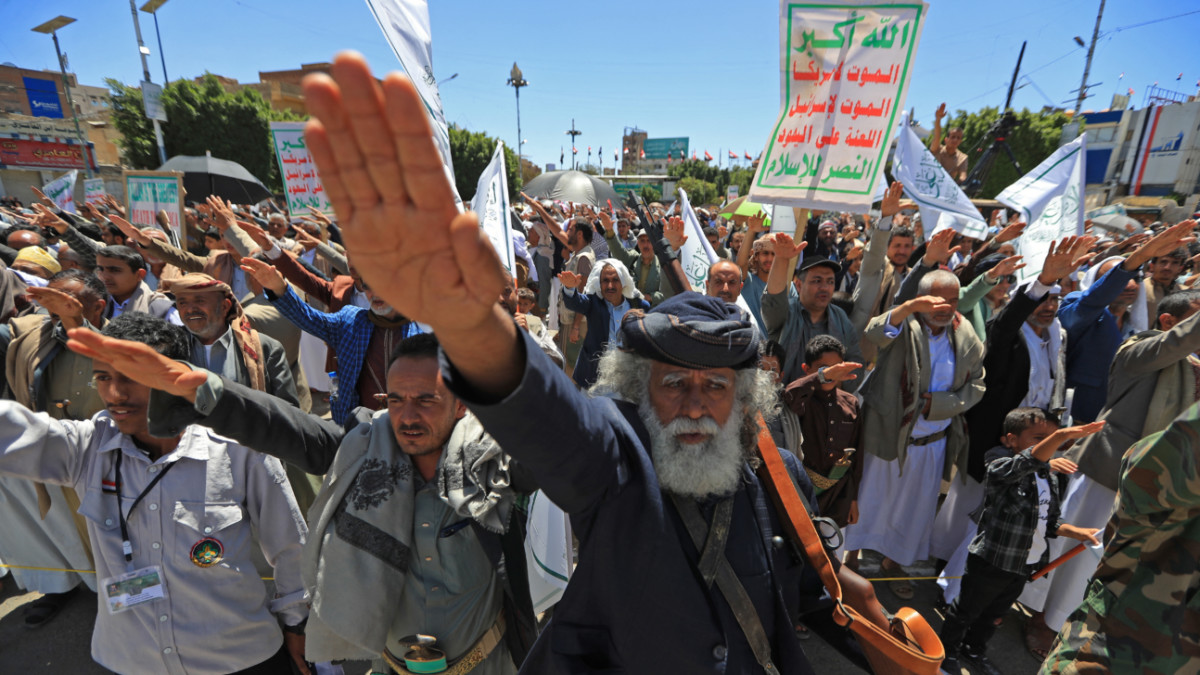
    Tensions are rapidly building across the Arabian Peninsula, as escalating threats from Yemen’s Houthi movement have pushed Saudi Arabia into internal deliberations over how to respond – a decision that carries the potential to reignite full-scale war in Yemen and send shockwaves through global energy markets. Multiple U.S. and regional sources familiar with internal discussions have confirmed to Middle East Eye that Saudi Defense Minister Khalid bin Salman has signaled that the U.S. has granted Riyadh flexibility to launch offensive strikes against Houthi positions, though the kingdom’s top leadership has yet to reach a final decision on the course of action.

    Diplomatic insiders note that these ongoing talks have also exposed visible rifts within the Saudi royal court over the appropriate response to rising Houthi aggression, at a time when broader military conflict between the U.S. and Iran has already pushed regional tensions to a 40-year high. The fragile four-year informal truce between Saudi Arabia and the Houthis, which grew out of an expired UN-brokered ceasefire, was first breached earlier this month amid a highly contentious dispute over an unscheduled flight landing at Sanaa International Airport.

    According to U.S. and regional intelligence sources cited by MEE, the inbound flight carried Lebanese, Iranian, Syrian, and Iraqi military specialists with expertise in drone and missile technology, while the outbound flight was set to transport senior Houthi political figures and militia members bound for military training in Iran. The Houthi movement quickly accused Saudi Arabia of launching an airstrike on Sanaa airport to block the flight’s departure, a claim that Riyadh has not formally addressed.

    This dispute shattered the unspoken rules that had kept the informal truce intact for years: for the duration of the expired UN ceasefire, all commercial and official flights to Yemen were restricted to routes originating in Amman, Jordan, and Cairo, Egypt. In retaliation for the alleged airport strike, the Houthis launched a coordinated barrage of missiles and drones targeting the southwestern Saudi city of Abha earlier this week, marking one of the largest direct attacks on Saudi territory since the 2025 truce went into effect.

    Houthi leader Abdul Malik al-Houthi doubled down on threats against the kingdom in a televised address Thursday, explicitly warning that all Saudi oil infrastructure and critical national installations would become legitimate military targets if Riyadh resumes offensive operations in Yemen. “Airports for airports, ports for ports, and a blockade for a blockade,” al-Houthi declared, drawing a clear line in the sand ahead of any Saudi military move.

    For Saudi Arabia, any decision to return to full-scale conflict carries massive, far-reaching risks. A resumption of major fighting would not only deepen what is already the world’s worst humanitarian catastrophe in Yemen – where more than 21 million people rely on aid to survive – but also threaten to disrupt critical energy shipping routes that are central to the Saudi and global economy. After Iran began asserting increased control over the Strait of Hormuz amid the ongoing U.S.-Iran war, the Red Sea has become the primary export artery for Saudi crude, with roughly 4.5 million barrels of oil per day moving through the waterway via the kingdom’s East-West Pipeline.

    Yemen experts warn that Riyadh faces a no-win dilemma regardless of the path it chooses. “I’d hate to be a Saudi today. There is no easy solution to Yemen,” said Mohammed al-Basha, a Washington-based Yemen analyst. “A peace deal [with the Houthis] would mean billions of dollars in reparations, while a return to war has 50-50 odds of a Saudi victory.”

    The current crisis grows out of a long-stalemated “no war, no peace” dynamic that has persisted since the 2025 truce halted large-scale Saudi-Houthi fighting at sea. The Houthis had paused major attacks on global commercial shipping in the Red Sea that they launched in October 2023 in solidarity with Palestinians in Gaza, a move that won the group widespread support across the Arab and Muslim world. After the U.S. launched a large-scale bombing campaign against the Houthis in early 2025, then-President Donald Trump halted the strikes ahead of a Gulf visit following extensive lobbying from Saudi Arabia, leading to the May 2025 maritime truce that has held until now.

    Though the Houthis have not formally joined the ongoing war between the U.S., Israel and Iran that erupted in February 2025, U.S. and Gulf officials tell MEE they believe the group has carried out multiple limited land strikes against Saudi targets in recent weeks. Independent Yemen analyst Ibrahim Jalal notes that the long-expired UN ceasefire framework has failed to create any path toward a permanent political settlement, leaving the door open for steady escalation. “The no war, no peace stalemate has not produced any outcome closer to a political settlement,” Jalal said. “The Houthis’ anti-Saudi rhetoric has also flared up.”

    As tensions rise, Saudi Arabia has moved quickly to shore up military and diplomatic support from Washington. On Wednesday, U.S. Central Command Deputy Commander Lieutenant General Patrick Frank met with Saudi Chief of the General Staff First Lieutenant General Fayyad al-Ruwaili in Riyadh to discuss regional security. The U.S. State Department also announced Wednesday that it had approved a major arms deal to sell 20,000 Advanced Precision Kill Weapon Systems to Saudi Arabia, a move widely seen as a show of support ahead of any potential military action.

    Internationally, key partners have already begun weighing in: Pakistan, which holds a mutual defense treaty with Saudi Arabia while maintaining cordial diplomatic ties with Iran, issued a public warning to the Houthis Thursday not to launch further attacks on the kingdom, according to Reuters reporting.

    Most analysts agree that the recent tit-for-tat strikes have been carefully calibrated by both sides, with few expecting an immediate closure of the strategically vital Bab el-Mandeb Strait, the narrow waterway connecting the Red Sea to the Gulf of Aden that carries roughly 10 percent of global trade. Basha argues that the Houthi movement has no incentive to close the strait, as that would draw direct U.S. military intervention into the conflict – an outcome the group wants to avoid. “Iran and Israel media leaks are emphasising the Bab el-Mandeb to try to bring the US into this fight, but the Houthis don’t want that,” Basha said. “Trump also has enough problems in the Strait of Hormuz,” he added.

  • More than 500 Rohingya vanished at sea – what happened?

    More than 500 Rohingya vanished at sea – what happened?

    It has been nearly three weeks since two overcrowded boats carrying 530 Rohingya asylum seekers departed from Myanmar’s Rakhine State on June 29, and no contact has been made with anyone on board. Advocates working on Rohingya rights warn the entire group is likely lost, with the dangerous monsoon season and the unseaworthy condition of the converted vessels making mass casualties almost inevitable.

    The two boats, modified old fishing trawlers packed far past their safe capacity to carry as many people as possible, set out amid already rough monsoon seas and carried unreliable engines. Roughly half of those on board are believed to be women and children, and Chris Lewa, director of the Arakan Project — a group that advocates for Rohingya rights — says it is highly probable both vessels capsized, with few to no survivors. Due to the ongoing conflict that has crippled communications across Rakhine State, a full accounting of what happened may never be possible.

    Rakhine State has been mired in active conflict for years, with the Arakan Army insurgent group pushing Myanmar’s military out of most of the territory and laying siege to the junta’s last major stronghold in the state capital Sittwe, which is only accessible by air and sea. Nearly all telecommunications networks across the region have been cut off, leaving advocates like Lewa without direct access to on-the-ground sources in Sittwe and Sin Tet Maw, the Arakan Army-controlled departure point for the missing boats.

    Through a network of secondary contacts and scattered information, Lewa has confirmed the two boats departed hours apart on June 29, bound for southern Myanmar, where passengers were to be transferred to smaller vessels before moving overland through forest transit camps, across Thailand, and to the Malaysian border. Under normal smuggling routes, families would expect to hear from their loved ones within 7 to 10 days; after nearly three weeks of total silence, fears for their safety have grown unavoidable. So far, authorities in Bangladesh have recovered one woman’s body washed ashore, and local fishermen found multiple additional bodies off the coast between Myanmar’s Irrawaddy Delta and Mon State nine days after the boats’ departure. These findings align with Lewa’s assessment that the first boat capsized just hours after leaving Sin Tet Maw, while the second sank several days into its southeast journey.

    The crisis of the missing boats is rooted in the decades of systemic persecution and escalating instability that have left millions of Rohingya with no viable path to safety. More than one million Rohingya currently live in overcrowded, underfunded camps in southern Bangladesh, where aid resources have dwindled, formal employment is almost non-existent, and transnational smuggling networks operate with impunity. An additional 600,000 Rohingya remain trapped in Rakhine State: one quarter are confined to squalid internal displacement camps, while the rest eke out a precarious existence in communities caught between warring factions. Myanmar’s military junta has increasingly forced Rohingya men into conscription, while the Arakan Army — which claims to represent ethnic Rakhine people — has been repeatedly accused of severe human rights violations against the Rohingya population it distrusts. With prospects for safety and dignity at home nonexistent, fleeing to neighboring countries is the only option many see for survival.

    Malaysia, which already hosts 200,000 Rohingya, has become the most popular destination for asylum seekers, creating a lucrative, brutal trade for transnational human smuggling rings with established networks across Bangladesh, Myanmar, Thailand, Malaysia, and Indonesia. Smugglers’ business model relies on packing as many people as possible into inadequate vessels, moving them undetected to Malaysia, and collecting fees ranging from $2,000 to $4,000 per person. Families that cannot pay face having their relatives detained, beaten, or even killed, with graphic videos of abuse sent to pressure relatives into raising the required funds.

    Smuggling routes have shifted repeatedly over the past decade in response to regional enforcement efforts. In 2015, after mass graves of trafficking victims were discovered in primitive jungle transit camps, the Thai government cracked down on overland smuggling routes, closing camps in mangrove swamps and rubber plantations where captives were held until ransoms were paid. This crackdown forced many smuggling operations to redirect boats toward Aceh, Indonesia, where local fishing communities initially welcomed the Rohingya as fellow persecuted Muslims. That welcome has since eroded, with anti-Rohingya social media campaigns spreading hostility across the country in recent years.

    Direct sea routes to Malaysia remain largely blocked: the Malaysian Navy regularly intercepts refugee boats and pushes them back into international waters, and local fishing communities refuse to assist smuggling operations. As a result, smuggling networks have reverted to using Thailand as their primary transit hub. Today, large mother vessels pick up Rohingya off the coasts of Rakhine or Bangladesh’s Teknaf, staying only long enough to unload passengers before moving on to avoid detection by authorities from both countries. Smugglers use satellite phones to coordinate with local networks, paying fishermen to transfer passengers to smaller craft that land on southern Thai or eastern Sumatran coasts. Once full payment is received, refugees are moved secretly overland to Malaysia. Other groups are dropped on southern Myanmar’s coast, then transported overland through border crossings to Thailand and on to the Malaysian border. For Rohingya fleeing Rakhine State, however, every escape route begins with a dangerous open sea crossing, since all land routes out of the conflict-torn region remain closed.

    The United Nations High Commissioner for Refugees estimates that as of mid-2026, at least 4,700 Rohingya have fled the region this year alone on 74 boats, and Lewa estimates the total number of departures since September 2025 may be as high as 10,000 — a sharp increase from previous years, directly driven by the worsening intolerable conditions facing the community in both Rakhine and Bangladesh. The UN has called for the creation of formal safe passage routes for Rohingya seeking asylum, but no country in the region has been willing to accept more refugees or facilitate safer passage, leaving thousands of desperate people to the mercy of brutal smuggling networks and dangerous monsoon seas.