Five years into Russia’s full-scale invasion, Ukraine’s push to mobilize new troops has devolved into a cycle of violence that is tearing at social cohesion within the country, leaving both serving soldiers and civilians injured and exposing deep flaws in the nation’s conscription system.
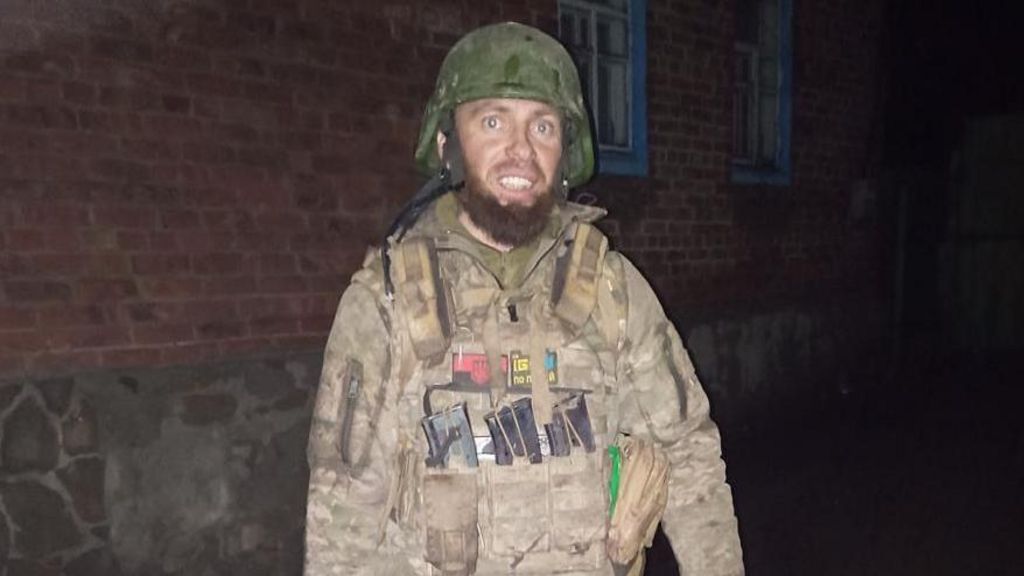
For Vasyl Krupych, a veteran machine gunner who survived brutal Russian assaults on Ukraine’s eastern Donbas region, the danger did not end when he was reassigned to rear-area duty searching for people avoiding conscription. Last December, he encountered two men who refused to present identity documents and fled the scene. When his patrol gave chase, the pair beat Krupych severely with a crowbar, breaking one of his ribs and leaving him struggling to breathe. He spent six weeks recovering in a hospital, and still grapples with disillusionment over the attack. “What did we fight for, if soldiers can now get beaten?” the frontline veteran asked in a recent interview.
Krupych’s assault is far from an isolated incident. Ukraine’s military ombudswoman has confirmed that attacks on conscription officers are now “regular” and represent a “major problem” as Kyiv races to replenish frontline ranks depleted by years of continuous combat. While the topic is rarely discussed openly in Ukraine, out of caution that it could be exploited by Russian propaganda, official data tells a stark story: Ukraine’s National Police Service has recorded more than 600 assaults on recruitment personnel to date, and has warned that the violence is growing increasingly aggressive.
The first major public outcry over the crisis came in April, when several recruiters were stabbed in a single attack that left one dead. Just this month, tensions boiled over in the western city of Lviv, where roughly 200 protesters surrounded officers attempting to detain a suspected draft dodger. The crowd smashed and overturned the officers’ vehicle, sparking national headlines and drawing condemnation from President Volodymyr Zelenskyy.
In the wake of the Lviv riot, Zelenskyy’s controversial decision to dismiss Defence Minister Mykhailo Fedorov has thrown efforts to resolve the conscription crisis into further chaos. Fedorov, who was removed over reported disagreements over strategy and leadership with Ukraine’s commander-in-chief, had only served six months in the role and had just begun implementing reforms to address growing conscription tensions. His departure leaves the ministry with only an acting minister, and all planned overhauls of the conscription system are currently stalled. Despite the policy pause, public anger over the current system has reached a breaking point, making urgent action unavoidable.
Analysts and politicians point to multiple root causes of the current backlash. After five years of war, nearly every Ukrainian knows someone who has been killed or injured on the front line, and widespread fear is compounded by a sense that the conflict has no clear end in sight. Enthusiasm for voluntary enlistement peaked only once after the initial 2022 wave of mobilization, during Ukraine’s late 2023 counteroffensive to retake southeastern territory. When that counteroffensive failed to deliver major territorial gains, public willingness to volunteer faded rapidly. Opposition MP Oleksandr Honcharenko argues that the government’s shift to what he calls “brutal mobilization” tactics after the counteroffensive directly sparked the current wave of violence. “These officers are hunting for people on the streets and sometimes using quite violent methods,” Honcharenko explained. “Violence leads to violence. It’s a huge problem and it’s going to get worse.”
Military analyst Ivan Stupak agrees that aggressive tactics are the core of the problem. He notes that mounting battlefield casualties and a growing shortage of manpower forced Ukraine’s high command to adopt the controversial practice widely known as “busification” — mobile conscription patrols that detain eligible men on the street and bundle them directly onto buses bound for recruitment centers. “When they need an extra 5,000 men, they start grabbing them — and if they refuse it turns into fights on the street,” Stupak said.
Accounts of abuse by conscription officers are just as common as reports of attacks on those officers. Ukraine’s Human Rights Commissioner received more than 6,000 complaints about illegal or aggressive conscription practices last year — double the number recorded in 2024. Complaints range from excessive use of force and unlawful detention to poor, dangerous conditions at recruitment processing centers.
Kyrylo Ogdansky, a university professor who qualifies for a legal draft exemption, is one of hundreds of civilians who have experienced this abuse firsthand. Last November, he was stopped on a street in Dnipro by an unaccompanied man in plain clothes who demanded to check his conscription status — a violation of official rules that require uniformed officers and police presence for street checks. When Ogdansky objected, he was violently assaulted. “One of them knocked the phone from my hand and two pushed me into the bus from behind. When I asked what’s happening, one started to beat me to the head. He hit me in the nose several times,” Ogdansky recalled. The recruiters even threatened to ship him directly to the frontline city of Pokrovsk regardless of his exemption. Ogdansky spent two weeks in hospital recovering from a suspected neck injury and severe bruising, and has filed formal complaints over the attack. Like many Ukrainians, he hesitated to speak publicly out of fear his story would be exploited by Russian propaganda, but ultimately decided to go public to force change. “If everyone is silent, then why would it stop? I understand the problem of conscription, but no official has the right to act like this,” he said.
For Krupych, the violence exposes a painful disconnect between soldiers who have fulfilled their duty and civilians willing to use violence to avoid service. The veteran volunteered on the first day of the full-scale invasion, survived an FPV drone strike that killed two of his comrades, and dragged an injured friend to safety. He still bears the physical and psychological scars of the war, suffers from regular nightmares, and wears a neck tattoo reading “Glory to the Ukrainian Armed Forces” as a testament to his pride in his service. His own assault case remains tied up in Ukrainian courts, and he says the anger he feels runs deeper than his own injuries. “We are doing our duty. We fought, we defended our people — and now they are attacking us,” he said.
When asked what could encourage more voluntary enlistment instead of relying on coercive patrols, Krupych pointed to higher salaries for frontline troops, but ultimately acknowledged there are no easy fixes. “It can’t be done differently, it can’t. Our lads need to be replaced. But nobody volunteers,” he said. “Everyone is afraid to die.”
Before his dismissal, Fedorov had begun rolling out incremental reforms to make military service more appealing, including fixed-term contracts with an option to end service after the contract term, and increased pay for troops in high-risk frontline roles. The reforms were still in their early stages, and a full overhaul of the flawed conscription system was still on his to-do list when he was removed from office. Policy proposals still on the table include shifting responsibility for conscription patrols from military recruiters to police officers, who are seen as less likely to use aggressive tactics, as well as requiring formal training and psychological screening for all recruitment staff.
For the first time, the Ukrainian government has openly acknowledged it has a serious crisis on its hands. But with no permanent defence minister in place and no consensus on how to move forward, a concrete solution to the growing cycle of violence remains out of reach.