博客

  • An excavation in Taiwan searches for remains of Japanese soldiers lost in WWII ship sinking

    An excavation in Taiwan searches for remains of Japanese soldiers lost in WWII ship sinking

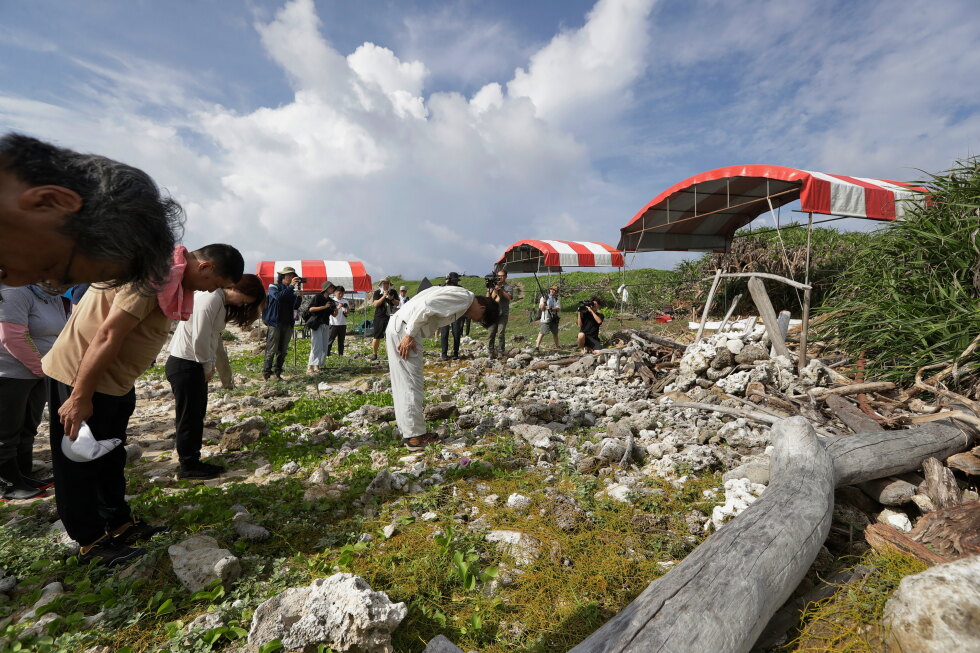
    Eighty years after the end of World War II, a new excavation effort to recover the remains of fallen Japanese soldiers kicked off on Monday in Taiwan’s southern Pingtung County, opening a new chapter in a decades-long mission to bring missing service members home to their families. Before digging began at the site in Hengchun Township, participating experts and volunteers stood in silent tribute, heads bowed, honoring the thousands of lives lost in the 1944 Bashi Channel attack.

    The excavation targets a site tied to one of the deadliest maritime tragedies of the Pacific War. In 1944, U.S. forces attacked a Japanese military convoy, sinking a transport ship and other accompanying vessels in the Bashi Channel, the body of water that separates Taiwan from the Philippines. Historical data compiled by recovery teams confirms more than 4,700 soldiers and crew members perished in the attack, with only 65 survivors. Historians and local researchers say many of the bodies washed ashore on Pingtung’s rugged coastline, where local residents reportedly gathered the remains and interred them in a rocky area near the discharge outlet of Taiwan’s Third Nuclear Power Plant. That remote site is the focus of the current week-long dig.

    The search for the missing soldiers is the product of years of collaborative work between Japanese historians, volunteers based in Taiwan, and local residents who preserved memories of the 1944 tragedy. Teams spent decades collecting oral histories, cross-referencing wartime records, and narrowing down the exact location of the unmarked mass grave to prepare for this excavation. If any human remains are recovered and successfully yield usable DNA samples, they will be repatriated to Japan during a future official mission, under existing recovery protocols.

    This dig marks the first large-scale recovery of Japanese WWII remains in Taiwan in nearly half a century, following the last excavation in 1975 that uncovered 242 sets of remains. Official Japanese government records show 41,900 Japanese service members died on Taiwan during the war; of that total, only 26,300 have been recovered to date, leaving more than 15,600 still missing. Globally, more than 1.1 million Japanese WWII soldiers who died overseas have yet to be found, out of a total of 2.4 million overseas fatalities.

    In a statement ahead of the excavation, Tatsuaki Inoue, a representative of the Japan Association for the Recovery and Repatriation of War Casualties, acknowledged the long wait for families of the missing. “We feel very sorry that we kept them waiting for such a long time,” he said. “But on the other hand, we are very happy that we came to be able to excavate in search of their remains.”

    To accelerate this ongoing national effort, the Japanese government passed a dedicated law in 2016 expanding funding for recovery work and extending official support for the mission through 2030, including scaling up access to DNA testing to identify recovered remains.

    Scholars of Japanese wartime history say the persistent push to recover missing remains reflects deep unresolved grief among bereaved families, as well as unique aspects of Japan’s WWII losses. “For bereaved families who have not received the remains of their loved ones, the lack of certainty regarding where and how their relatives met their end — and the feeling that they were unable to give them a proper sendoff — is likely one of the main reasons why the recovery of remains continues even 80 years later,” explained Akira Nishimura, a professor of religious studies at the University of Tokyo. Nishimura added that civil society groups, particularly religious organizations, have played an outsize role in driving recovery efforts and organizing memorials that bring comfort to grieving families, while preserving the memory of the war dead.

    Australian Monash University associate professor of Japanese studies Beatrice Trefalt noted that a large share of Japan’s WWII fatalities occurred at sea, leaving no trace of remains and creating persistent uncertainty for families. “Because of the enormous amount of uncertainty about who died or not, or how, the search for remains has been a constant in postwar Japanese history,” Trefalt said, adding that many families maintain the Japanese government has a core responsibility to account for conscripted service members who lost their lives in the conflict.

    Kazuko Tachi, a Japanese historian and activist who has led the efforts to recover the Bashi Channel remains, got involved in the work only after relocating to Taiwan, when local residents shared their first-hand memories of bodies washing ashore after the 1944 attack. “Those Taiwanese uncles taught me the importance of holding a memorial service for the war dead,” Tachi said. “It’s been more than 80 years since the war ended but I believe it is important to pray for the war dead, which I will keep on doing.”

    In Pingtung, the legacy of the Bashi Channel tragedy is already formally honored at two local memorial sites. Beside Chaoyin Temple, a monument dedicated to the fallen Japanese service members bears an inscription that reads: “We pray for the peace of all humanity in the world.” The temple itself honors those who died in the 1944 attack, holding a Japanese flag alongside a statue of the Buddhist Bodhisattva Ksitigarbha, a figure revered in traditions across East Asia for guiding and protecting the souls of the departed.

    Taiwan’s historical context frames this recovery effort: the island was a Japanese colony from 1895 until the end of World War II, and is currently a self-governing entity that China claims as part of its own territory.

  • Utah firefighter and four family members killed in flash flooding

    Utah firefighter and four family members killed in flash flooding

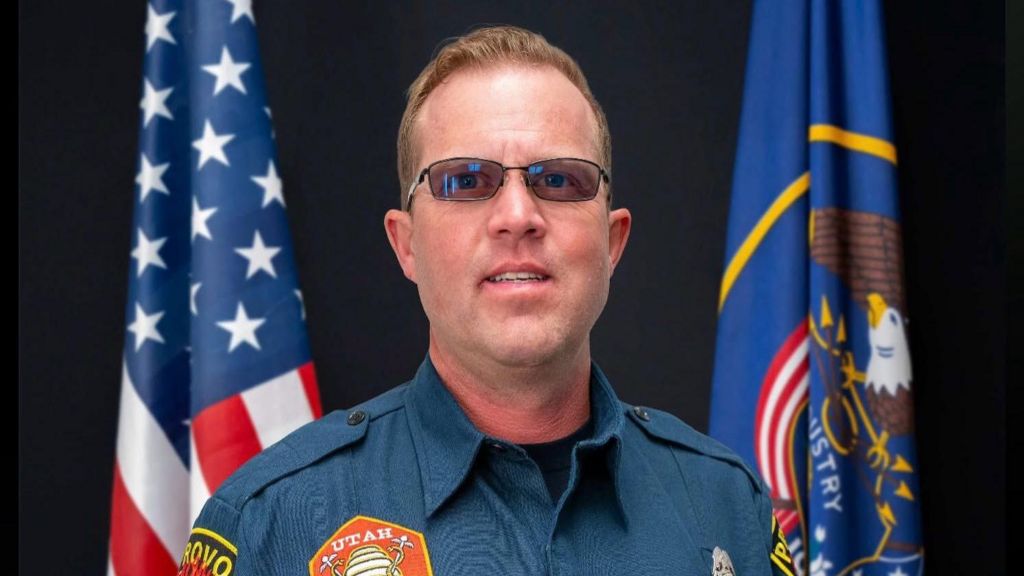
    A devastating weekend flash flood has claimed the lives of five members of a Utah family during a planned day of hiking in the state’s southern region, local law enforcement officials have confirmed. Among the deceased is Captain Spencer Long, a serving member of Provo Fire & Rescue, alongside his wife and their three young sons. The only surviving immediate family member is a daughter who chose not to participate in the outdoor excursion, leaving her as the sole survivor of the immediate household.

    In an official statement, the Wayne County Sheriff’s Office confirmed that the tragedy is linked to sudden floodwaters triggered by days of heavy regional rainfall. The agency did not release the identities of the victims publicly, leaving that confirmation to Provo Fire & Rescue, which formally announced Captain Long’s passing in a separate public message.

    “The entire Provo Fire & Rescue community is absolutely heartbroken by the death of Captain Spencer Long and his entire family,” the department shared in its statement. “Our deepest thoughts and condolences are with his surviving family member, friends, and fellow colleagues as they navigate this unimaginably difficult time.”

    Details of the victims’ full identities were further clarified through a verified GoFundMe fundraising page set up in the wake of the disaster, which confirmed the victims as Long, his wife Katrina, and their three sons: Reid, Thayne, and Gage. The fundraising page also noted that the surviving daughter “has had her life forever changed in an instant” by the sudden loss of her entire family.

    According to the Wayne County Sheriff’s Office timeline, the family arrived at a trailhead campground near the small town of Bicknell, Utah, to begin their day trip on Friday afternoon. Local emergency dispatch received the first report of a flood-related incident at the campground around 5:00 PM local time (23:00 GMT), where first responders recovered the body of a young male victim. As search and rescue teams combed the surrounding flood-prone terrain, they recovered two additional male victims later the same day. Search operations resumed at first light on Saturday to locate the two remaining missing family members, and by the end of the day, officials confirmed that the final two bodies had been recovered, bringing the total death toll to five.

  • EU hits AliExpress with a record 550 million-euro fine over unsafe and counterfeit goods

    EU hits AliExpress with a record 550 million-euro fine over unsafe and counterfeit goods

    BRUSSELS – In a landmark enforcement of the European Union’s landmark Digital Services Act (DSA), the European Commission announced Monday that it has issued a €550 million ($629 million) fine to Chinese e-commerce giant AliExpress, marking the largest penalty ever handed down for violations of the bloc’s sweeping digital regulation. The penalty comes on the heels of similar enforcement actions against other major platforms, setting a clear precedent for the EU’s aggressive crackdown on non-compliance by global online marketplaces operating in its single market.

    This latest fine follows a €200 million penalty issued to another China-based online retailer, Temu, just months prior, and a $120 million penalty imposed last year on X, the social media platform owned by Elon Musk, for failing to meet DSA obligations. For AliExpress, the penalty also arrives less than three weeks after its parent company, Chinese tech conglomerate Alibaba, agreed to pay $600 million to settle a long-running dispute with U.S. authorities over claims the firm facilitated the import and sale of illegal pharmaceuticals, controlled substances, regulated chemicals and pill-manufacturing equipment into the United States.

    European officials emphasized that the fine stems from AliExpress’s persistent failure to systematically curb the trade of dangerous and illicit goods on its platform, including counterfeit apparel, children’s toys that fail EU safety standards, toxic cosmetics, and a range of other prohibited products that put consumers at risk. Henna Virkkunen, the European Commission’s Executive Vice-President responsible for tech sovereignty, security and democracy, stated in an official release that the proliferation of these harmful goods is not an inevitable side effect of online commerce, but a direct result of AliExpress falling short of its mandatory obligations under the DSA.

    “Scale is not an excuse; risks must be identified and addressed systematically to ensure consumers can safely shop online,” Virkkunen said. “Today, we are holding AliExpress to this standard and request it to take urgent corrective action.”

    The commission’s investigation found that up until the bloc’s preliminary ruling in June 2024, AliExpress had not implemented sufficient safeguards to root out illegal and unsafe listings across its platform. While the company offered formal commitments to upgrade its compliance systems following the preliminary finding, the commission still moved forward with the full penalty to reflect the severity of the earlier non-compliance. AliExpress now faces an October 20 deadline to submit a detailed, actionable remediation plan outlining concrete steps it will take to address gaps in its systemic risk assessment and mitigation processes.

    Enshrined into EU law in 2022 and fully enforceable for major platforms since early 2024, the DSA is a landmark regulatory framework designed to protect digital users by forcing large online platforms to crack down on illegal and harmful content—ranging from dangerous counterfeit goods to incitement of violence and genocide—while upholding European citizens’ fundamental rights to privacy and free speech. The regulation requires very large online platforms, defined as those with more than 45 million monthly active users in the EU, to conduct regular mandatory risk assessments and implement targeted mitigation measures to address systemic harms tied to their services.

    In a written response emailed to the Associated Press following the announcement, AliExpress pushed back against the penalty, arguing it has made substantial proactive investments to align its operations with DSA requirements since the regulation entered into force. The company said it “has been, and continues to be, firmly committed to meeting our obligations and we have invested substantial resources in risk assessment and mitigation, product safety and consumer protection.”

    AliExpress rejected the fine as disproportionate, claiming it does not fairly reflect the compliance framework the company has already built, nor the significant upgrades it has already rolled out to strengthen safety protocols. “We are carefully reviewing the decision and considering all available options,” the company added, leaving the door open to an appeal of the penalty.

  • One Nation MP Barnaby Joyce loses his cool during fiery interview

    One Nation MP Barnaby Joyce loses his cool during fiery interview

    A routine live political interview on Australia’s public broadcaster ABC took an unexpected, chaotic turn on [recent date], when One Nation MP and former Australian deputy prime minister Barnaby Joyce’s outburst over an unruly off-camera dog ignited a heated exchange with the program’s host.

    Joyce had joined ABC’s flagship current affairs program 7.30 to defend One Nation leader Pauline Hanson against mounting criticism over her controversial choices: a recent podcast interview with far-right extremist Tommy Robinson, inflammatory remarks that revived references to the discriminatory White Australia policy, and public questions over who funded her luxury trip to a Sicilian fashion event. Host Sarah Ferguson probed Joyce on each of these contentious issues, but it was not her tough questioning that pushed the MP to lose his composure.

    Midway through a prepared response, Joyce suddenly cut himself off with a sharp, booming yell of “Sit down!” directed at something out of the camera’s frame. After a stunned pause, he quickly clarified that the command was not for Ferguson, but for his pet dog that had wandered into his interview space. “Sorry, it’s the dog,” he explained, before attempting to resume the conversation.

    Minutes later, the dog began acting up again, forcing Joyce to issue a second apology on his pet’s behalf. “I do apologise for this dog, it’s just started to bail up,” he told the studio. That is when the tension between Joyce and Ferguson boiled over. When Ferguson asked Joyce to set the dog aside and return to answering her question, Joyce snapped, warning the host against what he called rudeness. “Don’t be rude Sarah or this interview will grind to a halt,” he said.

    By the end of the awkward, tension-filled interview, Ferguson attempted to lighten the mood by referencing the chaotic interruption in her closing remarks. “We will say thank you very much for joining us Barnaby Joyce, the dog was no problem,” she said. Joyce, however, remained frustrated, retorting dryly: “It was to me.”

    The incident comes amid growing backlash against Hanson for her recent comments reviving the ideology of White Australia, a 20th-century Australian immigration policy that systematically excluded non-European migrants. Political analysts have noted that the viral dog interruption has drawn even more public attention to the controversial choices that landed Joyce in the hot seat to begin with.

  • Spain’s on-field World Cup celebrations marred by scuffles with Argentina players

    Spain’s on-field World Cup celebrations marred by scuffles with Argentina players

    EAST RUTHERFORD, N.J. – What was supposed to be a crowning celebration of Spain’s World Cup final victory over Argentina quickly devolved into ugly chaos, as a brief on-pitch clash between players erupted just moments after the final whistle blew to end the match.

    Repeated broadcast footage of the incident confirms that multiple athletes were caught up in the sudden scuffle. Among the key participants was Argentina’s starting defender Leandro Paredes, who was captured on camera appearing to shove Spain’s Eric Garcia directly in the throat area. When Spanish substitute Gavi moved in to separate the two players and defuse the tension, Paredes pushed the young midfielder hard enough to send him tumbling to the turf.

    The outburst did not last long, however. Teammates from both sides alongside Argentina’s senior head coach Lionel Scaloni sprinted across the pitch to intervene, stepping between the opposing players and working quickly to calm tempers and deescalate the confrontation before it could escalate further.

    As of Monday morning, it remains uncertain whether any of the players involved in the post-match altercation will face disciplinary action from global soccer’s governing body. FIFA has not yet issued an official statement on the incident, and did not immediately respond to requests for comment from reporters seeking clarification on potential penalties.

    Sunday’s tightly contested final required an extra 30 minutes of play for a winner to be decided, with Spain securing a 1-0 victory after Argentina was forced to play down a man for the closing stretch of regulation. Midfielder Enzo Fernandez was ejected from the match after picking up a second yellow card, leaving his team shorthanded for the final minutes and all of extra time.

    In an additional show of disappointment after the final result, the entire Argentina squad turned their backs to the trophy podium during Spain’s trophy lift, standing instead to face their own traveling fans in the stands.

  • Mamamia appoints son of founder Mia Freedman as its new CEO

    Mamamia appoints son of founder Mia Freedman as its new CEO

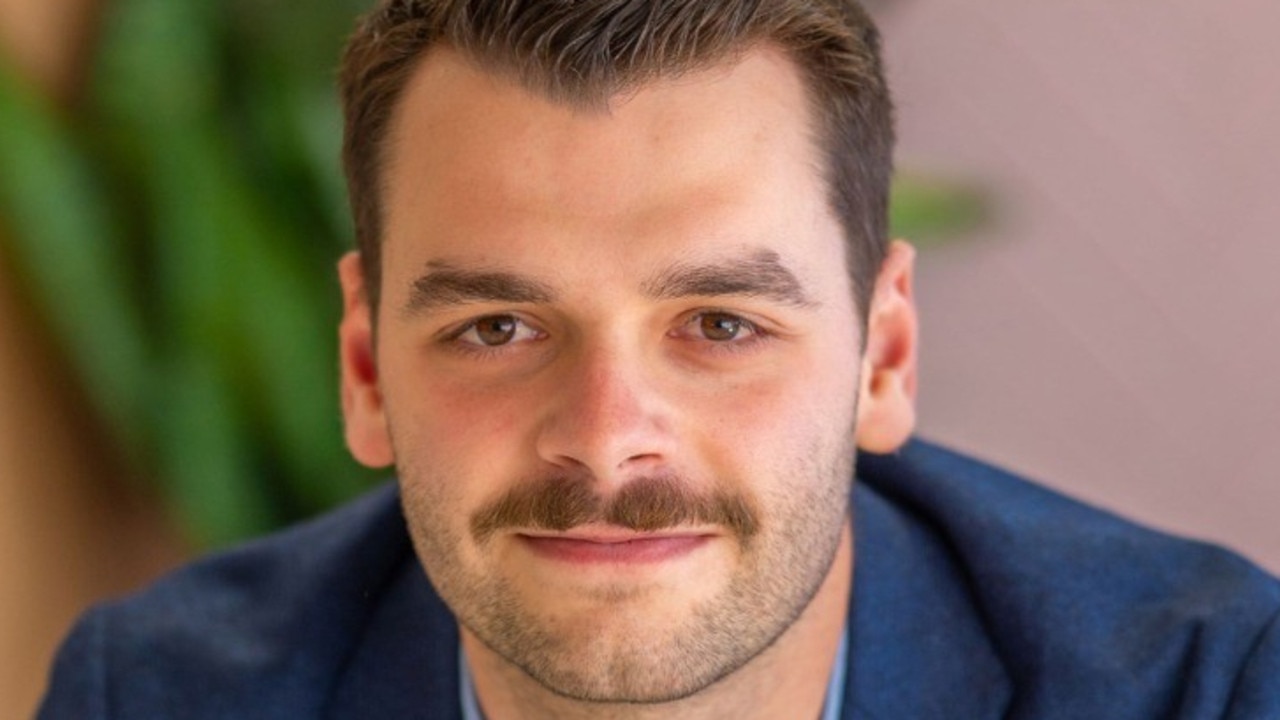
    One of Australia’s biggest independent digital media companies, Mamamia, has ushered in a new era of leadership with the appointment of 28-year-old Luca Lavigne — the son of founder Mia Freedman — as its newest chief executive officer.

    Founded by Freedman in her own living room back in 2007, Mamamia has grown from a small personal project into one of the nation’s most prominent independent media voices focused on women’s content. Lavigne’s rise to the top role is not a sudden handout: he has worked his way up through every tier of the company over the past decade, starting his tenure as an 18-year-old intern straight out of school. After cutting his teeth across multiple departments, he stepped into the chief operating officer role just two years ago, and has now been promoted to the top spot vacated by outgoing CEO Nat Harvey, who departed Mamamia to take up a new leadership position at Southern Cross Media Group.

    The announcement of Lavigne’s appointment was made public during a recent episode of the Mumbrella podcast, where the new CEO opened up about his career trajectory, his connection to the company’s founding team, and his plans for the future. In a candid conversation, Lavigne first paid warm tribute to his predecessor, praising Harvey’s unmatched ability to inspire teams across the organization.

    “CEO really stands for chief energy officer, and Nat is the best example of that,” Lavigne said. “I’ve never met anyone who can get up in front of a group of people and inspire them as Nat can, and I’m going to miss that about her hugely.”

    Ahead of inevitable public and media scrutiny over his family ties to the company’s leadership — Freedman is his mother, and his father Jason Lavigne also serves as a company director — Lavigne was open about how he first joined the company, while pushing back against assumptions that his promotion was unearned. He acknowledged that his family connection gave him the initial foot in the door a decade ago, but emphasized that Mamamia’s culture does not allow leaders to rest on their family connections.

    “Let’s be honest about how I got in the door here 10 years ago, the co-founders and I go back a long time. We’ve known each other a while, I’m not going to insult anyone’s intelligence by pretending otherwise,” he joked. “What I do know is that Mamamia is not a place that you can coast.”

    Outgoing CEO Harvey also publicly defended Lavigne’s appointment, noting that his decade of hands-on experience, relentless work ethic, and proven contributions to the business leave no question about his suitability for the role. “There will be nobody in this business, certainly over the last 12 months, that would question Luca’s work ethic or contribution or ability to do the job,” she said.

    Reflecting on his rapid career progression, Lavigne noted that taking on senior roles earlier than the industry average has become a pattern for him: after starting at 18, he is now taking on the CEO role at 28, and just recently welcomed newborn twins, bringing his total number of children to three. “I found my first grey hair the other day, which I think says a lot about where I’m at in my life,” he joked. “I’ve also just had newborn twins, I’ve got three kids at home. So it seems to be a pattern in my life that I seem to do things a little early.”

  • Trump says US strikes hit Iran in ‘honour’ of American soldiers killed

    Trump says US strikes hit Iran in ‘honour’ of American soldiers killed

    Tensions between the United States and Iran have reached a new boiling point in the Middle East, following the killing of three American service members in attacks linked to Iran-aligned groups. US President Donald Trump has framed the latest round of US airstrikes on Iranian targets as retaliation undertaken “in honour” of the fallen troops, saying the operations have inflicted heavy damage on Iranian infrastructure.

    The escalating exchange of fire entered its ninth consecutive night on Monday local time, when US Central Command (Centcom) confirmed it had launched a new wave of airstrikes across Iran, with loud explosions reported in multiple urban centers. According to US military statements, the strikes targeted Iranian military installations and communications networks, with the stated goal of further weakening Tehran’s capacity to disrupt commercial shipping in the Strait of Hormuz, one of the world’s most critical energy chokepoints.

    Iran has swiftly rejected the US offensive and launched counterattacks in response. Iranian officials announced a “surprise attack” targeting US aircraft at Aqaba airport in neighboring Jordan, while Kuwaiti armed forces confirmed they have intercepted multiple Iranian drones that entered their airspace. Iran’s semi-official Tasnim news agency reported that airstrikes hit several major cities, including Tabriz, Chabahar, Konarak, Bandar Mahshahr and Bandar Imam Khomeini.

    In a separate development that has heightened regional risk, the Islamic Revolutionary Guard Corps (IRGC) claimed two oil tankers exploded while transiting an “unsafe and hazardous southern route” through the Strait of Hormuz, bringing both vessels to a standstill. However, US Centcom has disputed the IRGC’s account of the incident, offering no further details on the explosion claims. The IRGC has issued a stark warning that the Strait of Hormuz will remain unsafe for all oil and petrochemical transit so long as US airstrikes continue, vowing additional “punitive operations” against American and allied interests.

    The current escalation grew out of three recent deadly attacks on US personnel in the region. Over the weekend, the Pentagon confirmed a third American service member was killed in an Iranian-aligned attack in northern Iraq on Saturday. That killing followed a fatal attack on a US base in Jordan on Friday that took the lives of two US soldiers: 19-year-old Private Isabella Gonzales and 25-year-old Lieutenant Tyler James Feehan. A third service member was initially reported missing after the Jordan attack, and US officials confirmed search teams have recovered “unidentified remains” during ongoing recovery operations.

    Despite the expanding military conflict, top US diplomatic officials have signaled openness to de-escalation. US Secretary of State Marco Rubio stated that the United States “always remains open to a diplomatic solution” to the ongoing crisis. Rubio also argued that the international community must collectively decide whether to allow Iran to control a critical global waterway, accusing Tehran of using energy transit through the strait as political leverage against the West.

    The current breakdown follows the collapse of a preliminary ceasefire deal reached in mid-June, which was designed to halt cross-border hostilities between the two sides. Negotiations aimed at forging a permanent peace agreement have stalled completely after President Trump announced the original ceasefire was “over” on July 8, clearing the way for the resumption of large-scale military strikes that have pushed the region to the brink of broader conflict.

  • Dozens feared dead in another Nigeria boat disaster but why do they keep happening?

    Dozens feared dead in another Nigeria boat disaster but why do they keep happening?

    For millions of rural Nigerians, winding rivers and sprawling waterways are not just geographical features—they are lifelines. With crumbling overland roads, few bridges, and remote villages tucked along riverbanks, rickety, aging wooden boats are often the only option to reach markets, attend family gatherings, or connect to the outside world. But this reliance on water transport comes at a devastating, recurring cost: a steady stream of preventable capsizings and sinkings that have left thousands dead and countless families shattered.

    Three years ago in Kwara State, Aisha Mohammed endured a loss no parent should ever face: she lost three of her daughters in a boat disaster that claimed more than 100 lives. Her grief is far from unique. Just this past Sunday, a wooden canoe carrying 40 people—most of them female farmers and laborers—capsized in Jigawa State, where search-and-rescue teams have recovered seven bodies so far and continue to hunt for survivors. The tragedy is the latest in a string of fatal incidents this year alone: last month, 12 people, including a pregnant woman and six children, died in a wreck on the Central Nigerian River Benue; earlier in 2026, 14 people returning from a wedding procession in Kebbi State lost their lives when their boat overturned. To date, more than 55 Nigerians have died in boat accidents in 2026, with dozens of bodies still missing from submerged vessels.

    For survivors of past tragedies, the pain never fades. Isiyaka Bello, a Kebbi State resident, still carries the fresh wound of losing his wife last year. She was returning from a village market when her boat sank, killing her and eight other passengers. “It seems like just yesterday. She left behind four children, and I am still struggling to adjust to raising them on my own,” Bello told reporters. “Whenever I pass by a large body of water, all I think about is her.”

    The root causes of Nigeria’s water transport crisis are well-documented, and all point to systemic failure rather than random bad luck: chronic overcrowding, structurally unsound vessels, and near-total failure to enforce even the most basic safety regulations, such as mandatory life jacket use. After every high-profile tragedy, government officials vow to crack down on unsafe practices and improve infrastructure—but years of broken promises have left waterways just as dangerous as ever.

    Mallam Sala Altine holds the traditional title of Sarkin Ruwan Shiroro, tasked with overseeing safety on Shiroro Lake in Niger State, a region that has seen some of Nigeria’s deadliest boat disasters. The Niger River, Africa’s third-longest waterway, cuts through the state that shares its name, fed by dozens of smaller tributaries that create a vast, high-risk network for passenger transport. Between 2023 and 2025, Nigeria recorded nearly 860 boating-related deaths nationwide, with Niger State accounting for a disproportionate share—one report counted 253 fatalities in the state between June 2023 and August 2025 alone.

    Altine says the core problem is simple: a crippling shortage of life-saving equipment, despite repeated government pledges to deliver supplies. “Our boats usually carry well over 100 passengers. But most of the time, we can only provide life jackets for 10 people, or even fewer, because we simply don’t have enough,” he explained. “We want to make it a rule that everyone who boards a boat must wear a life jacket. But we can’t enforce it because we don’t have any to give them.” After one 13-fatality accident, the government promised a large shipment of new life jackets, Altine recalled, but only a tiny number ever arrived. “It breaks my heart to see passengers boarding boats without any protection,” he said.

    Local safety advocates frame the recurring deaths as entirely preventable. “These are not acts of fate. They are the predictable consequences of systemic negligence,” one local observer noted.

    But government officials push back on that narrative, arguing that cultural resistance to safety measures also plays a role. Ibrahim Husseini, director of information at Niger State’s National Emergency Management Agency, says the government regularly distributes life jackets, but many lifelong riverine residents refuse to wear them, saying they do not need the equipment or find it uncomfortable. “We have people who are born and raised in riverine communities who take it for granted that this is the life they are used to,” Husseini told the BBC. “Sometimes it is difficult to force them to wear life jackets.”

    This dynamic disproportionately puts women at risk: while many men in riverine communities learn to swim from childhood, far fewer women have the same training, making them far more likely to die if a boat capsizes. Yet women are also the group most likely to rely on water transport to travel to markets and attend large family events like weddings.

    After a particularly deadly 2025 disaster in Niger State that killed 32 passengers, the National Inland Waterways Authority (Niwa) reaffirmed a national mandate requiring all passengers to wear life jackets, and banned commercial boats from picking up passengers outside of officially registered, approved docking areas. But these rules are not new—they were first written into Nigeria’s 2023 Water Transport Code—and they are almost never enforced across most of the country.

    Timothy Iwuagwu, president of the Institute of Safety Professionals of Nigeria, says weak enforcement is the core of the crisis. “Any regulation is as good as its implementation,” Iwuagwu explained. Beyond missing life jackets, he pointed to a widespread lack of formal training and licensing for boat operators: most local vessel pilots have no formal education in reading water conditions, from tides and currents to hidden hazards, and operate without official approval. Overcrowding is also rampant, he added, with no clear markings of maximum passenger capacity on most vessels. Even when life jackets are available, Iwuagwu noted, they are often low-quality, and passengers rarely receive instruction on how to wear them correctly.

    Last year, the federal government announced a plan to phase out traditional wooden boats, which are often decades old, structurally unsound, and never receive major repairs. Iwuagwu supports the long-term goal of replacing wooden vessels but says immediate action to enforce existing safety rules is far more urgent. He also called for safety professionals to be directly involved in designing and rolling out water safety policy, a step the government has not yet taken.

    One proposed intervention—stationing water marshals at terminals to stop overloading and enforce safety rules—has had little impact to date, because there are not enough marshals to cover the thousands of informal docking points across the country. A further hidden hazard clogs many Nigerian waterways: thousands of sunken tree stumps left behind by decades of unregulated logging. At low tide, the stumps are visible, but when water levels rise, they disappear beneath the surface, where they can slice through boat hulls and cause vessels to capsize. Husseini blames poor dredging and maintenance for the problem, noting that removing submerged tree debris falls under Niwa’s jurisdiction, not state governments, and the national authority has failed to address it.

    Federal officials acknowledge the scope of the crisis. “The time has come for a decisive break from outdated practices,” Nigeria’s Minister of Marine and Blue Economy Adegboyega Oyetola said late last year, after a nine-fatality accident on Sokoto State’s Jaranja River. “Wooden boats have served their time, but they cannot be the future of water transport in Nigeria. The tragic mishaps we continue to witness are a direct consequence of the continued reliance on unsafe vessels.” Oyetola said the ministry has distributed thousands of life jackets to riverine states and mandated their use, but added that “life jackets alone cannot guarantee safety without safe boats.” He has called on state governments to encourage operators to switch to stronger, more durable fiber and aluminum vessels, which are far safer than traditional wooden craft.

    There is already proof that systematic reform can drastically reduce fatalities. In Lagos, Nigeria’s largest coastal city, where one-third of the metropolitan area is covered by water and water transport is a critical alternative to crippling road congestion, aggressive safety reforms have cut deaths dramatically. Between 2018 and 2023, Lagos recorded 92 boating-related deaths. But after the state government implemented four key reforms—replacing old wooden boats with standardized new vessels, distributing free life jackets, dredging clogged water channels, stationing trained water guards at every jetty, and requiring all operators to complete formal training and licensing—fatalities plummeted: only one person died in a boating accident in 2024, six died in 2025, and there have been no fatal accidents so far in 2026.

    “Even when there is an accident or mechanical fault, the water guard quickly informs the control room and a rescue boat is deployed in record time,” said Abdulbaq Balogun, managing director of Lagos Ferry Services. Public awareness campaigns have also shifted cultural attitudes: today, many Lagos passengers now ask for life jackets before boarding, a practice that is almost unheard of in other parts of the country.

    While the Lagos model proves reform works, scaling it across Nigeria’s vast network of rural waterways will take significant time, political will, and funding. For those who have already survived tragedy, the decades of inaction are a devastating disappointment. Aminu Bagwai, a popular Nigerian singer, survived an 18-year-old boating disaster in Kano State that killed 36 people, including a bride traveling to her wedding. None of the passengers on the boat wore life jackets. Bagwai wrote a hit Hausa-language song, *Ruwan Bagwai (Bagwai’s Water)*, about the tragedy that made him a household name across northern Nigeria. But 18 years later, he says nothing has changed. “I still think about it every day, and it is sad I still see boat accidents happen leading to loss of lives,” he said. “My prayer at the time was that ours would be the last one.”

  • Starmer ‘proud’ of achievements as Andy Burnham set to become new UK PM

    Starmer ‘proud’ of achievements as Andy Burnham set to become new UK PM

    London — A historic transition of power unfolded in the United Kingdom on Monday, as Andy Burnham accepted King Charles III’s invitation to form a new government, stepping into 10 Downing Street just moments after outgoing Prime Minister Keir Starmer formally tendered his resignation to the monarch. The handover caps a turbulent period for the ruling Labour Party, and leaves Britain’s new leader facing a daunting stack of urgent challenges that have already brought down two previous premierships in less than a decade.

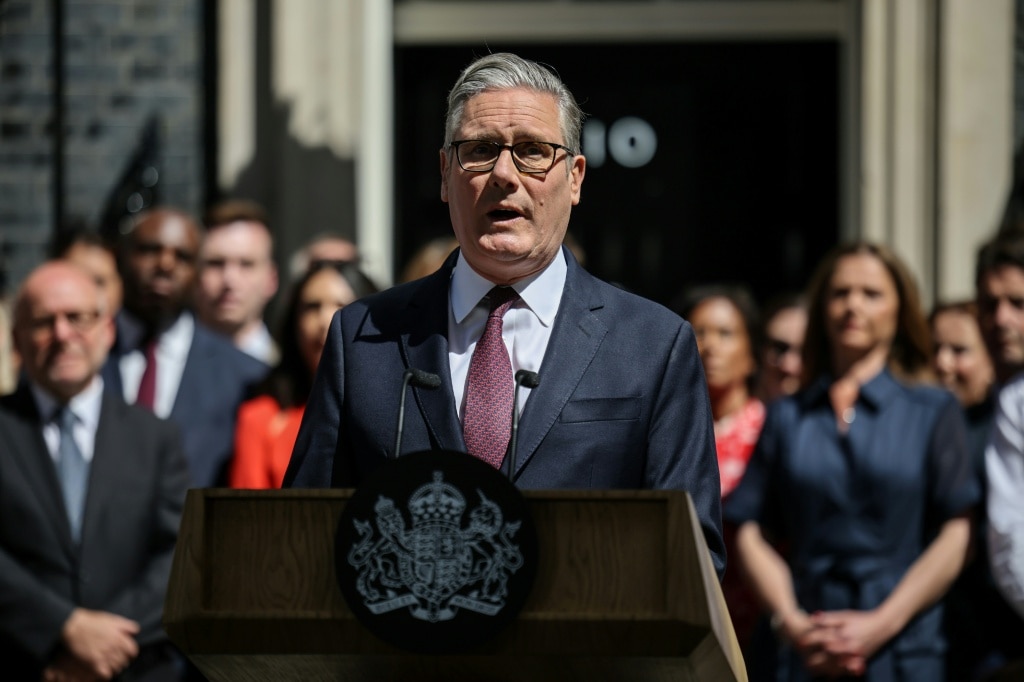
    In his final remarks outside his Downing Street residence before departing for Buckingham Palace, Starmer struck a defiant, positive tone about his two years in office. Elected in a 2024 landslide that ended 14 consecutive years of Conservative Party rule, Starmer said he left office confident that the country had improved under his leadership. “I am confident that Britain is now stronger and fairer than it was two years ago,” Starmer told assembled reporters. “I go with good grace, I go with a smile, and I go proud of everything that we have achieved.”

    Starmer’s resignation came last month, brought on by a cascade of internal scandals, policy missteps and repeated last-minute policy reversals that eroded public and parliamentary confidence in his leadership. At 56, Burnham, the former popular mayor of Greater Manchester who only regained a seat in Parliament four weeks ago, becomes the sixth UK prime minister to enter Downing Street over the past 10 years.

    Labour Party lawmakers tapped Burnham as the party’s new leader and prime minister in large part to counter the rising electoral threat of Nigel Farage’s right-wing, anti-immigration Reform UK party, which has climbed steadily in national polls ahead of the next general election scheduled for 2029. With Reform already leading voting intention surveys, Burnham told supporters ahead of his swearing-in that his leadership represents the “last chance” for Labour to course-correct and retain power.

    From his first day in office, Burnham faces an overflowing in-tray with no time to settle into the role. His most pressing challenges include persistently sluggish economic growth, soaring government borrowing costs, a rapidly expanding public welfare bill, and the ongoing small-boat irregular migration crisis that has fueled much of Reform UK’s electoral gains. Global headwinds add additional instability: unpredictable energy prices driven by ongoing tensions between the United States and Iran, and the volatile policy agenda of U.S. President Donald Trump threaten to upend domestic policy plans from the start.

    In an interview with *The Times* published Sunday, Burnham framed his premiership as a clear break from a decade of political dysfunction that has failed to deliver for British voters. “What we’ve been doing hasn’t been working. That’s the way I see it,” he said. “I am going to try and do things in a different way.”

    That different approach extends to economic policy, where Burnham said he will shift public spending toward long-term early investment and intervention, rather than the reactive spending on failed outcomes that defined previous governments. “We will be much more focused on setting people up for success, and much less paying for failure,” he explained.

    In one of his first policy moves after taking the leadership, Burnham already scrapped Starmer’s signature £1.8 billion national digital ID scheme, a policy that faced widespread criticism over cost and civil liberty concerns. A spokesperson for the new prime minister said the resources earmarked for the three-year project would be redirected to address immediate public needs, primarily easing the financial strain of the ongoing cost-of-living crisis.

    Burnham’s first public address outside 10 Downing Street on Monday is expected to lay out his core policy priorities: restoring public trust in national politics, delivering immediate relief for households struggling with the cost of living, boosting long-term economic growth, and devolving more governing power to regional communities across the UK. Later in the day, he is set to announce his senior cabinet appointments, with widespread political attention focused on who will replace outgoing Chancellor of the Exchequer Rachel Reeves at the head of the finance portfolio.

    Nicknamed the “King of the North” for his popular tenure leading Greater Manchester, Burnham has rebranded himself as a man-of-the-people politician, combining an approachable, folksy public image with a polished modern social media strategy. The former Labour minister served in the Cabinets of Tony Blair and Gordon Brown between 2001 and 2017, giving him decades of Westminster experience ahead of taking the top job. Still, critics have raised questions about the speed of his rise to the premiership — and whether his stated plan to fix Britain’s challenges will hold up amid severe fiscal constraints. Burnham inherits a framework of strict financial rules requiring balanced government spending and limited tax increases, paired with near-stagnant growth and high public debt that leaves him little room for policy maneuvering, with just three years to deliver results before the next general election.

  • Man charged over incident where car rams into crowd

    Man charged over incident where car rams into crowd

    A violent incident that left three teenagers injured and sparked widespread social media circulation of footage has led to a dangerous driving charge against a 29-year-old man in coastal County Dublin, Republic of Ireland. The event unfolded on Saturday afternoon along Harbour Road in the seaside town of Skerries, according to official court proceedings and Irish law enforcement details.

    Video recordings of the incident, which quickly spread across major social media platforms after being uploaded by witnesses, capture chaotic scenes of public fighting in the area before a car is seen accelerating directly toward a gathered group of people. Within hours of the incident being reported, Irish national broadcaster RTÉ confirmed that three local teenagers — two girls and one boy — had been transported to nearby Dublin hospitals for treatment. All three were described as having non-life threatening injuries, a detail that has eased community concerns over fatalities.

    Following a day-long investigation by Garda, the Republic of Ireland’s national police service, suspect Sean McGlone, a resident of Beechwood Drive in Drogheda, was taken into custody at his private residence at approximately 18:00 local time on Sunday. Law enforcement officials initially detained him on suspicion of dangerous driving causing endangerment, before formal charges were filed during processing at a local Garda station.

    McGlone made his first court appearance on Monday at Balbriggan District Court, where his defense team submitted an application for pretrial bail. Representing the Garda, the investigating officer did not oppose the bail request, provided a series of strict restrictive conditions were enforced by the court.

    Presiding Judge Stephanie Coggons approved the bail application, granting McGlone release on his own personal bond of €5,000, with a required cash lodgement of €1,000 ahead of his release. The 29-year-old, who works as a van driver professionally, is required to comply with multiple ongoing conditions for the duration of his pretrial release: he must check in with local law enforcement three times each week, he is strictly barred from entering the Balbriggan and Skerries areas entirely, he is prohibited from making any contact with witnesses connected to the case, he is forbidden from consuming alcohol, and he must maintain good behavior throughout the legal process.

    Local residents have reported heightened tension in Skerries in the days since the incident, particularly as footage of the event circulated widely among local social media groups, though no additional unrest has been reported as of Monday’s court proceedings.