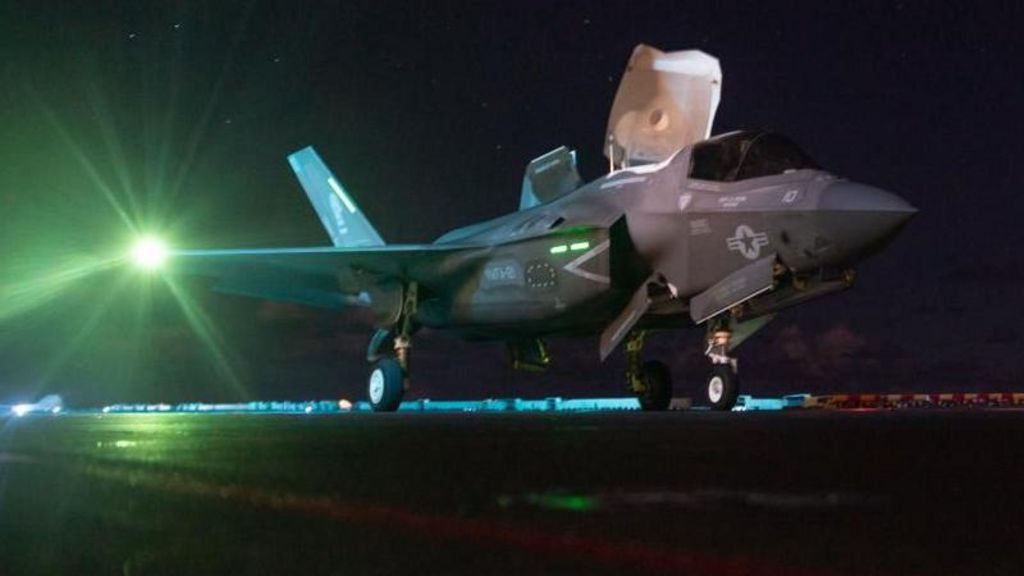
Tensions between the United States and Iran have reached a new boiling point in the Middle East, following the killing of three American service members in attacks linked to Iran-aligned groups. US President Donald Trump has framed the latest round of US airstrikes on Iranian targets as retaliation undertaken “in honour” of the fallen troops, saying the operations have inflicted heavy damage on Iranian infrastructure.
The escalating exchange of fire entered its ninth consecutive night on Monday local time, when US Central Command (Centcom) confirmed it had launched a new wave of airstrikes across Iran, with loud explosions reported in multiple urban centers. According to US military statements, the strikes targeted Iranian military installations and communications networks, with the stated goal of further weakening Tehran’s capacity to disrupt commercial shipping in the Strait of Hormuz, one of the world’s most critical energy chokepoints.
Iran has swiftly rejected the US offensive and launched counterattacks in response. Iranian officials announced a “surprise attack” targeting US aircraft at Aqaba airport in neighboring Jordan, while Kuwaiti armed forces confirmed they have intercepted multiple Iranian drones that entered their airspace. Iran’s semi-official Tasnim news agency reported that airstrikes hit several major cities, including Tabriz, Chabahar, Konarak, Bandar Mahshahr and Bandar Imam Khomeini.
In a separate development that has heightened regional risk, the Islamic Revolutionary Guard Corps (IRGC) claimed two oil tankers exploded while transiting an “unsafe and hazardous southern route” through the Strait of Hormuz, bringing both vessels to a standstill. However, US Centcom has disputed the IRGC’s account of the incident, offering no further details on the explosion claims. The IRGC has issued a stark warning that the Strait of Hormuz will remain unsafe for all oil and petrochemical transit so long as US airstrikes continue, vowing additional “punitive operations” against American and allied interests.
The current escalation grew out of three recent deadly attacks on US personnel in the region. Over the weekend, the Pentagon confirmed a third American service member was killed in an Iranian-aligned attack in northern Iraq on Saturday. That killing followed a fatal attack on a US base in Jordan on Friday that took the lives of two US soldiers: 19-year-old Private Isabella Gonzales and 25-year-old Lieutenant Tyler James Feehan. A third service member was initially reported missing after the Jordan attack, and US officials confirmed search teams have recovered “unidentified remains” during ongoing recovery operations.
Despite the expanding military conflict, top US diplomatic officials have signaled openness to de-escalation. US Secretary of State Marco Rubio stated that the United States “always remains open to a diplomatic solution” to the ongoing crisis. Rubio also argued that the international community must collectively decide whether to allow Iran to control a critical global waterway, accusing Tehran of using energy transit through the strait as political leverage against the West.
The current breakdown follows the collapse of a preliminary ceasefire deal reached in mid-June, which was designed to halt cross-border hostilities between the two sides. Negotiations aimed at forging a permanent peace agreement have stalled completely after President Trump announced the original ceasefire was “over” on July 8, clearing the way for the resumption of large-scale military strikes that have pushed the region to the brink of broader conflict.