For millions of rural Nigerians, winding rivers and sprawling waterways are not just geographical features—they are lifelines. With crumbling overland roads, few bridges, and remote villages tucked along riverbanks, rickety, aging wooden boats are often the only option to reach markets, attend family gatherings, or connect to the outside world. But this reliance on water transport comes at a devastating, recurring cost: a steady stream of preventable capsizings and sinkings that have left thousands dead and countless families shattered.
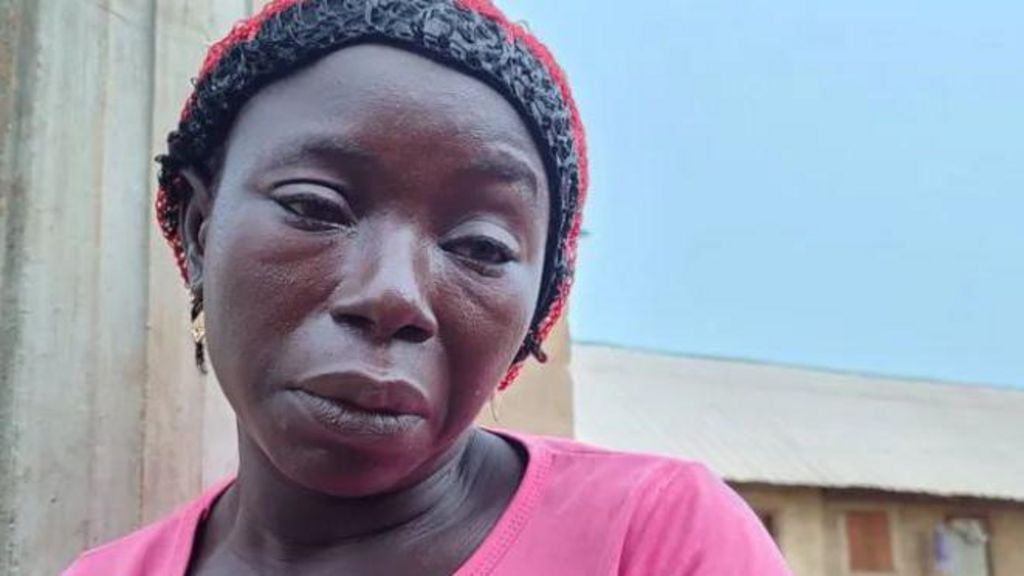
Three years ago in Kwara State, Aisha Mohammed endured a loss no parent should ever face: she lost three of her daughters in a boat disaster that claimed more than 100 lives. Her grief is far from unique. Just this past Sunday, a wooden canoe carrying 40 people—most of them female farmers and laborers—capsized in Jigawa State, where search-and-rescue teams have recovered seven bodies so far and continue to hunt for survivors. The tragedy is the latest in a string of fatal incidents this year alone: last month, 12 people, including a pregnant woman and six children, died in a wreck on the Central Nigerian River Benue; earlier in 2026, 14 people returning from a wedding procession in Kebbi State lost their lives when their boat overturned. To date, more than 55 Nigerians have died in boat accidents in 2026, with dozens of bodies still missing from submerged vessels.
For survivors of past tragedies, the pain never fades. Isiyaka Bello, a Kebbi State resident, still carries the fresh wound of losing his wife last year. She was returning from a village market when her boat sank, killing her and eight other passengers. “It seems like just yesterday. She left behind four children, and I am still struggling to adjust to raising them on my own,” Bello told reporters. “Whenever I pass by a large body of water, all I think about is her.”
The root causes of Nigeria’s water transport crisis are well-documented, and all point to systemic failure rather than random bad luck: chronic overcrowding, structurally unsound vessels, and near-total failure to enforce even the most basic safety regulations, such as mandatory life jacket use. After every high-profile tragedy, government officials vow to crack down on unsafe practices and improve infrastructure—but years of broken promises have left waterways just as dangerous as ever.
Mallam Sala Altine holds the traditional title of Sarkin Ruwan Shiroro, tasked with overseeing safety on Shiroro Lake in Niger State, a region that has seen some of Nigeria’s deadliest boat disasters. The Niger River, Africa’s third-longest waterway, cuts through the state that shares its name, fed by dozens of smaller tributaries that create a vast, high-risk network for passenger transport. Between 2023 and 2025, Nigeria recorded nearly 860 boating-related deaths nationwide, with Niger State accounting for a disproportionate share—one report counted 253 fatalities in the state between June 2023 and August 2025 alone.
Altine says the core problem is simple: a crippling shortage of life-saving equipment, despite repeated government pledges to deliver supplies. “Our boats usually carry well over 100 passengers. But most of the time, we can only provide life jackets for 10 people, or even fewer, because we simply don’t have enough,” he explained. “We want to make it a rule that everyone who boards a boat must wear a life jacket. But we can’t enforce it because we don’t have any to give them.” After one 13-fatality accident, the government promised a large shipment of new life jackets, Altine recalled, but only a tiny number ever arrived. “It breaks my heart to see passengers boarding boats without any protection,” he said.
Local safety advocates frame the recurring deaths as entirely preventable. “These are not acts of fate. They are the predictable consequences of systemic negligence,” one local observer noted.
But government officials push back on that narrative, arguing that cultural resistance to safety measures also plays a role. Ibrahim Husseini, director of information at Niger State’s National Emergency Management Agency, says the government regularly distributes life jackets, but many lifelong riverine residents refuse to wear them, saying they do not need the equipment or find it uncomfortable. “We have people who are born and raised in riverine communities who take it for granted that this is the life they are used to,” Husseini told the BBC. “Sometimes it is difficult to force them to wear life jackets.”
This dynamic disproportionately puts women at risk: while many men in riverine communities learn to swim from childhood, far fewer women have the same training, making them far more likely to die if a boat capsizes. Yet women are also the group most likely to rely on water transport to travel to markets and attend large family events like weddings.
After a particularly deadly 2025 disaster in Niger State that killed 32 passengers, the National Inland Waterways Authority (Niwa) reaffirmed a national mandate requiring all passengers to wear life jackets, and banned commercial boats from picking up passengers outside of officially registered, approved docking areas. But these rules are not new—they were first written into Nigeria’s 2023 Water Transport Code—and they are almost never enforced across most of the country.
Timothy Iwuagwu, president of the Institute of Safety Professionals of Nigeria, says weak enforcement is the core of the crisis. “Any regulation is as good as its implementation,” Iwuagwu explained. Beyond missing life jackets, he pointed to a widespread lack of formal training and licensing for boat operators: most local vessel pilots have no formal education in reading water conditions, from tides and currents to hidden hazards, and operate without official approval. Overcrowding is also rampant, he added, with no clear markings of maximum passenger capacity on most vessels. Even when life jackets are available, Iwuagwu noted, they are often low-quality, and passengers rarely receive instruction on how to wear them correctly.
Last year, the federal government announced a plan to phase out traditional wooden boats, which are often decades old, structurally unsound, and never receive major repairs. Iwuagwu supports the long-term goal of replacing wooden vessels but says immediate action to enforce existing safety rules is far more urgent. He also called for safety professionals to be directly involved in designing and rolling out water safety policy, a step the government has not yet taken.
One proposed intervention—stationing water marshals at terminals to stop overloading and enforce safety rules—has had little impact to date, because there are not enough marshals to cover the thousands of informal docking points across the country. A further hidden hazard clogs many Nigerian waterways: thousands of sunken tree stumps left behind by decades of unregulated logging. At low tide, the stumps are visible, but when water levels rise, they disappear beneath the surface, where they can slice through boat hulls and cause vessels to capsize. Husseini blames poor dredging and maintenance for the problem, noting that removing submerged tree debris falls under Niwa’s jurisdiction, not state governments, and the national authority has failed to address it.
Federal officials acknowledge the scope of the crisis. “The time has come for a decisive break from outdated practices,” Nigeria’s Minister of Marine and Blue Economy Adegboyega Oyetola said late last year, after a nine-fatality accident on Sokoto State’s Jaranja River. “Wooden boats have served their time, but they cannot be the future of water transport in Nigeria. The tragic mishaps we continue to witness are a direct consequence of the continued reliance on unsafe vessels.” Oyetola said the ministry has distributed thousands of life jackets to riverine states and mandated their use, but added that “life jackets alone cannot guarantee safety without safe boats.” He has called on state governments to encourage operators to switch to stronger, more durable fiber and aluminum vessels, which are far safer than traditional wooden craft.
There is already proof that systematic reform can drastically reduce fatalities. In Lagos, Nigeria’s largest coastal city, where one-third of the metropolitan area is covered by water and water transport is a critical alternative to crippling road congestion, aggressive safety reforms have cut deaths dramatically. Between 2018 and 2023, Lagos recorded 92 boating-related deaths. But after the state government implemented four key reforms—replacing old wooden boats with standardized new vessels, distributing free life jackets, dredging clogged water channels, stationing trained water guards at every jetty, and requiring all operators to complete formal training and licensing—fatalities plummeted: only one person died in a boating accident in 2024, six died in 2025, and there have been no fatal accidents so far in 2026.
“Even when there is an accident or mechanical fault, the water guard quickly informs the control room and a rescue boat is deployed in record time,” said Abdulbaq Balogun, managing director of Lagos Ferry Services. Public awareness campaigns have also shifted cultural attitudes: today, many Lagos passengers now ask for life jackets before boarding, a practice that is almost unheard of in other parts of the country.
While the Lagos model proves reform works, scaling it across Nigeria’s vast network of rural waterways will take significant time, political will, and funding. For those who have already survived tragedy, the decades of inaction are a devastating disappointment. Aminu Bagwai, a popular Nigerian singer, survived an 18-year-old boating disaster in Kano State that killed 36 people, including a bride traveling to her wedding. None of the passengers on the boat wore life jackets. Bagwai wrote a hit Hausa-language song, *Ruwan Bagwai (Bagwai’s Water)*, about the tragedy that made him a household name across northern Nigeria. But 18 years later, he says nothing has changed. “I still think about it every day, and it is sad I still see boat accidents happen leading to loss of lives,” he said. “My prayer at the time was that ours would be the last one.”