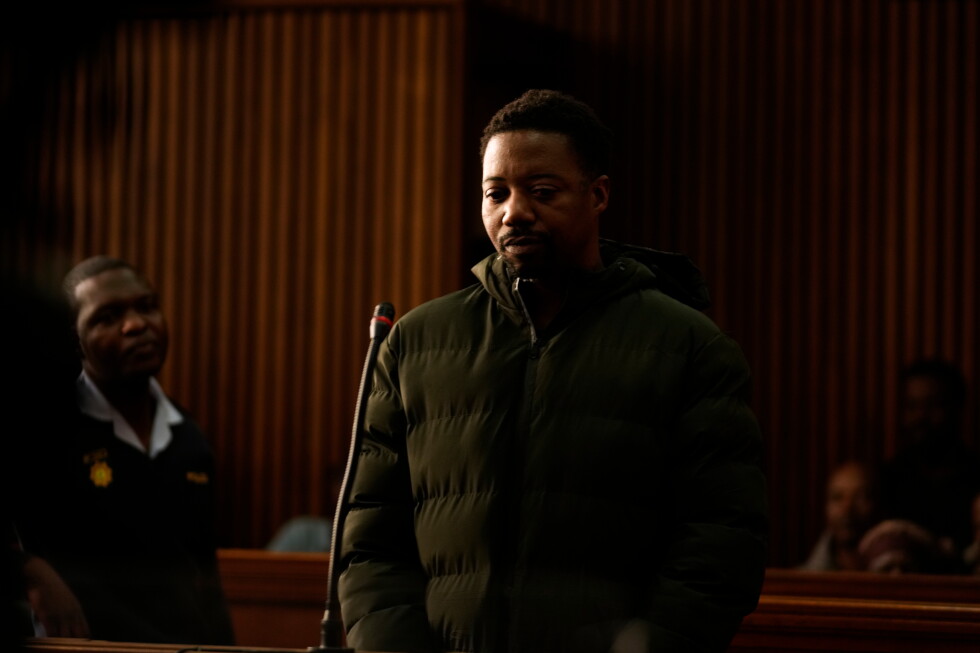
On the opening day of Friday’s sitting of Australia’s Royal Commission into Anti-Semitism and Social Cohesion, the first witness to take the stand, a librarian identified only as Benjamin F, delivered a harrowing emotional testimony that laid bare the rising toxicity of anti-Jewish prejudice in the country. Raised in a Christian household, Benjamin shared that he faced surprisingly little hostility when he came out as gay to his loved ones, receiving widespread acceptance and support from friends and family that allowed him to live openly without persistent prejudice. That warm reception stood in stark contrast to the bigotry he encountered after he formally completed his conversion to Judaism in 2022, an experience he described as “horrific” as he choked back tears throughout his address. Benjamin told the commission that converting to his new faith has cost him decades-long close friendships, with many lifelong companions abandoning him entirely after learning of his religious choice. The isolation has left him feeling deeply lonely and adrift, he said, adding that the level of hatred directed at him since his conversion has been far more severe than any bias he faced after coming out. “I feel alone. There’s been times you’ve had life-long friendships that have disintegrated. It’s lonely,” he told the commission through sobs. He also explained that any mention of his Jewish identity or topics related to Judaism inevitably gets tied back to the Israeli-Palestinian conflict by others, regardless of context. Beyond broken social bonds, Benjamin has faced direct verbal slurs and has even had the validity of his religious conversion repeatedly questioned by critics. The most striking moment of his testimony came when he described his experience attending a recent Sydney Mardi Gras parade, where he required police escort for his safety. He told the commission that he felt a genuine, unprecedented fear for his life during the event — a terror he never experienced even as a young gay man coming out in a less accepting era. Benjamin’s testimony marks one of the first firsthand accounts of rising anti-Semitism shared at the royal commission, which was convened to examine the state of religious prejudice and social cohesion across Australia. More witness statements and findings are expected to be released as the commission’s proceedings continue.
博客
-

New York governor orders US immigration agents to unmask
A high-stakes conflict over US immigration enforcement erupted this week after New York Governor Kathy Hochul announced sweeping new restrictions on Immigration and Customs Enforcement (ICE) operations across the state, including an unprecedented order requiring federal agents to stop concealing their identities during raids.
-

AI actors not eligible for Golden Globes, say organizers
Hollywood’s awards season rulebook just got a clear new update on artificial intelligence, with Golden Globe organizers announcing Thursday that performances created entirely or substantially by AI will not be considered for the prestigious annual honors. The policy shift comes just days after the Academy of Motion Picture Arts and Sciences, the governing body behind the Oscars, laid out its own restrictive AI rules for the film industry’s top awards, marking a unified industry stance on the hotly contested technology.
The new Golden Globe guidelines do not implement a blanket ban on all AI use in performances, however. Rulemakers have carved out exceptions for technical and cosmetic AI applications that enhance rather than replace human work. Uses such as AI-powered de-aging, aging effects, or minor visual adjustments to a performer’s on-screen appearance are allowed, as long as the core, underlying performance is delivered by the credited human actor, and AI does not fundamentally replace or alter the human’s creative work. Only submissions where the performance itself is primarily generated or created by artificial intelligence are marked ineligible.
This coordinated move by two of Hollywood’s most prominent awards organizations comes amid years of growing tension around AI in the entertainment sector. The issue was a core bargaining demand during the 2023 Hollywood labor strikes, which shut down most film and television production for months. Both acting and writing guilds argued that unregulated use of AI could displace human workers, erase creative credits, and threaten the long-term livelihoods of industry professionals.
The latest policy changes also follow a high-profile demonstration of AI-generated acting that sparked widespread industry debate. Last year, an AI-recreated version of late Hollywood star Val Kilmer was unveiled at a gathering of cinema chain owners, one year after Kilmer’s death. The digitally de-aged Kilmer appeared in a trailer for the upcoming archaeological action film *As Deep as the Grave*, delivering a full line of dialogue to another character. The project was developed with the full support of Kilmer’s family, who granted creators access to the actor’s extensive personal video archives to recreate his likeness and performance at multiple stages of his life. Even with family approval, the project renewed urgent conversations about how AI should be regulated in professional entertainment and awards recognition.
-

IS-linked Australian women charged with keeping slave in Syria
In a landmark counter-terrorism operation following the long-awaited repatriation of Australian citizens stranded in Syria, three women linked to the Islamic State (IS) terror group have been slapped with severe criminal charges, including allegations of crimes against humanity related to slavery.
Australian Federal Police (AFP) confirmed Friday that two of the women — a 53-year-old mother and her 31-year-old daughter — were taken into custody immediately after their Qatar Airways flight touched down at Melbourne International Airport Thursday evening. This marked the pair’s first return to Australian soil in almost a decade, after they were captured and detained by Kurdish forces in 2019 when IS’s self-declared caliphate collapsed across northern Syria. Before their repatriation, the two were held at the overcrowded, notoriously harsh Roj detention camp, where thousands of people with suspected IS ties are still held.
According to official police statements, the pair traveled to Syria in 2014 specifically to join and support the IS terror organization. The 53-year-old is accused of acting as an accomplice in the purchase of a female enslaved person for $10,000 USD, while her daughter is charged with knowingly holding that same woman as a slave in the IS-controlled household they shared. AFP counter-terrorism chief Stephen Nutt emphasized that the investigation into these grave allegations remains active and ongoing.
A third woman, 32-year-old Janai Safar, was arrested separately after her arrival in Sydney. Safar, who traveled to Syria in 2015 to join her IS fighter husband, faces charges of entering a declared restricted area and becoming a member of a listed terrorist organization. A fourth woman who traveled back with the group was not taken into custody upon arrival. In total, four women and nine accompanying children were on Thursday’s repatriation flight from the Middle East, which transited through Doha before reaching Australia.
The case has reignited long-running national debate over how Australia should handle citizens who left to join IS more than a decade ago. When IS seized large swathes of Syria and Iraq in the early 2010s, Australia criminalized travel to IS strongholds including Syria’s Raqqa province. Hundreds of Western women, many of whom followed partners who joined as jihadist fighters, migrated to the region during IS’s rise, and after the group’s territorial collapse, thousands of these citizens were left stranded in Syrian detention camps.
Countries including Australia, Canada, and the United Kingdom have struggled for years to reach a consensus on how to manage these remaining citizens. In Australia, human rights groups including the Australian Human Rights Commission have repeatedly urged the government to repatriate the roughly 34 women and children still stuck in Roj camp, arguing that stranded civilians, especially children, deserve the right to return home and face due process under Australian law. But critics argue that the women made a deliberate choice to abandon Australia and align with a terrorist organization, and should not be allowed to return, instead being forced to face the consequences of their decisions in the region.
Australian Home Affairs Minister Tony Burke echoed this critical stance following the arrests, saying all four returning women had made “a horrific choice to join a dangerous terrorist organisation”. Thursday’s repatriation is not the first time Australian citizens have returned from Syrian camps: small groups of women and children were repatriated in 2019, 2022, and earlier this year, with many of those returnees facing criminal prosecution upon arrival.
-

Arsenal sense Premier League glory as Spurs eye safety
With just four matches remaining in the 202X-2X English Premier League season, the final round of fixtures before the campaign’s climax brings high-stakes action across the table, from a historic title chase to a tense relegation battle and a fight for European qualification. This weekend’s slate of games will likely shape the final outcome of multiple key narratives that have defined the season’s closing stretch.
Arsenal’s Push For Historic Title Glory
Arsenal, the north London giants, have reclaimed full control of the Premier League title race, just four matches away from ending a 22-year wait for a top-flight crown and completing a historic domestic and European double. A win this Sunday against relegation-battling West Ham United at the London Stadium would put Mikel Arteta’s side on the cusp of a long-awaited trophy, a milestone the club has not reached since their iconic Invincibles campaign in 2004.Just one month ago, defending champions Manchester City fought their way back into title contention after a major mid-season slump from Arsenal. However, a costly 3-3 draw against Everton earlier this week has thrown City’s chances of retaining the crown into serious doubt. The Gunners have bounced back from their earlier wobble with consecutive league wins, and a recent 1-0 semi-final victory over Atletico Madrid at a raucous Emirates Stadium secured their place in the Champions League final against Paris Saint-Germain, lifting the entire squad’s confidence heading into the final league fixtures.
Currently, Arsenal hold a five-point lead over City, who still have one game in hand, with remaining matches against West Ham, Burnley and Crystal Palace. While West Ham are fighting for their Premier League lives and have not beaten Arsenal at home in league play since 2019, Arsenal legend Thierry Henry — a core member of the 2004 title-winning side — has warned that Sunday’s fixture is a potential banana skin for the league leaders.
“I always thought that City might drop points against Everton and my worry was West Ham away,” Henry told Sky Sports. “So I’m going to stay in my lane and not celebrate too early because nothing is done, but I could see that happening.”
Tottenham’s Fight For Relegation Survival
On Monday night, Tottenham Hotspur will host Leeds United knowing that a win, combined with dropped points for West Ham, would pull them to the brink of Premier League safety at the end of a tumultuous campaign for the north London club.Since Italian manager Roberto De Zerbi took charge at the end of March, replacing interim manager Igor Tudor after a disastrous run of form under his tenure, Spurs have picked up seven points from three matches, a run of form that suggests the club may have turned a corner after months spent in the relegation zone. Despite the recent improvement, De Zerbi has refused to get ahead of himself, stressing that the job is not finished yet for his side.
“We can’t forget what was the situation before Wolverhampton (a 1-0 win last month),” De Zerbi told TNT Sports. “Before Wolverhampton it was a very sad situation and these memories have to stay in our head every day.”
Tottenham currently sit 17th in the league table, one point above 18th-placed West Ham, and after Monday’s clash with Leeds, they face tough final fixtures against Chelsea and Everton, both of whom still hold ambitions of securing European football next season. For Leeds, a victory on Monday would guarantee their own top-flight status for another campaign, and they could even secure safety before kickoff if other results go their way this weekend.
The Weekend’s Other Key Storylines
Elsewhere, Chelsea face a tough test against Liverpool as they look to halt a catastrophic late-season collapse that has dashed their hopes of Champions League qualification. The west London side have dropped to ninth in the table after six consecutive league defeats, and have not picked up a top-flight win since early March. In their past six league matches, Chelsea have scored just one goal, with their most recent result a 3-1 away loss to Nottingham Forest. Interim manager Calum McFarlane’s side can still end the season on a high with a win over Manchester City in the upcoming FA Cup final, but their recent league form has been an embarrassment for the historically dominant top-flight side.Liverpool, managed by Arne Slot, go into Saturday’s early kickoff close to securing their own Champions League place for next season, making them heavy favorites against a demoralized Chelsea side.
The full list of this weekend’s fixtures (all times in GMT) is:
Saturday (14:00 kickoff unless noted): Liverpool v Chelsea (11:30), Brighton v Wolves, Fulham v Bournemouth, Sunderland v Manchester United, Manchester City v Brentford (16:30)
Sunday (13:00 kickoff unless noted): Burnley v Aston Villa, Crystal Palace v Everton, Nottingham Forest v Newcastle, West Ham v Arsenal (15:30)
Monday: Tottenham v Leeds (19:00) -

Exclusive: ICC prosecutor Karim Khan details ‘dangerous’ attempt by states to remove him
In an explosive exclusive interview with Middle East Eye, Karim Khan, the Chief Prosecutor of the International Criminal Court, has lifted the veil on what he calls a dangerous, politically motivated smear campaign to force him out of office. The unprecedented campaign, he alleges, is rooted in backlash over his office’s groundbreaking push for arrest warrants targeting Israeli Prime Minister Benjamin Netanyahu and former Israeli Defense Minister Yoav Gallant over alleged war crimes in Gaza, and it has twisted unfounded sexual misconduct allegations to sideline him.
Khan’s investigation into Gaza war crimes led his office to request arrest warrants for the two Israeli leaders in May 2024, with the court officially issuing the warrants that November. Almost immediately, the pressure campaign escalated: Khan, his two deputy prosecutors, and multiple ICC judges have since been hit with United States sanctions, and prominent Western politicians have delivered direct threats to force the court to back down. Khan confirmed to MEE that U.S. Senator Lindsey Graham threatened consequences against him if he moved forward with the warrants, while then-U.K. Foreign Secretary David Cameron warned that the U.K. would withdraw from the court and cut off funding if the prosecutions proceeded. In a 2024 April phone call, Cameron told Khan he had “lost the plot” for advancing the warrants, and made clear that Western powers would create major political and financial difficulties for the ICC if he refused to back down.
The internal campaign against Khan has centered on unsubstantiated sexual misconduct claims filed against him in 2024. The ICC’s Assembly of State Parties Bureau commissioned the United Nations Office of Internal Oversight Services to investigate the allegations, and a panel of independent ICC judges appointed to review the OIOS probe unanimously concluded in March 2025 that there was no evidence of misconduct or breach of duty by Khan. Despite this clear ruling, a bloc of mostly Western and European states on the 21-member ASP Bureau voted to ignore the judges’ finding, reopen the investigation, and keep Khan suspended from his post – a move Khan says violates core legal and procedural norms.
Khan has repeatedly and strenuously denied all allegations against him, noting that he has always maintained professional and appropriate relationships with all ICC staff. What makes the ongoing process even more unfair, he argues, is the blatant bias and breach of confidentiality that has marked it from the start. Unlike previous ICC officials investigated for misconduct, who were granted full anonymity during proceedings, ASP Bureau President Paivi Kaukoranta, a Finnish diplomat, confirmed Khan’s name and the details of the allegations to the press in October 2024, a move he calls a clear breach of the body’s confidentiality obligations. He also accused one of the ASP’s two vice presidents of holding an off-process meeting with his accuser, a step that violates all standards of due process.
Khan filed a motion to disqualify three biased Bureau members from participating in the decision on his future. While one member voluntarily recused themselves, the Bureau rejected his request to remove the other two, whose identities he has not publicly disclosed. Former U.N. OIOS Assistant Secretary-General Ben Swanson, who oversaw the original investigation before leaving his post in February 2025, has submitted new evidence backing Khan: Swanson confirmed that neither the final investigation report nor any underlying material meets the required standard of proof to support a finding of misconduct. Khan points out that the proof standard applied was set by the ASP Bureau itself, and has been used for all ICC staff and elected officials throughout the court’s history.
The ICC prosecutor has been on indefinite leave for nearly a year while the investigation dragged on, and he chose to remain silent throughout the process to respect procedural confidentiality. Now that the U.N. investigation is complete, he has broken his silence to warn that the ongoing campaign has pushed the court into uncharted, dangerous territory. If political appointees and diplomats can subvert a clear, independent investigation to remove an elected ICC official based on unfounded claims, Khan argues, this will set a catastrophic precedent that allows any future elected leader at the court to be ousted for political reasons.
“This is a template for getting rid of any elected official, now or in the future, on spurious or flimsy or fabricated or unfounded grounds,” Khan told MEE. He added that the bureau’s process “seems to be moving from legality to political considerations.” If the Bureau ultimately rules against him and the full ASP votes to remove him from office, Khan says he will immediately appeal the decision to the International Labour Organisation Appeals Tribunal to challenge the fairness of the process.
Internal divisions have already emerged within the Bureau: the vote to reopen the investigation was the first non-consensus decision in the body’s recent history, with a number of member states arguing the case should be closed and the judges’ ruling honored. The states that voted to disregard the panel of judges include Belgium, Bolivia, Brazil, Chile, Cyprus, Ecuador, Finland, Italy, Japan, Latvia, New Zealand, Poland, Slovenia, South Korea, and Switzerland.
Khan also revealed new details of the broader intimidation campaign against him: he has received intelligence that he is under close surveillance by both Russian and Israeli intelligence agencies, a claim he has passed to Dutch authorities. Last year, MEE reporting revealed that a Mossad surveillance team was operating in The Hague near ICC headquarters, raising fears for Khan’s safety, and that a parallel media campaign had been launched to destroy his reputation and split the ICC prosecutor’s office. Khan acknowledges that the campaign has already done significant harm to his reputation, but says he is confident its underlying goal – to derail the Gaza war crimes investigation – will not succeed.
Against the backdrop of growing Western pressure on the ICC, particularly since the return of U.S. President Donald Trump to office in January 2025, Khan says the court is facing the most concerted attack on international judicial institutions in modern history. He was the first ICC official targeted with U.S. sanctions shortly after Trump took office, with his deputy prosecutors sanctioned later in 2025. This pattern of targeting ICC prosecutors is not new: during Trump’s first term, Khan’s predecessor Fatou Bensouda was also sanctioned over an investigation into U.S. war crimes in Afghanistan, before being delisted during the Biden administration. The ultimate goal of the pressure campaign, Khan says, is to force the ICC to abandon any investigation into crimes committed in Palestinian territories.
Despite growing skepticism about the future of a rules-based international order, and longstanding criticism that the ICC has disproportionately focused on African cases while holding Western powers unaccountable, Khan argues that the court and multilateral judicial institutions remain irreplaceable. “There is a concerted attempt in some quarters to erode confidence in these structures, in these institutions, because they may, from one vantage point, be viewed as an impediment to power,” he said. “And that’s exactly why we need them.”
Khan rejects the idea that these flaws mean the global community should abandon the pursuit of equal international justice. Instead, he says, they should inspire greater effort to build a fairer system. Humanity is a work in progress in law, just as it is in science, technology and every other field, he notes, and the future of international justice depends on the commitment of ordinary people around the world. “Do they want their children to live in a world governed by brute power or a world regulated by law?” Khan asked. “Justice is too important to leave to the lawyers. It’s too important to leave to the prosecutor of the ICC, or even to the judges of the ICC. Everybody should say they’ve got a stake in justice, whether they’re affected or they’re not.”
-

‘I’d rather live in hiding in the US than return to Somalia’
For more than 30 years, Minnesota has hosted the largest Somali diaspora community outside of the African continent, with thousands of migrants seeking safety from decades of civil conflict, Islamist insurgency, and catastrophic drought in their homeland. Today, that community remains trapped in a climate of pervasive dread, months after federal officials announced the end of a high-profile, large-scale immigration enforcement deployment that roiled the state and sparked nationwide protest.
The deployment, dubbed Operation Metro Surge, at its peak brought thousands of Immigration and Customs Enforcement (ICE) agents to Minnesota, before the Trump administration’s border leadership announced a drawdown in mid-February, leaving only what was described as a “small contingent” of officers behind. But for many Somali residents, the official end of the surge has brought no end to the uncertainty and fear that has upended daily life across Minneapolis’s Somali neighborhoods.
Abdi, a 23-year-old Somali migrant who requested anonymity for his protection, is one of hundreds of community members now living in the shadows. Fleeing forced recruitment by al-Shabab, the al-Qaeda-aligned insurgent group controlling large parts of Somalia, Abdi made the perilous journey to the U.S. in 2022, paying $15,000 to smugglers to cross the deadly Darién Gap jungle, where he encountered the corpse of another fallen migrant along the route. After successfully crossing the U.S.-Mexico border, he applied for asylum and received Temporary Protected Status (TPS), a federal designation that allows people from conflict-ravaged nations to live and work legally in the U.S. through 2029. Even with his legal status, Abdi never stays in one residence for more than five nights, sneaks to work under cover, and lives in constant dread that agents will knock on his door. “It hasn’t ended,” he told reporters. “I don’t know when they will show up at my house.”
Abdi is far from alone. Local community members report that ICE agents continue to conduct unannounced home raids, and even people with valid TPS documentation have been detained. The Trump administration had moved to terminate TPS protections for roughly 2,500 Somali migrants by March 17, claiming security conditions in Somalia had improved enough for migrants to return. A federal judge has since temporarily blocked the order, but the damage to community trust has already been done. Compound this with disparaging public comments from former President Donald Trump, who has referred to Somali immigrants as “garbage” and openly stated “I don’t want them in our country,” and the community has been left with a clear sense that they are being intentionally targeted.
U.S. Census Bureau data puts the total Somali-origin population in the U.S. at roughly 260,000, more than half of whom are U.S.-born citizens, with thousands more naturalized. Community leaders emphasize that the number of undocumented Somali residents in the state makes up only a tiny fraction of the overall community, yet the entire population has been swept up in the enforcement dragnet. Even dual U.S.-Somali citizens have been detained in raids, and families separated by deportations remain too fearful and traumatized to speak publicly. For anyone deported, a 10-year or longer bar on reentry applies even if they have children who are U.S. citizens.
The Department of Homeland Security (DHS) has defended Operation Metro Surge as a public safety success, claiming the operation arrested more than 11,000 “criminal illegal aliens” that it says were endangering Minneapolis residents, blaming local sanctuary policies for creating a space for criminal activity. DHS maintains that any person present in the U.S. legally has nothing to fear from the operations, and defends the controversial tactic of masked, unidentifiable agents carrying military-grade weapons as a necessary safety measure to protect officers from doxxing and rising assaults on staff.
Local political leaders have pointed out a glaring contradiction at the heart of the federal government’s policy. “The federal government is saying there’s no need for Temporary Protected Status in the United States, while at the same time warning people not to travel to Somalia because it’s dangerous,” Minneapolis Mayor Jacob Frey told reporters, questioning the logic of the administration’s position. Even as daily life slowly begins to resume in most parts of the city, the impact of the surge remains visible: dozens of local businesses and restaurants remain shuttered after their owners and staff were detained, and car owners have abandoned vehicles in public lots too afraid to return to claim them.
Congresswoman Ilhan Omar, the first Somali-American elected to the U.S. House of Representatives and a frequent target of Trump’s criticism of the Somali community, says the fear has seeped into every corner of community life, affecting children, healthcare access, and basic daily activity. She argues that the tactics used in this surge marked a dangerous break from past immigration enforcement even under prior administries with high deportation rates. “The process… was done without creating chaos [and] fear,” Omar said. “What we saw here looked like a war zone.” Omar also pushed back on attempts to tie the immigration crackdown to a separate public fraud scandal involving a Somali community charity that fraudulently billed the state for child meal programs during the COVID-19 pandemic, noting that the vast majority of people indicted in that case are U.S. citizens. That scandal forced Democratic Governor Tim Walz to drop his re-election bid, and federal investigators expanded the probe with new raids on 12 local childcare centers just last week.
Even Republican state Senator Jim Abeler has criticized ICE’s tactics, framing the ongoing crisis as a long-standing, bipartisan failure of national immigration policy. “Our national immigration policy is a mess – it’s been a bipartisan failure for a decade,” he said. Trump’s inflammatory remarks have already eroded what limited support he had among socially conservative Somali voters in Minnesota; one former Trump voter told reporters she now regrets her ballot, saying “If I hadn’t voted for him, he couldn’t have called us ‘garbage’.”
Amid the ongoing fear, the crisis has fostered unusual cross-community solidarity. Faith leaders from Somali Muslim congregations and local Christian churches have partnered to build informal community alert systems, sending out real-time warnings when ICE agents are spotted in neighborhoods. Volunteer observers, including retired local residents, patrol the streets and use whistles to alert nearby residents of approaching agents, noting that after the drawdown, agents have operated more secretly, blending into civilian areas to avoid detection. The movement came at a deadly cost: two volunteer community organizers, Renee Good and Alex Pretti, both U.S. citizens, were killed by ICE agents during the peak of the surge in January.
For migrants like Abdi, the community networks offer small measures of comfort, but cannot erase the shattered hope many brought with them to the U.S. “We hoped for a future in America. Our dream has been shattered,” he said. “I would rather live in hiding here for the rest of my life than go back to Somalia, because my life would be at risk.”
-

Australian women linked to Islamic State charged with offences over Syria travel
In a high-profile counter-terrorism development that unfolded across two Australian states on Thursday, three women with documented connections to the Islamic State terror group have been taken into federal custody and formally charged just hours after touching down on Australian soil following years of detention in a Syrian displacement camp.
The first two suspects, 53-year-old Kawsar Abbas and her 31-year-old daughter Zeinab Ahmed, were apprehended immediately upon arrival at Melbourne’s international airport. They are scheduled to make their first court appearance at the Melbourne Magistrates Court this Friday, barely 24 hours after their arrest. According to official charging documents released by the Australian Federal Police (AFP), Abbas faces four separate counts of crimes against humanity. Investigators allege she relocated to Syria in 2014 alongside her husband and children, and directly participated in the $10,000 purchase of a female Yazidi slave whom she held captive in her household for years. Ahmed faces two matching charges of crimes against humanity, with police confirming she also accompanied her family to Syria in 2014 and knowingly assisted in holding the enslaved woman. Each of these charges carries a maximum possible sentence of 25 years behind bars if the pair are convicted.
Across the country in New South Wales, a third defendant, 32-year-old Janai Safar, was arrested and charged shortly after landing in Sydney. She arrived in the country accompanied by her young son, and is also set to appear in a local Sydney court on Friday. The AFP alleges Safar travelled to Syria in 2015 to join her husband, who had previously left Australia to pledge allegiance to IS. She faces two charges: entering and remaining in a formally declared conflict zone, and being a member of a designated terrorist organisation. Both offences carry a maximum penalty of 10 years imprisonment each.
Notably, another of Abbas’ adult children, Zahra Ahmed, also arrived in Melbourne on the same flight but was not taken into custody or charged by authorities.
The three women are part of a larger group of 13 Australian citizens that touched down in Australia on Thursday, nine of whom are minor children. This group forms a fraction of a broader cohort of 34 Australian women and children who have been held at the al-Roj camp in northern Syria since IS lost control of the territory it occupied in 2019. The group first attempted to complete their repatriation to Australia in February of this year, but were forced to return to al-Roj camp due to unresolved administrative technical issues, after the former Australian government repeatedly refused to approve their official repatriation. Earlier this year, one member of the 34-person cohort was issued a temporary exclusion order by the federal government, barring that individual from returning to Australia for a period of up to two years.
-

One year after India-Pakistan conflict, ceasefire holds – but little else does
Twelve months have passed since a four-day military confrontation between India and Pakistan pushed South Asia to the brink of a catastrophic, full-scale escalation, and the nuclear-armed neighbors now find themselves stuck in a brittle, deeply unsettled status quo. What began as a deadly militant attack targeting tourists in Indian-administered Kashmir rapidly spiraled into open conflict: India launched cross-border military strikes, and Pakistan responded with coordinated retaliatory action. Though the entire crisis unfolded in just 90 hours, it cemented years of growing political and diplomatic estrangement, eliminating nearly all space for even incremental steps toward normalization.
Today, formal diplomatic engagement between the two nations is all but nonexistent. The shared border remains fully shuttered, cross-border trade has been indefinitely suspended, long-stalled cultural and sporting ties (including cricket exchanges) remain severed, and the decades-old Indus Waters Treaty, once a pillar of bilateral cooperation, is held in abeyance. “Relations remain in deep freeze,” explained Husain Haqqani, a former Pakistani diplomat now serving as a senior fellow at the Anwar Gargash Diplomatic Academy and the Hudson Institute, in an interview with the BBC. “Neither side sees domestic or international incentive to reach out to the other. While we have seen strained ties in past peacetime eras, this ranks among the longest stretches of completely frozen relations we have ever seen.”
The aftershocks of the brief 2025 conflict have rippled far beyond the Line of Control (LoC), the de facto border that divides the two nations, reshaping external perceptions of regional power dynamics. “Before May 2025, most outside analysts, and much of the Indian public, believed India held an overwhelming strategic advantage over Pakistan,” noted Daniel Markey, a senior expert at the Johns Hopkins School of Advanced International Studies. “Pakistan’s ability to effectively withstand India’s initial offensive shifted that narrative to its strategic benefit, even though it remains unclear how a prolonged conflict would have ended.”
Most notably, the conflict helped Pakistan regain a geopolitical relevance it had not held in decades, a shift further accelerated by its unexpected emergence as a key intermediary in the Iran war, a development that caught many global observers off guard. “Pakistan has purposefully rebuilt its geopolitical standing,” explained Christopher Clary, a security affairs scholar at the University at Albany. “Pakistani leaders are now conducting regular shuttle diplomacy across the Middle East. The key open question is whether this new prominence is permanent, or merely a temporary product of idiosyncratic policy preferences from the U.S. president.”
Pakistan’s diplomatic revival has unfolded against a backdrop of broader global geopolitical upheaval, with U.S. policy playing a central role in shaping the post-conflict landscape. Then-U.S. President Donald Trump repeatedly claimed credit for brokering the 2025 ceasefire and offered to mediate the long-running Kashmir dispute, a core territorial claim held by both nations. The offer deeply irritated Indian officials, who have long rejected third-party mediation over Kashmir, and exacerbated existing trade tensions between Washington and Delhi.
Clary noted that Trump’s well-documented personal affinity for Pakistan’s army chief, now Field Marshal Asim Munir, has significantly reshaped post-conflict bilateral dynamics across South Asia. “The U.S. president’s policy impulses are not always easily explained by traditional grand strategic frameworks,” Clary explained. “His desire to be publicly recognized as a global peacemaker directly shaped how he engaged with the May 2025 conflict.”
Michael Kugelman, a senior South Asia expert at the Atlantic Council think tank, added that Trump frames Pakistan’s performance during the 2025 conflict as a modern “David-versus-Goliath story” against larger India, a narrative that at least partially explains his public admiration for Munir. At the same time, Pakistan strategically leveraged the ongoing Iran crisis and rising Gulf tensions to position itself as a critical go-between for Washington, Tehran, and key Arab capitals.
Even so, leading analysts warn against overstating the long-term strategic gains Pakistan has secured. Much of Islamabad’s new global prominence remains contingent on Trump’s highly personalized style of diplomacy and the temporary strategic priority of the Iran crisis, meaning it could fade rapidly as global issues shift. “This is a high-stakes gamble for Munir,” Markey noted. “The constantly shifting landscape of Middle Eastern politics is inherently dangerous, and aligning closely with the Trump administration almost always brings unanticipated consequences.”
For India, the 2025 conflict upended long-held diplomatic assumptions. For years, Delhi operated under the belief that its deepening strategic partnership with Washington had permanently shifted the regional balance of power in its favor. But Trump’s public embrace of Pakistan, repeated mediation offers, and escalating trade frictions with India introduced a new layer of unpredictability to the bilateral U.S.-India relationship.
“The credibility the U.S. built since the 1999 Kargil conflict as a reliable crisis interlocutor has declined considerably,” said Ajay Bisaria, India’s former high commissioner to Pakistan. Clary added that the post-conflict erosion of U.S.-India ties accelerated a broader strategic recalibration that was already underway in Delhi. “Since May 2025, reinforced by the subsequent U.S.-India mini-trade war, India has rebalanced its global diplomatic and economic portfolio to reduce its dependence on the U.S.,” he explained. This shift has included growing closer to the European Union, accelerating diplomatic rapprochement with China, and pushing back against U.S. pressure to sever defense and economic ties with Russia. Even so, Clary noted that India’s broader long-term trajectory of global rise remains intact: “As a major power, temporary regional disequilibrium does not threaten India’s continued growth and influence.”
While the diplomatic consequences of the 2025 conflict remain contested, military analysts on both sides agree on clearer takeaways. Experts frame the 90-hour confrontation as South Asia’s first fully networked, drone-centric, high-technology military clash. “We saw a fundamentally technologically different battlefield,” Bisaria explained. “No manned aircraft from either side crossed the international border.” In the year since the conflict, both nations have sharply increased defense spending, accelerated military modernization programs, and deepened defense cooperation with external partners.
Even so, Clary cautions against claims that the conflict fundamentally rewrote the regional balance of power. “It triggered important organizational, doctrinal, and technological shifts in both militaries,” he said. “But I do not believe either side has substantially altered its core assessment of the relative balance of power between the two neighbors.”
What has shifted, however, is the threshold for future escalation. Bisaria describes the current post-conflict environment as “a new normal defined by deliberate strategic ambiguity.” “That ambiguity sends a clear message: any act of terrorism above a certain threshold will be treated as an act of war,” he said. (Delhi blames the 2025 tourist attack that triggered the conflict on Pakistan-based militant groups, a claim Islamabad has repeatedly denied.)
In the wake of the conflict, New Delhi has signaled that future retaliation could extend beyond militant groups to target the Pakistani military establishment directly. “Terrorists and their state backers will be held to the same standard,” Bisaria said, echoing the official position of the Indian government. The ongoing suspension of the Indus Waters Treaty stands as a permanent marker of this harder Indian posture, with Bisaria adding, “Blood and water cannot coexist. There is no path for the treaty to return to force in the current environment.”
From Islamabad’s perspective, the conflict reinforced confidence in its longstanding escalation strategy. Haqqani argues that the brief duration of the 2025 confrontation worked to Pakistan’s strategic benefit. “Pakistan’s strategy has long been to rapidly climb the escalation ladder, so that the threat of nuclear conflict forces international community intervention,” he explained. This belief is now widespread across Pakistan’s strategic community.
Umer Farooq, an Islamabad-based defense analyst and former correspondent for Jane’s Defence Weekly, says Pakistani leaders are increasingly confident that Washington and key Gulf states will intervene rapidly to de-escalate any future crisis. “In Pakistan, there is a widespread belief that the U.S. has forced both sides to the negotiating table in past crises, and it can do so again,” he told the BBC. At the same time, Farooq noted that Pakistan’s military and political elite are acutely aware of the country’s deep internal fragilities. “Our economy is in chaos, our society is deeply divided, and we are confronting two active insurgencies,” he said. “There is a broad consensus among the political and military elite that Pakistan cannot afford another open conflict with India.”
This tension – between growing confidence in Pakistan’s deterrence strategy and crippling domestic economic vulnerability – explains the carefully calibrated public messaging emerging from Rawalpindi in recent months. Without naming India directly, Pakistan’s corps commanders recently emphasized the need for “restraint and avoidance of escalation,” noting that regional stability depends on “collective restraint, responsibility, and respect for national sovereignty.” Farooq frames this statement as a continuation of longstanding military policy that favors quiet dialogue over open confrontation.
Even with relations at a standstill, few analysts believe the two nations can sustain a complete diplomatic freeze indefinitely. “The two countries have a long history of productive backchannel dialogues,” Markey noted. “These talks have often proven effective at mitigating hostility and laying the groundwork for formal diplomatic engagement.”
Bisaria also sees a narrow path to de-escalation if the region avoids another large-scale militant attack. He argues that Pakistan may eventually recognize the strategic benefit of stabilizing, if not fully normalizing, its front with India. For now, Kugelman argues, “the best achievable outcome is that the situation does not deteriorate further.”Ultimately, the future of bilateral relations may depend less on broader global geopolitics and more on the strategic calculations of the two leaders holding the most power in each capital: Indian Prime Minister Narendra Modi and Field Marshal Asim Munir. “Munir and Modi wield extraordinary influence over policy in their respective countries,” Clary said. “If either leader chooses to pursue renewed diplomatic engagement, they have the power to make it happen. For the moment, however, neither side has signaled a willingness to take that step.”
-

‘Shutdown’: Moody’s expects Dubai hotel occupancy to plummet to 10 percent
The ongoing US-Israeli military campaign against Iran has triggered an unprecedented existential crisis for Dubai’s world-famous hospitality and tourism industry, with top financial analysts forecasting a catastrophic collapse in hotel occupancy for the second quarter of this year, The Wall Street Journal reported Wednesday.
According to projections from New York-based credit rating and financial analysis firm Moody’s, Dubai’s overall hotel occupancy is on track to drop to just 10% by the end of the second quarter on June 30, down from a pre-conflict level of 80% recorded before the outbreak of hostilities on February 28. Moody’s called the collapse an “effective shutdown of large parts of the hospitality sector”, a core economic engine for the emirate that draws millions of international tourists and business travelers annually.
Official data from Dubai Airports released Monday underscores the severity of the downturn. Total passenger traffic for the first three months of 2026 fell by at least 2.5 million compared to the same period in 2025, with March alone seeing a 66% year-on-year drop. Fearing regional instability, international travelers have overwhelmingly canceled trips to the Gulf, cutting off the steady flow of visitors Dubai’s hospitality ecosystem relies on. The collapse in demand has already triggered widespread temporary and permanent hotel closures, mass layoffs for sector workers, and a rapid erosion of business confidence across the emirate.
In a bid to reverse the crisis, the United Arab Emirates announced Saturday that it would lift all air travel restrictions imposed after Iran launched retaliatory strikes against Gulf nations hosting or cooperating with U.S. military forces. However, the policy shift has yet to reverse the steep decline in visitor numbers or shore up investor confidence.
Middle East Eye interviews with hospitality workers and business leaders across the UAE earlier this week paint a grim picture of collapsing sentiment. Tatiana, a Russian entrepreneur who runs a business logistics firm supporting new enterprises setting up operations in the Gulf, described a sudden, dramatic shift in outlook among both existing and prospective businesses.
“Within the first two weeks, people decided it’s no longer worth living or doing business here,” she said. “They weren’t panicking, necessarily, but they just saw no upside to staying. Businesses began liquidating assets almost overnight.” Tatiana added that her own family is now relocating to Europe, joining a growing exodus of foreign investors and professionals from Dubai.
To attract what little demand remains, top luxury hotel brands across Dubai have slashed room rates far below typical seasonal levels, a striking shift for one of the world’s most expensive urban destinations for luxury travel. The newly opened Atlantis The Royal, which markets itself as “the most ultra-luxury experiential resort in the world”, is offering a standard sea-view suite with a private balcony, plus breakfast for two, for just $800 per night this upcoming weekend. Beachfront property Mandarin Oriental Jumeira lists a standard room for $448 per night including parking and breakfast, while Four Seasons Resort Jumeirah lists the same type of room for $359 per night. Downtown Dubai’s Four Seasons International Finance Centre offers rooms for as low as $243 per night. All of these rates are substantially lower than pricing for the same properties and same seasonal window in previous years, as properties compete for a drastically smaller pool of potential guests.