博客

  • Sapporo to move some beer production from Canada to US after tariffs

    Sapporo to move some beer production from Canada to US after tariffs

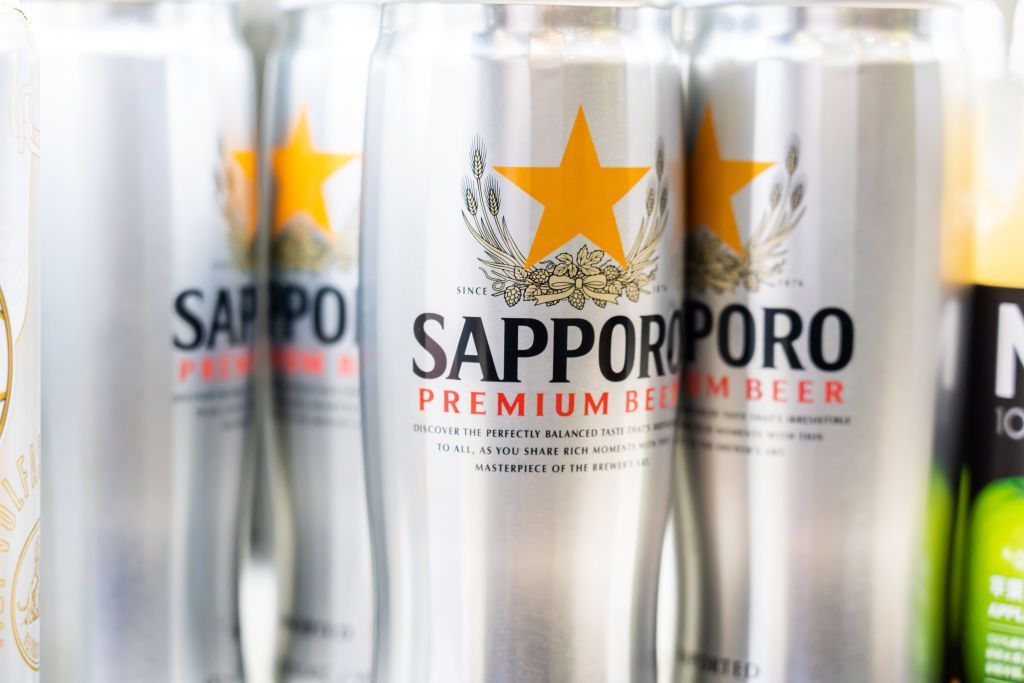
    Global trade policy shifts are forcing major consumer goods companies to restructure their cross-border supply chains, and leading Japanese brewing giant Sapporo is the latest firm to make significant operational changes in response. After the United States imposed a new 50% tariff on Canadian-sourced beer that went into effect on September 2 this year, the company has confirmed it will relocate production of beer bound for U.S. consumers from its Canadian facilities to domestic sites within the U.S.

    The new levy has drastically inflated operational costs for breweries that ship products across the U.S.-Canada border. In comments to Bloomberg, Sapporo Chief Strategy Officer Rieko Shofu framed trade tariffs as an external, unmanageable factor for the business, noting that the company’s path forward centers on expanding localized production in key target markets. The company did not issue an immediate additional response to requests for comment from the BBC when contacted for further details.

    Per Sapporo’s current timeline, production of its non-alcoholic beer line – which currently serves U.S. customers from Canadian manufacturing sites – will be fully transitioned to U.S. facilities by the first half of 2027. As one of the Japanese brewer’s largest and most strategically critical overseas markets, changes to North American production will directly impact operations at Sleeman Breweries, Sapporo’s Canadian subsidiary.

    To offset the cost increases triggered by the new tariffs and support expanded domestic output for the U.S. market, Sapporo is actively evaluating multiple options to add production capacity along the U.S. West Coast, which is its largest regional market in the country. These potential moves include constructing a new purpose-built brewery, acquiring an existing manufacturing facility, or entering a contract production partnership with an established local brewer.

    Sapporo has spent decades building its footprint in the U.S. market, and today it claims its namesake flagship Sapporo beer is the top-selling Asian beer brand in the country. For years, the company has prioritized aggressive overseas expansion to counteract stagnant domestic alcohol sales in Japan, where a steadily shrinking population has created persistent headwinds for revenue growth. To support this global growth push, Sapporo has earmarked up to ¥400 billion ($2.6 billion) in total investment by 2030, with roughly 30% of that capital allocated to developing overseas markets.

    The company’s expansion strategy is not limited to North America. Earlier this summer in July, it announced a strategic partnership with global brewing conglomerate Carlsberg to grow its market share across Southeast Asia, a fast-growing region with rising demand for international beer brands.

    Sapporo’s production relocation is far from an isolated case. As governments around the world increasingly implement new trade barriers, multinational companies are actively re-evaluating their manufacturing footprints to reduce cost exposure. The July 2025 U.S. tariff announcement that included new levies on dozens of trade partners, Canada included, has already squeezed margins for hundreds of businesses that rely on integrated cross-border North American supply chains. Sapporo’s decision underscores a broader global trend: as trade barriers raise the cost of serving international customers from offshore production sites, more companies are shifting toward localized manufacturing to maintain competitiveness.

  • Tung Chee-hwa, Hong Kong’s first post-colonial leader, dies at age 89

    Tung Chee-hwa, Hong Kong’s first post-colonial leader, dies at age 89

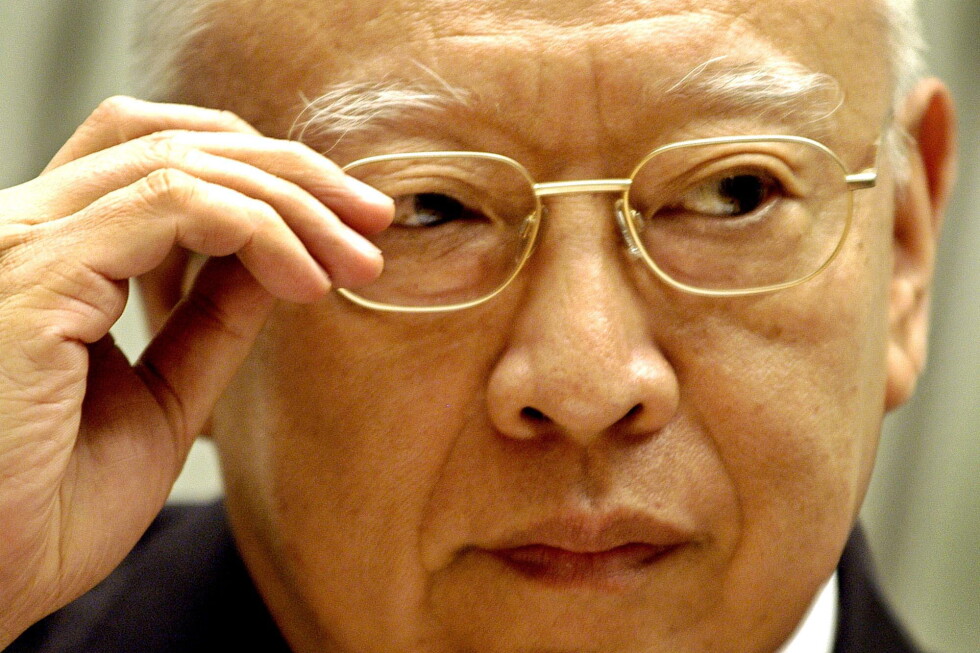
    Tung Chee-hwa, the shipping magnate who made history as Hong Kong’s first chief executive after the territory’s 1997 handover from British to Chinese rule, has passed away at the age of 89. In an official statement released this week, his office confirmed that Tung died peacefully on Tuesday, surrounded by his immediate family.

    Before taking the top post in Hong Kong’s new post-colonial government, Tung had virtually no formal political experience. A pro-Beijing panel of local elites selected him for the role ahead of the handover, a choice widely attributed to Beijing’s perception of him as a trusted loyalist who would align with the central government’s directives. His ties to Beijing ran deep: in the 1980s, state-owned Chinese banks stepped in to bail out his family’s struggling shipping firm, Orient Overseas Container Line, during a global industry downturn.

    The early years of Hong Kong’s handover were an unprecedented, sensitive period. The framework of “one country, two systems” — which guaranteed the territory would retain its existing civil liberties and separate governing systems for 50 years, while Beijing reserved authority over constitutional change and foreign affairs — had never been put to the test when Tung took office.

    While Tung earned praise for his relentless work ethic, earning him the affectionate nickname “7-11” for his habit of working 12-hour, seven-days-a-week schedules, his tenure was marked by repeated crises that eroded public support. His awkward political handling and perceived indecision during emergencies turned public opinion against him, and a less flattering, mocking nickname, “Old Dumb Tung,” began to circulate among residents.

    Within months of assuming office in 1997, two major crises struck. Hong Kong reported the world’s first documented human cases of H5N1 avian influenza, followed quickly by the 1997 Asian Financial Crisis that sent the territory’s economy into a deep recession. Tung’s administration drew widespread criticism for its response to both crises, and his well-documented distrust of the media left him unable to rebuild public trust or rehabilitate his image. Frequent policy missteps also turned him into a common target of public jokes and satire.

    Despite the deep unpopularity of his first term, Tung was re-elected unopposed in 2002 by a pro-Beijing electoral committee, the only body tasked with selecting the chief executive at the time. In 2003, he faced an even greater challenge when the Severe Acute Respiratory Syndrome (SARS) outbreak hit Hong Kong, killing nearly 300 people and bringing the city’s already fragile economy to a near-standstill. His government was widely accused of a slow, disorganized response that worsened the outbreak’s impact.

    Later that same year, Tung sparked mass public anger when his administration introduced draft national anti-subversion legislation, known locally as Article 23. Critics argued the bill would erode Hong Kong’s core civil liberties guaranteed under the handover framework, prompting an estimated 500,000 Hong Kong residents to join a mass street protest against the legislation. The bill was eventually shelved in the wake of the public backlash.

    In 2004, another large-scale pro-democracy rally was held to demand full universal suffrage for the selection of the chief executive and the entire Legislative Council. Tung aligned firmly with Beijing’s Communist leadership, which rejected the demand, and the rally became an annual tradition for pro-democracy activists for more than a decade. Political analysts widely view these mass demonstrations as a signal to Beijing that Tung had lost traction with the Hong Kong public and was no longer able to maintain political stability in the territory.

    In March 2005, Tung announced his resignation from the post of chief executive, insisting that declining health was the sole reason for his departure, rather than pressure from Beijing. “If I continue as chief executive, I won’t be able to handle it,” he stated at the time. Many observers and residents remained skeptical of the explanation, as no obvious serious health issues had been reported in the months leading up to his resignation.

    Born in 1937, Tung’s early life traced the trajectory of many prominent Hong Kong families. His family moved from Shanghai to Hong Kong in 1947, two years before the founding of the People’s Republic of China. He earned a bachelor’s degree in marine engineering from the University of Liverpool in the United Kingdom in 1960, then worked for General Electric in the United States and gained experience in his family’s shipping business before returning to Hong Kong permanently in 1969.

    After stepping down as chief executive, Tung founded a pro-Beijing think tank in Hong Kong and remained a vocal loyalist to the central government through all major political turning points, including the massive 2019 pro-democracy protests and the subsequent national security crackdown. During the height of the 2019 protests, Tung was among 42 public figures awarded national medals and honors by Chinese President Xi Jinping at a Beijing ceremony, recognized for his contributions to advancing the implementation of the “one country, two systems” policy.

    Following the passage of Beijing’s national security law for Hong Kong in 2020, the large-scale pro-democracy protests that defined much of Tung’s tenure were eliminated from the city’s public sphere. Earlier this year, Hong Kong’s current government finally passed the long-delayed Article 23 anti-subversion legislation first proposed during Tung’s tenure. Tung had not appeared at any public events in Hong Kong or mainland China for several years before his death.

  • Fourteen go on trial over deadliest Channel small boats disaster

    Fourteen go on trial over deadliest Channel small boats disaster

    One of the deadliest migrant tragedies in modern English Channel history has moved into the French courtroom, with 14 alleged people smugglers facing trial over their alleged roles in a 2021 sinking that killed at least 30 people, including children.

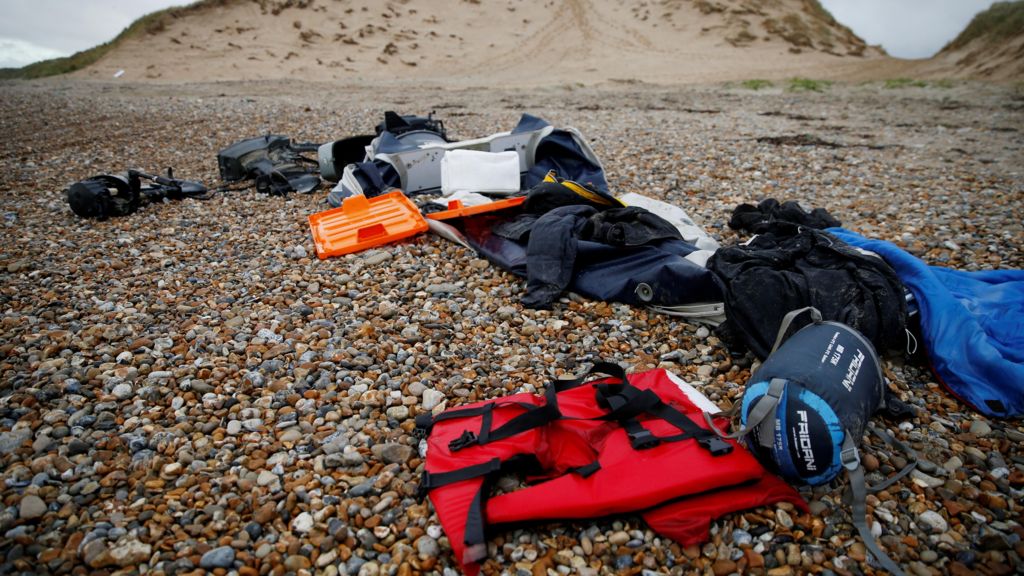
    The disaster unfolded on November 23, 2021, when an overloaded, unseaworthy motorized dinghy deflated and began taking on water mid-voyage between northern France and the United Kingdom. To reduce the vessel’s weight as it took on water, passengers jumped into the frigid Channel one by one, only to succumb to hypothermia and drown. Just two people on board survived the incident, which remains the deadliest small boat crossing disaster on record in the Channel.

    Official charging documents detail that the defendants supplied an unsafe, low-quality vessel unfit for open sea navigation, overloaded it with passengers, and provided inadequate life jackets for the group. In the aftermath of the sinking, rescue teams recovered 27 bodies, while four additional people were never found and are officially confirmed dead. The victims came from multiple countries across the Middle East and Africa: the majority were Iraqi Kurds, with others from Somalia, Ethiopia, Egypt and Afghanistan. The youngest victim identified was just seven years old.

    Most of the 14 defendants, who are mostly Afghan nationals, are being tried in court in Paris. They face two key charges: manslaughter and facilitating illegal immigration as part of a structured criminal network. The two alleged ringleaders of the smuggling operation are still at large and are being tried in absentia. The vast majority of the accused have rejected all charges brought against them. Many claim they are also migrants themselves, and argue any involvement they had was under coercion from the actual senior organizers of the crossing.

    Family members of the deceased traveled to Paris to attend the opening of the trial, which is scheduled to run for three weeks. Emmanuel Daoud, a lead lawyer representing multiple victim families, condemned the smuggling network for what he called deliberate, cynical disregard for human life. “Migrants are not sailors,” Daoud told reporters outside court. “The smugglers know perfectly well what they are doing. They take the deliberate, conscious risk of sending migrants to their deaths.”

    Beyond the charges against the accused smugglers, the tragedy has sparked official investigations into response failures on both sides of the Channel. Questions remain about why rescue agencies did not intervene sooner, despite multiple distress calls from the foundering vessel. In France, seven military personnel, including staff at a maritime rescue coordination center and crew of a French navy vessel, are currently under judicial investigation over potential charges of failing to assist people in danger. A judge will later decide whether these personnel will stand trial.

    A separate official inquiry conducted in the United Kingdom uncovered systemic gaps in the British response: the HM Coastguard station in Dover was operating with limited capacity due to long-term chronic staff shortages, a scheduled surveillance aircraft was not deployed because of poor weather, and rescue staff broadly held the assumption that migrants calling from small boats often exaggerated their level of distress, leading to a dangerous underestimation of the emergency.

  • When will Africa get its next Ballon d’Or winner?

    When will Africa get its next Ballon d’Or winner?

    When the 30-player shortlist for the 2026 men’s Ballon d’Or was revealed this week, African football fans saw a familiar pattern: only two players from the continent, Morocco captain and Paris Saint-Germain right-back Achraf Hakimi and Senegal star winger Sadio Mane of Al-Nassr, earned a spot in the running for the sport’s most prestigious individual prize.

    Both veterans are no strangers to Ballon d’Or contention, having previously cracked the top six in final voting. However, football analysts widely agree their odds of lifting the 2026 trophy are extremely slim, following a standout 12 months that saw Spain claim the FIFA World Cup crown and France’s Kylian Mbappe smash the tournament’s all-time scoring record with 10 goals. This limited representation continues a decades-long trend of underrepresentation for African footballers in the iconic award.

    To understand the scope of this trend, it is necessary to look back at the award’s restrictive origins. First launched in 1956 by France Football magazine, the Ballon d’Or barred players from non-European nations from eligibility for nearly 40 years. It was not until 1995 that the rules changed, opening the field to global talent — and it was in that very same year that Liberian striker George Weah, then in elite form for PSG and AC Milan, became the first and still only African man to win the award. Weah, who later went on to serve as Liberia’s president from 2018 to 2024, set a benchmark no African man has matched in the three decades since.

    In the years following Weah’s historic win, African players have made only sporadic impact on the final rankings. The only other time an African man landed in the top three came in 2022, when Mane finished second behind France’s Karim Benzema. For the vast majority of the 21st century, the award has been dominated by two global superstars: Lionel Messi and Cristiano Ronaldo, who combined to claim 13 of the 15 Ballons d’Or awarded between 2008 and 2023, crowding out other contenders.

    An analysis of 31 years of post-eligibility data puts the extent of African underrepresentation in stark perspective. Since 1995, African players have earned just 76 total nominations, accounting for only 6.62% of all shortlisted players across that period.

    Cameroon icon Samuel Eto’o holds the record for the most nominations among African players, earning nine consecutive spots on the shortlist between 2003 and 2011, with a career-best fifth-place finish in 2009 after scoring in Barcelona’s Champions League final win over Manchester United. Didier Drogba of Ivory Coast follows with eight nominations, while Egypt’s Mohamed Salah has six. Mane, the 34-year-old Senegal star, boasts the longest tenure of any African contender: his first and 2026 nominations come 10 years apart, marking a decade of consistent elite play.

    By country, Nigeria has produced the most individual nominees, with eight players earning spots, and Victor Osimhen’s eighth-place finish in 2023 stands as the best result in the nation’s history. Despite this, 39 African nations have never had a single player shortlisted, even as higher-ranked nations like the DR Congo (43rd in the FIFA rankings) and South Africa (54th) remain locked out of the shortlist entirely. Notably, no African player representing a domestic club based on the continent has ever earned a nomination.

    Over the years, there have been nine years since 1995 where just one African player made the shortlist, most recently in 2024, when Nigeria’s Ademola Lookman claimed 14th place after a standout campaign that included a hat-trick in the Europa League final for Atalanta. There have even been four instances where shortlisted African candidates failed to receive a single vote from the journalist panel, including cases in 1998, 2000, 2001 and 2003.

    Leading African nations by total nominations are Ivory Coast (15 total, led by Drogba’s eight), Cameroon (12, 9 from Eto’o), Nigeria (10), Senegal (8), Ghana (6), and Egypt (6, all from Salah).

    The underrepresentation extends to the women’s side of the award as well. Since the women’s Ballon d’Or launched in 2018, only four African women have earned nominations, with no more than two African players shortlisted in any single year. Across all editions, African women account for just 10 total nominations out of 195 overall shortlisted spots.

    Nigeria’s Asisat Oshoala became the first African woman to earn a nomination, landing spots on the 2022 and 2023 shortlists. Zambia captain Barbra Banda has been nominated every year since 2022, while Malawian sisters Tabitha and Temwa Chawinga joined the ranks in 2024 and 2025 respectively. Temwa Chawinga earned her second consecutive nomination in 2026 after claiming the golden boot at this year’s Women’s Africa Cup of Nations.

    The 2026 Ballon d’Or winner will be decided by votes from journalists representing the top 100 nations in the FIFA rankings, with the winner set to be announced at a 26 October ceremony in London. The venue was selected as a symbolic tribute to Sir Stanley Matthews, the English winger who claimed the very first Ballon d’Or in 1956, marking the award’s 70th anniversary this year. For African football, however, the ceremony looks set to extend the continent’s long wait for a second winner of the sport’s biggest individual prize.

  • Qatar and Pakistan carry Trump’s message to Iran: He won’t return to the MoU

    Qatar and Pakistan carry Trump’s message to Iran: He won’t return to the MoU

    As regional tensions reignite and the United States has reimposed its naval blockade on Iranian ports, a fresh diplomatic crisis has unfolded across the Middle East, rooted in the collapse of a fragile ceasefire agreement between Washington and Tehran. On August 24, Pakistan’s Chief of Army Staff Field Marshal Asim Munir traveled to the Iranian capital to carry a high-stakes message from US President Donald Trump, just hours after the Trump administration launched a sweeping new campaign of economic pressure against Iran.

    In Washington that same day, US Treasury Secretary Scott Bessent introduced what he called a “D-Day” economic pressure initiative, issuing a stark warning to any sovereign state that continues to maintain commercial trade with Tehran: those countries will face harsh secondary sanctions for violating Washington’s restrictions.

    During his visit to Tehran, Munir held closed-door talks with top Iranian leadership, including Iranian President Masoud Pezeshkian and newly appointed Supreme National Security Council Secretary General Mohsen Rezaei. According to two anonymous sources with direct ties to the Iranian government, Munir delivered one clear, uncompromising message from Trump: the US will not honor the June 17 Iran-US Memorandum of Understanding.

    That original MoU was designed to create a foundational framework to end months of open conflict between the two nations and reopen the strategic Strait of Hormuz, a critical chokepoint for 20% of the world’s daily oil shipments. It was also meant to set the stage for more comprehensive negotiations down the line, even though it intentionally left several divisive core issues unresolved to get the ceasefire over the line.

    A conservative source familiar with US negotiating positions confirms that Trump is pushing for an entirely new agreement, rather than moving forward with the existing MoU. For Iran, however, the original deal delivers substantial, non-negotiable benefits, according to an anonymous Tehran-based political analyst. These benefits include a critical oil waiver that lets Tehran access its oil sales revenues directly in US dollars, a full end to active conflict across all regional fronts including Lebanon, and the most consequential win for Iran: formal US recognition of its sovereign authority over the Strait of Hormuz.

    The analyst explains that Trump has faced growing pressure from hardline opponents inside Washington, particularly neoconservative factions and allies of Israel, who have waged a public campaign accusing the president of “surrendering” to Iranian demands. Over the course of the summer, the US military unilaterally established a new commercial shipping corridor through the Strait of Hormuz, opening a southern channel for tankers along the Omani coast. The analyst says this unilateral move was calculated to undermine the existing MoU, which Tehran views as a clear violation of the agreement’s terms, in order to provoke an Iranian response that would give Trump a pretext to withdraw from the deal entirely.

    Over the past six months, the conflict has followed a frustrating pattern: long stretches of relative calm punctuated by sudden, unpredictable outbreaks of sporadic fighting. The battle for control of the Strait of Hormuz flared up again just last week, with Iranian forces and the US military exchanging retaliatory strikes on commercial and military vessels over the weekend. By the start of this week, commercial shipping traffic through the strait slowed dramatically, after Tehran issued new threats to retaliate against any additional US attacks.

    The unraveling of the 2026 MoU actually began in early July, when bitter disputes emerged over implementation, particularly centering on the terms for reopening the strait. After Iran targeted vessels transiting through the waterway in response to Washington’s unilateral corridor establishment, the US revoked key oil export sanctions relief on July 7, effectively eliminating the single most important economic concession the agreement granted Iran. The two sides have also clashed repeatedly over Iran’s legal authority to regulate maritime traffic through the strait, as well as the timeline and scope of lifting the US naval blockade.

    Just three days after Munir’s August 24 visit to Tehran, senior Qatari officials led by the Qatari Prime Minister traveled to Iran, and they too conveyed Trump’s refusal to reaffirm the original MoU. According to regional sources, Iranian officials made their position clear to both the Pakistani delegation and the Qatari envoys: Tehran will only accept the existing MoU, and no alternative arrangement. At present, both Oman and Qatar, two key regional mediators that have helped facilitate talks between Iran and the US for years, are continuing diplomatic efforts to break the current deadlock, including exploring a revised version of the original MoU that could address some US concerns.

    On September 6, a second unannounced Qatari delegation arrived in Tehran, led by influential minister without portfolio Ali Al Thawadi, a veteran backchannel negotiator who is widely credited with bringing Iran and the US to the original June agreement in the first place. Sources confirm that Thawadi delivered Trump’s formal response to Iran’s repeated commitment to the original MoU, with the US president once again reiterating that Washington will not return to the existing agreement. For its part, Iran once again reaffirmed its position to the Qatari delegation: it will not abandon the MoU, nor will it enter negotiations for an entirely new deal, leaving the region in a tense diplomatic standoff.

  • Renoir theft ‘shows museums should check security’

    Renoir theft ‘shows museums should check security’

    A high-profile art theft targeting works by iconic 19th-century Impressionist Pierre-Auguste Renoir in southern France has sparked fresh calls for improved security standards at small cultural institutions globally, according to a leading Guernsey-based arts organizer.

    The incident unfolded on Tuesday, when two thieves gained unauthorized access to the Renoir Museum in Cagnes-sur-Mer, making off with four Renoir paintings collectively valued at over €9 million. While two of the stolen canvases were abandoned by the perpetrators during their escape and later recovered by law enforcement, the brazen heist has raised urgent questions about gaps in cultural heritage protection.

    David Ummels, founder of Art for Guernsey, who spearheaded a landmark Renoir exhibition on the Channel Island in 2023, shared his perspective on the theft and its broader implications. Renoir first visited Guernsey in 1883, completing roughly 15 paintings during his month-long stay on the island. Many of these rarely seen works were brought together for the 2023 exhibition, made possible through partnerships with private collectors and international art institutions.

    Ummels noted that shifting cultural attitudes have contributed to growing risks for art collections, saying: “It’s a sad reality that many people now view artwork solely through the lens of market value, rather than appreciating the creative cultural value they hold and their unique power to inspire local communities.”

    Compared to large metropolitan museums with substantial operational budgets, small regional institutions and galleries face a disproportionate security challenge, Ummels explained. “This theft perfectly illustrates the struggle smaller museums go through. They hold irreplaceable national treasures and cultural legacy, but operate with far smaller budgets than large international institutions. This leaves many relying on outdated, subpar security systems that cannot stop determined thieves.”

    On Guernsey, Ummels said the island’s small size and tight-knit community have created an ideally positioned security framework for art collections, but the tension between accessible public access and robust protection remains a persistent challenge. “My core philosophy for public exhibitions is to keep intrusive security measures to a minimum, so visitors can engage with the art freely. But we also have to prepare for unpredictable, reckless acts of theft,” he said. “This incident makes clear that major policy rethinking is needed across the world to support smaller museums in securing their collections.”

    Ummels, who settled on Guernsey 11 years ago, said he quickly fell in love with the island’s strong cultural integrity, a trait he argues is worth protecting for future generations. “Passing down our artistic heritage and legacy is critical. It not only preserves our history, it also inspires young people and gives them the courage to create. We have a strong community spirit and kindness here, and we are very fortunate that this kind of incident rarely happens on Guernsey,” he added.

  • Singapore man pleads guilty to orchestrating $240 million bitcoin theft from DC resident

    Singapore man pleads guilty to orchestrating $240 million bitcoin theft from DC resident

    WASHINGTON — In a landmark step forward for one of the most substantial cryptocurrency theft investigations in U.S. history, a 22-year-old Singaporean national has admitted to orchestrating a brazen scheme that stole nearly a quarter-billion dollars worth of bitcoin from a Washington, D.C., resident before blowing the laundered funds on an extravagant month-long spending spree.

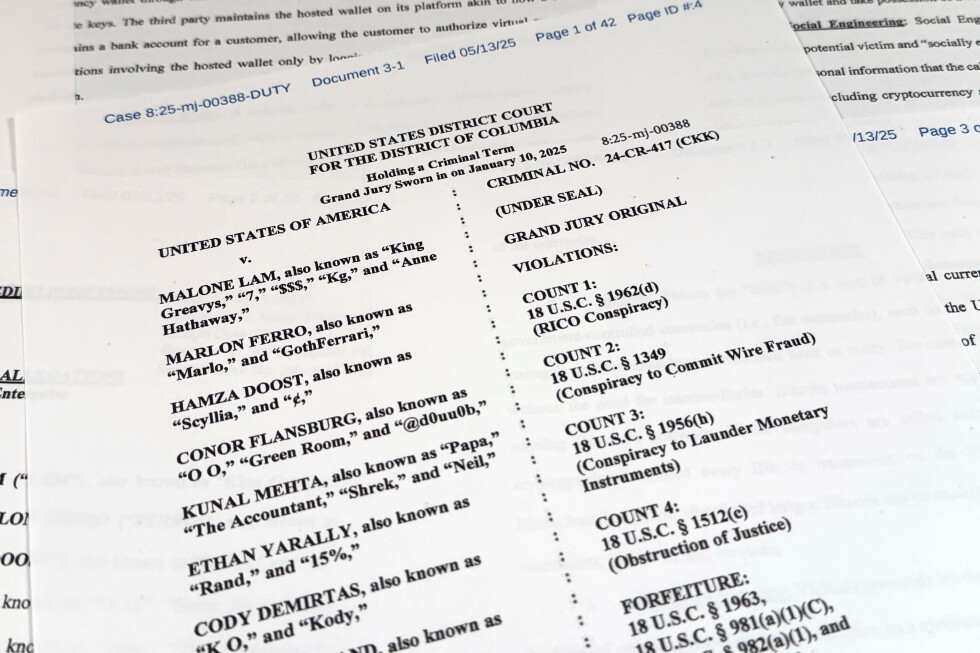
    Malone Lam, an eighth-grade dropout who relocated to the United States from Singapore, entered a guilty plea on Tuesday to a single federal count of racketeering conspiracy. The charge carries a maximum possible penalty of 20 years in federal prison, though U.S. District Judge Colleen Kollar-Kotelly has not yet set a date for his sentencing hearing in the District of Columbia.

    Prosecutors outline that Lam served as a key organizer for a transnational network of young criminals that launched a series of coordinated cryptocurrency fraud schemes beginning in 2023. His case is part of a larger investigation that has brought charges against 18 total defendants, with Lam marking the 11th person to change their plea to guilty. Legal observers note that his conviction represents a critical breakthrough for the U.S. Department of Justice’s multi-year probe into large-scale digital asset theft.

    The brazen heist that sits at the center of the case unfolded in August 2024. According to prosecution filings, Lam and his co-conspirators leveraged common “social engineering” tactics to trick the unidentified Washington-based victim into turning over access to his digital assets. Two of the group’s members posed as trusted representatives from Google and major cryptocurrency platform Gemini to gain the victim’s confidence. The ruse worked, convincing the man to grant the scammers access to his Google Drive account and share critical two-factor authentication security codes. With that access, Lam was able to siphon more than 4,100 bitcoin from the victim’s wallet, a haul valued at more than $245 million at the time of the theft.

    Once the digital assets were stolen, Lam took point on coordinating money laundering efforts to convert the illicit crypto into untraceable cash, authorities say. Instead of hiding the funds, he and his co-conspirators embarked on a lavish, unchecked spending spree that grabbed national attention.

    Federal investigators from the FBI document that Lam splurged the stolen funds on a fleet of high-end luxury sports cars, short-term rentals of multi-million dollar mansions in Miami, Florida, and exorbitant nights out at elite nightclubs across the country. One single evening at a Los Angeles nightclub cost the group more than $569,000, according to court records. Lam’s personal purchases included a single luxury watch valued at $2 million and more than 30 high-performance vehicles, including custom-built Porsches, Lamborghinis, and Ferraris. During his plea hearing, when Judge Kollar-Kotelly asked Lam to confirm which of the dozens of vehicles he had purchased personally, he acknowledged he could not immediately list them. “I would need some time,” he told the court.

    The month-long spending spree came to an abrupt end when FBI agents moved to arrest Lam in Miami. Court documents reveal that an off-duty law enforcement officer tipped Lam off that authorities were en route to take him into custody, though the warning did not allow him to evade arrest. Even after being detained, Lam’s reaction to his capture, captured in a recorded jailhouse call shared in the indictment, highlighted the surreal nature of his scheme and downfall. “We always talked about what it would be like if I were to go down, but never thought it would be this crazy,” Lam told a contact during the call.

    The case remains ongoing, with seven other defendants still awaiting trial or resolution of their charges in the sprawling conspiracy case.

  • Under siege: Iran faces strategic dilemma as war of attrition drags on

    Under siege: Iran faces strategic dilemma as war of attrition drags on

    Tensions between Iran and the United States have slid into a new, limited but deeply dangerous phase of confrontation, with mounting military and economic pressure leaving Tehran caught between two high-stakes options: ramp up hostilities, or pursue a rapidly narrowing path to a negotiated resolution.

    The latest cycle of escalation was sparked by a U.S. strike on Iran’s Islamic Revolutionary Guard Corps in southern Iran, per Iranian accounts. In the aftermath of the attack, U.S. officials claimed they had intelligence indicating Iranian forces planned to deploy mine-laden rockets in the Strait of Hormuz, the world’s most critical global energy chokepoint through which nearly a fifth of global oil supplies pass daily. Iran retaliated quickly, launching missile strikes against U.S. military bases hosted by the United Arab Emirates, Jordan, Kuwait, and Bahrain.

    This military uptick comes on top of weeks of a de facto U.S. naval and economic siege on Iran’s ports, adding crippling new pressure to an Iranian economy that was already teetering long before the latest crisis erupted. The Iranian rial has plummeted in value, now trading at roughly 2.2 million rials to the U.S. dollar, down from around 1.8 million before the siege began. So far, the government has managed to avoid the widespread shortages of essential goods that could spark a full-blown domestic crisis, but one growing vulnerability has become impossible to ignore: gasoline.

    Iran is struggling to secure consistent, adequate gasoline supplies as domestic consumption rises and foreign supply chains grow increasingly unreliable. The government has publicly called on citizens to cut back on fuel use, and reports indicate it is weighing a steep increase in domestic gasoline prices to curb demand. Compounding this challenge is disruption tied to the war in Ukraine: Russia has long been a key potential supplier of refined petroleum products to Iran, but repeated Ukrainian drone attacks on Russian refineries have drastically reduced Moscow’s capacity to export gasoline to Tehran.

    The combination of cross-border military tensions, crippling U.S. sanctions, disrupted trade routes, and rising domestic consumption has created an intractable policy dilemma for Iran’s leadership. While Tehran has so far kept basic economic functions running, maintaining that level of stability is becoming exponentially more costly. This strain has intensified a fierce internal debate over how to respond to the ongoing confrontation with the U.S.

    Among Iran’s conservative factions, a growing consensus argues that absorbing endless pressure from Washington cannot resolve the standoff. Instead, these voices argue the U.S. strike gives Iran justification to impose far steeper costs on Washington and its regional allies in the Gulf. “To break the deadlock, Iran is in a good position since the US attack has given Iran a right to answer disproportionately,” an anonymous conservative political activist told Middle East Eye. “By raising the costs, such as an attack on US allies’ oil and water infrastructure, we can break the siege.” The activist added that regional states helping Washington enforce the pressure campaign, including the UAE, should also face consequences for their cooperation, reflecting a core belief among conservative circles that effective deterrence requires demonstrating that any attempt to weaken Iran will carry severe, unavoidable costs.

    A professor of international relations aligned with the conservative camp went even further, arguing Iran should adopt what he called an “offensive preemptive doctrine.” “In my view, our experience has shown that power can deter power,” he explained. “We carried out a preemptive operation in Jordan, inflicted casualties, and the Americans did not continue. We therefore have no choice but to adopt an offensive preemptive doctrine, both militarily and through intelligence capabilities, to prevent future shocks and interventions like the 12-day and 40-day wars.” The professor added that recent conflicts have shifted Iran’s strategic calculations, with years of military and diplomatic experience leaving Tehran’s foreign policy more sophisticated than ever. He called for actions beyond conventional deterrence, even suggesting Iran should consider conducting its first nuclear test, arguing a demonstrated nuclear capability would give Tehran far stronger deterrence against future U.S. or Israeli intervention. He also framed economic pressure as a legitimate extension of military conflict, saying Iran must impose tangible economic costs on the U.S. to level the playing field.

    These arguments lay bare the central dilemma now facing Tehran. If Iran responds with excessive caution, conservatives warn Washington and its allies will conclude they can impose ongoing military and economic pressure without facing meaningful consequences. But if Tehran escalates too aggressively, it risks turning a limited standoff into a full-scale regional war that would cause catastrophic further damage to Iran’s already fragile economy. A conservative source close to Iran’s core leadership circles described the current moment as a potential “war between wars,” a transitional period where both sides are analyzing past confrontations and preparing for potential future open conflict. He noted the U.S. is pursuing multiple overlapping goals: ratcheting up economic pressure, eroding Iran’s regional influence, conducting periodic targeted strikes, shifting the regional strategic balance, and rebuilding its regional military and intelligence capabilities. “The key question is who benefits from time,” the source observed. From this perspective, Washington is not seeking a single decisive military victory; instead, it aims to hold the strategic initiative, keep Tehran trapped in constant strategic uncertainty, and prevent Iran from rebuilding its military capabilities or initiating escalation on its own terms. Even so, the source acknowledged that no simple solution exists for the standoff: neither negotiations alone nor military action alone can resolve the core disputes between the two sides, requiring Iran to adopt a completely new regional strategy adapted to a Middle East that has been fundamentally transformed in recent years.

    Inside Iran, reformists and government-aligned moderate figures argue the latest escalation should not be used as a pretext for more conflict, but rather as an opening to return to diplomatic negotiations. A reformist analyst who contributes to Iranian media framed the conflict as having entered a cycle of mutual attrition, with the Strait of Hormuz increasingly weaponized as an instrument of economic pressure. He explained that Iran can leverage its geographic control of the strait to impose costs on its adversaries, while Washington uses military pressure to neutralize that geographic advantage – a dynamic that carries severe risks for both parties. “Any prolonged disruption in the Strait could push energy prices higher, increase inflationary pressure and accelerate the economic damage already being inflicted on Iran,” he warned. “The greatest danger is miscalculation: a single incident in the Gulf could push both countries beyond the point where diplomacy remains capable of controlling events.” The analyst noted neither side is capable of securing a decisive outright victory, and without a political off-ramp, both Washington and Tehran risk being trapped in an endless cycle of unresolvable escalation. “If the current trajectory continues, the window for negotiations will soon close, giving way to a decisive confrontation,” he said. “The ultimate winner will not necessarily be the side capable of delivering the most destructive military blow, but the side that can extract a strategic concession while there is still time to prevent the diplomatic window from closing.”

    This view of grinding attrition is shared by other reformist sources close to the Iranian government. In recent days, U.S. drones, missiles, and bombs have struck again in southern Iran, killing civilians and turning a wedding celebration in the town of Kuhestak into a mass funeral, while Iran has retaliated with missile strikes on U.S. bases across the Middle East. One reformist source told MEE the core question for Iran is no longer who can win the next exchange of fire, but how long the confrontation can be sustained and what political outcome can ultimately end the crisis. He noted Washington has sent contradictory signals: simultaneously ramping up pressure to weaken Tehran while claiming military pressure is intended to force Iran back to the negotiating table. The current Iranian government continues to emphasize the possibility of reviving a preliminary understanding reached with Washington in June, demanding the U.S. honor its earlier commitments, while ultra-conservative factions advocate for prolonging conflict and even launching preemptive offensive operations. The result is an increasingly ambiguous standoff, where neither side has the capacity to sustain the current level of confrontation indefinitely. “A dramatic event is therefore likely to change the course of the war,” the source said. “But by its very nature, such an event cannot be predicted; any forecast would be little more than a shot in the dark.” For now, he added, Iran is navigating this constant uncertainty with no clear path forward.

    A university professor of geopolitics aligned with the reformist camp laid out the clearest case against further escalation. He framed the latest round of Iran-U.S. conflict as a clash that ended without a decisive result, forcing both sides to shift their tactics. Washington moved to prioritize economic pressure, a de facto naval blockade, and periodic targeted strikes, while Iran leaned more heavily on its geographic advantage around the Strait of Hormuz to project leverage. But that advantage comes with major costs: “Keeping the Strait closed also hurts Iran’s economy and its main oil partner, China,” he noted. For Tehran, the strategic goal is not to close the strait indefinitely, but to demonstrate that U.S. military superiority does not give Washington unlimited freedom to act in the region. The professor argued the conflict is too deeply entrenched to ever be resolved through military means. “The only viable path is a return to the 14-point memorandum, or a modified version, with simultaneous, verifiable steps and credible external guarantees,” he said. A framework overseen and backed by the United Nations Security Council, he argued, would make it far costlier for either side to unilaterally abandon any eventual agreement.

    Tehran now stands at a crossroads: it can respond to the U.S. siege by escalating, imposing greater costs on the U.S. and its regional allies, and formalizing an openly offensive military doctrine. Or it can use its remaining leverage to pursue a negotiated settlement while the diplomatic window remains open. The harsh reality is that both paths carry substantial, inherent risks. As the geopolitics professor noted, escalation could strengthen Iran’s deterrence posture but would also deepen Tehran’s economic isolation and drastically increase the risk of a full-scale regional war. Negotiations, by contrast, would ease crippling economic pressure but leave the government open to fierce criticism from conservative factions who argue past diplomatic efforts failed to deliver meaningful security guarantees for Iran.

    For Iran, the core question now is whether leadership can turn the current pressure into usable political leverage before economic and military costs become unsustainable, and whether Washington is willing to offer an exit that Iranian leaders can accept without appearing to surrender to U.S. demands. For now, neither side has found that balanced off-ramp, leaving the region in a state of precarious, unpredictable tension.
  • Mamdani, Jon Stewart reveal new 9/11 documents

    Mamdani, Jon Stewart reveal new 9/11 documents

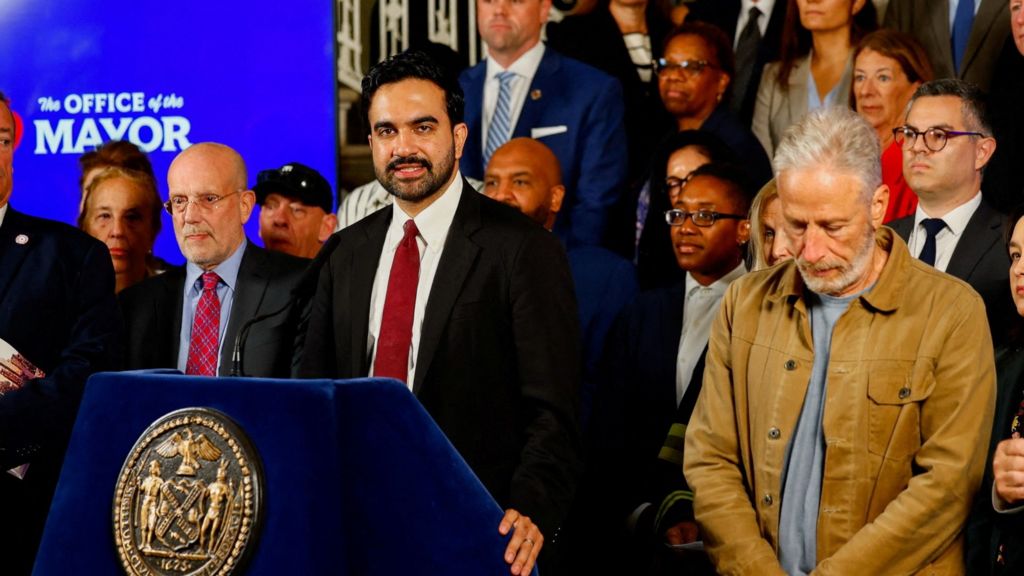
    Two decades after the devastating September 11 terrorist attacks that reshaped American life, New York City Mayor Eric Adams and longtime 9/11 first responder advocate Jon Stewart have opened the vault on a massive new collection of declassified government records. The batch, totaling 170,000 individual documents, shines a long-awaited new light on internal debates and warnings that city and federal officials privately held about the safety of air quality in and around the Ground Zero site in the immediate aftermath of the Twin Towers’ collapse.

    For years, survivors, first responders, and advocacy groups have pushed for full transparency around post-attack air quality assessments, after thousands of people who worked on the recovery and clean-up at Ground Zero went on to develop chronic respiratory illnesses, rare cancers, and other long-term health conditions linked to toxic dust from the wreckage. The newly released records confirm that long before public health officials made reassuring statements about the safety of returning to lower Manhattan, government insiders had already documented significant concerns about the levels of toxic contaminants, including asbestos, lead, and other carcinogens, circulating in the air close to the attack site.

    The release marks a major milestone in the decades-long fight for accountability from those affected by the attacks. Stewart, who has been a prominent voice lobbying Congress for permanent healthcare funding for 9/11 first responders, joined Adams in the announcement, framing the document release as a critical step toward honoring the sacrifices of first responders and ensuring the full truth about the aftermath of 9/11 is never hidden from the public.

  • RSF drone strikes shatter sense of optimism in Sudan’s el-Obeid

    RSF drone strikes shatter sense of optimism in Sudan’s el-Obeid

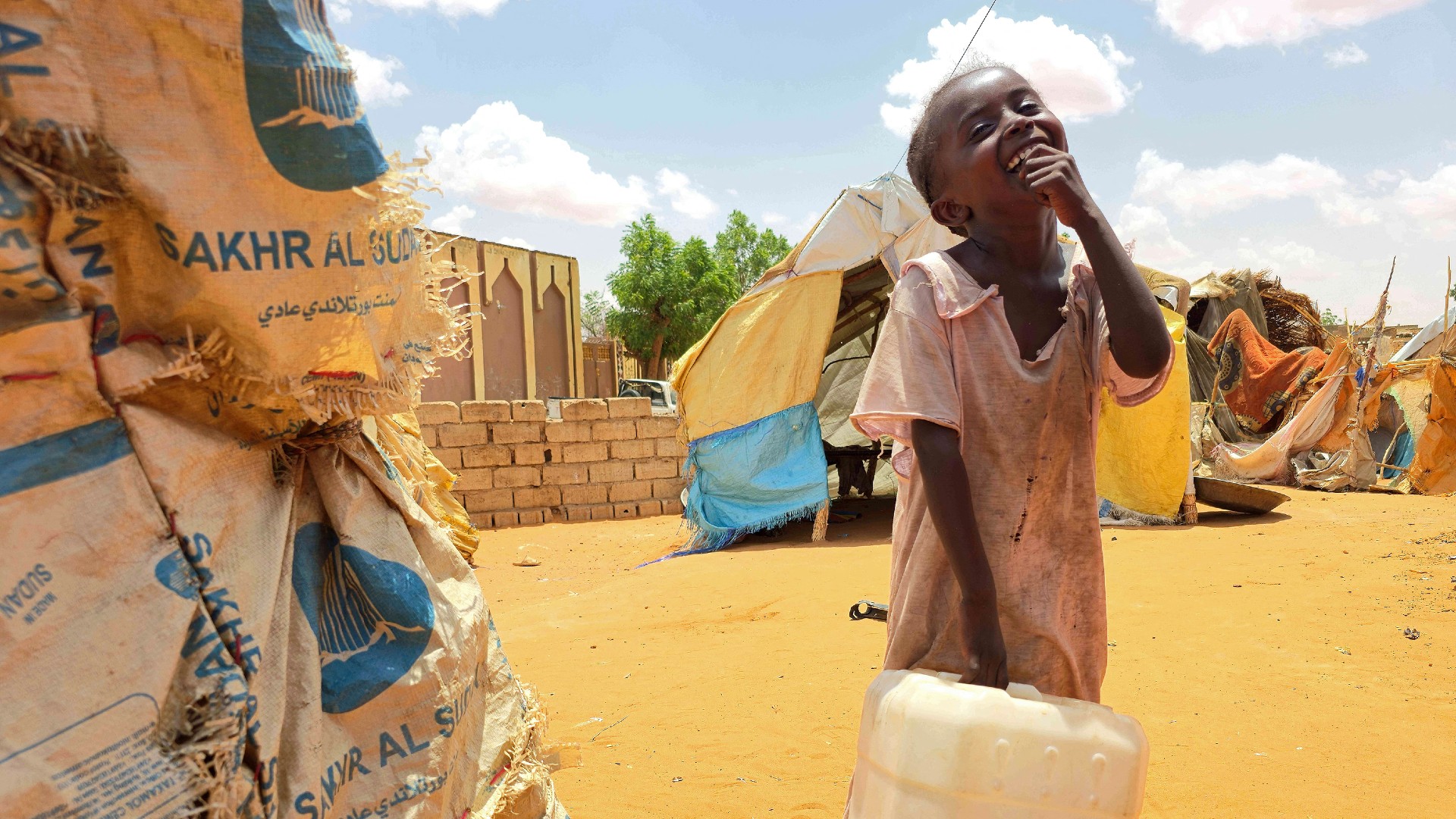
    On the early morning of August 12, a deceptive calm hung over the war-battered Sudanese city of el-Obeid. Children streamed toward school along packed streets, the calls of street vendors selling fresh fruit drowned out the low rumble of idling buses, and workers ducked into tree shade for a quick cup of tea or coffee before starting their workdays. A fragile wave of optimism had spread through the capital of North Kordofan state, rooted in two long-awaited shifts: the Sudanese Armed Forces (SAF) had partially broken a months-long siege imposed by the paramilitary Rapid Support Forces (RSF), and the annual rainy season had arrived, bringing hope of both agricultural relief and a turning point for a population that had endured crippling shortages of food and clean water.

    That fragile calm shattered in minutes. Crowds scattered in panic as residents pointed to the sky, where RSF drones had reappeared, bringing with them a flood of familiar, crippling fear. The thunderous roar of SAF anti-aircraft fire echoed across the city; on-the-ground reporting from Middle East Eye documented at least four drones shot down from the sky, drawing shouts of “Allahu Akbar” from watching bystanders. A young woman was struck and wounded by falling drone debris, and was rushed immediately to a nearby hospital for emergency care.

    This morning drone strike marked the first major RSF response to its recent significant defeat in Bara, a city located roughly 60 kilometers north of el-Obeid, and surrounding nearby towns.

    For el-Obeid, which has stood on the frontline of Sudan’s three-year civil conflict between the SAF and RSF, drone attacks are nothing new. The scars of constant bombardment are visible across every corner of the city: craters pockmark paved roads, vital oil and electricity infrastructure lies in ruins, and hospitals, public markets, and residential neighborhoods have been reduced to bombed-out shells. Yet, for the estimated one million people still calling the city home, the population has refused to surrender to chaos, clinging as tightly as possible to the rhythms of ordinary life.

    “ We adapted ourselves to these RSF attacks on civilians that happen from time to time. We won’t leave this city whatever happens,” Ahmed al-Mardi, a local taxi driver, told Middle East Eye as the drone strikes unfolded around him that August morning.

    A local market trader, who asked to remain anonymous out of fear of retaliation, questioned why the RSF consistently targets civilian infrastructure and populations rather than SAF military positions. “The RSF doesn’t care about the civilians or the life of the people of el-Obeid,” he said.

    Osman Abdullatif, who leads a civilian committee backing SAF and the auxiliary Popular Resistance units, accused the RSF of intentionally targeting civilian communities as part of a deliberate strategy to force mass population displacement. “We have seen in el-Genena, Khartoum, el-Jazira and el-Fasher that the RSF strategy is dependent on forcing people into displacement,” he explained. Abdullatif noted that el-Obeid residents have already witnessed the RSF’s tactics firsthand: the paramilitary group carried out massacres of Masalit communities in West Darfur’s el-Geneina in summer 2023, after which RSF supporters seized occupied abandoned homes and land belonging to displaced community members. “We understood the lesson and would never leave,” he stressed.

    Over the course of three years of war, el-Obeid has spent most of that time trapped under siege and under constant attack. While residents have displayed extraordinary resilience to maintain daily life, the city itself bears the heavy weight of prolonged conflict: streets lie uncleaned, public services are disjointed, basic goods are exorbitantly priced, and essential necessities are often completely unavailable.

    While hundreds of thousands of residents have fled the city to seek safety elsewhere, hundreds of thousands more have flooded into el-Obeid as a refuge after being displaced from their homes across other conflict zones in Kordofan, Darfur, and surrounding regions. Displaced person camps ring the city’s outer boundaries, yet daily life persists against all odds: markets stay open, universities and classes remain in session, and even wedding celebrations continue to be held, even as the threat of attack hangs overhead.

    One local activist, who also requested anonymity for security reasons, warned that the outward appearance of normalcy hides deep underlying tensions. The city is heavily populated by SAF troops, former Darfuri rebel fighters integrated into joint military units, and mobilized Popular Resistance civilians, a widespread armed presence that many residents find deeply intimidating. “We have seen more than 40,000 military personnel in the city, destruction and the wide deployment of the undisciplined Joint Forces of the former Darfur rebels. This situation has to be organised, or it will lead to serious consequences,” he warned.

    El-Obeid is surrounded by military barricades and checkpoints, with only one primary paved route connecting the city to the capital Khartoum through neighboring White Nile State. The stretch of road runs more than 700 kilometers, requiring roughly 10 hours of travel under the best of conditions. SAF is currently working to secure and reopen the Export Road, the historic strategic trade route connecting Kordofan to Khartoum that, before the war, carried the region’s valuable exports including gum arabic to global markets.

    SAF retook Bara and other key towns along the route in July 2026. But the RSF has launched a series of counterattacks in response, leaving control of the critical Export Road still contested. Drone strikes on el-Obeid have increased sharply over the past month, directly tied to these RSF counteroffensives. The RSF has claimed it inflicted heavy casualties on SAF and its allied forces in Gabrat al-Shiekh, Geraigikh, and Girfa – a claim SAF has repeatedly denied.

    El-Obeid holds unique strategic importance: it is the largest and most significant city in western Sudan still under full SAF control. For months, it has been the central frontline between the army and the RSF, which currently controls all of Darfur in western Sudan. Its strategic location previously made it a key humanitarian hub during United Nations peace operations in South Sudan and Darfur, a role it could step into again if fighting stabilizes. This status means both sides are desperate to hold full control of the city, to position themselves as the legitimate governing authority the international community must engage with.

    According to a senior SAF military source based in el-Obeid, the recapture of Bara has been a transformative turning point for the city’s future. “Our victory in Bara is very strategic, we seized a lot of weapons and military vehicles, lifted the siege of el-Obeid and opened access for more supplies to ourselves,” he said. The source, who spoke on condition of anonymity as he was not authorized to speak to media, added that the RSF is now at its weakest position since Kordofan became the main theater of Sudan’s war, after the RSF seized el-Fasher in October 2025. “We cut the supplies coming from Libya to Kordofan through Darfur, which had been the lifeline for the RSF in North Kordofan,” he said. “We are now ready to move from North to West Kordofan, more specifically al-Nuhud, Mazrob, al-Kwai and Babanousa. If SAF seizes these areas during this rainy season, the way to Darfur would be opened. This is why we have seen the RSF trying to counterattack us in North Kordofan, but we repulsed all their attempts and kept the new areas that we liberated.”

    A retired military expert with decades of experience operating in North Kordofan told Middle East Eye that the conflict is currently at a critical juncture, entirely shaped by Kordofan’s strategic geographic position. “We have seen how the two sides have tried to gain more territory in Kordofan as international pressure has grown to stop the fighting and cease fire across the country. SAF wants to liberate the greater Kordofan region and be closer to the RSF capital in Nyala, while the RSF wants to remain a threat to el-Obeid and even Omdurman,” said the expert, who also requested anonymity for security reasons.

    He explained that el-Obeid is a critical supply hub for both sides, supporting the movement of fighters and materials. “SAF has managed to secure Omdurman and el-Obeid by seizing Bara and Gabrat al-Sheikh, where the drones were coming from,” he added. “However, the RSF is opening a new front and seized new areas in the Blue Nile State, but I think it is doing so to distract SAF, because the main battle is in Kordofan rather than anywhere else.”