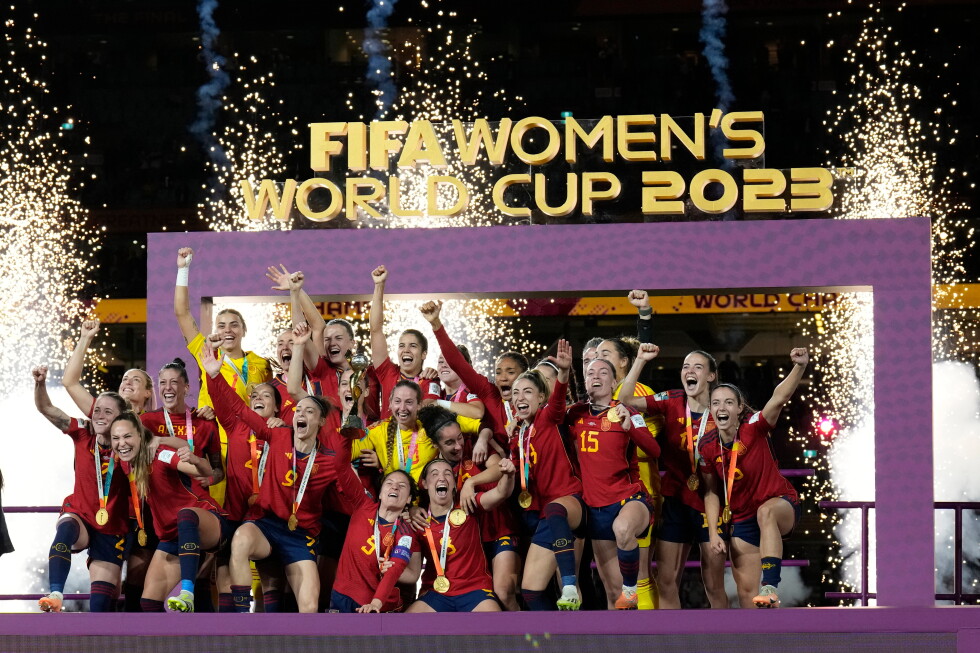
Fresh off the conclusion of the men’s FIFA World Cup, all attention in global soccer has shifted to the upcoming 2025 Women’s World Cup, which is scheduled to kick off next summer across Brazil. As the reigning champions of the competition, Spain enters the tournament as the team to beat. The Spanish side claimed their first-ever Women’s World Cup title in 2023 with a tense 1-0 victory over England in the Sydney final, and currently hold the number one spot in the global FIFA women’s rankings. That championship squad was stacked with elite talent, including two consecutive Ballon d’Or winners Aitana Bonmati and Alexia Putellas, plus dynamic young forward Salma Paralluelo. Even Spain’s men’s World Cup-winning star Rodri heaped praise on Bonmati during a post-tournament television interview, admitting “I’m trying to see if I can get to her level.”
For the United States, the 2023 campaign ended in disappointment when the team was knocked out in the round of 16 by Sweden, ending their quest for a third consecutive title. Despite the early exit, the U.S. remains a global powerhouse, holding four Women’s World Cup titles – more than any other nation – and currently sits second in the world rankings. This October, the U.S. will host Spain for two friendly matches, a critical preparation step ahead of CONCACAF qualifying kicking off in late November in Texas. These high-profile tune-up matches are expected to give fans and analysts an early look at how both squads will shape up when they compete for the trophy in Brazil. “We know Spain is an amazing team, and I think we’re just really looking forward to having this prep. Especially before qualifying,” said U.S. rookie midfielder Lily Yohannes. “It will be a really great opportunity for us. Playing these players, I played against them in the Champions League, and I know how great they are.”
Qualification for the 2025 tournament is already well underway, with 14 nations having secured their spots in the 32-team field, including defending champion Spain, 2003 and 2011 winner Germany, Japan, China, France, Argentina, and Australia. Host Brazil receives an automatic qualification, despite having never lifted the Women’s World Cup trophy in the tournament’s history.
This tournament marks a milestone for gender equity in Brazilian soccer, according to Aline Pellegrino, a former Brazil national team defender and current executive director of legacy and stakeholder affairs for the 2025 Women’s World Cup. “Some time ago the opportunities for men and women were not equal. But that’s changing. This World Cup has tremendous potential to make that change truly happen,” Pellegrino said. She added that local organizing committees, FIFA, and Brazil’s federal government have been working closely to deliver a seamless tournament and sell out stadiums, building on the positive momentum from friendly matches between Brazil and the U.S. held earlier this year. All eight host cities for 2025 previously welcomed the men’s World Cup in 2014: Rio de Janeiro, Sao Paulo, Belo Horizonte, Brasilia, Fortaleza, Porto Alegre, Recife and Salvador. Brazil also hosted the 2016 Summer Olympics, giving the country extensive experience in hosting major international soccer events.
One of the biggest storylines heading into the tournament for the host nation surrounds the status of iconic veteran captain Marta, Brazil’s all-time leading goalscorer with 122 international goals. The 38-year-old initially retired from international soccer after Brazil’s narrow 1-0 loss to the U.S. in the 2024 Paris Olympic gold medal match, but reversed her decision months later to compete in the Copa America Femenina. By the time the 2025 World Cup kicks off, Marta will be 41 years old, with fans across the globe waiting to see if she will lead her nation out on home soil one last time.
When the U.S. traveled to Brazil for two friendly matches in June 2025, the teams split the series: Brazil earned a 2-1 win in Sao Paulo, before the U.S. responded with a 1-0 victory in Fortaleza. U.S. head coach Emma Hayes noted after the series that the tense, hostile away environment was valuable preparation, saying her squad needed to lean into the “moments of chaos” that come with high-stakes international competition.
The 2025 Brazil Women’s World Cup will also mark the final edition of the tournament with a 32-team field. Starting in 2029, the competition will expand to 48 teams, matching the current format of the men’s World Cup. Looking further ahead, the 2031 Women’s World Cup is widely expected to be jointly hosted by the United States, Mexico, Costa Rica and Jamaica, with a formal hosting announcement expected this coming November.