博客

  • Hosepipe ban across Republic of Ireland but NI avoids same precaution

    Hosepipe ban across Republic of Ireland but NI avoids same precaution

    As unusually prolonged warm and dry conditions stretch across Ireland, national water utility Uisce Éireann, formerly known as Irish Water, has implemented a full nationwide six-week hosepipe ban that took effect immediately after midnight on Friday. The restrictions will remain in force through August 26, marking a significant expansion of local conservation measures that were rolled out just one week earlier across the greater Dublin region and parts of six other southern and eastern Irish counties.

    Utility officials cited two key drivers behind the new nationwide order: consistently soaring consumer demand for water paired with weeks of well-below-average rainfall that has depleted reserve supplies across the country. A national heat warning was also issued for the Republic of Ireland earlier this month, when temperatures climbed well above seasonal averages, exacerbating strain on water infrastructure.

    Under the newly enacted Water Conservation Order, the use of hosepipes is strictly prohibited for a range of non-essential activities, including residential garden watering, private vehicle and boat cleaning, and filling personal recreational items such as paddling pools, as well as private ponds and outdoor fountains. Uisce Éireann emphasized that such restrictive measures are only enacted when absolutely necessary, and urged all residents to shift to only essential water use for the duration of the ban. “Conserving and reducing water consumption in these circumstances is critical to ensure continuity of supply,” the utility stated in an official release.

    Across the Irish border in Northern Ireland, regional water provider NI Water has announced it has no plans to introduce matching hosepipe restrictions at this time. The organization noted that current reservoir levels across the region remain at reasonable levels for mid-July, even after three consecutive days of temperatures above 25°C during the second heatwave to hit Northern Ireland this summer.

    Despite holding off on a ban, NI Water is encouraging all residents to maintain voluntary water conservation efforts, as current demand still runs far higher than typical seasonal levels. Paul Bryce, NI Water’s head of water operations, stressed that local communities should not take reliable water access for granted amid the ongoing warm spell. “Every drop counts,” Bryce said. “By continuing to use water wisely, customers can help reduce pressure on the network and help ensure water continues to be available for everyone who needs it.” The organization also issued a public safety reminder, urging people to avoid unregulated recreation around open reservoirs, which remain dangerously cold and deep even during periods of high air temperature.

  • Russia’s businesses under strain from Ukraine’s attacks on Wildberries

    Russia’s businesses under strain from Ukraine’s attacks on Wildberries

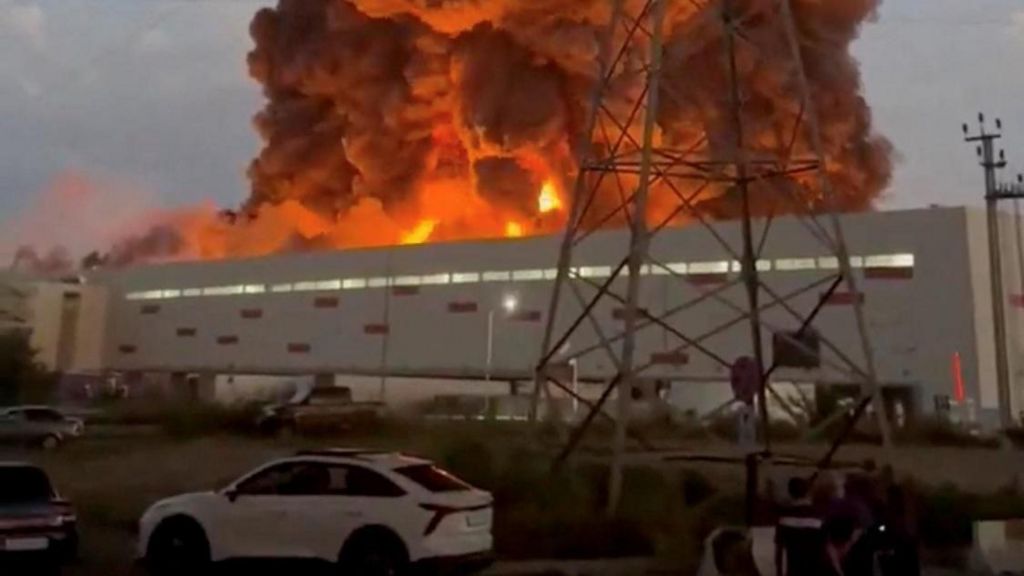
    Nearly four and a half years into Russia’s full-scale invasion of Ukraine, Kyiv has expanded its long-range drone campaign to target critical domestic logistics infrastructure inside Russia, shifting focus from energy facilities to warehouses operated by Wildberries, Russia’s largest online retail marketplace. Over a four-day span, four separate Wildberries distribution hubs have been hit by drone attacks, leaving eight workers dead, dozens injured, and an estimated $1 billion worth of stored inventory reduced to ash.

    The first wave of attacks struck over the weekend, targeting facilities in Elektrostal, just east of Moscow, and Kotovsk in the Tambov region, roughly 250 miles from the Ukrainian border. Seven night-shift employees were killed in the Kotovsk strike, with one additional fatality recorded at Elektrostal. Follow-up attacks overnight Wednesday hit two more hubs in Krasnodar and Nevinnomyssk in Russia’s Stavropol region, with Wildberries owner Tatiana Kim confirming additional unspecified casualties.

    Ukrainian officials have framed the strikes as a deliberate strategic move targeting infrastructure that supports Russia’s military effort. Ukrainian President Volodymyr Zelenskyy affirmed the shift in targeting, stating “We are, quite justly, bringing the war back home – to Russia.” Kyiv claims the targeted warehouses stored sanctioned electronic components used for Russian drone manufacturing and military navigation equipment. Pro-Kremlin military bloggers have also acknowledged that Russian volunteers and military suppliers regularly use major online marketplaces including Wildberries to source tactical gear and dual-use components for frontline forces.

    Independent verification of military stockpiles at the targeted sites has not been obtained, and the Kremlin has denied that domestic online platforms are used to supply the Russian army. Regardless of the military intent, the strikes have imposed devastating costs on thousands of independent Russian small and medium-sized sellers who rely entirely on Wildberries to store, distribute, and sell their goods to consumers across the country.

    Unlike Western marketplace giant Amazon, which operates both a first-party retail business and third-party seller platform, Wildberries and its primary competitor Ozon function almost exclusively as intermediary marketplaces. More than 85% of Russia’s economically active population uses the two platforms, and in many remote, underserved regions of the country, they are the only reliable source of everyday goods from clothing to household appliances. This business model means nearly all losses from the attacks fall to independent sellers, not the company itself.

    Hundreds of sellers have reported losing their entire stockpiles in the strikes, with many sharing devastating accounts of financial ruin on Russian social media. One seller, a mother of a disabled child who built her small business from scratch, wrote in a viral expletive-laden post that she had lost 1 million rubles ($12,700) in inventory, writing “We’re already getting screwed over from every direction as it is.”

    A stationery seller who delivered her full back-to-school inventory to the Elektrostal warehouse just one day before the attack lost all of her stock just weeks before the critical autumn shopping season. A teenage clothing retailer reported 1.4 million rubles ($13,300) in lost inventory and has paused new shipments, noting “The outlook for working with Wildberries is very murky. Right now I have enough of a safety cushion to survive the current losses, but if there are more strikes, I probably won’t manage.”

    Most sellers do not expect any meaningful compensation for their losses. Less than two weeks before the first strike, Wildberries updated its seller contracts to add drone attacks to its list of force majeure events, exempting the company from liability for inventory destroyed in attacks. While Kim has promised not to abandon affected sellers, offering temporary fee waivers and discounted shipping rates, these measures have done little to ease widespread anxiety among the platform’s seller base.

    The strikes come as Russia’s civilian small business sector already faces mounting pressure under the weight of wartime economic policies. Despite Russian President Vladimir Putin repeatedly naming support for small and medium-sized enterprises a top priority even during the war, the sector has faced a cascade of new challenges in 2026. In January, the national value-added tax was increased from 20% to 22% to fund additional defense spending, and targeted tax breaks for small businesses were eliminated. Data from business intelligence platform Kontur.Fokus shows more than 209,000 small and medium-sized companies closed in the first quarter of 2026, a 9% increase from the same period in 2025.

    Additional pressures include widespread internet restrictions, a crackdown on independent messaging apps that disrupted business operations, and a national fuel crisis triggered by earlier Ukrainian drone strikes on Russian oil depots and refineries. Analysts note the Wildberries strikes represent another major blow to a sector already reeling from cumulative strain.

    “There are already a lot of nails, and they keep hammering them in. Is [the attack on Wildberries warehouses] another nail in the coffin? Well, yes, of course,” said Ruben Eniklopov, a professor at Barcelona’s Pompeu Fabra University. While Russian small businesses have demonstrated surprising resilience through the first years of the war, high inflation, widening budget deficits, and a 23% drop in oil and gas revenues compared to the first half of 2025 have left the civilian economy increasingly fragile. Russia’s large peacetime financial reserves are increasingly being diverted to fund the war effort, crowding out support for civilian economic growth.

    The Wildberries strikes mirror a recent pattern of reciprocal targeting of civilian logistics infrastructure by both sides. In recent weeks, Russia has launched drone and missile strikes on sorting terminals and warehouses belonging to Ukraine’s largest private postal operator Nova Poshta, major retail chain ATB, and confectionery group Roshen. With frontline combat largely stalled in a stalemate, both sides have expanded long-range strike campaigns to disrupt supply chains and put increasing pressure on the opposing side’s domestic population.

  • Google burning through cash with spiralling AI costs

    Google burning through cash with spiralling AI costs

    In the intensifying global race to dominate the next generation of artificial intelligence technology, two of the world’s most high-profile tech and clean energy companies have booked rare dips into negative free cash flow, as aggressive capital spending on AI and next-generation infrastructure outpaces near-term incoming cash.

  • Watch: What we know about the US-Saudi nuclear deal

    Watch: What we know about the US-Saudi nuclear deal

    A proposed nuclear cooperation deal between the United States and Saudi Arabia has emerged as a landmark development in international diplomatic and energy circles, drawing widespread global attention for its far-reaching geopolitical and strategic consequences. BBC correspondent Sarah Smith has delivered a detailed breakdown of what is currently known about the agreement, unpacking its complex implications for both regional dynamics and global non-proliferation efforts.

    The framework of cooperation, which has been months in the making, centers on enabling Saudi Arabia to develop its civilian nuclear energy sector, with support from US companies and diplomatic backing from the White House. Unlike military nuclear programs that focus on weapons development, this deal is structured around peaceful applications of nuclear technology, including power generation, medical research, and water desalination – critical needs for a desert nation like Saudi Arabia that is seeking to diversify its energy mix away from fossil fuels.

    Yet the agreement has sparked significant debate around the world. One of the core points of contention is Saudi Arabia’s refusal so far to commit to the strictest international non-proliferation standards, specifically the Comprehensive Safeguards Additional Protocol that allows for more intrusive inspections by the International Atomic Energy Agency. Critics warn that without this commitment, there is a risk that technology transferred for civilian use could eventually be diverted to develop a nuclear weapons program, which would upend the fragile security balance in the already volatile Middle East.

    For the United States, the deal carries major strategic goals. It aims to strengthen the decades-long security alliance between Washington and Riyadh, counter growing Iranian influence in the region, and open up billions of dollars in commercial opportunities for American nuclear technology firms. It also aligns with Saudi Arabia’s ambitious Vision 2030 reform agenda, which seeks to modernize the kingdom’s economy and infrastructure ahead of a post-oil future.

    Sarah Smith’s analysis outlines that while the agreement is being framed as a landmark step in bilateral relations, it still faces significant hurdles. It must win approval from the US Congress, where many lawmakers from both major parties have raised concerns about Saudi Arabia’s human rights record and nuclear proliferation risks. Additionally, regional powers including Iran have already voiced strong opposition, arguing that the deal would create a new nuclear arms race in the Middle East.

    As negotiations continue to finalize the details of the agreement, global powers and non-proliferation watchdogs are closely monitoring every development, acutely aware that the outcome will shape regional security and global non-proliferation efforts for decades to come.

  • Watch: What it was like inside Maduro’s court hearing

    Watch: What it was like inside Maduro’s court hearing

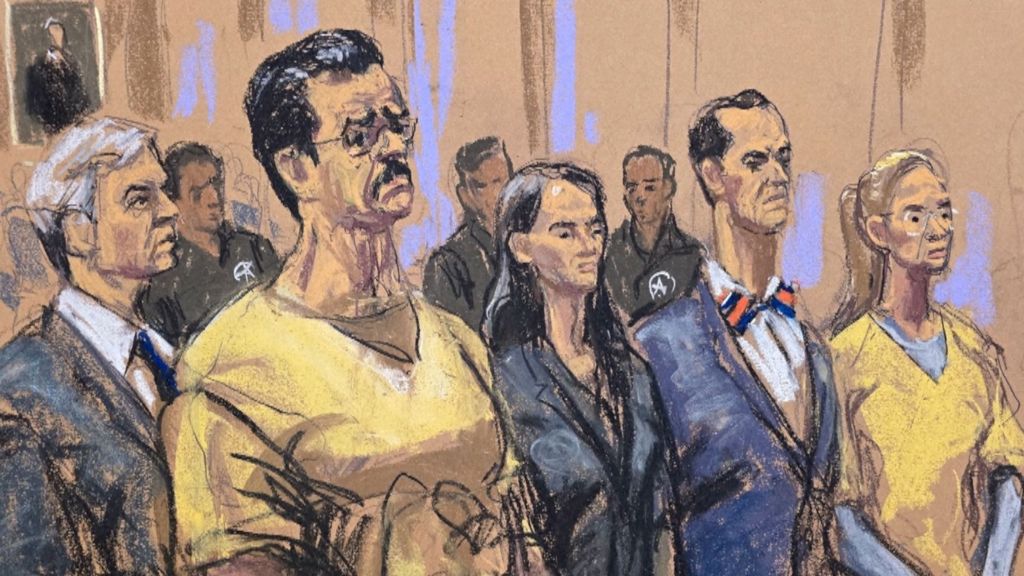
    For the first time, international press were granted access to a federal courtroom in the United States where a critical procedural hearing unfolded for Nicholas Maduro, the ousted former Venezuelan leader. The BBC’s senior correspondent Kayla Epstein was among the few journalists allowed inside the venue, offering a rare on-the-ground perspective of a legal proceeding that has drawn global geopolitical attention.

    During the session, the presiding judge formally announced a concrete start date for Maduro’s upcoming criminal trial, moving the high-profile case one step closer to a full judicial resolution. The hearing itself unfolded in an orderly, controlled atmosphere, with tight security protocols in place to manage the extraordinary public and diplomatic interest surrounding the proceedings. Maduro was present for the scheduling hearing, participating in the procedural steps alongside his legal team before the court.

    The case marks a historic moment in US-Venezuela relations, bringing a former head of state before an American criminal court on charges that stem from years of international scrutiny of the Maduro government’s activities. The scheduling announcement sets the stage for a months-long legal process that is expected to unpack complex allegations related to narco-terrorism, corruption, and other criminal activities, and will almost certainly amplify already tense diplomatic tensions between the US and remaining Maduro-aligned factions in Venezuela. Epstein’s firsthand access offers the public an unfiltered look at the opening stages of a trial that will be watched closely by policymakers, diplomatic observers, and voters across the Americas.

  • Chinese FM urges US to properly manage differences, address China’s legitimate concerns

    Chinese FM urges US to properly manage differences, address China’s legitimate concerns

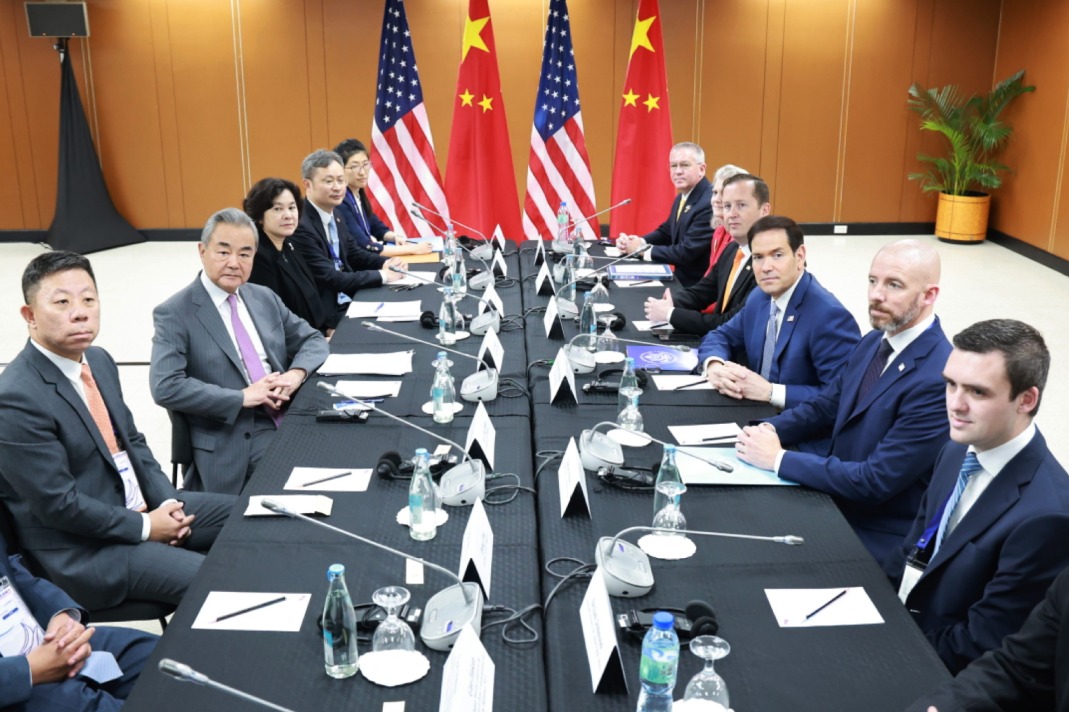
    In a high-stakes bilateral meeting held Wednesday in Manila, Philippines, Chinese Foreign Minister Wang Yi has pushed back against a recent string of antagonistic statements and actions from the United States, issuing a clear call for Washington to respect Beijing’s core interests, uphold the long-standing one-China principle, effectively manage bilateral disagreements, and address China’s fully legitimate concerns. The meeting, which brought together Wang – who also serves as a member of the Political Bureau of the Communist Party of China Central Committee – and US Secretary of State Marco Rubio, comes at a critical turning point for China-US relations. Wang opened the discussion by noting that 2026 marks a pivotal juncture after the landmark Beijing summit between the two nations’ heads of state, during which top leaders laid out a clear roadmap for building a constructive, strategically stable bilateral relationship. This agreed-upon direction, Wang emphasized, represents meaningful progress for the two global powers as they work to navigate peaceful coexistence. It aligns with the core interests of both the Chinese and American people, and matches the widespread hopes of the broader international community for stable great power relations. Today, the shared task for both sides is to remain firmly on the path charted by their leaders, Wang argued, urging the US to work with China to push past distractions and unnecessary barriers. Turning the consensus reached at the highest level into actionable policy and mutual understanding across all levels of government and societal sectors, he said, remains the urgent priority going forward. Wang further noted that productive, well-managed relations between China and the US can deliver global public goods: through bilateral strategic stability, the two countries can advance broader world peace and security, and constructive engagement can open new doors for global collective action on pressing shared challenges. Beyond bilateral topics, the two top diplomats also exchanged detailed views on a range of pressing international and regional hotspot issues. Following the closed-door discussions, both sides characterized the meeting as pragmatic, positive, and constructive. They reached a shared agreement to maintain open and functional political and diplomatic communication channels, put in place thorough preparations for the next round of high-level China-US exchanges, and continue working toward substantive progress in building the agreed-upon constructive and strategically stable bilateral relationship.

  • Indian police cracked down on ‘cockroach’ protesters. They went home and made memes about it

    Indian police cracked down on ‘cockroach’ protesters. They went home and made memes about it

    When tens of thousands of demonstrators with the Cockroach Janta Party (CJP), a youth-led Indian grassroots movement, marched toward India’s parliament in New Delhi on Monday to demand government accountability over a series of high-profile exam paper leaks and recruitment scandals, few could have predicted the defining image of the day would not be tear gas canisters or baton charges—but viral Instagram memes and deadpan jokes.

    The CJP movement first emerged from widespread student anger over persistent exam irregularities, and has since expanded into a broader call for transparency, targeting Education Minister Dharmendra Pradhan with demands for his resignation. Pradhan has rejected these calls, instead accusing opposition parties of exploiting young people’s frustrations for political gain. The Monday demonstration, one of the largest anti-government gatherings in New Delhi in recent years, quickly escalated when police moved to disperse the crowd, firing tear gas and charging protesters with batons. Authorities also shut down mobile internet access across the protest zone to limit information sharing. By the end of the day, both sides reported injuries: protesters said dozens of demonstrators had been beaten by police, while law enforcement confirmed multiple officers were also hurt.

    Once internet access was restored, a flood of first-person content—short video reels, personal dispatches, and sardonic memes—poured onto social media platforms, capturing the day’s chaos through a uniquely young, internet-native lens. Among the most viral content was a pre-protest “fit check” (a popular social media trend where creators show off their outfits) filmed by 20-year-old Chhavi, who smiled at her camera and joked, “Going to get beaten by cops, guys.” Hours later, after enduring the police crackdown, Chhavi still posted her content smiling—posing beside riot officers, flashing victory signs, and documenting the chaos unfolding around her.

    Chhavi’s video was far from an anomaly. Other young protesters shared equally striking, dryly humorous content: one young woman calmly reapplied lipstick in front of a line of fully geared riot police; another quipped she was “serving face at the protest because the government couldn’t serve justice”; one reel cut abruptly from a casual outfit reveal to footage of protesters fleeing tear gas; another offered a deadpan “product review” of tear gas, rating its scent and stinging power like a new street food vendor.

    To outside observers, this mix of humor and violence can seem contradictory. But for the young creators behind the content, the jokes are not a dismissal of danger—they are a way to live alongside it. Most of the self-deprecating humor centers on the absurdity of their own experiences: joking about the kilometers logged running from baton charges, or the strangeness of filming an outfit reveal moments before tear gas fills the street. The fear never disappears; it simply coexists with laughter.

    Digital culture and political science experts argue this trend signals a fundamental shift in how a generation raised entirely online engages in political protest. “Older generations separated political life from everyday life,” explained Joyojeet Pal, a University of Michigan professor specializing in technology and society. “Younger generations grow up with politics alongside their memes, their family pictures and their daily commutes.”

    Critics have accused some protesters of treating state violence as social media content, chasing viral engagement instead of taking the movement seriously. But Chhavi pushed back on that claim, saying the choice to laugh was a coping mechanism in the face of terror. “I was adrenaline-soaked, scared, petrified,” she said. “It was either laugh in the face of fear or cry.”

    Payal Arora, a digital anthropologist at Utrecht University, notes that the instinct to document political upheaval with smartphones has grown increasingly common across global protest movements. What was once the exclusive work of professional journalists is now done by ordinary participants, preserving moments that would otherwise be lost to official erasure. “The act of capturing a protest is often an end in itself,” Arora said. “Their message is more like: ‘This happened. We were there. We will remember.’”

    Nishant Shah, director of the Digital Narratives Center at the Chinese University of Hong Kong’s School of Journalism and Communication, says misinterpreting the protesters’ humor as detachment misses its core purpose. Humor has long been a unifying tool in protest movements worldwide, helping ease tension, build collective solidarity, and sustain participants through moments of intense fear. “Even when the cause is brutal and the fight fierce,” Shah said, “there is joy, laughter, songs and hope. Without those things, protests don’t sustain themselves.”

    For 21-year-old first-time protester Ishaan, that purpose was clear when he posted his own viral reel after a tear gas canister landed near his position. Instead of fleeing immediately, he pulled out his phone to film, and captioned the clip of drifting white smoke: “Delhi Police doesn’t realise I’m from Jamuna Paar.” The joke is familiar to most Delhi residents: Jamuna Paar, the low-income eastern neighborhoods across the Yamuna River, has long been mocked for its chronically neglected civic infrastructure. “The smell there is worse than the tear gas,” Ishaan explained with a laugh. He emphasized the joke was never meant to trivialize what happened. “It was about refusing to let fear dictate the memory of the day,” he said.

    Every generation of protest movement develops its own shared cultural language to bind participants together: India’s independence movement relied on rousing songs and speeches; trade unions carried iconic banners; 20th century student movements embraced hand-painted posters and street theater; more recent movements, from anti-citizenship law protests to the year-long farmers’ protest, used murals, constitutional readings, and border livestreams to build their community. The CJP movement’s language is that of a generation raised online, and experts say dismissing it as frivolous is a failure to understand how modern protest works.

    The dynamic nature of memes sets them apart from older forms of protest communication, Shah explained: a meme gathers meaning as other protesters remake it, parody it, and share it across their own networks. Sharing the meme becomes an act of protest in itself. That was the case for 18-year-old engineering student Manit, who attended his first protest Monday and almost chose not to film anything. “I was scared,” he said. “Then I looked around. Everyone was recording, talking to the camera, just being themselves. So I asked my friend to record me.”

    His viral reel looked identical to the casual workout content he posts regularly—until the final frame, which revealed the running distance logged on his fitness app had been accumulated while fleeing a police baton charge. “I escaped the lathi charge,” he laughed. “I ran and ran and ended up completing my workout too.” For Manit, the approach makes perfect sense. “Not all young people read the news,” he said. “If humour can make important conversations accessible, why wouldn’t we use it?”

    *Names of some protesters have been changed to protect their identities.*

  • R. James Woolsey, CIA director during the Clinton administration, dies at 84

    R. James Woolsey, CIA director during the Clinton administration, dies at 84

    Veteran American national security strategist R. James Woolsey, who steered the Central Intelligence Agency through two years of profound upheaval after his appointment by President Bill Clinton, has passed away at the age of 84.

    Multiple U.S. news outlets confirmed that Woolsey, who assumed the role of CIA director in the opening months of 1993, died Tuesday at his Washington, D.C., residence. His wife, Conchita Sarnoff Woolsey, confirmed the cause of death was a stroke, and told *The Washington Post* that his health had steadily deteriorated over recent years due to complications from Havana syndrome, the still-unexplained medical condition that has impacted dozens of U.S. diplomatic and government personnel stationed overseas.
    First documented among U.S. officials posted in Havana, Cuba, in 2016, Havana syndrome is characterized by a range of persistent neurological symptoms including chronic headaches, impaired balance, cognitive difficulties, and chronic sleep disruption, which gave the condition its widely recognized name.

    Woolsey’s two-year tenure at the head of the CIA ended in early 1995, a period marked by significant controversy following the exposure of longtime CIA officer Aldrich Ames, who confessed to spying for the Soviet Union and later Russia for nearly a decade. Ames, a career agency operative, admitted to accepting $2.5 million from Moscow in exchange for leaking classified U.S. intelligence that exposed scores of Western intelligence assets between 1985 and his 1994 arrest. Critics of Woolsey argued that agency leadership, including Woolsey himself, failed to impose sufficient accountability on senior supervisors who missed repeated red flags surrounding Ames’ espionage activity.

    In response to the backlash, Woolsey acknowledged that no intelligence agency could ever guarantee full immunity from moles like Ames, and urged policymakers and agency leadership to avoid excessive overreaction to the security gaps Ames’ case exposed. He warned that rushed, overly harsh crackdowns on internal agency procedures carried its own risks, cautioning that overly restrictive security protocols could foster a culture of paranoia and unsubstantiated accusations that would further erode workforce morale at the agency.
    Beyond the Ames scandal, Woolsey also navigated intense post-Cold War budget pressure from congressional leaders pushing for deep cuts to the CIA’s overall budget as the United States reoriented its national security priorities after the collapse of the Soviet Union.

    Woolsey’s decades-long career in public service spanned multiple presidential administrations from both major U.S. political parties. Before taking the helm of the CIA, he served as Undersecretary of the Navy during Jimmy Carter’s presidency, and advised both Republican and Democratic White Houses on complex arms control negotiations. In 1989, President George H.W. Bush appointed Woolsey as a special negotiator for the stagnant conventional arms reduction talks between the NATO alliance and the Soviet-led Warsaw Pact. Just one year later, Bush and Soviet leader Mikhail Gorbachev signed the landmark Conventional Armed Forces in Europe Treaty, a landmark agreement that dramatically reduced conventional military deployments across the European continent.

    Born in Tulsa, Oklahoma, on September 21, 1941, Woolsey built an impressive academic foundation for his public service career: he earned his undergraduate degree from Stanford University, went on to study as a Rhodes Scholar, and completed his legal education at Yale Law School. He launched his federal government career in 1970 as a staff member on the National Security Council, before moving to Capitol Hill to serve as general counsel for the Senate Armed Services Committee. Outside of his public service appointments, Woolsey worked as a private practice attorney at a Washington-based law firm between government stints.

  • A year after deadly jet crash at Bangladesh school, families demand answers

    A year after deadly jet crash at Bangladesh school, families demand answers

    On a seemingly ordinary school day in July 2025, catastrophe struck the busy Dhaka neighborhood of Uttara, when a Bangladesh Air Force training jet crashed straight into Milestone School and College — a private educational facility teeming with hundreds of active, unsuspecting students. The impact and subsequent raging fire turned a hub of learning into a scene of unthinkable chaos, leaving 34 dead and 160 more injured. Most of the casualties were children, making this the deadliest aviation disaster Bangladesh has witnessed in more than half a century.

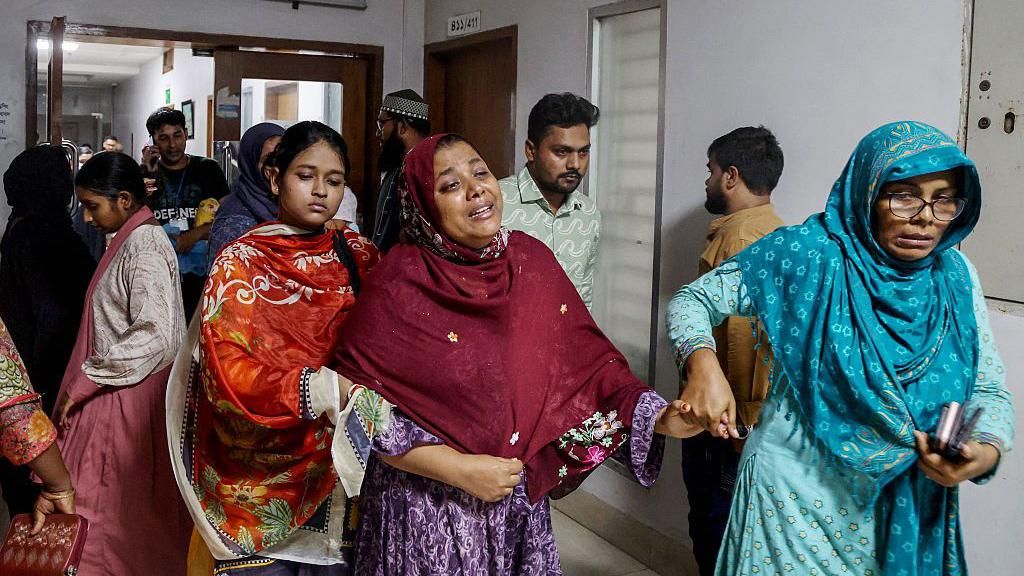
    Now, one year after the tragedy, survivors and grieving family members gathered in Dhaka this week to honor the lives lost — and to reiterate their desperate demand for long-overdue accountability and transparency. For many of the young survivors, the physical and psychological scars of that day remain a daily prison. Sixth-grader Nure Jannat Yusha, who suffered burn injuries in the crash, describes constant fear and trauma that has shattered her once-normal life. “Even now, if I go to school and see a plane, I feel afraid. I can’t sleep at night. In my dreams, someone is throwing me into the fire,” she told BBC Bengali. Once a student who dreamed of becoming a professional dancer, Yusha has abandoned that aspiration; she no longer has any interest in attending classes, gripped by constant paranoia that another plane will fall from the sky. Her story is far from unique.

    Fifth-grader Mehreen, another injured student, can no longer attend school at all. Her injuries leave her in severe pain when exposed to even small amounts of sunlight, and the trauma has erased her once-sharp ability to learn and retain information. “Earlier, if I read something, I would memorise it in two minutes. Now I can’t memorise a line in two hours,” she explained. Like Yusha, she struggles with nightly insomnia and recurring nightmares, unable to outrun the memory of the crash.

    In the immediate aftermath of the disaster, Bangladesh’s government established an investigative commission to unpack the causes of the crash. The committee submitted its final findings to state officials last November, but the full report has never been released to the public. A leaked copy obtained by BBC Bengali has revealed damning conclusions that contradict early official claims. Contrary to the Bangladesh Armed Forces’ initial statement that the crash was caused by an aircraft mechanical fault, the investigation found the jet itself had no technical failures. Instead, the report attributes the disaster to multiple systemic failures: the pilot lacked sufficient training, there was inadequate ground supervision for the training flight, Milestone School violated critical building safety codes (including only having a single exit for nearly 900 students), and hundreds of other buildings — including multiple schools and hospitals — located near Dhaka’s international airport have illegally violated height restriction rules, putting thousands of lives at risk daily.

    Grieving family members say these unaddressed safety lapses mean the same disaster could happen again. Mansur Helal, whose wife Mahreen Chowdhury — a schoolteacher at Milestone who died saving trapped students from the burning building — told the memorial gathering that the status quo is unacceptable. “No one can give a guarantee that another plane will not fall onto this school in the future,” Helal said, noting that between 2,500 and 3,000 students still attend the campus daily. “This is truly a horrific situation.”

    Helal and other attendees are demanding three core actions: the immediate public release of the full investigative report, full implementation of the compensation and support measures already recommended by the commission, and sweeping policy changes to restrict hazardous training flights over densely populated residential and educational areas and enforce building safety codes around the airport. While the commission already called for financial compensation and expanded care for survivors, none of these measures have been put into practice one year on.

    At Tuesday’s memorial, Health Minister Sardar Sakhawat Hossain stated the government would provide support to survivors requiring ongoing medical care, and Zubaida Rahman, wife of Prime Minister Tarique Rahman, praised survivors for their courage, calling it “a source of inspiration for the nation.” But those words have done little to address the unmet needs of families still waiting for answers, and survivors still struggling to rebuild their lives shattered by a disaster that could have been prevented.

  • Blocked by censors, China’s animal lovers take fight against abuse offline and overseas

    Blocked by censors, China’s animal lovers take fight against abuse offline and overseas

    In late June, graphic footage of a horrific animal abuse incident in southern China’s Guangdong province ignited widespread public fury that has spilled across national borders, becoming a global rallying cry for long-overdue animal cruelty laws in China. The video, which shows four boys under the age of 14 beating three newborn stray puppies to death with sticks before burning their mother, a stray dog named Wang Wang, to death while the children laughed, quickly spread across Chinese social media platforms, triggering an immediate wave of shock and grief.

    Chinese authorities responded to the outcry by moving to scrub most posts and mentions of the incident from domestic internet platforms, citing the need to protect the privacy and welfare of the underage perpetrators. In an official statement, local officials urged the public to stop sharing the disturbing footage, avoid so-called cyberbullying of the minors, and maintain a supportive environment for youth rehabilitation. Following the incident, Jieyang city authorities announced that the four boys would not face any criminal charges, and would instead be transferred to a specialized youth education facility; no further details on the placement or the facility’s programming have been released to the public.

    This official response has not quieted public anger, and instead amplified calls for systemic change: China currently has no standalone national legislation that criminalizes animal cruelty, leaving abuse cases without consistent legal consequences. While Chinese censors have restricted broad circulation of the full video and removed high-profile posts from public figures that called for animal protection reform – including posts from Chinese actor Du Jiang and Taiwanese actress Joe Chen – discussion of the incident and the broader demand for animal cruelty laws persists. Trending keywords related to Wang Wang and animal protection remain accessible on major Chinese platforms, and many domestic users have found creative ways to keep the conversation alive, despite repeated content removal restrictions.

    The censorship push has also driven animal rights advocates to organize action outside mainland China to amplify their cause, turning a local incident into an international movement. In New York City’s iconic Times Square, a large digital billboard now cycles images of Wang Wang every 35 minutes, bearing the moving caption: “She was loved. She wanted to live. She should still be here.” Near the Taipei 101 skyscraper in Taiwan, a second billboard displays Wang Wang nursing her puppies with the message: “This planet is their home too. Justice for Wang Wang.”

    CK, a Taiwanese activist who contributed NT$30,000 (approximately $930) to fund the Taipei billboard, told reporters she was left unable to eat or sleep normally for days after seeing the killing footage. She explained that the cross-border campaign was organized to create collective momentum for change, saying, “It makes everyone feel like we’re speaking out together on this issue, rather than airing our individual opinions online. The world needs to know about the cruelty these dogs have been subject to.” CK has also set up public accounts on global social platforms including Reddit and X to share the incident with international audiences, while another Taiwanese activist named Elara used artificial intelligence to translate a full summary of the incident into more than 10 languages, including Japanese, Portuguese, and Russian, to widen global outreach. Activists in Hong Kong and Macau have also raised funds to place awareness posters on public buses and trains across both regions.

    Within mainland China, grassroots action continues to gain traction across public and commercial spaces. During a recent professional football match in the northeastern city of Dalian, a large stadium screen displayed a cartoon tribute to Wang Wang and her puppies before kickoff, with the message: “Every life deserves respect and kindness.” Domestic Chinese brands including beauty label Amortals and streetwear brand Wah Yan Ching Nin have funded public awareness ads outside major shopping malls across the country, calling for an immediate end to animal abuse and passage of national anti-cruelty legislation. Even on e-commerce giant Taobao, sellers are offering stickers and car decals featuring Wang Wang and her puppies to raise awareness, while Weibo users continue to post calls for sustained action, urging supporters not to let public discussion fade.

    International animal welfare organizations have also been drawn into the campaign. The Italy-based International Organisation for Animal Protection announced it has received more than 100 public reports from people across the globe calling for the group to intervene, and has formally requested additional information on the incident and broader animal protection policy from Chinese authorities.

    The incident has sparked broader debate over competing ethical priorities: China’s decision to restrict identification of the underage perpetrators aligns with global standards that typically protect the identities of juvenile offenders to avoid long-term psychological harm from public exposure. Even so, many activists argue that the lack of national animal cruelty legislation is the core systemic failure that allowed this incident to occur without legal consequences, and that public outcry is necessary to force long-term reform. The Wang Wang killing is the latest in a string of high-profile animal abuse cases that have galvanized Chinese public opinion in recent years, with the graphic, visceral footage of the killing striking a particularly deep emotional chord with animal lovers across the country. One anonymous animal welfare advocate from eastern China told reporters, “We can’t make our voices heard, so many people outside China are actively helping us to share this message.”