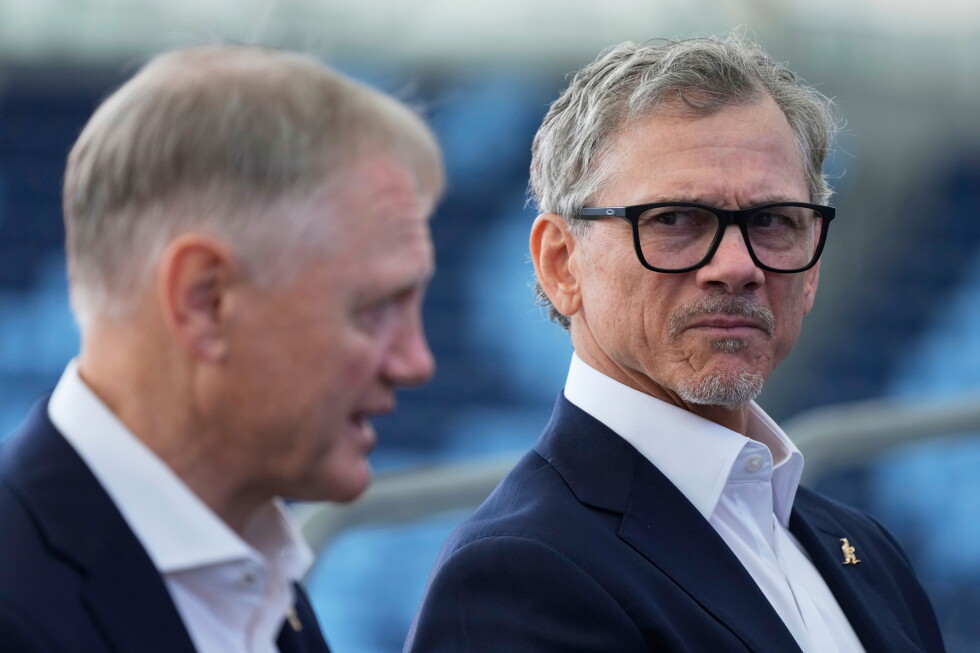
Australia’s newly appointed men’s national rugby union head coach Les Kiss has revealed his first 34-player squad ahead of the Wallabies’ upcoming two-test home-and-away series against Japan, making only minimal changes to the team’s recent roster after the side finished the inaugural Nations Championship with one win and two losses. The announcement, made publicly on Thursday, only includes one uncapped rookie — center Isaac Henry — and notably omits veteran prop James Slipper, Australia’s most-capped men’s international rugby player, who just made his return to top-tier international play in the Nations Championship just weeks ago. Taking Slipper’s place as an option at the loosehead prop position is newcomer Isaac Kailea, one of just two fresh faces to earn a call-up alongside lock/back row Lukhan Salakaia-Loto. In a statement following the squad announcement, Kiss framed selection as a consistently difficult process, noting that the coaching group built this roster around three core pillars: current on-field form, team cohesion, and alignment with the new coaching staff’s strategic playing style. The two tests against Japan will kick off in Osaka on August 8, with the second fixture scheduled one week later in Townsville, Queensland. Two regular squad members — center Len Ikitau and back row Tom Hooper — were ruled out of selection due to lingering ankle and shoulder injuries respectively. No. 8 Harry Wilson has been tapped to lead the squad as captain for the series. The roster is split between 19 forward players and 15 backs, who are set to gather for a pre-series training camp in Sydney next week before departing for Japan on August 1. The Japan series comes just after the Wallabies wrapped up their Nations Championship campaign over the past three weekends. Australia opened the tournament with back-to-back home losses: falling to Ireland in Sydney, then dropping a match to France in Brisbane, before closing out with a victory over Italy in Perth, Western Australia. That Perth test marked the final match in charge for former head coach Joe Schmidt, who had originally planned to step down from his role last October. Schmidt agreed to extend his tenure to allow Kiss to finish out his contract as head coach of the Brisbane-based Queensland Reds in the Super Rugby competition before taking over the Wallabies post. Kiss’s contract will run through the 2027 Rugby World Cup, which Australia is set to host. The full 34-player squad called up for the Japan series is as follows: Forwards: Allan Ala’alatoa, Miles Amatosero, Angus Bell, Charlie Cale, Josh Canham, Isaac Kailea, Fraser McReight, Josh Nasser, Zane Nonggorr, Brandon Paenga-Amosa, Billy Pollard, Aidan Ross, Lukhan Salakaia-Loto, Lachlan Shaw, Carlo Tizzano, Taniela Tupou, Rob Valetini, Jeremy Williams, Harry Wilson (captain). Backs: Jock Campbell, Filipo Daugunu, Ben Donaldson, Carter Gordon, Isaac Henry, Max Jorgensen, Ryan Lonergan, Tate McDermott, Declan Meredith, Hunter Paisami, Dylan Pietsch, Harry Potter, Joseph-Aukuso Suaalii, Kalani Thomas, Tom Wright.
博客
-
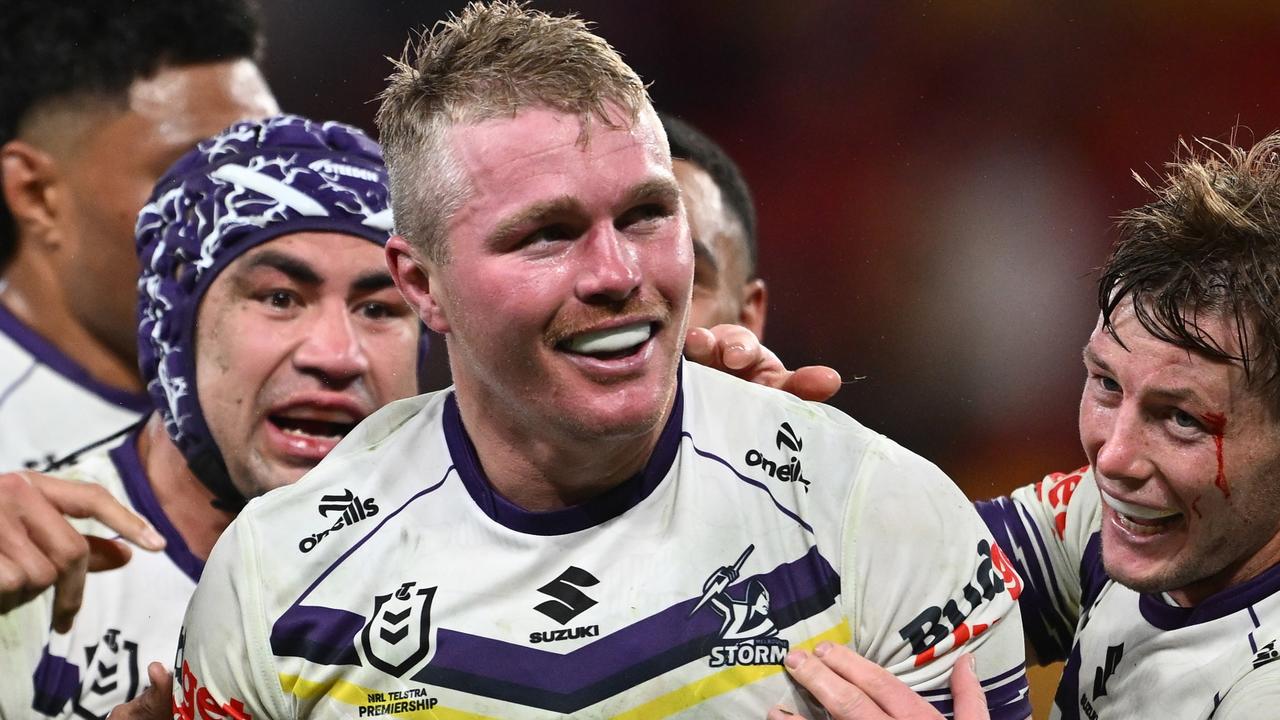
‘Quite remarkable’: Storm sweat on star playmaker as veteran leader prepares for major milestone
The Melbourne Storm is balancing two critical storylines heading into their high-stakes Friday night NRL clash with the South Sydney Rabbitohs at Accor Stadium: waiting on a late fitness call for star halfback Jahrome Hughes, and preparing to honor one-club workhorse Josh King’s 200th career NRL game. Hughes, a former Dally M Medal winner, has been sidelined by a persistent hamstring injury that has limited him to just three appearances since the start of June. He missed the Storm’s round loss to the Sydney Roosters last week as the club managed the nagging issue, but his name has been included in the game day squad ahead of Friday’s crunch fixture – a significant boost for a Melbourne side already crippled by injuries to key players. Five-eighth Cameron Munster is already sidelined, while winger Will Warbrick recently joined the club’s lengthy casualty list with an achilles injury, leaving the Storm thin on playmaking and backline depth. Storm head coach Craig Bellamy confirmed that the final call on Hughes’ availability will not come until after the team’s traditional captain’s run leading up to the match. “He hasn’t done much for a couple of weeks,” Bellamy told reporters of his star halfback. “We’ll just see how he goes today and then we’ll go from there.” Utility back Trent Toelau has been placed on standby to step into the side if Hughes is forced to withdraw late. Regardless of Hughes’ status, the entire Storm squad has highlighted that they are focused on delivering a win to celebrate King’s remarkable milestone. A reliable front-rower, King spent the first six years of his professional career with the Newcastle Knights before making the move south to join Melbourne ahead of the 2022 NRL season. Since crossing clubs, he has built a reputation as one of the league’s most durable and consistent forwards, missing almost no games through injury or form slumps. In his first season with the Storm, King played 25 matches, and he has notched 26 appearances in every subsequent campaign – a feat that is even more impressive given the high physical toll of playing in the middle of the scrum. Bellamy paid an extensive tribute to King, framing the 200-game milestone as a testament to the forward’s relentless work ethic rather than just good fortune. “To play 200 games at NRL level in the position that he plays and the way he plays is quite remarkable in the time that he’s done it,” Bellamy said. “He’s hardly missed any games. That’s not just being lucky, it’s a lot of hard work. The one thing that really struck me when he first came here was how much time and effort he was willing to put into his preparation for games and training. He’s always done the little things and has always been consistent with it. It didn’t matter how long or boring it got, he made sure he did what he thought he had to do.” Bellamy also highlighted King’s quiet, lead-by-example leadership style that saw him emerge as a core part of the club’s leadership group even before he received an official title. “He was a fairly quiet bloke when he first came here, a typical country bloke from Singleton,” Bellamy recalled. “He was a leader before his time in that he didn’t need to say anything. He wouldn’t have said it, but it was basically ‘look at what I do, I’m leading here’ because he was doing all the little things well and was always doing the extras. Whatever he did, he always did it the best he could and as hard as he could and as fast as he could. He was a leader before he even had a title, but now he’s in our leadership group and sets a great example.” The Storm historically lift their performance for milestone matches for long-serving players, and the entire squad has already signaled their intention to put forward their best performance to honor King’s achievement.
-

Rebel Wilson cleared of defaming an actor who starred in her directorial debut
A high-stakes defamation dispute centered on Hollywood star Rebel Wilson has come to a decisive close, with an Australian federal judge throwing out the lawsuit brought against Wilson by Charlotte MacInnes, the lead actor in Wilson’s first directorial project, the musical comedy *The Deb*.
The legal conflict traces its origins back to September 2023, when an off-set incident unfolded between MacInnes and one of the film’s producers during production in Sydney. According to Wilson’s prior accounts, MacInnes told her the morning after a group outing to Bondi Beach that the producer had pressured her into joining a bath at their shared production accommodation, an interaction that left MacInnes feeling uncomfortable. Wilson later claimed on social media that MacInnes ultimately withdrew the sexual harassment complaint she had filed over the encounter in order to progress her acting career on the project.
MacInnes, however, has repeatedly denied ever making any sexual harassment complaint at all, arguing that Wilson’s four social media posts published between September 2024 and July 2025 were false and damaging to her professional reputation. She also claimed Wilson had breached a confidentiality agreement around the private on-set incident, bringing both defamation and breach of confidence claims before the Federal Court of Australia.
On Wednesday, Justice Elizabeth Raper delivered a final ruling that fully exonerated Wilson. In her written judgment, Raper found that none of Wilson’s social media posts met the legal definition of defamation. She further ruled that MacInnes had failed to meet the legal burden of proving that the posts caused serious harm to her reputation, nor could she establish that Wilson had violated any confidentiality agreement. Raper dismissed the entire case and ordered MacInnes to cover all of Wilson’s legal costs stemming from the lawsuit.
Shortly after the ruling was issued, Wilson—who gained global fame for her leading roles in hit comedies *Pitch Perfect* and *Bridesmaids*—shared a public statement on her Instagram page reacting to the decision. She thanked Justice Raper and Australia’s independent legal system, describing the outcome as a “substantial win” and noting that she was eager to put the dispute behind her and move forward with her career.
As of Thursday, legal representatives for MacInnes had not issued any public statement or responded to media requests for comment on the ruling. The legal drama comes just weeks ahead of the upcoming release of *The Deb*, a musical comedy following two teenage girls navigating the lead-up to a debutante ball in a small rural Australian town. The film is scheduled to make its debut on digital streaming platforms across the United States on August 25.
-

Venezuelans search for animal companions lost in the quakes
One month has passed since two powerful back-to-back earthquakes shook Venezuela’s coastal region, leaving a trail of human tragedy and a less-discussed crisis: hundreds of companion animals left homeless, separated from their displaced or grieving owner families.
On June 24, a 7.2-magnitude tremor and a 7.5-magnitude aftershock struck just 60 seconds apart, devastating the northern coastal state of La Guaira, located just north of the capital Caracas. Official disaster tallies confirm the quakes killed more than 5,000 people, injured roughly 17,000 others, and displaced over 23,000 people from their destroyed homes. For desperate survivors already reeling from the loss of loved ones and livelihoods, the disappearance of beloved pets has added another layer of heartbreak to the disaster.
Like thousands of other residents, 42-year-old Raquel Ramos was caught off guard by the sudden tremors while in the coastal neighborhood of Tanaguarena with her young son. As the ground shook and buildings began to crumble, the pair fled for safety—but her white-and-orange domestic cat Mia stayed behind. “When the earthquake happened, we ran out and she stayed behind. I haven’t been able to find her since that day,” Ramos told Agence France-Presse during a search of local emergency animal shelters. Today, Tanaguarena, like many coastal communities hit by the quakes, is reduced to nothing but piles of concrete rubble. Wiping away tears as she pulled up a photo of Mia on her mobile phone, Ramos said she would continue checking other emergency shelters across the region in hopes of bringing her cat home.
Across La Guaira, informal and official emergency shelters have popped up to house displaced pets, offering temporary care while workers connect animals with their owners or new adoptive homes. At one state-run facility, 326 displaced cats, dogs and other animals have been taken in, with roughly 50 already placed with new families. Among the visitors to the shelter was 17-year-old Astrid Ugas, who originally came looking to adopt one companion for her cat, whose original partner went missing during the quakes. She left with four orphaned kittens instead. “I want to help everyone who needs it,” Ugas explained of her decision.
In one remarkable moment that has renewed hope for separated owners, a rescue team pulled a live black cat from the rubble of a collapsed residential complex nearly four weeks after the disaster. The six 12-to-17-story housing developments in the area were completely leveled by the quakes, making the survival all the more extraordinary. Vets provided emergency care on site before moving the cat to an improvised shelter set up inside a closed local McDonald’s, which has also doubled as a community outpatient medical clinic in the disaster’s aftermath.
Yanier Veliz, a 20-year-old veterinary student who has volunteered at the shelter since the quakes hit, says the facility treats around 50 animals every day. The roster of patients ranges from common dogs and cats to unexpected survivors: “including dogs, cats, turtles and someone even brought a goat,” Veliz said.
Back at the state-run main shelter, the new temporary home has even seen litters of kittens born to displaced mother cats, who are now raising their young in the facility’s safety. Amanda Gonzalez, a 25-year-old veterinary student working at the shelter, says most visitors who come looking for lost pets leave with their furry companions. “The reunions have been very emotional. Everyone ends up crying,” she said. “These are animals they might have considered gone, and when they see that they’re here, they’re happy and so are we.”
-
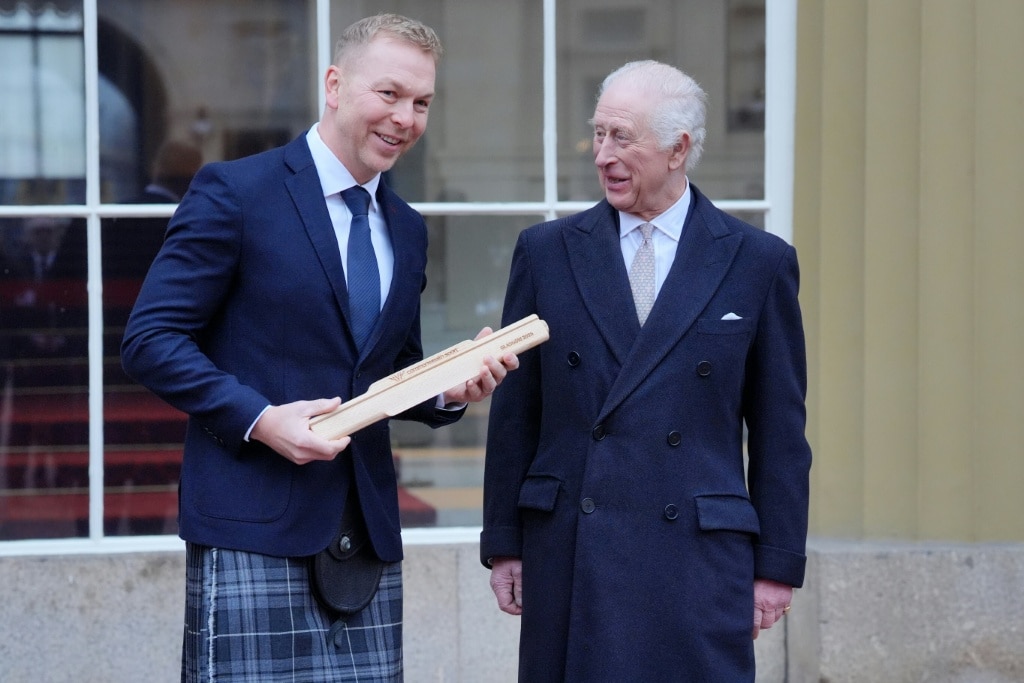
Commonwealth Games ‘where champions are made’ despite slimmed down model, argues president
As Glasgow prepares to welcome a newly condensed Commonwealth Games, the head of global Commonwealth sporting governance has defended the event’s enduring value, framing it as a critical launching pad for emerging athletic talent even after a major host crisis threatened the future of the 96-year-old competition.
Commonwealth Sport President Dr. Donald Rukare shared his perspective in an interview with AFP, just days ahead of the opening ceremony for the 2024 Games, which will see King Charles declare the event officially open. The Games were pushed into uncertainty last July, when the Australian state of Victoria pulled out as the originally scheduled host, citing ballooning costs that made the original event model unfeasible.
Stepping in at short notice, Glasgow — which previously hosted the event 12 years ago — stepped up with a practical solution: a scaled-back format that repurposes existing venues to cut down on public spending and keep the Games alive. This year’s competition will feature just 10 core sports and six para-sports, a significant reduction from the 19 sports and eight para-sports offered at the 2022 Birmingham Games. Despite the slimmed-down structure, Rukare emphasized the event’s core mission remains unchanged.
“We had that dark cloud over us in terms of having no Games, but Glasgow stepped in. Scotland the brave as we say,” Rukare noted.
First launched in 1930 as the British Empire Games, the modern Commonwealth Games now brings together 74 nations and territories, most of which have historical ties to the British Empire. Positioned every four years, two years on either side of the Olympic Games, the event has long served as a key developmental milestone for up-and-coming athletes preparing for top-tier international competition.
“It’s about the athletes,” Rukare added. “For some of the athletes, they’re going to be representing their countries, their territories, for the first time and we believe that the Commonwealth Games is where champions are made.”
To make hosting more accessible for future organizers, governing bodies have already restructured the event’s requirements: now, only swimming and athletics are designated as compulsory sports, giving potential hosts far more flexibility to design a programme that fits their infrastructure and budget. Rukare said he is optimistic about the event’s trajectory, pointing to already confirmed future host plans as evidence of growing stability.
India’s Ahmedabad has already been locked in as the host of the 2030 centenary Commonwealth Games, while multiple countries including New Zealand have expressed formal interest in hosting the 2034 edition. Rukare confirmed that the 10-sport model used in Glasgow is not a permanent change. “It won’t remain at the 10 sports for sure, but we’re looking at probably something in the range of between 15 and 18 sports going forward,” he said. “At the end of the day, what we’re looking for is how do we have a sustainable, smart, agile model, but also responding to the needs and aspirations of the athletes.”
The 2030 Ahmedabad Games marks a pivotal moment for the future expansion of the Commonwealth Games, which has been largely concentrated in a handful of countries over recent decades. Six of the last seven editions have been hosted by either the United Kingdom or Australia, and the event has only been held in Asia twice in its history. Notably, it has never been hosted on the African continent, despite dozens of African nations being part of the Commonwealth sporting family.
For India, hosting the 2030 Commonwealth Games in Ahmedabad is widely viewed as a critical stepping stone to the country’s ultimate goal of securing the 2036 Olympic Games. Indian authorities hope a successful Commonwealth Games will establish the world’s most populous nation as a global premier sporting destination.
Rukare, a Ugandan sports administrator, highlighted that expanding hosting across the full Commonwealth membership aligns with the event’s core identity as a celebration of global diversity. “We’d like to see that the Commonwealth family, Commonwealth Sport, reflect the diversity, the multicultural cultures that we have,” he said. “Going to one of the biggest countries in the Commonwealth, building on from Delhi 2010, there’s no doubt that India now is a different place. They are ready to go.”
He added that a successful 2030 Games in India could pave the way for even more geographic diversity in future, including a future Games hosted on the African continent. “We’d like to see how India will definitely put on a good show, maybe down the road sometime in the future, Africa could host the Games. So we’re really trying to commit to the Games right across the Commonwealth, to be able to show the whole mosaic of the culture and beautiful tapestry that we have of all our 74 territories.”
-

China’s Moonshot AI stole from Anthropic, Trump tech adviser says
Tensions between the United States and China over artificial intelligence innovation and intellectual property have escalated sharply this week, after senior Trump administration officials publicly accused Beijing-based Moonshot AI of carrying out a large-scale campaign to steal core capabilities from leading U.S. AI models.
Michael Kratsios, Trump’s top science and technology advisor, made the allegations in a public post on the social platform X on Wednesday. He claimed that Moonshot AI used a technical technique called model distillation — a process where a smaller, less advanced model extracts specialized knowledge and response capabilities from a more powerful, established model — to copy cutting-edge AI performance for its recently launched Kimi K3 large language model. Specifically, Kratsios stated that U.S. government intelligence indicates Moonshot distilled capabilities from Anthropic’s Fable AI model to develop Kimi K3.
Beyond the distillation allegations, Kratsios also claimed that Moonshot AI illegally obtained access to restricted, cutting-edge AI computing infrastructure built on Nvidia’s latest GB300 Grace Blackwell platform, which powers high-performance AI model training. Washington first implemented sweeping export restrictions on Nvidia’s most advanced AI chips back in 2022, citing national security concerns over potential military use by China, and governments around the world have since ramped up enforcement efforts to crack down on illegal smuggling of the restricted hardware.
These latest accusations come one day after U.S. Treasury Secretary Scott Bessent warned on Tuesday that the Biden — correction, Trump administration — would launch formal investigations into whether Chinese AI developers have stolen proprietary capabilities from U.S. competitors. Speaking again on Wednesday, Bessent confirmed that economic sanctions would remain a key policy option if Chinese firms “cross the line” and engage in large-scale industrial IP theft through what he labeled “industrial-scale distillation attacks.”
“ We support open-source AI and the innovation it unlocks. But open source is not open season on American IP,” Bessent stated in his social media remarks.
The heightened scrutiny of Chinese AI firms from U.S. officials arrives just months ahead of a planned meeting between U.S. President Donald Trump and Chinese President Xi Jinping scheduled for September, adding a new point of friction to already tense bilateral relations focused heavily on technology and trade competition.
Kimi K3, which was publicly unveiled just last week, quickly drew global attention from AI researchers and industry observers, with many independent analysts noting that the model appears to have significantly narrowed the performance gap between top Western AI models and leading Chinese-developed alternatives. Moonshot AI itself has publicly claimed that Kimi K3 matches or exceeds the performance of the most advanced U.S.-built large language models currently on the market. The company is set to release Kimi K3 as an open-source model on July 27, marking the first large-scale AI model of its size to be made available for free public download and custom modification by developers around the world.
This is not the first time U.S. AI firms have levied such distillation theft allegations against Chinese technology companies. Just last month, leading U.S. AI developer Anthropic accused Chinese e-commerce and technology giant Alibaba of illegally extracting capabilities from its popular Claude AI model via the same distillation technique. At the time, Anthropic called on U.S. Congress to impose penalties on the firms behind the alleged attacks and strengthen regulatory and enforcement measures to block theft of U.S. AI technology.
Back in April, the White House already announced it would deepen collaboration with domestic AI companies to counter what it called “industrial-scale campaigns” by foreign competitors to steal proprietary U.S. technology. In a policy memo released that month, Kratsios argued these campaigns are designed to “systematically undermine American research and development and access proprietary information.”
As of Wednesday, the BBC has reached out to all relevant parties — Moonshot AI, Anthropic, the White House, and Nvidia — for official comment on the latest allegations, but no formal responses have been published yet.
-

From Syria to UAE, the race to bypass Strait of Hormuz is on
Against a backdrop of escalating geopolitical rivalry over control of the Strait of Hormuz, the world’s most critical energy chokepoint, the Middle East is embarking on an unprecedented wave of pipeline construction stretching from the Mediterranean coast to the Red Sea and Gulf of Oman. Arab oil-producing nations are racing to build alternative export routes to avoid reliance on the waterway, where Iran has been pushing to assert dominance over global energy supplies.
Industry analysts project that tens of billions of dollars will be invested in these bypass infrastructure projects over the coming years. While the region has a history of ambitious large-scale energy projects that failed to move forward, energy experts emphasize that the political and economic commitments to reconfigure regional oil flows are genuine this time. “When we speak to our customers in the region, they say they never want to deal with this [Hormuz-related risk] again,” Artem Abramov, deputy head of analysis at Rystad Energy, told Middle East Eye. “These bypass projects will move forward.”
The United Arab Emirates (UAE) is leading the expansion, currently constructing a second pipeline to the Gulf of Oman port of Fujairah—located outside the Strait of Hormuz— that will double the country’s bypass export capacity by 2027, reaching 3.6 million barrels per day (bpd). Last month, a senior executive from the Abu Dhabi National Oil Company revealed that the state energy producer is also considering a third pipeline to carry refined petroleum products including jet fuel, gasoline and diesel to Fujairah. The country’s crude oil output hit an all-time record high of 4.1 million bpd in June, with existing capacity already allowing it to maintain steady exports through both Hormuz transits and the existing Fujairah pipeline.
Meanwhile, Iraq, OPEC’s second-largest producer, signed a landmark agreement with Syria in July to rehabilitate an aged pipeline linking its northern oil fields to Syria’s Mediterranean port of Baniyas. A consortium led by U.S. energy major Chevron, Los Angeles-based TI Capital, and the Syrian-Qatari al-Khayyat billionaire brothers is spearheading the rehabilitation project. If completed, most of the Iraqi crude moving through this new route will likely be sold to European markets, as very large crude carriers (VLCCs) too large to transit the Suez Canal make long-haul shipments to Asia economically unviable, according to analysts.
Saudi Arabia’s decades-old East-West Pipeline, which runs from the Gulf coast’s Abqaiq oil field to the Red Sea port of Yanbu, has become the regional model for Hormuz bypass infrastructure. Originally built in the 1980s and expanded multiple times since, the pipeline currently carries around 4 million bpd of crude for export, with an additional 2 million bpd supplied to domestic refineries on Saudi Arabia’s west coast. Riyadh is now actively pursuing capacity expansion, with reports indicating it aims to add 2 million bpd of export capacity, a project that will likely require constructing a parallel pipeline and upgrading port facilities at Yanbu to accommodate more VLCCs simultaneously. Despite lower export volumes in early 2024, Saudi oil revenue hit a three-year high in March on the back of elevated global prices.
This large-scale reconfiguration of regional oil flows is already creating clear winners and losers, reshaping the geopolitical and economic balance of power across the Gulf. Geopolitical and energy analysts note that Saudi Arabia and the UAE have emerged as the primary beneficiaries, cementing their positions as the region’s most influential power brokers and most reliable energy suppliers. In contrast, the geographic vulnerabilities of smaller Gulf states including Kuwait and Bahrain have been laid bare by the ongoing tensions.
“UAE and Saudi will realise the biggest windfalls from this. Kuwait and Bahrain are the biggest losers,” explained Gregory Brew, senior Iran and energy analyst at Eurasia Group. Kuwait, which depends on the Strait of Hormuz for nearly 100 percent of its oil exports due to its location at the northern tip of the Persian Gulf, has already opened discussions with Saudi Arabia and the UAE to access their bypass pipeline networks. Bahrain, an island kingdom connected to the outside world only by a causeway to Saudi Arabia, faces similar constraints. “Kuwait and Bahrain will require transit agreements and potentially revenue-sharing deals with Saudi Arabia and the UAE,” Brew noted, adding that this arrangement will significantly increase Riyadh and Abu Dhabi’s regional leverage.
Qatar, the world’s leading liquefied natural gas exporter, is expected to remain almost entirely dependent on the Strait of Hormuz for its exports, analysts predict. The geographic reality of each country’s position dictates the economic benefits and drawbacks of the new pipeline network: while Saudi Arabia and the UAE can maintain access to key Asian markets via their Red Sea and Gulf of Oman ports, Iraq’s new Mediterranean route locks it into primarily serving European markets at the cost of easier access to high-demand Asian economies. “Iraq wants to tap the Asian market. But with this pipeline they would be sending crude to Europe. The ability to generate considerable revenues from that market is constrained,” Brew added.
Despite the momentum behind the pipeline boom, experts warn that the alternative routes do not eliminate strategic risk. Greg Priddy, energy expert at the Center for the National Interest, points out that all new bypass infrastructure remains within range of Iranian missiles and drones, mirroring how Ukraine has been able to disrupt Russian energy infrastructure with long-range attacks. “The caveat to all these bypasses is that they are still vulnerable to Iranian missiles and drones. The balance in warfare has swung decidedly to offence, away from defence, making it hard to protect these assets,” Priddy said. “Fujairah is a great example. It is close enough to Iran that they can hit anything there with accuracy.”
The vulnerability of bypass routes was recently underscored by Houthi forces in Yemen, which are backed by Iran. The group recently declared an embargo on Saudi shipping in the Red Sea, forcing at least eight commercial tankers to reverse course to avoid potential attacks on transits through the Bab el-Mandeb Strait.
Escalating tensions around the Strait of Hormuz have intensified after Iran attacked commercial vessels belonging to Saudi Arabia, the UAE, Qatar, Kuwait, Bahrain and Jordan transiting the waterway earlier this month, breaking a recent ceasefire with the U.S. that included a critical sanctions waiver. Some Western diplomats and analysts now argue Iran may have overextended its efforts to assert control over the chokepoint, requiring further escalation to maintain its influence. “Iran might have overplayed its hand in the Strait of Hormuz. It will need to escalate in new ways to impose itself,” one anonymous Western diplomat familiar with Yemen affairs told Middle East Eye.
Energy analysts agree that the push for bypass infrastructure is a durable long-term trend, with funding secured from regional sovereign wealth funds and global infrastructure investors. “These pipelines are expensive and geopolitically complicated, but the Gulf states will spend serious money for back-up options,” said Ben Cahill, senior fellow at Washington-based think tank the Atlantic Council. “This is a durable trend. There will be backing from sovereign wealth funds and probably infrastructure investors.” As Priddy put it: “What used to look like a $5 or $10bn extraneous bet now looks necessary.”
-
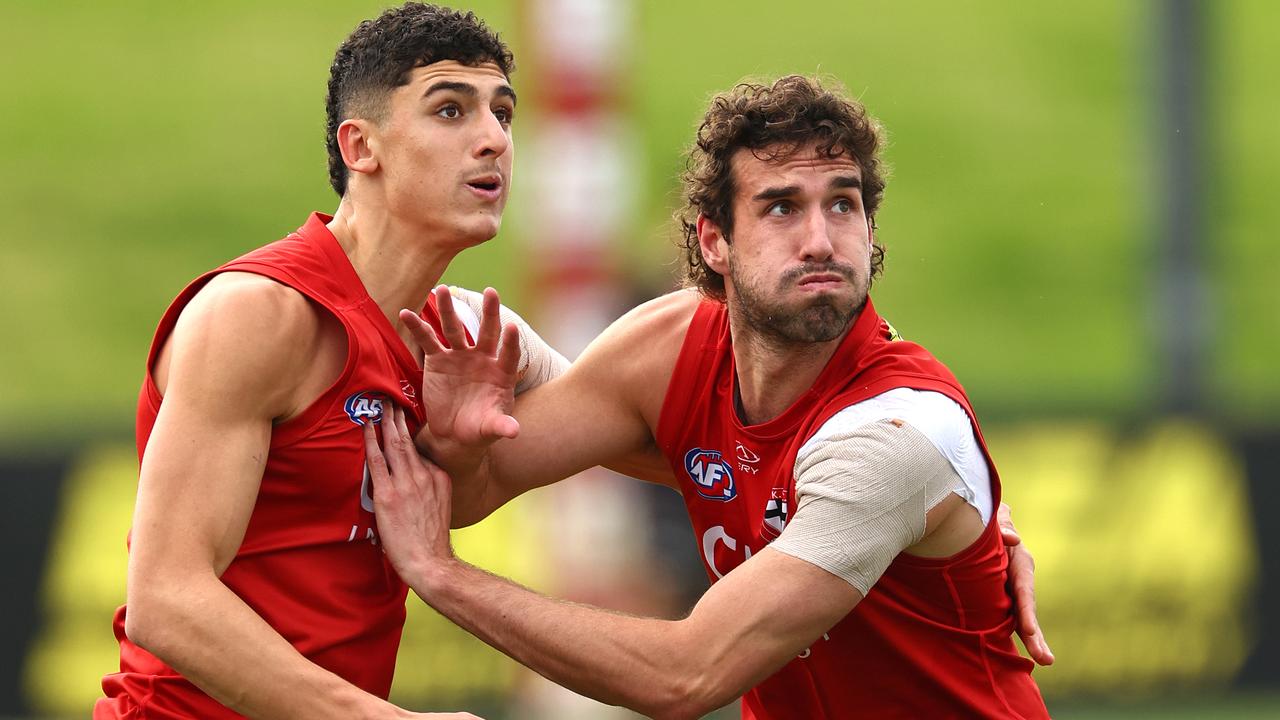
AFL 2026: St Kilda is expecting spearhead Max King to face North Melbourne
After more than two years on the sidelines battling a devastating string of injuries, star St Kilda Football Club spearhead Max King is just one final training session away from making his long-awaited return to senior Australian Football League (AFL) action. Head coach Ross Lyon confirmed Friday that the 204cm, 102kg key forward is set to take the field against North Melbourne this Sunday, barring any unexpected physical setbacks from his final pre-match training run.
King’s multi-year injury nightmare has included successive problems with his knee, calf, and most recently a hamstring injury that cut short a comeback attempt through the lower-tier Victorian Football League (VFL) earlier this season, when he suffered the setback against Carlton’s reserve side. But Lyon said King has put in the hard yards to earn a senior recall this weekend, noting that the forward has fully returned to the match fitness and running volumes he recorded in 2023, and is entering the coming contest in far better physical and mental condition than he was during his earlier VFL comeback attempt.
“As long as he gets through training, he’s done an enormous amount of work. Every time he stepped up his preparation, he built a bigger and stronger base, which has set him up for a sharper return,” Lyon told reporters Friday. “He’s certainly back to 2023 volumes and running numbers and he looks strong and fit, so we expect him to get through tomorrow and play. It’s not going to be easy, we get that, but he’s just in such better physical and mental shape this time around.”
Lyon explained that the club’s decision to fast-track King’s senior return comes down to a calculated risk-reward analysis: the Saints fielded the AFL’s shortest average team last week, and King’s imposing frame will add critical size and forward presence against North Melbourne. “We’re really respecting the level, we understand what Aidan Corr and Charlie Comben bring to North Melbourne, they’re a very good side, so we’re certainly not being flippant about this call,” Lyon said. “We just see the risk versus reward, and we just think he really helps us. Max is 204 centimetres and 102 kilos, he’s going to help, he’s a big man.”
While King’s return is all but confirmed barring injury, Lyon has backed off his earlier optimistic timeline for star ruckman Tom De Koning, who suffered a rib injury in a match against the Western Bulldogs last month. Lyon said he overestimated how close De Koning was to a return ahead of last week’s clash, and the big man is now unlikely to feature Sunday, though he retains an outside chance of a last-minute comeback.
The coach also fired back at recent comments from Geelong star Bailey Smith this week, after St Kilda defeated by a Smith-inspired Geelong last Thursday night at GMHBA Stadium. Smith had 35 disposals, kicked one goal, and ran riot in the first three quarters before the Saints assigned defensive midfielder Marcus Windhager to tag him, holding him to just 10 disposals in the final term. After the match, Smith argued Windhager was wasted in a tagging role, a comment Lyon dismissed Friday as self-interested and impulsive.
“Well it’s interesting, (Windhager) has been playing halfback, I think he’s had two tagging jobs all year,” Lyon said. “Bailey was running rampant with no one on him, then Windy put him to sleep, so there’s probably … the horse trying the hardest in the race is self-interest, right? Bailey often talks without thinking, doesn’t he? At least he’s not sending emojis out on texts this time.”
-
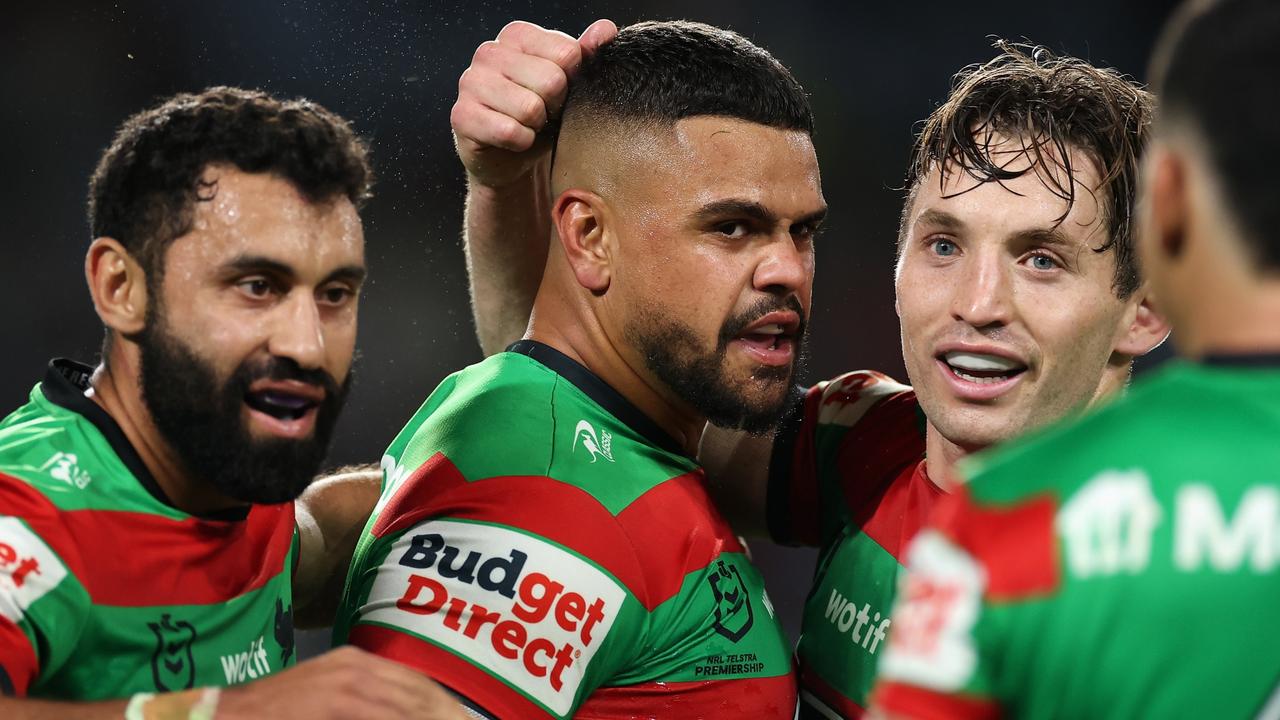
‘It’s a terrible idea’: Wayne Bennett shoots down Latrell Mitchell contract theory
South Sydney Rabbitohs head coach Wayne Bennett has delivered a firm rebuke to calls for injury-linked performance clauses in star centre Latrell Mitchell’s next contract, while maintaining cautious optimism that the representative rugby league superstar will take the field again before the end of the current National Rugby League (NRL) season.
Mitchell, 29, has not appeared in a match since the Rabbitohs’ Round 11 defeat to the Dolphins. What started as a lower-back injury has since been compounded by a persistent calf issue that forced the superstar to cut a recent training session short. Last week, Mitchell consulted a specialist neurologist to pinpoint the root cause of his ongoing injury troubles, and his availability remains assessed on a weekly basis as South Sydney fights to secure a place in the NRL finals.
Addressing media, Bennett pushed back against speculation that Mitchell’s season is already over. “We don’t know that (if he’s played his last game this season). It’s a week-by-week proposition,” the coach said. “He’s back running now which is good, so we’ll see how that goes. Of course I do (hope that we get him back this year) and he does too because he wants to play. It’s not like he’s trying to avoid playing. It’s something we have no control over. We have good people around him with experts in their field, so we’ve just got to wait and see now.”
While Bennett joked that Mitchell could avoid injury by switching to the low-impact racket sport pickleball, he turned serious when discussing public calls to structure the centre’s next contract around match availability. Mitchell has one year remaining on his current deal, with industry speculation projecting his next contract could carry a salary cap value of roughly $1.4 million per season.
Widely regarded as the most destructive active player in the NRL when fully fit, Mitchell has only featured in 31 first-grade games since the start of the 2024 season. This high rate of injury-related absence has led some pundits and fans to argue the Rabbitohs should add incentive-based clauses to his next deal, that would tie his salary directly to the number of games he plays. A similar structure was previously floated for Manly Sea Eagles star Tom Trbojevic, who has dealt with repeated hamstring injuries throughout his career.
Bennett rejected the proposal outright, calling it a bad idea that undermines the fundamental nature of player contracts. “It’s a terrible idea and I’m not interested in it,” Bennett said. “It’s just a bit of misfortune that creates the problem. It’s not because him or Tom or others don’t do all the work and all the training. You’ve either got a contract or you haven’t. We’re not going to make one up based on how many games you played. That’s not going to happen, not at the good clubs anyway.”
In other team news ahead of the Rabbitohs’ Friday night clash against the Melbourne Storm, forward John Radel has been named in the starting line-up after star forward David Fifita received a two-match suspension from the NRL judiciary. With starting lock Cameron Murray and young forward Tallis Duncan both sidelined by injury, Thomas Fletcher has been elevated to the game day bench.
-
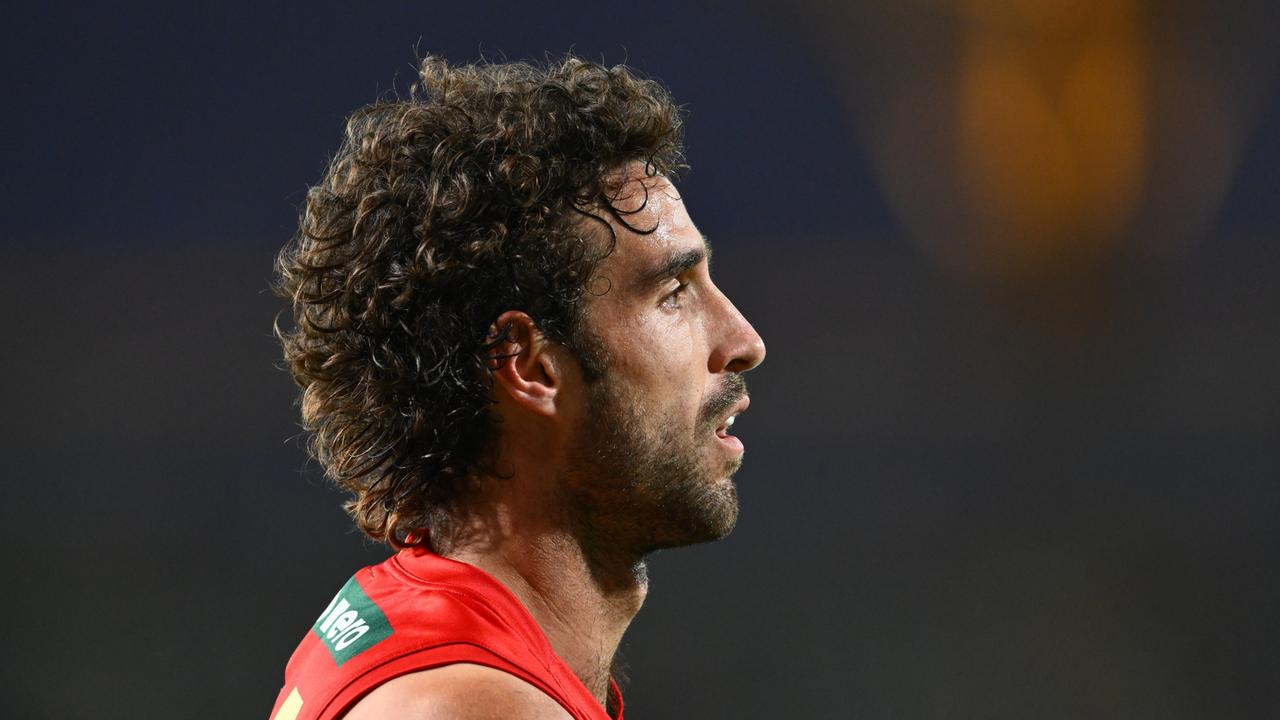
AFL 2026: Hawthorn coach Sam Mitchell speaks on Ben King reports, Calsher Dear future
Amid swirling speculation that Hawthorn Football Club has secured a commitment from one of the Australian Football League’s top attacking talents, head coach Sam Mitchell has kept his demeanor light while declining to reveal details of the club’s off-season forward line plans. Just 24 hours after Hawthorn locked in new contracts for established key forwards Jack Gunston and Mitch Lewis, multiple reports emerged indicating star Gold Coast Suns forward Ben King has selected the Hawks as his desired destination when free agency opens. The 20-something Victorian-born talent has long been tipped to leave the Gold Coast to return to his home state, with industry sources suggesting King has fewer than five weeks remaining as a contracted Gold Coast player.
When pressed by reporters on Thursday morning about the ongoing Ben King rumors, Mitchell leaned into his familiar running joke about AFL’s mandatory player contract announcement timing, dodging a direct answer with characteristic humor. “Is there speculation about that? I hadn’t heard that one,” Mitchell joked when asked directly about King’s potential move. “I think 6.20 in six months’ time, that’s when you’ll find out about what we’ll do with the forward line. Whatever it looks like, there’s so much water to go under the bridge between now and whatever that looks like next season. First and foremost we’ll be very heavily focused on the players that are within these walls right now, making sure we can get the best out of them in the finals campaign in front of us.”
The recent double re-signing of Gunston and Lewis, paired with the potential addition of King, has pushed exciting young development prospect Calsher Dear further down the club’s forward line depth chart. But Mitchell has pushed back against any concerns about the 20-year-old’s future, urging patience for the rising talent while highlighting his consistent strong work and development progress at the reserve level.
“I mean his game on the weekend was really good,” Mitchell said of Dear. “We’ve been working on a few things and there’s always a lag effect to learning and when you try some things with a player like Calsher. He’s 20 years old as a key forward, I’m really pleased with his progress and he jumped out of the blocks as an 18-year-old. Then he’s had some injury and hasn’t done a full pre-season, so with someone like him he’s every chance coming in as soon as this week. But his form on the weekend was a big step in the right direction for what we’re after from him, so I’m pleased with how he’s developing.”