博客

  • Europe’s central bank holds rates steady amid swings in oil prices

    Europe’s central bank holds rates steady amid swings in oil prices

    FRANKFURT, Germany — Against a backdrop of swirling geopolitical tensions and wildly fluctuating energy markets, the European Central Bank (ECB) announced Thursday it will keep its benchmark interest rate unchanged at 2.25%, hitting pause on monetary tightening just one month after its last quarter-point adjustment.

    The June 11 rate increase had been explicitly crafted to counter inflationary pressure driven by spiking global oil prices, which surged after conflict between the U.S. and Iran disrupted critical oil shipping lanes through the Strait of Hormuz. Since that decision, however, energy markets have seesawed dramatically: prices fell sharply following a brief ceasefire announcement, only to rebound once the truce collapsed and hostilities resumed, leaving policymakers scrambling to assess the long-term trajectory of inflation.

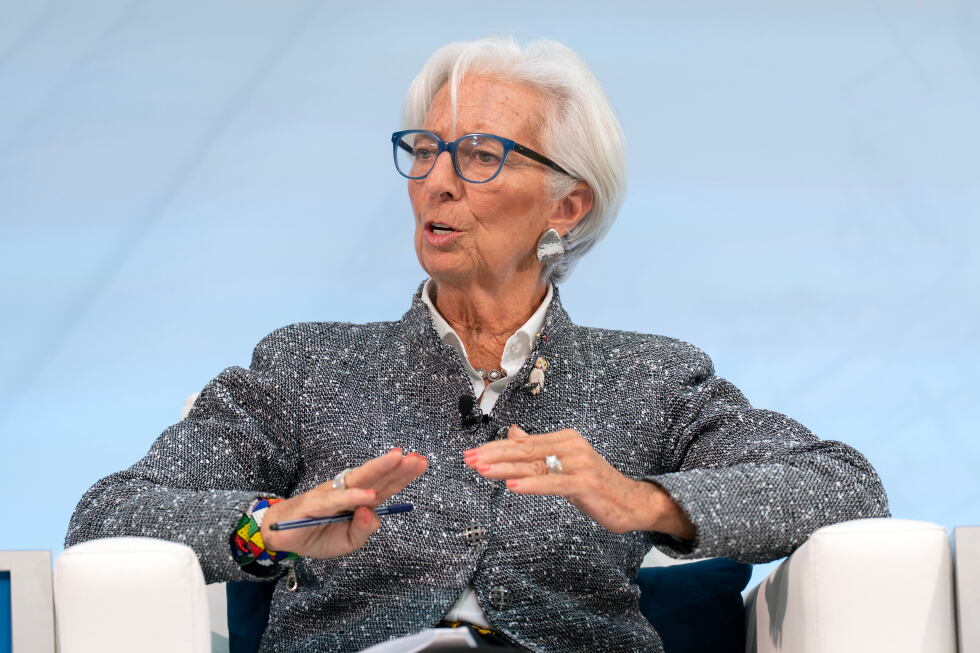
    Speaking at a post-meeting press conference, ECB President Christine Lagarde emphasized that persistent uncertainty surrounding the energy price shock has left the bank unable to map out a fixed path for future rate moves. “Uncertainty remains high and the full inflationary impact of the energy shock has yet to play out,” Lagarde told reporters. “We are therefore closely monitoring the intensity and duration of the shock, as well as its indirect and second round effects…the longer energy prices stay high, the more likely they are to drive up broader inflation.”

    Lagarde confirmed the ECB will take a data-dependent, meeting-by-meeting approach to future policy decisions, refusing to pre-commit to any specific trajectory for borrowing costs. Most economists now see the ECB’s September 10 policy meeting as the most likely timeline for a potential additional rate increase if inflationary pressures do not abate.

    In addition to monetary policy questions, Lagarde addressed speculation about her tenure, pushing back against requests for a rigid “yes or no” commitment to serving out her full eight-year term set to end in October 2027. “I hate to be boxed in in any particular circumstances,” she said, before adding: “you are not going to see the back of me before 2027. When there are clouds on the horizon, the captain stays on the ship, and this captain is staying on this ship as long as there are clouds on the horizon.”

    The ECB’s rate hold comes as fresh geopolitical turmoil sent global oil prices surging to key new thresholds Thursday. International benchmark Brent crude climbed above $100 per barrel for the first time in two months, after Iran-aligned Houthi rebels in Yemen claimed responsibility for attacks on two Saudi oil tankers in the Red Sea. The attack has stoked fears that ongoing Middle East conflict could widen and disrupt alternative shipping routes that Saudi Arabia has increasingly relied on to avoid closures in the Strait of Hormuz. Brent crude jumped 7% in the aftermath of the attack, deepening market volatility.

    Interest rate hikes work to curb inflation by raising borrowing costs for consumer and business purchases, cooling overall demand and easing upward pressure on prices. Eurozone annual inflation dipped to 2.8% in June, down from 3.2% in May, but policymakers remain wary that sustained high energy prices could spill over into broader price growth across the economy.

  • Supporters across India send food via delivery apps to sustain the ‘Cockroach’ protest

    Supporters across India send food via delivery apps to sustain the ‘Cockroach’ protest

    NEW DELHI – As thousands of demonstrators hold their ground at a central New Delhi protest site, an unexpected network of grassroots support has emerged to sustain their movement: a constant flow of food ordered via online delivery apps from backers across the country. This steady stream of donated sustenance has become one of the most visible markers of the rapidly expanding public backing for the ‘Cockroach’ movement, a youth-led uprising that has grown into one of the most significant political challenges faced by Prime Minister Narendra Modi’s administration in recent years.

    What began as an outcry over repeated leaks of high-stakes entrance examinations for medical colleges and government jobs – a scandal that drove some impacted young people to suicide – the movement has evolved into a broader national call for greater government accountability. Thousands of protesters have set up a continuous sit-in at Jantar Mantar, New Delhi’s historic designated protest zone, which now serves as the epicenter of the movement. Even after a harsh police crackdown on Monday, when officers deployed tear gas and batons to block demonstrators from marching toward India’s Parliament, the remaining protesters refused to disperse. Instead, the violent response only amplified public anger, swelling the crowd beyond student circles to include young working professionals, parents and other community members sympathetic to the movement’s demands.

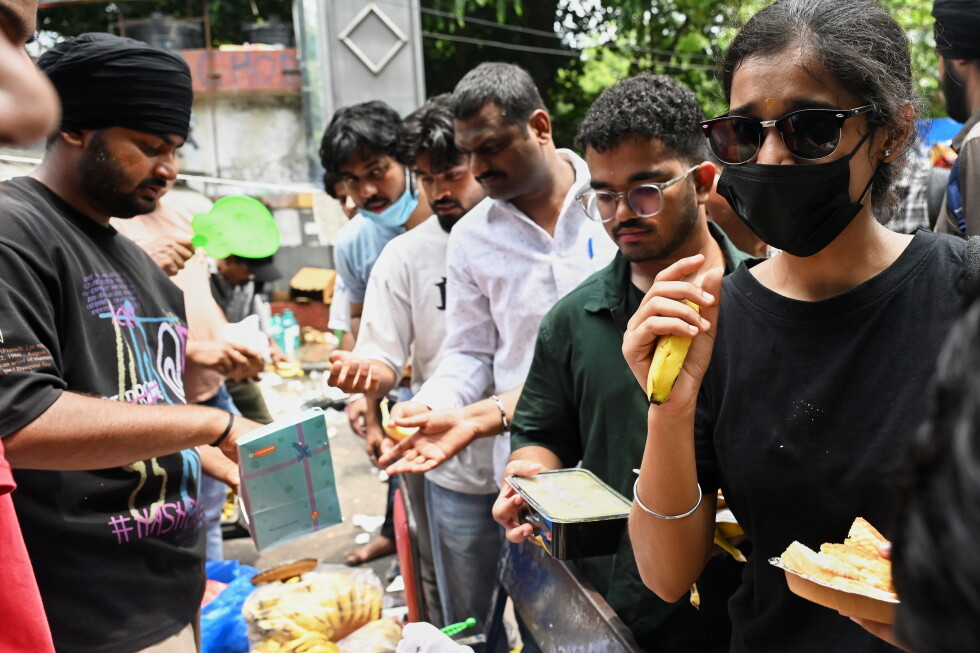
    To sustain the growing encampment, supporters who cannot attend the protest in person have turned to a simple but effective act of solidarity: ordering meals directly to the demonstration site through popular online food delivery platforms. Every few minutes, motorbike-riding delivery riders pull up to Jantar Mantar with bags packed with everything from homemade-style Indian curries and rice to burgers, pizza, snacks and bottled water. Volunteers collect each delivery, stack the contributions alongside other donated supplies, and distribute the food and water to protesters on the ground. Many donors have never visited the protest site personally and do not know the demonstrators they are supporting; they simply instruct delivery riders to hand their order to any protester they encounter at the camp.

    For Shakti Vashisth, a 24-year-old protester camped at Jantar Mantar, every incoming delivery is a powerful reminder that the movement’s support extends far beyond the boundaries of the protest site. “There are a lot of people that I can understand might not be able to come here, but they are sending their love,” she explained.

    The outpouring of support has been so overwhelming that protest organizers have recently been forced to ask the public to pause new food orders, as incoming donations now far outnumber the daily needs of the demonstrators camped on site. “The amount of food coming in is overwhelming. It’s difficult to even keep count,” said Bhoomi Kapoor, a volunteer coordinating food distribution at the site.

    Neg Singh, a motorbike delivery courier who has made 19 trips to the protest site, recalled one particularly massive order: 70 pizzas that required three separate riders to carry through the dense crowd, placed by a donor living in Noida, a city roughly 25 kilometers outside of New Delhi. For Singh, the constant trips to the camp have done more than add extra work to his schedule – they have pulled him into the movement as a supporter too. “We also feel deeply connected to this protest. We support it wholeheartedly,” he said.

  • Death toll in India hydropower tunnel disaster rises to 25 as rescue effort ends

    Death toll in India hydropower tunnel disaster rises to 25 as rescue effort ends

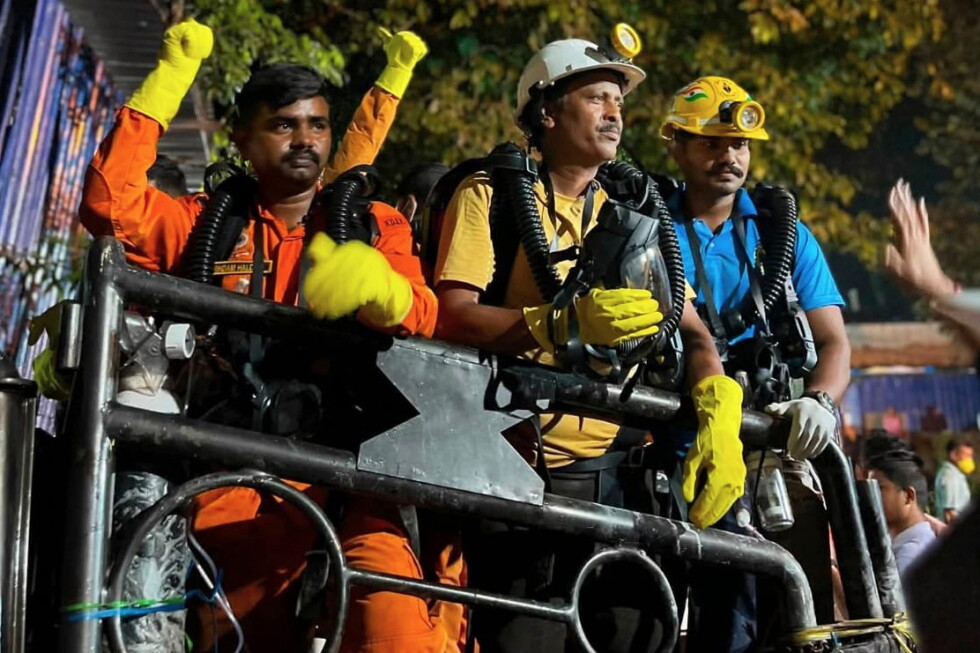
    GUWAHATI, India – Rescue operations for trapped workers at a collapsed hydropower tunnel in India’s Himalayan state of Sikkim concluded Thursday, after recovery teams pulled the bodies of the final 13 missing workers, raising the total confirmed death toll to 25.

    The tragedy unfolded on Monday, when a methane gas buildup ignited a powerful explosion inside the tunnel of the under-construction 500-megawatt Teesta Hydroelectric Project. The site sits roughly 40 kilometers south of Sikkim’s capital Gangtok, in the seismically active Teesta River basin. The blast trapped dozens of workers deep underground, leaving no chance of survival for those caught in the disaster. Multiple state and national agencies launched a coordinated four-day rescue effort, but operations were slowed significantly by high levels of toxic gas lingering inside the tunnel, according to official statements.

    After all trapped workers’ remains were recovered, search teams conducted a full final structural inspection of the damaged tunnel, the Sikkim state government confirmed in an official release. In response to the disaster, authorities have assembled a high-level special committee to launch a full investigation into the causes of the explosion. The panel will also be tasked with outlining new regulatory safeguards to prevent similar deadly accidents on future infrastructure projects.

    This latest industrial disaster has drawn renewed attention to systemic construction safety risks across India, where the country’s rapid push for large-scale infrastructure expansion frequently clashes with challenging geographic conditions, inconsistent safety oversight, and common construction lapses. Experts note that the Teesta River basin, where the hydropower project is located, presents uniquely high dangers for underground construction. The region is marked by young, geologically fragile rock formations intersected by frequent fractures and naturally occurring underground pockets that can trap ancient gases such as methane. Combined with ongoing seismic activity and unpredictable subterranean conditions, tunnel projects in the area carry inherently elevated risk.

    This disaster is far from an isolated incident in India. Just this year, a coal mine explosion in neighboring Meghalaya state claimed the lives of 18 workers. In 2023, a major tunnel collapse on an infrastructure project in northern Uttarakhand state trapped 41 workers for 17 days before a dramatic multi-week rescue effort successfully freed all those stuck underground.

  • What experts are saying as Ebola outbreak in Congo and Uganda kills more that 1,000 people

    What experts are saying as Ebola outbreak in Congo and Uganda kills more that 1,000 people

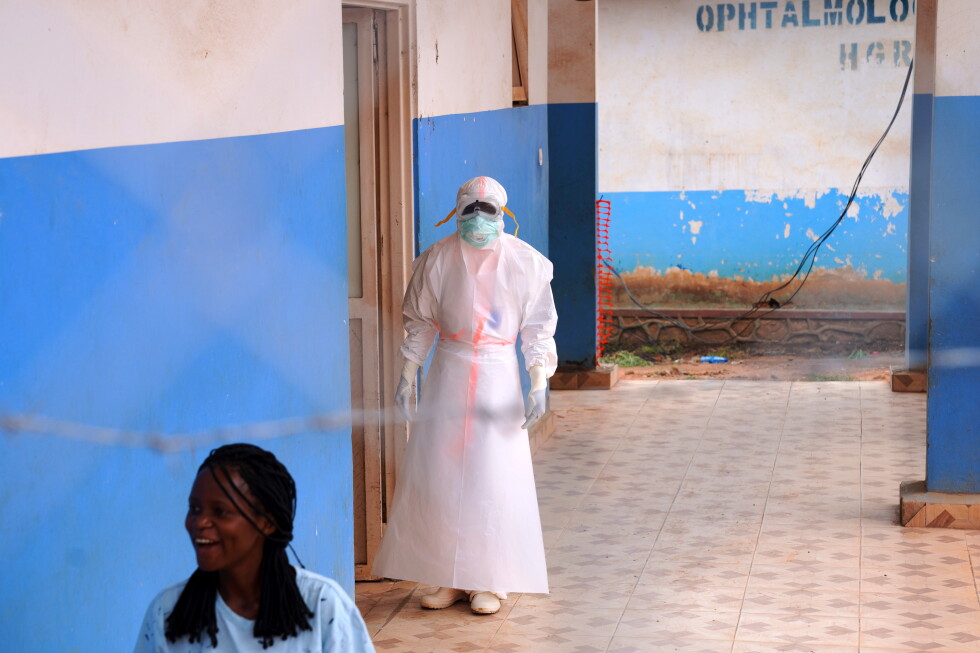
    DAKAR, SENEGAL – The fastest-expanding Ebola outbreak ever recorded has claimed more than 1,000 lives in the eastern region of the Democratic Republic of the Congo, as global and local health workers rush to curb a viral strain with no licensed medical countermeasures available. New data released Wednesday by Congo’s National Public Health Institute confirms 2,536 laboratory-confirmed infections and 1,033 fatalities to date, with at least 738 patients currently held in isolation or receiving hospital care. What makes this outbreak, declared in mid-May, unique among modern Ebola events is the pathogen driving it: the Bundibugyo strain, for which no approved vaccines or targeted treatments currently exist. The crisis is heavily concentrated in the hard-to-reach Ituri province, which accounts for nearly 90 percent of all documented cases, but infections have spread to five additional Congolese provinces – including the major eastern city of Kisangani – and have spilled across the border into neighboring Uganda. Though Congolese health authorities note the explosive growth in new cases has begun to moderate, they warn the outbreak has not yet reached its peak. The latest institute report confirms sustained community transmission remains ongoing, with recent swings in case counts largely attributed to lags in reporting and ongoing data consolidation. A persistent gap in contact tracing also undermines containment efforts: only 77 percent of known close contacts of confirmed cases are under active surveillance nationwide, far below the 95 percent threshold public health experts say is required to stop transmission chains. Last month, researchers from the U.S. Centers for Disease Control and Prevention (CDC) used predictive modeling to warn that in the worst-case scenario, the current outbreak could match the deadliest Ebola event in recorded history: the 2014–2016 West African epidemic that killed more than 11,000 people. Notably, that 2014 outbreak took eight months to reach the 1,000-death mark – a threshold the current Congolese outbreak crossed far faster. The World Health Organization (WHO) adds that a large share of new cases are linked to unknown transmission chains, leaving the full scope and trajectory of the outbreak uncertain for responders. Despite the severity of the crisis inside Central Africa, global health authorities agree the overall risk of widespread international spread remains low. The WHO classifies the risk as “very high” within Congo and “high” for neighboring countries such as Uganda, due to frequent cross-border population movement and ongoing local transmission, but rates the global risk as low. Unlike respiratory viruses such as influenza or COVID-19, Ebola only spreads through direct contact with the bodily fluids of an infected person who is already showing symptoms, making sustained global spread far less likely. “You cannot get Ebola from being near someone,” the CDC emphasized in its latest situation update. The agency also noted that since infected people do not become contagious before they develop symptoms, identifying cases and tracking contacts is simpler than for diseases that can spread asymptomatically. To date, the outbreak has produced only a handful of cases outside Congo’s borders. Uganda has recorded 20 confirmed infections linked to cross-border travel from Congo, including two deaths, all concentrated in the capital Kampala. The country has not reported a new case since June 21, and the last confirmed patient has been discharged from care, triggering the 42-day waiting period that precedes an official declaration that the Ugandan outbreak is over. In June, one imported case was detected in France involving a doctor traveling from Congo; the patient has since made a full recovery and been released from hospital. In response to the outbreak, the U.S. has imposed entry restrictions on most recent travelers from Congo, requiring U.S. citizens to complete a 21-day monitoring period outside the country before returning, and routing permitted travelers from Uganda and South Sudan through designated airports for mandatory Ebola screening. A U.S. plan to construct a dedicated Ebola quarantine facility in Kenya for U.S. citizens evacuated from Congo has faced significant pushback, including legal challenges and large protests, some of which have turned violent. Multiple barriers continue to slow the global response effort. According to health authorities and aid groups, low public trust and community resistance are among the biggest obstacles. Misinformation about Ebola treatment centers, fear of isolation protocols, and resistance to culturally sensitive safe burial practices have led many residents to avoid testing and delay seeking care until they are severely ill. Ongoing armed conflict in the region has also complicated response work: fighting between government forces and the Rwanda-backed M23 rebel group, plus attacks by the Islamic State-linked Allied Democratic Forces, have displaced hundreds of thousands of people and made it difficult for responders to access affected communities and conduct surveillance. In addition to the lack of approved medical tools for the Bundibugyo strain, limited testing capacity has slowed detection – even as capacity has expanded since the outbreak began, the virus continues to outpace containment efforts. “There’s never been an Ebola outbreak that started with so many cases because it was so late to be identified,” explained Trish Newport, emergency program manager for Doctors Without Borders (Medicines Sans Frontieres), who has been deployed to the outbreak zone. Earlier this month, researchers launched the first clinical trial for experimental treatments targeting the Bundibugyo strain, enrolling patients at a dedicated Ebola treatment center in Ituri province. The WHO notes it could take several months and up to 1,000 trial participants to determine whether either of the two test treatments is safe and effective. Associated Press writers Mike Stobbe in New York and Prosper Heri Ngorora in Bunia, Congo contributed reporting to this article.

  • Trump’s nuclear deal with Saudis jettisons longstanding US demands

    Trump’s nuclear deal with Saudis jettisons longstanding US demands

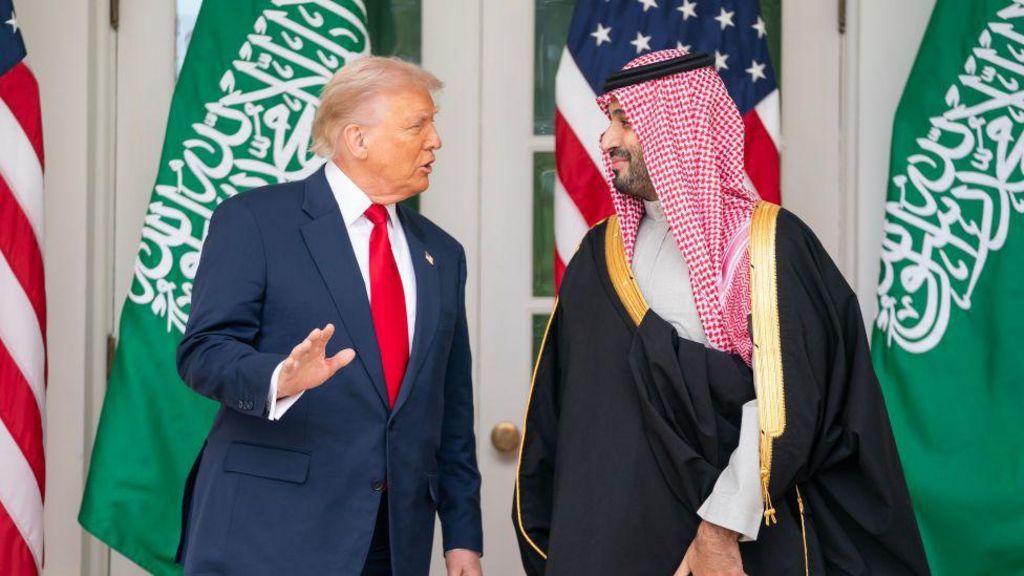
    In a sharp break with decades of U.S. diplomatic precedent in the Middle East, the second-term Trump administration has finalized a civilian nuclear cooperation agreement with Saudi Arabia that abandons longstanding requirements for the Gulf kingdom to normalize ties with Israel in exchange for access to American nuclear technology. For years, every sitting U.S. president maintained the non-negotiable stance that Saudi civilian nuclear access would be tied directly to progress on Israeli-Saudi normalization. The Trump administration has set that condition aside, granting Saudi Arabia’s long-sought request without extracting reciprocal concessions for Israel – a move that has already drawn fierce criticism from analysts and policymakers who warn it could ignite a regional nuclear arms race.

    This nuclear pact marks the latest instance of President Trump discarding the traditional U.S. approach to Middle East diplomacy, which for generations centered on protecting Israeli security and advancing a two-state solution to the Israeli-Palestinian conflict. Since returning to office, Trump’s foreign policy agenda has been anchored in his revived “America First” framework, with a primary focus on amplifying U.S. economic influence to counter rising competition from China and other global rivals. Regional analysts argue the agreement sends a clear signal that Washington is prioritizing retaining Gulf alliances in its great power competition, even at the cost of straining relations with long-time ally Israel.

    “Countries across the Middle East are determined to develop their domestic nuclear infrastructure, and they will move forward with or without U.S. involvement, and Washington is finally acknowledging that reality,” explained Yusuf Can, a Middle East specialist at global consulting firm Amena Strategies. “Through this deal, the U.S. is essentially telling regional states: you don’t need to partner with China for this development – you can work with us instead,” Can added.

    Transactional diplomacy has defined Trump’s second term in global affairs. Since taking office, the administration has ramped up economic and strategic competition with adversaries including China and Russia across multiple regions, from the Arctic to the Middle East. But striking a nuclear cooperation deal with Saudi Arabia stands out as an especially high-stakes move, one that threatens to further raise tensions in an already volatile region where the U.S. is currently engaged in open conflict with Iran.

    For Saudi Arabia and its de facto leader Crown Prince Mohammed bin Salman, widely known as MBS, the agreement represents a landmark political victory. MBS has pursued a U.S. nuclear pact for years as a core pillar of his campaign to deepen Saudi Arabia’s integration with Western economies and security alliances. Back in 2018, the crown prince made clear his position: if Iran moves forward to develop nuclear weapons, Saudi Arabia will insist on matching that capability.

    Full details of the agreement have not yet been released to the public by the Trump administration, but early reporting indicates the pact lacks strict, enforceable nonproliferation measures to prevent Saudi Arabia from converting its civilian nuclear program to a military weapons program down the line. This sets it apart sharply from the 2009 U.S.-United Arab Emirates nuclear cooperation deal, which required rigorous, ongoing inspections by the International Atomic Energy Agency (IAEA) to block proliferation. A second, highly controversial difference is that the new Saudi deal reportedly permits the kingdom to enrich uranium domestically on its own soil – a capability that can be directly repurposed to build nuclear weapons.

    Analysts note that even if Saudi Arabia chooses not to accelerate a nuclear weapons program immediately, retaining the technical capability to do so already grants the kingdom a strengthened regional deterrent. “This agreement definitely lays the foundational groundwork for Saudi Arabia to develop nuclear weapons at any point in the future it chooses,” said Imran Bayoumi, a resident fellow at the Atlantic Council and former policy advisor to the U.S. Department of Defense.

    Energy sector analysts point to a clear practical benefit for Saudi Arabia: the agreement allows the kingdom to diversify its energy mix and deploy nuclear power to meet rapidly growing domestic electricity demand. Over the long term, nuclear power could reduce Saudi Arabia’s heavy reliance on oil exports, insulating its economy from the extreme price and supply volatility that plagues global oil markets, explained Christopher Russo, an energy expert at consulting firm Charles River Associates.

    “Oil supply chains are vulnerable to disruption: oil fields can be targeted in attacks, tankers can be blocked in strategic chokepoints like the Strait of Hormuz, which we’re seeing firsthand right now,” Russo noted. “Nuclear power infrastructure is far more self-contained and less exposed to these kinds of disruptions.”

    Saudi Arabia will not see meaningful economic benefits from the deal for decades. Industry analysts estimate it will take at least 10 years, and likely longer, for the kingdom to complete construction and commission new civilian nuclear power plants. But the short-term political gains are already clear: the deal further solidifies Saudi Arabia’s status as the dominant military and political power in the Gulf region. Most notably, the kingdom secured the agreement without having to recognize Israel, and without abandoning its longheld demand that any future normalization deal with Israel must be tied to the creation of an independent Palestinian state.

    The Trump administration’s concession on normalization reflects a broader calculation that a breakthrough between Saudi Arabia and Israel is unlikely in the near term. Negotiations over normalization advanced during the Biden administration, but stalled entirely following the outbreak of the Israel-Hamas conflict in Gaza and the subsequent escalation of open war between the U.S.-Israel alliance and Iran.

    The administration has not publicly explained its timing for announcing the agreement, nor have officials outlined why it chose to finalize the deal now. But regional analysts widely agree that the ongoing war with Iran played a major role. Since the conflict began, Washington has prioritized mending and strengthening ties with Saudi Arabia and other Gulf allies that have been targeted by Iranian proxies. Earlier in the war, Saudi Arabia briefly denied the U.S. military access to its airspace, and has repeatedly pushed for de-escalation between Washington and Tehran.

    U.S. nuclear technology firms will also benefit from the deal, though those economic gains will also take years to materialize. Saudi Arabia has committed to partnering with U.S. companies to develop its civilian nuclear sector, opening a massive lucrative new market for major U.S. reactor manufacturers such as Westinghouse.

    Despite these potential benefits, the agreement has already drawn sharp bipartisan criticism from both Israel and U.S. political leaders. When news of the deal broke Wednesday, multiple Israeli politicians warned that a Saudi civilian nuclear program could evolve into a direct nuclear threat to Israel. Israel is widely understood to possess an unacknowledged nuclear arsenal, and joined the U.S. war against Iran over shared concerns about Tehran’s nuclear ambitions.

    “A civilian nuclear program in Saudi Arabia will trigger a mad nuclear arms race across the entire Middle East,” Avigdor Lieberman, a former Israeli defense minister and current member of the Knesset, wrote in a social media post.

    Democratic lawmakers in the U.S. Congress have echoed these concerns. “This deal is a total giveaway to the Saudis, and it will only fuel Iran’s own nuclear ambitions, and it will further destabilize the region alongside Israel,” Democratic Congressman Ro Khanna of California told the BBC. “This is simply not smart or responsible policy.”

    U.S. Energy Secretary Chris Wright has pushed back against criticism, arguing the agreement will boost the U.S. economy and strengthen American national security. In a public social media statement, Wright claimed the U.S.-Saudi pact “upholds the highest standards of nuclear safety and nonproliferation.”

    Still, the Trump administration has fueled public skepticism by refusing to release full details of the agreement. In a notable departure from standard diplomatic practice, President Trump did not preside over the official signing ceremony for the pact. On the day the deal was announced, Trump instead attended a dignified transfer ceremony for four U.S. service members killed in action in Iran, before traveling to Georgia for a campaign rally where he claimed his policies have made the Middle East more stable than at any point in modern history.
  • Kashmiri activist Khurram Parvez and journalist Irfan Mehraj freed on bail, under tight curbs

    Kashmiri activist Khurram Parvez and journalist Irfan Mehraj freed on bail, under tight curbs

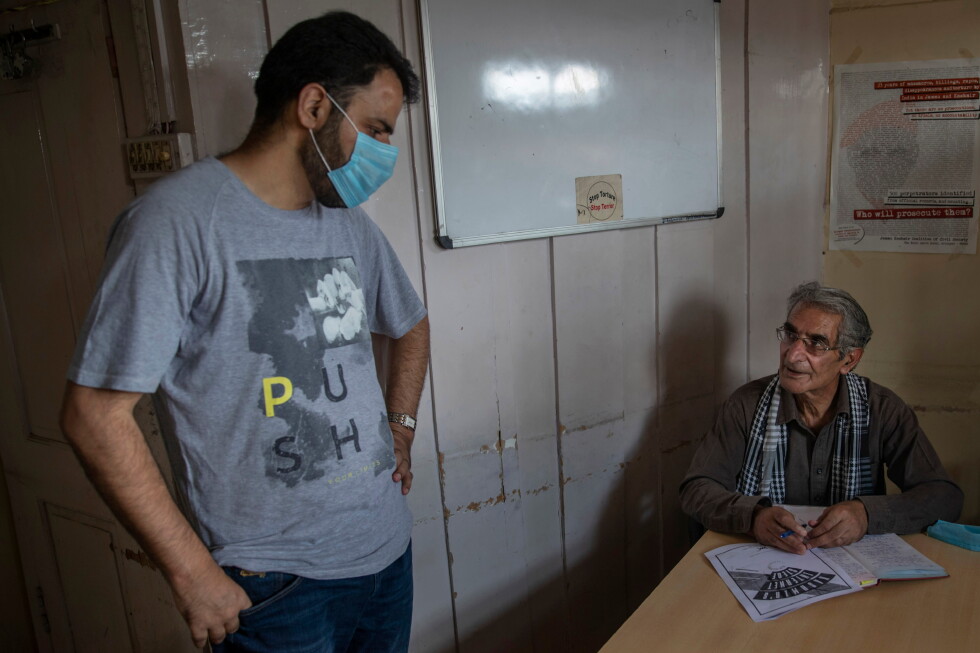
    In a closely watched legal development out of India’s capital New Delhi, a prominent Kashmiri human rights campaigner and a respected independent journalist have walked free from jail on bail after years of detention on controversial terrorism financing charges stemming from their work in India-administered Kashmir.

    Rights advocate Khurram Parvez was first taken into custody under India’s sweeping Unlawful Activities Prevention Act (UAPA), a strict anti-terror legislation, back in 2021, while journalist and researcher Irfan Mehraj was arrested under the same law two years later in 2023. Though both were released from New Delhi’s Tihar Jail late Wednesday, their freedom remains heavily constrained by strict court-ordered conditions, as India’s federal National Investigation Agency (NIA), the country’s top counterterrorism body, moves to overturn the bail ruling.

    The release marks a rare win for critics of the Indian government’s widespread crackdown on dissent in Kashmir, a campaign that has ramped up dramatically since New Delhi revoked the Himalayan region’s long-held semi-autonomous special constitutional status in August 2019. In the years following that policy shift, authorities have used the stringent anti-terror law to detain dozens of rights workers, independent journalists, and political dissidents across the region, drawing widespread international condemnation.

    The path to release began last week, when a lower Indian court granted bail to Parvez and Mehraj. The NIA immediately filed an appeal to block the order, bringing the case before the Delhi High Court. On Tuesday, the high court declined to suspend the lower court’s release ruling, but sided with the agency to impose far harsher restrictions on the pair’s movement, association, and public activity while the appeal proceeds through the legal system.

    International human rights organizations, including the United Nations’ Office of the High Commissioner for Human Rights, have repeatedly called for the pair’s release for years, arguing their detention was solely a result of their legitimate human rights documentation and journalistic work. Parvez has been a leading figure with the Jammu and Kashmir Coalition of Civil Society (JKCCS), a prominent regional human rights organization that has documented widespread abuses by Indian security forces in Kashmir for decades. Mehraj worked as a researcher with the group alongside his independent journalism.

    The NIA’s case alleges that Parvez, Mehraj, and the JKCCS used the organization to channel funding to militant groups and advance a separatist political agenda in the region. Both men have repeatedly and categorically denied all the allegations leveled against them. The JKCCS has become one of the most prominent sources of on-the-ground reporting on human rights violations in Kashmir, publishing in-depth investigations that document what it describes as systemic, routine torture by Indian security forces deployed across the region. India maintains hundreds of thousands of troops in Indian-administered Kashmir, and the JKCCS has repeatedly highlighted that broad legal immunity granted to security personnel has created a culture of impunity that enables ongoing abuse with no accountability.

    Following the pair’s release, two leading global human rights groups issued a statement condemning the legal proceedings against them. The Paris-based International Federation for Human Rights and the World Organization Against Torture called the charges against Parvez and Mehraj “trumped-up,” arguing the entire case is a politically motivated effort to discredit both the men and the legitimate human rights work carried out by the JKCCS. The organizations renewed their call for Indian authorities to drop all charges against the pair entirely.

    Full legal proceedings against Parvez and Mehraj are set to continue in the coming weeks, with the NIA’s appeal against the bail ruling expected to be heard in the Delhi High Court in the near future.

    The Kashmir region has been mired in conflict for nearly 80 years, with both India and Pakistan claiming the entire Himalayan territory. Since 1989, armed militant groups have fought against New Delhi’s rule in Indian-administered Kashmir, where the majority of the population identifies as Muslim, with many supporters backing either unification with Pakistan or full independence for the region.

  • Iran’s IRGC stops 3 oil tankers in Strait of Hormuz as US strikes continue

    Iran’s IRGC stops 3 oil tankers in Strait of Hormuz as US strikes continue

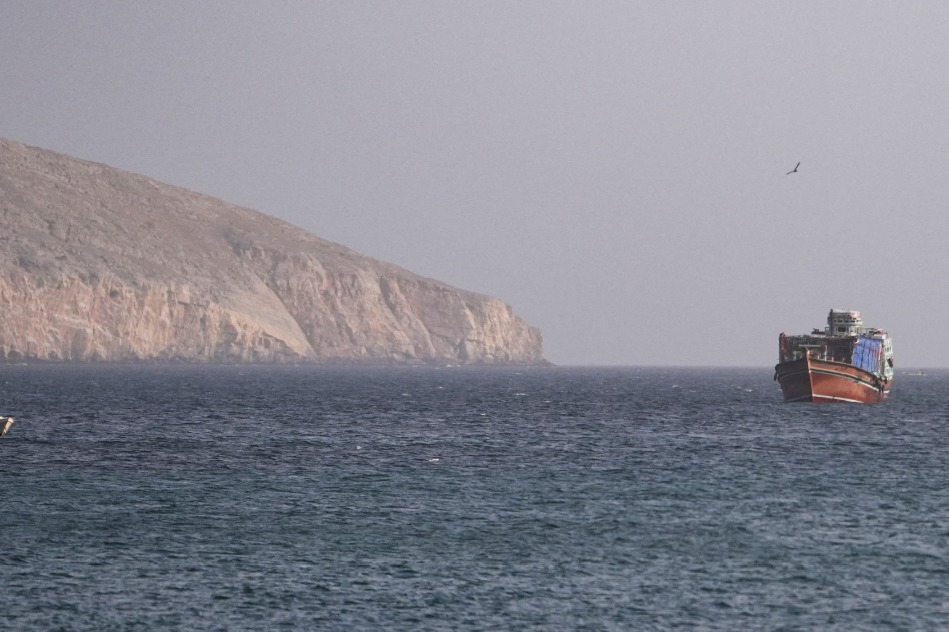
    Escalating tensions in the strategic Strait of Hormuz have reached a new boiling point, as Iran’s Islamic Revolution Guard Corps (IRGC) announced it intercepted three oil tankers attempting to traverse the waterway on Thursday, just one day after U.S. forces carried out their 12th straight night of airstrikes across Iranian territory.

  • New multi-millionaire’s four-letter reaction to $40m Powerball win

    New multi-millionaire’s four-letter reaction to $40m Powerball win

    After three straight weeks of no top-prize claimants, a middle-aged couple from Brisbane’s Kenmore neighborhood has walked away with one of Australia’s biggest recent Powerball jackpots, scoring a total windfall of $40,724,820.55.

    The couple, who already had 19 additional lower-division wins to their name in the same Thursday evening draw, became the first jackpot winners since late June, when an unregistered Canberra man claimed an identical $40 million top prize. When lottery officials called to deliver the life-changing news, the winning husband gave a blunt, distinctly Australian reaction that captured the utter shock of the moment: “F**k no! What? You’re kidding me,” he shouted, unable to process the win at first.

    His wife shared similar disbelief, recalling that she had joked with her husband moments before the call that the unknown contact could be the national lottery operator The Lott with good news. “This is unreal. This can’t be real,” she said. Unlike many jackpot winners who weigh long-term decisions about their careers, the pair immediately announced an end to their working lives, saying they had spent years questioning whether there was more to life than daily work routines.

    “I’ve dreamt of this, but never imagined this happening to us,” the husband told lottery officials. The couple outlined their early plans for the massive sum: they will first clear their outstanding home mortgage, then set up long-term financial security for their children and extended family. Beyond that, they said they plan to embrace their newfound freedom and enjoy every moment of their unexpected good fortune.

    Lottery officials confirmed that the winning numbers, ordered numerically, were 7, 11, 12, 18, 27, 30 and 34, with a Powerball of 16. Alongside the single top-division jackpot win, 20 players took home division two prizes of $38,148.45 each, and another 81 winners claimed division three prizes of $11,650.25 apiece. The win marks the end of a four-draw rollover that had built up the jackpot to its massive sum, making the Brisbane couple the envy of lottery players across the country.

  • EU hits Google with $1 billion fine over its Play app store and search

    EU hits Google with $1 billion fine over its Play app store and search

    BRUSSELS – In a landmark escalation of the European Union’s years-long campaign to rein in the power of large technology platforms, the bloc’s executive body levied an 890 million euro ($1 billion) fine against Google on Thursday, ruling that the American tech giant violated regional digital antitrust rules by skewing its core services to favor its own offerings over rival products.

    The penalty marks the latest high-profile enforcement action from Brussels, which has emerged as a global trailblazer in regulating big technology firms, regardless of whether their headquarters are based in Silicon Valley or Beijing. The action comes shortly after Google lost an EU court appeal against a separate $4.5 billion antitrust fine, which dated back to a ruling that the company stifled competition and eroded consumer choice through the dominant market position of its Android mobile operating system.

    The European Commission, which serves as the EU’s executive governing arm, framed the penalty as a measure taken to protect consumer interests across the 27-nation bloc. “The best products should succeed because they’re better, not because they’re owned by the company running the search engine. And European consumers have a right to be told by app developers where to sign up to the best offers, even when the app store owner does not get a cut,” explained Teresa Ribera, the commission’s Executive Vice President for Clean, Just and Competitive Transition.

    Commission spokesperson Thomas Regnier reiterated the bloc’s commitment to fair competition, noting: “In the EU, businesses have the right to compete fairly. Gatekeepers have the obligation to ensure a level playing field and consumers the right to choose for cheaper alternative offers.”

    Google pushed back fiercely against the ruling, with Kent Walker, the company’s President of Global Affairs, dismissing the penalty as harmful policy driven by narrow self-interests. Walker called the fine “product degradation driven by a small group of self-serving complainants” that would ultimately hurt both European businesses and regional consumers. He also argued that the EU’s newly enacted Digital Markets Act, the regulatory framework underpinning this enforcement push, compels Google to eliminate popular real-time search features that European users rely on, including instant pricing and direct availability updates for hotels, flights, and local restaurants, while also forcing the company to remove key safety safeguards from the Google Play app store.

  • Aussie brand’s trademark battle with rapper Eminem takes new twist

    Aussie brand’s trademark battle with rapper Eminem takes new twist

    A high-stakes David vs Goliath trademark dispute between global rap icon Eminem and small Australian swimwear label Swim Shady is set to continue, after the hip-hop star filed a last-minute appeal against a recent court ruling that favored the local brand.

    The conflict centers on the similarity between Swim Shady’s brand name and Eminem’s legendary alter ego, Slim Shady, a moniker the rapper has built a decades-long career around. Lawyers representing Eminem, whose legal name is Marshall Mathers, had previously blocked Swim Shady co-founders Jeremy Scott and Elizabeth Afrakoff’s 2024 application to register their brand as a trademark in Australia, arguing the name infringed on the rapper’s existing intellectual property rights.

    Earlier this month, however, Delegate of the Registrar of Trade Mark Benjamin Goldsworthy ruled in Swim Shady’s favor. The decision found that Eminem’s registered trademarks for “Shady” and “Shady Limited” had not been actively used on clothing, footwear, headwear, bags, or leather goods in Australia during the mandatory legal period required to enforce trademark protection. As a result, the court ordered Mathers to cover the small brand’s legal costs stemming from the challenge.

    Scott and Afrakoff, the husband-and-wife team behind the Australian beachwear label, welcomed the initial ruling, calling it a key milestone for their young business. Even at the time, however, the pair acknowledged that the legal fight might not be fully resolved, noting that additional proceedings remained pending after the first ruling.

    True to that expectation, Eminem’s legal team has now launched an appeal. Documents for the appeal were officially submitted to the Federal Court of Australia’s Victoria Registry on Wednesday, right before the July 22 deadline set in the original ruling. The move means the small Australian brand will have to continue defending its trademark against one of the biggest names in the global music industry, extending a legal battle that has drawn international attention to the clash between a giant entertainment corporation and a local small business.