博客

  • Iran vows to continue strikes in Mideast war

    Iran vows to continue strikes in Mideast war

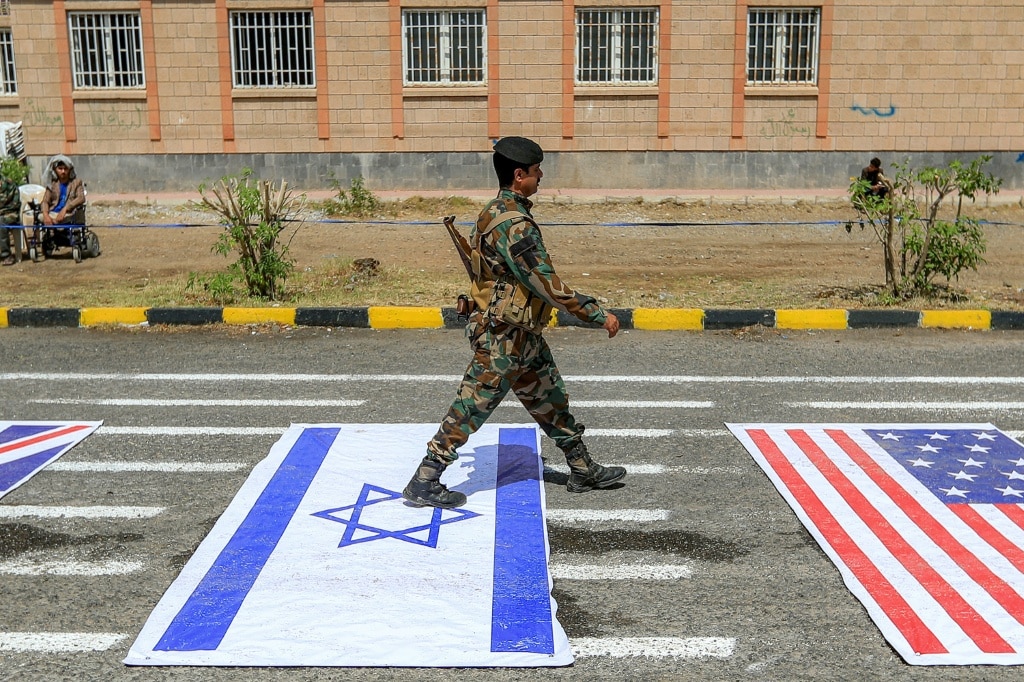
    A widening regional conflict across the Middle East has entered a dangerous new phase, with Iran formally announcing Thursday that it will sustain retaliatory military operations for as long as it remains under attack, as its allied Houthi movement opens a new front in the Red Sea targeting Saudi commercial shipping.

    The latest escalation follows a brief multi-week ceasefire that has collapsed, reintroducing widespread uncertainty to both the region and global energy markets, as Iran and the United States engage in a high-stakes contest for control of the strategically critical Strait of Hormuz.

    This week, the Iran-aligned Houthi group entered the active conflict, announcing a blockade of Saudi ports and launching strikes on two Saudi oil tankers in Red Sea waters. Parallel to this Red Sea escalation, Jordan and Kuwait have both confirmed intercepting incoming strikes, as Iran’s regular military and Islamic Revolutionary Guard Corps (IRGC) have stated their operations are targeting U.S. assets positioned across both nations.

    “The armed forces’ retaliatory attacks will continue as long as the U.S. attacks on the country’s infrastructure and coastal areas continue,” Iranian army spokesperson Mohammad Akraminia stated in comments carried by Iran’s state television.

    The latest round of open hostilities comes on the heels of fresh U.S. airstrikes on Iranian military positions. U.S. Central Command confirmed it had conducted its twelfth consecutive night of strikes, noting the operations are intended to “further degrade Iran’s ability to threaten civilian mariners and commercial vessels transiting regional waters.”

    On Wednesday, former U.S. President Donald Trump issued an unusually explicit threat via social media, stating that the U.S. would target Iranian civilian infrastructure every time Iranian forces attack vessels in the Strait of Hormuz. “Any time the Islamic Republic of Iran shoots at a ship in the Strait of Hormuz, whether it be by Missile, Rocket, Drone, or any other device or weapon, the United States will bomb and destroy ONE BRIDGE OR POWER PLANT,” Trump wrote.

    Iranian Foreign Minister Abbas Araghchi reaffirmed Tehran’s commitment to proportional retaliation for any attacks on its infrastructure, writing, “Our defence doctrine is clear: eye for an eye.”

    Iranian state media reported Thursday that a recent U.S. strike killed two people near Shalamcheh, located on Iran’s border with Iraq. The outlet also confirmed two U.S. missiles struck targets near Bushehr, the site of Iran’s only civilian nuclear power plant, which has been repeatedly targeted by U.S. strikes in recent weeks.

    In the Red Sea theater, the Houthis confirmed they carried out combined missile and drone attacks on two Saudi-flagged oil tankers, the Encelia and the Layla, following their formal declaration of a blockade on Saudi commercial ports. UK Maritime Trade Operations (UKMTO), the British-led naval security monitoring service, reported the captain of one vessel confirmed a strike by an unidentified projectile roughly 70 nautical miles southwest of Saudi Arabia’s Al Shuqaiq, sparking a fire that the crew was working to extinguish as of Thursday.

    Saudi Arabian officials have confirmed the Encelia sustained damage in the attack, but have not released any information on potential damage or casualties linked to the Layla strike.

    While it remains unclear how effectively the Houthis can enforce a full-scale blockade of Saudi ports, the threat of sustained disruption to Red Sea shipping compounds existing volatility sparked by competing control of the Strait of Hormuz, threatening to undermine Riyadh’s ability to redirect oil exports away from the strait to bypass ongoing conflict.

    In the Strait of Hormuz itself, the IRGC announced it has halted three oil tankers from transiting the waterway, which carried roughly one-fifth of global oil supplies prior to the outbreak of the current conflict. “The Strait of Hormuz is under our control… and any ship that is deceived by the U.S. and intends to pass without coordination with the Islamic Republic of Iran will suffer the same fate,” the IRGC said in a statement.

    The fresh escalation has sent global oil prices climbing sharply Thursday. Brent crude, the global benchmark for oil pricing, rose 4% to trade at $97.80 per barrel, reviving widespread market fears of accelerating consumer inflation and slowed global economic growth.

    Speaking on the sidelines of a Southeast Asian summit hosted in Manila, U.S. Secretary of State Marco Rubio accused Iran of manipulating the Houthis into joining the conflict to disrupt Red Sea shipping. “The Houthis largely were smart and stayed out of all this throughout the conflict, but they now apparently have gotten themselves suckered into this, going after Saudi Arabia and their ships,” Rubio said. “I hope they will de-escalate, because I think the Houthis, frankly, got snookered into this thing by the Iranians.”

    Oman, which has served as a key neutral mediator in the years-long conflict between the Houthis and Saudi Arabia, announced Thursday it is working to restart negotiations between the two parties, while voicing “great concern” over the rapidly deteriorating security situation in Red Sea waters.

  • Germany calls news conference as Klopp expected to be named coach

    Germany calls news conference as Klopp expected to be named coach

    FRANKFURT, Germany — One of the most high-profile vacancies in international men’s soccer is on the cusp of being officially filled, with the German Football Association (DFB) set to introduce Jürgen Klopp as the country’s next senior men’s national team manager during a Friday press conference, multiple insiders with knowledge of the process have confirmed.

    In a short, sparse statement released Thursday, the DFB did not disclose the explicit purpose of the Friday morning event planned at its Frankfurt headquarters, but multiple football industry sources have confirmed the gathering will be dedicated to presenting Klopp as Julian Nagelsmann’s permanent replacement.

    Klopp has been the DFB’s top target for the role ever since Nagelsmann stepped down from the position after Germany suffered a stunning elimination from this year’s FIFA World Cup. The defending champions were knocked out in the round of 32 in a penalty shootout defeat to Paraguay, a result that ended their tournament run far earlier than expected and triggered the opening of the top job.

    Talks between Klopp and DFB leadership first took shape in New York, where the former Liverpool boss was working as a broadcast pundit and television analyst for the World Cup. On July 11, the federation publicly confirmed that the two sides had reached a preliminary understanding on all core terms of a potential contract.

    For weeks after that announcement, the primary stumbling block to finalizing the deal was securing an exit agreement from Red Bull, the global beverage and sports conglomerate. Klopp has served as Red Bull’s head of global soccer for the past 18 months, a role that saw him oversee the operations and development of the company’s entire network of sponsored professional clubs across Europe and the Americas. Final negotiations between the DFB and Red Bull ultimately cleared that hurdle, opening the door for Friday’s official presentation.

    Klopp stepped away from his role as Liverpool’s first-team manager at the end of the 2023-2024 season, citing prolonged burnout and a need for an extended break from elite coaching. Earlier this month, however, the 57-year-old told reporters he has completed his period of rest and now feels fully recharged, ready to return to the sidelines for a new challenge at the international level.

  • Wildfire spreads near popular French tourist town as thousands are evacuated

    Wildfire spreads near popular French tourist town as thousands are evacuated

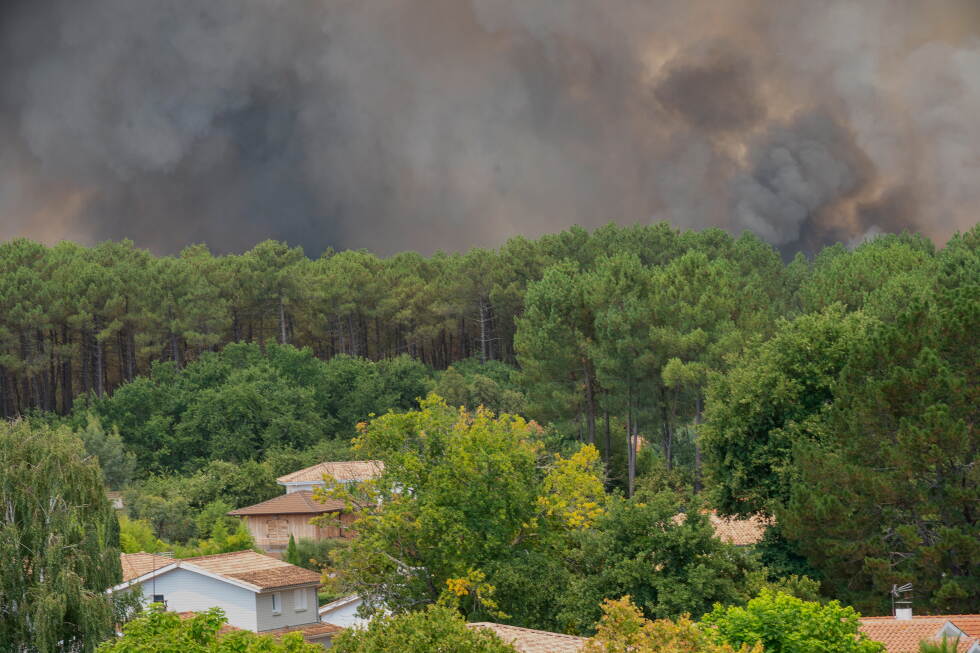
    A fast-spreading wildfire burning through Gironde region forestland along France’s Atlantic coast has forced roughly 20,000 residents and vacationers to flee their homes and resorts, in what marks the latest major wildfire event to hit Southern Europe amid a season of record heat and prolonged drought.

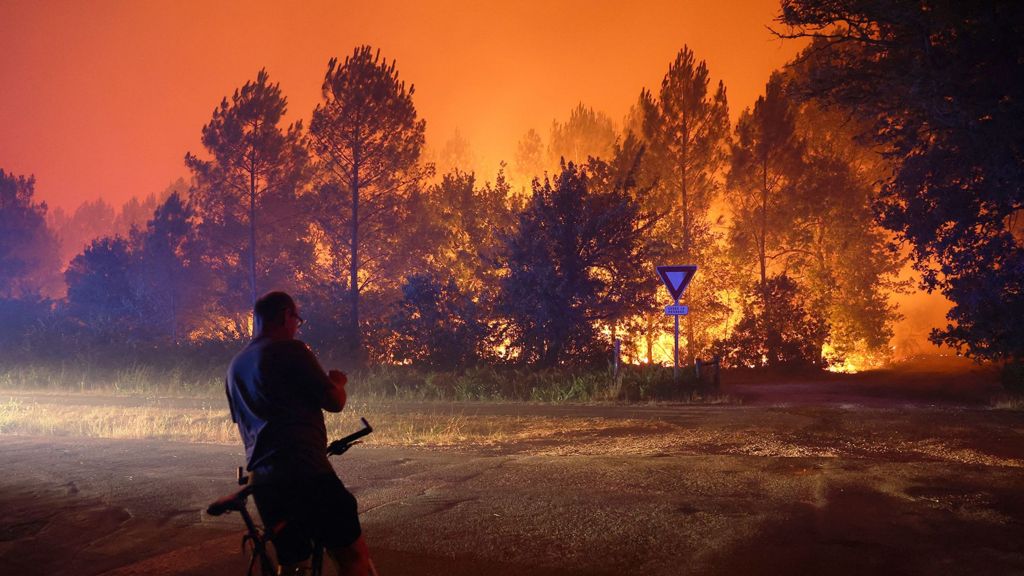
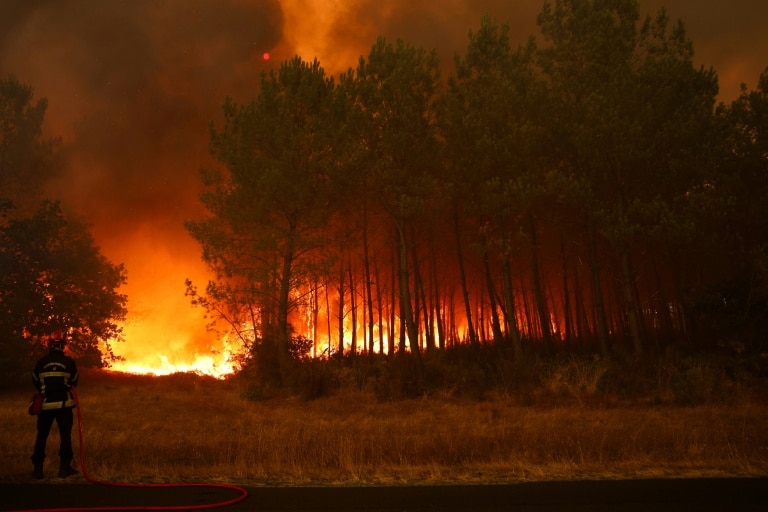
    The blaze, which ignited near the coastal town of Lège-Cap Ferret, roughly 60 kilometers southwest of Bordeaux, has already scorched more than 31 square kilometers of vegetation, regional authorities confirmed Thursday. As of the latest update, no injuries have been documented, but the fire has advanced to within 300 meters of residential neighborhoods in the town of Lège, prompting urgent emergency action.

    More than 700 firefighters, including reinforcement teams deployed from the Paris region, have been assigned to contain the blaze, with water bombers called in to drop massive amounts of water on the fire line from the air. By Thursday evening, regional prefect Sophie Brocas’ office reported that while the fire has not yet been fully extinguished, it has been successfully contained to the northern area of Lège, limiting further spread for the time being.

    Evacuation efforts unfolded in two phases overnight and through Thursday: first, roughly 11,000 people, including tourists staying at coastal holiday camps and campgrounds, plus more than 1,000 permanent residents living along the forest edge, were moved to safe zones. As a precautionary measure, authorities later ordered a full evacuation of the nearby village of Claouey, which hosts multiple additional campsites, adding another 8,800 people to the total evacuation count. Local municipalities have set up dedicated reception centers to provide shelter, food, and basic support for displaced evacuees.

    This Gironde blaze is just one part of a far wider wildfire crisis that has engulfed Southern Europe this summer, a disaster climate scientists link directly to human-caused climate change, which is amplifying the frequency and severity of extreme heat and prolonged dry conditions across the Mediterranean region. France has already faced a cascade of heat waves starting earlier than usual this year, bringing record-breaking high temperatures and leaving vegetation so parched that wildfire risk has jumped dramatically. French Interior Minister Laurent Nunez reported that as of this week, more than 12,500 wildfires have burned across France since the start of 2024, consuming nearly 44,000 hectares of land.

    The crisis extends far beyond France’s borders. In Italy, wildfires continued to spread across Sicily on Thursday, just one day after a veteran fire department chief, Alessandro Marchì, died while battling a blaze in the province of Caltanissetta. Italian President Sergio Mattarella released a formal statement of condolences to Marchì’s family and fellow first responders following his death.

    In Spain, firefighters are working around the clock to contain dozens of active blazes amid an ongoing severe heat wave that is projected to push temperatures as high as 44 degrees Celsius (111 degrees Fahrenheit) in the country’s southeast. A blaze near Alcalá de Henares, just outside of Madrid, forced a temporary suspension of high-speed rail service between the capital and Barcelona on Thursday, disrupting travel for thousands of passengers. In the province of Guadalajara, crews continue to battle a week-old blaze that is already the second-largest wildfire recorded in modern Spanish history, having burned 320 square kilometers of land. Other active fires in central Spain, including one near the city of Toledo, have destroyed roughly 20 residential structures and forced additional evacuations of local communities.

  • Trent Bridge to kick off the 2027 men’s Ashes as England hosts Australia

    Trent Bridge to kick off the 2027 men’s Ashes as England hosts Australia

    LONDON – The England and Wales Cricket Board has officially locked in the full schedule and confirmed the opening venue for the highly anticipated 2027 men’s Ashes series against defending title holders Australia, a announcement that has already sparked debate over regional representation.

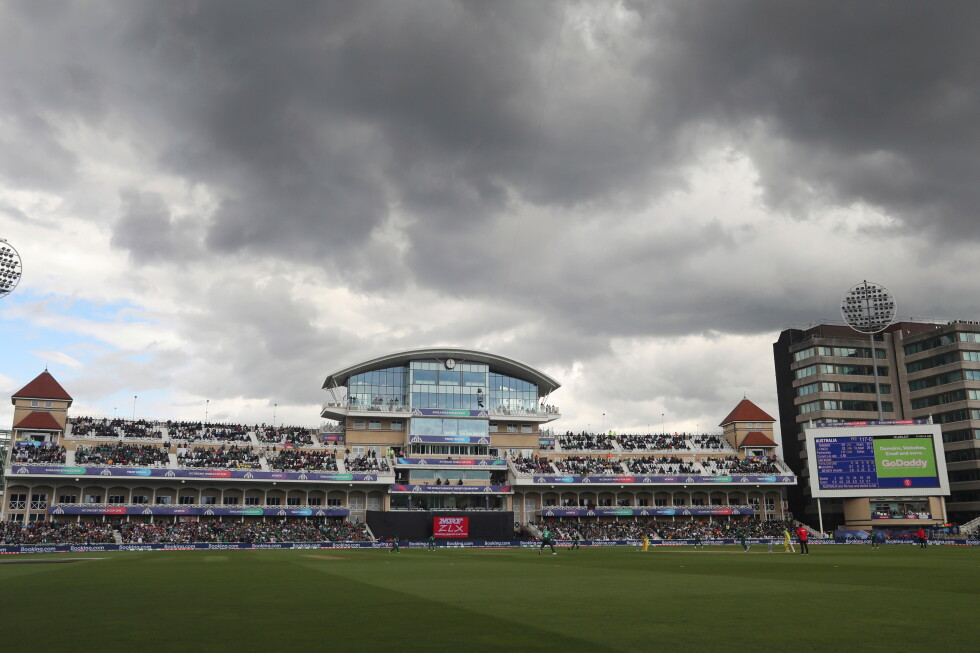
    Trent Bridge, the iconic Nottingham-based cricket ground, will play host to the first Test of the five-match series, scheduled to run from June 18 to 22, 2027. The venue has emerged as a lucky ground for England in recent Ashes history, with the home side claiming victory in three consecutive Ashes Tests at Trent Bridge, most notably a 2015 win where Australia was bowled out for just 60 runs in one innings.

    Following the opening clash, the series will move to London’s historic Lord’s ground for the second Test, held from June 30 to July 4. Just four days later, the third Test gets underway at Birmingham’s Edgbaston from July 8 to 12. The fourth Test will mark a historic milestone for the tournament: Southampton’s Rose Bowl will host its first ever men’s Ashes Test from July 21 to 25, becoming the 10th different English ground to host a men’s Ashes series match. The five-match series will wrap up at London’s The Oval from July 29 to August 2.

    All five venues were shortlisted in 2023, but the selection drew immediate criticism for the exclusion of two major northern English grounds: Old Trafford in Manchester and Headingley in Leeds. While both venues were already confirmed to host matches in the 2031 Ashes series, their absence from the 2027 lineup made Nottingham the northernmost host venue for the 2027 tournament. Following the 2023 selection announcement, the mayors of Greater Manchester and West Yorkshire sent official letters of disappointment to the ECB. Even England men’s skipper Ben Stokes, who represents the northern county side Durham, called the lack of northern Test venues for the 2027 series “a shame” in comments made during England’s 4-1 Ashes defeat in Australia earlier this year.

    To soften the impact of the exclusion, Old Trafford has been assigned a high-profile preparatory fixture: it will host a warm-up match between Australia and the England Lions from June 7 to 10, 2027. The schedule for this warm-up will be adjusted if Australia qualifies for the World Test Championship final, which is set to take place at The Oval from June 9 to 13 that same year.

    Alongside the men’s fixture announcement, the ECB confirmed that the 2027 women’s Ashes series will run concurrently with the men’s tournament. The women’s series will open with a Test match at Headingley from June 24 to 27, marking the first women’s Ashes Test hosted at the ground since 2001, followed by three Twenty20 matches and three One Day Internationals concluding on July 20.

    The announcement also included details of other upcoming home Test and limited-overs series for England’s national sides. In May 2027, the men’s team will host Pakistan for five One Day Internationals, followed by England’s first home Test match against Bangladesh at Lord’s since 2010. That September, New Zealand will tour England for three Twenty20s and five One Day Internationals as both sides prepare for the 50-over Men’s World Cup hosted in southern Africa that October. The England women’s team will also host Bangladesh for six white-ball matches in September 2027.

  • Anthony Albanese holds first talks with yet another new British PM

    Anthony Albanese holds first talks with yet another new British PM

    Just over two years after taking office as Australia’s Prime Minister, Anthony Albanese has held his first official conversation with Andy Burnham, the United Kingdom’s newest prime minister – marking the fifth different British leader Albanese has been paired with since he won federal office in May 2022.

    Burnham, the former long-serving Mayor of Greater Manchester, moved into 10 Downing Street early Monday after being selected as the new leader of the UK Labour Party, following the resignation of former Prime Minister Sir Keir Starmer, who held the post for just over two years after Labour’s landslide 2024 general election victory.

    The introductory call, held shortly after Burnham’s formal appointment, saw Albanese extend warm congratulations to the new British premier alongside a formal invitation to visit Australia in the coming months.

    The wide-ranging discussion covered nearly every corner of the deep, decades-long bilateral relationship between Canberra and London. Key topics on the agenda included the ongoing implementation of the AUKUS trilateral security partnership, progress on post-Brexit trade and bilateral economic investment, and Australia’s pioneering policy banning social media use for children under a minimum age.

    Beyond domestic and bilateral policy, the two leaders aligned on the importance of joint UK-Australian action to address pressing global challenges, ranging from the ongoing armed conflict in the Middle East to the complex risks and transformative opportunities presented by the rapid expansion of artificial intelligence.

    In a lighter moment, the pair also bonded over their shared enthusiasm for rugby league.

    Albanese’s string of introductory meetings with successive UK prime ministers is a direct product of the extraordinary political instability that has shaken British politics over the past two and a half years. When Albanese first entered The Lodge in May 2022, Boris Johnson was already three years into his premiership. Johnson resigned just months later, replaced in September 2022 by Liz Truss, whose tenure infamously ended after just 49 days – shorter than the shelf life of a head of lettuce that became a viral social media sensation mocking her short-lived time in office.

    Truss was succeeded by Conservative Prime Minister Rishi Sunak, who held office until Labour’s 2024 general election landslide. Starmer then took the reins until his resignation earlier this month, clearing the way for Burnham’s appointment and the latest introductory meeting for the Australian prime minister.

  • Around 12,000 people evacuated in France fires

    Around 12,000 people evacuated in France fires

    A wave of destructive, heat-fueled wildfires is tearing across multiple regions of Southern Europe this summer, leaving three firefighters dead, forcing mass evacuations of thousands of residents and tourists, and destroying vast swathes of forest and land. The crisis unfolded just weeks after a landmark climate report confirmed Europe is the world’s fastest-warming continent, amplifying concerns over the growing frequency and intensity of extreme weather events driven by climate change.

    In southwestern France’s Gironde region, local officials confirmed that roughly 12,000 people have been evacuated to escape advancing flames, with 10,000 of those displaced being tourists visiting the popular coastal and forested area. As of Thursday, the wildfire has already burned through more than 2,000 hectares of land, just days after two firefighters lost their lives battling blazes near Bordeaux Airport. No new civilian injuries have been reported as of Thursday, but authorities have enacted strict emergency measures to slow the spread of the fire: all combustion and electric engine use has been banned in heavily forested zones, multiple major roads have been closed, and all high-risk leisure sites in exposed forest areas will stay shut through Thursday evening. Gironde remains under red wildfire alert, as the region grapples with the same prolonged, record-breaking heatwave that has raised fire risk across much of Western Europe.

    French officials have held formal tributes to the two fallen firefighters this week. Interior Minister Laurent Nuñez shared images from a Wednesday memorial, describing the occasion as one marked by “immense emotion” and extending “infinite gratitude” and “unwavering support” to the firefighters’ families.

    Across the Mediterranean, Italy is also reeling from a deadly wildfire crisis of its own. On the island of Sicily, a 60-year-old firefighter Alessandro Marchi died Wednesday while battling a large blaze in San Cataldo. Another firefighter was injured in the same operation, and Sicilian President Renato Schifani has publicly wished the injured first responder a “speedy recovery.” Italian Interior Minister Matteo Piantedosi honored Marchi’s sacrifice in a post on X, writing that the firefighter died “in service to the community” and that “He will not be forgotten.”

    Sicilian Civil Protection head Salvo Cocina confirmed Wednesday that the island has recorded more than 350 separate wildfires in recent days, including 10 major blazes that have already triggered precautionary evacuations. Cocina noted that nearly all of the fires were caused by human activity, and warned that repeated large-scale wildfire events have turned firefighting into a persistent public order and social crisis for the island.

    In neighboring Spain, wildfires have reached the outskirts of Madrid, forcing the evacuation of hundreds of residents earlier this week. Overnight, most displaced residents were allowed to return to their homes, though one neighborhood in Villa del Prado remains off-limits as an adjacent fire continues to burn. Roughly 90 emergency personnel and one firefighting helicopter have been deployed to contain the remaining blaze, with emergency crews launching a “direct attack” on the flames to stop it from spreading further. Spanish weather service AEMET forecast maximum temperatures will reach 36 degrees Celsius across the region on Thursday, and local authorities have continued to warn of an “extreme risk of fires” for the coming 24 hours.

    The current wave of wildfires comes amid a longer-term trend of rising temperatures and increasing fire risk across Europe. A April 2025 report from the Copernicus Climate Change Service confirmed that at least 95% of Europe recorded above-average annual temperatures in 2025, and the continent is warming faster than any other major region on Earth. The report also found that both the total area burned by wildfires and fire-related carbon emissions reached all-time record highs across the continent last year, highlighting the growing threat climate change poses to European communities.

  • White House readies fresh tariffs as 10% levy to expire

    White House readies fresh tariffs as 10% levy to expire

    As U.S. President Donald Trump’s temporary 10% global tariff is set to expire this Friday, the White House is moving forward with plans to roll out a new slate of import duties targeting dozens of trading partners, top American trade representative Jamieson Greer confirmed Tuesday. This renewed tariff push comes as the Trump administration works to rebuild its core trade policy agenda after a series of major legal setbacks earlier this year that invalidated many of its earlier tariff measures.

    In February, the U.S. Supreme Court struck down a large portion of Trump’s original tariffs, prompting the administration to implement a temporary 10% global import levy to maintain its trade pressure while drafting new policy. That temporary measure will expire at the end of this week. According to trade analysts, the incoming tariffs, framed around allegations that trading partners fail to crack down on forced labor, will replace the expiring temporary levy, with rates set to range between 10% and 12.5%.

    The new round of tariffs is expected to cover the majority of U.S. trade volume, Greer confirmed Tuesday, telling CNBC “We expect to see some action soon” when pressed for details on the new measures, though he declined to share a specific timeline for implementation. The European Union has already pushed back against the planned measures, stating publicly that it considers tariffs imposed on forced labor grounds by the U.S. to be completely unjustified.

    The Trump administration has already moved to implement new targeted tariffs against key trading partners in recent days. Last week, Washington announced a 25% duty on select Brazilian goods set to take effect Wednesday. While exemptions have been carved out for products the U.S. does not produce domestically, as well as goods including beef, coffee and certain aircraft components, the measure still impacts more than $11 billion in Brazilian exports to the U.S. The Brazilian government has issued a sharp rebuke of the policy, and the American Chamber of Commerce in Brazil has warned that the tariffs place Brazil among the nations facing the most restrictive access conditions to the U.S. market.

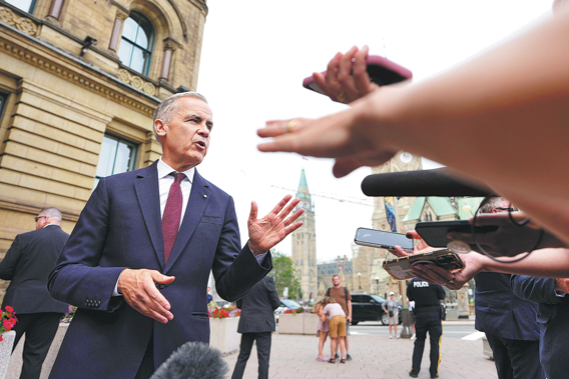
    On Monday, the administration unveiled a 50% tariff on a wide range of Canadian products, scheduled to go into effect in 30 days. In response, Canadian Prime Minister Mark Carney told reporters in Ottawa Tuesday that his government is currently considering “all options” to respond to the measure, though he added that he and President Trump have agreed to intensify bilateral negotiations over the coming weeks to reach a potential negotiated settlement.

    The new 50% Canadian tariff also comes as the U.S. engages in high-stakes renegotiation of the U.S.-Mexico-Canada Agreement (USMCA), the trilateral trade pact governing North American trade. The Trump administration recently rejected calls to extend the current terms of the agreement, and Greer is scheduled to travel to Mexico for negotiations tied to the joint USMCA review from Wednesday through Friday.

    In an additional major trade announcement Tuesday, Trump disclosed a new phased tariff schedule for imported generic pharmaceuticals. Starting in August 2028, a 100% sector-specific tariff will go into effect on imported generic drugs, rising to 200% in 2029. To create a window for drug manufacturers to shift production to the U.S., the president added that the tariff will be set at zero for imports between August 2026 and the start of the 2028 levy. Swiss generic drug giant Sandoz confirmed Wednesday it would continue holding talks with U.S. policymakers to address the impact of the new policy.

    Trade experts have warned that the broad new slate of tariffs risks reigniting global trade tensions, with high chances of retaliatory measures from U.S. trading partners that could escalate into a wider trade conflict that disrupts global supply chains and raises costs for American consumers.

  • Deadly wildfires force thousands from homes in parts of Europe

    Deadly wildfires force thousands from homes in parts of Europe

    As a brutal heatwave pushes temperatures past 40 degrees Celsius across the Mediterranean, fast-moving wildfires have ripped through populated and forested areas of Italy, France and Spain this week, leaving three firefighters dead and forcing tens of thousands of residents and tourists to flee their homes and accommodations. The ongoing disaster comes as climate scientists have long warned that human-caused fossil fuel emissions are intensifying extreme weather events, making heatwaves and wildfires more frequent, longer-running, and far more destructive than historical averages. In Italy, the island of Sicily has become one of the hardest-hit regions, where roughly 6,000 first responders including firefighters, forest rangers and civil protection personnel have battled dozens of blazes that have burned uncontrolled for days. Even with the support of water-bombing aircraft, crews have struggled to contain the flames, fueled by extremely high temperatures and parched, drought-stricken soil that acts as kindling for wildfires. Italian Interior Minister Matteo Piantedosi confirmed one firefighter died after suffering a medical emergency while on the fire lines, with the nation’s Civil Protection Agency describing the overall situation on the island as “serious.” To the northeast of Sicily, the adjacent Calabria region has recorded more than 160 separate blazes, with local civil protection chief blaming most of the fires on intentional arson perpetrated by “malicious individuals.” In one shocking allegation, he claimed arsonists tied flammable liquid-soaked rags to the tails of stray cats to ignite new fires across the region. Across the border in southwestern France, more than 10,000 tourists were forced to evacuate campgrounds and holiday rentals near Bordeaux on Thursday after a wildfire tore through a coastal pine forest. The Le Porge blaze has consumed more than 2,000 hectares of land – an area roughly three times the size of Gibraltar – since it ignited on Wednesday. Two firefighters were killed on Tuesday while battling a separate blaze near Bordeaux Airport, a loss that came as fire department unions warned crews were already stretched to breaking point, facing widespread exhaustion and critical shortages of resources. Wilfried Schneider, a fire captain on the ground in Le Porge, described the blaze as having an intensity rarely seen in the region, fueled by densely packed pine stands that burn hot and spread quickly. “We saw a big cloud of black smoke spread across the sky in the middle of the afternoon,” said Julie Leonard, a 30-something Bordeaux resident who traveled with her family to a safe observation point outside the evacuation zone. Bernard Roche, a 75-year-old long-term resident of the area who evacuated his cabin, noted that conditions had been exceptionally dry for weeks. “If I’d been brave, I would have stayed in my cabin, but it was too hot. I got in my car and left,” Roche said. While Le Porge mayor Martial Zaninetti suggested the fire may have started from a machine used to clear forest tracks, no official cause has been confirmed. Local authorities confirmed that 700 residents evacuated their homes as a precaution, with an additional 3,000 campers relocated to safer areas further from the fire. Further north in Spain, emergency officials reported Thursday that progress on containing a large wildfire south of Madrid has allowed most displaced residents to return to their homes. That blaze ignited Wednesday near Toledo, roughly 75 kilometers from the Spanish capital, prompting immediate evacuation orders for multiple communities as flames advanced toward residential areas. Only residents of El Encinar del Alberche in Villa del Prado municipality remain under evacuation orders as of Thursday. Fire crews called overnight containment progress “very positive,” though the blaze has not been fully stabilized and multiple regional roads remain closed. Hundreds of firefighters continue to battle a much larger, older blaze in Guadalajara province, roughly 100 kilometers north of Madrid, which has burned nearly 32,000 hectares since it started one week ago. According to data from the European Forest Fire Information System, Spain has already lost more than 393,000 hectares of land to wildfires in 2025 – the worst annual wildfire toll in the country’s modern recorded history.

  • Seinfeld actor apologises to reality star for ‘inappropriate’ sketch when she was 17

    Seinfeld actor apologises to reality star for ‘inappropriate’ sketch when she was 17

    More than a decade after a controversial comedy sketch that featured a minor as the butt of sexualized jokes, veteran Hollywood actor Jason Alexander has issued a public apology to Courtney Stodden, the reality TV star who was just 17 years old when the segment was filmed. The 2012 sketch, produced by digital comedy platform Funny or Die, parodied daytime talk shows in the vein of *Dr. Phil*, and has resurfaced in recent weeks to renewed public backlash over its inappropriate content.

    In the resurfaced clip, Alexander — best known for his decades-long fame as George Costanza on the iconic sitcom *Seinfeld* — performs a crude bit where he rubs a mobile phone across Stodden’s chest, joking that there was “no signal” on her head but “plenty of signal” in her breasts. The sketch closes with another problematic joke, where Alexander quips that he would take Stodden behind a couch and “have his way” with her once she turned 18. Stodden also confirmed that Alexander was credited as one of the sketch’s writers, adding a layer of accountability to his involvement.

    Earlier this month, Stodden, now 31, reposted the clip to her Instagram with a heartfelt reflection on the harm the experience caused her. “The older I get, the more impossible this is to understand,” she wrote. “Looking back now, I don’t see comedy. I see a 17-year-old girl whose body became part of an adult joke. I was a minor. I didn’t have the legal power to decide whether I wanted to participate… I was the only child in the room. I felt so alone.” Stodden went on to question how a room full of adult industry professionals could deem the sexualization of a minor acceptable content for a comedy sketch.

    After Stodden’s public post drew widespread media attention, Alexander released a formal statement to multiple major U.S. entertainment outlets acknowledging the sketch was wrong. “Looking back at the comedy sketch in which Ms Stodden and I participated in 2012, I completely agree that it was inappropriate and I truly regret it,” Alexander said. “But more importantly, I am deeply sorry for any harm or distress it has caused Ms Stodden. I offer her my sincerest apologies.”

    This conversation comes amid Stodden’s ongoing advocacy work to end child marriage in her home state of California. Stodden herself was married at 16 to 51-year-old actor Doug Hutchison in 2011, a union that was legally allowed at the time because her parents granted consent. The pair finalized their divorce in 2020, and Stodden has since become a prominent voice for reform. Currently, 33 U.S. states still allow 16- and 17-year-olds to marry with parental approval or a judicial waiver, a practice Stodden has spent years fighting to eliminate.

    California is currently considering AB 1267, a bill that would set the absolute minimum age for marriage at 18, eliminating all exceptions for underage marriage. Stodden said she appreciated Alexander’s public apology, but pushed for more concrete accountability. “People keep asking if he’s apologised privately, and he hasn’t. A private apology would be meaningful, but meaningful action would be even more powerful,” she told reporters. “If he truly regrets what happened, I’d invite him to support [campaign group] Unchained At Last and the fight to end child marriage through AB 1267. That’s how we turn accountability into lasting change.”

    Beyond his breakout role on *Seinfeld*, Alexander has built a decades-long career in Hollywood with credits on hit series including *ER* and films like *Pretty Woman* and *Shallow Hal*. Stodden, who rose to fame following her 2011 marriage, has built a public profile through appearances on reality shows including *Couples Therapy*, *Celebrity Big Brother*, *Reality Ex-Wives*, and *Celebs Go Dating*.

  • Hundreds hospitalised in Japan heatwave ‘disaster’

    Hundreds hospitalised in Japan heatwave ‘disaster’

    Japan is currently grappling with an unprecedented extreme heatwave that has officially been labeled a national disaster, leaving at least 14 people dead and forcing hundreds of residents and visitors into hospital care for heat-related illnesses. On Thursday, Tokyo Fire Department officials released staggering daily figures confirming that 453 people required emergency hospital treatment for heatstroke and related complications on Wednesday alone — the highest single-day count recorded since the city began tracking such statistics 16 years ago in 2008. Emergency service callouts for heat-related incidents also hit a record high not seen since consistent record-keeping began in 1963.

    The unprecedented surge in heat-related hospitalizations comes as much of the island nation bakes under consistent high temperatures, with the death toll rising to at least 14 across the country over the past seven days, per data from Japan’s Fire and Disaster Management Agency. In Tokyo prefecture, home to roughly 14 million residents, one person has already died from heat-related causes in this event, with four more in critical condition and 18 others classified as seriously ill.

    “We are urgently urging people across the capital to stay consistently hydrated and run air conditioning whenever possible to avoid heatstroke,” a fire department spokesperson told reporters. The spokesperson added that patient numbers have climbed steadily alongside rising temperatures, with sharp, worrying increases reported on both Tuesday and Wednesday.

    Tourists visiting popular Tokyo attractions have described the conditions as punishing, with many altering entire travel itineraries to prioritize access to cool spaces. Nick Estes, a 35-year-old American tourist visiting Tokyo’s historic Asakusa district with his family, noted the extreme conditions felt even more intense than his trip last summer. “We’ve planned every part of our day around staying cool: spending time on the air-conditioned metro, popping into small air-conditioned souvenir shops, doing anything we can to bring our body temperatures down,” Estes explained. “Especially with young kids, it’s been absolutely brutal. I was here last summer, and somehow it feels even hotter this year.”

    Central Japanese regions have seen some of the worst heat, with Aichi Prefecture — home to the major city of Nagoya and Toyota Motor’s global headquarters — reporting 116 hospitalizations on Wednesday alone. Nationwide, heatstroke alerts have been issued for nearly all of Japan’s 125 million residents, and the disaster management agency has formally categorized the event as a disaster.

    “Temperatures have climbed steadily since mid-July, and severe heat is forecast to continue across the entire country,” the agency stated in an official release. “It is no exaggeration to call this extreme heat a disaster, given how many people are being rushed to hospitals or even losing their lives to heatstroke.”

    By early afternoon Thursday, at least six locations across Japan recorded temperatures of 40°C or higher, with three more sites hitting 39.9°C. The highest reading was logged in Hamamatsu, located in central Shizuoka Prefecture, which hit 41.1°C. Toyota City followed at 40.8°C, and Kuwana in Mie Prefecture reached 40.7°C. Japan’s all-time record high temperature of 41.8°C was set just last month in Isesaki, north of Tokyo.

    This year, Japanese authorities introduced a new official term for days with temperatures exceeding 40°C: kokushobi, which translates to “cruelly hot day.” The label was created to draw greater public attention to the severe risks of extreme heat, though it does not trigger mandatory nationwide emergency measures.

    Climate scientists have repeatedly warned that human-caused climate change is steadily increasing both the frequency and intensity of extreme heat events across Japan and the globe. Last year, Japan experienced the hottest summer on its national record, a trend that visitors and residents alike say they are noticing firsthand.

    “You leave your hotel at 8:30 in the morning and it already feels like midday, and it just gets hotter and hotter as the day goes on,” said Yesenia Gueta, a 47-year-old tourist from Los Angeles. “Now I understand why Japanese clothing is loose, and why people carry umbrellas to block the sun all the time. This heat is extreme, and that new name ‘cruelly hot day’ fits perfectly.”

    Many Japanese residents are also expressing growing anxiety about what the coming weeks of summer will bring, with temperatures already hitting record levels in mid-July. “Since it’s already this hot in mid-July, I’m worried about what August will be like,” said 24-year-old Japanese university student Nukochama, who carries a fully charged portable electric fan at all times to stay cool.