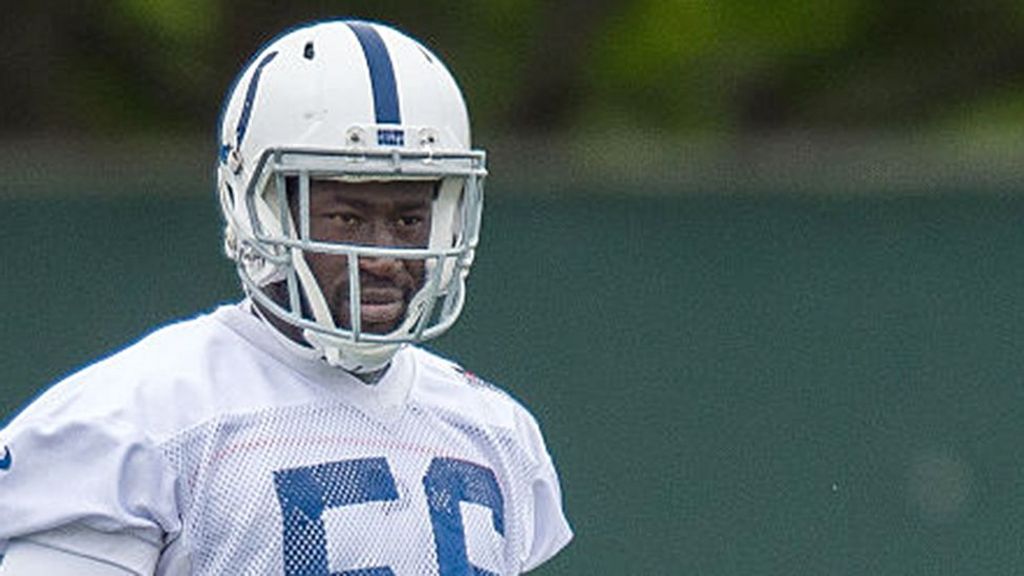
In a recent enforcement action that highlights how immigration laws apply equally to public figures and professional athletes, U.S. Immigration and Customs Enforcement (ICE) has confirmed that 37-year-old former NFL player Daniel Adongo was deported from the United States in June, more than nine years after he overstayed his work visa. A native of Kenya, Adongo spent three seasons as a linebacker with the Indianapolis Colts from 2013 to 2015, a tenure that made national headlines when he made the rare transition from professional rugby to American football despite never having played the sport at any level before.\n\nPer ICE records, Adongo’s visa expired in 2016, the year after his NFL career came to an end, and he remained in the country without legal authorization. After a years-long legal process, a deportation order was issued against him on March 23 of this year, and he was formally removed from U.S. territory on June 20. ICE officials have labeled Adongo a dangerous individual, and emphasized in an official statement that anyone who violates U.S. immigration law faces accountability regardless of their professional background or public profile.\n\n\”Those who violate immigration law are held equally accountable, including former professional athletes,\” Douglas Thompson, assistant field office director for ICE in Chicago, said in the agency’s statement. \”This dangerous individual was clearly a threat to the community, which is now safer since he’s been removed.\”\n\nAccording to ICE documentation, Adongo had been arrested multiple times over the past decade for offenses that include felony intimidation, battery, and disorderly conduct. Local reporting from the Indianapolis Star has shed additional light on Adongo’s struggles following his exit from the NFL: the publication confirmed that after he faced 2017 charges of intimidation and criminal mischief, a court ordered a psychiatric evaluation to assess his competency to stand trial. Evaluators ruled Adongo unfit for trial, and he was committed to a psychiatric facility for treatment. His trial was rescheduled multiple times, after he failed to pass subsequent competency assessments. In 2020, he was ultimately convicted of criminal mischief causing property damage, and sentenced to 364 days in federal prison.\n\nAdongo’s mother and legal representatives have previously stated that the former athlete suffered from mental health conditions and chronic physical injuries, many of which they link to his career as a professional contact sports player. As of press time, Adongo has not issued any public comment responding to the deportation or the allegations against him, and ICE has not confirmed where he was relocated following his removal from the U.S.\n\nThis deportation marks one of the first high-profile enforcement actions carried out under the provisions of the Laken Riley Act, a bill signed into law by U.S. President Donald Trump on January 29, 2025, shortly after he began his second presidential term. The legislation, named for a Georgia nursing student who was murdered by an undocumented Venezuelan migrant in 2024, mandates that undocumented immigrants arrested for theft or violent offenses must be held in federal custody pending their trial, rather than being released on bond. ICE confirmed that Adongo’s most recent charges fell under the scope of the new law.\n\nU.S. Department of Homeland Security data shows that more than 40 Kenyan citizens have been arrested by ICE for immigration violations in recent months. This case has drawn public attention because of Adongo’s former career as a professional athlete, a rare high-profile example of the consequences of immigration violations for public figures.”,