博客

  • Ahead of Israel’s elections, Bennett rejects two-state solution as Eisenkot surges in polls

    Ahead of Israel’s elections, Bennett rejects two-state solution as Eisenkot surges in polls

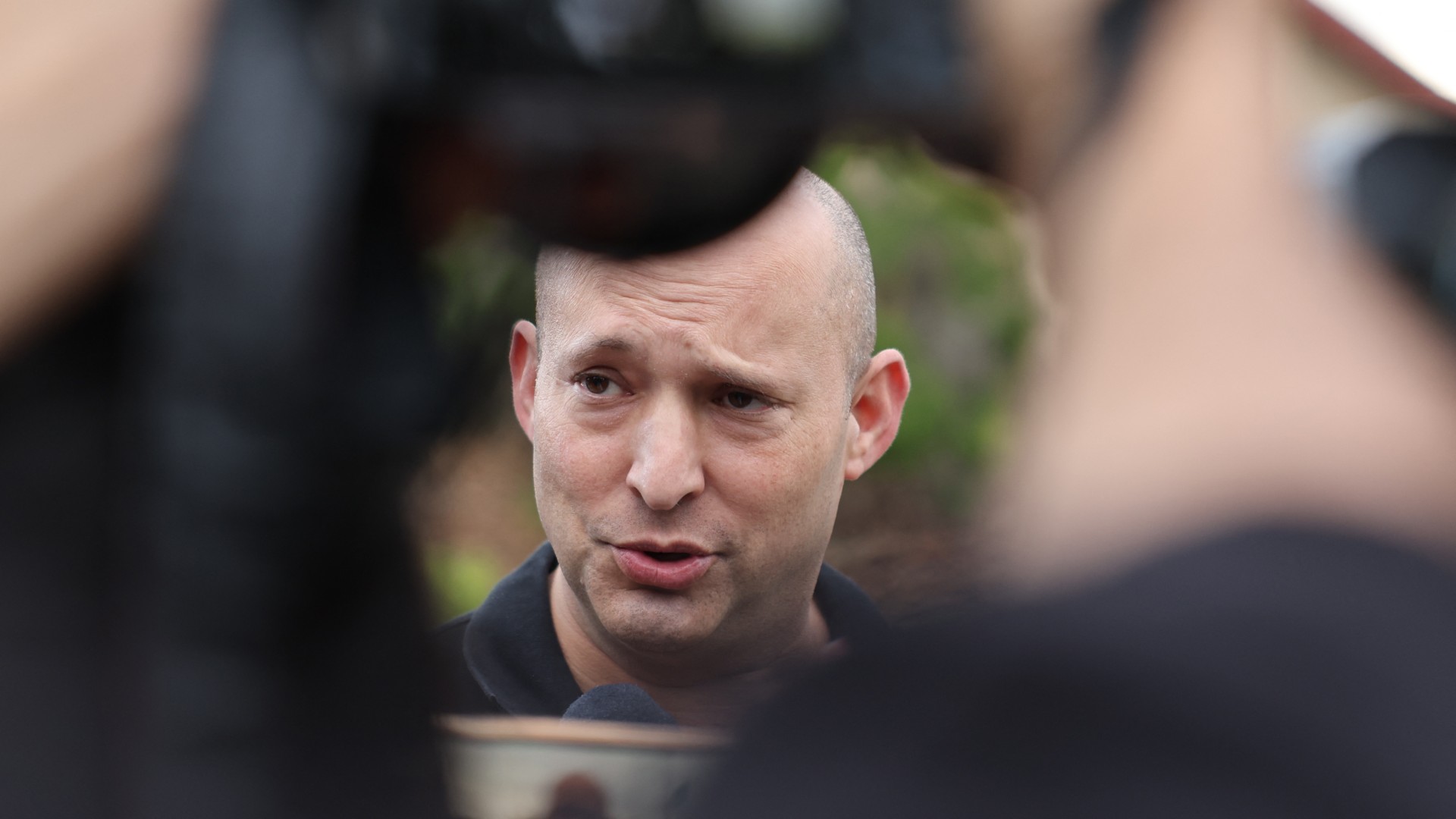
    As Israel prepares for one of the most consequential general elections in its modern history on October 27, opposition figure and former Prime Minister Naftali Bennett has drawn a sharp line in his policy platform, stating he will block the creation of an independent Palestinian state even if it derails potential normalization agreements with Saudi Arabia. In an exclusive interview with Israeli Channel 12, Bennett doubled down on his long-held hardline stance, saying plainly, “I am not giving up territory, period.”

    The upcoming election is widely framed as a referendum that could end the decade-long tenure of incumbent Prime Minister Benjamin Netanyahu and his right-wing Likud Party, as shifting polling numbers show opposition factions gaining momentum ahead of the vote. A recent survey published by Israeli daily Maariv puts Netanyahu’s Likud in second place with a projected 20 seats in parliament, trailing former Israeli army chief Gadi Eisenkot’s Yashar Party, which hit a record high of 23 projected seats. Bennett’s own Together party sits third in current polling with 17 projected seats, positioning him as a key power broker in any post-election coalition negotiations.

    Bennett used the interview to position himself as the only leader capable of sweeping institutional reform in Israel, declaring, “I am the most suitable person to lead the historical correction that needs to be made here in the State of Israel.” Beyond his foreign policy stances, Bennett outlined his top domestic priority: advancing sweeping reforms to integrate ultra-Orthodox Haredi communities into the national workforce and end their long-standing exemption from compulsory military service. The exemption has been one of the most contentious domestic political issues in Israel for decades, as successive governments have failed to reach a consensus on reform amid growing Haredi population growth. Netanyahu has consistently protected the exemption to preserve his political alliance with Haredi political parties, a position both Bennett and Eisenkot have publicly criticized.

    During the interview, Channel 12’s presenter repeatedly pressed Bennett on his refusal to answer questions about the Palestinian statehood issue and whether his 2021–2022 coalition government with centrist former Prime Minister Yair Lapid was a failure, accusing Bennett of dodging key questions. Bennett deflected the criticism, reiterating that his sole focus is overhauling Israeli leadership and advancing long-stalled domestic reforms that have not been addressed since the country’s founding.

    Bennett’s opposition to a two-state solution is consistent with his long political record: he has spent decades advocating for policies that block Palestinian statehood. In 2018, while serving in a previous government, he went as far as to say that if he held the defense minister post, he would implement a “shoot-to-kill” policy for all Palestinians attempting to cross the Gaza-Israel border. When pressed on whether that policy would extend to children, Bennett infamously replied, “They are not children. They are terrorists.”

    Unlike Bennett, who has held multiple senior cabinet positions including prime minister, defense minister, economy minister and education minister, Eisenkot hails from an exclusively military background, serving as the Israel Defense Forces Chief of Staff from 2015 to 2019. Born to Moroccan immigrants, Eisenkot is best known as the architect of the controversial “Dahieh doctrine,” an Israeli military strategy that calls for the use of disproportionate force against civilian infrastructure in areas where armed groups are believed to operate. Eisenkot has gained widespread public sympathy across Israel after his son and two nephews were killed serving in the Israeli military during offensives in Gaza.

    On foreign policy, Eisenkot has broken with Bennett, publicly pushing for closer diplomatic and security ties with Saudi Arabia, which has not yet joined the U.S.-backed Abraham Accords normalization agreements between Israel and Arab states. A two-state solution to the Israeli-Palestinian conflict remains a core requirement for any Saudi normalization with Israel, making Bennett’s hardline stance a potential major barrier to a future coalition that advances normalization talks. Eisenkot has said Israel is willing to share intelligence with Riyadh to counter what both parties frame as Iranian regional aggression.

    Eisenkot currently faces a critical political dilemma as he works to build a coalition majority. While he needs the parliamentary support of Israeli Arab parties to secure a governing majority, inviting those parties into a coalition would almost certainly alienate his centrist and right-wing base of voters. The shifting dynamics of the election leave Israel at a crossroads, with the outcome set to reshape both the country’s domestic policy and its regional diplomatic prospects for years to come.


  • Watch: Police officers free owl tangled in football net

    Watch: Police officers free owl tangled in football net

    A remarkable story of quick compassion and careful action unfolded recently in Avon, Ohio, when two local police officers stepped in to save a wild owl that had become dangerously entangled in a football net.

    The incident, which was captured on camera, shows the two law enforcement members approaching the distressed bird with deliberate calm, well aware that a sudden or clumsy move could worsen the animal’s injuries. Working slowly and with great focus, they used cutting tools to carefully snip away the netting that had wrapped around the owl’s body and wings, taking care not to nick the creature’s skin or damage its feathers.

    Once the last strands of netting were removed, the owl was gently released. To the relief of the officers and any onlookers present, the bird showed no visible signs of harm, and immediately stretched its wings and took flight back into the surrounding wild.

    This heartwarming rescue highlights the often unseen acts of care that public safety officials carry out beyond their regular law enforcement duties, extending their protection to vulnerable wildlife in the community.

  • How a bridge became a symbol of US-Canada tensions

    How a bridge became a symbol of US-Canada tensions

    After years of planning and construction, the Gordie Howe International Bridge, a infrastructure project designed to connect the United States and Canada across the Detroit River, has finally opened its lanes to commercial and passenger vehicle traffic. But what was meant to be a landmark celebration of cross-border collaboration has instead emerged as a stark symbol of the growing frictions between the two North American neighbors, opening against a backdrop of simmering trade tensions that have strained their longstanding economic partnership.

    For decades, the crossing has been hailed as a transformative project that would cut congestion at existing border checkpoints, slash transit times for commercial freight, and boost economic activity on both sides of the river. Spanning nearly 1.5 miles, the bridge connects Detroit, Michigan, in the US with Windsor, Ontario in Canada – two cities at the heart of the $700 billion annual cross-border trade relationship between the two countries. When the first motorists rolled across the new span this week, officials from both nations acknowledged the infrastructure milestone, but the festive mood was undercut by ongoing disagreements over trade policy that have raised tensions in recent months.

    The trade row that has overshadowed the opening centers on a range of lingering disputes, from US tariffs on Canadian steel and aluminum implemented in previous years to disagreements over dairy market access and clean energy subsidy rules that have created frictions in the post-USMCA trade era. Analysts note that while the bridge itself is designed to facilitate smoother trade flows, its launch amid ongoing disagreements highlights how political tensions can overshadow even the most ambitious cross-border infrastructure projects. What was intended to stand as a monument to cooperation has instead become a talking point for critics on both sides, who point to the unresolved disputes as evidence of growing rifts in the bilateral relationship.

    Despite the tensions, many business leaders on both sides of the border still emphasize the long-term benefits of the bridge. They argue that once trade disputes are resolved, the new crossing will deliver significant economic gains, reducing supply chain delays that have cost businesses millions of dollars annually. For now, however, the Gordie Howe International Bridge carries a symbolic weight that extends far beyond its role as a transportation link: it serves as a reminder of how closely the economic fates of the US and Canada are tied, even as political disagreements continue to test their partnership.

  • Prague’s rare 70 mm IMAX draws thousands of Europeans for Nolan’s ‘The Odyssey’

    Prague’s rare 70 mm IMAX draws thousands of Europeans for Nolan’s ‘The Odyssey’

    When Christopher Nolan’s highly anticipated new feature *The Odyssey* hit global box offices and smashed opening weekend records, it sparked an unexpected tourism boom in the heart of Central Europe. Thousands of movie enthusiasts from across the continent are flocking to the Czech capital Prague, home to one of the EU’s only two working 70mm IMAX screens — the gold standard of analog film projection Nolan champions as the ultimate viewing experience for his first feature shot entirely on IMAX film cameras.

    Only 41 operational 70mm IMAX screens exist worldwide, the vast majority concentrated in North America. Across the European Union, just two other cities — Montpellier, France and Brussels, Belgium — host the rare equipment, with an additional three screens located in the United Kingdom. That leaves Prague’s Screen 7 at Cinema City as a rare destination for dedicated fans eager to see Nolan’s latest work as the director intended.

    For many lovers of large-format film, the trip is worth every mile of travel. Daniel Jung, a visitor from Norway, spent three days driving across Denmark and Germany with his two teenage sons just to secure access to the rare screening. His son Leo, who had followed the cinema’s social media and coordinated with staff via email six months ahead of the July 16 premiere, snapped up premium central seats the moment tickets went on sale.

    “Everything was so much larger than the small screens we have back home,” Leo explained after the screening. “This is an experience I’ll remember forever.” Even with the long round trip, his brother Felix noted the effort was fully worthwhile, even without the side sightseeing stops the family added along the route. Polish visitor Nicolas Walak, who had already watched *The Odyssey* on a standard digital screen, echoed that sentiment, saying the 70mm IMAX format completely transformed his appreciation of the film.

    To keep up with overwhelming cross-regional demand, Cinema City’s Prague branch has ramped up programming, scheduling four to five screenings daily — including a late midnight showing — and the vast majority of showings have sold out completely. As of the first Monday following the premiere, more than 22,000 moviegoers from roughly 15 European countries, ranging from Scandinavia in the north to Spain in the south, had already seen the film at the venue.

    The rarity of 70mm IMAX screenings today stems from steep operational costs and logistical hurdles that pushed most theaters to swap analog projection for digital equipment starting in the late 2000s. IMAX film cameras are notoriously heavy, and custom modified low-noise models had to be developed specifically for *The Odyssey*. The finished film print itself weighs roughly 660 pounds and stretches 11 miles long, requiring it to be shipped and assembled in multiple segments. The projection room must be strictly climate-controlled to protect the film, and only projectionists certified by IMAX are allowed to operate the equipment.

    What makes Prague’s rare screen possible is a lucky decision by former venue staff more than a decade ago. When cinemas around the world began replacing analog projectors with digital systems in 2008, the Prague Cinema City team opted not to discard the original 70mm IMAX hardware. The projector was stored in a back corner for three years, before being pulled back into service for Nolan’s 2012 blockbuster *The Dark Knight Rises*. It has since been used to screen every one of Nolan’s subsequent large-format features, including 2014’s *Interstellar* and 2023’s *Oppenheimer*. For current certified projectionist Tomáš Vyšinský, that decision to preserve the equipment is one the global film community owes the previous team gratitude for.

    As *The Odyssey* continues to post record-breaking box office numbers — notching an $87 million haul in its second weekend, the strongest second-weekend performance of Nolan’s entire career — the stream of traveling film fans to Prague shows no sign of slowing down, proving that for dedicated cinephiles, the analog film experience is irreplaceable.

  • US Secret Service agent among three charged over alleged violent fraternity hazing

    US Secret Service agent among three charged over alleged violent fraternity hazing

    A violent, abuse-driven hazing scandal at one of Florida’s most prominent higher education institutions has led to the arrest of three people, including an active-duty United States Secret Service agent, according to official court and law enforcement records. The accused are 29-year-old Marquez Pinder, the Secret Service agent named as the fraternity’s pledge oversight officer, 26-year-old Lamar James, and 29-year-old Elijah Delano Dyous. All three face severe felony charges: organized hazing, attempted manslaughter, and aggravated battery using a deadly weapon.

    Details laid out in an official arrest warrant acquired by major U.S. media outlets paint a brutal picture of the four-day hazing campaign, which unfolded across multiple off-campus residential properties near the University of Miami’s Coral Gables campus. Investigations from the Miami-Dade State Attorney’s Office confirm the hazing ritual included repeated, prolonged beatings carried out with wooden paddles and solid canes. The violence was triggered when prospective new members failed to answer questions about fraternity history and protocol correctly.

    Two student recruits were hospitalized as a result of the assault. One victim, a current law student, suffered acute kidney failure that required urgent, life-saving surgery. Court documents note that without prompt emergency medical intervention, the young man would have died from his injuries, and he continues to experience severe chronic pain months after the attack. Both injured students were going through the membership intake process for the Kappa Alpha Psi fraternity chapter at the university, according to official records.

    In the aftermath of the arrest, Michael Townsend, head of the Secret Service’s Miami field office, confirmed that Pinder has been placed on paid administrative leave pending the outcome of the criminal investigation. Townsend emphasized in an official statement that the agency “takes seriously any criminal allegations involving one of our employees” and is fully cooperating with local law enforcement and prosecutorial investigations. The BBC has reached out to Pinder’s legal representation for comment on the charges, but no statement has been released as of press time.

    Miami-Dade State Attorney Kathrine Fernandez Rundle released a public statement reaffirming the severity of hazing under Florida state law, noting that “hazing is abuse and it is a crime.” She added that harmful hazing rituals have too often resulted in severe lifelong injury or death for young recruits across the country. This arrest marks the latest in a string of high-profile hazing prosecutions across the United States; earlier this month, a Pennsylvania college football coach was among those charged in connection with a separate violent hazing incident at his institution.

  • ‘This is a Jewish state’: Arabic banned at work for Palestinian citizens of Israel

    ‘This is a Jewish state’: Arabic banned at work for Palestinian citizens of Israel

    For 19-year-old Salma, a Palestinian citizen of Israel working at a retail shop, a routine workplace message from her manager upended her sense of safety and belonging. The instruction was clear: all staff were banned from speaking Arabic while on the job. Salma and her predominantly Palestinian colleagues first dismissed the order as absurd, but a rapid, hostile escalation quickly changed their minds.

    When one coworker briefly spoke Arabic to announce she was moving a box to the storeroom – even inserting the Hebrew word for storeroom to clarify the work-related conversation – the manager exploded in anger. “She started shouting, kicking boxes and telling us we were forbidden to speak Arabic,” Salma recalled. The manager’s final rebuke encapsulated the prejudice driving the ban: “This is a Jewish state. Here we speak only Hebrew. Arabic stays at home.”

    Salma’s experience is far from an isolated incident. Over recent months, Palestinian workers across Israel have reported a growing wave of workplace Arabic-speaking bans, with complaints spanning retail outlets, pharmacies, and public hospitals. One of the highest-profile recent cases unfolded at a Good Pharm branch in the coastal city of Jaffa, where local media obtained WhatsApp messages showing a manager threatening workers caught speaking any language other than Hebrew. The manager justified the ban by claiming Arabic could upset customers traumatized by the October 7 attacks. In a statement, Good Pharm said it is committed to equality, employs people from all communities, and would address the manager’s behavior internally. But Palestinian workers say no meaningful changes have followed the public disclosure.

    In Salma’s case, the ban extended even beyond customer interactions: it remained in place when the shop was closed and no customers were present, with only Palestinian staff on site. When Salma and her colleagues protested the policy, the company responded by removing them from the work schedule for nearly two months, then offering transfers to distant branches that were practically unreachable. “Instead of removing the manager or holding her accountable, the company preferred to ask us to change our workplace,” Salma said. While the retail chain has publicly condemned racism and discrimination, the experience has left a lasting mark on Salma, who is preparing to begin university this year. She says she now feels deep anxiety about entering another majority-Jewish work or academic environment. “I had heard about racism before this, but I never understood the feeling until now,” she said. “It was the first time I understood what it means for someone to treat you badly simply because of your identity.”

    Palestinian citizens of Israel are the descendants of the native population of historic Palestine who remained in their lands after the 1948 Nakba, when Zionist militias displaced an estimated 750,000 Palestinians to establish the state of Israel. Today, the community makes up roughly 20 percent of Israel’s total population, numbering around two million people. Since the October 2023 outbreak of the Israel-Gaza war, Palestinian citizens have faced a sharp rise in arrests, professional disciplinary action, and job losses linked to their political expression regarding the conflict in Gaza.

    Legal advocates who represent Palestinian workers warn that the public cases that have emerged are only a small fraction of the total number of discriminatory incidents taking place across the country. What has shifted, they argue, is not the existence of anti-Palestinian discrimination in workplaces, but the open confidence with which employers now impose discriminatory policies. Alya Zoabi, an employment lawyer who specializes in representing Palestinian workers, told Middle East Eye that her office has seen a dramatic jump in racism-related workplace claims. “Most of the cases now reaching my office from Jewish workplaces involve racism,” she said. “There has been a significant increase.”

    Zoabi shared details of two extreme cases her office has handled recently: one involved a young Palestinian employee who suffered a full panic attack after months of ongoing discrimination from her manager. When an ambulance was called to the workplace, the employer forced the worker to go to the hospital alone. In a second case, a pregnant Palestinian employee was fired without obtaining the legally required authorization for dismissing a pregnant worker.

    The growing push to ban Arabic in workplaces builds on a 2018 controversial piece of Israeli legislation: the Nation-State Law, which enshrined Hebrew as the country’s only official language, downgrading Arabic from an official language to one with “special status.” While the law preserved the practical use of Arabic in government services, public signage, and education, Palestinian communities report that pressure to suppress public expressions of their cultural and linguistic identity has intensified steadily in the years since the law passed.

    From a legal perspective, the biggest barrier to holding discriminatory employers accountable is not the absence of rules against bias, but the difficulty of proving an employer’s discriminatory motive to meet Israel’s court standards. Israel’s Equal Employment Opportunities Law prohibits discrimination on the basis of nationality, race, and religion, but it does not explicitly guarantee the right to use any language in all workplace settings. Legal experts note that a full, blanket ban on Arabic – particularly for private conversations or in roles where Hebrew is not required for job duties – can qualify as unlawful discrimination, but enforcement of this standard remains deeply uneven.

    “But formal legal protection means little when enforcement is slow, costly and uncertain,” Zoabi explained. She added that since October 7, there has been a clear leniency toward employers in discrimination cases that cannot be ignored. Claims that would normally be worth tens of thousands of shekels in compensation often end in settlements that award workers only a small fraction of that amount. The high cost and low odds of success discourage both workers and their legal representatives from pursuing claims, even when discrimination is obvious. Both Salma and the Good Pharm employee ultimately abandoned their plans to file lawsuits after being advised the cases would drag on for years, cost more than they could afford, and have little chance of a ruling in their favor. As a Palestinian woman working within Israel’s legal system, Zoabi says she experiences the impact of this discrimination firsthand. “When I stand in court, I feel I am both the lawyer and the client,” she said. “As a Palestinian woman in Israel, I experience this racism too.”

    (Note: The source’s name has been changed to protect their identity, per the original reporting)

  • Wildfire now nine miles away from French city of Bordeaux, mayor warns

    Wildfire now nine miles away from French city of Bordeaux, mayor warns

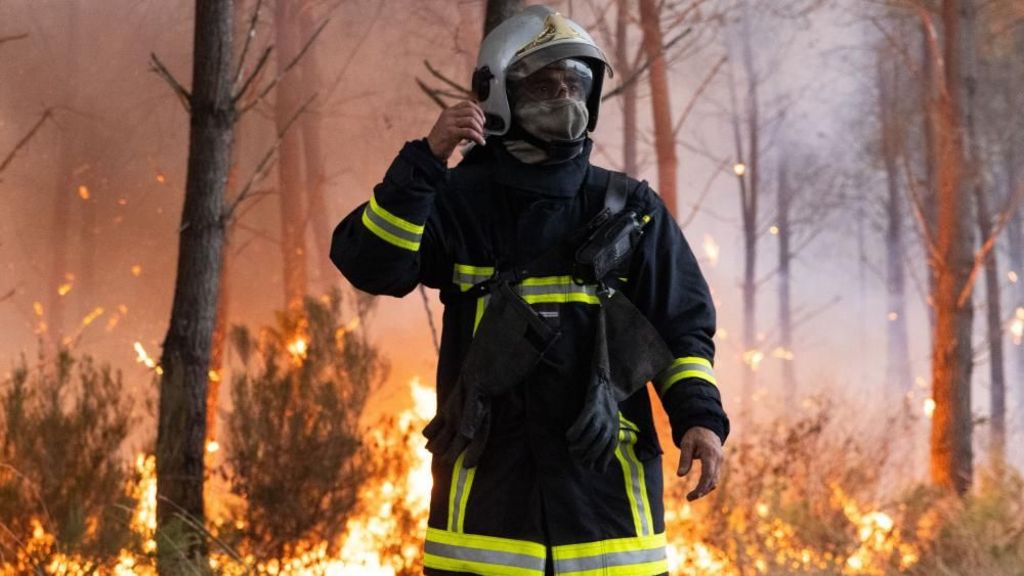
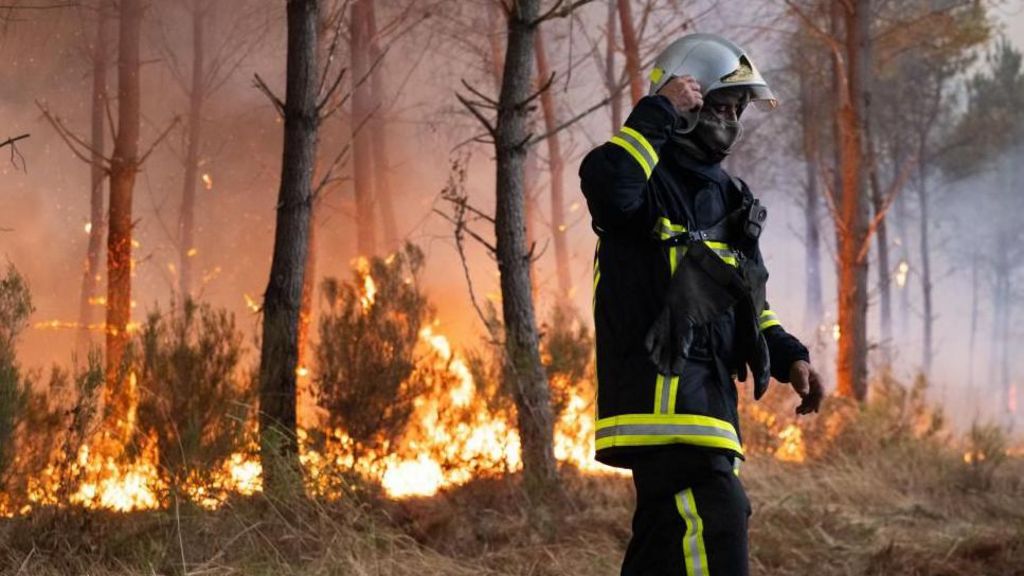
    As Europe grapples with accelerating climate change that has pushed regional temperatures far above the global average, a catastrophic wave of wildfires has sparked national emergencies in two neighboring Western European nations, overwhelming emergency responders and forcing mass evacuations. The situation in France’s Gironde region, one of the worst-hit areas, has been described as “unprecedented” by top French officials, with a massive blaze that continues to defy containment efforts less than 15 kilometers from the major southwestern city of Bordeaux.

    Bordeaux Mayor Thomas Cazenave announced that municipal authorities are mobilizing emergency resources to prepare for every possible outcome, including large-scale additional evacuations. “We are putting plans in place to accommodate a surge of displaced residents if new evacuation orders are issued,” Cazenave stated. For his part, French Interior Minister Laurent Nuñez emphasized that firefighters on the ground are confronting an out-of-control blaze with unpredictable behavior, noting that the active fire “has a life of its own.”

    Jerome Steffe, mayor of the Gironde town of Cestas located just south of Bordeaux, called the ongoing inferno “the fire of the century.” Just two days prior, rapid expansion of the blaze forced emergency crews to evacuate all 17,000 Cestas residents overnight. So far across the Gironde region, wildfires have charred more than 42,000 hectares of land and destroyed 240 residential structures. “In my city, the situation is truly catastrophic,” Steffe told reporters. While the fire’s forward spread has slowed in recent days, Steffe warned that first responders have only claimed a small victory, with persistent risks from flying embers and sudden wind shifts that could reignite active flames. “All of our resources are focused on building protective firebreaks,” Steffe explained, “but we are all scared facing this magnitude of disaster.”

    French Prime Minister Sébastien Lecornu confirmed that the country is experiencing its most extreme wildfire season on record. In a social media post on X from Monday, Lecornu reported that 116,085 hectares of land have burned across France since the start of January, with more than 13,500 separate fire outbreaks recorded. The prime minister added that nine out of every 10 wildfires in the country are linked to human activity, most starting from simple carelessness: an improperly discarded cigarette butt, an unattended outdoor barbecue, or unregulated outdoor work without fire safety precautions. Crucially, Lecornu also noted that not all blazes are accidental, confirming that some have been intentionally set. Since July 6 alone, French law enforcement has made 162 arrests related to arson in connection with the wildfires. To highlight national support for emergency crews, French President Emmanuel Macron is currently touring fire-ravaged areas of Gironde to meet with firefighters and response teams.

    Wildfires are not isolated to Gironde; active blazes are also burning across multiple other French regions, including Var, Landes, and Haute-Corse on the island of Corsica. To date, more than 220,000 people have been evacuated from high-risk areas across France.

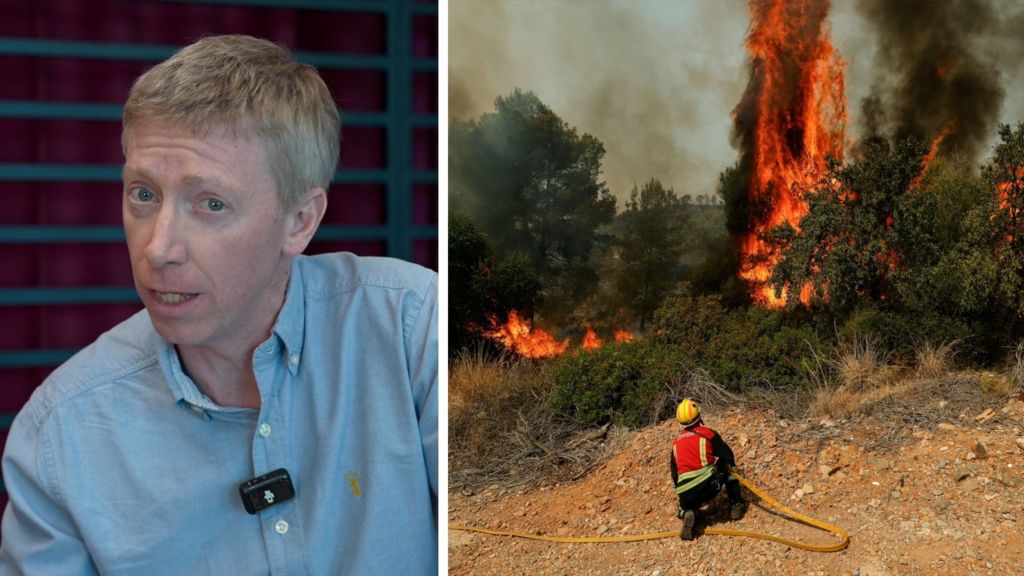
    Across the border in neighboring Spain, the situation is equally dire, with the country entering its fifth day of a national state of emergency on Monday as uncontrolled wildfires burn west of the capital Madrid. Analysis of satellite imagery by BBC Verify confirms that the merged fire complex west of Madrid has already scorched more than 27,000 hectares, after separate blazes in the Almorox, Villa del Prado, and San Martín de Valdeiglesias areas combined into a single massive inferno. Images captured on July 24 and 26 show the rapid expansion of the burn scar over just 48 hours, with the blaze leaving behind a trail of destruction that has turned the village of Casavieja into what local observers describe as a “car cemetery” of burned-out vehicles. Local Spanish officials have called the outbreak the worst wildfire event in the region’s history, with more than 100,000 people evacuated across the country so far.

    A forecast new intense heatwave set to arrive in the region on Tuesday is expected to worsen conditions for firefighters, with higher temperatures, lower humidity, and potential shifting winds creating new risks for further fire expansion. Climate scientists have long warned that this type of extreme wildfire event is becoming more frequent as a result of human-caused climate change. According to data from the Copernicus Climate Change Service, Europe is warming twice as fast as the global average, a trend that has amplified the frequency and intensity of summer heatwaves, strained regional water supplies, and created ideal conditions for larger, more destructive wildfires across the continent.

  • McConnell out of hospital but not yet cleared to return to work, doctors say

    McConnell out of hospital but not yet cleared to return to work, doctors say

    Long-serving U.S. Senate Republican leader Mitch McConnell has been discharged from hospital but remains ineligible to resume his official legislative duties, according to a medical update released by his office this week. The 84-year-old Kentucky legislator first entered medical care in mid-June, after suffering a fall and developing a mild case of pneumonia, marking the latest in a string of public health scares for the veteran lawmaker in recent years.

    In a statement shared by his staff on Monday, McConnell said he is continuing to push toward a full return to his working schedule both in the U.S. Senate and across his home state of Kentucky. “I’m still working hard to get back to my full schedule of work in the Senate and in Kentucky, keeping up with intense physical therapy per my doctors’ orders,” he said. As of the latest update, McConnell remains at an inpatient rehabilitation facility, and his office has not offered any clear timeline for when he may be able to resume his official duties.

    Alongside his personal statement, McConnell’s team released a new photograph dated July 26 that shows the senator smiling alongside his wife, Elaine Chao, the former U.S. Secretary of Transportation. The update also confirmed that McConnell will be forced to miss an upcoming community celebration scheduled in western Kentucky in the coming days.

    A formal medical note from the U.S. Congress Office of the Attending Physician (OAP), published alongside the update, expanded on the current status of McConnell’s recovery. Physicians from the OAP conduct daily check-ins with the senator to oversee every element of his rehabilitation plan. “Since his discharge from hospital care, he has maintained a strenuous course of physical therapy and rehabilitation, including multiple sessions a day designed to rebuild strength and reduce the risk of future falls,” the OAP statement explained.

    Medical providers also noted that McConnell’s childhood bout with polio remains a major contributing factor to his ongoing mobility challenges. “He is not yet medically cleared to leave the rehab facility and return to the office,” the statement confirmed.

    Since McConnell first entered treatment on June 14, his office has released only limited details about his condition, creating a vacuum of information that has sparked widespread speculation about his health across Washington political circles and social media platforms. McConnell, who holds the historic distinction of being the longest-serving Senate party leader in U.S. history, has navigated repeated health complications in recent years. In 2024, he suffered an injury after tripping at a Senate lunch event, and earlier in 2025, he was admitted to hospital for treatment of the flu. The senator has already confirmed that he will retire from Congress at the end of his current Senate term, eliminating the need for a re-election campaign in 2026.

  • What you need to know if you’re travelling to France or Spain

    What you need to know if you’re travelling to France or Spain

    As wildfire outbreaks sweep across parts of Southern Europe, thousands of summer holiday travelers heading to France and Spain are facing sudden and disruptive last-minute itinerary cancellations. With blazes tearing through popular tourist regions, destroying vegetation, forcing mass evacuations, and upending pre-planned travel arrangements, uncertainty has left many visitors unsure of their rights and next steps. To address this growing travel disruption crisis, the BBC’s dedicated cost of living correspondent has broken down critical information that every prospective and current traveler needs to know.

    Wildfires are amplified this summer by record-breaking heatwaves that have gripped the Mediterranean, turning dry vegetation across large swathes of France’s southern coastal regions and Spain’s inland and coastal tourist hubs into tinder. This year’s fire season has already burned thousands of hectares of land, prompted emergency declarations in multiple local jurisdictions, and hit peak tourism season just as many European and international visitors had already booked trips to the region.

    The correspondent’s guidance covers key topics including refund eligibility for canceled accommodations and tours, rebooking options through travel providers, insurance coverage for wildfire-related disruptions, and steps to take if travelers already on the ground are forced to evacuate their accommodation due to an advancing wildfire. It also breaks down how current cost of living pressures compound the stress of canceled holidays, as many households have saved for months to afford their summer trips, making unexpected financial losses from disruptions even more damaging.

    Travel industry experts echo the guidance, recommending that all travelers heading to affected regions monitor local official updates for wildfire risk on a daily basis, keep digital and physical copies of all travel documents and insurance policies handy, and coordinate closely with tour operators and airlines to adjust plans if necessary. With fire activity expected to remain high through the peak of summer travel, staying informed and prepared remains the most effective way to reduce disruption and protect travelers’ financial interests.

  • Spain and France wildfire witnesses describe ‘wall of flames’, fear and stress

    Spain and France wildfire witnesses describe ‘wall of flames’, fear and stress

    A devastating outbreak of wildfires burning across France and Spain has upended the lives of hundreds of thousands of people, leaving widespread destruction, disrupted travel plans, and mounting anxiety in affected communities across the Iberian Peninsula. With blazes still raging just kilometers from major urban centers and popular tourist destinations, residents and holidaymakers alike have shared harrowing firsthand accounts of the crisis, as cross-border emergency teams work around the clock to bring the fast-spreading fires under control.

    In southwestern France, the fire line sits just 15 kilometers outside the major city of Bordeaux, leaving local residents gripped by fear and uncertainty. Local resident Pierre Pourquery told the BBC that a thick, acrid smoke haze has blanketed the entire city, forcing people to wear protective face masks outdoors and leaving many with severe respiratory distress. “People here are anxious and fearful,” Pourquery explained, describing the constant sense of danger hanging over the community.

    The situation is even more severe in the nearby coastal resort town of Biscarrosse Plage, where a wildfire swept through populated areas earlier this week. Rachel Hanberry, a local resident whose beachfront home sits adjacent to the town’s official evacuation point, said her community has already suffered catastrophic losses. “Everyone fled here on Thursday night,” she recalled. “People had nowhere else to go, so we opened our home to as many as we could. The stress and trauma that you feel as someone living here is immense.”

    Further inland, in the southeastern French town of Cotignac, resident Jo Barnes described a close call that left her family shaken after four days of mandatory evacuation. When the blaze advanced on her neighborhood, “a wall of orange flames came roaring up over the hill,” she said. By Friday afternoon, the fire had advanced to within 10 meters of her back door, just feet from a residential gas tank on her property. “It was all very dramatic.” While the surrounding hillsides were left completely charred and blackened, Cotignac itself escaped major damage, and Barnes’ home remained miraculously intact, allowing her family to return over the weekend.

    The crisis is mirrored across the border in Spain, where fast-moving blazes have scorched more than 27,000 hectares alone in the central Madrid region, forcing urgent mass evacuations of entire rural villages. “Everyone had to get out of the village quickly, it was a critical situation and people were scared,” local resident Olga Congacha told AFP. She and her husband fled with little more than the handful of essential items they could grab on the way out: critical personal documents and a few changes of clothes.

    In Spain’s eastern Castellón province, where blazes have burned across vast swathes of forest and rural land, long-term residents say they have never seen a wildfire of this scale and intensity. “I’ve seen major fires, but only on television. Nothing like this, here and now,” said local resident Ricardo Pozo. Maria Garcia, a resident of the Castellón town of Betxí, added that the fire has brought daily life to a complete standstill for evacuees. “You can’t go out to work, you can’t go about your daily life. You can see the mountains you’ve known your whole life burning,” she said.

    Beyond local residents, the wildfires have also completely upended travel plans for thousands of summer holidaymakers who flocked to the region’s popular coastal destinations. British visitor James Hillier was visiting his son in Lacanau, a seaside community 42 kilometers east of Bordeaux in France’s Gironde department, when the smoke moved in. “The whole town got consumed by smoke,” he told the BBC. “There was ash falling from the sky and I noticed a big lump of it landed on my hand.” He and his wife fled to Bordeaux for safety, only to find the city’s air so heavily polluted that “the air was acrid – it stung your eyes and people were wearing masks.” The pair ultimately cut their trip short and traveled further north to escape the hazard.

    Another British visitor, Sarah from Hertfordshire, also cut her family’s week-long Bordeaux vacation after smoke seeped into their rented apartment even after they sealed all windows and doors. She warned her sister-in-law Georgia, who was scheduled to join the group in Lacanau, to cancel her trip, and Georgia rebooked accommodation in the Loire Valley instead. But Georgia says she has been unable to secure a refund for her canceled Lacanau booking, since the fire had not reached the town when she canceled. “If we don’t find a solution with them we currently stand to lose over £3,500,” she said.

    Across both countries, the blazes have scorched tens of thousands of hectares of land and forced more than 300,000 people to evacuate their homes and vacation properties, with emergency crews from both nations continuing their containment efforts as the fire season enters its most dangerous period.