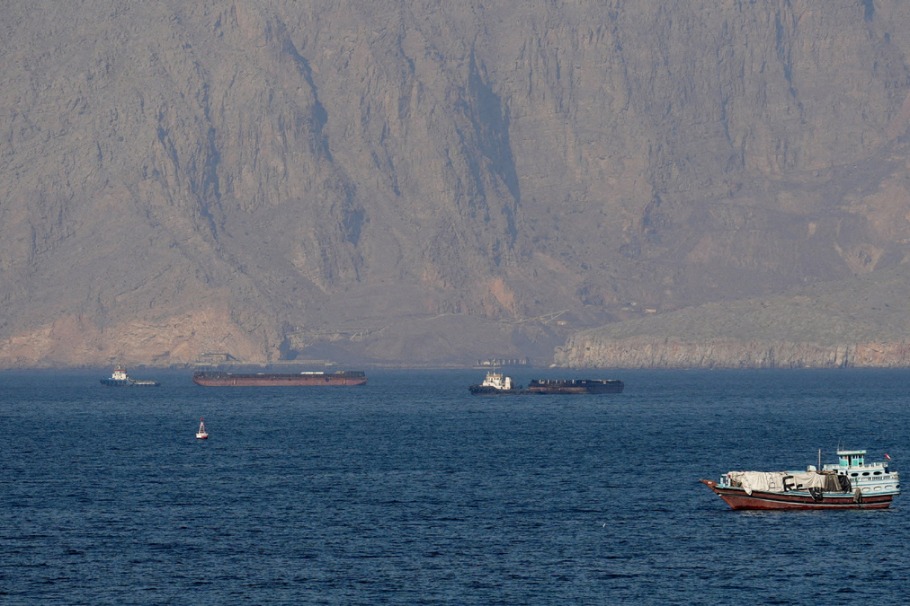
On Wednesday, July 30, 2026, the United States announced a new round of sanctions targeting 10 Chinese shipping companies, alleging that the firms, with operations spanning mainland China and Hong Kong, along with eight registered tankers, have violated Washington’s existing restrictions on Iranian crude oil exports.
Under the terms of the new punitive measures, any assets held by the 10 companies within jurisdictions under U.S. control are frozen, and all U.S.-based companies and individual entities are legally barred from entering into any commercial transactions with the blacklisted firms. Two Iranian maritime insurance entities — Persian Gulf Marine Insurance Company and Hormuz Safe Marine Services Authority — were also added to the U.S. sanctions list. Washington accuses the two insurers of coercing commercial ships to buy their maritime insurance coverage as a requirement for secure transit through the Strait of Hormuz, a critical global chokepoint for energy trade.
China has repeatedly and consistently pushed back against such unauthorized unilateral sanctions and extraterritorial long-arm jurisdiction, practices that Beijing says have no grounding in international law. The Chinese Foreign Ministry has once again urged the United States to immediately end these unlawful, unjust practices.
Anthony Moretti, an associate professor specializing in communication and organizational leadership at Pennsylvania’s Robert Morris University, shared his assessment of the U.S. approach in an interview with China Daily. Moretti noted that Washington has fallen into a repetitive pattern of announcing new bans and blockades in quick succession, all part of a persistent push to wield unilateral punitive measures. He pointed out that while the frequent use of these tools may create a domestic political image of toughness for the current U.S. administration, this perception is not shared by the international community. “The more the White House repeats this same narrative of punitive action, the less global attention and buy-in it receives,” Moretti said. He added that there is no evidence of a coherent, long-term strategy guiding these actions to resolve underlying regional tensions.
This latest round of sanctions marks a continuation of a years-long pressure campaign by successive U.S. administrations targeting what Washington claims are violations of its Iran oil blockade. Prior to the escalation of direct hostilities between the U.S. and Iran that began on February 28 this year, roughly 20% of global oil trade transited through the Strait of Hormuz. Today, that flow has slowed to a small fraction of its previous volume. To date, the Trump administration has blacklisted more than 100 tankers over allegations that they are attempting to circumvent the U.S. naval blockade of Iranian ports, a tactic explicitly designed to cripple Iran’s national economy.
The escalation of U.S. unilateral sanctions comes amid growing global pushback against long-arm jurisdiction and extraterritorial punitive measures, with many world governments arguing that such actions violate core principles of sovereign trade and international law.