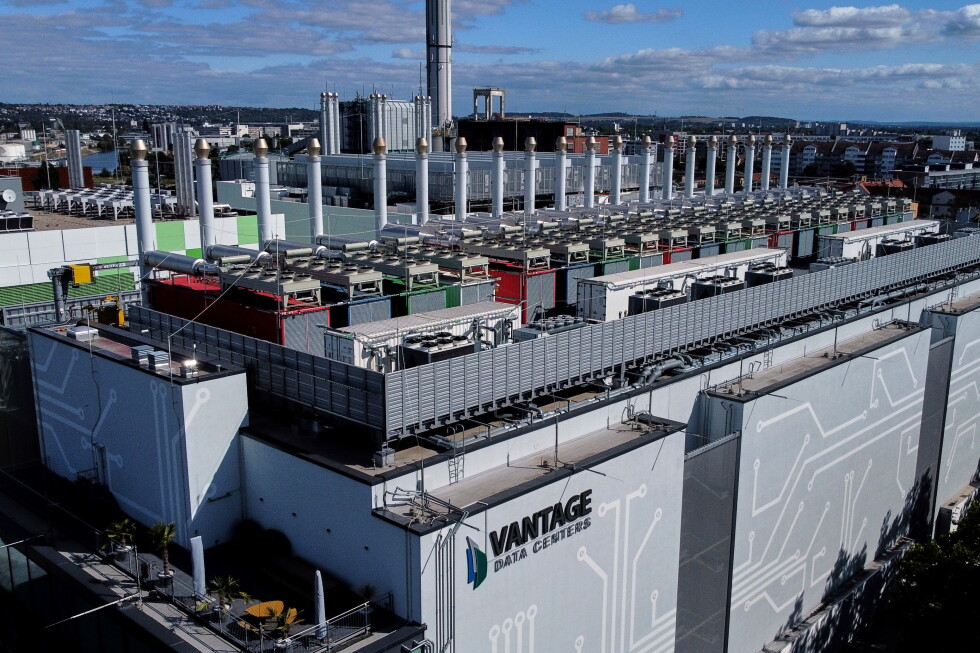
BRUSSELS – In a bold push to cement its technological autonomy and narrow the competitive gap with the United States and China, the European Union’s executive branch announced Thursday a €10 billion ($11.4 billion) public funding package to support private companies in constructing seven large-scale artificial intelligence manufacturing facilities, known as AI gigafactories.
The European Commission expects the public investment to catalyze an additional €20 billion ($22.8 billion) in private sector funding, creating a total €30 billion injection into Europe’s lagging AI infrastructure. Commission Executive Vice President Henna Virkkunen, who oversees the bloc’s push for tech sovereignty, framed the initiative as a non-negotiable strategic priority. “Access to massive, scalable computing power within AI gigafactories is a strategic necessity for Europe as AI development accelerates globally,” Virkkunen noted.
The urgency behind Brussels’ tech sovereignty agenda stems from growing geopolitical concerns over reliance on non-European technology providers. EU leaders argue that foreign control over critical AI infrastructure could be “weaponized” against European interests, compounded by trade tensions with the U.S. over regulatory policy and Chinese restrictions on exports of critical minerals required for AI chip production.
Under the new plan, companies are now eligible to bid for contracts to build the gigafactories, each of which will be required to host at least 100,000 cutting-edge AI chips. Once operational, the facilities will deliver roughly four times the computing capacity of the most powerful existing data centers operating across the EU today. Currently, the bloc maintains a network of 19 smaller AI data centers stretching from Finland to Spain; the seven new gigafactories will more than double the EU’s total AI computing power.
Independent assessments and EU data underscore the severity of the bloc’s current AI gap. A 2025 analysis from the U.S. Federal Reserve found Europe trails far behind both the U.S. and China in key infrastructure sectors required for advanced AI development. China boasts massive excess power generation capacity to support energy-intensive data centers, while the U.S. attracts the overwhelming majority of global private AI investment. A June Commission report presented to the European Parliament added that Europe produces almost none of the millions of specialized components needed for AI data centers, and energy costs for facility operations in the bloc can run two to three times higher than in the U.S. or China.
Without targeted investment to expand domestic capacity, the report warns, European businesses and government bodies will remain dependent on U.S. AI providers – a dynamic that undermines homegrown European AI firms trying to compete at the cutting edge of the industry. Currently, all five of the EU’s top cloud service providers are American. “Dependence on hyperscale cloud and AI computing service providers, particularly for highly critical use cases, will continue to expose data to third-country access and carry risks to service continuity, endangering operational autonomy,” the report stated.
To date, the largest existing AI data center in the EU is operated by French AI firm Mistral at its Paris campus. Mistral, developer of the Le Chat chatbot, has yet to match the pace of innovation and scale set by leading U.S. players like OpenAI, creator of ChatGPT, and top Chinese competitors such as DeepSeek. While high-profile European leaders including French President Emmanuel Macron have publicly warned about the bloc’s lack of competitive homegrown AI companies, widespread public anxiety persists across the continent over both the economic disruption and privacy risks posed by rapidly advancing AI technology.
The Commission emphasized that all AI products developed using the expanded gigafactory network will be required to adhere to the EU’s strict regulatory standards for data protection, safety, security and ethics, aligning with existing bloc rules including the Digital Services Act and Digital Markets Act.
The initiative comes amid growing global scrutiny of the environmental footprint of large-scale AI infrastructure. In June, 40 mayors from major cities across the world – from Phoenix, U.S. to Melbourne, Australia – signed a global pact to mitigate the negative impacts of AI data center construction on local natural resources, energy prices and municipal climate targets.