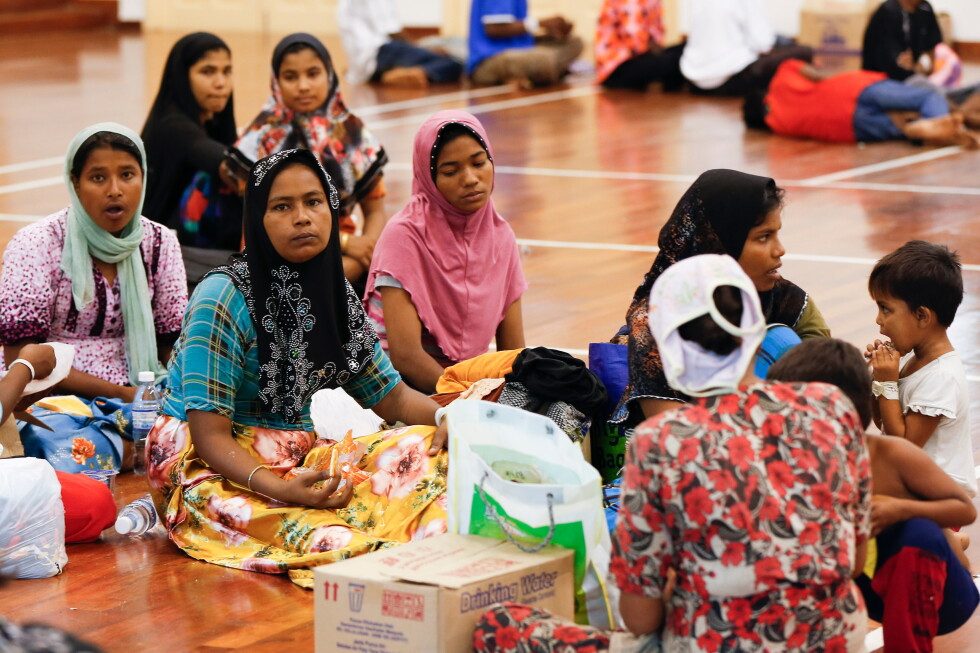
KUALA LUMPUR, Malaysia – Malaysia has kicked off a joint repatriation program with Myanmar, starting documentation and security screening for thousands of Myanmar nationals detained across the country, Malaysia’s Home Minister Saifuddin Nasution announced Thursday. Under the terms of the bilateral agreement, Myanmar has pledged to accept up to 5,000 of its citizens currently residing in Malaysia, in addition to an unconfirmed number of Myanmar nationals based at the Cox’s Bazar refugee camp in southeastern Bangladesh. To date, Malaysian authorities have identified roughly 4,000 eligible individuals held across the country’s 19 detention facilities. These detainees will be relocated to a centralized location to complete mandatory security checks and official identity paperwork, Saifuddin told reporters. “We will certainly hit the 5,000-person target once this verification process is finalized,” he noted, adding that Malaysia’s foreign ministry will lead all subsequent coordination with Myanmar on moving the process forward. A day prior, on Wednesday, Malaysian Prime Minister Anwar Ibrahim publicly confirmed that the repatriation cohort would consist of Rohingya refugees. “People ask why we don’t just send them back immediately. Send them to where? Myanmar refused to take them back before,” Anwar stated in comments reported by the *New Straits Times*. “Now, thanks to our improved bilateral relations with Myanmar, they have agreed to accept 5,000 from Malaysia.” Unlike the prime minister, Saifuddin did not explicitly name the Rohingya as the group being repatriated, only confirming that the program applies to Myanmar nationals holding official refugee status. Repeated attempts to reach Malaysian foreign ministry officials for additional clarification Thursday went unanswered. In Cox’s Bazar, Mohammed Mizanur Rahman, a commissioner for refugee, relief and repatriation for Bangladesh, told the Associated Press he had no knowledge of any upcoming repatriation of Rohingya from the camp, which hosts hundreds of thousands of displaced Rohingya who fled violence and persecution in Myanmar. Myanmar officials based in the national capital of Naypyitaw have pushed back against claims that the program includes Rohingya, clarifying that the effort is limited exclusively to verified Myanmar citizens held in Malaysian detention. Han Win Aung, director-general of the ASEAN department at Myanmar’s Ministry of Foreign Affairs, told AP the country does not recognize the Rohingya as an official ethnic group, a longstanding policy that has been widely criticized by the international community. Myanmar officially refers to the Rohingya as “Bengalis,” framing the group as illegal migrants from Bangladesh, despite many Rohingya families having lived in Myanmar for generations. “This is not a program to bring back Bengalis. There are Myanmar nationals being held in Malaysian detention centers for a range of different reasons,” Han Win Aung explained. “Both sides are still in the coordination phase, and only individuals whose identity as legitimate Myanmar citizens has been fully verified will be repatriated.” Han Win Aung added that the current initiative builds on small-scale repatriation operations carried out in 2021 and 2022, when Myanmar accepted more than 1,100 of its citizens who were stranded in Malaysia. Final details, including the full timeline for transfers and the confirmed final number of repatriates, are still under active discussion between the two governments, he noted. Currently, Malaysia hosts approximately 215,600 refugees and asylum seekers registered with the United Nations High Commissioner for Refugees. Around 126,000 of that total are Rohingya, making Malaysia home to one of the largest Rohingya refugee communities in Southeast Asia. Critically, Malaysia is not a signatory to the UN Refugee Convention, and the country classifies all refugees as undocumented migrants, leaving the population vulnerable to detention and deportation. This article includes reporting contributions from journalists Julhas Alam in Bangladesh and Grant Peck in Bangkok.