博客

  • UK police arrests dozens at protest supporting banned group Palestine Action

    UK police arrests dozens at protest supporting banned group Palestine Action

    LONDON – In a dramatic escalation of tensions over the United Kingdom government’s terrorist designation of pro-Palestine advocacy group Palestine Action, 77 demonstrators were taken into custody Thursday outside a central London courthouse after gathering to show public support for the banned organization. The arrests coincided with a landmark procedural ruling that cleared the way for the group to appeal its proscription status before the UK Supreme Court, setting up a major constitutional showdown over the boundaries of free speech and counterterrorism policy.

    The UK government first outlawed Palestine Action as a terrorist organization one year ago, in response to a high-profile direct action protest in June 2025 where activists breached security at a Royal Air Force base to demonstrate against British military backing for Israel’s offensive in Gaza. The ban carries severe legal consequences: anyone found guilty of membership or public support for the group can face up to 14 years in prison. Since the designation took effect, more than 3,000 people have been arrested for acts as minor as holding public signs reading “I support Palestine Action”, according to official figures. More than 1,200 of those detained have been formally charged under the UK’s Terrorism Act, though no convictions have been secured in any of these cases to date.

    The legal battle over the ban has wound through multiple levels of the UK judicial system over the past year. The High Court struck down the government’s proscription order in February, ruling in the group’s favor. But the government appealed that decision, and the Court of Appeal reversed the lower court’s ruling in June. The appellate judges characterized the ban as a “justified and proportionate” limitation on freedom of expression, concluding that Palestine Action had crossed the line from legitimate civil disobedience by using violence to damage property and threaten public safety.

    On Thursday, the Supreme Court granted Palestine Action founder Huda Ammori permission to bring the challenge before the court’s top justices. Oral arguments in the case are scheduled to take place between October and December. Court officials confirmed that all ongoing prosecutions of people charged under the ban have been paused pending the Supreme Court’s final ruling, which will set a binding precedent for future counterterrorism proscription cases in the UK.

    The demonstration outside Westminster Magistrates’ Court on Thursday drew hundreds of supporters, with detained protesters shouting chants including “I oppose genocide, I support Palestine Action” as onlookers responded with cries of “Shame!” The Metropolitan Police confirmed that nearly all of the 77 arrests were made on charges of violating the proscription ban by publicly expressing support for Palestine Action.

  • Flash flooding destroys structures, submerges roads in Northeast US

    Flash flooding destroys structures, submerges roads in Northeast US

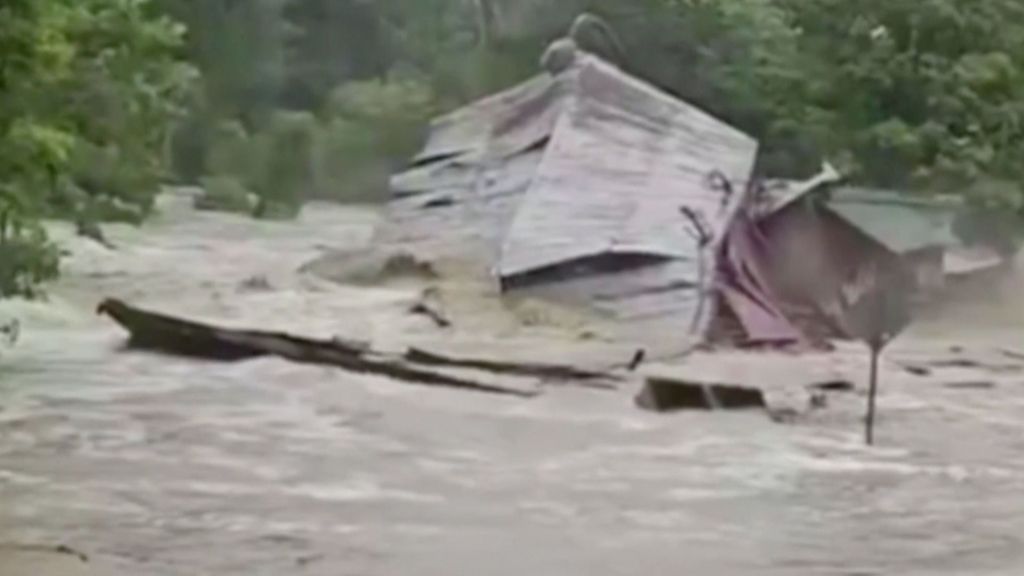
    Destructive flash flooding has swept across multiple states in the U.S. Northeast, leaving a trail of damage in its wake. Whole structures have been destroyed by the surging, fast-moving floodwaters, while major and local roads have been completely submerged, bringing transportation across the region to a standstill. By Wednesday, official weather authorities had issued active flood alerts covering more than 10 million residents spanning the affected area. Emergency management teams have mobilized to conduct search and rescue operations, evacuate at-risk communities, and clear blocked transportation routes. Local officials have urged residents to avoid non-essential travel, heed evacuation orders, and stay updated on changing weather conditions as response teams work to assess the full scope of damage and begin recovery efforts.

  • UEFA says will boycott World Cup if FIFA pushes private investor proposal

    UEFA says will boycott World Cup if FIFA pushes private investor proposal

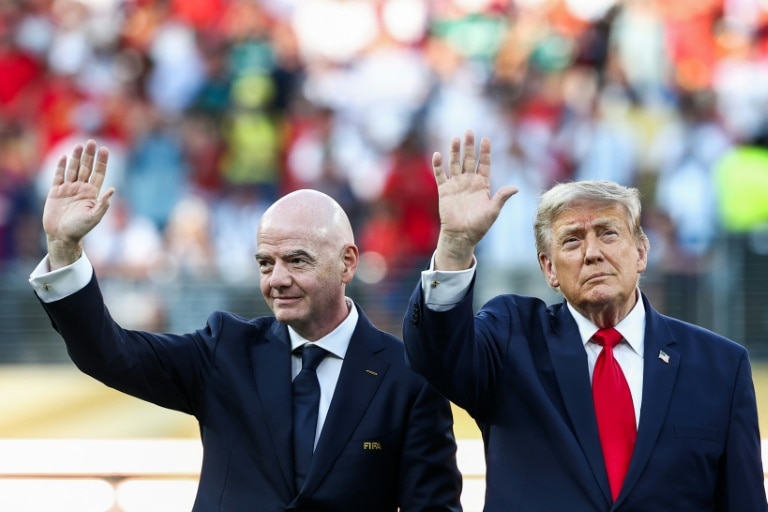
    In a sharp rebuke that has sent shockwaves through global football governance, Europe’s governing football body UEFA issued an ultimatum Thursday: it will pull all of its national teams out of every FIFA competition, including the marquee World Cup, if FIFA refuses to completely abandon its plan to bring private investors into the ownership of its top competitions. The hardline stance marks one of the most significant rifts between continental confederations and the global football governing body in modern history.

    “No UEFA national teams will participate in any FIFA competition for so long as these proposals remain alive, unless this proposal has been abandoned in its entirety and binding assurances have been given that FIFA will never again open its governance or competitions to private ownership,” UEFA said in an official, strongly worded statement. The organization doubled down on its principle that football’s most iconic tournament cannot be commodified: “The World Cup cannot be treated as an investment product… No part of it should ever be surrendered to private investors. The World Cup is not for sale.”

    The controversy stems from an announcement FIFA made just two days prior, on Tuesday, that it intended to launch a new commercial subsidiary, FIFA Forward Enterprise (FFE), that would manage its crown jewel events, including the men’s and women’s World Cup and the expanded Club World Cup. Under the published framework, private investors would be permitted to purchase minority stakes in the new entity, with FIFA targeting capital raises of up to $4.2 billion based on a $20 billion total valuation of FFE.

    FIFA has framed the initiative as a transformative investment in global football growth. If the proposal receives final approval, the organization says each of its 211 member associations would get a one-time payout of $20 million as early as 2027, and would see its core funding allocation for the 2027-2030 cycle jump from $8 million to $20 million. FIFA President Gianni Infantino lauded the plan Wednesday, calling it a “golden opportunity to turbocharge the development of the game globally”.

    That pitch has done little to sway critics, led by UEFA. UEFA President Aleksander Ceferin already boycotted the 2024 World Cup final last week to signal his opposition to the plan, and the confederation’s latest statement makes clear the schism is about core principles of football governance. “This model has no place in world football,” the statement read. “Football’s future cannot be dictated by the expectations of those whose first duty is to maximise financial return. Nor can the interests of national associations, leagues, clubs, players and supporters become subordinate to investor returns. Football cannot mortgage its future for financial gain.”

    UEFA went on to argue that the entire process behind the proposal has been deeply undemocratic. “It is both irresponsible and indefensible that a proposal of such significance for football was conceived in secret and brought to the brink of approval without any meaningful consultation with those entrusted with stewarding the game,” the statement added. “This is not merely a profound failure of leadership, but an abdication of FIFA’s duty as the custodian of world football. National associations around the world are now presented with an ultimatum: accept the irreversible capture of football’s greatest competitions or bear the consequences. This is not a ‘democratic decision’, but governance by intimidation – an act of coercion unworthy of an institution entrusted with the stewardship of the global game.”

    UEFA is far from alone in its opposition. Several top European national federations and European Union officials have already come out against the plan, warning it accelerates the excessive commercialization of sport and creates dangerous openings for conflicts of interest. Two other continental confederations, CONCACAF covering North, Central America and the Caribbean, and the Asian Football Confederation, have also raised objections over the lack of broad consultation with FIFA’s full membership before the plan was announced. The Confederation of African Football has directed its member associations to conduct a full review of the controversial proposal before taking a formal position.

    Closing its statement, UEFA reiterated that its opposition is non-negotiable, framing the fight as a defense of football’s intergenerational legacy. “There are moments when institutions are judged not by what they are prepared to accept, but by what they refuse to compromise. This is one of those moments. Some things are simply too important to sell. The FIFA World Cup belongs to football. It always will. And so long as Europe has a voice, it will never be for sale,” the statement concluded.

  • Man impaled by a hiking pole treks 10 miles down mountain

    Man impaled by a hiking pole treks 10 miles down mountain

    In an extraordinary display of endurance and self-reliance that has shocked outdoor communities, experienced hiker David Cifaldi survived a life-threatening accident on one of Montana’s most challenging peaks by trekking 10 miles down the mountain with a sharp hiking pole impaled through his torso, turning down an offer for an emergency helicopter evacuation mid-incident.

    The harrowing incident unfolded on Granite Peak, the highest point in Montana, a popular but strenuous destination for backcountry hikers that sees thousands of visitors annually. While navigating the mountain’s rocky, steep terrain, Cifaldi suffered a devastating accident that left a metal hiking pole piercing through the soft tissue of his side. Instead of waiting for rescue teams to reach him via air – a response that would have been standard for such a severe injury – he made the fateful decision to begin the long descent to the base of the mountain on his own power.

    Local search and rescue officials confirmed that Cifaldi reached lower elevations after completing the 10-mile trek, where emergency medical teams were waiting to transport him to a regional trauma center for immediate treatment. As of the latest updates, medical professionals have not released full details on his current condition, but initial reports indicate that his decision to self-evacuate allowed him to reach care far faster than a helicopter rescue could have been arranged in the remote mountain terrain.

    Outdoor safety experts have noted that Cifaldi’s case is an extremely rare exception to standard backcountry safety protocols, which urge injured hikers to stay in place and wait for professional rescue whenever possible. The accident has sparked new conversations about the risks backcountry enthusiasts face, and the split-second decisions that can mean the difference between life and death in remote wilderness areas.

  • Russian missile strike destroys family home, 10 feared dead

    Russian missile strike destroys family home, 10 feared dead

    In one of the deadliest large-scale Russian attacks on Ukraine in recent months, a massive overnight barrage of missiles and drones launched early Thursday has killed dozens of civilians, including 10 members of a single extended Ukrainian family whose home was completely obliterated in an eastern strike.

    Ukrainian emergency service officials confirmed to Agence France-Presse that six deaths have been formally verified at the residential site outside Kryvyi Rih, Ukrainian President Volodymyr Zelenskyy’s hometown, with four additional people still missing and presumed dead amid extensive destruction. Forensic teams are still processing the blast site, where 17 body fragments have been recovered to date amid piles of splintered wood and crumbled concrete. Regional governor officials have released on-the-ground photos showing rescue workers sifting through the rubble of what was once the Voronov family home.

    Zelenskyy identified the victims in a social media statement Thursday morning: mother Olena, father Artem, their seven children, and a grandchild, noting the youngest presumed victim was just 18 months old. “It was an ordinary home, blown into smithereens,” he wrote, condemning the deliberate targeting of civilian residential property.

    Sergiy Kovtoniuk, press officer for the State Emergency Service in Dnipropetrovsk region, told AFP that the scale of devastation leaves little hope of survival for the 10 people present in the home at the time of the strike: “It can be preliminarily stated that all 10 people who were in the house have died.”

    The strike on the Voronov family home was part of a far larger coordinated assault that saw Russia launch 74 missiles and 284 drones across Ukraine overnight, the latest escalation in a four-and-a-half-year war that has seen civilian casualties spike sharply in recent weeks. Zelenskyy had issued a public warning of an impending attack late Wednesday, prompting tens of thousands of Kyiv residents to seek shelter ahead of the first blasts, which rang out shortly after midnight across the capital.

    For the first months of the full-scale invasion, Kyiv’s subway system served as a primary bomb shelter for residents, and that long-held routine reactivated quickly Thursday night. More than 56,000 people packed into station platforms, setting up tents, rolling out yoga mats and unfolding sleeping bags in a now well-rehearsed process. Galyna Doschuk, a 27-year-old photojournalist who has taken shelter in the subway repeatedly during the war, summed up the mindset of many Ukrainians amid the ongoing attacks: “I want to live… sometimes our neighbour gets in the way. But we’re fighting on.”

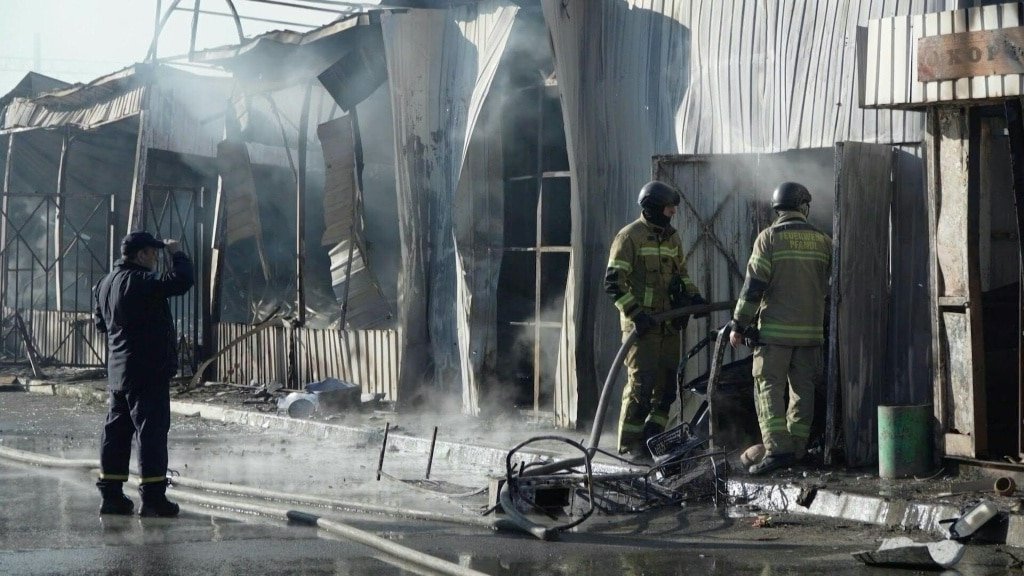
    By dawn Thursday, three additional civilian deaths were confirmed across Kyiv, Poltava and Lviv. A popular Kyiv flea market was destroyed in the strike, with its charred, twisted metal framework still smoldering as vendors arrived to salvage whatever belongings they could. In the western city of Lviv, which suffered extensive damage across multiple residential blocks, rescue teams pulled a 93-year-old woman alive from the rubble of a collapsed five-story apartment building, where she had been trapped alone on the top floor. AFP reporters on the ground saw stunned local residents gathering around destroyed apartment blocks, many crying and covering their faces as they surveyed the damage.

    The assault also spilled over into NATO territory, triggering new diplomatic tensions after a 10-meter-wide crater was discovered in an agricultural field in eastern Poland, roughly 80 kilometers from the Ukrainian border. Polish Prime Minister Donald Tusk confirmed Thursday that debris recovered from the site matches a Russian Kh-101 cruise missile, confirming the projectile originated from the overnight Russian barrage.

    Ukrainian air force officials reported that defense systems successfully intercepted 55 of the 74 Russian missiles and 265 of the 284 drones launched in the attack. However, Ukrainian forces continue to face critical gaps in defense against advanced Russian ballistic missiles, which Moscow has increasingly deployed in recent strikes and are far harder to intercept. Zelenskyy renewed his urgent appeal to Western allies Thursday for additional air defense systems and interceptor missiles to shield civilian population centers.

    The appeal comes just two days after Zelenskyy met with U.S. President Donald Trump at the White House to discuss anti-ballistic defense cooperation. Trump previously announced plans to grant Ukraine a license to domestically produce Patriot anti-ballistic interceptors, but neither government has released further details of the agreement to date.

    April 2025 has already become the deadliest month for Ukrainian civilians since April 2022, according to casualty tallies, as Russia has dramatically scaled up the frequency and size of its missile and drone strikes across the country. Russia’s defense ministry claimed in a statement Thursday that the overnight barrage exclusively targeted Ukrainian military-industrial sites, military communications hubs and logistics centers, a claim that contradicts extensive on-the-ground reporting of civilian damage and casualties.

  • AP Exclusive: Child soldiers recount horrors of Sudan’s war and presence of Colombian mercenaries

    AP Exclusive: Child soldiers recount horrors of Sudan’s war and presence of Colombian mercenaries

    Four years into Sudan’s brutal civil conflict between the national army and the Rapid Support Forces (RSF), gripping firsthand testimonies from former child soldiers have pulled back the curtain on systematic abuse, forced conscription, and the hidden role of foreign mercenaries in the capital region of Khartoum. Six former child conscripts held by the RSF spoke anonymously to The Associated Press, sharing harrowing details of their exploitation that align with broader investigations into foreign fighter involvement in the war.

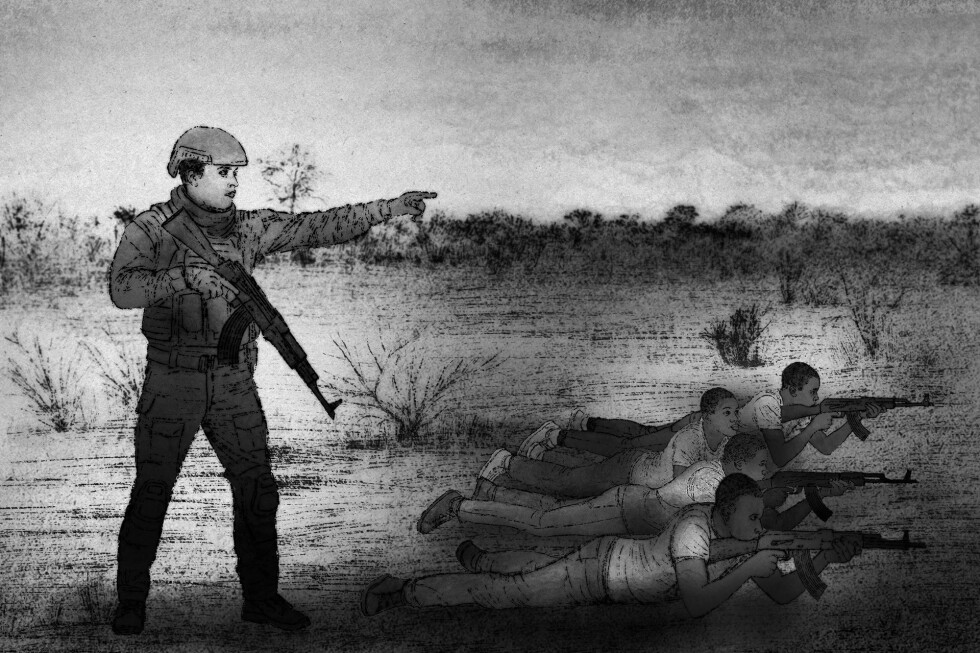
    One 17-year-old survivor, who was abducted at 15 while selling cigarettes in Omdurman – Khartoum’s twin city – described being mistakenly seized by RSF fighters searching for deserters, then thrown directly into frontline combat with no prior weapons training. Chained by his hands and feet to an anti-aircraft weapon mounted on a pickup truck, he recalled being left exposed as Sudanese warplanes launched airstrikes. When enemy jets approached, Colombian mercenaries who commanded the post retreated to fortified bunkers, ordering the chained children to open fire on the aircraft. Anyone who tried to run, the teens were told, would be killed by their captors before the bombs could hit them.

    The teenager, who still bears shrapnel scars on his head and face, spent 18 months in captivity at the RSF’s Central Reserve Camp in Omdurman, where dozens of child recruits were held. He described being kept bound around the clock – even during meals, when guards poured water over the shackled boys instead of allowing them to bathe. Colombian mercenaries stationed at the base trained the children to operate heavy anti-aircraft systems and explicitly ordered that the teens be chained to the weapons to prevent escape, he said. Too terrified to aim accurately, he never hit a target, he added.

    A second 17-year-old survivor, abducted at 15, shared equally devastating accounts from his detention at the RSF’s al-Konan camp, where he said Colombian mercenaries trained him and other underage recruits to handle heavy artillery and operate drones. Locked in a cell unless he was ordered to carry out strikes, he described seeing civilian targets through drone cameras, and being beaten – sometimes unconscious with electric batons – when he refused to fire. He watched an 18-year-old friend who attempted to escape shot dead by RSF fighters, and he still suffers nightly nightmares from the trauma.

    These testimonies confirm long-suspected reports of widespread Colombian mercenary deployment alongside the RSF. Rights researchers say the foreign fighters are recruited by a United Arab Emirates (UAE) state-linked contractor and trained in Emirati military bases, supporting the RSF in its fight against the Sudanese army. A UN panel has previously tracked weapons shipments from the UAE to the RSF, though the UAE has repeatedly denied arming the paramilitary group, claiming all shipments were humanitarian aid for refugees. It did not respond to multiple AP requests for comment on the mercenary allegations.

    Colombia’s long history of internal armed conflict has created a large pool of combat veterans with specialized U.S.-backed training, many of whom turn to mercenary work abroad due to low domestic pensions and limited civilian job opportunities. While Colombia has passed legislation banning its citizens from fighting in foreign wars, recruitment networks continue to operate, veteran groups report. Human Rights Watch and the private research firm Conflict Insights Group have already documented Colombian mercenary presence in Sudan’s Darfur region, including during the RSF’s 2024 capture of El Fasher, where the paramilitary has been accused of mass civilian killings. A Colombian mercenary who fought in Darfur for six months in 2025 told the AP that hundreds of Colombian fighters were deployed on RSF front lines, and he personally encountered child recruits as young as 13.

    The accounts from Khartoum mark the first concrete on-the-ground confirmation of Colombian mercenary activity training child soldiers in the capital region. Multiple independent sources, including a defected former RSF fighter and a senior Sudanese military officer, confirmed to the AP that Colombian fighters were actively training underage recruits in Khartoum while the RSF controlled the city. The Colombian government said it has no official information confirming the child soldier training allegations, but condemned any such abuses.

    Across Sudan, an estimated tens of thousands of children as young as 8 have been forcibly conscripted by all parties to the conflict, according to Sudan’s National Council for Child Welfare. The United Nations confirms both the RSF and government-allied militias have deployed child soldiers on front lines, with thousands still held in combat roles. The RSF, which grew out of the Janjaweed militias that carried out a genocidal campaign in Darfur in the 2000s, has a well-documented pattern of repeating these abusive tactics today. International law explicitly classifies forced child recruitment as a war crime, and rights experts say the UAE’s documented support for the RSF could leave the Gulf nation complicit in widespread crimes against humanity.

    Both of the surviving teens interviewed by AP spoke from a government-run rehabilitation facility on the outskirts of Khartoum, which housed more than 200 former child soldiers recaptured when the army retook the capital over the past year. Facility staff told AP that multiple child recruits have confirmed Colombian mercenary involvement in their training across Khartoum’s camps. Many of the released children face a difficult path forward: some carry permanent disabilities from combat and torture, while others have been rejected by their families traumatized by the war. Psychologists at the facility work to reconcile families with the boys, who are struggling to process severe trauma and guilt over acts they were forced to commit.

    Since the AP’s visit to the facility in April 2025, all children held there have been released through a joint process between the Sudanese government and UNICEF. The UN children’s agency is working to expand efforts to release and reintegrate remaining child soldiers across the country, pushing for all parties to recognize conscripted children as victims rather than combatants. For the teens who survived their ordeals, the desire to rebuild is mixed with lingering trauma. “We have made mistakes,” one boy said. “We want to get out of here to rebuild Sudan.”

  • Uefa to boycott World Cups if Fifa plans approved

    Uefa to boycott World Cups if Fifa plans approved

    A seismic rift has opened at the highest level of global football after all 55 member associations of European football’s governing body UEFA voted unanimously to boycott every FIFA competition if FIFA proceeds with its controversial proposal to sell minority stakes in its top tournaments, including the men’s and women’s World Cup, to private investors. The historic decision was reached during a virtual emergency meeting chaired by UEFA president Aleksander Ceferin, held to address the plan FIFA unveiled earlier this week to the shock of the global football community.

    FIFA’s proposal would establish a new commercial subsidiary called FIFA Forward Enterprise (FFE), which would hold ownership of FIFA’s flagship competitions. The governing body has opened the door for third-party private investors to acquire minority, non-controlling stakes in FFE, a plan that requires a formal approval vote from FIFA’s 211 global member associations. To secure backing for the initiative, FIFA president Gianni Infantino has offered a $40 million payout to every member association that votes in favor of the plan, with an initial $20 million available to supporters who confirm their backing by the September 19 deadline. If approved, the investor group is set to be led by Thrive Eternal, an American venture capital firm founded by Joshua Kushner, brother of Jared Kushner, former US President Donald Trump’s son-in-law.

    UEFA has emerged as the most vocal opponent of the plan, and Thursday’s vote cemented the unified opposition of every European national federation. In a hard-hitting statement released after the meeting, UEFA stressed that the World Cup is far more than a commercial asset, calling it one of the greatest sporting legacies in global football, built over generations by players, national teams and fans across every continent. “The World Cup cannot be treated as an investment product. No part of it should ever be surrendered to private investors. The World Cup is not for sale,” the statement read.

    The organization doubled down on its criticism of FIFA’s process, condemning the plan as having been developed in complete secrecy without any meaningful consultation with global football stakeholders, calling the lack of input “irresponsible and indefensible.” The statement went further, framing the move as a fundamental failure of global football leadership: “This is not merely a profound failure of leadership, but an abdication of FIFA’s duty as the custodian of world football. National associations around the world are now presented with an ultimatum: accept the irreversible capture of football’s greatest competitions or bear the consequences. This is not a ‘democratic decision’, but governance by intimidation – an act of coercion unworthy of an institution entrusted with the stewardship of the global game.”

    Major European federations have already lined up to back the unified stance. England’s Football Association confirmed it stands “shoulder to shoulder” with European colleagues, adding “We oppose Fifa’s plans – the Fifa World Cup belongs to football and always will.” The Scottish Football Association echoed the criticism, highlighting deep concerns over the lack of full consultation and disregard for good governance in how the proposal has been rolled out with a tight binding deadline.

    Under the boycott terms, all UEFA member nations will withdraw from all FIFA-run competitions if the proposal passes, with the first potential test of this commitment coming as early as October, during the scheduled Women’s World Cup play-offs. Other upcoming FIFA tournaments include the Women’s Under-20 World Cup kicking off in Poland on September 5, well before the September 19 vote deadline for the proposal.

    Industry analysts and football insiders warn this confrontation represents one of the most existential challenges to global football’s governing structure in modern history, drawing comparisons to the 2021 failed European Super League breakaway as a threat to the core identity of the sport. Simon Stone, BBC Sport’s chief football reporter, notes that private investment in FIFA competitions would almost certainly lead to frequent expansion of tournament size and frequency, putting massive pressure on global football calendars that would trickle down through every level of the domestic game in every football-playing nation.

    While UEFA only represents 25 percent of FIFA’s total global membership, its member associations include the majority of the world’s most successful and commercially valuable national teams. Data from recent World Cups underscores UEFA’s outsize influence: at this summer’s men’s World Cup, six of the eight quarter-finalists were European sides, including eventual champion Spain. The 2022 and 2018 men’s World Cups saw five and six European quarter-finalists respectively, and European nations have won 13 of the 23 men’s World Cups held to date. The pattern holds across other FIFA competitions: three of the four semi-finalists at the last Women’s World Cup were European, and three of four semi-finalists at the 2025 Club World Cup also came from European confederations.

    Football insiders say a World Cup held without participation from top European sides would be commercially unviable, as it would lack the star power and fan appeal needed to generate the revenue FIFA requires to fund the $40 million payouts it has promised to voting supporters. For now, the global football world waits for the September vote, with the future of the sport’s most iconic tournament hanging in the balance.

  • Brazil’s president confirms two US government officials were denied visas over election interference fears

    Brazil’s president confirms two US government officials were denied visas over election interference fears

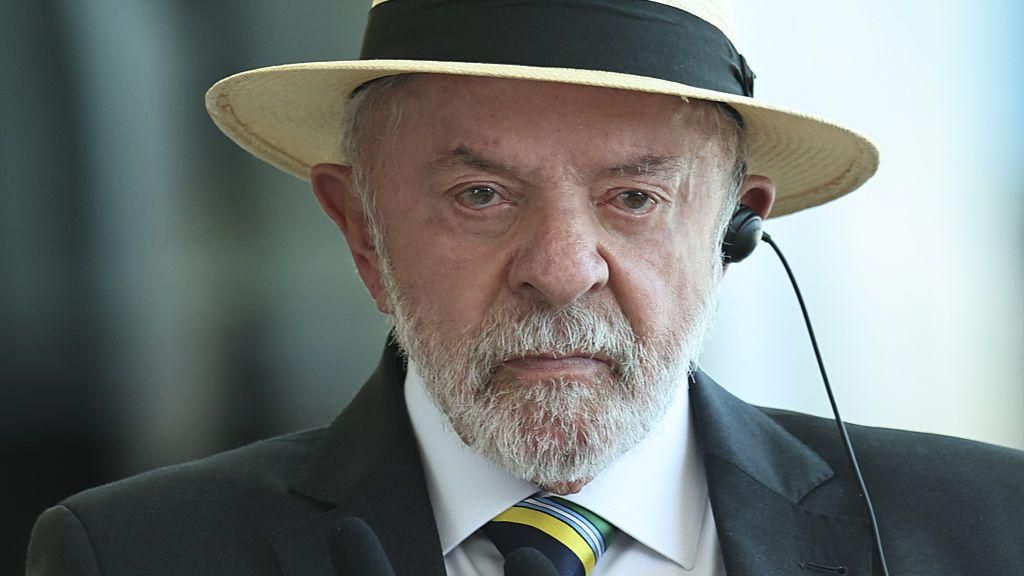
    Rising diplomatic tensions between Brazil and the United States have taken a sharp turn after Brazilian President Luiz Inácio Lula da Silva announced his administration has denied entry visas to two senior U.S. State Department officials, accusing the pair of plotting to meddle in Brazil’s upcoming October general election.

    Speaking to reporters Wednesday, Lula framed the visa denial as a necessary defense of Brazilian sovereignty: “We had to deny visas to two individuals they were sending to Brazil to interfere in our electoral process.” The two officials in question are Riley M. Barnes, Assistant Secretary of State for Democracy, Human Rights, and Labor, and Samuel Samson, Deputy Assistant Secretary in the same department. They were scheduled to travel to Brazil in late July for a trip the U.S. described as focused on freedom of expression, religious liberty, and election integrity. The trip also included a planned meeting with Flávio Bolsonaro, the right-wing opposition candidate in October’s election.

    Flávio Bolsonaro is the eldest son of former Brazilian President Jair Bolsonaro, a polarizing far-right figure who was convicted last year of plotting a coup attempt following his 2022 election loss to Lula, and sentenced to 27 years in prison. Jair Bolsonaro was already barred from running for public office before his conviction, after years of spreading unsubstantiated claims that Brazil’s electronic voting system was vulnerable to rigging. His baseless claims of widespread fraud after his 2022 defeat inspired his supporters to storm Brazil’s Congress, Supreme Court, and Presidential Palace on January 8, 2023 — an event widely compared to the January 6 U.S. Capitol riot.

    In a recent meeting with foreign diplomats, Flávio Bolsonaro repeated unfounded questions about Brazil’s voting system, claiming the country’s electronic voting machines shared origins with those used in Venezuela, and citing an outdated CIA document referencing fraud in that country. He later walked back the comments, claiming he merely supported the presence of more international election observers, rather than questioning the integrity of Brazil’s system. But the meeting reinforced Brazilian authorities’ concerns that U.S. officials would lend legitimacy to false claims about the election, prompting the visa decision.

    The U.S. State Department has dismissed Lula’s accusations of election interference as a “baseless lie.” But Brazilian authorities have pushed back, noting that Flávio Bolsonaro’s claims have already been thoroughly refuted by the country’s Superior Electoral Court. Independent election experts have long ranked Brazil’s electronic voting system, first implemented nationwide in 1996, as one of the most secure in the world. No cases of systemic fraud have ever been recorded in the country’s modern electoral history.

    The system includes multiple layers of security to protect integrity: it uses biometric fingerprint scanning to verify voter identity, preventing double voting and impersonation. Every machine produces a paper record of votes cast that can be cross-checked against the electronic tally, and all results are subject to independent third-party audits. In the lead-up to every election, independent cybersecurity experts are invited to attempt to hack the system to identify and address any potential vulnerabilities, as a public confidence-building measure.

    October’s election will see the 80-year-old incumbent left-wing President Lula da Silva seek re-election, facing off against Flávio Bolsonaro, who has already received high-profile endorsements from Argentine President Javier Milei and Israeli Prime Minister Benjamin Netanyahu. The visa dispute is the latest flashpoint in the ongoing partisan battles over Brazilian electoral integrity that have roiled the country’s politics since the 2022 election.

  • France, Spain eye wildfire reprieve as other blazes start up in Europe

    France, Spain eye wildfire reprieve as other blazes start up in Europe

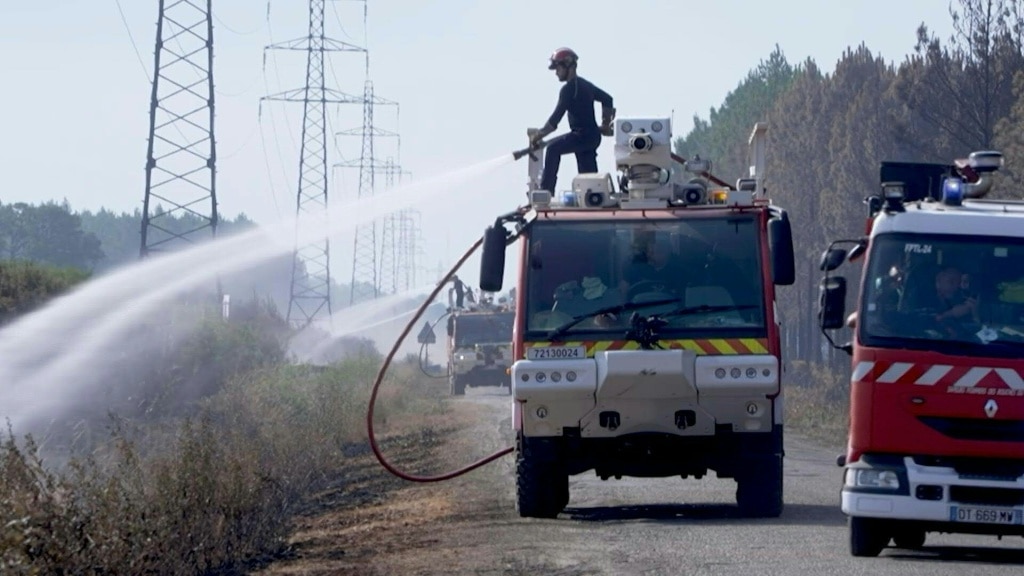
    As Europe enters one of its most devastating forest fire seasons in modern history, France and Spain reported tentative progress containing massive blazes on Thursday, even as new infernos ignited across the continent, bringing deadly consequences to Greece, Portugal, and Turkey.

    Over the past week, extreme wildfire conditions have forced hundreds of thousands of people across the Mediterranean to flee their homes, among them A-list Hollywood actor George Clooney, his wife Amal Clooney, and their family, who were forced to evacuate their southern French estate earlier this week.
    Climate scientists have repeatedly warned that this season’s unusually intense fire activity is directly tied to human-caused climate change. Rising regional temperatures have dried out vegetation across the continent, turning vast forested areas into tinderboxes that allow wildfires to spread faster and burn hotter than historical records indicate, drastically increasing the risk of extreme fire emergencies for European communities.

    In southwest France, more than 220,000 people have been evacuated from a massive wildfire burning west of Bordeaux that has burned more than 42,000 hectares of land — an area larger than the entire island of Malta. Fire officials reported Thursday that they are “reasonably optimistic” the massive blaze has stopped spreading, a boost from light overnight rain that dampened smoldering hotspots across the fire zone. Marc Vermeulen, chief of the regional firefighting service, noted that active hotspots had dropped from six to three since dawn, calling the development a “tipping point” in the week-long battle. However, crews remain on high alert for re-ignitions from embers that have persisted through previous lulls in fire activity.
    To date, the Bordeaux fire has destroyed more than 200 homes and claimed the lives of two firefighters, who were trapped in their truck by rapidly spreading flames last week. For local residents, the disaster extends far beyond the active fire front. Nina Rosazza, who operates a metal factory in the Arcachon Basin near Bordeaux, called this the “start of the end of the fire” but warned it is only the “start of the crisis.” She added that the damage to local tourism, the natural environment, and the regional landscape will amount to a long-term catastrophe for the community.
    Smaller active fires are still burning across other parts of southern France, including a blaze near Brignoles that forced the Clooney family to evacuate their property on Wednesday. In a letter shared with the Brignoles mayor, the couple shared that they did not yet know if their home would survive the fire, but emphasized that they are part of the local community and are committed to helping rebuild the area once the threat passes.

    Across the border in Spain, Prime Minister Pedro Sanchez announced Thursday he was lifting the state of emergency declared for a major wildfire that threatened communities near the capital, Madrid. Regional officials confirmed that the fire no longer has any active burning fronts, allowing most of the more than 60,000 people evacuated during the peak of the crisis to return to their homes. However, the country continues to face extreme fire risk: in the western Avila region, an inferno that has been burning since last week has already burned 50,000 hectares of land, making it the largest wildfire recorded in Spain since official record-keeping began in 1961. A new heatwave sweeping across Spain this week has prompted official warnings that dry conditions could reignite contained fire zones near Madrid. On Wednesday, a new wildfire broke out near the Spanish-Portuguese border in Fermoselle, forcing more than 600 local residents to evacuate immediately.

    In Greece, the wildfire crisis has already turned deadly, with three firefighters killed while battling active blazes across the country. Two firefighters on the island of Crete were trapped when shifting wind patterns flipped the direction of a fast-moving fire, and a third collapsed and died while fighting a blaze on the Greek mainland near Gythelo. Prime Minister Kyriakos Mitsotakis warned that the country faces “difficult days” ahead as summer heat persists and the peak of the annual wildfire season gets underway. On Crete, a major overnight fire near the resort village of Agia Galini forced 8,000 residents and tourists to evacuate, with 300 firefighters deployed to contain two separate active blazes. Local mayor Maria Lioni said the fire is believed to have destroyed residential homes and killed livestock, but the full extent of the damage is still being assessed. Daniela Schmidt, an Austrian tourist on the island, told AFP she and her family were “quite scared” as flames swept across their part of the island overnight. The family was forced to evacuate straight from the beach, still wearing their bathing suits, because they could not return to their hotel to collect belongings.

    In northern Portugal’s Valpacos region, nearly 800 firefighters are working to contain a rapidly spreading forest fire, according to the country’s civil protection service. Five people have suffered minor injuries in the fire, including three firefighters and one police officer.

    In Turkey, firefighting crews are battling active blazes near some of the country’s most popular tourist destinations, including the coastal region of Antalya and the Dardanelles strait. Agriculture Minister Ibrahim Yumakli reported that 105 of the 110 wildfires that ignited across the country in recent days are now contained, with only five active blazes remaining. Turkey’s forestry agency said it is running intensive ground and air firefighting operations along the country’s fire-prone coastal corridor, stretching from Antalya to Alanya and from Mugla to Fethiye.

  • Oprah Winfrey to close her school for girls in South Africa

    Oprah Winfrey to close her school for girls in South Africa

    Nearly two decades after breaking ground on a transformative educational initiative for disadvantaged young women in South Africa, media icon Oprah Winfrey has announced that the Oprah Winfrey Leadership Academy for Girls (OWLAG) will close its current boarding campus at the end of the 2027 academic year, aligning with the original founding agreement for the site. The sprawling campus, located in Henley-on-Klip south of Johannesburg, will then be transferred to local Gauteng provincial education authorities.

    Winfrey’s plan for transitioning the academy ensures no currently enrolled student will face disruption to their studies: any girl who has not completed her degree by the 2027 handover will receive full scholarships to continue their education at other top institutions across the country. Moving forward, Winfrey’s foundation will shift its model from operating a single campus to running a national scholarship program that supports academically gifted girls from low-income communities to attend leading South African schools.

    The idea for OWLAG was first sparked in 2002, when Winfrey met with anti-apartheid icon and former South African president Nelson Mandela. Launched in 2007 at a total cost of $40 million, the boarding school was designed to unlock leadership potential for girls from underserved backgrounds. To date, more than 1,000 students have graduated from the academy, with alumni going on to build successful careers as doctors, lawyers, engineers, corporate executives, entrepreneurs and artists. One 2012 graduate, Andronica Klaas, now serves as a senior engineering lead at global tech giant Meta, who credits the academy with reshaping her worldview. “Every corner of the campus was filled with so much love and care and detail,” Klaas said in comments shared on Winfrey’s Oprah Daily platform. “OWLAG convinced me that preparation, character and purpose mattered more than where I came from.”

    Long circulating online speculation has linked the campus closure to mismanagement, but Nico Olwagen, a public relations consultant for the Oprah Winfrey Leadership Academy Foundation, has denied these claims. For Winfrey, the transition is not an end to her mission, but an expansion of it. “The dream was never simply to build a school,” the 72-year-old media mogul explained in an official statement. “It was to invest in the limitless potential of young women. That mission doesn’t end with one campus. It continues in every girl whose future can be transformed through education. I’m excited that this next chapter will allow us to reach even more young women across South Africa and continue the promise that began more than 20 years ago.”

    While the future use of the OWLAG campus remains undecided following the handover, Gauteng’s education department has pledged to uphold the institution’s founding legacy. “We will ensure that this exceptional institution continues to serve the people of Gauteng while honouring the vision upon which it was established,” the department said in a statement.

    Throughout its 20-year history, OWLAG has not been without controversy. When the academy first opened, some critics questioned its lavish facilities, which included two theaters, a yoga studio and a beauty salon, arguing that the $40 million investment could have served a larger number of students if distributed across existing public institutions. Just months after opening, the academy also faced scandal when a group of students accused a former staff member of abuse; the staff member was ultimately cleared of all charges. Currently, 281 students are enrolled at the campus.