博客

  • Myanmar’s detained former leader Aung San Suu Kyi has rare meeting with International Red Cross

    Myanmar’s detained former leader Aung San Suu Kyi has rare meeting with International Red Cross

    BANGKOK, Thailand – Nearly four and a half years after Myanmar’s military seized power and detained the country’s democratically elected former leader Aung San Suu Kyi, the Nobel Peace Prize laureate has held a long-awaited meeting with a senior representative of the International Committee of the Red Cross (ICRC), the junta-backed civilian administration confirmed this week. The encounter marks one of the only verified instances of contact between Suu Kyi and an independent international representative since her 2021 detention, which has kept her completely out of public view.

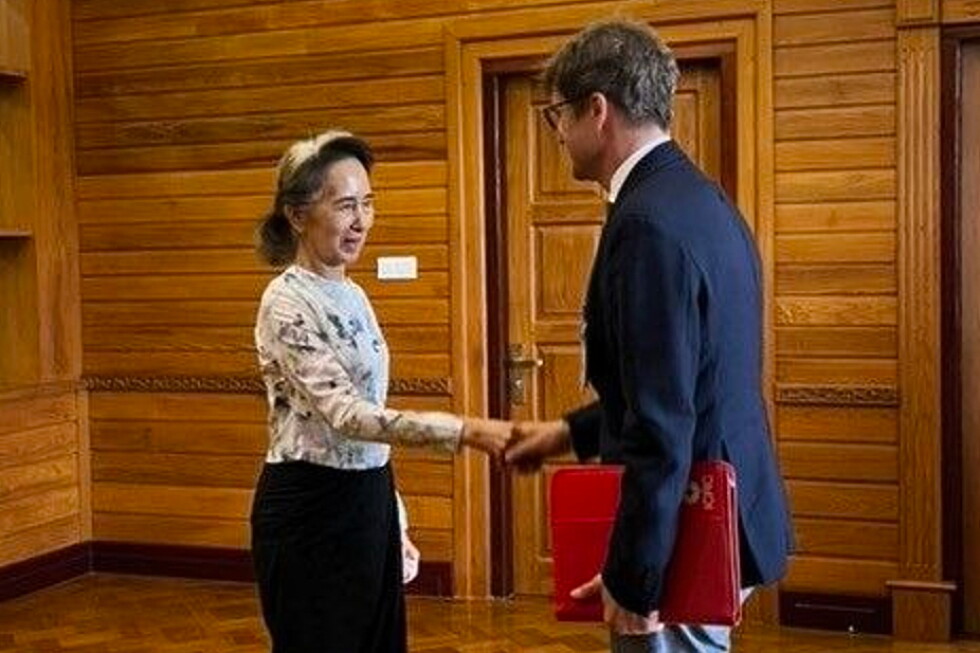
    In a formal announcement paired with four published photographs, the military-aligned Presidential Press and Information Bureau said the closed-door meeting between Suu Kyi and Arnaud de Baecque, the ICRC’s top envoy to Myanmar, took place on Monday morning. No additional details were released, including the exact location of the meeting or the substance of the pair’s discussion. Two of the released images capture the pair shaking hands and holding talks in a wood-paneled meeting room, while the two additional photos show Suu Kyi cutting a pink birthday cake inscribed with “Happy Birthday Aunty Suu, 19.6.2026” – a reference to her 81st birthday, which fell on June 19 this year.

    In all published images, Suu Kyi appears relaxed, smiling, and free of any visible signs of ill health, though independent observers have not been able to conduct a full assessment of her physical condition from the photographs alone. The ICRC’s Myanmar office has not yet issued an official statement confirming or expanding on details of the meeting.

    Suu Kyi’s detention began on February 1, 2021, when the Myanmar military ousted her elected civilian government in a coup that triggered widespread international condemnation, sweeping sanctions, and ongoing armed conflict across the country. The former state counselor has not appeared in public since the coup, and the most recent official image of her released prior to this week dates back to April 2024, when junta authorities announced she had been transferred from prison to house arrest and had part of her accumulated prison sentence reduced as part of a mass amnesty tied to a major Buddhist holiday.

    This week’s announcement of the ICRC meeting comes amid growing international and regional pressure on Myanmar’s military leadership. Members of the Association of Southeast Asian Nations (ASEAN) and other global actors have repeatedly called for meaningful access to Suu Kyi as a core step toward advancing dialogue to resolve the country’s deepening political and humanitarian crisis. For months, Suu Kyi’s youngest son Kim Aris, who resides in London, and pro-democracy activists have run a high-profile online campaign demanding independent proof that the 81-year-old former leader is still alive and in good health.

    Myanmar’s junta has spent the past year moving to frame a return to civilian rule, planning for a national election in 2025 and pursuing deeper diplomatic engagement with regional neighbors to ease its international isolation. Critics of the transition plan, however, note that the proposed nominally civilian government is overwhelmingly made up of former military generals and officials who held power under the previous junta administration, arguing the restructuring will do little to loosen the military’s tight grip on national governance.

    Opposition leaders with the National Unity Government, the shadow civilian administration formed by elected lawmakers ousted in the 2021 coup, reject the ICRC meeting as a meaningless gesture that does not address the core injustices of the coup. “Since, from the outset, a country’s leader was wrongfully arrested and imprisoned by finding faults where there were none, she must be released without any conditions,” said Nay Phone Latt, a spokesperson for the opposition group.

  • ‘We can play better’: Roosters issue terrifying threat to the rest of the NRL after historic win

    ‘We can play better’: Roosters issue terrifying threat to the rest of the NRL after historic win

    The Sydney Roosters have delivered one of the most devastating displays in modern National Rugby League (NRL) history, and the powerhouse side is already making it clear that their best football is still ahead of them. Fresh off a record-breaking 82-12 rout of the North Queensland Cowboys in Townsville, the reigning contenders have issued a stark four-word-adjacent warning to every other team in the competition: they have not hit their peak yet.

    This lopsided victory marked the Roosters’ sixth consecutive win, and it etched the club’s name into NRL record books: the 82-point haul stands as the highest score posted by any top-flight side since 1935, and the third-highest total in the 110-plus year history of Australian rugby league premiership. Stand-off Sam Walker delivered a career-best masterclass, racking up a personal total of 36 points to guide his side to the dominant win.

    The performance was so strong that analysts have already suggested even reigning premiers Penrith Panthers would face a massive test against the Roosters if the side repeats this form on grand final day. But despite the glowing praise and jaw-dropping result, Roosters utility Connor Watson says the squad still has room to grow as they prepare for this Friday’s high-stakes clash against the in-form Canterbury Bulldogs. Speaking to reporters from the team’s pre-match mini-camp in Gosford, Watson outlined the side’s quiet confidence heading into the second half of the season.

    “We feel like we’ve got more levels to our footy that we can still ascend to,” Watson said. “The weekend was a good start. Up to this game, we haven’t clicked into our best attacking rhythm yet. Our success so far this year has come from our defence, from the way we pressure opponents and grind out wins by scoring just enough to get across the line. That’s been a huge shift for us — in previous seasons, we dropped a lot of those tight matches, but this year we’ve taken the majority of them. To be in title contention come September, we need to keep winning those close games. But we know we can play better as a group, especially with ball in hand, and the Cowboys game was a really great first step toward that.”

    Young fullback Cody Ramsey, who turned in an electrifying second-half performance after coming on as a substitute for captain James Tedesco, echoed Watson’s sentiment. Ramsey said that even a blowout win like the 70-point victory leaves plenty of room for improvement across all areas of the pitch.

    “We can still definitely refine our craft in attack, and we also had a few defensive lapses that let the Cowboys through for line breaks,” Ramsey explained. “No matter how good a game looks on the surface, you can always pick out areas to work on. That could be our kicking game, our defensive line speed, our contact work. There’s still so much we can learn, and if we keep refining those small details, we’ll be able to execute even better by the end of the season.”

    One key talking point from the weekend was Tedesco’s early exit from the match, with the star fullback coming off the pitch as a precaution after sustaining a minor ankle issue. But the club has moved quickly to ease concerns about his availability for Friday’s game, confirming Tedesco is on track to start against the Bulldogs. Watson said the captain’s resilience has long been a defining feature of his career, and he expects the skipper to be fully fit for the upcoming clash.

    “You’d probably have to check with the medical staff for the full update, but he bounced back pretty well from the issue,” Watson said. “He played almost the entire first half with the niggle, and he still played like a beast, just like he always does. That’s one thing that’s been a testament to his career, especially after the early injury scares he’s had — his ability to just be resilient and bounce back quickly from these small injuries is incredible. I think he’ll be sweet to go on Friday.”

  • Asian stocks are mixed as yen jumps against the dollar, while oil prices slip

    Asian stocks are mixed as yen jumps against the dollar, while oil prices slip

    BANGKOK – Global financial markets kicked off the first trading day of the week in a state of uneven flux, driven by two major geopolitical and policy developments: coordinated currency intervention between the United States and Japan to stabilize the Japanese yen, and a sudden shift in U.S. posture toward Iran that has eased fears of open military conflict in the Middle East.

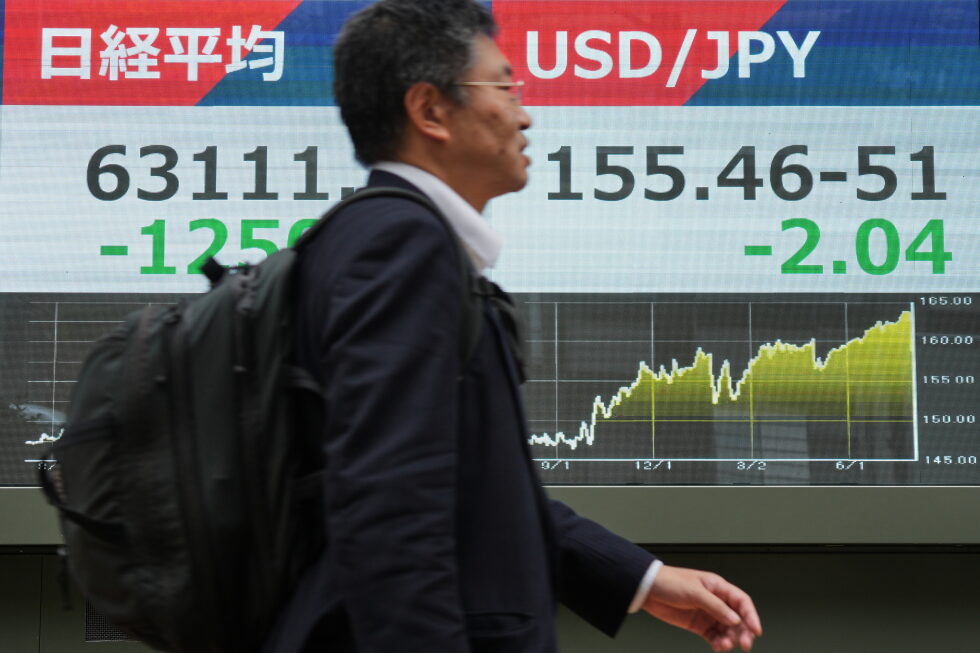
    Following joint confirmation from U.S. and Japanese officials that the two governments intervened in foreign exchange markets last week to reverse the U.S. dollar’s surge to 40-year highs against the yen, the yen climbed to its strongest level against the greenback since the end of 2023. At its lowest point for the dollar, one U.S. dollar traded as low as 155.20 yen, a sharp pullback from last week’s peak near 164 yen. The euro, by contrast, posted a modest uptick, rising slightly from $1.1528 to $1.0933 against the dollar.

    The shift in yen valuation creates mixed outcomes for Japan’s economy. A chronically weak yen has long benefited Japanese multinational corporations with large overseas operations, as their foreign earnings translate into more yen when converted back to the domestic currency. It has also drawn a boom in international tourism, as visitors from countries with stronger currencies enjoy amplified purchasing power inside Japan. But the downside of a cheap yen has been crippling: it erodes Japan’s overall national purchasing power, driving up import costs for critical commodities including oil and industrial inputs that the Japanese economy depends on.

    Across Asian equity markets on Monday morning, trading results were deeply split. Japan’s benchmark Nikkei 225 index fell 1.9% to 63,140.68, reflecting investor expectations that a stronger yen will cut into the overseas profits that have driven the index’s recent gains. In South Korea, the Kospi plummeted 4.5% to 6,298.75, erasing much of the index’s historic 17.9% surge from Friday – its best single-day performance in recorded history. The Kospi, which is heavily weighted toward two major tech and semiconductor giants, Samsung Electronics and SK Hynix, saw both stocks rally more than 25% on Friday amid AI-driven optimism, but both pulled back sharply on Monday: Samsung traded 8% lower, while SK Hynix fell 7.8%.

    Other regional markets posted more muted movements. Hong Kong’s Hang Seng Index gained 0.6% to reach 26,038.92, while China’s Shanghai Composite slipped 0.5% to 3,812.97. Australia’s S&P/ASX 200 edged down 0.2% to 8,961.30, and Taiwan’s Taiex index posted a 0.7% uptick.

    The easing of military tensions in the Middle East drove a sharp drop in global oil prices. After U.S. President Donald Trump announced he would order American forces to hold off on new strikes against Iran, claiming a deal to end ongoing hostilities in the region was within reach, oil benchmarks fell roughly 5% by early Monday. U.S. benchmark crude dropped 4.8% to trade at $80.58 per barrel, while Brent crude, the global pricing standard, fell 5% to $83.87 per barrel.

    The Monday open in Asia follows a volatile week for U.S. equities that ended on a positive note, wrapping up a turbulent July for Wall Street. The S&P 500 gained 0.7% on Friday, the Dow Jones Industrial Average added 0.5%, and the Nasdaq Composite rallied 1% – erasing an early 1.3% intraday loss to close higher. The gains pushed the S&P 500 into its first winning week in three weeks.

    U.S. markets have swung wildly in recent weeks, buffeted by three key sources of uncertainty: spiking oil prices driven by the Iran conflict, ongoing debate over whether massive corporate investments in artificial intelligence will eventually translate into meaningful profits, and concerns that semiconductor stocks have rallied too far too fast amid AI euphoria.

    Big tech led Friday’s gains after strong quarterly earnings signaled AI investments may already be paying off. Amazon led all gains with a 15.3% jump after reporting that its latest quarter profits tripled year-over-year, far outpacing analyst expectations. The strong results were fueled by accelerating growth in the company’s cloud computing division, leading analysts to conclude that Amazon’s heavy AI spending is beginning to deliver returns. The company also raised its full-year capital expenditure forecast in response to ongoing AI expansion. The results mirrored Microsoft’s strong earnings report a day earlier, which sent its stock soaring to its best single-day performance in nearly 18 years on similar signals of AI-driven profit growth.

    Semiconductor stocks, which provide the processing power and memory chips that big tech “hyperscalers” are rushing to acquire for AI expansion, continued their volatile trajectory on Friday. Micron Technology, for example, swung wildly from an early 6.4% gain to an intraday loss of 6.5% before closing down 5.9% for the day. Even with the broader market rally, Apple closed down 7.4% on Friday, despite reporting better-than-expected quarterly profits. The sell-off was triggered by Apple’s lower-than-expected revenue forecast for the current quarter, which executives blamed on component supply shortages driven by overwhelming AI-related demand for semiconductors.

  • Cuba state energy firm reports new nationwide blackout

    Cuba state energy firm reports new nationwide blackout

    On Sunday, Cuba’s national power grid suffered a complete collapse, triggering a new total nationwide blackout that left the entire island — including its capital Havana — in sudden darkness, the state-run energy utility Union Eléctrica (UNE) confirmed via a social media statement.

    The outage came as a fresh blow to Cuban residents already grappling with weeks of persistent rolling power cuts. In Havana, crowds of residents who had gathered outdoors to escape sweltering summer heat groaned collectively when the lights cut out abruptly, highlighting the widespread frustration over the ongoing crisis.

    This latest grid failure is just the most recent in a string of total system collapses. Only 24 hours before the nationwide outage, the entire western half of Cuba was already plunged into darkness for hours. For months, Cuba’s energy sector has been crippled by two core issues: severely aging power generation infrastructure that has not received adequate upgrades, and a longstanding US energy embargo that has cut off regular fuel deliveries for the country’s power stations.

    The ongoing blackouts have upended daily life across the island. Every major outage disrupts water distribution systems, leaving households with limited access to running water, and stops electric ceiling fans — a critical tool for coping with Cuba’s hot, humid climate. Even a population long accustomed to navigating economic and social adversity is now struggling under the weight of the unending crisis, which shows no clear signs of resolution in the near term. In the hardest-hit regions, residents have taken to public protests of frustration, including burning piles of trash in streets and banging pots and pans to demonstrate their discontent.

    Cuba’s Ministry of Energy announced immediately after Sunday’s collapse that restoration protocols were already underway to bring power back online across the country. However, long-term fuel shortages continue to hamper efforts to stabilize the grid. The only major fuel delivery authorized by US authorities in recent months was a single Russian tanker carrying 100,000 tons of crude oil that arrived in March, and those reserves have now been completely exhausted.

    The energy crisis has been compounded by wider economic pressure from the United States. The Trump administration ramped up sanctions on Cuban state-owned enterprises beyond the longstanding oil embargo, prompting many international companies to suspend operations on the island. In recent weeks, tensions have risen further after the US indicted former Cuban president Raul Castro, brother of revolutionary leader Fidel Castro, over the 1990s downing of two civilian aircraft. Diplomatic talks between Havana and Washington have so far failed to produce any tangible progress on easing sanctions or resolving the energy crunch. To counter the broader economic downturn that has accompanied the energy crisis, the Cuban government has rolled out a series of incremental free-market reforms aimed at stimulating growth, though these have yet to address the root causes of the country’s energy instability.

  • Top Australian radio host Alan Jones allegedly groped men as they drove, court hears

    Top Australian radio host Alan Jones allegedly groped men as they drove, court hears

    One of Australia’s most recognizable and influential media figures, 85-year-old veteran broadcaster and former national rugby coach Alan Jones, has appeared in a Sydney courtroom on the opening day of his long-awaited trial, facing multiple allegations of non-consensual sexual misconduct against six male complainants.

    Prosecutors laid out detailed allegations before the packed judge-only trial on Monday, outlining 20 counts of indecent assault and two additional counts of sexual touching that are alleged to have occurred between 2003 and 2020. The alleged incidents are said to have taken place across a range of locations, including public events, Jones’s private residences, and his former workplace.

    Nine of the 22 total charges relate to complainant J, who was just 17 years old when the alleged abuse began. Prosecutors told the court that complainant J first met Jones as a teenager during an on-air radio interview celebrating his sporting success. After the meeting, Jones allegedly gave the teen gifts including a mobile phone and a car, and began providing regular fortnightly cash payments that started at AU$400 and later rose to AU$600. On a drive to Jones’s rural property in Fitzroy Falls, roughly two hours south of Sydney, Jones is accused of groping complainant J’s genitals and attempting to kiss him without consent.

    A second complainant, identified as complainant C who worked for years as Jones’s personal driver, is expected to testify that the broadcaster groped his genitals on multiple occasions while he was driving Jones home from work. Prosecutors added that Jones repeatedly attempted to kiss complainant C without consent, often inside the lift of his radio studio, and sent the driver unsolicited explicit messages. The complainant has stated he felt pressured to respond to the messages out of fear of losing his job, according to prosecution accounts.

    Additional allegations include an incident where a 17-year-old high school student was invited to Jones’s Fitzroy Falls property, where the broadcaster is accused of attempting to kiss him without consent. In total, six separate men have brought allegations against Jones, all of which Jones has categorically denied since his arrest in November 2024. That arrest came after the Sydney Morning Herald first published reports of the abuse claims, prompting a formal police investigation.

    In their opening arguments to the court, Jones’s defense team launched a forceful challenge to the credibility of the complainants’ accounts. Defense lawyers argued that the allegations against Jones are rooted in a toxic mix of professional rivalry, financial incentive, personal animosity, and opportunism, claiming some witnesses have deliberately fabricated their claims. They also told the court that Jones has already endured unfair “trial by media” long before the case reached the courtroom, arguing that rivals in the media and political spheres encouraged the complainants to come forward with false statements. The defense emphasized that prosecutors must prove all allegations beyond a reasonable doubt to secure a conviction.

    Outside the criminal allegations, Jones has had an outsize impact on Australian public life for more than four decades. Before retiring for health reasons in 2020, he dominated Sydney talkback radio for 2GB, building a large loyal audience and wielding significant political influence. Prior to his broadcasting career, Jones worked as a school teacher, and in the mid-1980s he served four years as head coach of the Australian national rugby union team, the Wallabies.

    The judge-only trial, which is scheduled to hear testimony from more than 70 witnesses over the coming weeks, continues.

  • Former Australian radio host and national rugby coach Alan Jones on trial for sex charges

    Former Australian radio host and national rugby coach Alan Jones on trial for sex charges

    SYDNEY – One of Australian media and rugby’s most prominent former figures has appeared in a Sydney court to face trial over allegations of decades-long sexual misconduct against six male complainants, opening a high-stakes legal proceeding that is expected to stretch for months.

    The 85-year-old retiree, who built his career across top-tier rugby coaching, commercial radio and conservative political circles, has maintained a categorical not-guilty plea against 22 total charges: 20 counts of indecent assault and two counts of non-consensual sexual touching. Court documents outline the alleged offenses occurred between 2003 and 2020, when the defendant stepped back from his radio role. The incidents are reported to have taken place at multiple Sydney locations and the defendant’s rural property in New South Wales’ Southern Highlands.

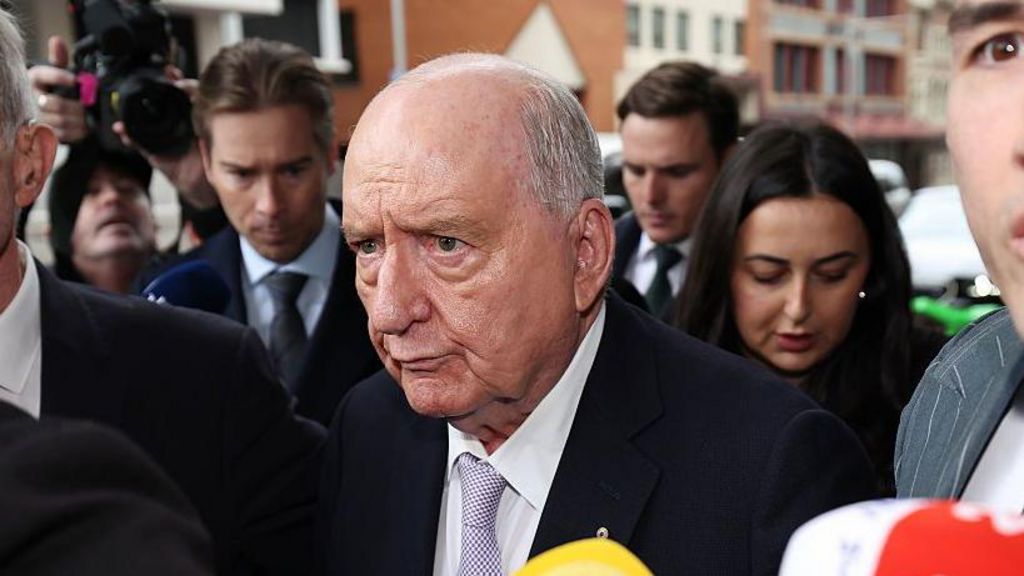
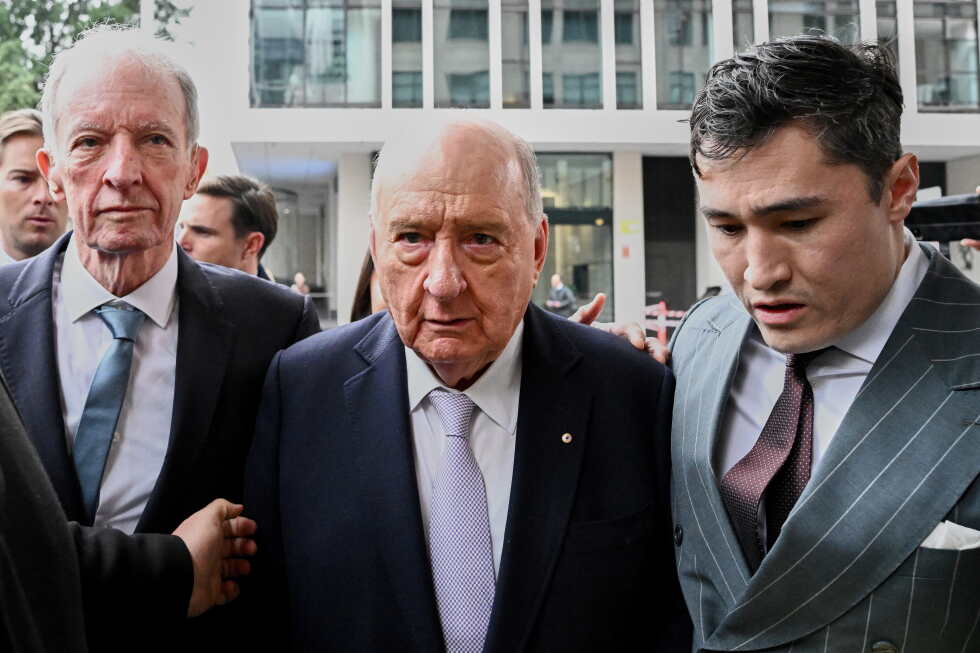
    As the accused and his legal team entered the Downing Center Local Court on Monday morning, they declined all requests for comment from assembled reporters. The trial, which will be heard by Judge Glenn Walsh without a jury following a formal request from the defendant, is scheduled to call more than 70 witnesses to the stand. In line with Australian legal protections for sexual offense complainants, none of the six accusers can be publicly identified.

    In her opening address to the court, Prosecutor Georgina Wright laid out the details of the prosecution’s case, detailing the alleged abuse of power by the high-profile defendant against vulnerable young men. Wright told the court the first complainant was just 16 years old and a rising young sports talent when he first encountered Jones. The defendant is accused of committing nine separate offenses against this teenager, including repeated non-consensual kissing and genital touching while the young man was behind the wheel of a car. Wright noted the complainant felt “trapped and didn’t know what to do” in the face of the alleged abuse.

    A second accuser, who was 21 when the alleged offending occurred and worked on Jones’ radio program, will tell the court Jones repeatedly groped him during a car ride, after addressing him with the intimate nickname “darling”, Wright added.

    The defendant has repeatedly rejected all allegations since his arrest in early 2024. In a statement released one month after his arrest, he claimed the accusations are either entirely without foundation or deliberate distortions of the truth.

    The case carries unique national attention due to the defendant’s decades-long career in the public eye. For nearly 20 years, he hosted one of Sydney’s highest-rated breakfast radio programs, earning a reputation as one of the most influential figures in Australian media. Beyond broadcasting, he led Australia’s national men’s rugby team, the Wallabies, as head coach from 1984 for four years, notching a remarkable 86 wins from 102 test matches during his tenure. He also wielded behind-the-scenes influence in Australian conservative politics, serving as a speechwriter for former Prime Minister Malcolm Fraser, who held office from 1975 to 1983 and passed away in 2015.

    The investigation into the defendant was launched after 2023 reports in The Sydney Morning Herald that detailed allegations he exploited his successive positions of power – first as a schoolteacher, and later as a leading media personality – to target and abuse multiple young men. In response to the initial revelations, New South Wales Police assembled a dedicated strike force to probe the claims, leading to the defendant’s arrest last year.

  • World Cup star Vozinha finally lands in Chile to join Colo Colo

    World Cup star Vozinha finally lands in Chile to join Colo Colo

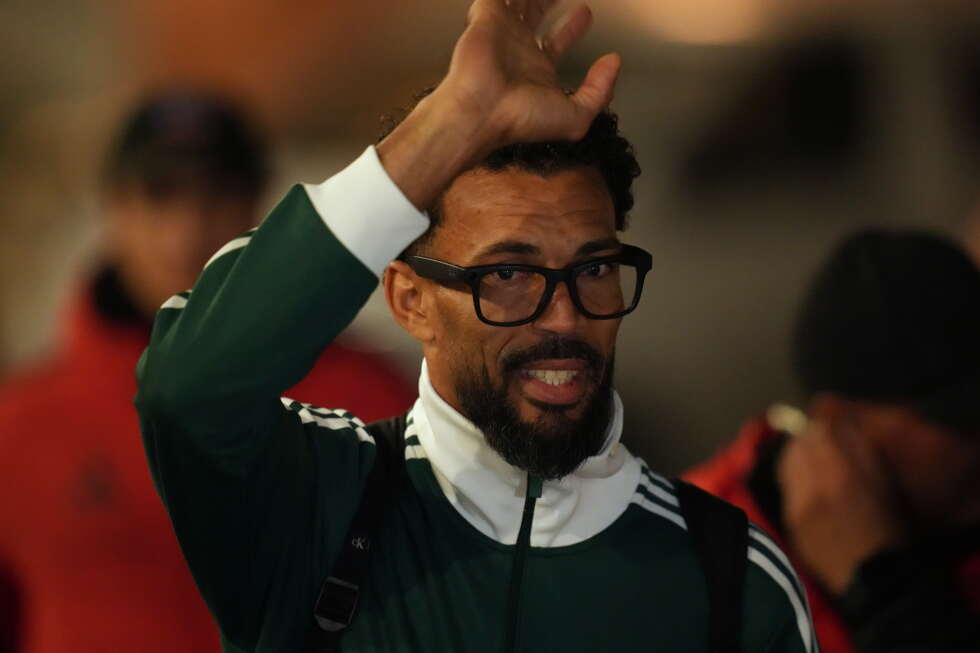
    After weeks of unexpected setbacks that left his transfer in question, 40-year-old Cape Verdean World Cup history-maker Vozinha touched down in Santiago, Chile on Sunday to officially join Chilean powerhouse club Colo Colo. The veteran goalkeeper, who became a global fan favorite during the recent World Cup, expressed his relief and excitement upon arrival, thanking supporters for their patience through the extended wait. “I’m very happy to be here. And I want to thank the fans for the patience they’ve shown while waiting for me,” Vozinha told assembled reporters. “See you at the Monumental Stadium,” he added, referencing Colo Colo’s iconic Santiago home ground.

    Chile’s most decorated soccer club first announced the signing of Josimar Évora Dias — the player’s legal name, known universally by his nickname Vozinha — back on July 24. What was supposed to be a swift transfer hit three consecutive snags, however, with administrative documentation hurdles and unplanned personal matters pushing back his arrival multiple times, sparking anxiety among club leadership and fans alike. When Vozinha stepped off the plane at Santiago’s international airport at 8:35 p.m. local time, he was greeted by a throng of passionate supporters, who packed the airport terminal waving club flags, holding welcome banners, and beating drums in celebration.

    Vozinha earned his place in World Cup history as the oldest player ever to make their national team debut in the tournament, and cemented his global reputation with a standout performance that held eventual tournament champion Spain scoreless — a result that remains one of the most shocking upsets of the 2022 tournament. Beyond that historic clean sheet, he turned in a series of spectacular saves against elite global sides including Uruguay and Lionel Messi-led Argentina, helping Cape Verde reach the Round of 16 for the first time in the nation’s history. That unexpected deep run turned Vozinha into a global household name; before the tournament, he had fewer than 50,000 Instagram followers, a number that has since skyrocketed to more than 29.5 million. He arrives in Chile following the end of his contract with Chaves, a club competing in Portugal’s second division.

    For Colo Colo, the signing of the World Cup breakout star comes as the club sits comfortably atop the Chilean league table, with supporters dreaming of both a domestic title and stronger performances in continental competition next season. “I’m excited. And if Colo Colo wins the title, next year comes the Copa Libertadores, which makes everything even more exciting for all of Chile and South America,” 32-year-old fan Marcos Antonio Barrera told the Associated Press. Fellow supporter Sebastián Paredes echoed that excitement, noting “The Colo Colo family and all of Chile are eagerly waiting. Now he has to earn his place at Colo Colo through talent, dedication, hard work, commitment, and by winning over the fans. Hopefully, he’ll be a great signing and help put Chile on the map.”

    In a fitting gesture to welcome the new star, the Chilean Football Federation voted unanimously on Friday to adjust league regulations, granting Vozinha special permission to wear his famous nickname — which means “grandma” in Portuguese — on the back of his jersey. Standard Chilean league rules require players to only use their legal surname on match kits, but the federation made an exception for the global star.

    Vozinha is set to complete mandatory medical examinations on Monday before putting pen to paper on his contract. The initial deal is structured as a six-month agreement, with an option to extend the contract for an additional 12 months. He will join his new teammates for his first training session on Tuesday, the same day Colo Colo plans to host an official presentation event to unveil its high-profile new signing to the public and media.

  • High-profile Melbourne man seeks suppression order after guilty rape verdicts

    High-profile Melbourne man seeks suppression order after guilty rape verdicts

    A high-profile Australian business figure, recently found guilty by a jury of raping a much younger woman, is fighting to keep his identity hidden from public view, with a key court hearing on the request set for this week in Victoria.

    The 12-member jury delivered its guilty verdict last Tuesday, concluding a two-week trial in the County Court of Victoria. The guilty finding centered on a 2023 sexual assault that unfolded after the defendant and his accuser met at his home to discuss potential work opportunities. According to court testimony, after the work meeting, the pair began drinking alcohol and consuming cocaine. The woman, who was decades younger than the defendant, told the court she opened up to him about a recent romantic relationship breakup, after which he hugged her and claimed he would “take care of her” before initiating unwanted sexual contact.

    Prosecutor Matthew Fisher told the court that the woman repeatedly pushed the defendant away, explicitly saying “I don’t want this”, but the businessman ignored her protests, responding that he could not stop because he found her so attractive. The attack continued as the defendant digitally penetrated the woman while she cried into a pillow, before raping her. She only managed to stop the assault by punching him in the face, Fisher told the court.

    Throughout the trial, defense barrister Dermot Dann KC repeatedly challenged the accuser’s account, arguing there were inconsistencies in her testimony. Dann claimed the woman had a clear financial incentive to fabricate the allegations, pointing to evidence that she had launched a civil claim against his client, and had told a cousin she intended to “take this man for all that he’s worth”. The defendant has maintained his full innocence, denying the allegations of sexual assault, cocaine use and unwanted advances, and his legal team has confirmed they are weighing an appeal against the guilty verdict.

    For three years leading up to the trial, successive non-publication orders have barred news organizations from releasing any information that could identify the defendant. These initial orders were granted after judicial officials ruled there was a substantial risk of severe psychological harm to the man if his name was released, and were scheduled to expire once the jury delivered its verdict. However, immediately following last week’s guilty finding, Dann requested and received a temporary extension of the suppression order, to give his legal team time to prepare full arguments and evidence for a permanent gag order. Dann confirmed the submission will include new psychiatric evidence outlining the risks to the defendant’s mental health if his identity is made public.

    The upcoming Monday hearing in the County Court of Victoria will hear arguments for and against the permanent suppression order. Multiple media outlets have already confirmed they will formally challenge the request to keep the defendant’s identity secret, and prosecuting authorities have also previously stated they oppose the ongoing non-publication order.

    A sentencing hearing is scheduled to take place later this month after the court resolves the dispute over the suppression order.

  • ‘My only son was shot standing up for justice’ – inside city gripped by deadly protests in Pakistan-administered Kashmir

    ‘My only son was shot standing up for justice’ – inside city gripped by deadly protests in Pakistan-administered Kashmir

    Deep in the heart of Rawalakot, a major city in Pakistan-administered Kashmir (PAK), a rudimentary emergency clinic sits just steps from the epicenter of months of escalating unrest between protestors and state security forces. What began as a campaign for basic economic and civil rights has devolved into deadly clashes that have left dozens dead, countless injured, and the region on edge as local elections unfold.

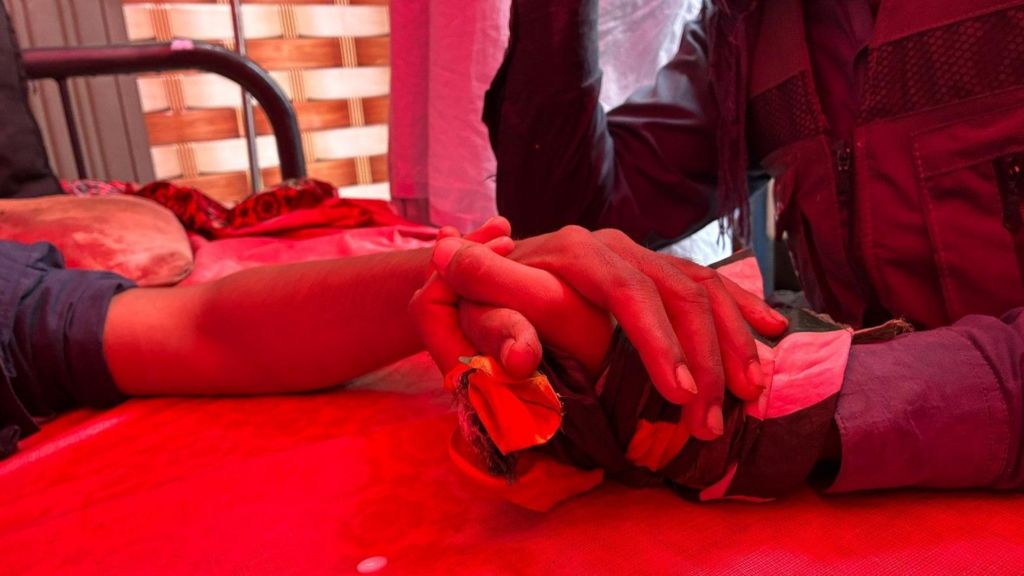
    The clinic, operated by a physician identified only as Dr. Anwar for his safety, is cobbled together from spare domestic space: a converted bedroom stores limited medical stocks, while a single patient bed rests outdoors under a tattered red tarpaulin. On that bed lies Shafqat Hussain, a protester shot in the chest, lying on a sheet already stained by the blood of earlier casualties. With no access to advanced care, Hussain is slipping away.

    Over the past two months, clashes between security personnel and demonstrators from the Joint Awami Action Committee (JAAC), the organizing group behind the protests, have killed dozens across the 4.5 million-person region. This violence has unfolded against the backdrop of ongoing regional elections, and the BBC became the first international media outlet to gain on-the-ground access to Rawalakot to document the crisis.

    Dr. Anwar explained that his small clinic is only equipped to handle minor trauma: his team can stop bleeding, clean and bandage surface wounds, and remove bullets lodged just beneath the skin. But for patients with life-threatening injuries to vital organs like the chest, abdomen, or brain, advanced hospital care is the only option – and that care is out of reach for most injured protesters. He noted that even major regional hospitals would struggle to cope with a surge of critical gunshot wound patients, a surge his clinic has already faced: since July 27 alone, the makeshift facility has treated 50 to 60 critically injured people, 15 to 20 of whom suffered gunshot wounds treated personally by Dr. Anwar.

    Injured demonstrators avoid formal public hospitals out of fear of arrest or extrajudicial violence, a claim local authorities have rejected as false. Dr. Anwar added that the vast majority of casualties are young people between the ages of 15 and 35, with very few patients over 40. The local administration says JAAC protesters have blocked major access routes into Rawalakot, cutting off connectivity and transit.

    At Hussain’s bedside, his grieving friend Ali wiped away tears as he described the demonstrators’ core demands. “We only asked for affordable flour, electricity and our basic rights,” Ali said through sobs. “Instead, our brothers are being killed. What was our crime? Why are live bullets being fired at us?”

    JAAC launched its protest movement after a 2023 agreement with the Pakistani and PAK governments, which was meant to address longstanding grievances including soaring energy costs, failing education systems, and inadequate healthcare. The group says the government has failed to implement the terms of the deal, prompting continued demonstrations. Protesters planned to march to the regional capital of Muzaffarabad, but authorities blocked the route.

    Local government officials have pushed back against JAAC’s narrative, labeling the group as armed agitators seeking to disrupt the regional elections. The JAAC was officially banned in June, and has been branded as foreign-funded terrorists by the state. The group rejects this characterization, confirming it receives funding from the PAK diaspora abroad but denying it is sponsored by India, a common accusation from Pakistani authorities. JAAC insists it is a peaceful civil rights movement and that security forces initiated the violence, making protesters the primary victims.

    With internet service cut across the region and major roads either blocked by protesters or guarded by security checkpoints, independent information about the unrest has been extremely hard to verify. During the BBC’s on-the-ground reporting, multiple grieving families shared accounts of losing loved ones to gunfire during demonstrations.

    Asma, a woman whose only son was killed at a protest, said she was at the demonstration when she learned he had been shot. “We were only asking for our rights. We are not terrorists,” she said. “No mother could ask for a better son. He knew there were risks, but he believed standing up for justice was important. He used to say that dying for a just cause was an honour.”

    Salman, who lost his younger brother in the violence, echoed her grief and pride. “He was the youngest in the family and was loved by everyone. It is a great loss for us,” he said. “At the same time I feel proud that he gave his life while standing up for the rights of the people. He was not fighting or attacking anyone.”

    Ayub, a retired armed forces soldier who also lost his son, laid blame not at the feet of Pakistan’s national government or military, but with the PAK regional administration, which he said called in paramilitary forces to suppress the protests. “I am a retired soldier. I lived through the martial law periods of General Zia-ul-Haq and General Pervez Musharraf,” he said. “But I have never seen anything like what is happening now. In my opinion, it is extreme injustice. My son had done nothing wrong. None of the protesters had done anything wrong.”

    PAK’s government has rejected claims that security forces opened fire indiscriminately on peaceful demonstrators, saying law enforcement only responded to individuals who attacked officers, threatened public order, or obstructed official actions.

    The BBC documented widespread food shortages in Rawalakot, with nearly all shops closed and demonstrators sharing limited existing supplies among themselves. Some residents described smuggling small bags of rice into the city on the back of motorbikes to avoid checkpoints. While some access routes are blocked by felled trees – which authorities say were cut by JAAC protesters – other main entry points are controlled by armed security checkpoints. The PAK government denies blocking food or medical supplies from entering the city, saying it is actually facilitating the delivery of essential goods.

    Authorities have repeatedly presented evidence they say proves JAAC is a violent group: they have released drone footage they claim shows armed JAAC members on city rooftops, and displayed weapons seized from the group to local media. Officials say several security personnel have been killed in clashes, and that a detained JAAC suspect confessed to being promised a reward of 10 million rupees (roughly £26,700) for every paramilitary officer killed.

    Umar Nazir, a core JAAC committee member currently based in Rawalakot, did not deny that security personnel have died, but claimed without providing evidence that state agents have infiltrated the JAAC movement to carry out violence and discredit the group. “I believe that certain elements, who are under their control, were infiltrated into our ranks. Such people were certainly present among us,” Nazir said. “I believe they may have carried out such actions themselves in order to justify their own narrative. I am not making a definitive claim, but there is no evidence whatsoever that any such violence came from our side.”

    Authorities reject this claim, saying JAAC has launched a disinformation campaign against the government across social media. During the BBC’s visit to a JAAC protest, reporters saw no visible weapons or gunfire from demonstrators, though repeated gunshots were heard overnight. It remains unclear who fired the shots and what their target was.

    Today, Rawalakot remains in a state of tense, uncertain limbo. No one can predict when or if the violence will escalate further. Nazir says JAAC remains open to negotiations with authorities, but in the meantime, the group has more demonstrations planned in the coming weeks.

  • Formula 1 star Oscar Piastri thanks fans on anniversary of viral Alpine snub

    Formula 1 star Oscar Piastri thanks fans on anniversary of viral Alpine snub

    Four years after one of the most dramatic and widely discussed contract controversies in modern Formula 1 history, McLaren driver Oscar Piastri has playfully acknowledged the anniversary of the viral incident that launched his senior F1 career into the global spotlight.

    The 2022 drama unfolded after two-time world champion Fernando Alonso stunned the motorsport community by announcing his departure from the Alpine team. In a rushed move to fill the empty race seat, Alpine issued an official statement on August 2 that same year, confirming its junior academy prospect Piastri would step into Alonso’s role for the 2023 F1 season. What the team did not anticipate, however, was an immediate and public pushback from the young Australian driver.

    Piastri and his management team had never agreed to the terms outlined in Alpine’s announcement, despite the driver having come up through the team’s development program. Within just a few hours of the team’s press release, Piastri took to social media platform X (then known as Twitter) to set the record straight in unusually blunt terms for a young prospect stepping into the sport’s top tier.

    “I understand that, without my agreement, Alpine F1 have put out a press release late this afternoon that I am driving for them next year. This is wrong and I have not signed a contract with Alpine for 2023. I will not be driving for Alpine next year,” his original viral statement read.

    In the aftermath of the unprecedented public dispute, Piastri secured a race seat with McLaren, replacing outgoing Australian driver Daniel Ricciardo for the 2023 season. The young driver has since impressed enough with his performances to earn a contract extension that keeps him with the British-based team through at least the end of the 2028 F1 season.

    To this day, the 2022 public denial remains one of the most recognizable moments of Piastri’s early career, with the original post regularly recirculated across F1 fan social media circles. On the four-year mark of the incident, Piastri leaned into the ongoing attention with a lighthearted new post for his followers, thanking fans for their flood of “anniversary messages” that marked the viral moment that reshaped his career path.