Just days after threatening a massive military strike on Iran that he claimed would rank as the largest attack since World War II, U.S. President Donald Trump has reversed course, announcing that new bilateral negotiations with Tehran will kick off on Monday as the administration pursues a diplomatic end to the five-month conflict.
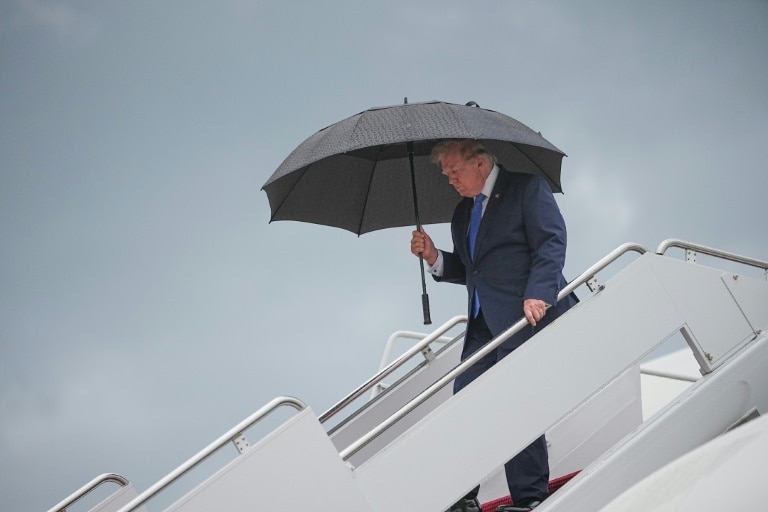
Speaking to reporters aboard Air Force One on Sunday while returning from a weekend stay at his New Jersey golf club, Trump confirmed that talks would open the following afternoon, focusing first on the future of the Strait of Hormuz — the world’s most critical energy chokepoint that has emerged as the core flashpoint of the ongoing war — with an eventual goal of reaching an agreement on Iran’s nuclear program. He added that he had been urged to hold off on the planned strikes by Iran and key regional U.S. partners including Saudi Arabia, the United Arab Emirates, and Qatar. Iranian state media has since denied that Tehran made any such request to delay military action.
The conflict between Washington and Tehran began on February 28, when the United States and Israel launched coordinated surprise strikes against Iranian military and nuclear infrastructure. While intermittent diplomatic talks over the past five months have created temporary periods of reduced hostilities, fighting resumed last month after Iran tightened its control over the Strait of Hormuz, a waterway that carries roughly 20% of the world’s daily oil supplies. Before the war, all vessels enjoyed free passage through the strait, but Iran closed the route after the start of hostilities, now demanding the right to control access and charge navigation tolls — a position the U.S. has flatly rejected.
Following the resumption of strikes last month, regional tensions spiked dramatically. Trump openly threatened a devastating response against Iran, with U.S. diplomatic missions across the Middle East placed on high alert and reports indicating the administration was considering targeted strikes against Iranian energy infrastructure. By Saturday, however, the president announced he was pulling back from the threat, noting that the basic framework for a potential deal was already in place.
On the Iranian side, parliamentary national security commission spokesman Hassan Ghashghavi confirmed Sunday that regional mediators are working to revive a preliminary U.S.-Iran memorandum of understanding reached back in June. That earlier agreement was never meant to serve as a final peace deal, but rather as a foundation for broader comprehensive negotiations, and it already included core provisions related to the Strait of Hormuz. “They know that the main issue and, in fact, the key to the matter right now is the issue of the Strait of Hormuz, so yes, there is an exchange of views,” Ghashghavi said. Iranian President Masoud Pezeshkian emphasized the country’s position in a post on X, writing, “We must strive to compel the enemy to remain committed to what it has signed.”
In a separate development, Iranian foreign ministry spokesman Esmaeil Baqaei told state television Sunday that Tehran is nearing a bilateral transit agreement with Oman, which shares the Strait of Hormuz’s opposite coastline, for a new navigation route through the waterway. Baqaei explained the proposed route would be a compromise between Tehran’s preferred northern route and Muscat’s proposed southern route, designed to respect the sovereign claims of both countries while protecting Iran’s national security and interests. He stressed, however, that the tentative deal would not amount to a full reopening of the strait to unrestricted international traffic.
The ongoing restrictions on Hormuz traffic have already had a sharp impact on global trade: maritime analytics firm Kpler reported Friday that shipping volume through the strait has dropped dramatically in recent weeks. The continued volatility of the region was underscored Sunday, when the United Kingdom Maritime Trade Operations (UKMTO) confirmed a commercial tanker off the Omani coast reported an explosion in its immediate vicinity. All crew and the vessel itself remained unharmed following the incident.
Global energy markets reacted quickly to Trump’s negotiation announcement on Monday: West Texas Intermediate crude oil fell 4.7 percent to $80.72 per barrel in early Asian trading, as investors bet that reduced geopolitical risk would ease threats to global energy supplies.