博客

  • Mining and tech stocks lift ASX to record high despite bank and energy losses

    Mining and tech stocks lift ASX to record high despite bank and energy losses

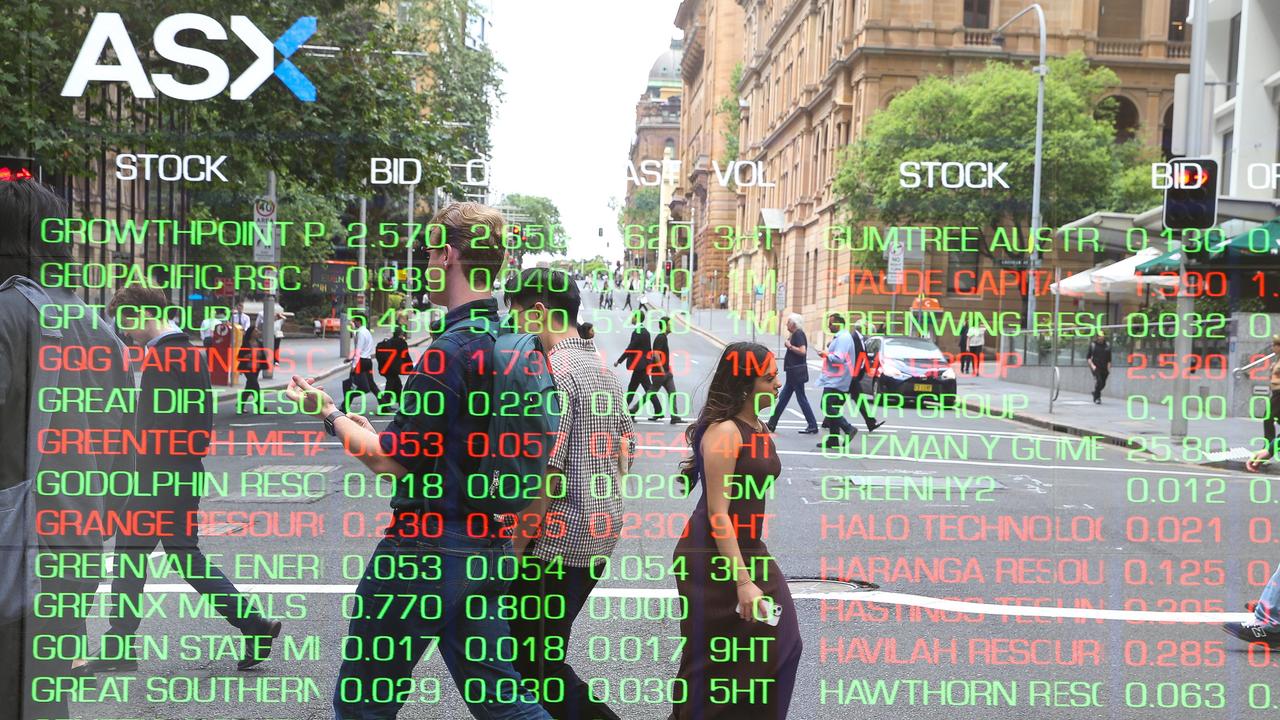
    Australia’s benchmark share index closed at a historic all-time high on Wednesday, powered by strong gains in mining and technology stocks, a sudden drop in global crude oil prices, and bullish momentum carried over from overnight gains on U.S. markets. The S&P/ASX 200 rallied 0.9% to end the trading day at 9227.80, an 82-point jump that pushed the index past its previous February 2025 peak of 9202.90 to claim a new record. The broader All Ordinaries followed suit, climbing 1% to close at 9405.40, a gain of 93.5 points. Against the U.S. dollar, the Australian dollar edged slightly lower to 70.45 U.S. cents by market close.

    Despite the overall market hitting a new milestone, only six of the 11 tracked industry sectors finished the day in positive territory, with large-scale mining stocks leading the upward charge. BHP Group saw shares surge 3.34% to settle at $62.54, while Rio Tinto gained 2.29% to close at $176.34, and Fortescue Metals added 0.61% to reach $18.19. Gold miners also posted double-digit and high single-digit gains, lifted by rising global gold commodity prices: Northern Star Resources climbed 5.76% to $21.49, and Evolution Mining rose 6.28% to $12.52.

    The catalyst for the day’s market movement came from an unexpected statement by U.S. Treasury Secretary Scott Bessent, who told CNBC that ongoing diplomatic talks with Iran could result in a breakthrough within days to reopen the strategically critical Strait of Hormuz to unobstructed global shipping. “We are in talks with the Iranians,” Bessent said in the interview. “There is a chance we may have a deal today or tomorrow to open the strait and move towards a more normalised position in this conflict.”

    The prospect of eased geopolitical tension in the Persian Gulf — one of the world’s most important oil chokepoints — sent global crude prices tumbling, with Brent Crude trading between $76 and $78 U.S. per barrel on Wednesday. Falling oil prices pushed Australian energy stocks down 2% by market close. Gains were also capped by modest losses across the nation’s four largest retail banks: Commonwealth Bank of Australia fell 1.38% to $178.23, National Australia Bank dropped 0.75% to $42.53, Westpac Banking Corporation lost 0.75% to $38.53, and ANZ Group slid 0.42% to $38.01.

    Overnight, U.S. benchmarks the S&P 500 and the Dow Jones Industrial Average both closed at record highs, fueled by news of the potential interim peace deal between the U.S. and Iran, which created bullish sentiment that spilled over into Australian trading. Another factor supporting the ASX’s record run is recent volatility in AI-focused global stocks, which has benefited Australian markets due to their limited direct exposure to overinflated AI valuations.

    Hugh Lam, investment strategist at Betashares, noted that Australian equities are increasingly seen as a global safe haven for investors seeking to avoid concentration risk in AI-dominated markets. “The local benchmark has reached all-time highs, driven by a rotation into blue-chip assets that has seen recent strength in July as global investors sought refuge in more diversified markets less exposed to AI concentration risk,” Lam explained. “Materials stocks have added further momentum, with Iran-linked supply disruptions keeping commodity risk premiums elevated and copper futures trading near record highs.”

    In individual company news, Endeavour Group, the owner of liquor retailer Dan Murphy’s and hospitality chain ALH Hotels, saw shares fall 1.44% to $3.43 after releasing preliminary full-year results that showed underlying net profit dropped to $363 million Australian, down from $426 million the previous year. IperionX recovered 8.95% to $3.41 after a sharp sell-off earlier in the week, following the company’s announcement that it would relocate its parent company headquarters to Texas. Neuren Pharmaceuticals surged 16.28% to $21.64 after reporting that net sales of DAYBUE, its Rett syndrome treatment for adults and children over two years old, rose 30% to $125 million U.S. from the second quarter of 2025. Gaming machine operator Light Wonder gained 3.96% to $118.00 after announcing annual consolidated revenue of $828 million Australian.

  • Police raid Starbucks Korea headquarters over ‘Tank Day’ fiasco

    Police raid Starbucks Korea headquarters over ‘Tank Day’ fiasco

    South Korean law enforcement has executed a raid on Starbucks Korea’s national headquarters, launching an official probe into allegations of defamation tied to a deeply controversial marketing campaign that sparked widespread public outrage and national debate earlier this year.

    The fiasco erupted in May, when Starbucks Korea rolled out a limited-time coffee tumbler promotion branded as “Tank Day,” timed to coincide with the anniversary of the 1980 Gwangju Uprising — a defining moment in South Korea’s pro-democracy movement that ended in a violent crackdown by military forces, leaving an estimated hundreds of pro-democracy protesters dead. For many South Koreans, the “Tank Day” name was an unavoidable reference to the military tanks deployed to crush the Gwangju uprising, triggering a nationwide mass boycott movement almost immediately after the campaign launched.

    Starbucks Korea, operated under a license by retail conglomerate Shinsegae Group, moved quickly to pull the promotion, and maintained from the outset that the insensitive timing and naming were an accidental oversight. Even so, local civic groups filed a formal criminal complaint against the company, arguing that the campaign defamed the victims of the 1980 military dictatorship crackdown and demanded a full police investigation.

    Shinsegae’s own internal investigation later concluded the blunder was unintentional, noting that the junior marketing team that planned the promotion failed to connect the “Tank Day” name to the Gwangju anniversary, and senior leadership also missed the problematic reference before the campaign went live. Beyond scrapping the promotion, the company took a series of corrective steps: in June, all Starbucks locations across South Korea closed for half a day to require all staff to attend mandatory educational lessons on modern South Korean history, including the Gwangju Uprising. Shinsegae also issued a formal public apology for the “inappropriate marketing,” terminated the company’s chief executive over the controversy, and confirmed the scandal has triggered a steep, sustained drop in sales in South Korea — one of Starbucks Coffee’s largest and most important international markets.

    The insensitivity did not end with the “Tank Day” name: promotional materials for the tumbler also included the slogan “tak on the table!”, a phrase intended to mimic the sound of an object being placed firmly on a table. But “tak” also holds painful historical resonance for many South Koreans: it was the term used in a controversial 1987 police statement describing the death of a student pro-democracy activist who died in police custody, a death that helped fuel further national protests against military rule.

    The scandal quickly spilled beyond consumer outrage into national politics, unfolding during South Korea’s local election season to become a major flashpoint between the country’s two major political parties. South Korean President Lee Jae Myung was one of the most high-profile critics of the campaign, condemning it as an open “insult to the victims and the bloody struggle” of Gwangju residents. His administration’s interior ministry subsequently announced an official government-level boycott of Starbucks, a move that drew immediate pushback from opposition leaders. In a notable act of protest, the opposition leader held up a branded Starbucks cup during a major public speech to accuse the Lee administration of overstepping political bounds to capitalize on the scandal.

    In the months since, the controversy has reshaped the symbolic meaning of the Starbucks brand in South Korean politics: right-wing commentators and opposition figures have now adopted the Starbucks cup as a informal symbol of resistance to the Lee Jae-myung government, with branded cups appearing regularly at right-wing political rallies and opposition-focused online livestreams, turning a corporate marketing mistake into a lasting fixture of the country’s polarized political landscape.

  • India monsoon floods, landslides kill more than 100 since July: officials

    India monsoon floods, landslides kill more than 100 since July: officials

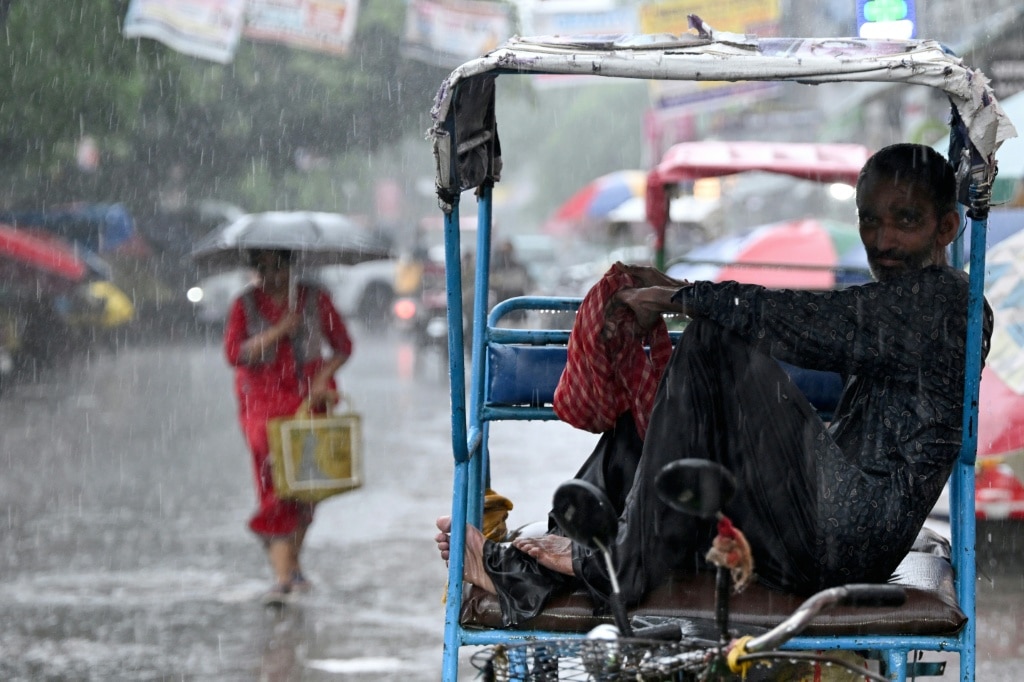
    As the 2026 annual monsoon season unleashes its destructive force across South Asia, deadly floods and landslides have claimed more than 100 lives in India since the start of July, forcing tens of thousands of residents to abandon their inundated homes and seek emergency shelter, official government data confirmed this Wednesday. For millions of South Asian farmers, the annual monsoon is not a natural disaster to fear—it is a lifeline that sustains crop production and underpins regional food security. But climate scientists have long warned that rising global temperatures driven by climate change are transforming this predictable seasonal pattern, making rainfall more erratic, intensely concentrated, and unpredictable, amplifying the risk of catastrophic disaster across the region’s most vulnerable communities.

    India’s northeastern state of Assam has emerged as the worst-hit region, with state Chief Minister Himanta Biswa Sarma confirming at least 87 monsoon-related deaths. The hardest-hit Sivasagar district alone has recorded 47 fatalities, with multiple low-lying communities remaining submerged days after the heaviest rainfall hit. State disaster management personnel have been working around the clock to rescue stranded residents, with AFP footage showing survivors using makeshift rafts and inflated vessels to navigate flooded neighborhoods to reach higher ground, assisted by official response teams. Describing the scale of the destruction as unprecedented for the region, Sarma wrote in a post on X, “The devastation here is unlike anything these areas have witnessed before. Material losses can be restored, but no compensation can replace a loved one.” State authorities have launched a public appeal for financial donations to fund urgent relief operations and long-term rehabilitation for displaced communities.

    Further south, the coastal state of Kerala has also been battered by days of relentless downpours, which have left at least 15 people dead and seven more unaccounted for, according to state Chief Minister VD Satheesan. Rains have triggered deadly landslides across the state’s hilly regions, while swollen rivers have burst their banks, inundating hundreds of residential areas. Local authorities have established more than 300 emergency relief camps across the state, which currently provide shelter to more than 10,000 displaced residents.

    In the northern Himalayan Union Territory of Jammu and Kashmir, short bursts of extremely intense rainfall have killed at least 31 people, according to reports from India’s public state broadcaster.

    Monsoon-related natural disasters are a recurring annual challenge for India, coming immediately after the long summer season when large swathes of the country grapple with critical water scarcity and drought. But the scale of destruction this year aligns with scientific projections of worsening extreme weather linked to climate change.

    The extreme weather has not been confined to India: neighboring Sri Lanka is also facing a dual climate crisis, driven in part by this year’s El Niño phenomenon, which raises sea surface temperatures across the central and eastern equatorial Pacific Ocean and disrupts global rainfall patterns. Since Monday, unusually heavy monsoon downpours have triggered flash floods and mudslides in Sri Lanka that have killed at least eight people, according to the country’s Disaster Management Centre, forcing roughly 12,000 residents to evacuate flooded homes in the island nation’s central region. At the same time, eastern regions of Sri Lanka are locked in a severe, prolonged drought that has forced authorities to deliver emergency drinking water to residents via tanker trucks. The Sri Lankan government has established a special ministerial task force to coordinate mitigation efforts, but has not yet released an estimate of the total economic damage caused by El Niño-driven extreme weather this year.

  • Nepal’s Gandaki province legalizes medical cannabis farming and use

    Nepal’s Gandaki province legalizes medical cannabis farming and use

    KATHMANDU, Nepal — In a bold policy move that puts a regional administration at odds with federal legislation, one of Nepal’s seven provincial governments has enacted a law permitting regulated cultivation and medical use of cannabis, against the backdrop of a nationwide national ban on all production and consumption of the plant.

    The new regulation officially entered into force on Monday, following formal approval from Gandaki Province’s chief executive, confirmed Prabin Poudyal, spokesperson for the provincial chief’s office. Under the framework of the new law, any farmer seeking to grow cannabis must first obtain an official license from provincial regulatory bodies, and all operations will remain under continuous close oversight to prevent diversion of the crop to unregulated recreational markets.

    Gandaki Province, a scenic Himalayan region that draws millions of international tourists annually for its mountain peaks, iconic hiking trails and the popular resort city of Pokhara, has carved out an unexpected path on drug policy that defies national legislation currently in place. Under Nepal’s federal law, cultivation, possession and recreational use of marijuana are criminal offenses across the country. Anyone caught with small amounts of cannabis for personal use faces up to one month of prison time, while those convicted of trafficking or selling the drug can receive sentences as long as 10 years behind bars, with penalties scaled to the quantity of cannabis seized.

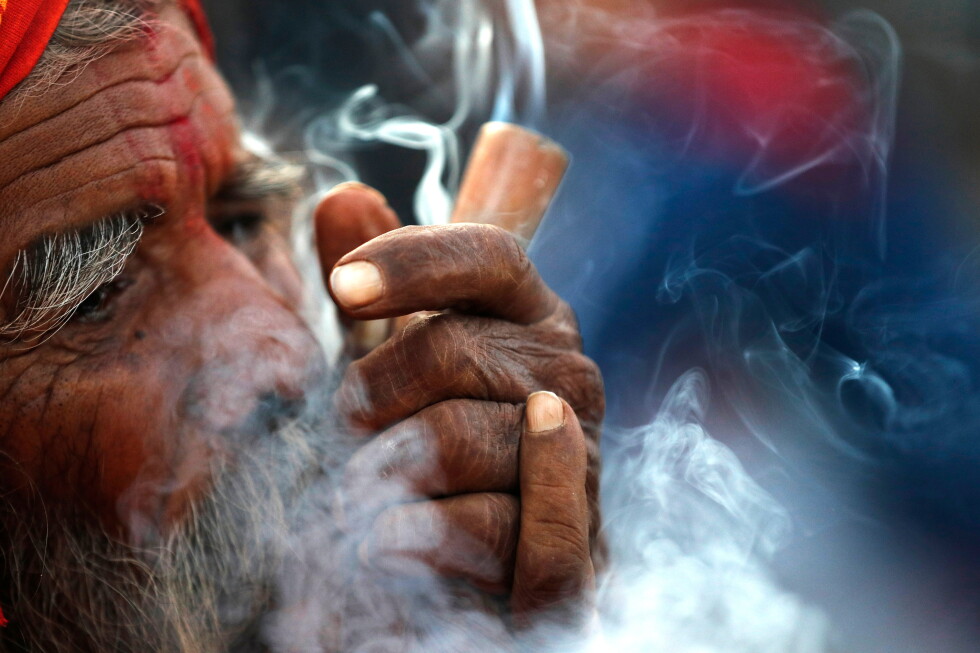
    Cannabis is an indigenous plant to Nepal, with deep historical roots in the nation’s cultural and religious traditions. For centuries, the plant has been integrated into local ritual practices, and cannabis advocacy groups have pushed for decades to reverse the national ban and legalize regulated use. The push toward decriminalization gained further cultural context from long-standing annual traditions: each spring during the Hindu festival of Shivaratri, devotees openly smoke cannabis at temples dedicated to the god Shiva, a practice that local authorities have traditionally tolerated despite the nationwide ban.

    The national ban on cannabis was implemented in the late 1970s, when Nepal aligned its drug policies with international efforts led by Western nations to crack down on recreational cannabis use. At that time, the government’s crackdown also pushed out the large community of international hippie travelers that had flocked to Nepal starting in the 1960s and 1970s, drawn by the country’s open cannabis culture and low cost of living.

  • South Korea pro baseball league cancels games over heatwave

    South Korea pro baseball league cancels games over heatwave

    A relentless, record-shattering heatwave that has already claimed nearly 20 lives and sickened thousands across South Korea has forced the nation’s top professional baseball circuit to scrap all scheduled matches for Wednesday and Thursday, marking one of the most visible public disruptions caused by the extreme weather event.

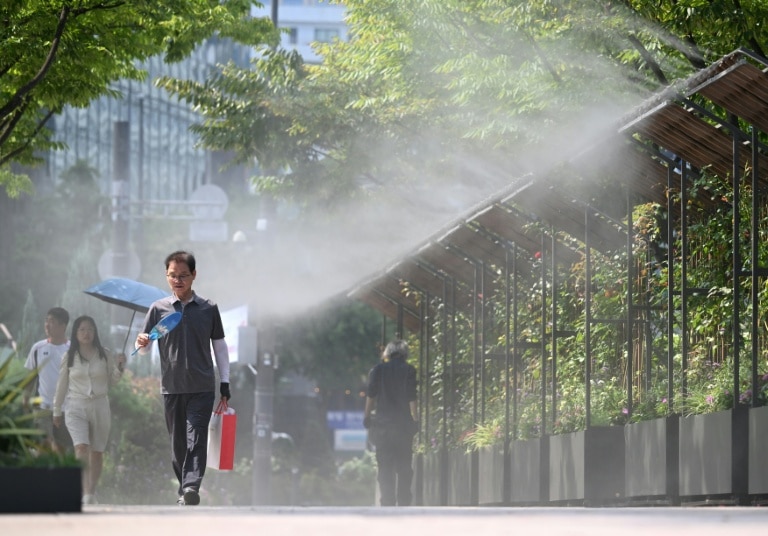
    For more than two months, the country has baked under unrelenting high temperatures, with three new national all-time temperature records set over the past seven days alone. The peak of the heatwave so far came Sunday, when thermometers climbed to 42.5 degrees Celsius in parts of the country. As of Wednesday, the highest-level heat alerts remained in effect for both eastern and western districts of the capital Seoul, a warning triggered when heat index is projected to hit 38C or actual temperatures are forecast to reach 39C or higher.

    The cancellation decision from the Korea Baseball Organization (KBO) came just one day after South Korean President Lee Jae Myung directed government agencies to classify the ongoing heatwave as a national disaster, and ordered officials to deploy all necessary resources to implement emergency protective measures to save civilian lives.

    In an official statement announcing the match cancellations, the KBO noted that the decision to call off all August 5 and 6 games was driven by ongoing safety risks for both competing players and attending spectators, and that the cancellations will remain in place until comprehensive heat safety protocols can be put in place. Local media reports confirm that 10 scheduled games across the country were scrapped as a result of the order.

    The devastating public health toll of the heatwave is already substantial: data from the Korea Disease Control and Prevention Agency shows that between May 15 and August 3, more than 2,200 people have been treated for heat-related illnesses, with at least 19 confirmed deaths linked to extreme heat.

    The cancellations are not an unprecedented step for the league this week. On Tuesday, the KBO already called off two scheduled games: one at Seoul’s Jamsil Stadium and another in the southwestern city of Gwangju, after multiple spectators collapsed from heat exhaustion during pre-game and game activities. Even for matches that went ahead on Tuesday, heat-related medical incidents were widespread. An official with the SSG Landers franchise confirmed to AFP that a male attendee at the team’s Tuesday match against the LG Twins in Incheon collapsed from a suspected heat illness, forcing a nine-minute game stoppage before the fan was transported to a local hospital by ambulance. The team added that 25 additional spectators required on-site medical treatment for heat-related symptoms during the contest.

    Moving forward, the KBO announced it will convene an emergency executive committee meeting, with representatives from member clubs and the KBO Players’ Association in attendance, to negotiate and adopt additional long-term heat safety protocols for the remainder of the season.

  • ‘Outstanding’ month as Australians continue EV uprising

    ‘Outstanding’ month as Australians continue EV uprising

    Australia’s electric vehicle (EV) market has continued its explosive growth, notching a second straight month of historic sales amid ongoing global fuel price volatility that has pushed thousands of consumers to shift to battery-powered transport. New industry data released by the Federal Chamber of Automotive Industries (FCAI) reveals that more than 23,500 battery electric vehicles were sold across the country in July 2026, accounting for 21.7% of total new car sales for the month — the highest market share EVs have ever captured in a single month. This milestone marks the second consecutive record-breaking month for EV adoption in Australia, confirming the sector’s rapid transition away from fossil fuel-powered vehicles.

    “July was another outstanding month for Australian new-vehicle sales and delivered the best July result on record,” said FCAI chief executive Tony Weber. While Weber praised the accelerating uptake of EVs, he also issued a stark call to action for policymakers and private industry to urgently expand the country’s public charging network to match growing consumer demand. With more Australians embracing EVs, particularly drivers who lack off-street parking or home charging access and those traveling through regional areas, Weber stressed that accessible, reliable charging infrastructure is non-negotiable to preserve consumer confidence as EVs become a mainstream option.

    “Governments and the private sector must work together to ensure that the public charging network meets growing demand particularly in regional areas and for motorists who do not have access to charging at home,” Weber said. “Accessible and dependable charging will be critical to maintaining consumer confidence as electric vehicles become a larger part of Australia’s new-vehicle fleet.”

    When it comes to top-selling models, Chinese automaker BYD led the market in July, with its popular Sealion 7 SUV notching 2,548 sales to claim the number one spot. US EV giant Tesla followed close behind: its Model Y Long Range variant recorded 2,429 sales, while the standard Model Y added more than 2,200 additional sales, cementing Tesla’s position as one of Australia’s most popular EV brands.

    Federal Energy Minister Chris Bowen welcomed the record sales, linking the sharp uptick in EV adoption to persistent global oil market instability that has kept petrol prices volatile for Australian motorists. Bowen noted that EV ownership is helping households shield themselves from global oil shocks and cut everyday cost-of-living expenses, a benefit that more Australians are prioritizing as energy prices remain unpredictable.

    “The lesson from Cheaper Home Batteries and EVs is clear to me: with the right policy settings Australians will respond enthusiastically in ways which can lead to globally leading outcomes,” Bowen said. He pointed to longer-term data that underscores the speed of Australia’s EV transition: in the first half of 2026, battery EVs and plug-in hybrid vehicles together made up 27% of all light vehicle sales, totaling 191,830 units. That marks a dramatic jump from 2025, when the combined market share of EVs and plug-ins stood at just 13% for the full calendar year.

    Bowen added that EV tax cuts have driven the strongest uptake in fast-growing suburban and outer-urban areas including Tarneit, Werribee, Kellyville, Marsden Park, Craigieburn, Cranbourne and Baulkham Hills. He argued that widespread EV adoption reflects a common-sense choice by Australian households to cut costs and embrace modern renewable energy technology.

    “The common sense choices that Australians are making to upgrade their own energy infrastructure with modern, reliable renewables is the same as our approach for the country,” Bowen said. “People (are) getting a battery and then maximising its contribution to their cost of living by using it to power their EV at a rate much cheaper than filling up at the servo.”

    Beyond battery EVs, the overall low-emission vehicle sector now dominates the Australian new car market. When combined with hybrid vehicles, which held a 17.2% market share in July, all electric and hybrid vehicles accounted for nearly 39% of total new car sales. Internal combustion engine vehicles still hold a significant share of the market, however: petrol-powered cars led all powertrains with 27,894 sales in July, equal to just over a quarter of total market share, while diesel vehicles followed closely with 24,773 units sold.

  • Russian missile and drone barrage in Ukrainian capital region kills at least 15

    Russian missile and drone barrage in Ukrainian capital region kills at least 15

    On the overnight period leading into Wednesday, a new wave of Russian missile and drone attacks targeting Ukraine’s capital Kyiv and its adjacent suburban regions left at least 15 civilians dead and 42 more injured, Ukraine’s State Emergency Service confirmed in an official statement. The assault marks the most recent installment of a steady string of large-scale ballistic missile strikes that Moscow has launched with growing regularity across Ukraine throughout the summer months.

    Ukraine’s defense capabilities face a critical gap in defending against these repeated barrages: the country currently holds only a limited stock of interceptor missiles for its U.S.-manufactured Patriot air defense systems, the only weaponry in Kyiv’s arsenal capable of intercepting incoming ballistic missiles. This shortage has left Ukrainian forces unable to fully stop large coordinated attack volleys like the one carried out this week, even as Ukraine has ramped up its own deep cross-border strikes targeting Russian oil refineries and key domestic energy infrastructure in recent weeks.

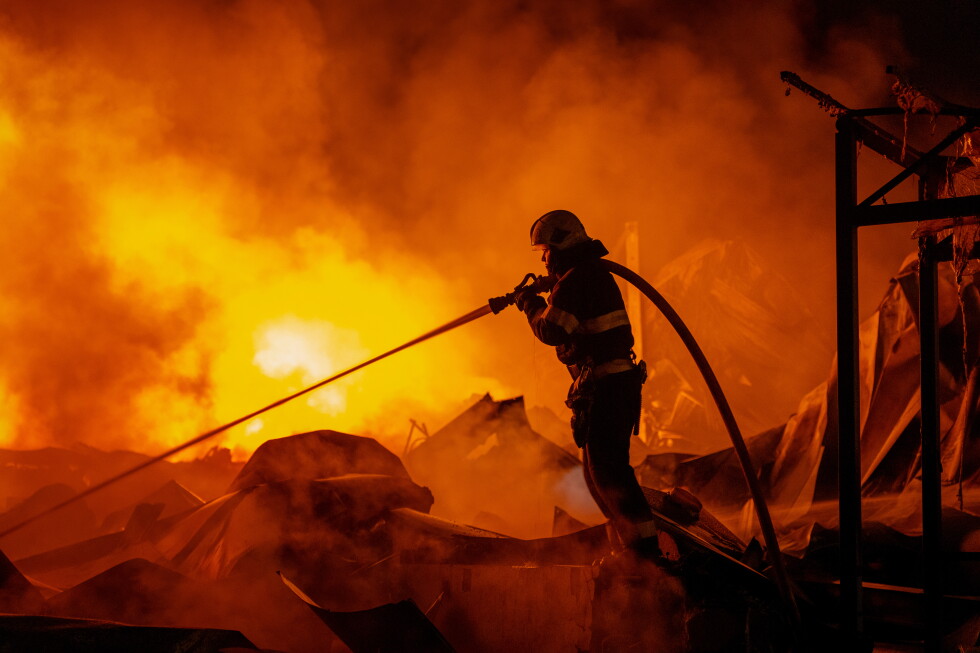
    Across the broader Kyiv Oblast surrounding the capital city, 14 of the total fatalities were recorded, with another 27 people sustaining injuries. Multiple large fires broke out across the region’s Brovary, Bucha and Fastiv districts following the strikes. In Brovary, massive blazes consumed large commercial warehouses, with additional large warehouse fires breaking out in the neighboring villages of Velyka Dymerka, Kvitneve and Peremoha. Emergency response teams in Fastiv District successfully extinguished a blaze that broke out at an industrial enterprise that had ignited among parked vehicles. In Bucha District, fire crews contained a warehouse fire in the village of Chaiky after first extinguishing a separate blaze at a logistics hub in Sofiivska Borshchahivka.

    Within Kyiv city limits, the strikes claimed one additional life and left 15 residents wounded, according to the Kyiv City Military Administration. Responders have already fully extinguished all fires sparked by the attacks across the capital’s Obolonskyi, Sviatoshynskyi, Holosiivskyi and Desnianskyi districts.

    Serhii Beskrestnov, an advisor to Ukrainian President Volodymyr Zelenskyy focusing on defense technology development, framed the assault as a sign that the ongoing war of attrition between the two nations has shifted into a new, more destructive phase. Speaking in a public post to Facebook, Beskrestnov noted that Russian forces are now targeting all types of civilian and infrastructure sites without distinction. “The enemy is attacking everything indiscriminately — retail warehouses, food storage facilities, logistics hubs, enterprises, building materials warehouses,” he wrote.

  • Five toddlers among seven injured in devastating house fire in Queensland

    Five toddlers among seven injured in devastating house fire in Queensland

    A destructive residential blaze in Queensland’s Southern Downs region has delivered a story of extraordinary luck, after seven people — including five young children between the ages of three and five — managed to escape the engulfed two-storey home on Wednesday morning.

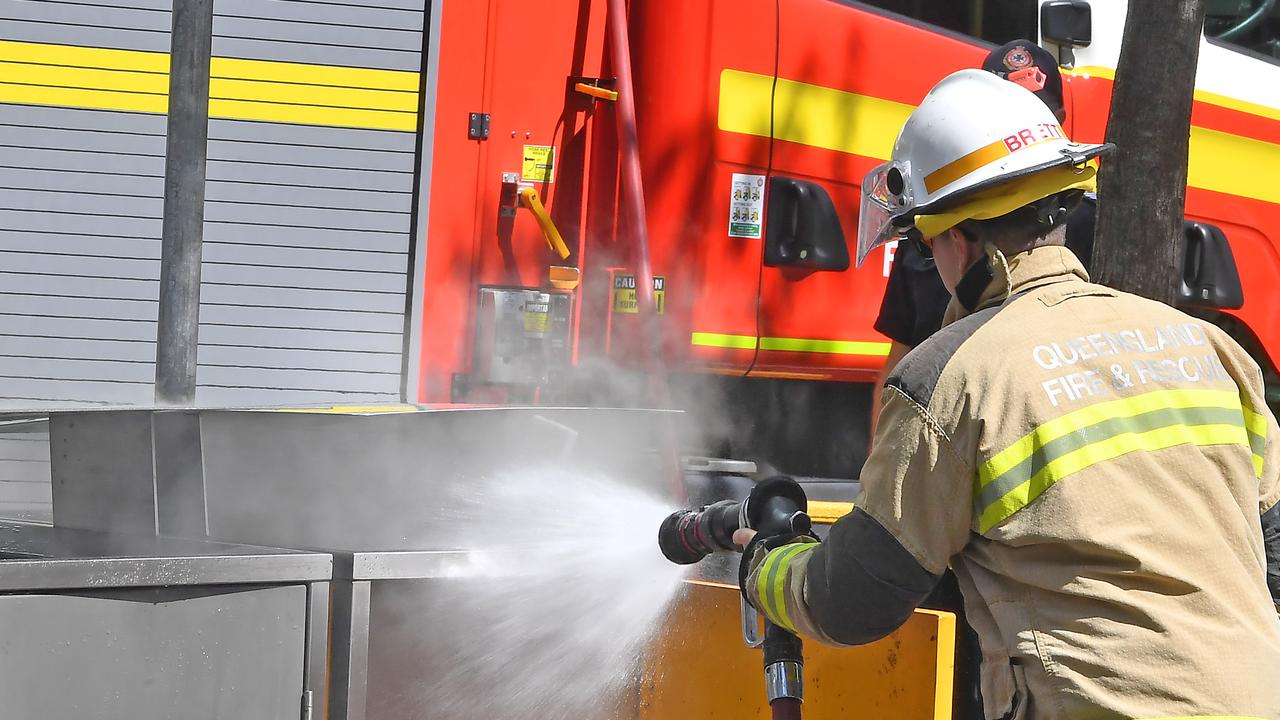
    Emergency services confirmed that first responders were dispatched to Leslie Parade in Stanthorpe shortly after 8:40 a.m. following reports of a structure fully engulfed in flames. When crews from the Queensland Fire Department arrived on scene, they found the two-storey brick home already burning heavily, with the fire confirmed to have originated in the property’s stairwell, a critical escape route for the occupants inside.

    At the time the fire broke out, all seven residents were inside the home: the five young toddlers, a 26-year-old woman, and an 80-year-old man. Against significant odds, every person managed to evacuate the burning building before firefighters could gain entry to conduct search and rescue operations.

    Local paramedics immediately provided on-site first aid to all seven evacuees. The five young children received initial assessment and treatment at the scene before being transferred to Stanthorpe Hospital for further observation. The 26-year-old woman was treated for two separate conditions: a soft tissue injury to her arm and smoke inhalation, while the 80-year-old man also received medical care for smoke inhalation.

    To bring the blaze under control, fire crews were forced to remove a section of the home’s roof to access hidden hotspots and fully extinguish the fire. No further injuries were reported among first responders, and investigations into the exact cause of the fire are ongoing.

    The incident marks the second residential fire escape making headlines in Queensland in recent days, following a separate event where seven children escaped an e-bike-related house blaze.

  • Australian teen who killed UK woman has reduced sentence overturned

    Australian teen who killed UK woman has reduced sentence overturned

    In a landmark ruling that has resonated across Queensland and beyond, Australia’s High Court has overturned a previous reduced sentence for a teenage killer who stabbed British-born mother Emma Lovell to death during a 2022 home invasion, restoring the harsher penalty handed down in the original trial.

    Lovell, a 41-year-old originally from Suffolk in the United Kingdom, relocated to Australia with her husband Lee in 2011, settling in Brisbane to build a life with their two teenage daughters. Her life was cut short in a brutal attack on Boxing Day 2022, when she and Lee confronted two teenage intruders who had broken into their suburban Queensland home. During a violent struggle that unfolded after the couple forced the intruders out into their front garden, the then-17-year-old offender stabbed Lovell in the heart. Emergency responders performed emergency open-heart surgery at the scene as Lovell’s daughters watched helplessly, but she did not survive her injuries and died shortly after being transported to hospital.

    The case sparked widespread public anger and became a catalyst for Queensland state government to introduce controversial stricter youth crime legislation, amid growing community concern over violent youth offending. The second teenager involved in the break-in was acquitted of murder, and ultimately received an 18-month detention sentence on lesser charges of burglary and assault.

    In the 2024 original trial, the judge ruled the teenager’s murder was “particularly heinous”. While the court acknowledged the offender’s unstable childhood and other mitigating personal circumstances, the judge found these factors did not offset the extreme severity of the crime. The teenager was sentenced to 14 years in prison, with a requirement to serve 70 percent of the sentence — a minimum of nine years and nine months — before becoming eligible for parole.

    The teenager launched an appeal against the sentence the following May, arguing the original penalty was “manifestly excessive”. Queensland’s Court of Appeal sided with the offender, cutting the required non-parole period from 70 percent to 60 percent of the total sentence, a reduction of 17 months, citing the defendant’s early guilty plea, claims of genuine remorse, and potential for rehabilitation as justification for the lighter sentence.

    That reduced sentence was immediately challenged by Queensland Attorney-General Deb Frecklington, who brought the case to the High Court of Australia in April 2025. On Wednesday, the High Court quashed the appeal court’s ruling, determining that the lower appeal court had no legal standing to alter the original trial judge’s sentence decision.

    Following the announcement of the High Court’s verdict, Frecklington said she was pleased with the outcome, noting she had pursued every possible legal pathway to protect what little justice had originally been granted to the Lovell family. Queensland Premier David Crisafulli called the ruling a “big win” for Lovell’s relatives, while acknowledging that no sentence could ever bring Emma back or undo the pain the family has endured.

    For Lee Lovell, the ruling delivers a long-awaited sense of validation. Speaking to reporters shortly after the decision was handed down, he said the outcome confirms “Emma’s life did matter”, and that his eldest daughter was “pretty pleased” with the result. Even with the ruling in hand, he acknowledged that the upcoming Boxing Day — which will mark four years since Emma’s killing — will remain a difficult anniversary for the family. “It feels like a few months ago that it happened,” he said, adding that after years of drawn-out court proceedings, he hopes the family can now begin to rebuild some semblance of normal life. Lovell’s parents, who traveled from the United Kingdom to be in Australia for the ruling, are set to return home on Thursday.

  • This organ will play one composition until 2640. It’s redefining how slowly music can be played

    This organ will play one composition until 2640. It’s redefining how slowly music can be played

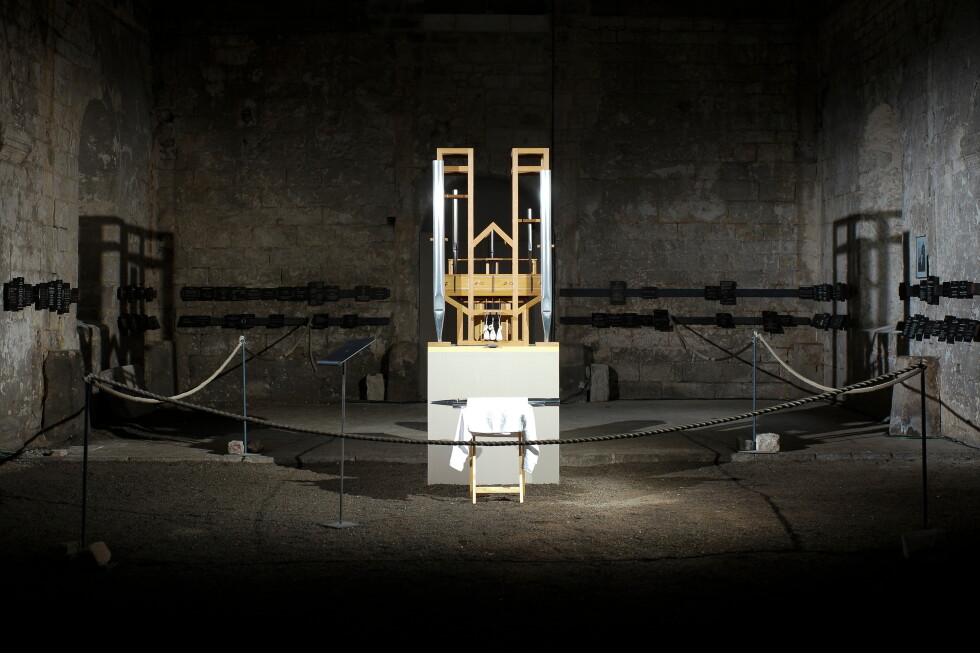
    In the medieval ruins-turned-arts space of Burchardi Church in Halberstadt, eastern Germany, an extraordinary experimental art project that redefines the boundaries of musical performance continues its glacial journey. Nearly 25 years after the first note resonated through the stone walls, the world’s slowest ongoing concert has hit a rare milestone: a manual chord change that brings the 639-year performance to roughly 4% completion.

    The ambitious initiative, known as the John Cage Organ Project Halberstadt, stages John Cage’s iconic experimental composition *ORGAN²/ASLSP (As SLow aS Possible)*, a work that demands the piece be played as slowly and softly as the interpreters choose. While project planning began in 2000, the performance officially launched on September 5, 2001, what would have been the avant-garde American composer’s 89th birthday, opening with a 17-month silent pause that stretched all the way to February 5, 2003, when the first chord finally echoed through the church. This week’s chord shift, which added an A4 pipe to expand the harmony from seven notes to eight, marks only the 17th sound adjustment in the work’s more than two-decade history. The next change is already scheduled for October 5, 2027, when an E4 pipe will be removed to alter the chord once again.

    The 639-year timeline, set to conclude on September 4, 2640, was not chosen arbitrarily. According to Anneli Borgmann, chair of the project’s board of trustees, the duration was selected as a tribute to the world’s oldest playable historic organ, which was constructed in Halberstadt in 1361 — exactly 639 years before the project was first organized in 2000. The organ itself, powered by a continuous electric blower system to sustain unbroken sound, has been engineered for extreme longevity. Master organ builder Johannes Hüfken, who crafted the new A4 pipe installed this month, confirms that all components are built to survive at least another 500 years, ensuring the performance can outlive multiple generations of stewards.

    What began as a radical experimental art concept has also reshaped the Burchardi Church itself. Before the project launched, the structure sat largely in ruins, but funds raised for the initiative paid for a new roof and critical structural repairs, saving the historic site for future generations. For visitors, the experience is unlike any traditional concert: the sustained chord resonates through the entire empty stone sanctuary, and shifting just a few feet dramatically alters how the sound is perceived, leading Jeffrey Lependorf, executive director of the New York-based John Cage Trust, to observe: “I think it really is the organ playing the church and not the other way around.” Lependorf, who has followed the project for years, says the deep, sustained vibrations of the organ are felt across the entire body, creating an immersive experience that cannot be replicated in modern performance settings.

    Beyond its artistic innovation, the project acts as a provocative meditation on intergenerational responsibility and long-term thinking, a reminder to plan for futures far beyond any single person’s lifetime. “This John Cage project is a good example of thinking ahead for the next generation — thinking outside the box, beyond the completely normal and traditional,” Hüfken noted. Curators and stewards regularly grapple with questions that stretch centuries into the future: Will the church still stand when the final chord sounds in 2640? Will Halberstadt, a city that has already survived two world wars, endure the accelerating impacts of climate change? To lock in access for the final performance, the project has already begun selling inheritable “final tickets” for the 2640 closing event, priced at 2,640 euros (approximately $3,045) apiece, that can be passed down through families for more than six centuries.