博客

  • Record heatwave in South Korea as temperatures soar to 42.5C

    Record heatwave in South Korea as temperatures soar to 42.5C

    South Korea is grappling with an unprecedented climate event that has made history for all the wrong reasons: a relentless record-shattering heatwave that has pushed national temperatures to a never-before-seen high of 42.5°C. According to official reports, the extreme heat has already claimed at least 19 lives, making this one of the deadliest heat-related events the East Asian nation has faced in modern recorded history.

    Meteorological agencies confirm that the peak temperature logged during this heat event marks the highest reading ever captured since systematic temperature tracking began in South Korea. The sweltering conditions have stretched across large swathes of the country, putting unprecedented strain on public health services, vulnerable populations including the elderly and low-income communities without consistent access to cooling, and critical infrastructure. Public health officials have issued repeated urgent warnings, urging residents to stay hydrated, avoid prolonged outdoor exposure, and check on at-risk neighbors to prevent additional heat-related fatalities.

    Climate researchers note that this extreme heat event aligns with a broader global pattern of increasing frequency and intensity of heatwaves driven by anthropogenic climate change. South Korea, like many nations across the globe, has seen a steady rise in average annual temperatures over the past century, with extreme weather events becoming more common and more severe in recent decades. This record-breaking event is already prompting renewed calls for accelerated action on both climate adaptation measures to protect public safety and broader emissions reduction efforts to curb long-term global warming.

  • Pakistan restricts international media reporting

    Pakistan restricts international media reporting

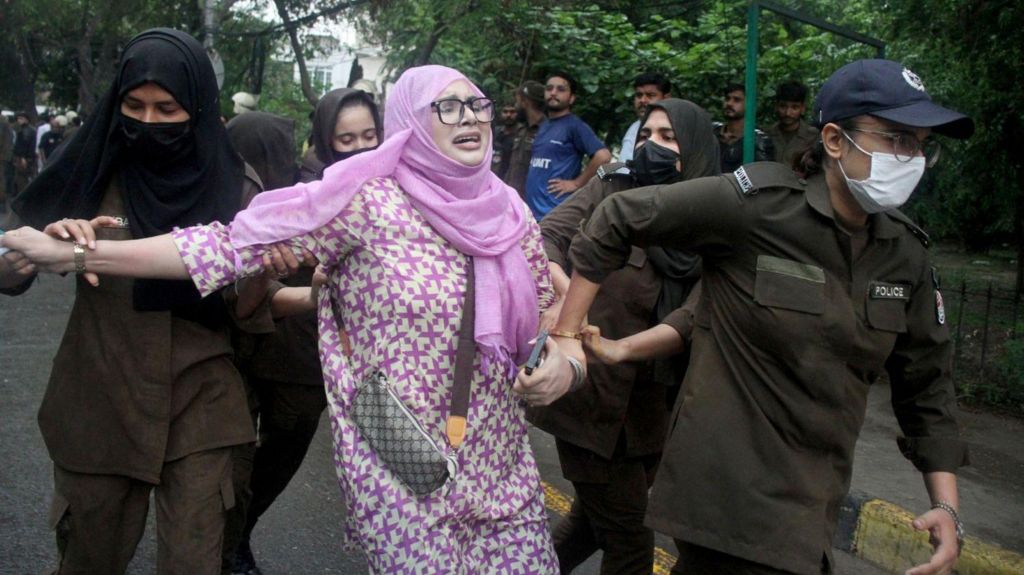
    Pakistan’s federal government has introduced sweeping new regulations governing international media reporting across most of the country, triggering fierce condemnation from journalist groups and press freedom advocates who warn the rules will further erode independent coverage and create fertile ground for disinformation.

    Announced on Sunday under the official title of the *Foreign Media Facilitation Guidelines, 2026*, the new requirements mandate that every individual working for international media outlets — including Pakistani citizens, freelance contributors and local fixers — must obtain a government-issued No Objection Certificate (NOC) to report from any location outside of Pakistan’s three largest cities: Islamabad, Karachi, and Lahore. The policy leaves all on-the-ground reporting outside these major urban centers completely at the discretion of federal authorities.

    The move comes as Pakistan already ranks 153rd out of 180 countries in the 2025 World Press Freedom Index, reflecting long-standing challenges to open journalism in the nation of 240 million people. Critics note that while media restrictions have a long history in Pakistan, domestic outlets have traditionally faced greater pressure than their international counterparts, which many Pakistanis rely on for unfiltered reporting on sensitive issues.

    “These guidelines are tantamount to choking international media in an increasingly shrinking space,” said Mustafa Nawaz Khokhar, a prominent Pakistani political commentator. “The public looks at the international media for independent reporting. Placing restrictions simply creates more room for disinformation and spread of fake news.”

    The regulations do not include any clear timeline for processing NOC applications, a gap that mirrors existing approval processes for foreign journalists. Many international correspondents have previously reported waiting months for NOC approval, or receiving no response at all — a delay that effectively blocks coverage of breaking news events from outside the three permitted cities. To avoid these bottlenecks, international outlets have long relied on Pakistani contributors based in or able to travel freely to regions like Balochistan, Khyber Pakhtunkhwa, and Pakistan-administered Kashmir; under the new rules, all of these contributors will now require official approval to work on stories.

    Zaffar Abbas, veteran editor of Pakistan’s leading English-language newspaper *Dawn*, called the new rules “ridiculous restrictions and are totally unacceptable.” With more than four decades of journalistic experience in Pakistan spanning military dictatorships and authoritarian civilian governments, Abbas noted he has never encountered such sweeping limits on reporting. “To ask journalists to get an NOC for travelling outside the three major cities not just undermines freedom of movement but also freedom of the press,” he added.

    In its official defense of the policy, the Pakistani government has rejected claims that the guidelines are intended to restrict reporting, framing the rules instead as a neutral “administrative mechanism” to verify media credentials, coordinate reporting requests, and facilitate access to restricted regions. Government officials further argue that any accreditation system must retain the authority to revoke credentials for journalists who engage in activity that threatens national security or public order.

    The guidelines include a provision allowing authorities to revoke a journalist’s accreditation for “acts against ideology, sovereignty, security or public order of Pakistan” — a broadly worded clause that Khokhar has called “vague,” warning it opens the door to arbitrary enforcement against critical reporting.

    Legal experts have also raised red flags about the policy’s legal foundation. Salhuddin Ahmed, a lawyer practicing before the Supreme Court of Pakistan, says the guidelines have no basis in statutory law. “These ‘guidelines’ are merely an executive order and lack any legal backing from statute,” Ahmed explained. “They refer to the rules of business; those rules are only meant to regulate the internal functioning of government, not create legal obligations on others. Quite clearly, these guidelines are a hastily and ill-thought-out attempt to further curb independent reporting in Pakistan.”
    The government counters that the rules are a valid regulation of the Information Ministry’s External Publicity wing’s administrative relationship with foreign media, falling within the scope of existing government business rules.

    Press freedom advocates, including a coalition of international journalists and the president of Pakistan’s Federal Union of Journalists, are currently working to arrange a meeting with Pakistan’s information minister to formally raise their objections to the new policy.

    Observers have pointed to ongoing unrest in Pakistan-administered Kashmir (PAK) as a key trigger for the new restrictions. The region has seen two months of violent clashes between anti-government protesters and security forces that have left dozens dead, amid a local election boycott and sweeping internet shutdowns that have made independent verification of events extremely difficult.

    Just one day after the new guidelines were announced, the External Publicity wing sent an urgent WhatsApp message to international media outlets ordering all journalists currently in PAK to “return back IMMEDIATELY” and apply for an NOC if they wish to report from the region. The message was sent after multiple major international outlets, including the BBC, published on-the-ground reports from the disputed territory.

    Earlier this week, the Qatari news network Al Jazeera’s website became inaccessible to users within Pakistan after the Information Ministry labeled a correspondent’s report from PAK’s regional capital “yellow journalism” — a term referring to sensationalized, inaccurate reporting. No formal public ban on the outlet has been announced, however.

    Kashmir is one of the world’s most long-standing disputed territories, with both India and Pakistan claiming full sovereignty over the region while each controls only a portion of it. Coverage of unrest in Pakistan-administered Kashmir has long been an extremely politically sensitive topic for the Pakistani government. Two local Pakistani journalists speaking to the BBC confirmed they had been explicitly warned by their editors to avoid covering the ongoing unrest.

  • What can scientists learn from a stray SpaceX rocket hitting the Moon?

    What can scientists learn from a stray SpaceX rocket hitting the Moon?

    In an unplanned cosmic collision that has turned into a rare scientific windfall, a discarded upper stage of a SpaceX Falcon 9 rocket has impacted the Moon’s surface near the iconic Einstein crater, opening new doors for lunar research that will benefit future human and robotic missions to Earth’s only natural satellite.

    The crash occurred at approximately 06:35 GMT on Wednesday, with the empty 4,000-kilogram rocket stage – roughly the size of a five-story building – striking the lunar surface at a blistering speed of nearly 8,700 kilometers per hour. The brief, intense flash generated by the impact was all but invisible to even the most well-equipped amateur astronomers, lasting just a fraction of a second and appearing far too faint for ground-based telescopes to capture clearly. While amateur observers were unlikely to spot the flash, some may have detected a plume of ejected lunar dust stretching as far as 100 kilometers that lingered for several minutes after the collision.

    No orbiting spacecraft were positioned to capture the impact in real time. South Korea’s Danuri lunar orbiter passed the crash site shortly before the collision, and the mission team has confirmed that any collected data and imagery will not be released to the public until initial scientific analysis is complete. In the coming days, NASA’s long-operating Lunar Reconnaissance Orbiter will maneuver into position to photograph the impact site, allowing scientists to compare high-resolution pre- and post-impact imagery to map the newly formed crater in detail.

    The path to this accidental collision began more than 18 months ago, when the Falcon 9 rocket launched from Cape Canaveral, Florida, in January of the previous year. Its core mission was to deliver two robotic lunar landers onto a trans-lunar trajectory out of Earth’s orbit, a goal the rocket completed successfully. After deploying its payload, the spent upper stage was left drifting in a large, looping orbit that alternated between swinging close to the Moon and returning near Earth. Over the following year and a half, tiny, cumulative gravitational tugs from the Earth, Moon, and Sun, combined with the faint pressure of solar radiation, gradually shifted the rocket stage’s orbit until astronomers tracking the debris confirmed it was on an irreversible collision course with the Moon, gaining speed with each passing orbit.

    Initial observations and early data analysis are being led by large ground-based observatories across the Americas, where the sky was still dark at the time of impact. Even for these advanced facilities, detecting and processing clear data of a 14-meter object striking the Moon 385,000 kilometers from Earth is a significant challenge, and scientists warn it could take days or even weeks to produce a full, clear picture of the impact site and the initial findings from the event.

    For planetary geologists and lunar scientists, this unplanned collision is far more than an interesting space oddity – it is a unique, well-characterized natural experiment. Unlike most random impact events, researchers already have precise data on the rocket stage’s mass, size, speed, and exact impact location, allowing them to test long-standing models of crater formation, debris dispersion, and seismic activity within the Moon’s interior. These data will have direct practical applications for future lunar exploration: understanding how far impact debris travels and how much seismic shaking is generated by high-speed collisions will help engineers design safer lunar landers and durable long-term Moon bases for crewed missions.

    Additionally, the material ejected from beneath the Moon’s surface during the impact will provide new, unaltered samples of lunar geology that can be studied remotely, helping scientists refine existing theories about the formation of the Earth-Moon system 4.5 billion years ago.

    This event marks far from the first time a human-made object has collided with the Moon. Since the Soviet Union’s Luna 2 probe became the first human-made object to impact the lunar surface in 1959, dozens of spacecraft and rocket stages have crashed there, both intentionally for scientific research and by accident. Notable past impacts include NASA’s Ranger probes in the 1960s, discarded rocket stages from the Apollo program, and the 2009 LCROSS mission, which was deliberately crashed into a polar crater to confirm the presence of water ice. The last confirmed accidental rocket impact occurred in 2022, when a discarded booster from a 2014 Chinese lunar mission struck the lunar surface, highlighting the growing issue of orbital space debris that has been accumulating around Earth and the Moon for more than 60 years.

  • Russian drone factory director badly injured in car explosion

    Russian drone factory director badly injured in car explosion

    A brazen car bombing has left the head of a key Russian military drone supplier critically injured, marking the latest in a string of high-profile attacks on Russian defense-linked figures amid the ongoing conflict in Ukraine, multiple Russian state news outlets reported Wednesday.

    Vladimir Tkachuk, director of Uraldronzavod, was rushed to intensive care after the blast that hit his vehicle late Tuesday in Bolshoy Istok, a small settlement located just on the outskirts of Yekaterinburg. The industrial city sits roughly 870 miles east of Moscow in the Ural Mountains, and stands as Russia’s fourth-largest urban center and a critical hub for the country’s defense manufacturing sector. As of Wednesday afternoon, Russian law enforcement and national security officials had not released additional details about the nature of the explosion, nor named any possible persons of interest in the attack. No official statement on the incident has been issued by government authorities.

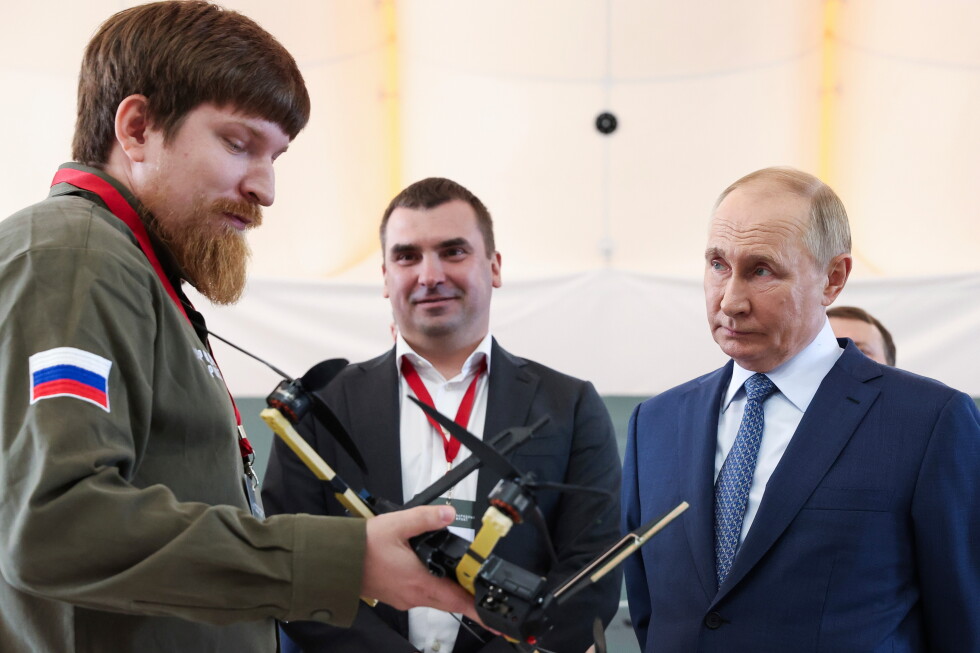
    A small-business entrepreneur turned defense industrial leader, Tkachuk built a team of local engineers to develop and mass-produce the Upyr – translated to “Ghoul” in English – a low-cost first-person view (FPV) drone designed for frontline military use. Russian military personnel have publicly praised the Upyr platform for its strong resistance to electronic jamming, a key vulnerability that has taken many other cheap FPV drones out of commission in battlefield conditions.

    Wednesday’s news of the attack comes just days after a deadly bombing at a high-end restaurant in central Moscow that killed five people and injured 19 more. The incident at the Balzi Rossi restaurant, a popular dining spot frequented by Moscow’s expatriate Italian community, occurred Saturday, and Russian officials quickly pointed fingers at Kyiv. In a Monday statement, the Russian Embassy in Rome called the bombing a deliberate act of intimidation targeting the Italian community in Russia. The Russian Foreign Ministry reposted the embassy’s claim publicly, but Russia’s domestic security agencies have not officially identified any suspects or confirmed a motive for the attack. Moscow Mayor Sergei Sobyanin labeled the bombing a “brutal terrorist act” in his public remarks, but also declined to name a responsible party.

    Multiple independent and state-aligned Russian media outlets have circulated unconfirmed claims that the restaurant bombing was targeted at a senior Russian military commander celebrating a birthday at the venue. Many of these reports name Col.-Gen. Alexander Chaiko, who led Russia’s failed 2022 assault on Kyiv and was recently appointed head of Russia’s aerospace forces, as the intended target. To date, these claims have not been verified by independent third parties.

    Since Russia launched its full-scale invasion of Ukraine in February 2022, Russian officials have repeatedly blamed Ukrainian intelligence and security services for a wave of bombings, assassination attempts, and other attacks targeting senior military figures and defense industry leaders across Russian territory. Ukrainian officials have rarely claimed direct responsibility for such attacks inside Russia, though many have not denied involvement.

  • Footballers branded ‘traitors’ by Iran for protest become Australian citizens

    Footballers branded ‘traitors’ by Iran for protest become Australian citizens

    Two former Iranian women’s national team footballers, who made international headlines for refusing to sing their country’s national anthem and were labeled traitors by Iranian state media, have officially become Australian citizens.

    Fatemeh Pasandideh, 22, and Atefeh Ramezanisadeh, 34, first defied authorities in Tehran and chose to remain in Australia following the AFC Women’s Asian Cup held back in March 2024. Their decision to skip the national anthem before a tournament match, broadcast live to global audiences, sparked immediate backlash from Iranian official media, which swiftly labeled the pair traitors for their act of protest.

    Shortly after the tournament concluded, Australia’s Home Affairs Minister Tony Burke approved humanitarian visas for seven Iranian players who chose not to return to Iran. However, intense pressure from the Islamic Revolutionary Guard Corps—including threats targeting the players’ family members still in Iran—forced five of the seven athletes to reverse their decision and return home. Only Pasandideh and Ramezanisadeh stayed to build new lives in Australia.

    On Wednesday, the two athletes completed their naturalization process at an official citizenship ceremony held in Brisbane, posing for photos with Minister Burke after receiving their official citizenship certificates. A visibly thrilled Pasandideh shared her excitement with local outlet The Australian following the ceremony. Burke had been scheduled to deliver a keynote address on migration policy at Canberra’s National Press Club the following day, though the event has since been postponed.

    Soon after the pair settled in Queensland, Brisbane Roar Football Club’s women’s team extended an invitation for them to train with the squad, and club representatives have celebrated their new citizenship status. “What they have been through since February is more than most people deal with in a lifetime, and to see them arrive at this point is something everyone here at Brisbane Roar is glad to have had a small part in,” a club spokesperson told The Australian. “Queensland is their home now. If they ever want to pull on a training top and come back out with us, the door will always stay open.”

    Back in April, shortly after receiving their humanitarian visas, Pasandideh and Ramezanisadeh released a public statement expressing gratitude to Australian authorities and local community groups. “We are overwhelmed by the warmth and generosity of the Iranian diaspora community in Australia,” the statement read. “Your support has made us feel welcome and less alone as we navigate this transition. At this stage, our primary focus is on our safety, our health and beginning the process of rebuilding our lives. We are elite athletes, and it remains our dream to continue our sporting careers here in Australia.”

  • Mexican influencer shot dead during livestream

    Mexican influencer shot dead during livestream

    A violent and shocking attack has taken the life of a well-known Mexican digital creator, marking another deadly incident targeting social media personalities in a region grappling with organized crime violence. César Gastélum, who amassed more than 500,000 followers on TikTok where he primarily shared lighthearted comedy content, was killed in a close-range shooting Tuesday evening while he broadcast live to his audience.

    The attack unfolded outside a fast-food restaurant in the Tres Ríos neighborhood of Culiacán, the capital city of Mexico’s northwestern state of Sinaloa. According to official accounts of the incident, two armed suspects traveling on a motorbike pulled up alongside Gastélum, who was filming the live stream with two companions. One of the suspects opened fire at point-blank range, striking the influencer before the pair fled the scene immediately.

    Gastélum and his friends were wearing bright orange outerwear and bags that match the standard uniform used by local delivery workers when the shooting happened. This matching outfit initially led responding law enforcement officers to misidentify Gastélum as a delivery driver, before authorities received formal notification of his identity as a popular social media creator.

    In the hours after the attack, local police and forensic investigation teams cordoned off the entire crime scene to process evidence. Investigators are currently reviewing spent bullet casings recovered from the area and analyzing nearby closed-circuit security camera footage to identify the attackers and establish a motive for the killing. As of the latest updates, no suspects have been taken into custody, and authorities have not confirmed whether Gastélum had received any prior threats against his life before the shooting.

    Beyond his comedy content on TikTok, Gastélum maintained an active Instagram presence, where he regularly shared photos from his personal travels, social outings, and posed shots in front of high-end luxury vehicles. One notable post on his account showed him visiting the gravesite of Leobardo Aispuro, another Mexican influencer known online as “El Gordo Peruci” who was shot and killed in December 2024. Law enforcement investigators have linked Aispuro’s killing to ongoing violent rivalry between two competing factions of the Sinaloa drug cartel.

    This shooting is not an isolated case: it is the latest in a string of deadly attacks on social media influencers in Mexico. Just last year, 23-year-old influencer Valeria Márquez was also shot and killed while broadcasting a live TikTok stream from a local beauty salon.

    The broader context of this killing is a sharp upward surge in violence across Sinaloa, triggered by a bitter split between the cartel’s two dominant factions, Los Chapitos and La Mayiza, which broke out into open conflict in September 2024. Since that split, brutal inter-faction fighting has driven a steep increase in homicide rates and public violence across the state, putting civilians and public figures alike at heightened risk of targeted attacks.

  • Salah given hero’s welcome before Trabzonspor move

    Salah given hero’s welcome before Trabzonspor move

    One of modern football’s most decorated forwards, Mohamed Salah, is on the cusp of completing a blockbuster move to Turkish Super Lig side Trabzonspor, after touching down in Istanbul to a rapturous welcome from hundreds of cheering fans this Wednesday.

    The 34-year-old Egypt captain, who departed Liverpool at the end of last season following a nine-year trophy-laden spell on Merseyside, stepped out of Ataturk Airport wearing Trabzonspor’s iconic claret and sky blue kit, stopping to greet and interact with the jubilant crowd that had gathered to catch a first glimpse of their new star signing.

    Salah leaves Anfield as one of the club’s greatest ever players, having scored 257 goals across all competitions, led Liverpool to two Premier League titles, a Champions League trophy, a Club World Cup, Uefa Super Cup, an FA Cup and two EFL Cups. Individually, he claimed the Premier League Golden Boot four times and won the Professional Footballers’ Association Player of the Year award three times, in 2018, 2022 and 2025. His final full season at Liverpool saw him contribute 29 goals and 18 assists to the club’s 2024-25 title triumph, but a falling out with former Reds head coach Arne Slot limited his playing time in the following campaign, where he only managed seven league goals before his exit.

    Since Salah announced he would leave Liverpool a year early from his contract extension, the global football community has speculated heavily over his next destination. A strong run at the recent World Cup, where Egypt reached the round of 16 for the first time in their history before a narrow defeat to Argentina, stoked further transfer interest. A move to another Turkish top-flight side, Besiktas, was reportedly close, but financial disagreements ultimately collapsed the deal, paving the way for Trabzonspor to step in with an agreement.

    As a free agent following his Liverpool exit, Trabzonspor was able to allocate the full weight of their transfer budget to meeting Salah’s wage demands, with the exact terms of his compensation still undisclosed. The Turkish club teased the impending arrival on social media Tuesday night, posting a video showing the Egyptian Pyramids displayed next to their home ground Papara Park, followed by an official confirmation that negotiations with Salah were underway. The club also shared a live tracking map for Salah’s incoming flight to Istanbul, prompting the mass fan turnout at the airport. In a pre-arrival video posted to social media from his private jet, Salah told supporters: “Trabzon, are you ready? See you very soon.”

    Trabzonspor, nicknamed the Black Sea Storm, is one of only six Turkish clubs to have won the Super Lig, with a trophy history that includes seven league titles — six of which came between 1976 and 1984, before a 38-year drought ended with their most recent title in 2022. The club finished third in last season’s Super Lig, eight points behind champions Galatasaray, which guarantees them a spot in European competition for the upcoming campaign. They will enter the Europa League play-offs, with a drop down to the Conference League if they fail to progress to the main league phase.

    Salah’s signing is the biggest in Trabzonspor’s history, and joins the club alongside former Liverpool striker Daniel Sturridge and ex-Arsenal winger Nicolas Pepe. The club’s current squad also features on-loan Manchester United goalkeeper Andre Onana and Cape Verde World Cup stars Wagner Pina and Sidny Lopes Cabral.

    Industry analysts widely view this transfer as one of the biggest in Turkish football history. The Super Lig has previously attracted global icons including Roberto Carlos, Didier Drogba, Robin van Persie, Samuel Eto’o, Mesut Ozil and Wesley Sneijder, and this season is already stacked with elite talent: N’Golo Kante and Ederson will feature for Fenerbahce, while Victor Osimhen, Ilkay Gundogan and Leroy Sane will line up for Galatasaray.

    For Trabzonspor, the capture of Salah marks a major strategic shift. While the club has long competed for domestic titles, it has in recent years prioritized developing young talent and recruiting players with high resale value. The Turkish top flight has grown increasingly dominated by Istanbul giants Fenerbahce and Galatasaray in recent seasons, leading to waning supporter enthusiasm for Trabzonspor and consistent undercapacity crowds at Papara Park. The signing of Salah is designed to reverse this trend: club officials expect his arrival to draw lapsed supporters back to matches, drive massive shirt sales, and expand Trabzonspor’s commercial reach across the Middle East, tapping into a new global fanbase and driving increased interest among the Arab community both in Trabzon and among international visitors to the city. The blockbuster move has already injected a renewed wave of excitement among the club’s fanbase, marking a bold new chapter for the Black Sea Storm.

  • Hundreds of Qantas workers plan strike action over pay and safety

    Hundreds of Qantas workers plan strike action over pay and safety

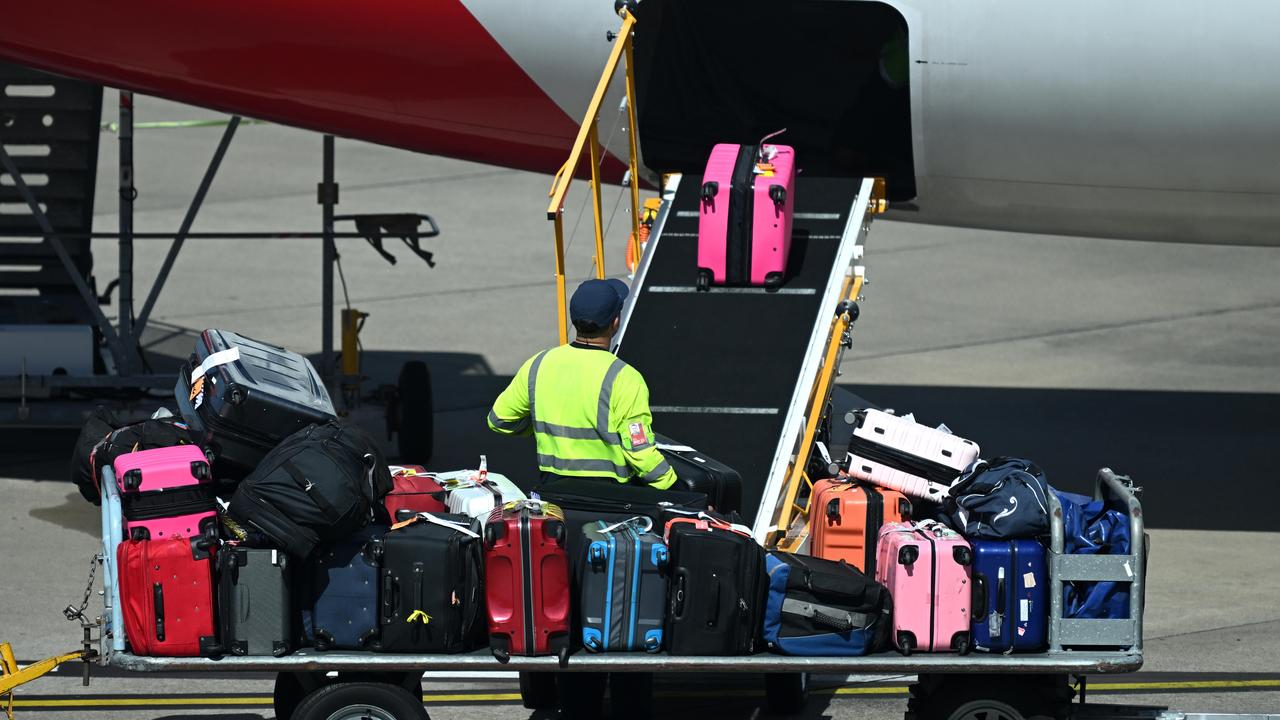
    A long-simmering conflict between Qantas Airways’ ground services subsidiary and its workforce has escalated this week, as the Transport Workers Union (TWU) moves to authorize a potential industrial action that could see more than 600 Australian workers walk off the job. The dispute centers on long-running grievances tied to pay erosion, compromised safety standards, and deteriorating working conditions, issues the union traces back to Qantas’ 2022 decision to outsource 1,800 ground staff positions.

    On Wednesday evening, TWU officials lodged an official Protection Action Ballot, a procedural step that clears the way for affected Qantas Ground Services (QGS) employees to cast votes on whether to launch strike action. For months, workers have raised alarm that the outsourcing restructuring has shifted the bulk of remaining operational burdens onto the smaller rostered QGS workforce, without corresponding adjustments to compensation or safety protocols.

    The union’s calls for urgent reform gained renewed gravity in the wake of a fatal workplace accident at Sydney International Airport’s freight terminal nearly 12 months ago. A 40-year-old cargo worker was killed on the job after being struck by a towing vehicle, an incident TWU leaders frame as a direct consequence of underinvestment in workforce standards. Michael Kaine, national secretary of the TWU, argued that the relentless push for cost-cutting has systematically eroded working conditions across QGS, with safety put at severe risk.

    “When pay and conditions reach rock-bottom levels, safety suffers,” Kaine said in a statement Wednesday. “We saw this deadly recipe last year when a Qantas Freight worker was horrifically killed in Sydney. Workers at QGS, and elsewhere across aviation, are saying enough is enough; it is time for Qantas to invest in its workforce instead of continuing to trash jobs and safety.”

    Qantas officials have pushed back on the narrative that they are prioritizing profits over worker well-being, noting that the company remains committed to negotiating a mutually acceptable deal that addresses worker concerns while maintaining long-term business sustainability. A Qantas spokesperson emphasized that there is no immediate threat of strike action for the time being, and added that any potential industrial action would have minimal disruption for commercial passenger services, noting most of the affected QGS employees work in the airline’s freight division rather than passenger ground operations.

    The ballot comes as the aviation sector across Australia continues to grapple with post-pandemic labor unrest, as workers demand wage adjustments to match skyrocketing living costs and push for stronger safety protections after years of industry restructuring.

  • Record heat wave impacts people and animals in Japan and Korean Peninsula

    Record heat wave impacts people and animals in Japan and Korean Peninsula

    A relentless, record-shattering heat wave has swept across Northeast Asia, leaving a trail of human casualties, animal deaths, and disrupted daily life in South Korea, North Korea, and Japan, with extreme temperatures pushing communities and emergency systems to their breaking point.

    In South Korea, the crisis has escalated to the status of a national disaster, according to top government officials. Since mid-May, national data from the Interior and Safety Ministry confirms 2,220 people have developed heat-related illnesses, with 19 losing their lives to extreme temperatures. The agricultural sector has also suffered catastrophic losses: more than 17,000 head of livestock including chickens, ducks, and pigs have perished from heat exhaustion, alongside roughly 160,000 farmed fish. On July, the southeastern city of Yangsan recorded a historic high of 42.5 degrees Celsius (108.5 Fahrenheit), the highest temperature ever measured in the country since consistent weather monitoring began in 1904.

    As of Wednesday, most of South Korea remained under extreme heat warnings, with temperatures in the greater Seoul metropolitan area—home to more than 20 million residents—climbing as high as 39 degrees Celsius (102.2 Fahrenheit). During a cabinet meeting on Tuesday, South Korean President Lee Jae Myung ordered government agencies to treat the ongoing heat emergency as a full national disaster and deploy all available resources to protect civilian lives.

    The extreme heat has already disrupted public events across the country. Last Tuesday, a spectator in his 20s collapsed mid-game during a professional baseball match between the SSG Landers and LG Twins at Incheon’s stadium, forcing a 10-minute game stoppage as emergency crews administered CPR and rushed him to a hospital. A second fan in his 20s also lost consciousness shortly after the game concluded and required on-site medical care. In response, the Korea Baseball Organization announced Wednesday it would cancel all 10 scheduled professional games for Wednesday and Thursday, with plans to reschedule the matches at a later date.

    To the north, North Korean authorities have also issued heat wave warnings across most of its territory, urging residents to take precautionary measures to prevent heat-related health complications. A top hospital official from Pyongyang General Hospital, Min Son Yong, told state newspaper Rodong Sinmun that people should consume specific foods to maintain stamina in extreme heat. Min recommended dog meat—known euphemistically in North Korea as *dangogi*, or sweet meat, a traditional summer food believed to boost energy during hot weather—alongside fish porridge to add protein to diets. He also listed cooling produce including watermelons, cucumbers, tomatoes, and mung beans as ideal heat-beating foods. While dog meat consumption is also common in other parts of East Asia and parts of Africa, South Korea is set to implement a full national ban on the slaughter, breeding, and sale of dog meat for human consumption starting in 2025.

    In Japan, the ongoing heat wave has compounded existing recovery efforts in the wake of a recent major earthquake. Japan’s Anti-Disaster Agency reported that between July 20 and 26 alone, more than 18,000 people showing heat stroke symptoms were admitted to hospitals across the country. On Wednesday, Japan’s Environment Ministry issued a top-level heat stroke alert for most of western and southern Japan. While temperatures in the Tokyo region have dipped slightly this week, extreme heat continues to batter southern areas of the archipelago.

    In the southwestern city of Kumamoto, recovery work is still underway after a magnitude 7.1 earthquake struck the region on July 28, which killed 38 people. Among the fatalities was a 70-year-old woman who suffered fatal heat stroke while sheltering in her car after the quake. As of Wednesday, more than 43,000 households in the affected area still remained without running water, leaving residents even more vulnerable to the extreme heat.

    The heat has also proven deadly for captive wildlife in the region: three female lions have died from heat-related complications at Tokyo’s Tama Zoological Park, with other animals also showing clear signs of heat stroke. Park officials reported that the first fatality, 3-year-old Mugi, developed a loss of appetite on July 19 and lost the ability to stand just one day later. Zookeepers attempted to cool her down with increased ventilation and water sprinklers, and administered subcutaneous fluids, liver tonics, and vitamins, but Mugi died on July 28. Two other lions—11-year-old Ichigo and 15-year-old Luena—died within a few days of Mugi. Autopsies confirmed all three lions suffered from severe dehydration and multiple organ failure, which park officials have attributed directly to the extreme ongoing heat.

    The deadly heat wave across Northeast Asia aligns with broader scientific warnings that climate change is increasing the frequency and intensity of extreme heat events globally, with the upcoming El Niño pattern expected to push global temperatures even higher in coming months.

  • China announces countermeasures against Washington, including controls on drone exports to the US

    China announces countermeasures against Washington, including controls on drone exports to the US

    BANGKOK, Associated Press – As diplomatic tensions simmer between the world’s two largest economies ahead of a planned high-level summit, China unveiled a suite of targeted countermeasures against the United States on Wednesday, responding directly to a series of recent restrictive actions rolled out by the Biden administration. The retaliatory package includes new export controls on drone technology and a formal trade ban targeting six U.S.-based entities, marking a sharp escalation in the ongoing bilateral economic and geopolitical standoff.

    The rising friction comes even after earlier signs of detente: during Chinese President Xi Jinping’s May meeting with U.S. President Donald Trump in Beijing, the two leaders reached tentative consensus that was meant to ease strained ties, ahead of Xi’s expected official visit to the U.S. this September. Even so, recent unilateral actions from Washington have pushed Beijing to respond in kind, Chinese officials confirmed.

    According to a statement released by China’s Ministry of Commerce, the latest countermeasures are a direct response to two recent U.S. actions: first, a ban on imports of Chinese drones issued by the U.S. Federal Communications Commission, and second, the addition of 43 Chinese firms to the Uyghur Forced Labor Prevention Act Entity List by the U.S. Department of Homeland Security, a move that blocks imports of goods produced by those companies into the U.S.

    The Commerce Ministry emphasized in its statement that Washington’s recent steps “seriously violate the important consensus reached by the two heads of state and severely damage China’s legitimate rights and interests.” The statement added that “China has no choice but to take necessary countermeasures in response,” while noting that Beijing has exercised deliberate restraint throughout the escalation. Beijing has called on Washington to immediately reverse its restrictive measures against Chinese entities and abandon what it calls its “erroneous practices.” The ministry also issued a clear warning: further retaliatory steps will be implemented if the U.S. rolls out any new restrictive policies targeting China.

    Under the new drone export rules, Beijing now requires case-by-case security reviews for all exports of unmanned aerial vehicles, their core components, and related dual-use technologies that can be adapted for both civilian and military applications.

    Six U.S. entities are barred from all trade and commercial dealings with Chinese entities, including New York-based biotechnology firm Applied DNA Sciences, Inc. and the non-governmental organization Human Rights in China. A seventh U.S.-based firm, Compliance Testing LLC, was also banned from operating in China; the Commerce Ministry stated that the company collaborated with the FCC on actions that “harm China’s sovereignty and security.”

    In a separate regulatory move, China’s State Administration for Market Regulation announced that U.S.-based firms that conduct on-site factory inspections for China’s mandatory CCC (China Compulsory Certificate) safety certification will no longer be authorized to provide these services. CCC certification is required for all electronic products sold in the Chinese market to confirm they meet national safety standards, meaning U.S. electronics manufacturers seeking access to the Chinese market will now be required to hire third-party auditors based outside the U.S., or work with non-U.S. designated certification bodies.

    The Commerce Ministry also revealed it has launched a national security probe into imported printing software and office equipment, though it declined to name specific companies affected by the investigation.

    The latest escalation follows a series of recent U.S. restrictions targeting Chinese tech imports: In December 2024, the U.S. FCC implemented a ban on new Chinese drone imports, later revising the rule to allow a small number of specific models to enter the country. Just last week, the FCC also issued new import bans on foreign-made humanoid robots and power inverters, citing unaddressed national security risks – a policy that is widely understood to primarily target Chinese manufacturing exports.

    The report was contributed by Leung from Hong Kong.