博客

  • Suspect in Greek suitcase murder of Scottish aid worker appears in court

    Suspect in Greek suitcase murder of Scottish aid worker appears in court

    ATHENS, Greece — In a high-profile cross-border investigation that has drawn international law enforcement support, a migrant suspect charged with the murder and robbery of Scottish aid worker Elisabeth Jane Ross was formally escorted by Greek police to an Athens courtroom on Wednesday. The case unfolded after Ross, a 38-year-old aid worker, arrived in the Greek capital to meet with close friends, but was killed shortly after her arrival. Her remains were found concealed inside a large suitcase inside an unused, abandoned building in the city on July 18, days after she had been reported missing.

    Authorities were able to identify the suspect after reviewing extensive street surveillance footage captured near the site where Ross’s body was discovered. The footage clearly captured an unidentified man moving a large, dark-colored suitcase through the area near the abandoned structure, which helped investigators narrow their search and locate the suspect. The accused, who has not been publicly named under Greek legal regulations that protect the identity of defendants before trial, was taken into custody by Greek police this past Sunday.

    Multiple international law enforcement agencies contributed to the investigative work on the case: the United Kingdom’s National Crime Agency, Police Scotland, and American law enforcement authorities all collaborated with Greek investigators to advance the probe. Greek public service broadcaster ERT has published additional unconfirmed reports that the suspect was born in Afghanistan and had been training and building a professional boxing career based in Athens, though Greek law enforcement officials have not yet officially confirmed these biographical details to the public.

    Following Wednesday’s initial court appearance, judicial officials granted the suspect a 24-hour period to organize and prepare his legal defense. He is scheduled to return to the Athens court for a second hearing on Thursday as the legal process moves forward.

  • Disaster prevention stepped up

    Disaster prevention stepped up

    Against a backdrop of rising extreme weather events that have exposed critical gaps in legacy disaster mitigation frameworks, China’s Ministry of Natural Resources has launched an ambitious new five-year plan to reform the country’s geological disaster prevention system, shifting focus from monitoring individual hazard points to managing entire at-risk zones to cut disaster-related casualties and economic damage.

    Releasing the 15th Five-Year Plan (2026–2030) for National Geological Disaster Prevention and Control in early August 2026, officials outlined that the policy update comes in response to a growing trend: more frequent extreme rainfall is triggering sudden, clustered and cascading geological disasters in regions previously classified as outside traditional high-risk zones. Point-based prevention strategies, which only target documented individual hazard sites, have proven ill-equipped to handle these emerging threats, according to the ministry.

    As of the end of 2025, China has recorded nearly 280,000 registered geological disaster hazard points across the country. These sites collectively put more than 11.48 million people at risk, and threaten more than 760 billion yuan ($112.54 billion) in property, underscoring the ongoing severity of the nation’s disaster prevention challenge despite major progress in recent years.

    During the 14th Five-Year Plan period (2021–2025), China recorded notable gains in disaster risk reduction: compared to the 2016–2020 period, geological disaster-related fatalities dropped by 52%, and direct economic losses fell by 38%. The country also expanded its technological disaster prevention infrastructure dramatically, deploying over 75,000 automated monitoring and early warning devices and launching successful pilot programs for comprehensive remote-sensing geological disaster identification.

    Even with these advances, unique geographic and climatic conditions leave China facing persistent geological disaster risks, explained Yang Xudong, a senior engineer at the ministry’s Geological Disaster Technical Guidance Center. China’s diverse terrain, complex geological structures, active tectonic and seismic activity, variable climate patterns, growing frequency of extreme weather, and intensive human engineering activity all combine to create conditions for frequent, recurring geological disasters. Yang added that many of these events are particularly hard to forecast due to their hidden origin, tendency to reoccur, and sudden onset, making proactive prevention the most effective strategy to reduce risk.

    According to Yang, China’s geological disaster prevention work has now entered its third evolutionary stage. “The previous two stages — whether relying on traditional community-based monitoring and professional surveys, or on large-scale high-precision remote sensing and widespread monitoring instruments — both centered on hazard points with visible deformation signs,” Yang noted. “The new stage directly addresses mass shallow landslides and debris flows triggered by extreme rainfall, which often show no clear warning signs and typically strike during the peak of heavy rainfall. Traditional methods struggle to identify and predict these kinds of disasters.”

    To tackle these new challenges, the 15th Five-Year Plan outlines seven core priorities for the 2026–2030 period, including dynamic nationwide hazard surveys, upgrades to monitoring infrastructure, and comprehensive risk governance. The plan targets the completion of more than 4,200 engineered disaster mitigation projects, over 6,100 hazard elimination projects, and the relocation of 50,000 at-risk households to safer areas.

    A dual management system that combines oversight of both individual hazard points and entire risk zones will be rolled out in 1,206 key counties, cities and districts across 17 priority provinces, with formal management rosters and clear accountability frameworks established for each administrative region.

    The plan also expands the number of national key prevention zones to 21, up from 16 during the 14th Five-Year Plan period. These zones cover approximately 2.97 million square kilometers of terrain at risk of landslides, rockfalls, debris flows and ground subsidence, plus an additional 280,000 square kilometers at risk of ground settlement and earth fissures.

    Newly added key prevention zones include the lower reaches of the Yarlung Tsangpo River hydropower project area, high-altitude long-distance disaster chain regions, and the Yanshan-Taihang Mountain region. The plan also refines risk mapping for traditional high-susceptibility areas, including southeastern China’s hilly regions and the mountainous southwest.

    A central focus of the new plan is boosting the precision and intelligence of prevention efforts. It mandates detailed 1:10,000 scale geological surveys for all key towns located in extremely high and high-risk areas, and promotes wider adoption of advanced technologies including artificial intelligence and digital twins to improve hazard identification and early warning accuracy.

    Yang emphasized that these changes represent a fundamental upgrade to China’s disaster prevention philosophy. “The shift reflects the scientific recognition that under extreme conditions, some disasters remain beyond prevention with existing technology,” he said. Moving forward, disaster prevention will increasingly rely on evidence-based scientific risk assessment, precision early warning, and broad public participation to raise disaster awareness across all levels of society, he added.


  • Taiwan kicks off annual military drills to counter a potential Chinese attack

    Taiwan kicks off annual military drills to counter a potential Chinese attack

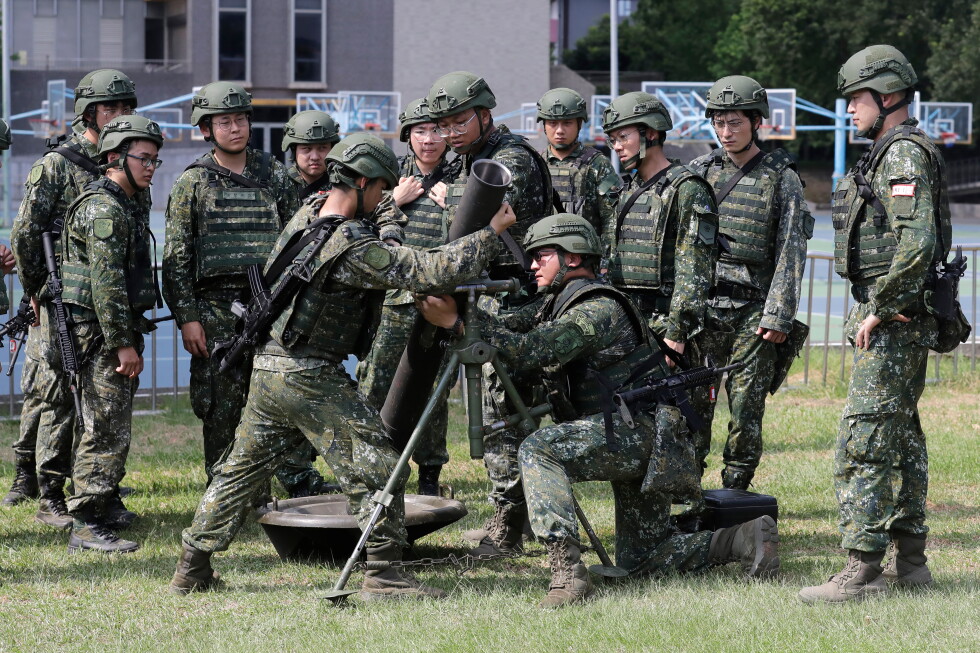
    TAIPEI, Taiwan — Against a backdrop of steadily mounting cross-Strait tensions, Taiwan launched its annual 10-day Han Kuang military exercises on Wednesday, a large-scale training series designed to prepare the self-governing island for a potential military incursion from China, which has long claimed Taiwan as part of its sovereign territory.

    Unlike routine training maneuvers, this year’s drills are tailored to address the full spectrum of modern security threats Taiwan faces, from large-scale invasion scenarios to the incremental, below-war-threshold “gray-zone” pressure that China has regularly employed in recent years. A core operational objective of the exercises is to verify whether Taiwan’s standing military can maintain uninterrupted 24-hour defensive operations across multiple fronts, while building more flexible, autonomous response capabilities for frontline troops.

    This iteration of the exercises introduces several key updates that reflect evolving defense priorities. Drawing on doctrinal guidance from the United States, Taiwan’s military is testing new communication protocols, including the backbrief system, through which lower-echelon commanders explicitly outline their mission execution plans to senior leaders. Defense analysts note this framework is intended to empower frontline fighters to make independent, effective decisions amid the chaos of combat, rather than relying solely on top-down orders.

    Another notable expansion comes in reserve mobilization: this year’s drills will activate a record force of more than 5,000 reservists organized into two full brigades, marking a significant increase from 2023’s exercise, which mobilized just one 3,000-strong reserve brigade. The drill will assess how quickly reserve personnel can transition from peacetime standby status to fully operational active duty, a critical capability for reinforcing frontline defenses in the opening days of a conflict.

    In line with Taiwan’s longstanding focus on integrating civilian defense into national security planning, urban resilience drills will be conducted across three major population centers: the capital Taipei, central Taiwan’s Taichung, and southern Taiwan’s Kaohsiung. To simulate the signal jamming and telecommunications disruption that would likely accompany a large-scale attack, organizers will intentionally slow mobile internet speeds for a 30-minute period during the drills, testing civilian response protocols and public adaptability to critical infrastructure outages.

    The exercises also mark the first formal field testing of Taiwan’s newly delivered American-made M1A2T Abrams main battle tanks. Taipei signed a contract to purchase 108 of the advanced tanks from the U.S. in 2019, with the final shipment of the platform arriving on the island in April this year.

    Taiwan relies on the U.S. for the vast majority of its advanced military hardware, and Washington remains Taipei’s most important informal security partner amid persistent Chinese territorial claims. Beijing views the democratically governed island as a separatist province that must be reunified with mainland China, by force if necessary, and has ramped up near-daily military coercion campaigns over the past five years, including regular incursions of military aircraft and naval vessels into Taiwan’s adjacent air and sea defense identification zones.

    Just weeks before the launch of the Han Kuang exercises, Taiwan’s legislative body approved a $24.8 billion supplementary defense budget earmarked for U.S. arms purchases, a figure that fell short of the $40 billion proposal put forward by President Lai Ching-te. Currently, the Taiwanese government is awaiting approval for a long-delayed $14 billion arms sales package from Washington. While former U.S. President Donald Trump and Congress previously signed off on a separate record-breaking $11 billion arms package for Taiwan, Trump indicated after a May visit to China that arms sales to Taipei could serve as a “good negotiating chip” in talks with Beijing, and has so far declined to greenlight the new, pending $14 billion sales package.

  • Probe launched into major runway near miss at Sydney Airport

    Probe launched into major runway near miss at Sydney Airport

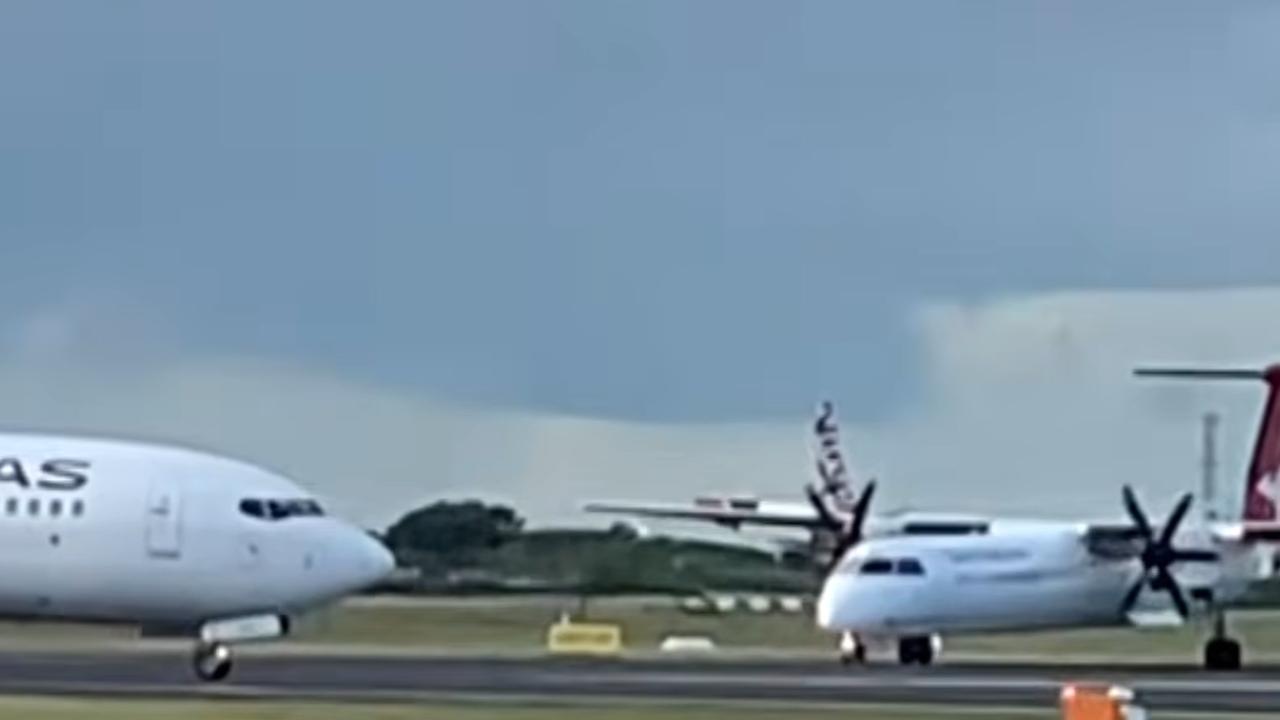
    A serious close call between two Qantas passenger aircraft at Sydney Airport’s primary runway has prompted an official investigation by Australia’s top transport safety watchdog, after a coordination breakdown between air traffic control teams nearly led to a catastrophic mid-ground collision last week.

    The incident unfolded on July 27, when air traffic controllers granted clearance for a Qantas Boeing 737, inbound from Canberra, to cross an active runway at the busy international hub. Unbeknownst to the control team at the time, a second Qantas aircraft — a Bombardier DHC-8 carrying passengers from Queenstown, New Zealand — was already on final approach for a landing on the same runway.

    Quick action from alert controllers averted disaster, however: within moments of detecting the conflicting aircraft movements, controllers alerted both flight crews, ordering the 737 to stop short of the runway while the incoming turboprop aborted its approach and completed a safe landing. No passengers or crew were injured in the incident, and neither aircraft suffered any damage.

    The Australian Transport Safety Bureau (ATSB), the national body responsible for investigating transport accidents and safety incidents, confirmed this week it has launched a full probe into the near-miss, which the agency has already preliminarily linked to a “breakdown of co-ordination” between air traffic control teams.

    In an official statement posted to the ATSB’s website, investigators confirmed that “ATC detected the conflict and advised both crews, with the 737 stopping after the holding point. The investigation is continuing.”

    Qantas has moved to cooperate fully with the probe, with a spokesperson for the airline noting that both flight crews operated strictly in line with the clearance and instructions issued by air traffic control. “Both Qantas aircraft were cleared to proceed following instructions from air traffic control and we will support the ATSB in the investigation,” the spokesperson said.

    Airservices Australia, the government-owned agency that manages national air traffic control operations, also confirmed it would back the ATSB’s work, noting that safety remains the organization’s overarching priority. The investigation is on track to wrap up by the end of 2024, with a full public report on its findings and any recommended safety changes expected to be released after that.

  • WHO chief arrives in Congo to support Ebola response as cases near 4,000

    WHO chief arrives in Congo to support Ebola response as cases near 4,000

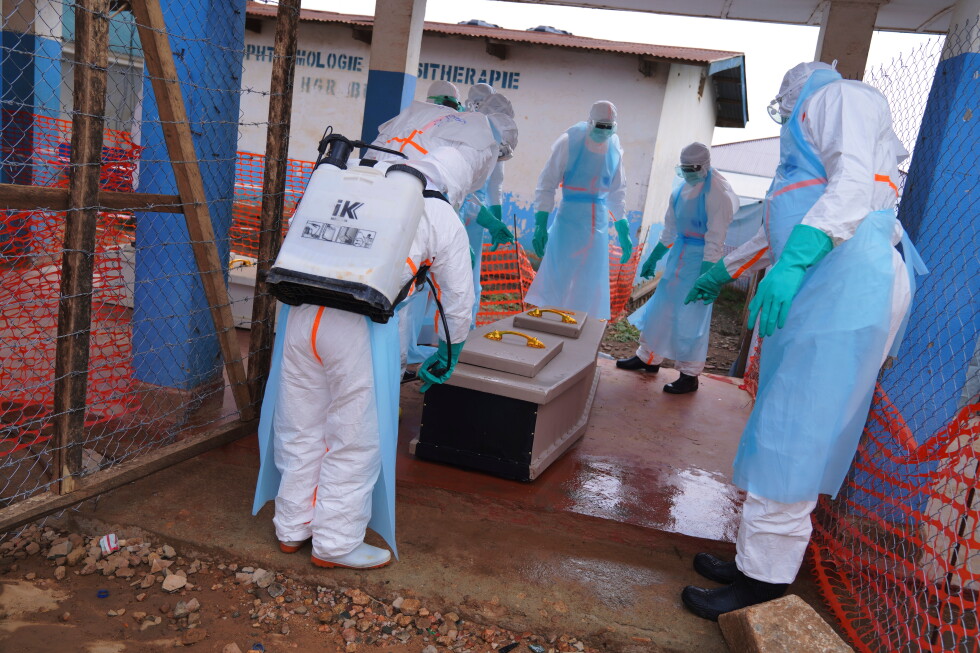
    KINSHASA, DRC – The World Health Organization has confirmed that its top leader has traveled to the Democratic Republic of the Congo to back expanding efforts to curb the fastest-spreading Ebola outbreak the world has ever seen, as total confirmed infections near the 4,000 mark.

    WHO Director-General Tedros Adhanom Ghebreyesus touched down in Kinshasa, the Central African nation’s capital, on Tuesday evening, per official statements from the WHO country office to the Associated Press. During this trip, his second visit to Congo since the outbreak was formally declared in mid-May, he is set to hold meetings with local response partners and Congolese President Félix Tshisekedi to align on next steps for scaling up intervention.

    The most recent data released overnight by Congo’s Ministry of Health puts the outbreak’s official case count at 3,874 as of Monday, with 1,751 recorded fatalities. In terms of transmission speed, this outbreak has outpaced every previous Ebola event in recorded history, ranking as the second-largest outbreak globally. It only trails the devastating 2014–2016 West African Ebola epidemic, which saw more than 28,000 total cases and over 11,000 deaths.

    The pathogen driving this current outbreak is the Bundibugyo virus, a strain of Ebola for which no universally approved vaccine or targeted treatment currently exists. Local health officials have noted that the virus was circulating undetected for weeks in remote areas of eastern Congo long before the outbreak was officially announced on May 15, allowing early transmission to go unchecked.

    A troubling hallmark of the outbreak is that a large majority of new confirmed infections are occurring among people not already on monitored contact lists of individuals exposed to known patients. This trend confirms that the virus continues to spread more quickly than the expanding response efforts can keep up with.

    Nearly 90 percent of all cases are concentrated in Ituri province, the outbreak’s epicenter. Many communities in Ituri remain cut off from response teams due to ongoing insecurity from active rebel conflict in the region. Further complicating operations, many frontline health workers walked off the job in recent weeks to protest delayed salary payments, though some workers have reported receiving backpay in recent days.

    During a visit this week to Bunia, Ituri’s provincial capital, Africa Centers for Disease Control Director-General Dr. Jean Kaseya echoed concerns about broken contact tracing systems, estimating that between 60 and 70 percent of new infections occur outside of monitored contacts. “We need to be innovative on the way to approach the contact list,” Kaseya stressed, calling for an urgent overhaul of current tracing protocols.

    Health officials add that late detection of infections remains one of the biggest systemic challenges, and is a core driver of the outbreak’s 45 percent overall fatality rate. In the 24-hour period preceding the latest health ministry update, 77 new cases were confirmed, alongside 44 reported deaths. Currently, 717 patients are receiving care in isolation facilities, while 749 people have recovered from the virus and been discharged.

  • Swimmer le Clos says his home was destroyed in a fire while he was at the Commonwealth Games

    Swimmer le Clos says his home was destroyed in a fire while he was at the Commonwealth Games

    South African swimming legend Chad le Clos, fresh off breaking the all-time Commonwealth Games medal record, has faced an unthinkable personal tragedy: his long-time Cape Town apartment was completely destroyed by a large apartment block fire that also claimed the life of one of his neighbors.

    The 34-year-old swimming star, who claimed his historic 21st Commonwealth Games medal – a bronze in the men’s 4×100-meter medley relay – on July 29 while competing in Glasgow, Scotland, was not home when the blaze broke out the following evening. The fire spread rapidly through the residential building in Sea Point, a scenic oceanside Cape Town suburb, reducing le Clos’ apartment to ashes. He noted in a public social media statement that he had lived in the home for more than 10 years, and that no personal belongings could be recovered from the wreckage.

    In the same Instagram post shared Tuesday, le Clos extended heartfelt condolences to the family of an elderly neighbor who lost his life in the incident. The long-time neighbor had lived alongside the swimmer for many years before the tragedy. Despite his own devastating loss, le Clos announced that his personal foundation would launch a fundraising drive to support other displaced residents in rebuilding their lives and homes after the fire.

    A decorated competitor with a decades-long elite career, le Clos claimed Olympic gold in the 200-meter butterfly at the 2012 London Games, and has amassed four total Olympic medals and 16 world championship titles throughout his professional career. Glasgow 2014 marked his fifth appearance at the Commonwealth Games, and the athlete has previously confirmed his plans to continue competing through the 2028 Olympic Games in Los Angeles.

  • Japan’s Honda reports robust results after its first ever annual loss

    Japan’s Honda reports robust results after its first ever annual loss

    Japanese automaker Honda Motor Co. has delivered a stunning first-quarter fiscal result, with net profits more than doubling year-over-year, marking a sharp milestone in the company’s effort to rebound from its first full-year operating loss in corporate history. The Tokyo-based manufacturer announced Wednesday that net income for the April-June quarter reached 456.9 billion Japanese yen, equivalent to approximately $2.9 billion, jumping from 196.6 billion yen recorded in the same three-month period last year.

    Quarterly total revenue also climbed 13.5% year-over-year to hit 6.06 trillion yen, or $38 billion, driven by strong consumer demand for Honda’s passenger vehicles in the U.S. and Indian markets. The company, which produces models ranging from the popular Accord sedan and Fit subcompact car to the iconic Super Cub motorcycle, saw particularly robust gains in its two-wheeler segment, with motorcycle sales surging across Brazil and India to deliver outsized profitability. Automobile sales grew steadily in Honda’s home market of Japan and the U.S., but continued to face headwinds in the world’s largest passenger vehicle market, China.

    Honda’s recent turnaround effort follows a difficult full fiscal year ending in March 2024, when the company posted a net loss of 423.9 billion yen ($2.7 billion). At the time, the automaker attributed the underperformance to massive unplanned costs tied to overly ambitious electric vehicle development plans that failed to meet original targets. Company leadership also cited policy shifts from the former Trump administration as a key external headwind: the Trump administration rolled back federal EV incentive programs, paused funding for state-level EV charging infrastructure expansion amid soaring global gas prices driven by the conflict in Iran, and implemented steep 25% tariffs (later lowered to 15%) on imported automobiles and auto parts, which eroded Honda’s export margins. After discovering slower-than-expected consumer adoption of fully electric vehicles, Honda has scaled back many of its planned EV model launches to refocus on segments with stronger current demand.

    To address its ongoing sales challenges in China, Honda Chief Financial Officer Masao Kawaguchi told reporters that the company is adjusting its product lineup to align with the unique preferences of Chinese consumers, which differ significantly from buyer tastes in North America and other Asian markets. Kawaguchi noted that full strategic adjustments will require one to two more years of focused investment and localization, adding that Honda will fully redirect dedicated resources to the Chinese market to drive a rebound.

    A favorable foreign exchange environment also provided a major boost to Honda’s first-quarter results. A weaker yen against the U.S. dollar throughout the quarter translated into higher yen-denominated earnings for Honda’s overseas sales, a longstanding advantage for Japanese export-focused manufacturers. While recent joint U.S.-Japan currency intervention has lifted the yen’s value slightly, the currency’s average depreciation over the past 12 months still delivered significant bottom-line gains for the quarter, according to Kawaguchi, who described the overall first-quarter performance as “very healthy.”

    Buoyed by the strong start to the fiscal year, Honda has upgraded its full-year net profit forecast from 260 billion yen ($1.6 billion) to 400 billion yen ($2.5 billion), projecting a full return to annual profitability after last year’s loss.

    Looking ahead, the company is facing a new short-term disruption following the magnitude 7.1 earthquake that struck Kumamoto, southwestern Japan, last week. Like other major Japanese automakers with production facilities in the region, Honda temporarily suspended operations at some plants and saw minor supply chain interruptions. Honda is scheduled to enter its annual company-wide summer break later this month, and company officials stated they expect production and logistics to return to normal once operations resume after the break. The full financial impact of the earthquake on full-year production volumes remains under assessment.

    Investors reacted positively to the strong earnings report, driving Honda’s share price up 3.9% in Tokyo trading following the results announcement.

  • Australian airline Jetstar will charge passengers to use the overhead lockers for their bags

    Australian airline Jetstar will charge passengers to use the overhead lockers for their bags

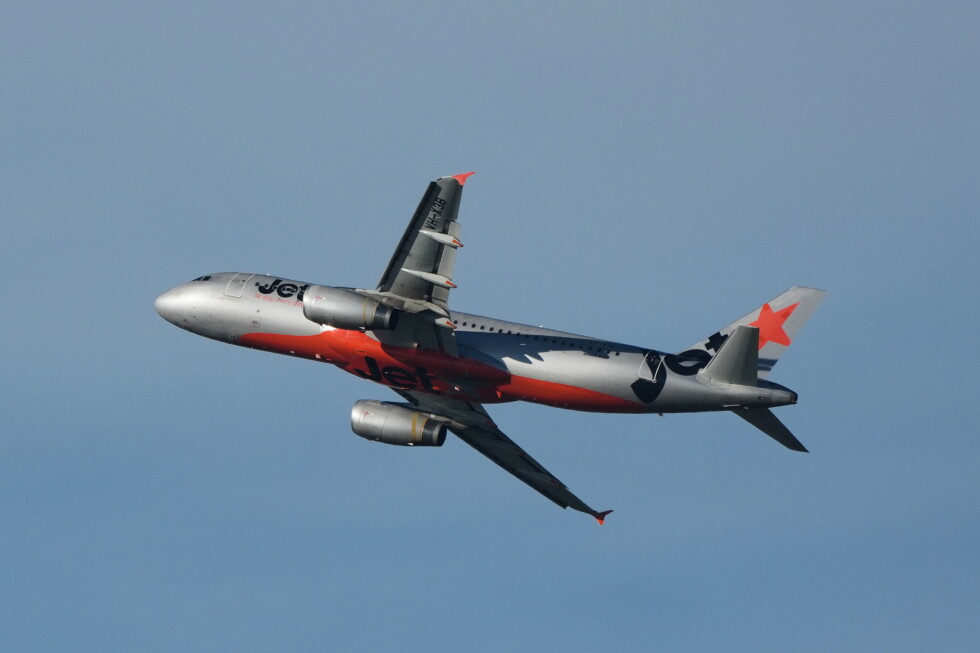
    Australian budget airline Jetstar is set to shake up regional air travel with a groundbreaking policy change that will charge passengers for using overhead cabin compartments for carry-on luggage, a first for the Australian aviation market. Scheduled to take effect in February 2027, the new rule brings Jetstar into line with low-cost carriers across the United States and Europe that have long adopted similar fee structures for cabin storage.

    The policy shift was born from widespread customer and staff feedback identifying overcrowded overhead lockers and gate-side bag weight checks as among the most stressful parts of the air travel experience, the airline confirmed in an official statement released Wednesday. Under the new framework, passengers will still be able to bring one small personal item — such as a purse, laptop sleeve, or compact backpack — that fits under the seat in front of them at no extra cost. This small underseat item will also see its existing 7-kilogram weight limit eliminated entirely to simplify boarding procedures.

    For travelers opting to use an overhead compartment, one-way fees will start at 25 Australian dollars, equal to roughly 18 U.S. dollars, with final pricing adjusted based on the length and route of the flight. Bags stored in overhead lockers will have a maximum weight limit of 10 kilograms, and gate-side weight checks for carry-on items will be scrapped entirely under the new system, cutting down on boarding delays and crowding at departure gates.

    Jetstar Chief Executive Officer Stephanie Tully explained that the restructuring is designed to address longstanding passenger frustrations during the boarding process while improving operational efficiency. “By giving customers an underseat bag with the option to add Priority Carry-on, we can make better use of overhead locker space, streamline boarding and help more flights depart on time,” Tully said, adding that the model lets passengers pay only for the extra services they choose to use.

    Like many airlines globally, Australian and New Zealand carriers have spent years unbundling ticket costs, introducing separate fees for checked luggage, seat selection, in-flight dining, and entertainment. But industry analysts note that Jetstar’s new overhead locker fee is an unprecedented move in the Australian market, one that is already expected to draw pushback from local travelers.

    Sharon Petersen, CEO of aviation industry watchdog AirlineRatings.com, noted that the change will likely ruffle widespread criticism because Australian passengers have long held higher expectations for inclusive air travel. “For such a long time they lived in a bubble of full-service options only,” Petersen explained. She also pointed out that Jetstar’s base fares remain significantly higher than those of European low-cost carriers such as Ryanair and Wizz Air that already charge for overhead locker access. This gap, she said, stems from Australia’s less competitive aviation market, as well as far higher operating costs for wages, taxes, and infrastructure that drive up baseline ticket prices across the country.

  • Gold Coast couple facing boot from Australia after paperwork mix-up

    Gold Coast couple facing boot from Australia after paperwork mix-up

    After more than a decade of building a life, putting down roots, and embracing every part of Australian community on the Gold Coast, a South African expat couple is confronting a devastating deportation order, all triggered by an administrative error that left one partner technically unlawfully in the country for just nine days.

    Rory and Michelle Hewitt, both 52, first made the life-altering decision to uproot their entire lives in their home country back in 2012, not 2015 as their initial relocation paperwork initially cited, bringing their two young sons Matthew and Caleb with them in pursuit of the iconic Australian dream. Over the 12 years that followed, the couple built stable, respected careers, watched their sons grow into adults, welcomed their first granddaughter 18 months ago, and fully integrated into the local way of life they now call home. What they never could have anticipated is that a long-undiscovered paperwork mix-up from three years ago would unravel all they have worked for.

    The administrative blunder only came to light during a recent visa renewal process this year. Despite the couple’s solicitor submitting all required documentation within the mandated legal timelines, processing delays left Michelle Hewitt without valid visa status for nine days in 2023 — a fact the couple remained completely unaware of until months later. This tiny technical error has derailed their entire application for permanent residency, and the couple has now been ordered to leave Australia by October 22. Cruelly, their two adult sons, who have already established their own lives in the country, are permitted to stay, meaning deportation would force the couple to leave behind their children and infant granddaughter indefinitely.

    “This has been devastating. We knew we would have to leave our extended family behind when we moved here, and we accepted that heavy sacrifice because we believed it would all be worth it in the end,” Rory Hewitt told reporters in an interview. “We never could have imagined this would be the outcome. The personal toll this has taken on our family is indescribable.”

    The Hewitts’ immigration journey has been fraught with unforeseen complications from the start. They first arrived in Australia on a sponsored work visa, but issues with Rory Hewitt’s initial employer led to the visa expiring unexpectedly. They subsequently applied for protection visas and were granted bridging visas that allowed them to work and study legally while their application was processed. Everything proceeded without issue until the 2023 processing gap derailed their latest bid for permanent status, even after they requested ministerial intervention to waive the technical error.

    “ We have exhausted every other available option, and we just beg that someone will review our case with compassion,” Michelle Hewitt, who worked as an office manager until the deportation order barred her from working, said. “Australia is our home now. This is where our family is.”

    As the couple fights to overturn the order, their community has rallied around them. A family friend launched a GoFundMe campaign to cover the couple’s mounting legal fees, as both are now barred from working while their appeal is pending. A public petition calling for government intervention has already garnered more than 1,200 signatures from supportive locals.

    Rory Hewitt said he has been overwhelmed by the outpouring of support from the Australian public. “We love this country and its people, and we never doubted that Australians would stand with us if they heard our story,” he said. “The support we’ve received has been incredible, and it means more than we can say.”

    If a last-minute solution does not come through, the couple says they plan to make the most of their remaining time in the country they love, with a short trip into the Australian bush to soak in the landscape they have called home for 12 years.

    Australia’s Department of Home Affairs was contacted for comment on the Hewitts’ case. In a statement provided to media, a department spokesperson said it could not comment on individual immigration cases due to privacy requirements. “All applicants lodging a visa decision review are encouraged to do so at the earliest opportunity to maintain lawful status,” the statement read. “The department is unable to grant a Judicial Review Bridging Visa A until it receives confirmation from the Federal Court that a judicial review application has been made.”

  • Flights at German airport disrupted after suspect objects sighted

    Flights at German airport disrupted after suspect objects sighted

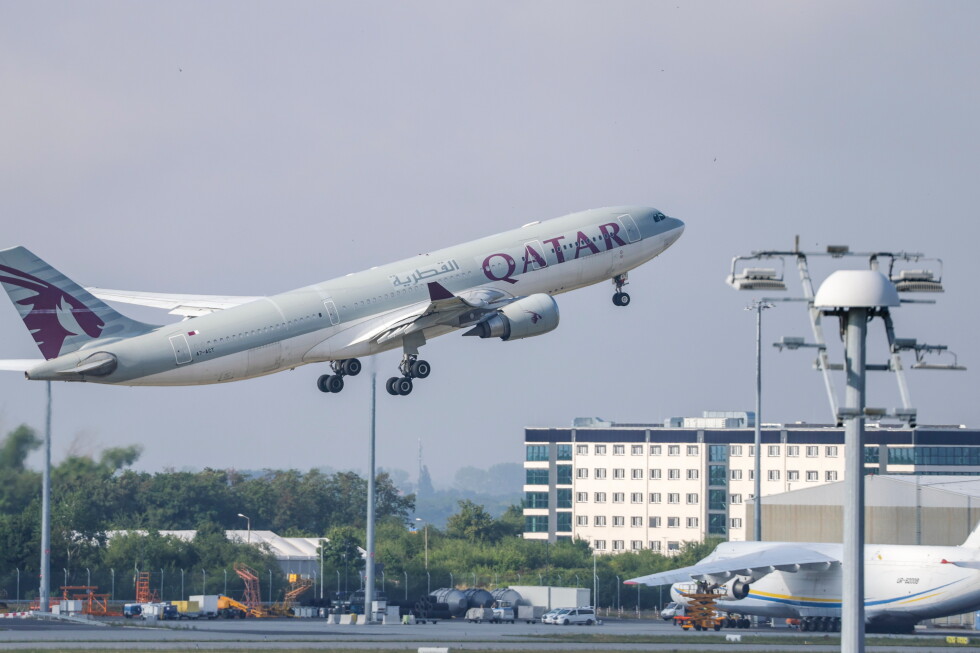
    BERLIN – Operations at Leipzig/Halle Airport, one of Germany’s most critical air cargo hubs, were thrown into disarray overnight following two separate security incidents: an unconfirmed sighting of an unidentified flying object in the area and the discovery of a suspicious object near one of the facility’s runways, local law enforcement confirmed Wednesday.

    The first report of an airborne object near the airport came in just minutes before midnight, prompting immediate safety protocols that forced multiple inbound and outbound flights to reroute. Among the diverted aircraft was at least one commercial passenger plane, according to initial law enforcement updates. Following the sighting, crews located a second, stationary unknown object in the vicinity of the airport’s southern runway, triggering an explosive ordnance response.

    Authorities dispatched a specialized bomb disposal robot to conduct a thorough inspection of the suspicious object near the runway. As of Wednesday’s public statement, police have not released additional details about the nature of either the sighted flying object or the discovered suspicious item.

    While operations using the airport’s remaining open runway resumed shortly before 2 a.m. after the initial security lockdown, the southern runway remained fully closed to all air traffic through Wednesday morning, leaving ongoing disruptions to cargo and passenger schedules at the major transport hub.