博客

  • Coroners try to identify dozens of bodies kept in ‘deplorable conditions’ at US funeral home

    Coroners try to identify dozens of bodies kept in ‘deplorable conditions’ at US funeral home

    A shocking discovery at a Chicago funeral home has left dozens of families in agonizing uncertainty, as investigators launched a painstaking process to identify improperly stored remains found in deplorable, unrefrigerated conditions. The Cook County Medical Examiner’s Office, leading the multi-agency investigation, confirmed Thursday that nearly 60 bodies were located at South Chicago Chapel, left in various stages of decomposition amid documented rodent and maggot infestations. Investigators worked through the overnight hours to transport all remains to secure facilities to begin the identification process, which officials warn could take multiple days to complete.

    According to regulatory records obtained by CBS News, the BBC’s media partner, the funeral home’s director Johanna Morgan intentionally allowed multiple decedents to be stored in an unrefrigerated space with unsanitary conditions that accelerated decomposition and attracted pests. In response to the findings, the Illinois Department of Financial and Professional Regulation (IDFPR) has suspended Morgan’s funeral director license. The facility has not responded to multiple requests for comment from the BBC.

    The case has already raised questions about regulatory gaps, as the operation of South Chicago Chapel has ties to a prior mishandling incident involving the Morgans. Public records show that Clark Morgan, Johanna Morgan’s husband and the listed president of South Chicago Chapel, had his own funeral director license revoked in 2024. Clark Morgan previously owned and operated Heights Crematory, another Chicago-based facility that was shut down in 2025 after investigators also uncovered mishandling of human remains there. Michael Sharkey, general counsel at the Illinois Funeral Directors Association, told the BBC he was the one who initially reported the Heights Crematory incident last year, and he questioned why regulatory officials did not increase scrutiny of the Morgans ahead of the latest discovery.

    “It is extremely disturbing that the same individuals who appear to be involved with the events at South Side Chapel are the same persons,” Sharkey said in a formal statement. He added that while he believes the IDFPR has performed well overall, the repeated failures by the same operators point to gaps in proactive oversight.

    For local families already grieving, the discovery has turned mourning into fear and uncertainty. Patrice Halliburton told CBS News Chicago that she arranged for her late sister Melody to be cremated at South Chicago Chapel, but now has no way to confirm whether the ashes she received actually belong to her loved one. “We don’t know if Melody is in there or not,” Halliburton said. “So right now, we’re more fearful… than we are angry. I’d rather save that anger for later when we know for sure what’s going on.”

    The Chicago incident is the latest in a string of high-profile mishandling cases across the United States that have reignited calls for stricter, more consistent regulation of funeral homes. Currently, oversight of the funeral industry is split between federal and state authorities: Federal Trade Commission rules mostly govern pricing transparency and consumer contract requirements, while day-to-day operational standards for handling remains are set entirely by individual states.

    Sharkey explained that Illinois already has relatively strict rules for handling decedents, including requirements that each body be stored separately rather than stacked, and that a written chain of custody log must be maintained to track every movement of a remain after it enters a funeral home’s care. State regulators are authorized to audit these logs and conduct routine inspections of facilities, though Sharkey acknowledged that consistent enforcement remains a challenge.

    Regulatory frameworks vary widely across the country, with some states requiring no licensing for funeral home operators at all. In 2023, nearly 200 bodies were discovered at the Return to Nature funeral home in Colorado, a state that did not require operators to hold a license at the time of the incident. In response to that case, Colorado will implement new mandatory licensing requirements for funeral operators starting in January 2027. Similar high-profile cases have been reported internationally: in the United Kingdom, a funeral director was sentenced to 20 years in prison after authorities discovered dozens of improperly stored bodies and half a tonne of unprocessed ashes at his facility, a case that inflicted years of trauma on affected families and sparked widespread calls for regulatory reform.

    Dan Ford, president of the U.S. National Funeral Directors Association, expressed deep sorrow over the Chicago incident in a statement to the BBC. “I am absolutely heartbroken over what has happened here,” Ford said. “I feel for everybody that’s affected, all the families and loved ones who are now facing this additional pain after losing someone they care about.”
  • Kidnapped rare Serbian eagle freed into wild after rescue

    Kidnapped rare Serbian eagle freed into wild after rescue

    A remarkable journey of conservation and cross-border cooperation has ended with the successful release of a rare, critically endangered eastern imperial eagle back into its natural habitat in Serbia, months after the bird was snatched by poachers in the Middle East.

    Named Feliks by conservationists, the young raptor fledged from its nest in Serbia in July 2025. As part of ongoing species recovery efforts, experts from the Bird Protection and Study Society of Serbia (BPSSS) fitted the bird with a tracking device to monitor its migratory movements. When the young eagle began flying toward the Middle East, conservation teams immediately grew concerned about the risks it faced in the region, where illegal wildlife trafficking is pervasive.

    By October 2025, Feliks’ tracking signal cut out entirely. At first, teams assumed the issue was a faulty tracking device, but they soon made the grim discovery that the bird had been captured by poachers in Syria, who later attempted to sell the protected animal. Following weeks of silence, a partner wildlife organization in Lebanon reached out to BPSSS to confirm that Feliks’ captors were demanding a ransom for his safe return. Rejecting the demand outright to avoid fueling the illegal wildlife smuggling network, BPSSS entered into months of protracted negotiations to secure the eagle’s release without paying.

    According to reports from the Associated Press, the delicate handover saw refugees smuggle Feliks across the Nahr al-Kabir river, which forms the northern border between Syria and Lebanon, hidden inside a potato sack. Once in Lebanon, the bird was transferred to a specialized wildlife rehabilitation center in Beirut, where he received veterinary care and spent more than six months recovering from his captivity.

    In June 2026, Serbian peacekeepers deployed on a peacekeeping mission in Lebanon arranged to repatriate Feliks back to Serbia aboard a military transport plane returning from the region. The bird arrived exhausted at Palic Zoo’s wildlife shelter in Serbia, where zookeepers and conservationists monitored his health daily for more than a month as he regained his strength ahead of release.

    The successful rescue of Feliks comes alongside major progress in the recovery of the eastern imperial eagle, a protected species classified as critically endangered. BPSSS data shows that targeted conservation efforts launched in 2017 have grown Serbia’s wild population from just a single breeding pair to 29 breeding pairs as of 2026, marking one of the most successful species recovery initiatives for the raptor in Europe.

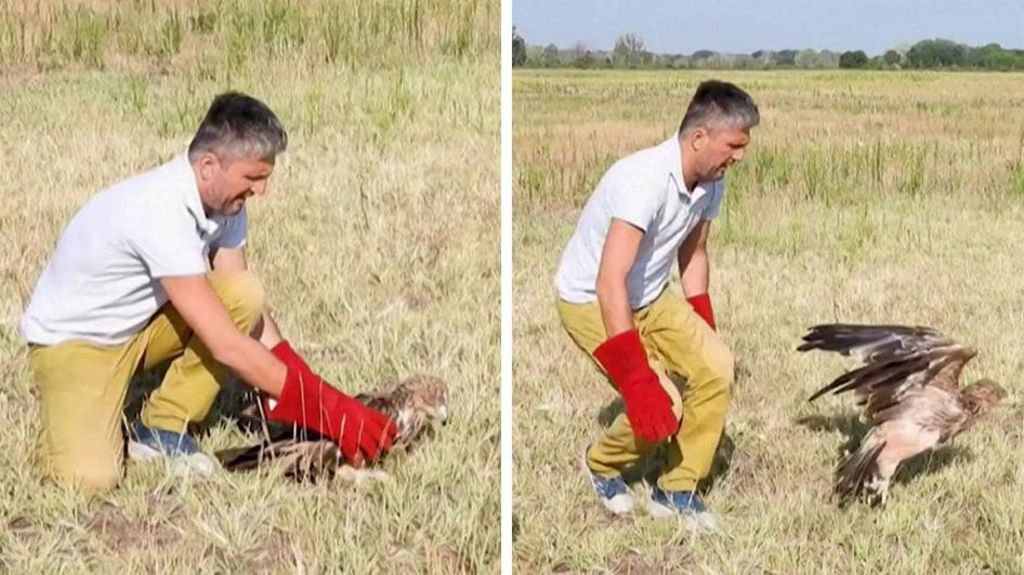
    After completing his recovery, Feliks was officially released back into the wild on Thursday. Conservation leaders expressed hope that the young eagle will thrive, establish his own breeding territory, and contribute to the ongoing growth of Serbia’s recovering eastern imperial eagle population. In the coming weeks, experts will continue to closely monitor Feliks’ movements and behavior via his tracking device to ensure he readjusts successfully to life in the wild.

  • Motorcyclist dies in County Donegal crash

    Motorcyclist dies in County Donegal crash

    A fatal road traffic collision has claimed the life of a motorcyclist in County Donegal, Republic of Ireland, leaving one person dead and another with minor injuries, Irish police have confirmed.

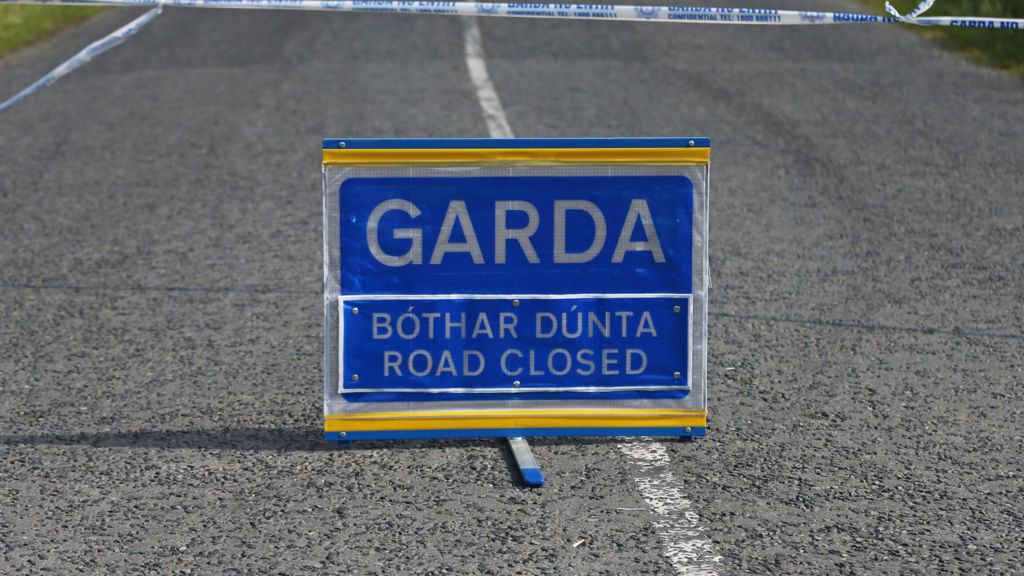
    The incident unfolded just after 4:30 PM local time on Friday along the N56 route at Termon, according to official updates from Gardaí, Ireland’s national police service. The victim, a male motorcyclist in his 60s, could not be saved and was pronounced dead immediately at the crash site. Following initial emergency protocols, his remains were transported to Letterkenny University Hospital, where a post-mortem examination is scheduled to determine the official cause of death in the coming days.

    The second person involved in the crash, a woman in her 30s who was driving the passenger car, was also taken to a local hospital for assessment and treatment. Gardaí confirmed her injuries are non-life threatening and classified as minor.

    To support a full and thorough investigation, the crash site was cordoned and preserved on Friday to allow specialist Garda Forensic Collision Investigators to conduct their forensic examination. Local traffic diversion plans were put in place throughout the investigation to manage travel through the area and prevent further disruption.

    As investigators work to piece together the full circumstances of the collision, Gardaí have launched a public appeal for information from anyone who may have witnessed the incident. Police are specifically asking any drivers who traveled along the stretch of the N56 between the Lagoon Restaurant & Guesthouse and Creeslough between 4:00 PM and 5:00 PM on Friday to come forward, particularly those with dashcam footage that could provide critical evidence for the investigation.

  • Watch: BBC questions Infantino over backing as Fifa president

    Watch: BBC questions Infantino over backing as Fifa president

    The embattled leader of soccer’s global governing body, FIFA, is now under intense public scrutiny after the BBC openly questioned the continued support for Gianni Infantino’s presidency. The controversy ignited after Infantino’s controversial plan to sell private stakes in the World Cup collapsed at the eleventh hour, triggering a wave of demands from across the global soccer community that he resign from his post.

    What was supposed to be a behind-the-scenes deal to offload private shares of soccer’s most lucrative tournament was derailed, bringing the questionable proposal into the public spotlight. The failed initiative has thrown the leadership of FIFA back into crisis, with critics arguing that the scheme raises serious questions about governance and transparency within the organization. Multiple high-profile voices and soccer stakeholders have now joined the chorus calling for Infantino to step down, turning what began as an internal deal gone wrong into a major leadership challenge for the head of world football.

  • Hunter Biden opens up to the BBC about father’s cancer battle, pardon and politics

    Hunter Biden opens up to the BBC about father’s cancer battle, pardon and politics

    In a rare, wide-ranging interview with BBC’s flagship current affairs program Newsnight, Hunter Biden, the son of former U.S. President Joe Biden, has opened up on a series of deeply personal and politically charged topics that have dominated headlines in recent months.

    During the conversation, Hunter Biden pulled back the curtain on his father Joe Biden’s ongoing battle with cancer, offering unpublicized insights into how the former president has navigated his health struggle while remaining engaged in public life. He addressed widespread speculation about the former president’s well-being, speaking candidly about the challenges the Biden family has faced behind the scenes as Joe Biden undergoes treatment.

    A central focus of the interview was the controversial pardon that Joe Biden granted to his son before leaving office in January 2025. Hunter Biden discussed his feelings about the decision, responding to critics who have labeled the pardon an abuse of presidential power, and explained how the action resolved years of legal investigations that hung over his personal and professional life.

    Beyond personal matters, Hunter Biden also shared his thoughts on his own potential future in U.S. politics. When asked about whether he would seek elected office in the coming years, he offered clarity on his political ambitions, addressing ongoing rumors that have circulated in Washington political circles about his next career steps.

    The interview marks one of the most extensive public comments Hunter Biden has made since his father left the presidency, giving voters and political observers a rare unfiltered look at the private dynamics of one of America’s most high-profile political families at a pivotal moment in U.S. politics.

  • BHP faces $120m revenue loss as Port Hedland workers begin strike action

    BHP faces $120m revenue loss as Port Hedland workers begin strike action

    Global mining giant BHP is bracing for projected losses of up to $120 million in daily revenue this weekend, after hundreds of unionized workers moved forward with planned industrial action at the company’s critical Port Hedland iron ore export terminal in Western Australia. The work stoppage proceeds despite recent negotiations that unions have characterized as broadly progressive, after more than eight months of stalled talks over a new four-year enterprise wages agreement.

    Three major Australian union bodies — the Electrical Trades Union (ETU), the Australian Manufacturing Workers Union, and the Australian Workers Union — have coordinated the industrial action, which will see around 150 workers walk off the job across Saturday and Sunday. The stoppage kicked off with a 24-hour ship-loading ban on August 8, followed by a full 24-hour work halt at the Port Hedland Bulk Export Terminal starting at 5:30 a.m. AWST Sunday. Workers responsible for high-voltage power infrastructure, who are negotiating a separate independent contract with BHP, will also join the action with a 12-hour stoppage on Sunday.

    Union leaders say the industrial action is a last resort after months of what they frame as deliberate stonewalling from the mining giant. ETU WA Secretary Adam Woodage explained that after eight months without meaningful negotiation, BHP tabled a proposal that establishes a so-called “false floor” for base wages, which would set formal base pay well below workers’ current earnings. Under BHP’s proposal, the company would make off-agreement backdoor payments to bring total wages up to current levels, a structure the union rejects as untransparent and unenforceable.

    “Workers want an agreement that locks in real, enforceable terms that reflect the specialist skills, extreme working conditions and significant personal sacrifice that comes with remote iron ore operations,” Woodage said. “Protected industrial action was the only path left open to us. We want to negotiate, not fight — but we have been forced to take action just to get a seat at the table.”

    Craig Beveridge, spokesperson for the Western Mine Worker Alliance, added that workers have grown frustrated after months of delays and bad faith bargaining from BHP. “BHP pulls in billions of dollars in annual profit off the hard work and dedication of our members,” Beveridge said. “It is only fair that those workers get their fair share of that success. Our members are fed up, and ready to fight for as long as it takes to get a fair agreement.”

    BHP has offered a 16 percent pay increase across the four-year term of the new agreement, which the company argues outpaces Australia’s current average inflation rate of 2.87 percent and would deliver industry-leading pay and conditions. A company spokesperson said the industrial action would only delay progress toward a final deal, noting that significant progress has already been made with the assistance of the Fair Work Commission. “With another meeting scheduled and an updated proposal on the table, there is no need for unions to proceed with this work stoppage,” the spokesperson said. “Our focus remains on reaching a fair and reasonable agreement that delivers consistent pay across the workforce while protecting strong conditions.”

    As the world’s largest iron ore export hub, Port Hedland handles roughly 1.6 million tonnes of iron ore exports daily for multiple Pilbara-based miners. Beyond BHP’s $120 million projected daily revenue loss, the Western Australian state government is expected to forego nearly $7 million in daily royalty payments during the shutdown. Unlike BHP, other major miners operating in the Pilbara — including Fortescue Metals Group and Hancock Prospecting — are not expected to face disruptions to their export operations, as their workers are not participating in the industrial action.

    This is the second round of industrial action taken by BHP workers at the terminal this year. A July strike saw only 63 of more than 1,000 total staff participate, and ship loading operations continued as scheduled with no major disruptions. This weekend’s action is structured differently, however, with all participating workers set to stay home rather than rally on-site, leading to projected full operational halts for the terminal across the two-day stoppage.

    Despite the walkout, both parties are set to return to the negotiating table mediated by the Fair Work Commission on August 18, leaving open the possibility of a last-minute resolution to the dispute before that scheduled meeting.

  • Spain imposes border checks on Italy as migrant showdown grows

    Spain imposes border checks on Italy as migrant showdown grows

    A diplomatic dispute between two European Union and NATO allies, Spain and Italy, has escalated sharply over irregular migration, with Madrid set to implement temporary reciprocal border controls on travelers from Italy starting midnight Saturday.

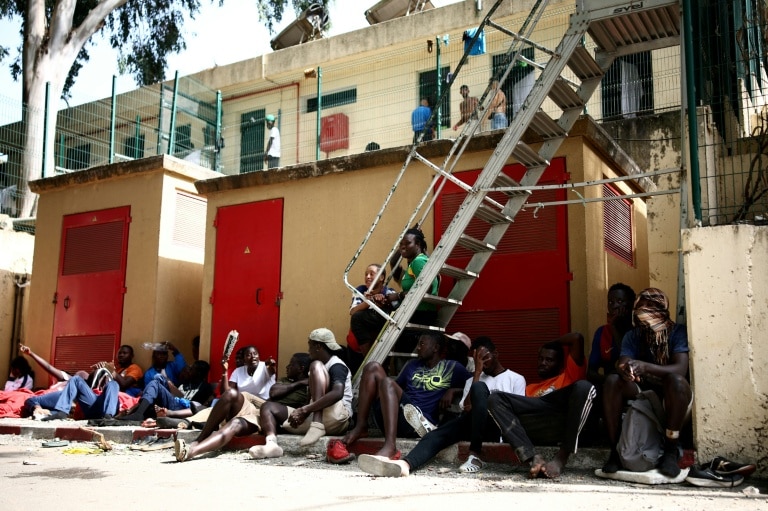
    The escalating confrontation traces back to an unprecedented mass border crossing that unfolded on July 30 and 31, when tens of thousands of migrants crossed into Spain’s North African enclave of Ceuta from Morocco. Official Spanish data confirms 72,000 people entered Ceuta during the incident, with roughly 70,000 later returning to Morocco. The crossing resulted in significant fatalities: Spanish authorities record 80 deaths, but Moroccan human rights groups put the toll at a minimum of 141, with the number expected to climb, while Morocco’s interior ministry confirms 11 deaths on its side of the border, almost all from drowning. Hundreds of unaccompanied minor migrants who remain in Ceuta are currently trapped in severe living conditions, with limited access to basic necessities including food, clean water and adequate shelter.

    Following the Ceuta incident, far-right Italian Prime Minister Giorgia Meloni’s administration took swift action, imposing a one-month suspension of Italy’s visa-free Schengen Area participation with Spain. Italy, which has faced consistent pressure from tens of thousands of irregular migrants arriving on its shores via small Mediterranean boats each year, framed the move as an extraordinary national security safeguard. Meloni was also among a group of hardline EU leaders that called for Spain’s suspension from the full Schengen zone — a step that legal experts note is not permitted under EU rules.

    On Friday, Spain rejected Italy’s measure in blunt terms, calling it “unfair, contrary to the EU’s interests and discriminatory for the Spanish population.” Spanish Foreign Minister Jose Manuel Albares called the decision “a torpedo fired at the hull of European unity,” and gave Rome until Sunday to reverse the checks, threatening proportional countermeasures if it refused. Italy rebuffed the ultimatum within hours, confirming it would not revisit its decision before August 15, citing unconfirmed expectations of a second mass migration wave to Ceuta mid-month. “Italy does not accept ultimatums or impositions from abroad regarding national security and border control,” Meloni’s office said in an official statement, adding that it will only reconsider the policy once it has confirmation that no new irregular migration flows or security risks are heading toward Europe.

    Shortly after Italy’s refusal, Spain’s interior ministry followed through on its threat, announcing the new temporary border checks, which will remain in place through September 7. Madrid says the controls are a direct response to the persistent irregular migration pressure Italy has cited to justify its own measures. Italy, which shares no land border with Spain, implemented its original checks at air and maritime entry points for third-country nationals arriving from the Iberian Peninsula, while noting that Spanish and other EU citizens would not face disruptions to movement. Local Spanish media reports that Spanish police have monitored social media rumors of an August mid-month new arrival to Ceuta, though national authorities have not officially confirmed expectations of a repeat of the late-July incident.

    Spain has pushed back against Italy’s move, suggesting it is driven by internal domestic political priorities rather than a genuine policy need, warning that the dispute risks “creating rifts and sterile conflicts” across the bloc. Madrid says it remains optimistic that shared pro-European values and good faith will resolve the standoff, but the unprecedented dispute between two allied EU member states has exposed deepening divisions over how the bloc should manage irregular migration across the Mediterranean.

  • All Blacks pull away late in flattering 38-21 win over the Stormers

    All Blacks pull away late in flattering 38-21 win over the Stormers

    Three decades after New Zealand’s last full-scale tour of South Africa, the iconic All Blacks finally returned to the country’s iconic stadiums this Friday, but their opening tour match fell far short of the high expectations fans and analysts had carried for years. Despite closing out the fixture with a 38-21 victory over the Stormers, the final scoreline offered a misleadingly flattering portrait of a disjointed, ill-disciplined All Blacks side that had been favored to win by a minimum of 30 points.

    The All Blacks got off to a promising start, with sharp, well-executed breaks from Peter Lakai and Leroy Carter setting an early tone. Hooker Samisoni Taukei’aho crossed for the tour’s opening try in the fifth minute off a driving lineout, and experienced playmaker Beauden Barrett added the conversion before nearly notching a try of his own, only to knock the ball on under heavy Stormers pressure. That promising opening quickly unraveled, however, as a cascade of All Blacks penalties pinned the side in their own half for 20 consecutive minutes. Three of those early penalties went to All Blacks tighthead Pasilio Tosi, all called for collapsing the scrum, exposing early struggles in New Zealand’s set piece that would plague the team for the full 80 minutes.

    The underdog Stormers, a makeshift preseason outfit that had already lost several key starters, put in a gritty, defiant performance that outperformed most pre-match predictions. Twice the underdogs rallied to level the score, and the match remained tied 14-14 with just 13 minutes left to play. The tide shifted only when injury stripped the Stormers of their second scrumhalf, leaving the side with no remaining reserve backs to fill the gap. Forced to reshuffle their backline — with former sevens star Seabelo Senatla moving to scrumhalf and flanker Hacjivah Dayimani shifting out to wing — the patched-up Stormers defense was quickly exposed by the All Blacks, who ran in three tries in the final eight minutes to pull away to their final 17-point margin.

    For the All Blacks, the match was marked by uncharacteristic chaos: three yellow cards for foul play, persistent struggles at the scrum and lineout, and a general lack of cohesion across the starting lineup. In front of a crowd of 47,130 that fell short of a sellout, the All Blacks notched six tries to the Stormers’ three, but the win only papered over the obvious gaps in their performance ahead of the highly anticipated test series against South Africa’s Springboks, widely regarded as rugby’s greatest modern rivalry, which kicks off in just two weeks. On the positive side for New Zealand, the side finished the match with no major injury concerns, seven players earned their first caps in the iconic black jersey this year, and two young prospects — prop Siale Lauaki and inside back Josh Jacomb — made their professional debuts off the bench.

    It was two Stormers players who stole the show, however: 20-year-old flyhalf Yaqeen Ahmed, who turned in a remarkably composed performance in his first-class debut, and 39-year-old flanker Deon Fourie, a dynamic veteran who will turn 40 next month. Fourie’s second-half try, scored while the All Blacks were down to 13 men following two yellow cards, marked his second score against New Zealand; his first came in the 2023 World Cup final, where he played through a serious shoulder injury just months before tearing his ACL and spending more than a year recovering from ligament damage. Senatla also notched a memorable try for the Stormers after a disrupted start to the second half that saw the home side lose captain and center Ruhan Nel to injury, leaving them without any backline replacements left on their 6-2 bench.

    The All Blacks’ inconsistent performance means few players have put forward a compelling case to earn a starting spot in the upcoming test series. New Zealand’s next tour match is set for this Tuesday against the Sharks in Durban, where the side will look to iron out the kinks before the high-stakes test series gets underway.

  • Coventry sign Ghana’s Yirenkyi for record fee

    Coventry sign Ghana’s Yirenkyi for record fee

    Premier League returnees Coventry City have sealed their most expensive signing in club history, landing 20-year-old Ghanaian international midfielder Caleb Yirenkyi from Danish top-flight side Nordsjaelland.

    The promising young talent has put pen to paper on a long-term deal with the Sky Blues, with the transfer fee widely reported to hit 27 million euros ($29.3 million), equivalent to £23.1 million, with an additional 3 million euros (£2.5 million) in performance-based add-on clauses. Yirenkyi’s arrival marks the fifth new addition to Coventry’s first-team squad this summer transfer window, coming as the club prepares to end a 25-year absence from England’s top tier under manager Frank Lampard.

    A graduate of the renowned Right to Dream football academy, Yirenkyi only joined Nordsjaelland in 2024, but quickly established himself as one of the most exciting young prospects in Scandinavian football. He was named the Danish Superliga’s Young Player of the Year for his outstanding breakout 2024-2025 season, catching the eye of top European clubs just months after his arrival at the Danish club.

    On the international stage, Yirenkyi earned his first senior cap for Ghana in May 2025, and went on to feature for the Black Stars at the 2025 FIFA World Cup held earlier this summer. He delivered a career-defining moment at the tournament, netting a dramatic stoppage-time winner that secured three points for Ghana in their group stage clash against Panama. To date, Yirenkyi has scored two goals in 15 appearances for his country.

    While he is primarily classified as a box-to-box central midfielder, Yirenkyi has shown impressive positional versatility during his short professional career, making multiple appearances at right-back for both his club and national team, a trait that has drawn praise from talent scouts across Europe.

    In his first comments after completing the transfer, Yirenkyi highlighted his excitement to work under Lampard and develop with his new side. “When I spoke to the head coach about the club’s plans and the style of football they want to play, it’s something I really clicked with,” he said. “I’m still young, so I want to learn as much as I can from the head coach, from all the experienced players in this squad, and I’m ready to work as hard as I can for this team.

    Danish football journalist Nicklas Degn, who hosts the popular Mediano football podcast, told BBC Sport that Yirenkyi’s move to the Premier League was widely expected following his breakout season and strong World Cup performances. Degn described Yirenkyi as an “extremely exciting player” who has long been “touted as the next big thing” in European youth football.

    “He was one of the standout players in the Danish Superliga last season, and he’s held in extremely high regard across the continent,” Degn explained. “Everyone knew it was only a matter of time before he made the step up to a bigger league, especially after how well he performed at the World Cup.”
    Degn also noted that Nordsjaelland has built a globally renowned reputation for developing elite young talent, a track record that has turned the Danish club into a common stepping stone for prospects moving to top European leagues. “He’s a complete number eight, but his versatility really stands out – he spent much of this spring playing in defence for both Nordsjaelland and Ghana,” Degn added. “Coventry are getting an incredibly exciting prospect who plays with a level of maturity that’s way beyond his 20 years.”

    Yirenkyi’s arrival follows Coventry’s earlier summer signing of goalkeeper Ben Rushworth, who joined the club on a permanent deal from Brighton & Hove Albion after a successful loan spell during the 2024-2025 campaign that secured the Sky Blues’ promotion back to the Premier League.

  • War on Iran: Saudi Arabia warns of imminent attacks by Iraqi groups and Yemen’s Houthis

    War on Iran: Saudi Arabia warns of imminent attacks by Iraqi groups and Yemen’s Houthis

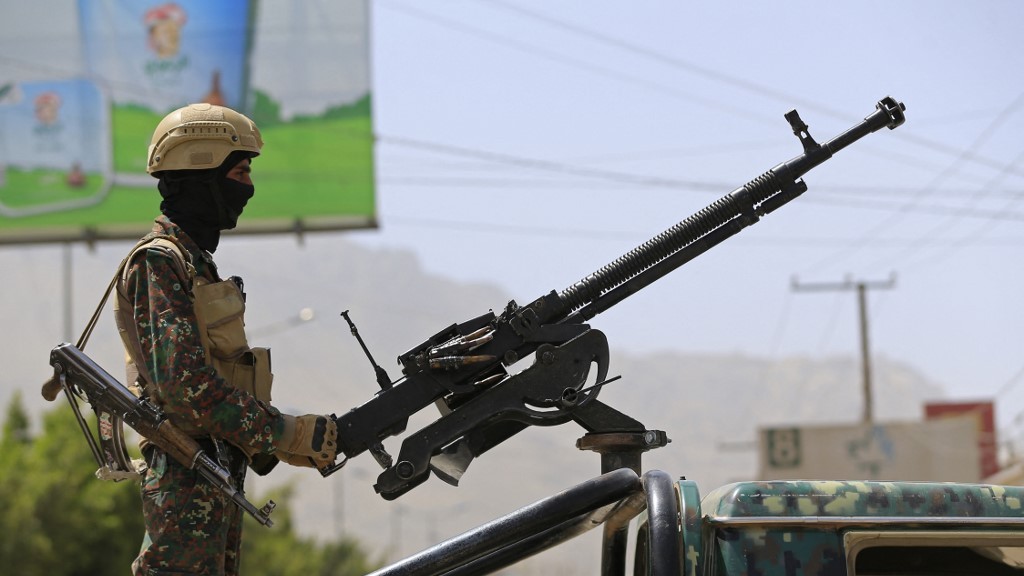
    As tensions across the Middle East surge to new heights, Saudi Arabia has issued a stark intelligence-backed warning that Iran’s Islamic Revolutionary Guard Corps (IRGC) is orchestrating coordinated cross-border attacks against the kingdom, carried out jointly by Iraqi armed factions and Yemen’s Houthi movement.

    A senior anonymous Saudi official shared details of the intelligence assessment with Reuters Thursday evening, noting that the collaborative threat assessment was compiled by Saudi authorities, U.S. intelligence agencies, and regional partner nations. According to the official, the planned attacks are set to target high-value civilian and economic infrastructure across the kingdom, with critical energy facilities, commercial ports, and major airports listed as the primary potential targets.

    Saudi security forces have already detected unusual movements of drone and missile systems consistent with pre-attack preparations, the official confirmed, adding that hostile forces are positioning to launch strikes from two directions: Iraq along the kingdom’s northern border and Yemen to the south. In a firm statement of intent, the official added that Riyadh has completed defensive preparations and is prepared to deploy all necessary measures to repel and respond to any act of aggression against its territory.

    This latest warning comes against a backdrop of rapidly escalating regional confrontation tied to the expanding Israeli-U.S. campaign against Iran-aligned groups that launched in late February. Tensions spiked further late last month, on July 29, when joint Saudi-U.S. airstrikes hit positions held by Iran-backed armed groups in Iraq. The strikes targeted command headquarters operated by the Popular Mobilisation Forces, leaving more than 20 fighters dead and at least 30 others injured.

    In the wake of the airstrikes, Iraqi aligned factions publicly vowed to carry out retaliatory attacks against Saudi and U.S. targets. However, Hadi al-Amiri, leader of the prominent Iraqi Badr Organisation, has called for a delay in any retaliatory action. In a televised address carried by Iraqi media outlets, Amiri urged fighters to hold off on responses to what he labeled “American-Saudi aggression” and set aside immediate grievances for the sake of Iraq’s national strategic interests.

    Beyond the northern threat from Iraqi factions, Saudi Arabia has also faced a sharp uptick in cross-border attacks from Houthi forces based in Yemen. The Houthi movement confirmed it launched an assault on Saudi Arabia’s Najran airport earlier this week on Tuesday, part of its ongoing wider campaign targeting Saudi military positions, civilian infrastructure, and commercial shipping connected to the kingdom.

    On Thursday alone, Houthi assaults on Saudi-backed Yemeni government deployments in Yemen’s Marib and Hadramout provinces left at least 17 government soldiers dead, according to Yemen’s internationally recognized government. Multiple independent regional sources have put the confirmed death toll as high as 58. The Houthi movement has also compounded pressure on Saudi Arabia by disrupting the kingdom’s crude oil exports through a de facto blockade of Red Sea shipping lanes, pulling Riyadh deeper into the broad regional confrontation with Iran-aligned groups.

    In response to the growing array of threats, regional diplomatic sources familiar with defense planning confirm that Saudi Arabia, Pakistan, and Turkey are set to sign a new trilateral joint defense agreement during a meeting scheduled Friday in Mecca. As of Friday morning, neither the Houthi movement nor the Iranian government has issued an immediate public response to Saudi Arabia’s warning of planned coordinated attacks.