博客

  • From autonomy to ‘settler colonialism’: How India redrew Kashmir’s demographic and political landscape

    From autonomy to ‘settler colonialism’: How India redrew Kashmir’s demographic and political landscape

    It has now been seven years since India revoked the special constitutional autonomy long granted to Indian-administered Jammu and Kashmir. The rollback of these historic constitutional protections, followed by sweeping changes to residency rules, land ownership laws and regional governance, has systematically remade the region’s social, political and economic landscape. Critics across academic, political and local circles frame these changes as a deliberate multi-pronged strategy to alter Kashmir’s unique demographic character and erode native political power. The debate around the changes remains deeply divided, with competing narratives of integration versus disenfranchisement defining the region’s uncertain future seven years on.

    On August 5, 2019, India’s ruling Bharatiya Janata Party (BJP), a right-wing nationalist administration led by Prime Minister Narendra Modi, took the unilateral step of scrapping two core constitutional provisions: Article 370 and Article 35A. For seven decades, these clauses had anchored Kashmir’s relationship to the Indian Union, granting the Muslim-majority region limited self-governance and legal safeguards to protect its native population and resources. Article 370 originated from the 1949 accession agreement following the partition of India, while Article 35A empowered Jammu and Kashmir’s regional assembly to define permanent residents and bar non-locals from permanent settlement in the region. Prior to 2019, existing land laws capped individual land holdings at 12 acres, prohibited construction on agricultural land and barred non-Kashmiris from property ownership, frameworks designed to protect the region’s fragile ecology, preserve local access to resources and guarantee native access to employment.

    Following the 2019 repeal, the Indian government unilaterally split the former state into two federally controlled Union Territories: Jammu and Kashmir, and Ladakh, placing the entire region directly under the administrative control of India’s central government in New Delhi. Modi’s administration framed the move as a long-overdue corrective to historical anomaly, arguing that integrating the region more tightly into India would attract new private investment, spur long-delayed development, and curb long-running separatist militancy.

    But within months of the repeal, New Delhi introduced sweeping regulatory changes that opened the region to outside settlement and investment. In March 2020, the government implemented new domicile rules that granted resident status to any person who had lived in the region for 15 years, studied within its borders for seven years, or served in select central government posts in the region. A subsequent notification in October 2020 eliminated even the requirement of domicile status for purchasing most non-agricultural land, effectively removing all historic barriers to outside property ownership.

    Official government data presented to the Jammu and Kashmir Assembly reveals that within just two years of the new rules going into effect, more than 1.25 million domicile certificates had been issued across the region. Of these, more than 83,000 went to individuals who did not previously qualify as permanent residents. Regional authorities have claimed that domicile certificates are only required to apply for government jobs and do not automatically confer land or voting rights, but concurrent changes to land law mean a domicile status is not required to purchase most property in the region anyway.

    For native Kashmiris, these policy shifts have resulted in widespread systemic disenfranchisement, as outsiders gain open access to the region’s limited land and natural resources. Many residents describe growing economic inequality that has reshaped daily life over the past seven years. “I think what has changed in these seven years is the visible presence of inequality,” explained Jan, a 35-year-old resident who requested only her first name be published for safety. “I don’t recall Kashmir being so economically unequal before. When you see the much-hyped city centre of Lal Chowk, for example, you get a small glimpse of a colourful metropolis. But the moment you step into the next-door neighbourhood of Maisuma and walk into the lanes of the old city, you encounter real Kashmir: waterlogged roads, people driving rickshaws for a living, stray dogs outnumbering humans and more.”

    Jan pointed to the elimination of historic land regulations as a core driver of displacement. “Before, we had laws that prevented a single person from acquiring land that was more than 12 acres. That kept Kashmir anchored into a socialist character. No one was allowed to build so much as a small hut in agricultural land. Now, it is free for all. Indian construction firms can tear past our rice fields and apple orchards to construct railway lines and expressways that are completely defacing the Kashmir that we knew as children. This infrastructure is meant to serve its military more than it serves us. The poorer lot are especially more defenceless against the onslaught of ‘new Kashmir’ and the sweeping changes it represents. We are simply getting estranged from our own land.”

    The opening of land to outside investment has also triggered widespread evictions of long-term residents living near forested areas. Abu Bakr, a 42-year-old Srinagar business owner who closely follows regional politics, noted that new land policies reclassified many long-standing community land holdings as illegal encroachment. “To facilitate investment and improve the ease of doing business, the policy allowed investors greater access to land. Subsequently, the government introduced a series of policy changes affecting land, agriculture, and forest laws. In several cases, land occupied by such residents was classified as encroachment, leading to eviction drives. There are many examples of it.” Bakr added that government initiatives to distribute land to homeless families from outside the region have amplified long-standing native fears of deliberate demographic engineering, a concern that has been central to Kashmiri political discourse for decades.

    Beyond land and residency changes, the Indian government also redrew Jammu and Kashmir’s electoral boundaries for the first time since 1995. The federal Delimitation Commission expanded the total number of regional assembly seats from 83 to 90, allocating five of the six new seats to the Hindu-majority Jammu region and only one to the Muslim-majority Kashmir Valley. The commission also merged geographically disconnected areas separated by mountain ranges into single parliamentary constituencies, a restructuring widely criticized as a deliberate maneuver to shift political power toward parties aligned with New Delhi. While regional elections were eventually held and an elected local government formed, the administration remains stripped of full statehood, with core legislative and administrative powers retained by the central government in New Delhi, leaving local leaders severely constrained in their ability to enact policy.

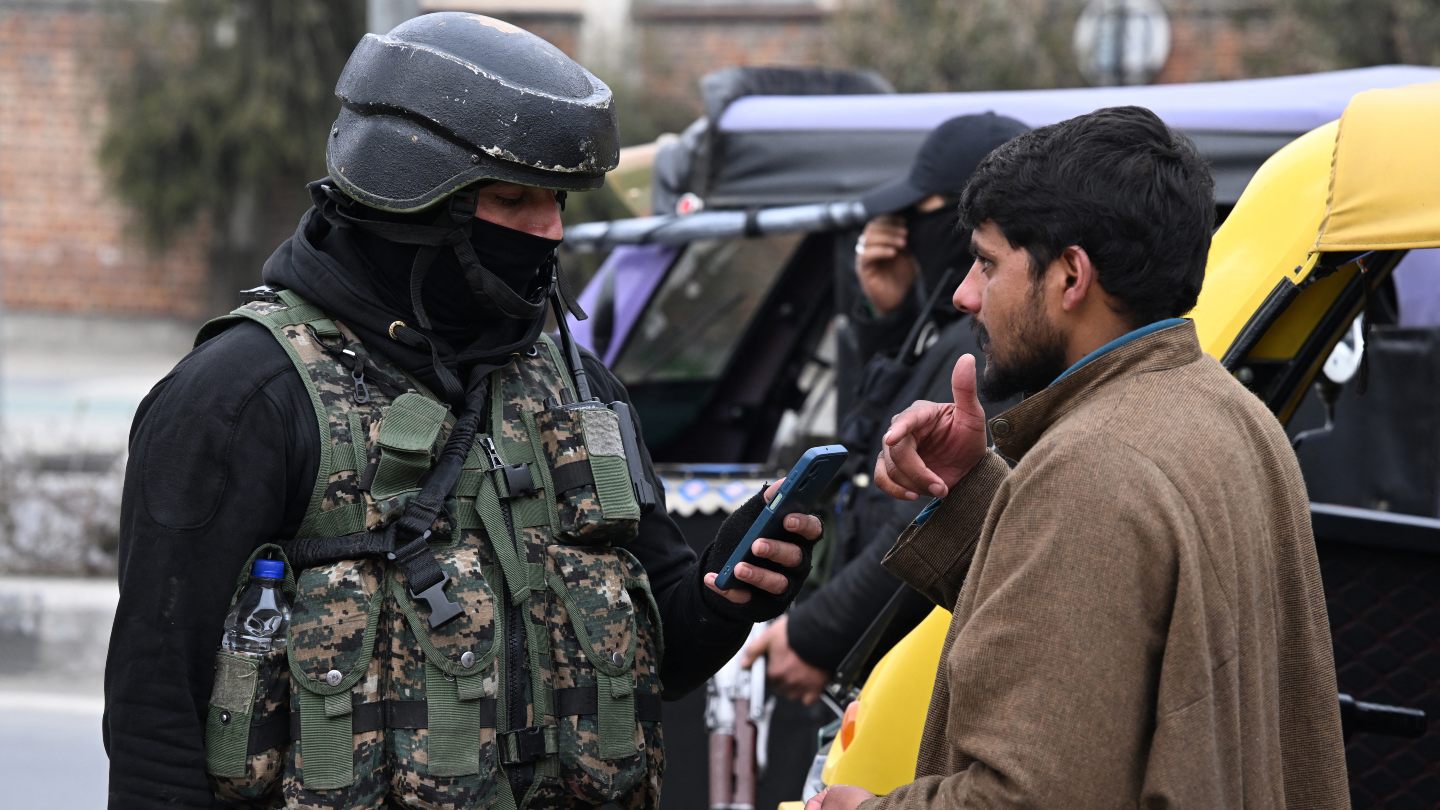
    Seven years on, the promised economic boom and end to militancy that the BJP used to justify the 2019 changes have yet to materialize, and the region remains mired in volatility. In May 2025, suspected militants carried out a deadly attack on tourists in Pahalgam’s Baisaran Valley, killing 26 people in one of the deadliest civilian assaults on the region in recent years. Just last month, a police officer on security duty was shot and killed in Anantnag’s Lal Chowk; the killing triggered a massive government crackdown that resulted in the detention of more than 3,500 people across the region.

    Local residents also highlight ongoing systemic economic and social crises. Unemployment among Kashmiris currently sits at roughly 6.7 percent, double the national average for India, and youth joblessness has fueled a growing drug crisis in the region. “We are plagued by high rates of unemployment among youth; they are going towards drugs,” said Muhammad Amin, a 55-year-old local resident. Critics also point to widespread government censorship, including revisions to school textbooks to erase dissenting perspectives and suppress native Kashmiri identity.

    International and academic observers have echoed these criticisms, framing the 2019 changes and subsequent policy shifts as a deliberate project of political disempowerment. In 2021, a panel of United Nations special rapporteurs raised alarm that the revised residency rules were implemented without any consultation with the local Kashmiri population, warning that fast-tracking domicile status for outsiders risked severely deteriorating the human rights situation for native residents.

    Scholars who study the region frame the cumulative changes through the lens of settler colonialism, arguing that incremental policy shifts over time have worked together to restructure control over land, political power and native sovereignty. Ather Zia, a political anthropologist, explained: “In my work, I describe this as the iterative temporal dynamic of settler colonialism, where successive changes over a period of time reinforce one another, and cumulatively they are focused on restructuring control over land, political representation, and Indigenous sovereignty, as we see that is what has unfolded. Settler colonialism as an analytical framework helps explain how changes in legal restructuring, policies of land expropriation, demographic engineering, increasing militarisation, and massive overhaul in how the region is governed illustrate an evolving structure rather than disconnected policies.” Zia added that the cumulative effect of these changes has fundamentally transformed everyday life for native Kashmiris: “There is heightened uncertainty and deep fear over land; political representation has diminished; journalism, activism, and civil society activity are curbed.”

    Muhammad Junaid, a professor at the Massachusetts College of Liberal Arts, told reporters that the entire post-2019 restructuring is designed to erase the historical political rights of the Kashmiri people. “The post-2019 changes were designed as a strategy aimed at the total political disempowerment of Kashmiris as a people. To bring Kashmir to a level where people of Kashmir would be compelled to demand (or not even demand at all) things that had already once existed rather than seek their historical political rights as a people. This disempowerment is part of the broader history of imperial control in Kashmir. The history of such a process in other places and times tells us that the situation in Kashmir resembles many aspects of settler colonialism. The impacts of the 2019 events are gradually unfolding… as people are being governed by imperial bureaucrats as imperial wards with no say in their own administration.”

    While the Indian government continues to maintain that the 2019 constitutional changes have improved governance, attracted new investment and integrated Kashmir more closely into the Indian Union, critics argue the policies have fundamentally and permanently altered the region’s political, legal and demographic character. Seven years after the repeal of Article 370, these deeply opposing narratives continue to shape the bitter debate over Kashmir’s future.

  • Maradona’s ‘Hand of God’ ball heads to US auction

    Maradona’s ‘Hand of God’ ball heads to US auction

    Nearly four decades after one of the most controversial and legendary moments in soccer history, the match ball from Diego Maradona’s iconic 1986 World Cup quarter-final clash between Argentina and England is set to go under the hammer at a Texas-based auction house this August, with experts projecting it could fetch as much as $10 million.

    The 1986 showdown at Mexico City’s Estadio Azteca remains etched in global soccer lore for two unprecedented goals from Maradona that sealed Argentina’s 2-1 win over England. The first, the infamous ‘Hand of God’ goal, saw the Argentine superstar illegally punch the ball past England goalkeeper Peter Shilton; after the match, Maradona famously quipped the goal was scored ‘a little with the head of Maradona and a little with the hand of God.’ Just minutes later, Maradona scored what is still widely known as the ‘Goal of the Century,’ dribbling past six England defenders from halfway across the pitch before slotting the ball into the net – all with the same match ball that is now heading to auction.

    Argentina would go on to claim their second World Cup title that tournament, cementing Maradona’s status as one of the greatest players to ever step onto a soccer pitch. Maradona died in November 2020 at the age of 60, leaving behind a legacy of unrivaled skill and enduring controversy that continues to draw global fascination.

    Dallas-based Heritage Auctions is set to open bidding on the historic ball from August 21 to 23, with an opening bid set at $2.5 million. Dan Imler, vice president of sports at Heritage Auctions, told Agence France-Presse that the ball stands alone as the most significant piece of soccer memorabilia in existence. ‘Both of the goals scored are just so iconic, so memorable,’ Imler said. ‘I think it’s easily the most historic ball in the realm of soccer.’

    The ball is not the only piece of memorabilia from the historic match to break price records in recent years. The jersey Maradona wore during the clash sold at auction for $9.3 million in 2022, retaining the title of the most expensive soccer shirt ever sold.

    Rivalry between Argentina and England has extended far beyond the soccer pitch for decades. The two nations have held a long-running political dispute over sovereignty of the Falkland Islands, which boiled over into the 1982 Falklands War just four years before the iconic 1986 World Cup match. The rivalry reignited most recently at the 2022 Qatar World Cup, where Argentina defeated England in a heated semi-final clash before ultimately going on to win their third World Cup title, 36 years after Maradona led them to their second win.

  • Hunter Biden tells BBC his pardon was ‘not good’ for America or his father’s legacy

    Hunter Biden tells BBC his pardon was ‘not good’ for America or his father’s legacy

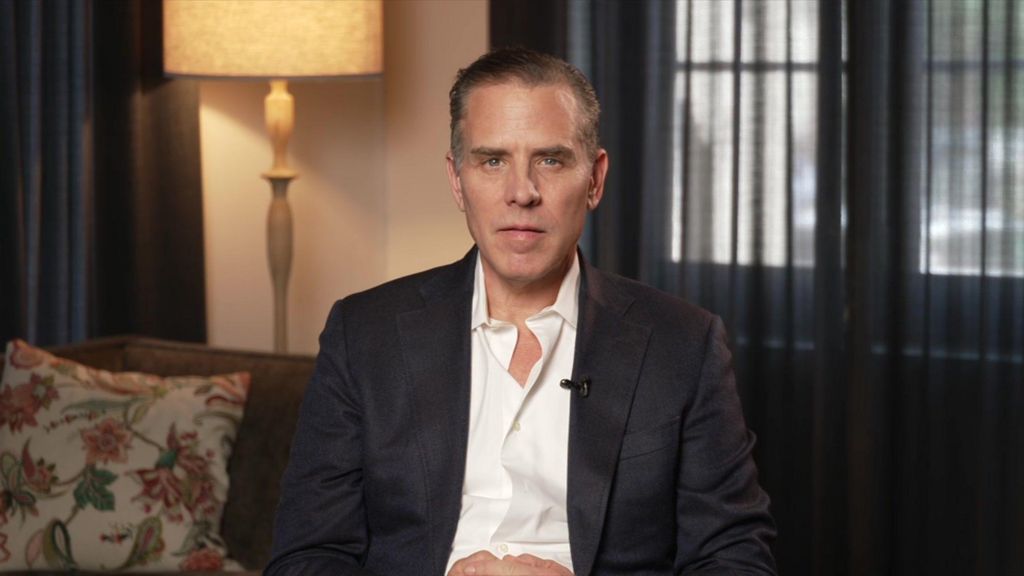
    In a candid, wide-ranging exclusive interview with the BBC’s *Newsnight*, Hunter Biden has opened up about one of the most controversial acts of his father’s presidency, the spread of Joe Biden’s cancer, and his own decades-long battle with addiction, offering unflinching insight into the personal and political turmoil that shaped the end of the 46th U.S. president’s term.

    The interview, one of Hunter Biden’s most extensive public appearances since Joe Biden left office, addressed the full and unconditional presidential pardon Joe Biden granted him in December 2024 — a decision that broke the former president’s previous public pledge not to use executive power to interfere in his son’s federal legal cases.

    Acknowledging the widespread bipartisan criticism the pardon sparked, Hunter Biden admitted the move was not beneficial for the American public, the U.S. Constitution, or his father’s political legacy. “It’s something that is easily criticised and for good reason,” he told the BBC. “It’s not fair… All I know is that I’m grateful that he did it for me.” While he accepted the legitimacy of public pushback, he pushed back against claims that the pardon demonstrated blatant nepotism, arguing that Joe Biden’s choice stemmed from a genuine, personal fear: that Hunter would become a political target of incoming President Donald Trump’s administration. He also emphasized that the pair never discussed the possibility of a pardon before it was issued, noting that any pre-pardon conversation would almost certainly have been leaked to the public. “I was the only one in the world that could have gotten what I got from the only person in the world who could give it, my father,” he said. The blanket pardon covered all federal offenses Hunter Biden committed between 2014 and 2024, including his prior federal gun conviction and the tax charges to which he had pleaded guilty. In justifying the pardon when it was announced, Joe Biden had argued his son had been the victim of selective, politically motivated prosecution.

    The conversation turned deeply personal when Hunter Biden addressed his father’s ongoing battle with cancer, growing visibly emotional as he shared updates on the former president’s health. He confirmed that the cancer has metastasized, spreading to Joe Biden’s bones and other areas of the body, causing severe, constant pain and significant disability. “Cancer is really hard. It’s really sad to watch,” he said, pausing to clear his throat. Despite the grim diagnosis, Hunter Biden described his 82-year-old father as the unshakable center of their family, praising his stoicism through relentless pain: “My dad is, to this day, the centre of our family. He’s the best father, the best husband, the best grandfather. The only thing that I say about my dad, about his health right now, is I wish he would complain more.”

    Hunter Biden also reflected on the June 2024 presidential debate that ultimately forced Joe Biden to end his re-election campaign, saying that watching the performance from his California home left him immediately alarmed. “I was shocked. I knew something was wrong,” he recalled. He previously attributed the poor performance to extreme physical fatigue from a grueling campaign travel schedule, but now he says the undiagnosed cancer likely already impacted his father’s performance that night. He added that despite his illness, Joe Biden remains actively engaged in political discourse and committed to speaking out on public issues.

    Opening up about his own well-documented struggle with addiction, Hunter Biden described the darkest days of his substance abuse, recalling that at his worst, he drank nearly a full gallon of vodka daily and smoked crack cocaine every 15 minutes. “It was hell on earth. There’s nothing glamorous about it,” he said. Rejecting claims that his addiction stemmed from a sense of privileged invincibility as the son of a powerful politician, he explained he turned to drugs and alcohol to escape crippling feelings of anxiety and isolation. What began as a coping mechanism quickly became a fatal threat: “The drugs and alcohol initially felt like a solution before becoming ‘the thing that almost killed me,’” he said.

    When asked about persistent speculation that he would pursue a career in elected politics, even a potential presidential run, Hunter Biden flatly ruled out any bid for public office. “I have no interest in elected politics,” he said, pushing back firmly on the rumors. Instead, he plans to dedicate his time to advocacy for addiction recovery, a cause he argues can transcend America’s toxic partisan divides. “I believe that addiction and the hope of recovery are something that connect us all,” he said.

    When asked what trait of his father he is most proud of, Hunter Biden did not point to Joe Biden’s decades of public service, but to his relentless resilience in the face of repeated personal and political hardship. “I’m most proud of his resilience. He’s proven time and time again that when you get knocked down, you can get up. He’s the toughest man I know,” he said.

  • Trump ally Abelardo de la Espriella sworn in as Colombia president

    Trump ally Abelardo de la Espriella sworn in as Colombia president

    On Friday, Colombia swore in Abelardo de la Espriella as its new president, marking a sharp rightward turn for the Andean nation and ending four years of rule by the country’s first left-wing government. The 48-year-old former lawyer, who holds dual U.S.-Colombian citizenship, used his inauguration to lay out an aggressive security agenda centered on cracking down on drug-trafficking armed groups and forging close alignment with the United States, a stark departure from his predecessor’s tenure marked by repeated diplomatic tensions with Washington.

    Breaking with decades of inauguration tradition that centered the ceremony in the formal capital of Bogota, de la Espriella hosted the event in Cali – the tropical southwestern city known globally as Colombia’s salsa capital. To secure the event, which unfolded in a city that has faced repeated guerrilla pipe bomb attacks in recent years, authorities deployed 11,000 security personnel and an advanced anti-drone system.

    Immediately after taking their oaths of office, de la Espriella and Vice President Jose Manuel Restrepo embraced, cheered, and carried out the signature military salute that defined their campaign. In his policy pledges, the new president has promised a hardline approach: he says he will order airstrikes on jungle cocaine production labs, construct large-scale “mega-prisons” to hold detained offenders, and drastically downsize the size of Colombia’s federal government.

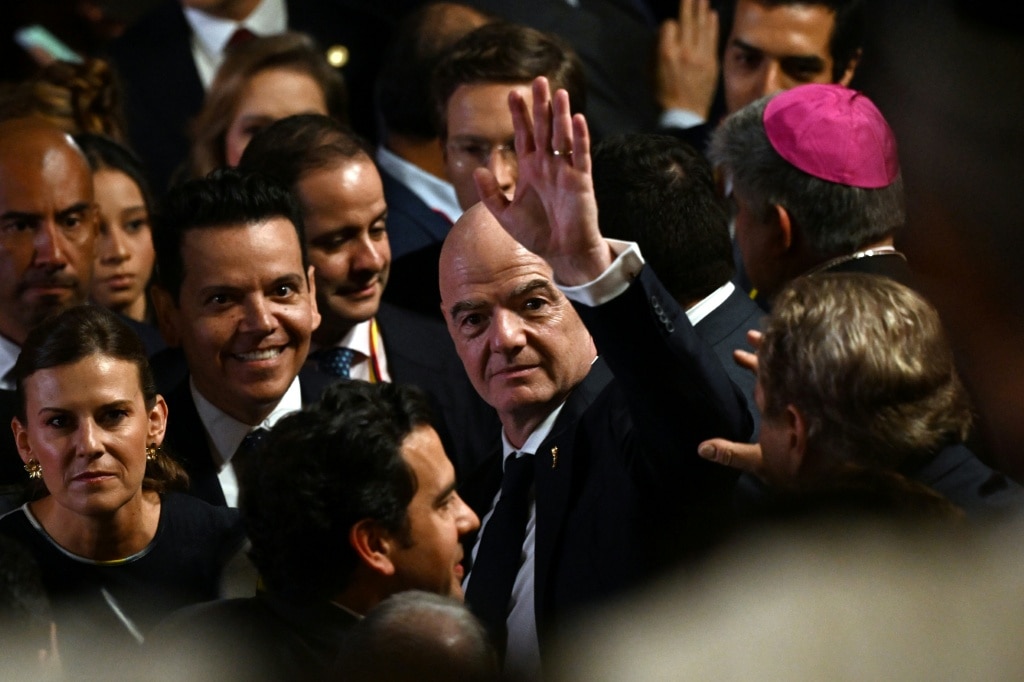
    A long list of high-profile international guests attended the inauguration, signaling the new government’s ideological alignment. Attendees included Argentina’s right-wing President Javier Milei, FIFA President Gianni Infantino (who has faced widespread criticism over his now-shelved plan to allow private investment in major FIFA competitions), and Todd Blanche, former acting U.S. Attorney General and a key legal ally of former U.S. President Donald Trump, who led the official U.S. delegation. De la Espriella’s leftist predecessor, Gustavo Petro, boycotted the ceremony, having already vacated the presidential palace in Bogota earlier Friday, leaving with the farewell message “farewell, freedom and life.”

    De la Espriella’s narrow election victory in June – he won by less than one percentage point against leftist candidate Ivan Cepeda – brings the latest win for right-wing movements across Latin America, where candidates running on tough-on-crime pledges have flipped control of governments from Chile to Costa Rica in recent years. The new president has dubbed his security strategy “Plan Colombia II,” a reference to the massive U.S.-funded anti-drug and counter-insurgency initiative of the 2000s. He has proposed a formal military alliance with the United States and Israel to advance his campaign against armed groups, and has already offered to allow joint military operations on Colombian soil and host U.S. military personnel – a major diplomatic shift after four years of public spats between Petro’s government and the Trump administration.

    Colombia has faced years of instability following the breakdown of peace negotiations with disparate armed groups, which originally formed as ideological insurgencies but now largely profit from cocaine trafficking and other illicit criminal activity. Petro’s government attempted to negotiate a permanent truce with these groups, but the effort collapsed, and analysts report the gangs used the ceasefire period to expand their control and operations. Supporters of the new president say his hardline approach is exactly what Colombia needs to reverse rising crime and instability. “We have to support him so there won’t be so much crime. We need a complete change,” 63-year-old contractor German Angulo told AFP in Cali following the inauguration.

    Not all observers are optimistic, however. De la Espriella enters office facing a divided Congress, where his coalition does not hold a legislative majority, limiting his ability to push through major policy changes. The original 2000s Plan Colombia, while successful in weakening major insurgent groups, also faced widespread international condemnation over documented serious human rights abuses. Petro, for his part, has not conceded defeat gracefully: he has called for mass anti-government protests across major Colombian cities on inauguration day, repeating unsubstantiated claims of widespread election fraud. For ordinary Colombians, the new government faces high expectations to deliver on its campaign promises, as many communities continue to grapple with persistent violence and organized crime. “This government has a lot to prove. A lot was said during the campaign,” 46-year-old Cali resident Marisol Peira told reporters.

  • First-home buyers and investors flee property market as mortgage demand collapses

    First-home buyers and investors flee property market as mortgage demand collapses

    Australia’s housing finance market is facing its steepest downturn since the height of the COVID-19 pandemic, driven by a simultaneous retreat from the market by two of its largest buyer groups: first-time homeowners and property investors. New data released by credit reporting agency Equifax confirms that a toxic combination of repeated central bank interest rate increases and recent federal government policy changes have sent broader mortgage demand crashing, pushing key metrics into deep negative territory.

    Kevin James, chief solutions officer for Equifax Australia, told NewsWire that both first-time buyers and existing property owners seeking additional investment mortgages have pulled back sharply from the market in recent months. “We saw first-home buyers drop fairly substantially and anyone who has two or more mortgages applying for a second or a third one, we saw that drop dramatically as well,” James explained.

    The ripple effects of rate increases have drastically reduced how much prospective borrowers can afford to borrow. Every 25 basis point rate hike cuts an individual’s borrowing capacity by between $20,000 and $40,000, James said, eroding purchasing power for buyers already stretching to enter the market. The Reserve Bank of Australia (RBA) has lifted the official cash rate three times in 2026 – by 25 basis points each in February, March, and May – as part of its ongoing fight to bring persistent inflation back within its 2-3% target range. While the RBA held rates steady at 4.35% in June, and markets broadly expect another hold after the August board meeting, the cumulative impact of earlier hikes has already priced out many aspiring buyers.

    First-time buyers have borne the brunt of the current downturn, with government policy designed to lower entry barriers actually compounding pressure from rising rates. The federal government’s 5% deposit scheme, which aims to help buyers save for a deposit by removing the requirement for lenders mortgage insurance, has increased the total amount buyers need to borrow to secure a home in their desired location. “Because you’re not putting 20 per cent in, you actually need to borrow more if you want to get into the property and the area that you want to get into,” James said. “Then you get hit with this capacity challenge again about how much do I earn, how much I need to earn, how much on my payments. When interest rates go up, it’s the loss of capacity to borrow and buy in the same area.”

    Additional policy shifts introduced in the May federal budget have also dampened activity among both first-time buyers and investors. Changes to negative gearing and capital gains tax (CGT) now limit negative gearing concessions for residential investment properties to new builds only, replacing the 50% CGT discount with cost base indexation. The policy changes have hit a common first-time buyer strategy particularly hard: rentvesting, where buyers purchase an affordable property in one location to build equity while continuing to rent in their preferred area. That strategy is now far less financially viable than it was before the budget changes.

    Official Equifax figures illustrate the scale of the current downturn: mortgage demand swung from a 3.7% annual increase in the 12 months to March 2026 to a 12.5% annual contraction in the 12 months to June. Between the first and second quarters of 2026, the average size of a new mortgage application dropped by $8,000 nationally. Major capital cities on Australia’s eastern seaboard have recorded the sharpest declines: Brisbane saw an average $15,000 drop in application size, followed by Sydney at $12,000 and Melbourne at $11,000, all outpacing the national contraction by a wide margin. “We haven’t seen such a big quarter-on-quarter drop since Covid, that was the last time we saw that,” James noted.

    Beyond suppressing new demand, the higher rate environment has put growing financial pressure on existing mortgage holders, with a rising share of Australian households struggling to meet their repayment obligations. Equifax data shows that requests for mortgage hardship assistance rose 5.3% quarter-on-quarter in June.

    Sally Tindall, data insights director at comparison site Canstar, advised borrowers struggling with rising repayments to proactively shop around for better rates, noting that loyal customers who stay with their existing lender often pay far more than necessary. “We’ve done the maths on this and it is really quite startling how much someone can gain by going from a compliant borrower into a proactive one,” she said. For example, a borrower who took out a $600,000 mortgage five years ago with 25 years remaining and has not adjusted their rate since could be paying a variable rate of 6.98%. Switching to a rate below 6% would save them nearly $11,000 over two years, even after accounting for a typical $1,150 break fee, Tindall calculated.

    While banks are no longer running the aggressive mortgage price wars seen in 2022, Tindall said there are still significant benefits for borrowers who negotiate or switch. She added that borrowers facing severe financial hardship should reach out to their lender proactively rather than ignoring the problem. “If you’re looking like you’ll miss a mortgage repayment, don’t put your head in the sand,” she said. “If that is becoming the reality, it’s so important to call your bank before you miss a repayment. There’s more options available to you if you let them know in advance, they can put you on a hardship plan.” While entering a hardship plan will be recorded on a borrower’s credit file, Tindall noted that banks are generally willing to work with borrowers to find a sustainable solution.

  • Five dogs seized from iconic Sydney property after man mauled in fatal attack

    Five dogs seized from iconic Sydney property after man mauled in fatal attack

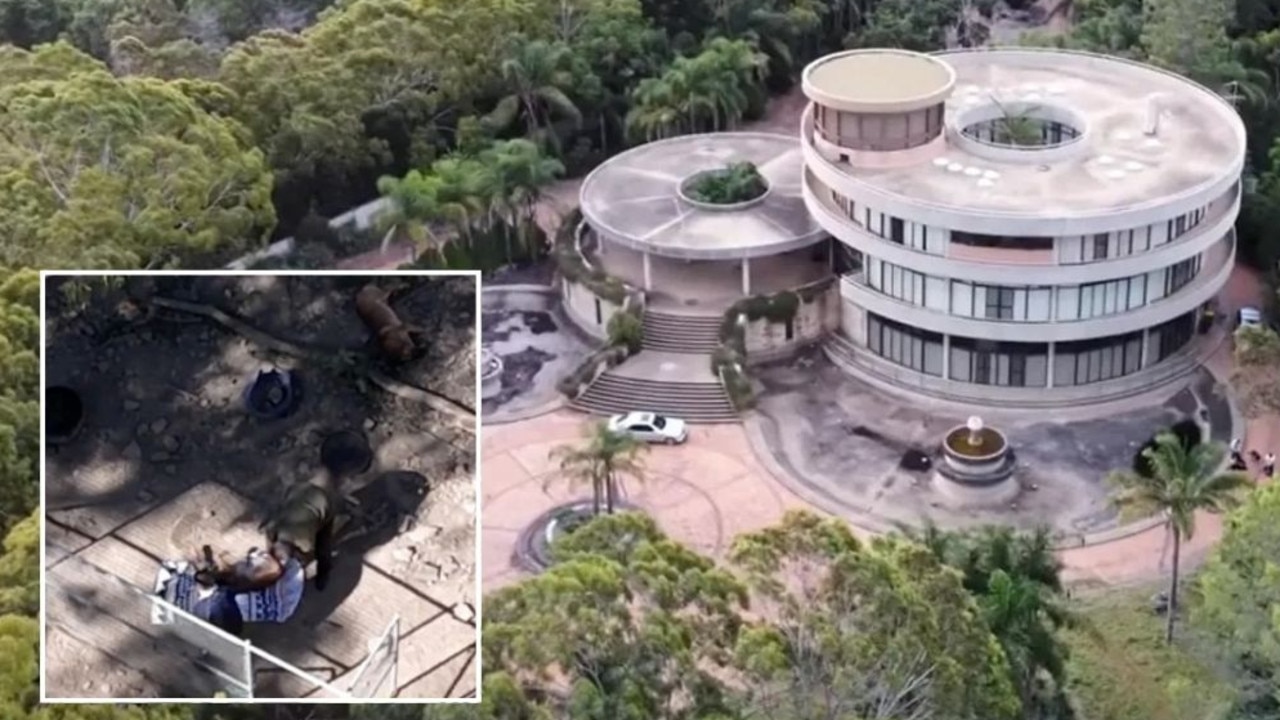
    A grim discovery in southwest Sydney has launched a full police investigation after a 23-year-old man was found dead Wednesday near the famous Saturn’s Rings property in Eschol Park, with authorities confirming his death is suspected to be the result of a fatal dog attack. Local media reports indicate the young man may have lain dead at the site for as much as 24 hours before his body was located by passersby around midday.

  • Thai PM vows to introduce stricter gun laws after eight killed in shooting

    Thai PM vows to introduce stricter gun laws after eight killed in shooting

    A devastating mass shooting carried out by a 14-year-old student near the Thai capital Bangkok has killed eight people and wounded 22 others, sparking urgent new calls for tougher gun regulation in a country long grappling with widespread civilian firearm ownership.

    The tragedy unfolded on a Friday morning in August, starting at the two-story home the teenager shared with his 73-year-old grandfather and 74-year-old grandmother, whom he shot and killed around 5 a.m. local time. A single shot to the head killed each of his guardians, according to Thai law enforcement officials.

    Rather than fleeing the scene, the teen smuggled the legally registered weapon — which belonged to his grandfather, alongside dozens of rounds of ammunition — onto a public school bus bound for his campus, Debsirin School in Nonthaburi, a satellite province bordering Bangkok. He attended his first scheduled class at 8:30 a.m. and joined his second session just under an hour later. Around 30 minutes into that second class, he pulled out the gun and opened fire.

    Investigative accounts from police confirm the shooter first targeted teachers on the school’s sixth floor, killing three before moving down the main stairwell. There he encountered the school’s deputy director and the director’s secretary, who were ascending the stairs to respond to reports of gunfire. Both were shot and killed at the scene. By the time armed police officers surrounded the campus and located the attacker around 10:40 a.m., he had already taken his own life. Initial counts put five immediate deaths and 23 injuries, but an additional wounded victim later succumbed to their injuries, bringing the total death toll to eight.

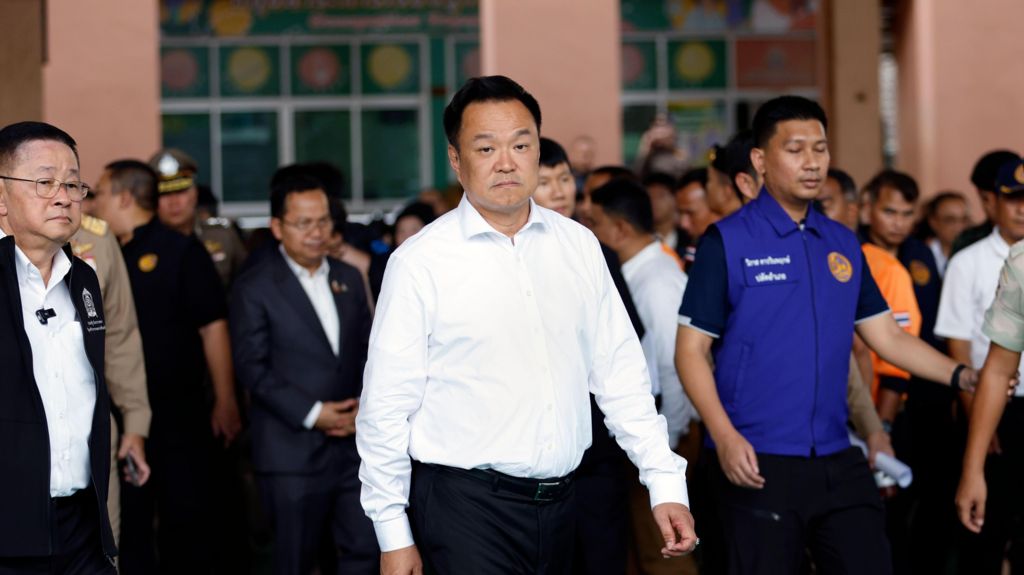
    Forensic analysis conducted by national police found the teen’s shots were surprisingly accurate, with many striking vital organs. Prime Minister Anutin Charnvirakul told reporters the attack was well-planned, with deliberate steps and clear premeditated targets. Searches of the teen’s personal electronic devices uncovered multiple videos of school shooting attacks in the United States, local Thai media has reported.

    Family members told local outlets the teen, who lived with his grandparents following his parents’ divorce, had long been quiet and socially withdrawn, spending most of his time inside playing violent video games and rarely leaving the home. No family members reported noticing any warning signs that would have indicated he was planning a mass attack.

    Founded in 1885, Debsirin School ranks among Thailand’s most prestigious secondary education institutions, with a network of campuses across the country and a alumni roster that includes some of Thailand’s most prominent public figures, from senior diplomats and professional athletes to multiple former prime ministers.

    In the immediate aftermath of the tragedy, Prime Minister Anutin Charnvirakul announced plans to push through sweeping new gun control legislation that would drastically restrict public firearms carry. Under the proposed new rules, only on-duty government officials would be legally permitted to carry weapons in public spaces.

    This is not Anutin’s first push for tighter gun rules: during his tenure as Thailand’s interior minister, he implemented several key gun control measures, including a temporary freeze on new firearms licenses and new restrictions on gun imports.

    Thailand already has one of the highest rates of civilian gun ownership in Southeast Asia, with an estimated 10.3 million firearms held by private citizens. Roughly four million of these weapons are unregistered and held illegally. While the country already has formal laws on the books that impose penalties of up to 10 years imprisonment for illegal gun possession, consistent and effective enforcement of these regulations has long been a persistent gap in national policy.

    Speaking publicly after the attack, Anutin expressed shock and sorrow over the unthinkable violence. “This tragedy shouldn’t have happened,” he said. “I don’t just feel sorry for the victims but I feel sorry that this happened. How can this happen in our country?”

    Police investigations are still ongoing, with forensic teams continuing to comb the school campus for evidence and interview witnesses and family members to build a full picture of the attack and what motivated the teen’s actions.

  • What is birthright citizenship and how prevalent is birth tourism in the US?

    What is birthright citizenship and how prevalent is birth tourism in the US?

    Four months after the U.S. Supreme Court struck down his first attempt to narrow access to U.S.-born citizenship, former President Donald Trump has rolled out a new pair of executive orders targeting what his administration calls “birth tourism” and expanding carve-outs to the longstanding principle of birthright citizenship. Signed during a formal White House ceremony on Thursday, the orders mark the latest high-profile push by the Trump administration to reshape U.S. immigration and nationality policy without congressional approval.

    The first of the two orders expands the legal definition of non-citizen parents whose children born on U.S. soil are excluded from automatic birthright citizenship. Under the new framework, babies born in the U.S. to two non-citizen parents will be denied automatic citizenship if one parent falls into any of several specified categories: members of a designated foreign terrorist organization, foreign government officials, individuals who have previously sought U.S. immigration status through fraud, or residents of unincorporated U.S. territories where federal law does not grant birthright citizenship. While some of these categories were already excluded under longstanding rules, the new provision related to terrorist group membership has already sparked legal and policy ambiguity, according to Colleen Putzel-Kavanaugh, an associate policy analyst at the nonpartisan Migration Policy Institute (MPI). Putzel-Kavanaugh notes that the order fails to clarify critical procedural details: how terrorist affiliation will be verified, which government body will bear the responsibility of determination, and whether the burden of proof will rest with the government to confirm membership or the individual to disprove it.

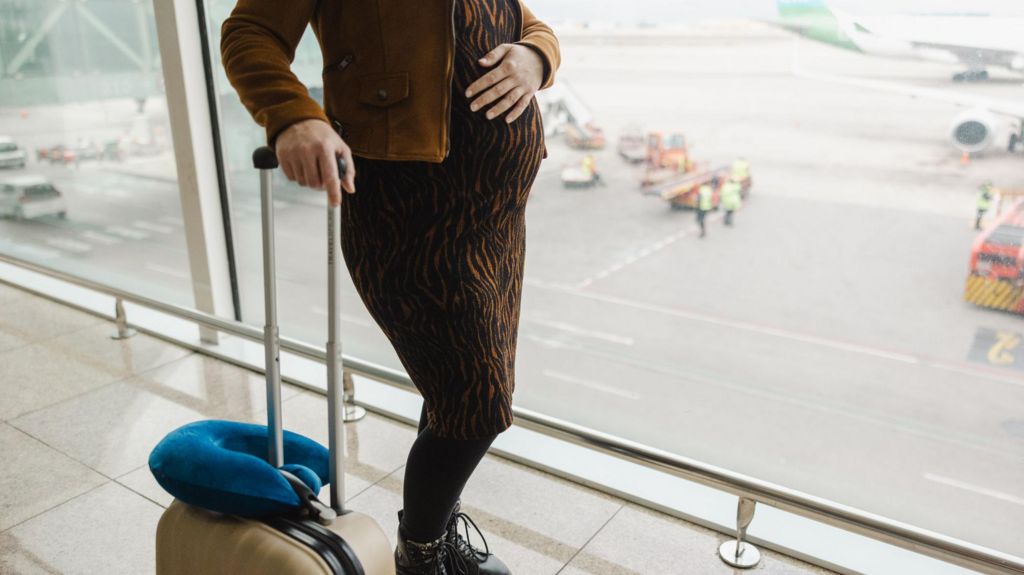
    The second executive order directly targets the practice of birth tourism — the process through which foreign nationals travel to the U.S. specifically to give birth, so their child can obtain U.S. citizenship by birth. The order directs the State Department and Department of Homeland Security to tighten existing regulations and ramp up enforcement efforts against the birth tourism industry, which the order argues relies on deceptive marketing to attract expecting parents. The order claims that industry operators frequently advertise guaranteed U.S. citizenship, access to public benefits, and specialized maternity accommodation, but often fail to deliver on these promised services. Notably, traveling to the U.S. for the explicit purpose of giving birth is already classified as a violation of immigration law.

    Birthright citizenship, formally known as *jus soli* (the right of the soil), is codified in the 14th Amendment to the U.S. Constitution, ratified in the aftermath of the American Civil War to guarantee citizenship to formerly enslaved people born in the U.S. Under current longstanding interpretation, almost all individuals born on U.S. soil receive automatic citizenship regardless of their parents’ own citizenship or immigration status, with only a handful of narrow exceptions. These existing exceptions include children born to foreign diplomats on official assignment, children born to enemy occupying forces, and children born in unincorporated U.S. territories where Congress has not extended birthright citizenship. For example, people born in Puerto Rico, Guam, and the U.S. Virgin Islands receive automatic U.S. citizenship, while those born in American Samoa are classified as “non-citizen nationals” rather than full citizens.

    In announcing the new orders, Trump claimed that “hundreds of thousands” of babies are born in the U.S. each year via birth tourism, offering no evidence to support the figure and no clarification on whether the number reflects an annual total or cumulative count. Official data from the U.S. Centers for Disease Control and Prevention (CDC) shows that just over 9,500 babies were born in 2024 to women listing foreign residential addresses, accounting for roughly 0.25% of the 3.7 million total births recorded in the U.S. that year. However, MPI analysts argue that official CDC figures are almost certainly an undercount, as birth tourism participants often use a temporary U.S. address to register the birth rather than their permanent foreign address. After a broader analysis of U.S. Census data, MPI estimates that between 20,000 and 26,000 babies are born annually in the U.S. as a result of birth tourism, equal to between 0.5% and 0.7% of total annual U.S. births. Putzel-Kavanaugh emphasized that exact counts are inherently difficult to capture, because birth tourism is defined by the traveler’s private intent to give birth in the U.S. — a detail that is rarely recorded in official administrative data. Some unplanned births also occur when traveling pregnant people experience unexpected medical emergencies that require delivery in the U.S. even if they originally planned to give birth in their home country, she added.

    The Trump administration’s legal challenge to broad birthright citizenship reached the Supreme Court earlier this year, with oral arguments held in April. The administration’s case centered heavily on the argument that unconstrained birthright citizenship has allowed the birth tourism industry to grow, creating a cohort of U.S. citizens with no meaningful connection to the country. Solicitor General D. John Sauer argued during arguments that the 14th Amendment’s framers never intended for the provision to enable mass birth tourism, arguing that modern air travel has created a situation where “eight billion people are one plane ride away from having a child who’s a U.S. citizen.” When Chief Justice John Roberts asked whether Sauer agreed that birth tourism’s existence has no bearing on the legal interpretation of the 14th Amendment, Sauer countered that the practice proves the amendment carries unforeseen consequences that its authors would never have endorsed. The Supreme Court’s majority rejected the administration’s interpretation in June, with the majority’s reasoning summed up by Roberts’ remark: “Well, it’s a new world. It’s the same Constitution.”

    Trump has repeatedly claimed that the U.S. is nearly unique among major nations in granting unrestricted birthright citizenship. In reality, more than 30 countries around the world practice automatic unrestricted *jus soli*, including most nations in Central and South America such as Brazil, Argentina, and Mexico. The U.S. and Canada are the only two IMF-classified developed economies that grant nearly unrestricted birthright citizenship; other major countries such as the United Kingdom and Australia use a modified system that only grants automatic birthright citizenship if at least one parent is a citizen or permanent resident.

  • Argentines pray that Pope Leo’s visit alleviates their economic stress

    Argentines pray that Pope Leo’s visit alleviates their economic stress

    BUENOS AIRES, Argentina – It has been nearly four decades since a sitting pope last set foot in Argentina, and the recent announcement of Pope Leo XIV’s November trip to the South American nation has been greeted by many of the country’s Catholics as a source of divine comfort at a moment of crippling economic uncertainty. Millions of Argentines have already been pushed into unsustainable debt by years of financial turmoil, a crisis exacerbated by the austerity policies pushed by libertarian President Javier Milei since he took office in December 2023.

    The Argentine Catholic Church has sounded repeated alarms over the rapid erosion of living standards for the country’s most marginalized communities, a direct outcome of Milei’s sharp government spending cuts. While the president’s policies have delivered tangible macroeconomic progress – bringing sky-high inflation down and shrinking the nation’s fiscal deficit – those gains have come at a steep social cost. Wages and pension payments have failed to keep pace with soaring prices, while basic costs from public transit and utility bills to rent and groceries have jumped sharply. For millions of households, taking on high-interest debt has become the only way to cover daily survival needs.

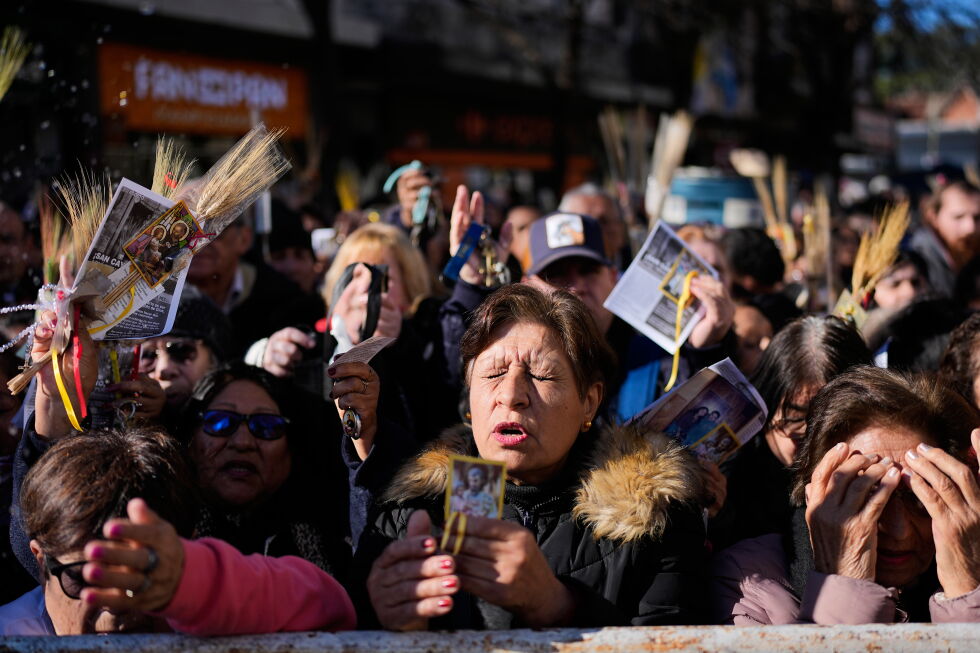
    For faithful Catholics gathered at Buenos Aires’ iconic Parish of Saint Cajetan, the patron saint of work, the pope’s visit carries more than symbolic weight. “I hope the Pope comes to help the poor like me,” shared 70-year-old retiree María Ruíz Díaz, who made her annual pilgrimage to the parish on August 7 as she has done for years. Dozens of devotees waited patiently to enter the sanctuary, with many echoing her hope that the papal visit will draw global attention to Argentina’s crisis and shift public conversation. Sixty-year-old Santiago Olave put it simply: “The country is going through a difficult time; there are many brothers and sisters in need. The Pope can open hearts and minds.”

    Milei has remained unapologetic in defending his austerity agenda, pushing back against growing criticism from church leaders and civil society groups. “I am not going to engage in populism,” he stated this week. “I am going to die with my boots on, doing what is right and doing what is proper. If you want populism, you have other alternatives.”

    To coincide with the announcement of the papal visit, leaders at the Parish of Saint Cajetan installed a new cardboard display next to the venerated image of the patron saint. The cutout depicts Pope Leo XIV standing alongside a group that reflects Argentina’s current crisis: an elderly retiree, a disabled woman in a wheelchair, an unhoused man and a public school teacher. Underneath the image reads the inscription: “Saint Cajetan, here are your people.”

    The figures represent the groups hit hardest by Milei’s budget cuts to public health, education and social support programs for vulnerable populations. Leading a public Mass on Friday, Archbishop of Buenos Aires Jorge García Cuerva used the moment to explicitly push back against the government’s policy framework. “Saint Cajetan, here are your people, who refuse to accept that work is a commodity and that one must have two or more jobs to make ends meet, or fall into the trap of loans that indebt and suffocate so many families,” he told the assembled congregation. Echoing the church’s longstanding commitment to social justice, he added: “With Pope Leo XIV, we say that economic freedom cannot be absolute and must always be measured in terms of the common good and the dignity of each person.”

    Vatican officials have confirmed preliminary details of the papal tour, which will bring Pope Leo XIV to three South American nations: Argentina, Uruguay and Peru, from November 8 to 11. A full schedule of public and private activities has not yet been released to the public. During his time in Argentina, the pope will visit the national shrine of Our Lady of Lujan, the patron saint of Argentina, located in a western suburb of Buenos Aires, before traveling to the central province of Cordoba.

    The last pope to visit Argentina was John Paul II, who traveled to the country in April 1987. Notably, former Pope Francis, who was born in Buenos Aires, never returned to his native country after being elected to the papacy in 2013. This upcoming tour carries extra personal significance for Pope Leo XIV: the first U.S-born pope holds deep, longstanding ties to the region, having spent decades working as a missionary and church leader in Peru, where he served as bishop of Chiclayo from 2015 to 2023 and holds formal citizenship.

  • Sophia Laforteza steps away from Katseye, the second member to depart this year

    Sophia Laforteza steps away from Katseye, the second member to depart this year

    Global hit girl group Katseye is adjusting its upcoming schedule after lead vocalist Sophia Laforteza announced she will step away temporarily from all group activities to prioritize her mental health and wellness. The announcement marks the second temporary departure from the six-member ensemble in less than six months, following Manon Bannerman’s February 2026 hiatus that the 23-year-old Swiss singer has yet to end.

    The joint label behind Katseye, HYBE x Geffen Records, confirmed the news in an official public statement released earlier this week. The label clarified that Laforteza, a Filipino-American performer who rose to fame as one of the group’s core vocalists, will not be able to participate in any upcoming promotional tours, live appearances, or public events during her break. “We understand how much EYEKONS, our dedicated fanbase, were looking forward to seeing Sophia on stage in the coming months, but it is absolutely critical that we put her mental health and long-term wellness above all else,” the statement read.

    According to the label, Laforteza has been working closely with medical professionals and receiving full organizational support to address her mental health challenges. Clinical experts have advised her to take an extended period of rest and ongoing focused care to achieve a full recovery before returning to the demanding schedule of a global performing artist. Though Laforteza herself has expressed eagerness to rejoin her bandmates Yoonchae, Megan, Lara Raj, and Daniela for upcoming engagements, the label reaffirmed that artist health will always remain its top priority. Laforteza’s condition will be formally reassessed in September 2026 to determine when she can safely return to group activities.

    In a personal message shared with fans via her official Instagram account, Laforteza opened up about the difficult decision to step back. “Making this choice wasn’t easy at all, but I’m learning that your health has to come first, no matter what,” she wrote. “I’m realizing that if I don’t take the time to care for my mind and body now, I won’t be able to keep doing what I love most for years to come.” The vocalist also thanked fans for their understanding and committed to working toward a full comeback. “This support you’ve given me means more to me than I could ever put into words,” she added. “I promise I’m going to work as hard as I can to get through this, heal properly, and come back stronger than ever.”

    Founded in 2023, Katseye quickly rose to international stardom with chart-topping global hits including *Gnarly*, *Pinky Up*, and *Gabriela*, earning two Grammy Award nominations in 2025 and an invitation to perform at the 2026 Grammy Awards in Los Angeles earlier this year. With both Laforteza and Bannerman on temporary leave, the group will move forward with all scheduled upcoming activities as a four-member ensemble.

    Long before the latest hiatus announcement, Katseye’s members have opened up about facing intense online harassment, including multiple death threats targeted at individual members since the group’s 2023 debut. Bannerman, the first member to step back for health reasons, told fans in February that she was prioritizing personal care, noting that she was already healthy and continuing to look after herself. The label has repeatedly stated that the door remains open for Bannerman to return whenever she feels ready to rejoin the group, and that the decision to take a break was reached through collective, open conversation among all members and the management team.