博客

  • Senate confirms Hamilton to lead FEMA and clears more than 70 other Trump nominees

    Senate confirms Hamilton to lead FEMA and clears more than 70 other Trump nominees

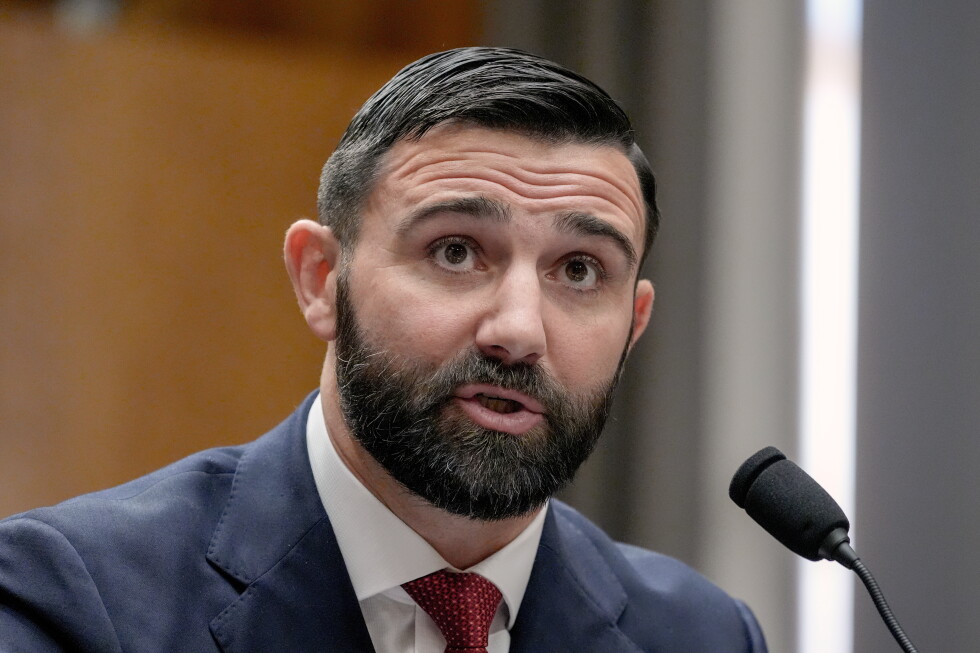
    In a Friday vote that capped months of uncertainty for one of the federal government’s most critical public safety agencies, the U.S. Senate has approved Cameron Hamilton’s nomination to serve as the permanent administrator of the Federal Emergency Management Agency (FEMA). The confirmation marks an extraordinary political comeback for the former Navy SEAL, who was fired from the same top post in an acting capacity 16 months prior after publicly opposing the Trump administration’s push to eliminate the agency entirely.

    Hamilton’s confirmation was part of a batch of 74 presidential nominations advanced by the Senate in a single voting session. Other high-profile picks approved Friday included David Cummins, President Donald Trump’s nominee to lead the Transportation Security Administration (TSA), and Daniel Perez, the administration’s controversial choice for U.S. ambassador to Brazil.

    When Hamilton is sworn in, he will inherit an agency that has faced years of existential uncertainty, organizational upheaval, and lingering accusations of political bias. Just days into Trump’s second term, the president openly threatened to dissolve FEMA entirely, a proposal that led to Hamilton’s firing last year when he pushed back against the plan in congressional testimony. While Hamilton’s nomination signals the administration has backed away from scrapping the agency entirely, the White House and top Department of Homeland Security (DHS) leaders have made clear that sweeping overhauls to federal disaster response are still on the agenda.

    The agency Hamilton takes over is still recovering from the chaotic tenure of former DHS Secretary Kristi Noem, whose leadership triggered mass staff exodus, widespread disruptions to FEMA’s federal grant programs, and crippling delays to life-saving disaster aid. A 2025 Government Accountability Office (GAO) report found that more than 4,300 FEMA employees left the agency in the 2025 budget year alone, with over 1,500 taking voluntary buyouts. The exodus resulted in a substantial loss of institutional knowledge and experienced disaster response personnel that the agency is still working to replenish. Current DHS Secretary Markwayne Mullin, who took over from Noem in March, has already moved to reverse some of the most damaging changes: he has re-filled hundreds of eliminated positions and rescinded a burdensome rule that required all FEMA expenditures over $100,000 to gain direct approval from the secretary’s office, a policy that created a backlog worth billions of dollars in delayed disaster aid.

    Even with these fixes, new controversies continue to roil the agency. Last month, 25 U.S. states and the District of Columbia filed a lawsuit against the Trump administration over new election security mandates attached to FEMA counterterrorism grants, a policy that critics call an overreach of executive power. Congressional Democrats have also raised alarms over what they call widespread politicization of disaster relief under the Trump administration. A July analysis from The Associated Press found that the White House has approved roughly 80% of disaster declaration requests from Republican-led states, but only 60% of requests from Democratic-led states, a gap that critics argue leaves vulnerable communities in political opposition shortchanged.

    Hamilton’s path to permanent leadership is a rare story of a fired acting official returning to lead the agency he once defended. Before being tapped as FEMA’s acting head in January 2025, Hamilton had limited formal emergency management experience and was initially an open critic of the agency. But during his short tenure, he said he grew to appreciate FEMA’s core mission, and broke sharply with Noem and the White House over the plan to eliminate the agency. In May 2025, he told a House panel that eliminating FEMA would be against the best interests of the American people, and was fired the very next day.

    His public stand against scrapping the agency won him broad support from many emergency management professionals. Pete Gaynor, who served as FEMA administrator during Trump’s first term, released a statement supporting Hamilton’s confirmation, saying, “It tells you exactly who he is and how he will lead when the pressure is highest and the easy answer is the wrong one.” The National Emergency Management Association also issued a statement welcoming his confirmation. Still, some current FEMA employees remain wary of Hamilton, pointing to his role in the controversial 2025 cancellation of a multibillion-dollar national climate resilience grant program.

    Hamilton takes office at the height of an active 2026 North American summer disaster season, which has already brought destructive wildfires across the West and dangerous flash flooding across the Midwest and South, leaving FEMA managing more than 1,000 open active disaster declarations. He will be the first permanent FEMA administrator to take office in Trump’s second term, a role that comes with the dual mandate of implementing the Trump administration’s planned overhaul and bringing long-term stability to a workforce that has faced years of turnover and uncertainty.

    Top administration officials have laid out clear priorities for the overhaul: shifting more disaster response responsibility back to state and local governments, and restricting FEMA’s role to only the most catastrophic events, rather than responding to every localized weather event. In a recent meeting of U.S. governors, Mullin described FEMA as “bloated” and reiterated that shift in responsibility, saying, “The biggest reform you’re going to see is more responsibility is going to go back to your states, FEMA there for worst of the worst, not every storm.” A Trump-appointed FEMA Review Council issued a set of recommendations in May that would speed up federal assistance delivery but could also reduce the scope and frequency of federal support, with many changes requiring congressional approval to take effect.

    During his June confirmation hearing before the Senate, Hamilton laid out his own priorities, pledging to advocate for FEMA and its workforce while committing to running the agency free of political bias. “I will ensure FEMA is objective, is fair and reasonable, follows the law, and is consistent in the approach to how we adjudicate and process claims and requests for disasters,” he told lawmakers. He also acknowledged longstanding concerns about bureaucratic bloat within the agency, arguing that FEMA cannot be expected to respond to every disaster, and that policymakers must strike a new balance that encourages cost reasonableness and cost savings. Gaynor, the former FEMA head, said he expects Hamilton will prioritize cutting red tape to make the disaster recovery process simpler for survivors and state and local officials.

    Alongside Hamilton’s confirmation, the Senate advanced two other controversial nominees. David Cummins, a former senior vice president at government contractor Serco, which operates air traffic control towers at 60 U.S. airports, was confirmed to lead TSA. The agency is still recovering from massive staffing disruptions following this year’s record-long partial government shutdown, which left thousands of TSA officers working weeks without pay, prompting thousands of call-outs and roughly 1,100 resignations. Cummins takes over as the Trump administration pushes to expand private airport screening and cut thousands of existing TSA positions.

    The Senate also confirmed Daniel Perez, former speaker of the Florida House of Representatives and a close ally of Secretary of State Marco Rubio, to serve as U.S. ambassador to Brazil. Perez’s nomination has already sparked a major diplomatic rift between the Trump administration and the government of Brazilian President Luiz Inácio Lula da Silva, which has refused to approve his appointment. Earlier this week, the State Department announced it had revoked the visa of Brazil’s sitting ambassador to the U.S. in response, a move that escalated tensions between the two countries. Under international diplomatic protocol, host nations have the right to approve or reject foreign ambassador nominees before they take office.
  • From ‘The Lion’ to ‘The Tiger’: Conservative Trump allies gain ground in Latin America

    From ‘The Lion’ to ‘The Tiger’: Conservative Trump allies gain ground in Latin America

    Across Latin America, a pronounced political shift to the right has unfolded in recent years, with conservative candidates claiming victory in seven major presidential elections — most of those wins coming after Donald Trump’s second inauguration as U.S. President in January 2025. This sustained winning streak has been driven by widespread voter anxiety over surging violent crime, uncontrolled irregular migration, and years of sluggish economic growth that have left many working- and middle-class voters hungry for change.

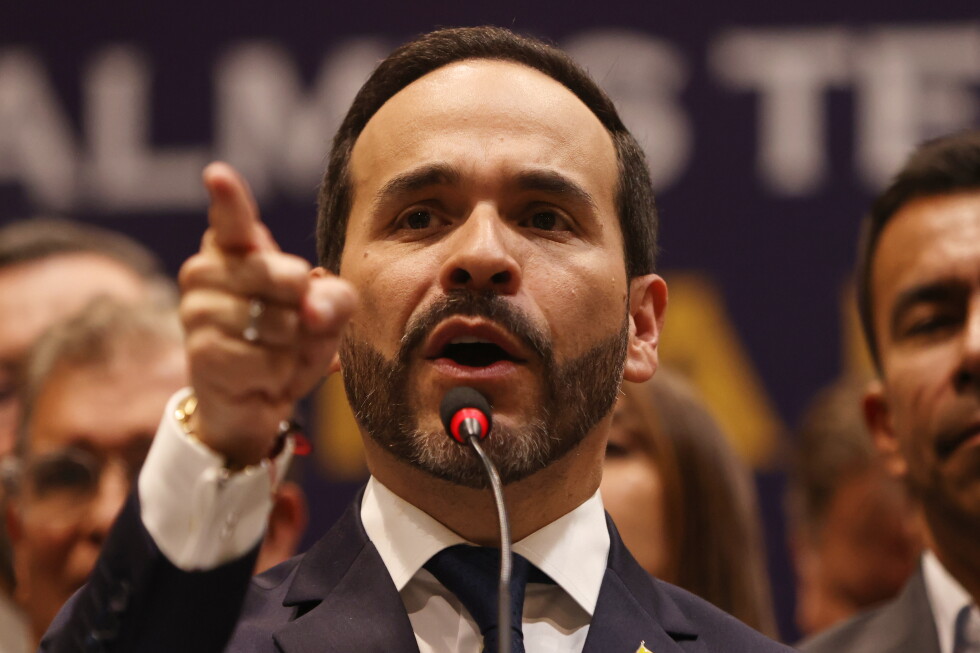
    The latest leader to join this conservative tide is Abelardo de la Espriella, a Colombian lawyer and business owner endorsed by former U.S. President Trump. Set to take office this Friday, de la Espriella — who goes by the nickname “The Tiger” for his uncompromising stance on public safety — secured a narrow victory in June’s presidential race over progressive lawmaker Iván Cepeda. His election marks a dramatic reversal for Colombia, which spent the past four years under the leadership of a former rebel commander who openly criticized Trump administration policies on immigration and counter-narcotics.

    During his campaign, de la Espriella ran on a hardline security agenda that includes scrapping existing peace negotiations with active Colombian rebel factions and constructing large-scale mega-prisons modeled after the controversial facility built in El Salvador to incarcerate gang members. Trump threw his full support behind de la Espriella, framing him as the only candidate capable of reestablishing widespread law and order across the country, and the new president has pledged to prioritize cracking down on extortion rings and transnational drug trafficking operations.

    In Peru, another conservative, Keiko Fujimori, assumed office in July after winning a tight June runoff election by fewer than 50,000 votes. Fujimori, the daughter of late former President Alberto Fujimori — who defeated the Shining Path extremist movement in the 1990s but oversaw a widely criticized authoritarian government — has also centered her tenure on aggressive anti-crime action. She has pledged to build four new correctional facilities, including one mega-prison designed after El Salvador’s CECOT, militarize national borders to disrupt drug trafficking, and deport undocumented migrants residing in the country. Fujimori’s victory makes her Peru’s ninth head of state in just 10 years, underscoring the country’s prolonged period of political instability.

    Argentina was an earlier adopter of this conservative shift, with libertarian economist Javier Milei — nicknamed “The Lion” — winning the presidency in November 2023 on a promise to slash runaway government spending and end the nation’s decades-long battle with crippling inflation. Milei defeated the long-dominant ruling Peronist movement, and has since implemented sweeping austerity measures: he has blocked the central bank from printing new currency to cover government deficits, cut thousands of civil service positions, paused public infrastructure investment, and reduced subsidies for public utilities. His policies have delivered measurable results on inflation, which has plummeted from 211% in 2023 to just 32% in 2025, but the reforms have drawn fierce criticism from opponents who argue austerity has eroded living standards for millions of working-class Argentines and public sector employees.

    In April 2025, Ecuadoran voters handed a second four-year term to conservative incumbent Daniel Noboa, a scion of one of the country’s wealthiest families who won 56% of the vote. Noboa has expanded the military’s role in public security in coastal cities besieged by drug gangs fighting for control of key smuggling ports and trafficking routes. Despite the increased military presence, homicide rates have not seen a substantial drop, and Noboa’s administration has faced repeated allegations of human rights violations, including extrajudicial killings of suspected gang members. Under his leadership, Ecuador has launched joint counter-narcotics operations with U.S. forces, though a proposal he supported to reopen a U.S. military base on Ecuadoran soil was rejected by voters in a national referendum last year.

    Central America has also felt the impact of the conservative shift. In Honduras, National Party candidate Nasry Asfura, a real estate investor and former mayor, claimed a narrow election win in November, edging out his closest rival by less than one percentage point. Asfura’s party is the same that counted former President Juan Orlando Hernández, who received a presidential pardon for his drug trafficking conviction from Trump after taking office. Trump personally endorsed Asfura, even threatening to cut U.S. aid to the small Central American nation if he lost. Since Asfura took office, Honduras has accepted dozens of deportees from third countries — mostly Guatemalan nationals — under a deportation agreement signed with the U.S. in early 2025.

    In Chile, conservative activist José Antonio Kast, a devout Catholic, defeated the sitting progressive government in December’s presidential election, taking 58% of the vote to claim victory. Kast centered his campaign on voter fears of rising crime, promising to expel undocumented migrants from Venezuela and Haiti. One of his first policy moves after taking office was to expand a border trench along Chile’s frontiers with Peru and Bolivia, a measure his administration says will curb cross-border drug trafficking and irregular migration. Kast’s government has already faced widespread public protests over rising unemployment and austerity budget cuts that have reduced pay and benefits for public sector workers.

    Most recently in Costa Rica, Laura Fernández, a former economy minister under outgoing conservative President Rodrigo Chaves, won February’s election with 48% of the vote — a 15-point margin over her closest rival, enough to avoid a runoff election. Fernández ran on a hardline anti-crime platform that included declaring a national state of exception allowing police to arrest suspects without judicial warrants, and plans to construct a mega-prison modeled after El Salvador’s CECOT. She has continued the previous government’s policy of accepting deportees from third countries deported by the U.S., with one June flight carrying migrants from China, Vietnam, Colombia and Azerbaijan.

  • Book hidden in fireplace returned to Australian library 150 years overdue

    Book hidden in fireplace returned to Australian library 150 years overdue

    More than a century and a half after it was first checked out, a rare 19th-century architecture book has found its way back to the small coastal Australian library it was borrowed from — and its unlikely journey traces back to a stonemason who helped build one of London’s most iconic landmarks.

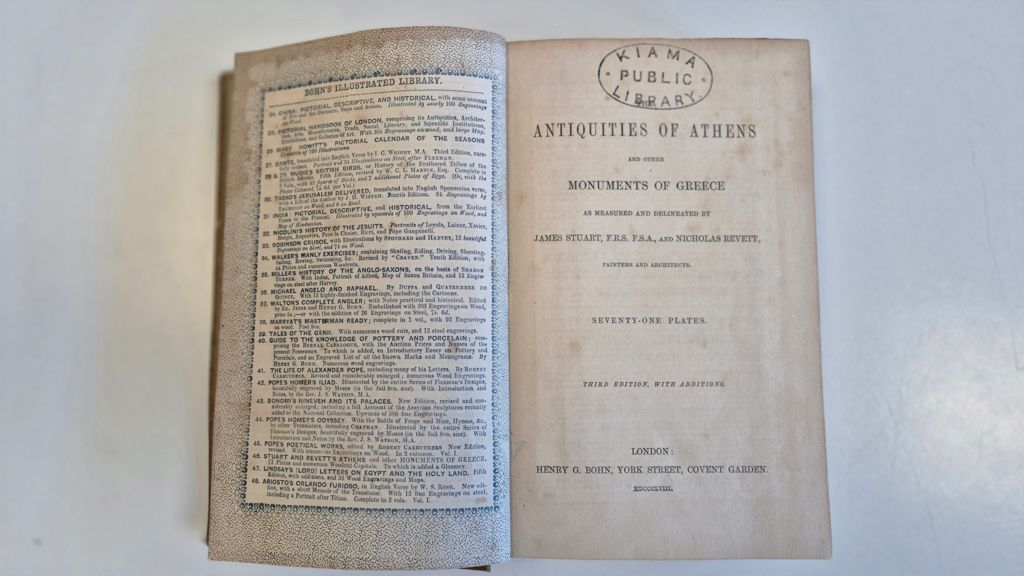
    The volume, *Antiquities of Athens*, a detailed illustrated reference on classical Greek architecture, was borrowed from Kiama Library in the 1870s. Kiama, a quiet seaside town located roughly 120 kilometers south of Sydney, had only opened its public library eight years prior, built with a £200 government grant that launched the institution’s original collection of fewer than 1,000 books. This particular volume, cataloged as item number 506, would disappear from the library’s records for generations.

    The story of its rediscovery begins with 77-year-old Ross Simmons, a dedicated amateur family historian who has spent years unpacking the legacy of his great-grandfather, John Simmons. Born in the United Kingdom, John Simmons trained as a stonemason in Westminster between 1839 and 1844, and worked as an apprentice on the construction of the UK Houses of Parliament before emigrating to Australia in 1857 at the age of 27. After settling first in Sydney’s Newtown suburb, he moved permanently to Kiama after leading the construction of a local sandstone church, establishing himself as a respected architect in the region.

    Ross Simmons explains that his great-grandfather, who had a deep professional and personal passion for architecture, likely borrowed the reference volume to support his work. For decades after John Simmons’ death, the book sat undisturbed in a wooden tea chest stored alongside other family documents, tucked into a boarded-up fireplace in the old family home. The sealed hiding place kept the volume safe for generations, until a home renovation 30 years ago unearthed the chest, and the collection of books inside was passed to Ross Simmons for safekeeping.

    It was only two weeks ago that Simmons finally sorted through the full collection, and made a surprising discovery: inside the front cover of the 1858-published *Antiquities of Athens*, a clear Kiama Library stamp was visible, alongside the library’s original 19th-century borrowing rules. Those rules offer a fascinating window into 1870s public library practices: patrons could normally only check out one book at a time, unless they could prove six members of the same household were literate, which allowed a limit of three books; intoxicated patrons were banned from borrowing, and late returns incurred a fine of three pence per week overdue.

    When library staff calculated the total fine accumulated over 150 years, adjusted for inflation, the total came out to roughly AU$28,000 (equivalent to around £15,000 or $20,000 USD). In an act of good faith, the library has completely waived the unexpected fine, recognizing the historic significance of the returned volume.

    While the library’s original borrowing records from the 1870s have been lost to time, so there is no definitive proof that John Simmons was the one who checked the book out, the circumstantial evidence strongly points to him. Today, the book remains in surprisingly good condition: it has minor water damage from its decades in the fireplace, but its detailed fold-out illustrations of Greek monuments, complete with the original precise measurement notes, are still intact.

    Kiama Council libraries manager Michelle Hudson says the extraordinary story of the book’s return has drawn widespread public interest, with visitors traveling from more than 40 minutes away just to see and even handle the historic volume. The library has now added *Antiquities of Athens* to its special collections archive, meaning it will no longer be available for checkout to prevent another century-long disappearance. “We don’t want to wait another 150 years for it to come back,” Hudson joked.

    For Ross Simmons, the book’s homecoming feels like the perfect end to a long, unlikely journey. “I think he’d be happy to see the book returned and he’d probably have a bit of a laugh about it,” he said of his great-grandfather.

  • Houthi missile and drone attacks kill dozens of Yemeni government troops

    Houthi missile and drone attacks kill dozens of Yemeni government troops

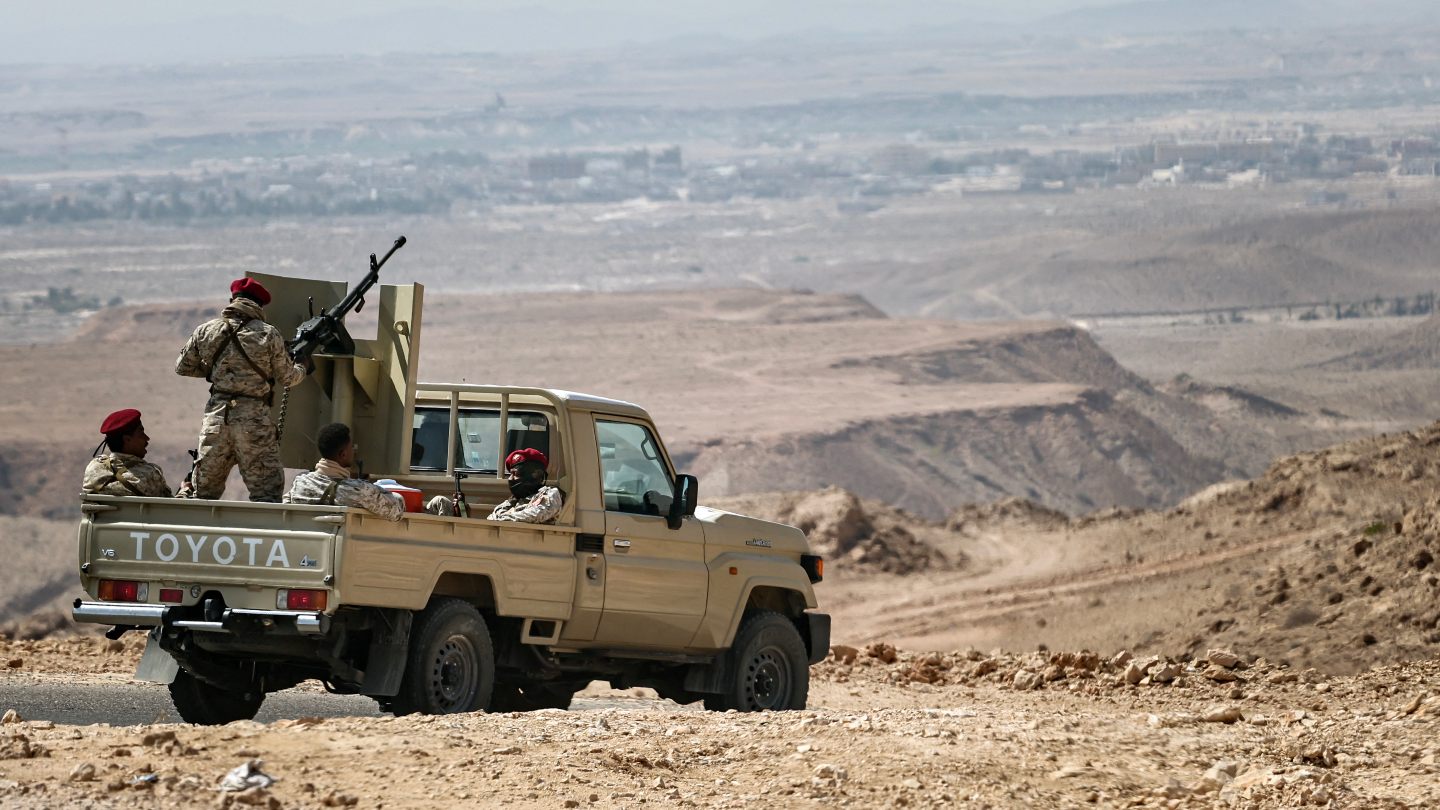
    In a dramatic escalation of hostilities that has shattered years of relative calm in Yemen, Houthi missile and drone attacks killed at least 38 Yemeni internationally recognized government forces and wounded 29 others on Thursday, according to multiple sources cited by Agence France-Presse. Military officials confirm this assault is the deadliest strike against government-aligned troops since the United Nations-brokered ceasefire took effect in 2022.

    Houthi military spokesperson Yahya Saree confirmed the group carried out the coordinated attacks, saying the operation was launched in direct retaliation for what the group calls a Saudi-backed military buildup in strategic Yemeni regions. Saree added that ballistic missiles and drones targeted multiple government military positions across three key areas: al-Ruwaik in Marib province, al-Thaniyah, and al-Abr in Hadramawt province. “We are fully prepared to confront any further escalation from our opponents,” Saree stated in the official announcement.

    Detailed on-the-ground accounts from medical and military sources reveal one of the deadliest strikes hit a government military camp during morning formation in the al-Ruwaik district of Marib, alone leaving 45 personnel dead or injured. Additional simultaneous strikes targeted military outposts in al-Abr and al-Wadiah, Hadramawt province, a region that sits directly along Yemen’s border with Saudi Arabia, a key backer of the Yemeni government.

    Yemen’s defense ministry swiftly issued an official statement condemning the attacks, vowing that the country’s armed forces would respond to the drone and missile assault “at the appropriate place and time.”

    The Thursday offensive represents the latest spike in a broader resurgence of conflict that has followed rising tensions between the United States and Iran this year. After the 2022 UN truce brought an extended period of relative stability, the Houthi movement formally ended the de-escalation phase on July 12, following what the group claims was an Saudi air strike on Sanaa International Airport while an Iranian aircraft was on the tarmac in the Yemeni capital. Since that announcement, the Houthis have significantly ramped up military operations across the country.

    In the weeks following the end of de-escalation, the Houthi group declared a full maritime blockade of all Saudi ports and launched a series of attacks on commercial shipping linked to Saudi interests. This disruption of Red Sea and Gulf of Aden shipping comes as Saudi Arabia has rerouted much of its oil shipments through the Bab el-Mandeb Strait, after Iran blocked the Strait of Hormuz to vessels aligned with the U.S. and its allies in March. The closure of Hormuz followed the February 28 launch of US-Israeli military operations against Iran.

    This most recent deadly attack is not an isolated incident: just one month ago, Houthi strikes killed 16 government-aligned troops in an offensive south of the Red Sea port city of Hodeidah, AFP reports.

    The current escalation of fighting in Yemen extends a nearly decade-long conflict that began when Houthi forces seized the capital Sanaa in 2014, pushing the internationally recognized government into exile and later into control of southern Yemeni territories. The conflict has killed hundreds of thousands of Yemenis through direct fighting, starvation, and lack of access to medical care, creating what the United Nations has repeatedly called one of the worst humanitarian catastrophes on the planet. Even after the formal expiry of the 2022 truce, front lines remained largely static for more than two years, until the recent regional spillover from the US-Iran confrontation reignited large-scale hostilities.

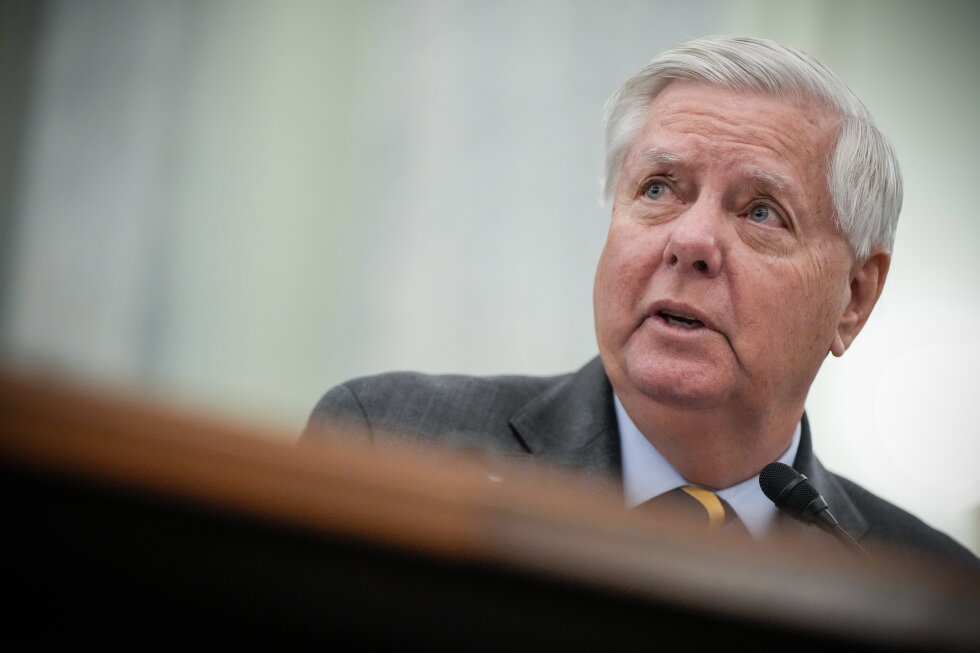
  • Senate passes sweeping Russia sanctions bill negotiated by the late Sen. Lindsey Graham

    Senate passes sweeping Russia sanctions bill negotiated by the late Sen. Lindsey Graham

    On a historic Friday vote in Washington, the U.S. Senate delivered an overwhelming bipartisan endorsement of a sweeping new sanctions package targeting Russia, capping a year-long advocacy campaign led by the late South Carolina Senator Lindsey Graham to tighten U.S. backing for Ukraine amid its drawn-out defensive war against Russian invasion.

    Passing by a lopsided margin of 86-11, the legislation is crafted to cut off critical war funding for Russian President Vladimir Putin by penalizing nations that continue to purchase Russian oil, natural gas and other key exports. The vote carries deep personal and political resonance: just one week prior, Ukrainian President Volodymyr Zelenskyy sat in the Senate gallery to watch initial procedural votes on the bill, just hours after attending Graham’s funeral in Washington and holding bipartisan talks with U.S. senators. Graham, who had only just returned from a visit to Ukraine when he secured a final agreement on the legislation with the White House on July 10, died suddenly the next day from an aortic tear.

    Standing on the Senate floor ahead of the final vote, Sen. Richard Blumenthal of Connecticut — who co-led negotiations on the package with Graham — reflected on the moment. “Today, President Zelenskyy is watching from Ukraine — and Putin is watching from Moscow,” Blumenthal said. “I would like to think Lindsey Graham is watching, too. Today we say to the people of Ukraine: You are not alone. And today we say to Vladimir Putin: You will not conquer Ukraine.”

    This broad show of Senate unity marks the most consequential shift in U.S. policy toward the three-year-plus war during President Donald Trump’s second term, a conflict that has now lasted longer than the entirety of World War I. For months, Congress had grappled with gridlock over sustaining U.S. funding and military supplies for Ukraine, but Trump has publicly backed the sanctions package, building pressure for the House of Representatives to bring the bill to a vote and send it to the White House for signing.

    Named in Graham’s honor, the bipartisan measure grants the president authority to impose tariffs on the world’s five largest buyers of Russian oil and natural gas — a list that includes major emerging economies China and India. Exceptions are carved out for nations that import less than 15% of their natural gas from Russia and are actively working to cut their reliance on Russian energy exports. Beyond secondary penalties for third-party buyers, the package expands direct sanctions to target Putin, his top political and military allies, major Russian financial institutions, and key Russian energy infrastructure projects. It also closes a longstanding loophole in existing sanctions by cracking down on the aging, reflagged oil tankers Russia has used to evade export restrictions and keep its energy revenues flowing.

    The legislation includes built-in flexibility: it grants the president waiver authority to lift specific sanctions or restrictions if he formally certifies to Congress that such a move serves U.S. national interests. Still, the grant of new tariff authority to Trump sparked opposition from across the ideological spectrum, with progressive Democrats forming the core of the 11 “no” votes. Many lawmakers on both sides of the aisle raised concerns that broad tariff power could drive up import prices, worsen ongoing inflation, and raise cost-of-living burdens for American households.

    Appointed by South Carolina’s governor to fill her late brother’s Senate seat, Republican Sen. Darline Graham reaffirmed her commitment to advancing his final policy priority. “This legislation hits Putin where it hurts,” she said in remarks on the floor.

    For Ukraine, the package carries both strategic and symbolic weight, Zelenskyy has said. During his closed-door meeting with senators last week, the Ukrainian leader noted that Kyiv’s forces have made incremental battlefield gains but continue to depend on sustained U.S. support. Publicly, he thanked the Senate for the vote, saying the package sends a “big signal” of American solidarity to Ukraine and its global allies.

    Republican Sen. Todd Young of Indiana, who attended the meeting with Zelenskyy, echoed that framing, calling the legislation “important as a moral signal to a country that is weary and tired, though holding its own.”

    Sen. Jeanne Shaheen of New Hampshire, the top Democratic member of the Senate Foreign Relations Committee, noted the timing of the vote, ahead of Russia’s scheduled national elections. Advancing the package now, she argued, will increase pressure on Putin to enter serious negotiations toward a negotiated peace deal. She warned that every time the U.S. hesitates to take strong action against Russia, Moscow responds by ramping up its offensive attacks. “If we can’t shut down the funding for the war machine that Russia is using against Ukraine, then they’re going to keep at it,” Shaheen said.

    Criticism of the bill centered on the expanded tariff authority, with lawmakers from both parties arguing it grants too much unchecked power to the executive branch. The Senate defeated an amendment sponsored by Republican Sen. Rand Paul of Kentucky and Democratic Sen. Ron Wyden of Oregon that would have stripped the new tariff authority from the bill. Paul argued the measure would impose unnecessary costs on U.S. taxpayers, while Wyden noted that many American households are already struggling with persistent economic strain. “We’ve got folks who are walking an economic tightrope here in America,” Wyden said.

    Sen. Raphael Warnock of Georgia, who had delayed consideration of the package over his concerns about tariff authority, secured a written guarantee from the Trump administration via U.S. Trade Representative Jamieson Greer that establishes clear guardrails for the use of tariffs. Under the commitment, tariffs will be lifted once a country is no longer listed as a major purchaser of Russian energy or a facilitator of sanctions evasion. “We should not have to choose between putting a check on Putin’s aggression and putting a check on this president’s tariffs regime,” Warnock said, adding that if Trump “oversteps his power, we will see him in court.”

    Many other Democrats who hold reservations about granting Trump new executive powers ultimately supported the bill, saying they would not risk undermining critical support for Ukraine. “Weighing that against the boost for Ukraine, I think it’s important to support Ukraine right now,” said Sen. Chris Murphy of Connecticut.

    The sanctions package will now head to the House of Representatives, where Senate momentum is expected to push for a swift vote when lawmakers return from recess at the end of the month. The House already passed a separate Ukraine aid and Russian sanctions package in June, which included security assistance and reconstruction funding for Kyiv alongside penalties for key sectors of the Russian economy. That earlier measure drew bipartisan support despite objections from Republican leaders, who argued it undercut negotiations to produce a stronger, more unified piece of legislation.

  • Exclusive: ICC judges order Taliban case split from Afghanistan probe that covers US troops

    Exclusive: ICC judges order Taliban case split from Afghanistan probe that covers US troops

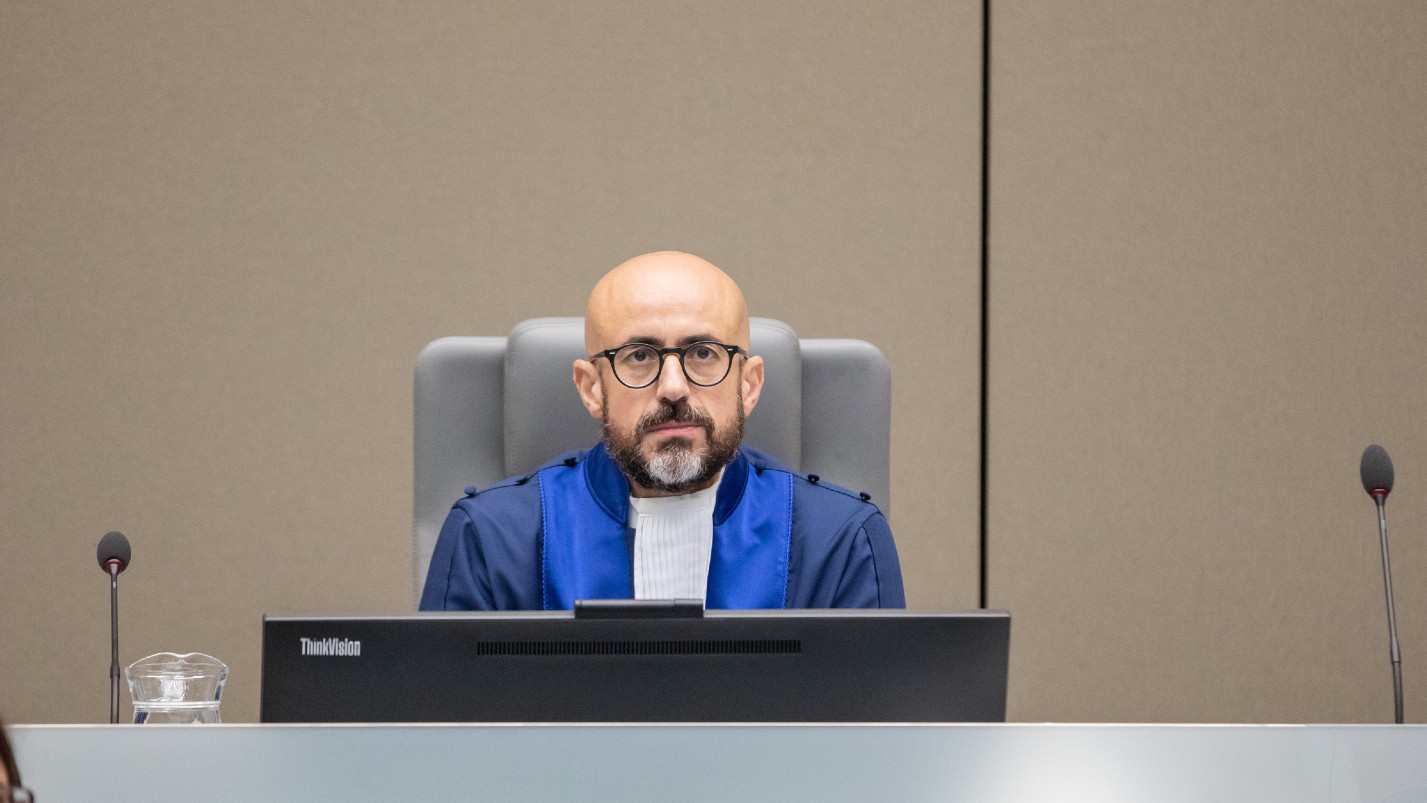
    Exclusive reporting from Middle East Eye (MEE) has uncovered a landmark decision by International Criminal Court (ICC) pre-trial judges, who have ordered prosecutors to launch a fully standalone investigation into accusations of systematic gender persecution at the hands of the Taliban. The order splits this inquiry from the court’s decades-old overarching Afghanistan war crimes probe, which previously included allegations against United States nationals.

    Court documents acquired by MEE via independent channels confirm that a three-judge panel from Pre-Trial Chamber II issued the formal directive to the ICC Office of the Prosecutor in mid-July 2025. If prosecutors move forward with the order, the investigation into Taliban conduct will be formally separated from the broader Afghanistan inquiry, which has examined alleged war crimes dating back to 2003 involving multiple parties: the former Afghan National Security Forces, U.S. military and CIA personnel, the Taliban, and the Islamic State-Khorasan Province (IS-K).

    Legal observers note the move is almost certain to fuel speculation that the court is seeking to de-escalate tensions with Washington, signaling a potential end to active pursuit of allegations against U.S. forces and their Afghan former allies. The judicial directive comes just days after U.S. Secretary of State Marco Rubio publicly threatened to “dismantle the ICC, brick by brick” in remarks criticizing the court’s 2020 decision to greenlight the full Afghanistan investigation.

    Since February 2025, the U.S. has enforced retaliatory financial and visa sanctions against multiple ICC officials linked to the Afghanistan and Palestine investigations, justifying the measures as a response to efforts to prosecute U.S. nationals or U.S. allies. The first high-profile target was Karim Khan, the ICC’s former chief prosecutor, who was controversially removed from office by ICC member states last month following an 18-month misconduct investigation. Eight additional ICC judges have also been sanctioned, including three members of the 2020 Appeals Chamber that authorized the full Afghanistan investigation: Kimberly Prost, Solomy Bossa, and Luz Ibanez.

    These U.S. sanctions were imposed even after Karim Khan’s 2021 decision to deprioritize the segment of the Afghanistan probe focused on U.S. military and CIA personnel, as well as forces of the former Afghan government, in order to refocus investigative resources on the Taliban and IS-K. A year ago, the ICC issued high-profile arrest warrants for Taliban Supreme Leader Hibatullah Akhundzada and the group’s Chief Justice Abdul Hakim Haqqani, charging both with the crime against humanity of gender persecution against Afghan women and girls. Those warrant applications were drafted by a legal team led by Deputy Prosecutor Nazhat Shameem Khan, who oversees the overall Afghanistan investigation, and Professor Lisa Davis, the court’s Special Adviser on Gender Crimes and the author of the prosecutor’s office policy on gender-based violence. Both officials have faced U.S. pressure: Nazhat Shameem Khan is among the sanctioned ICC leaders, while Davis successfully won a court case in New York to block potential punitive action from the U.S. administration.

    MEE previously reported in December 2024 that diplomats attending the ICC’s annual Assembly of States Parties meeting in The Hague revealed the Trump administration had pressured the court to abandon both the Afghanistan and Palestine investigations as a precondition for lifting U.S. sanctions. The U.S. also demanded ICC member states amend the court’s founding document, the Rome Statute, to block prosecution of nationals from non-member states including the U.S. and Israel. In a rebuke of these demands, the assembly issued a public declaration rejecting calls to amend the Rome Statute, resisting U.S. pressure without explicitly naming the country in the final text.

    The ICC’s involvement in the Afghanistan situation traces back to November 2017, when then-Prosecutor Fatou Bensouda first requested authorization to investigate alleged crimes committed after 2003 across all involved parties. The request was initially rejected by a differently composed pre-trial chamber in 2019, but the Appeals Chamber overturned that ruling in March 2020 and authorized the full investigation to move forward. Just months later, Bensouda was sanctioned by the U.S. government for her efforts to bring Americans under the court’s jurisdiction.

    The probe was suspended later in 2020 following a deferral request from the then-sitting Afghan government, and only resumed in late 2022, with that decision upheld on appeal in April 2023. In November 2024, six ICC member states—Chile, Costa Rica, Spain, France, Luxembourg, and Mexico—submitted a joint referral detailing allegations of widespread crimes against women and girls committed after the Taliban retook control of Afghanistan in August 2021, asking prosecutors to incorporate these claims into the existing Afghanistan investigation. Weeks later, in January 2025, then-Prosecutor Karim Khan applied for arrest warrants, arguing the gender persecution allegations already fell within the scope of the 2020 investigative authorization. The warrants for Akhundzada and Haqqani were issued shortly after.

    In the latest judgment obtained by MEE, Pre-Trial Chamber II found that the Taliban’s post-2021 conduct is “materially different” from the armed conflict-related violence that formed the core of the original 2020 conflict-linked investigation. The panel, led by presiding judge Rosario Salvatore Aitala alongside members Sergio Gerardo Ugalde Godinez and Haykel Ben Mahfoudh, directed prosecutors that if they determine the legal threshold for an investigation is still met, they must open a fully separate probe rooted in the 2024 state referral, and formally notify the ICC Presidency of the referral—a step that had not yet been taken as of the court’s order.

    “The Referral concerns allegations of gender and political persecution through the adoption, implementation and enforcement of discriminatory decrees, policies and restrictions made possible by the Taliban’s exercise of de facto governmental authority, rather than conduct allegedly committed by the Taliban as an insurgent armed group during the armed conflict,” the judges wrote in their ruling. They echoed a prior recognition from the prosecution that after seizing power in August 2021, the Taliban’s actions did not center on armed attacks against civilian populations, but instead on imposing “discriminatory rules and prohibitions on the population directly” and punishing people who “did not conform” to the group’s policies.

    “The allegations in the Referral therefore arise in a materially different factual and institutional context, involve distinct alleged modes of commission, do not appear to be related to any armed conflict, and concern conduct occurring after the Taliban’s assumption of governmental de facto authority,” the ruling continued. “In light of the above, the Chamber considers that the conduct identified in the Referral constitutes a sufficiently distinct subset of alleged events that, in the interests of the proper administration of justice and the orderly management of the Court’s proceedings, warrants a separate investigation.”

    The judges also drew attention to the fact that the original overarching Afghanistan investigation, which nominally covers alleged crimes by all parties, has remained dormant for years. They directed prosecutors to a newly implemented court procedure that allows for formal closure of inactive situation records. In a footnote, the chamber noted: “Considering that more than three years have elapsed since the Chamber authorised the resumption of the investigation into the Situation in Afghanistan and that no proceedings are presently pending in relation to the conduct covered by that authorisation, the Chamber draws the Prosecution’s attention to the recently implemented regulation 66 ter of the Regulations of the Court, which allows the Prosecution to request the closure of a situation record when it does not anticipate any further investigatory or prosecutorial activities in relation thereto.”

    As of the publication of MEE’s reporting, the Office of the Prosecutor has not yet announced a decision on either closing the original Afghanistan investigation or opening the new standalone probe into Taliban gender persecution. When contacted by MEE for comment, a court spokesperson stated the office “does not comment on investigations.”

  • What we know so far about the deadly Thailand shooting

    What we know so far about the deadly Thailand shooting

    A horrific act of gun violence has shaken Thailand’s capital Bangkok, leaving multiple people dead in an attack that began within a family before spilling over into a local school.

    According to initial official accounts, the shooter is a teenage male suspect. Authorities confirm that he first took the lives of his own grandparents in a domestic incident before opening fire at a nearby school in the Bangkok area.

    As of the latest update from emergency response teams and law enforcement officials, the confirmed death toll from the combined attacks stands at seven people. First responders were dispatched to the two crime scenes immediately after reports of gunfire first emerged, working to secure the areas and provide urgent medical care to any injured individuals.

    Local law enforcement has launched a full investigation into the incident, working to piece together the full sequence of events and determine what led the teen to carry out the violence. Community leaders and public officials have expressed shock and condolences over the tragedy, which has renewed conversations about youth violence and gun access in the country.

    At this stage, no further details about potential motives, the identities of the victims, or whether any additional casualties have occurred have been released to the public. Updates are expected as the investigation progresses.

  • FIFA chief Infantino travels to Colombia for presidential inauguration

    FIFA chief Infantino travels to Colombia for presidential inauguration

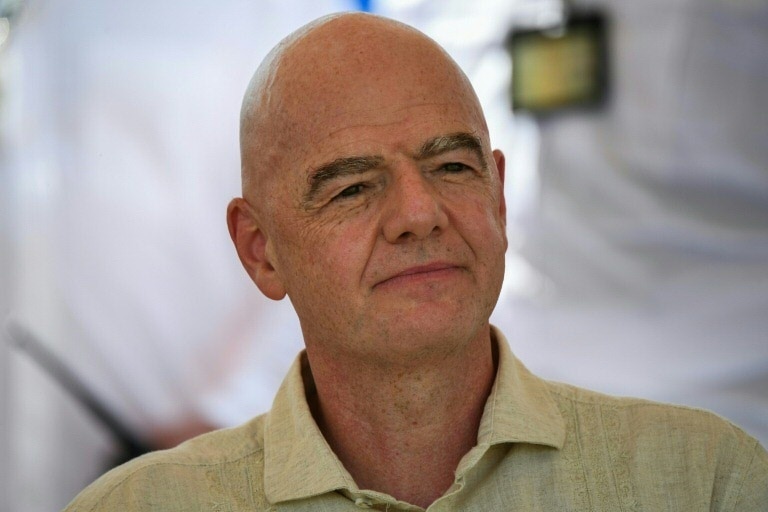
    Embattled FIFA president Gianni Infantino touched down in the Colombian city of Cali on Friday, marking his arrival to attend the inauguration of new hard-right Colombian president Abelardo de la Espriella — all while a growing crisis roils the top leadership of global football’s governing body.

    Infantino finds himself at the center of a growing controversy that has engulfed FIFA in recent weeks. The firestorm was sparked by a heavily criticized plan to open the World Cup up to private investment, a proposal that was ultimately walked back in the face of widespread backlash from major football bodies across the globe. Despite the withdrawal of the investment plan, tensions remain high, with Europe’s governing football body UEFA reaffirming its threat to boycott future World Cup tournaments just one day before Infantino’s arrival in Colombia. The FIFA chief is currently gearing up to run for a fourth and final term as president, with the election set to take place in Rabat, Morocco, next March.

    During a public event with dozens of children dressed in full football kit in the southwestern Colombian city, Infantino leaned into his usual messaging around the sport, framing football as a unifying, joyful force. “It is a joy to be here today,” he told the gathered crowd. “Football is joy, football is happiness, football is unity. So many champions were born in this part of the world, in this part of Colombia.”

    When approached by an Agence France-Presse reporter on the ground in Cali, Infantino declined to respond to questions about whether he believed FIFA’s recent string of controversies had been fully resolved.

    Infantino has long-standing ties to prominent right-wing political figures, including former United States president Donald Trump, making his attendance at the inauguration of Colombia’s new hard-right leader unsurprising. In a break with longstanding Colombian political tradition, de la Espriella has chosen to host his inauguration ceremony in Cali — widely known as the global capital of salsa music — rather than holding the traditional swearing-in before the national Congress in the capital city of Bogota.

  • Mysterious orb seen racing over residential area in new UFO files

    Mysterious orb seen racing over residential area in new UFO files

    In a continued push for greater transparency around Unidentified Anomalous Phenomena (UAP), the U.S. Department of Defense has released a new set of declassified files containing previously unseen footage, visual renderings, and official records detailing encounters with mysterious airborne and surface objects. This release marks the fifth batch of documents declassified under an executive order issued earlier this year by former President Donald Trump, which mandated full public disclosure of long-classified UAP-related records held by federal agencies.

    Altogether, the latest drop includes 41 individual files: more than a dozen video recordings, three original images, and dozens of text-based PDF documents that span more than 70 years of U.S. military observation, with the oldest document dating back to 1953 and the most recent recorded just this year. This follows an initial release of 161 declassified UAP files uploaded to the Pentagon’s public website in May, when officials first pledged that additional batches would follow on a rolling schedule.

    Among the most notable new recordings is a 2021 video captured over the Gulf of Oman, which captures a dark, roughly 4-foot diameter “cold orb” moving in erratic, irregular patterns that do not match known conventional aircraft or natural weather phenomena. At first glance, the object appears small enough to be a common housefly crossing the camera’s sensor, but official classification confirms it is cataloged as an unidentified anomalous phenomenon.

    Another 2025 recording, captured by a U.S. military sensor camera at an undisclosed military location in the Middle East, shows a solid round sphere moving at consistent speed in a straight line over a developed urban residential area.

    A 2019 recording taken over the Pacific Ocean offers another curious observation: a black sphere that appears to vanish from the sensor feed entirely for a short period before reappearing, visibly trembling as it drifts slowly across the frame. Pentagon notes accompanying the video clarify that while the original observation was captured by a military sensor, the footage itself was recorded by holding a handheld camera up to the display monitor, meaning some of the visible flickering may be a result of the secondary recording method rather than the object’s actual behavior.

    Beyond video, a declassified 1953 memo from the U.S. Naval Photographic Interpretation Center analyzes two separate UAP videos captured in Montana in 1950 and Utah in 1952. The center’s assessment concluded that the objects captured in both videos showed unusual characteristics: their size visibly increased alongside increases in their luminosity, traits that the memo confirmed are “inconsistent with those of natural phenomena.”

    A declassified FBI file included in the release also features a first-hand account from a former military pilot, who reported repeated sightings of unusual white lights during transatlantic flights between Boston and Dublin beginning in October 2023. The pilot reported that the lights start dim, grow progressively brighter before fading out, and exhibit unusual movement: some hold stationary position, while others travel in straight lines and occasionally change direction abruptly. He noted that he has observed the lights at least 10 times since his first sighting, and claimed that many other commercial and military pilots have reported similar sightings consistently between midnight and 3 a.m.

    All three images included in this release are official renderings, created as artistic interpretations of first-hand witness descriptions of UAP encounters. One of the most striking renderings depicts a massive, dark triangular craft hovering in the sky, with a bright round light positioned at each of the three corners. The rendering is based on a 2011 encounter reported by two former U.S. military service members.

    UAP is the official term adopted by the U.S. government and scientific community to replace the more popularized term “UFO” (unidentified flying object). Unlike the traditional framing of UFOs as only airborne potential alien spacecraft, UAP covers all unexplained observations, including those on land, in the air, and underwater.

    Public curiosity and interest in UAP and the potential for extraterrestrial life has grown dramatically in the U.S. over the past decade. In 2022, the U.S. Congress held its first formal public hearings focused on UAP in more than 50 years, and the Department of Defense has committed to ongoing transparency around military observations of unexplained phenomena. In a statement accompanying this fifth file release, Pentagon spokesperson Sean Parnell confirmed that the department will continue releasing additional declassified UAP documents to the public on an ongoing rolling basis.

  • Niewiadoma-Phinney wins Mont Ventoux stage to take overall lead on Women’s Tour de France

    Niewiadoma-Phinney wins Mont Ventoux stage to take overall lead on Women’s Tour de France

    On a sunbaked afternoon on one of professional cycling’s most legendary climbs, Poland’s Katarzyna Niewiadoma-Phinney delivered a career-defining performance Friday, attacking early up the brutal slopes of Mont Ventoux to secure her first-ever stage win at the Women’s Tour de France and leapfrog Switzerland’s Marlen Reusser to take the overall general classification lead with just two stages remaining in the 2024 race.

    Niewiadoma-Phinney, who claimed the overall 2024 Tour title earlier this year without winning a single individual stage, broke away from the leading group of contenders approximately nine kilometers from the barren, moon-like summit of the Hors Catégorie (highest difficulty) climb, which averages a near-9% gradient. 2023 Tour champion Demi Vollering and former leader Reusser could not match her blistering pace, as the Polish rider held off all chasers through a strong headwind in the final kilometers to cross the line first, arms raised in triumph.

    Exhausted from her all-out effort, Niewiadoma-Phinney nearly lost her balance after crossing the finish line and required assistance dismounting her bike. She later collapsed onto the roadside, pouring cold water over her head to cool down as she processed her breakthrough win, tears welling as she was fitted with the race’s coveted yellow overall leader jersey. She now holds a 15-second lead over second-place Vollering and a 39-second advantage over Reusser heading into the race’s final weekend.

    In a post-stage interview, Niewiadoma-Phinney shared that an unexpected encounter with her family midway up the climb gave her the extra push she needed to secure victory. “When I started climbing I looked to the right and I saw my parents standing on the roadside. They came today by surprise. I saw my father yelling for me and I thought I had to make him proud,” she said.

    The winner, who is married to former professional men’s Tour sprinter Taylor Phinney, also explained that a personal connection to Mont Ventoux fueled her ambition to win on the iconic climb. She recalled visiting the ascent in the off-season with her husband and friends, riding to the top three times just for the joy of the challenge. “From that moment, I just wanted to experience that feeling again. The pure joy of riding, as if I was a kid,” she added. “I never chase victories for the sake of winning, I target them because I like this beautiful feeling I have right now.”

    Vollering, the 2023 overall champion, put in a strong performance to finish second on the stage, dropping Reusser in the final kilometers of the 15.7-kilometer ascent to move into second place overall. Two-time Giro d’Italia winner Elisa Longo Borghini of Italy took third place on the stage, while former race leader Reusser, the reigning world time trial champion, crossed the line in fourth, ceding the yellow jersey after a valiant but ultimately unsuccessful defense.

    Mont Ventoux holds a unique place in Tour de France history, having been featured multiple times in the men’s race, and it carries somber historical context: it was on this climb that British rider Tom Simpson collapsed and died during the 1967 Tour, one of the darkest tragedies in the race’s history.

    With the race now moving into its final weekend, the general classification remains tightly contested. Saturday’s eighth stage is a flat 172-kilometer route tailored for sprinters, finishing in the coastal French city of Nice. Sunday will bring a decisive final mountain stage, featuring four sharp climbs up Col d’Èze, which overlooks Monaco. This is not the first time Niewiadoma-Phinney has entered the final stage with a narrow lead over Vollering: two years ago, she defeated Vollering on the final day to win the overall race by a margin of just four seconds, setting the stage for another dramatic finale to this year’s competition.