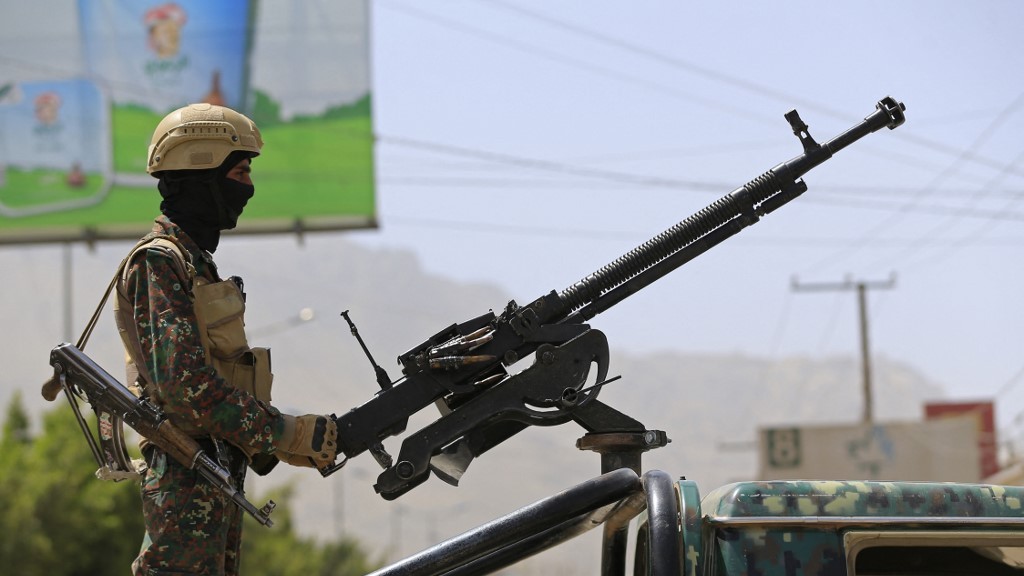
As tensions across the Middle East surge to new heights, Saudi Arabia has issued a stark intelligence-backed warning that Iran’s Islamic Revolutionary Guard Corps (IRGC) is orchestrating coordinated cross-border attacks against the kingdom, carried out jointly by Iraqi armed factions and Yemen’s Houthi movement.
A senior anonymous Saudi official shared details of the intelligence assessment with Reuters Thursday evening, noting that the collaborative threat assessment was compiled by Saudi authorities, U.S. intelligence agencies, and regional partner nations. According to the official, the planned attacks are set to target high-value civilian and economic infrastructure across the kingdom, with critical energy facilities, commercial ports, and major airports listed as the primary potential targets.
Saudi security forces have already detected unusual movements of drone and missile systems consistent with pre-attack preparations, the official confirmed, adding that hostile forces are positioning to launch strikes from two directions: Iraq along the kingdom’s northern border and Yemen to the south. In a firm statement of intent, the official added that Riyadh has completed defensive preparations and is prepared to deploy all necessary measures to repel and respond to any act of aggression against its territory.
This latest warning comes against a backdrop of rapidly escalating regional confrontation tied to the expanding Israeli-U.S. campaign against Iran-aligned groups that launched in late February. Tensions spiked further late last month, on July 29, when joint Saudi-U.S. airstrikes hit positions held by Iran-backed armed groups in Iraq. The strikes targeted command headquarters operated by the Popular Mobilisation Forces, leaving more than 20 fighters dead and at least 30 others injured.
In the wake of the airstrikes, Iraqi aligned factions publicly vowed to carry out retaliatory attacks against Saudi and U.S. targets. However, Hadi al-Amiri, leader of the prominent Iraqi Badr Organisation, has called for a delay in any retaliatory action. In a televised address carried by Iraqi media outlets, Amiri urged fighters to hold off on responses to what he labeled “American-Saudi aggression” and set aside immediate grievances for the sake of Iraq’s national strategic interests.
Beyond the northern threat from Iraqi factions, Saudi Arabia has also faced a sharp uptick in cross-border attacks from Houthi forces based in Yemen. The Houthi movement confirmed it launched an assault on Saudi Arabia’s Najran airport earlier this week on Tuesday, part of its ongoing wider campaign targeting Saudi military positions, civilian infrastructure, and commercial shipping connected to the kingdom.
On Thursday alone, Houthi assaults on Saudi-backed Yemeni government deployments in Yemen’s Marib and Hadramout provinces left at least 17 government soldiers dead, according to Yemen’s internationally recognized government. Multiple independent regional sources have put the confirmed death toll as high as 58. The Houthi movement has also compounded pressure on Saudi Arabia by disrupting the kingdom’s crude oil exports through a de facto blockade of Red Sea shipping lanes, pulling Riyadh deeper into the broad regional confrontation with Iran-aligned groups.
In response to the growing array of threats, regional diplomatic sources familiar with defense planning confirm that Saudi Arabia, Pakistan, and Turkey are set to sign a new trilateral joint defense agreement during a meeting scheduled Friday in Mecca. As of Friday morning, neither the Houthi movement nor the Iranian government has issued an immediate public response to Saudi Arabia’s warning of planned coordinated attacks.