博客

  • Cyprus natural gas to supply Europe by first half of 2028, minister says, as EU seeks new sources

    Cyprus natural gas to supply Europe by first half of 2028, minister says, as EU seeks new sources

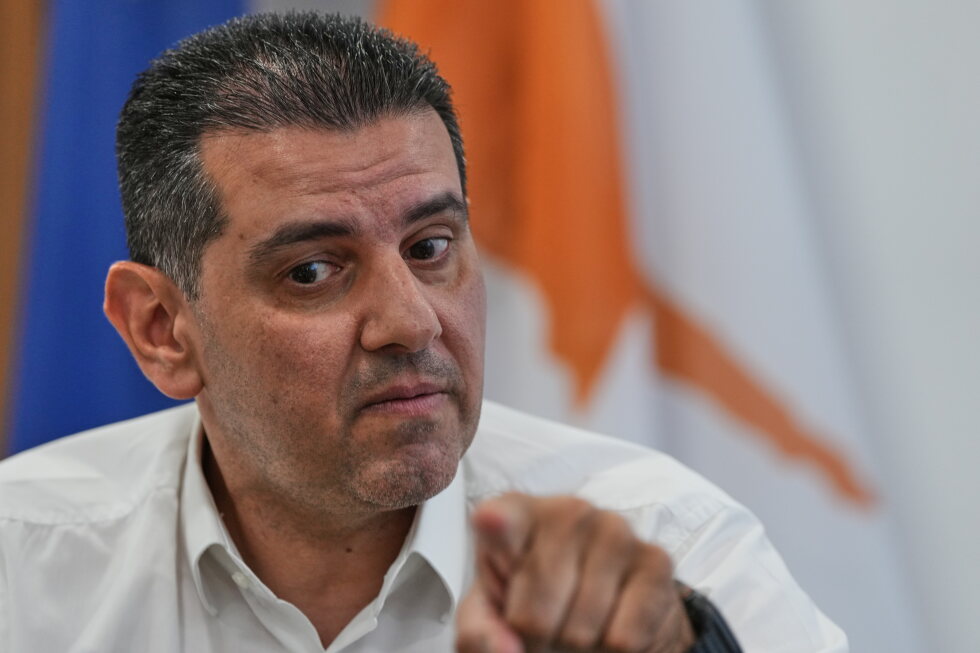
    Against a backdrop of widespread European energy market volatility triggered by the Russian-Ukrainian war and escalating Middle East geopolitical unrest, Cyprus has positioned itself as a emerging alternative energy supplier for the continent, with its first undersea natural gas shipment from the Cronos field slated to reach European markets as early as March 2028, the island nation’s Energy Minister Michael Damianos confirmed in an exclusive interview with the Associated Press.

    Last month, development partners TotalEnergies (France) and Eni (Italy) formally signed off on a final investment decision to advance the Cronos project, located off Cyprus’ southern coast in the country’s Exclusive Economic Zone. This milestone marks the first time that natural gas extracted from East Mediterranean offshore deposits will be exported directly to European consumer markets, filling a critical gap as the continent works to diversify its supply chains away from traditional sources.

    Per the consortium’s official timeline, preliminary construction work on a 105-kilometer pipeline connecting the Cronos field to existing processing infrastructure at Egypt’s massive Zohr natural gas deposit will kick off before the end of 2025, with construction expected to take up to 18 months to complete. Once extracted, raw natural gas from Cronos will be routed through the new pipeline to Egypt’s Damietta liquefaction facility on the country’s northern coast, where it will be converted into liquefied natural gas (LNG) for seaborne transport to European terminals. This route was selected as the most economically viable option for the project, coming in with an estimated total cost of roughly $2 billion (1.73 billion euros) — half the projected cost of developing alternative export infrastructure within Cypriot territorial waters, thanks to access to Egypt’s already operational energy network.

    Under the project agreement, nearly all of Cronos’ estimated 3 trillion cubic feet (tcf) of proven natural gas reserves is earmarked for European consumption, though a contractual clause allows up to 20% of output to be diverted to meet Egypt’s growing domestic energy demand if needed. Damianos noted that while Cronos is a relatively modest reserve that will not generate massive state revenue for Cyprus, the project carries far greater strategic significance for the small island nation. “Its importance is not the money, its importance is the commencement of being a producer and having first gas,” he explained.

    Cronos is just one of six proven natural gas deposits discovered to date in Cyprus’ offshore Exclusive Economic Zone, with more large-scale developments already in the pipeline. Energy giants ExxonMobil and QatariEnergy hold development licenses for the Glaucus and Pegasus fields, which together hold an estimated 6.9 tcf of natural gas, with first production targeted for 2033. Damianos added that ExxonMobil, which has a track record of delivering projects ahead of schedule, plans to expand its exploration activities off Cyprus and is in line to receive an additional exploration license for new hydrocarbon prospects. The Aphrodite field, Cyprus’ first offshore gas discovery made 15 years ago, holds an estimated 5.6 tcf of reserves. A final investment decision from the Chevron-led development consortium is expected by summer 2027, with a planned direct pipeline connection to Egyptian processing facilities to supply Egypt’s domestic market. A long-running border dispute over a portion of the Aphrodite field that extends into Israeli waters is expected to be resolved via arbitration by next month, Damianos confirmed.

    Beyond natural gas development, Cyprus is also advancing a landmark interconnector project to integrate its power grid with the broader European network, and eventually link up with Israel as well. The Great Seas Interconnector, a subsea electricity cable project, has secured backing from French investment firm Meridiam, and forms a core infrastructure building block for the European Union’s IMEC initiative, a planned new energy and trade corridor connecting Europe to the Gulf region and India. The project would end decades of energy isolation for both Cyprus and Israel, but it has recently hit delays over cost overruns that push total spending above the original $2.2 billion estimate. The European Investment Bank is set to release a revised cost assessment in the coming months to clarify the project’s final budget.

    Under current agreements, Cypriot residential and commercial energy consumers could be on the hook for up to 63% of construction costs, which would trigger a substantial increase in domestic electricity prices. To mitigate this burden, project organizers are actively courting additional private sector investment and exploring options for increased European Union grant funding. The EU has already committed 760 million euros ($658 million) to the project. “It’s a very important project for Europe because it connects Cyprus which is isolated to the European grid. And the idea is to then proceed and connect to Israel,” Damianos said.
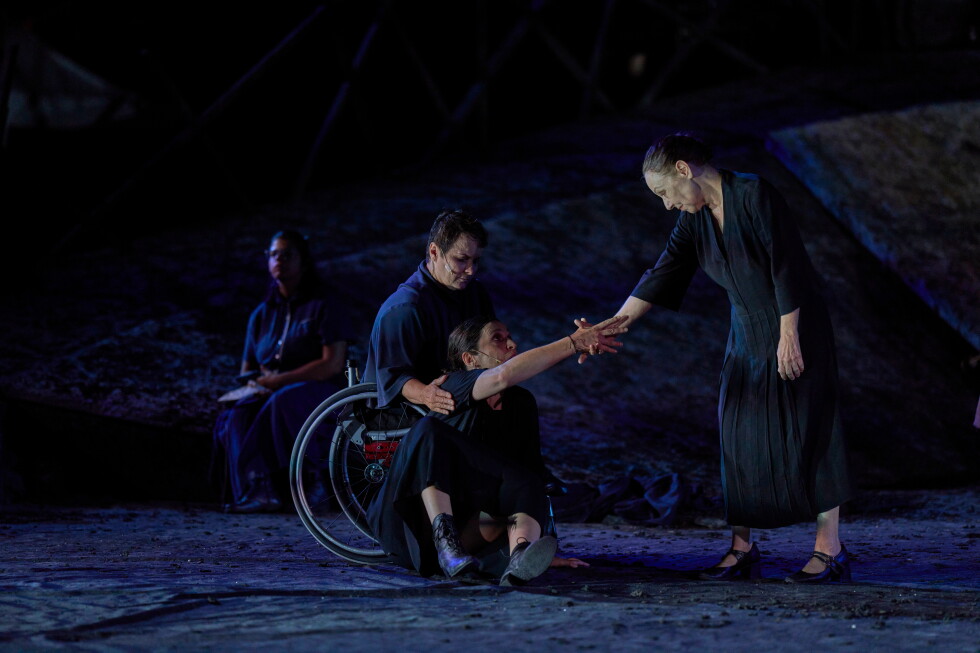

  • As the world rediscovers ‘The Odyssey,’ disabled actors in Greece explore the pain of war

    As the world rediscovers ‘The Odyssey,’ disabled actors in Greece explore the pain of war

    Against the backdrop of a global resurgence of interest in Homer’s ancient works sparked by Christopher Nolan’s recent adaptation of *The Odyssey*, a groundbreaking theatrical production in southern Greece is rewriting the rules of cultural accessibility, while centering a forgotten chapter of the Trojan War narrative.

    On August 2, 22 disabled and non-disabled performers took the stage at the Ancient Theater of Epidaurus, the iconic 2,300-year-old open-air stone amphitheater famed for its unparalleled acoustics and historic place in Greek dramatic tradition. Their staging of Euripides’ *The Trojan Women* marked the first fully accessible performance in the theater’s long history, breaking down centuries of barriers that excluded disabled audiences and creators from engaging with one of the world’s most celebrated cultural sites.

    Unlike Homer’s canonical epics, which follow victorious Greek warriors on their journeys home from the 10-year Trojan War, Euripides’ 5th-century BCE tragedy shifts focus away from heroic triumph to the devastating human cost of conflict. Written roughly three centuries after Homer’s works, the play centers on the widowed, exiled, and enslaved women of conquered Troy, giving voice to the suffering that war leaves in its wake.

    To fulfill the production’s commitment to full inclusion, organizers rolled out a comprehensive suite of accessibility accommodations across the entire site. Blind and low-vision attendees received Braille event programs, tactile 3D models of the ancient theater, and live in-person audio description to follow the performance. Deaf and hard-of-hearing spectators could track dialogue via overhead projected titles, while widespread physical modifications to the venue’s walkways and seating areas improved access for visitors with mobility impairments.

    For attendees and creators alike, the milestone event was far more than a theatrical performance—it was a public celebration of disability equality. Greg Polychronidis, a Paralympic gold medalist who participated in the event, noted that the production set a critical precedent for cultural institutions worldwide. “It’s the first time a performance at Ancient Epidaurus has been made accessible to everyone,” Polychronidis said. “Today was a celebration of equality and it should serve as an example for everyone, forever.”

    The message of inclusion extended to the cast as well, where disabled performers held prominent roles that put overlooked communities center stage. For 58-year-old cast member Eirini Kourouvani, a wheelchair user who had never been able to enter the ancient theater before the production, standing on its historic stage was a transformative experience. “It is just grand,” Kourouvani said. “I feel my heart opening up as wide as this theater is.”

    Ioanna-Maria Gertsou, a blind psychologist who attended the performance alongside her guide dog Babu, echoed that sentiment, emphasizing that accessibility is a fundamental right, not an extraordinary favor. “We too have the right to attend performances on an equal footing,” Gertsou said, noting her relief that her guide dog was able to remain with her throughout the show without disruption.

    The landmark production was created by Greece’s National Theater, with accessibility design led by the nonprofit organization Liminal and financial backing from Alpha Bank, one of Greece’s largest financial institutions. Argyro Chioti, the National Theater’s artistic director, emphasized that full accessibility should not be a one-off special event, but the new standard for all major cultural venues.

    Chioti acknowledged that building inclusive access required extensive advance work: “This was complex, not simple. It required months of planning. It cost money. And it required very specific organizational expertise. But that’s the standard and venues we need to reach — the major stages and the major theaters.”

  • Three Palestinians killed and dozens wounded in Israeli attacks across Gaza and West Bank

    Three Palestinians killed and dozens wounded in Israeli attacks across Gaza and West Bank

    A fresh wave of violence orchestrated by Israeli military forces and Jewish settlers across the occupied Palestinian territories left at least three Palestinians dead and dozens more injured in a single day of unrest on Saturday.

    Violence was concentrated primarily in the occupied West Bank, where multiple incursions and settler attacks unfolded across multiple communities. In the northern West Bank city of Tubas, Israeli military convoys pushed into urban areas, deploying infantry to secure key positions in the city center. Troops deployed tear gas against local residents, leaving 15 people in need of medical attention, which was provided on-site by teams from the Palestinian Red Crescent Society.

    Southeast of Tubas, near Ramallah, Israeli forces launched a raid on the village of al-Mughayyir. During the incursion, soldiers fired tear gas directly into a private family home, leaving all household members, including minor children, struggling with respiratory distress from the chemical agent. Additional Israeli incursions were recorded across the broader Ramallah governorate, including entries into the nearby town of Turmus Ayya, the village of Abu Falah, and the village of Kobar, where tear gas was fired into public streets to disperse local populations.

    Further south in the Hebron governorate, the violence escalated into armed attacks by Israeli settlers, who operated under explicit armed protection from Israeli military forces. In the Masafer Yatta community of Wadi al-Rakhim, settlers opened fire on local residents during a raid, wounding four Palestinians. A 57-year-old man was hospitalized after sustaining a bullet wound to his hand, according to local medical reports.

    In Idhna, a town west of Hebron, settlers backed by Israeli troops stormed the area surrounding the Prophet Saleh Mosque. The settlers assaulted local residents, discharged live ammunition, and illegally erected a makeshift tent on privately owned Palestinian agricultural land. When the assault was underway, Israeli soldiers entered the mosque itself and detained seven worshippers, including the mosque’s lead imam, Mu’taz Sa’di Tmaizi. During the raid, troops deployed live bullets, stun grenades, and tear gas, while settlers vandalized a privately owned Palestinian vehicle parked nearby.

    Settler violence also spilled over into Abu Falah, where armed groups fired weapons in close proximity to the village’s local school, endangering students and staff. Other separate groups of settlers entered the community of Beit Ur al-Tahta, and roamed through privately owned Palestinian farmland outside the village of Jaljalia, all while Israeli military forces provided armed security for the incursions.

    The violence extended to the blockaded Gaza Strip, where Israeli troops shot and killed one Palestinian near the border in northern Khan Younis. The injured survivor was transferred to Nasser Medical Complex for emergency care. Gaza’s Ministry of Health confirmed that two additional Palestinians died on Saturday from injuries sustained during earlier Israeli attacks in the enclave. As of Saturday, the official Palestinian casualty count for the ongoing Israeli military campaign in Gaza, which launched in October 2023, stands at 73,384 people killed and 174,242 others wounded. Even following the ceasefire that took effect in October 2025, Israeli forces and settlers have killed 1,257 Palestinians and wounded an additional 4,131 people across the occupied territories. This report is drawn from independent on-the-ground coverage by Middle East Eye, a media outlet specializing in original, unfiltered reporting on the Middle East and North Africa region.

  • Shanghai cancels 1,300 flights as China prepares for Typhoon Dolphin

    Shanghai cancels 1,300 flights as China prepares for Typhoon Dolphin

    As Typhoon Dolphin tracks toward eastern China after drenching northern Taiwan over the weekend, regional authorities have enacted sweeping emergency measures, including mass evacuations and widespread flight disruptions, to mitigate the impact of the powerful storm.

    The storm’s outer rain bands first reached northern Taiwan, including the island’s capital Taipei, on Saturday, dumping heavy downpours across the region. In response, multiple Taiwanese air carriers scrapped all scheduled flights bound for mainland China on Sunday, leaving hundreds of passengers stranded at airports across the island.

    As of Sunday morning, official meteorological data placed the typhoon’s maximum sustained wind speeds at roughly 162 kilometers per hour (101 miles per hour), marking it as a significant weather event capable of causing widespread damage. Forecasters projected the storm would make landfall along the coasts of Zhejiang province and the northern section of neighboring Fujian province by late Sunday, bringing torrential rainfall that raises major risks of flash flooding and dangerous landslides.

    In the most hard-hit forecast zones, accumulated rainfall over the coming days is expected to reach between 200 and 400 millimeters (7.9 to 15.7 inches), according to Chinese national meteorological services. Officials in Zhejiang have issued repeated urgent warnings about elevated landslide risks across the province’s mountainous and hilly areas, urging residents to heed evacuation orders immediately.

    In Shanghai, the country’s busiest aviation hub, both of the city’s major international airports – Pudong and Hongqiao – have canceled more than 1,300 flights scheduled for Sunday, accounting for roughly 60 percent of the day’s planned operations, per reports from Shanghai-based state media outlet The Paper.

    Emergency evacuation efforts have been underway across the region since Saturday evening. In the Zhejiang city of Taizhou alone, officials have relocated more than 390,000 residents from low-lying and high-risk areas. Shanghai authorities have also evacuated more than 30,000 people from coastal and flood-prone zones, bringing the total number of relocated residents across the affected regions to more than 720,000.

    In additional safety measures, Zhejiang provincial authorities have suspended all water-based recreational and commercial activities, including inter-island ferry services and passenger cruise operations, until the storm passes and safety inspections can be completed.

  • Diego Rossi helps Monterrey to 2-1 Leagues Cup win over Messi-less Inter Miami

    Diego Rossi helps Monterrey to 2-1 Leagues Cup win over Messi-less Inter Miami

    MIAMI — In a dramatic late turn of events in Saturday night’s Leagues Cup group stage clash, Diego Rossi netted the game-deciding goal in the final minute of regulation to deliver Monterrey a hard-fought 2-1 victory over an Inter Miami side forced to compete without global superstar Lionel Messi.

    Messi, the 36-year-old Argentine icon, departed for his home country earlier the same day following the passing of his father and long-time agent Jorge Messi at age 68. As of the post-match report, no official timeline has been confirmed for his return to the Major League Soccer club.

    The eight-time Ballon d’Or winner had recently wrapped a two-week hiatus after leading Argentina to a runner-up finish at the 2022 FIFA World Cup. He made his first comeback appearance off the bench in Inter Miami’s August 1 MLS fixture, which ended in a 2-2 draw against Columbus Crew. Just three days before Saturday’s match, Messi put on a vintage performance in Miami’s opening Leagues Cup group game, notching two goals and one assist to secure a 4-2 win over Atletico San Luis.

    The first half of Saturday’s match saw Inter Miami draw first blood in the 32nd minute, when Rodrigo De Paul fired a 25-yard strike that curved into the left side of the net past the Monterrey goalkeeper. In a show of solidarity with his grieving club and country teammate, De Paul pulled off his own number 7 jersey to reveal Messi’s iconic number 10 underneath the kit. The celebration resulted in a yellow card per competition rules, but the gesture quickly drew widespread support from fans across the globe.

    Monterrey, which trailed 1-0 going into the halftime break, turned the tide in the second half. It only took two minutes after the restart for Hugo Cuypers to slot home the equalizer. The Belgian striker, who earned 2026 MLS All-Star honors and notched 13 goals in 11 appearances for the Chicago Fire before transferring to Monterrey on July 23, brought his side level to set up the final showdown.

    Rossi, who was acquired by Monterrey from Columbus Crew on July 3, sealed the three points with his stoppage-time winner. The 2022 MLS Golden Boot winner, who previously helped Columbus claim the 2023 MLS Cup and 2024 Leagues Cup titles, capped off Monterrey’s second-half comeback with the decisive late strike.

    An early injury disrupted Monterrey’s game plan in the first half: defender Carlos Salcedo was forced to exit the match in the 15th minute, with Jorge Rodríguez stepping in as his replacement.

    With one group stage match remaining for both sides, both clubs currently hold an even 1-1-0 record with three points apiece. For Inter Miami, the defending 2023 Leagues Cup champions and 2024 tournament finalists, their path to the knockout round has grown significantly narrower after Saturday’s loss. Both teams will wrap up their group phase action next Wednesday: Inter Miami will play host to León at their home stadium, while Monterrey will travel to face Nashville SC.

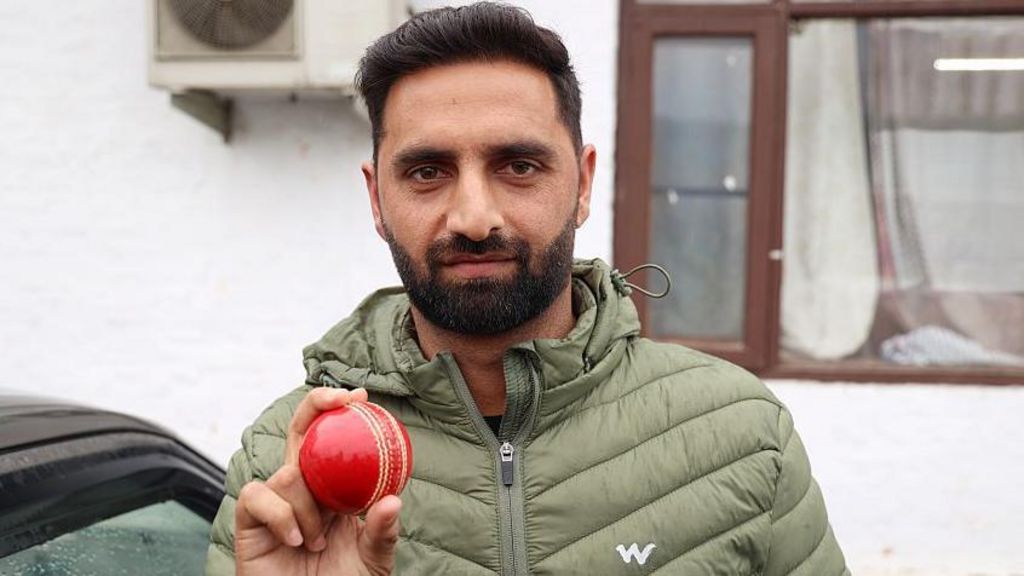
  • How a schoolteacher’s son became Kashmir’s first India Test cricketer

    How a schoolteacher’s son became Kashmir’s first India Test cricketer

    Decades of systemic challenges, harsh climatic conditions, and limited sporting infrastructure have long stood between Jammu and Kashmir’s aspiring cricketers and the highest levels of the sport. But for 29-year-old all-rounder Auqib Nabi, a childhood promise of greatness has turned into history, as he becomes the first cricketer from the region to earn a call-up to India’s men’s Test cricket squad.

    Auqib’s inclusion replaces star fast bowler Jasprit Bumrah for India’s upcoming two-match Test series against Sri Lanka, which is scheduled to kick off on 15 August. The milestone is more than a personal win: it marks a watershed moment for cricket development across a region that has spent decades battling systemic and environmental barriers to professional sport.

    Growing up in a remote village in Jammu and Kashmir’s Baramulla district, Auqib cut his teeth playing cricket on uneven local grounds with almost no formal infrastructure. His father, Ghulam Nabi Dar, a local schoolteacher, initially pushed his son to prioritize academic study and pursue a career in medicine, echoing the widespread local belief that professional cricket offered no viable future for young people from the region. “There was no scope in cricket. We used to think playing sport was a waste of time, so I insisted that Auqib focused on his studies,” Ghulam explained in reflections on his son’s early journey.

    But Auqib’s relentless passion for the game eventually changed his father’s mind. After years of watching his son dedicate every spare moment to training, Ghulam reversed his position and became one of Auqib’s strongest supporters. “After seeing his passion for cricket, I accepted it. I realised that, as a parent and a teacher, I shouldn’t force him to do something he didn’t want to do. I started supporting him,” he said.

    Even childhood friends recalled how out of reach a professional cricket career seemed for young players in the region. Junaid Dar, Auqib’s childhood companion, remembers questioning Auqib’s unwavering commitment at a time when professional sport was barely a concept in local communities. “Auqib was obsessed with cricket from childhood. I used to ask him, ‘Why are you doing all this? There’s no future in it.’ We came from a place where there was no concept of playing sport professionally and hardly any infrastructure,” Junaid said.

    To access the training facilities he needed to develop his skills, Auqib made a grueling 70-kilometer round trip to Srinagar nearly every day just to practice on regulation cricket pitches. When he attended his first formal cricket trials, he did not even own a proper pair of spiked cricket shoes. For a full decade, he stuck to a brutal daily routine: rising before dawn for gym work, then spending the rest of the day honing his craft on the pitch. “Auqib is very hardworking and consistent. He knows how to fight obstacles and make a way for himself. He would wake up early to go to the gym and then practise for the rest of the day. He did that almost every day for 10 years,” said Auqib’s cousin Bilal Ahmad Dar.

    That decade of grind began to pay off in 2020, when Auqib made his debut in the Ranji Trophy, India’s elite domestic first-class cricket competition, representing Jammu and Kashmir. He announced his arrival with a stunning five-wicket haul against Jharkhand in his first outing, signaling the arrival of a promising new fast-bowling talent.

    Parvez Rasool, Jammu and Kashmir’s first-ever international cricketer and Auqib’s long-time captain, has watched the all-rounder’s progress from the early days of his career. He says Auqib’s extraordinary work ethic and discipline have always set him apart from his peers. Success, however, did not come overnight. Even after finishing as the leading fast bowler in the 2024–25 Ranji Trophy season with 44 wickets, Auqib remained largely overlooked by national selectors, a snub that stung for the player and his support system. “When you do well but don’t get recognition, it hurts. But we should never lose hope. Hope is what keeps the world intact. I always believed his time would come,” Ghulam said.

    That patience paid off in the following season, when Auqib delivered one of the most dominant bowling campaigns in modern Ranji Trophy history. He claimed 60 wickets across 10 matches, finishing as the tournament’s top wicket-taker and leading Jammu and Kashmir to their first-ever Ranji Trophy title, a historic win that ended a 67-year wait for the region.

    That standout performance earned Auqib a blockbuster INR 84 crore (approximately £730,000 or $982,000) contract with the Delhi Capitals in the Indian Premier League. While he received limited playing time in the high-profile T20 league, his red-ball form had already caught the attention of India’s national selection panel, paving the way for his historic Test call-up.

    For Rasool, Auqib’s achievement carries significance that extends far beyond the player himself. “Playing Test cricket is the ultimate dream for any cricketer. It was my dream too. Seeing Auqib earn that call-up fills me with immense pride. In a way, it feels like a dream many of us in Jammu and Kashmir carried has finally been realised through him. It is a historic moment not just for Auqib and his family, but for cricket across the region,” Rasool said.

    He emphasized that breaking into the Indian national team requires an extra level of resilience for players from Jammu and Kashmir, where decades of underdevelopment, conflict, and limited access to facilities create barriers that players from other parts of India rarely face. “Making it to the Indian team is incredibly difficult for any player, but the challenge is even greater when you come from Jammu and Kashmir. For years, we have had limited infrastructure, fewer opportunities and many obstacles that players from other parts of the country don’t necessarily face. To reach this level, you need exceptional consistency, mental strength and the determination to keep believing in yourself. Auqib has shown all of those qualities, which is why this achievement is so special,” Rasool explained.

    Jammu and Kashmir first gained affiliation with the Board of Control for Cricket in India (BCCI) in 1957, but to this day the region only hosts two major cricket stadiums, both with limited facilities. Long, snow-heavy winters and decades of regional instability have further slowed the growth of organized cricket in the area. “This is a landmark moment for cricket in Jammu and Kashmir. For a long time, people questioned whether someone from our region could make it to India’s Test team. Auqib has answered that question. His selection shows players from Jammu and Kashmir can compete with the best if they are given the opportunity,” Rasool said.

    Rasool believes Auqib’s journey will inspire a new generation of young cricketers across the region, filling a gap that has long existed for local sporting role models. “When I started playing, there weren’t many role models from Jammu and Kashmir. Today, things are changing. Auqib becoming the first player from the region to earn an India Test call-up will give countless youngsters the belief that they can dream big too. His journey proves that no matter where you come from or what challenges you face, hard work and perseverance can take you to the highest level,” he said.

    Back in Auqib’s home district of Baramulla, Ghulam Nabi Dar has become a local celebrity overnight, recognized everywhere he goes by community members celebrating his son’s achievement. “People come up to me, hug me and say, ‘This is Auqib’s father.’ It makes me immensely proud,” he said. The milestone caps a remarkable journey that began with a young boy’s bold promise to his cousin: that one day, cricket’s biggest stars would be asking *him* for a selfie. That day has now arrived.

  • A Tibetan cooperative keeps a centuries-old weaving tradition alive

    A Tibetan cooperative keeps a centuries-old weaving tradition alive

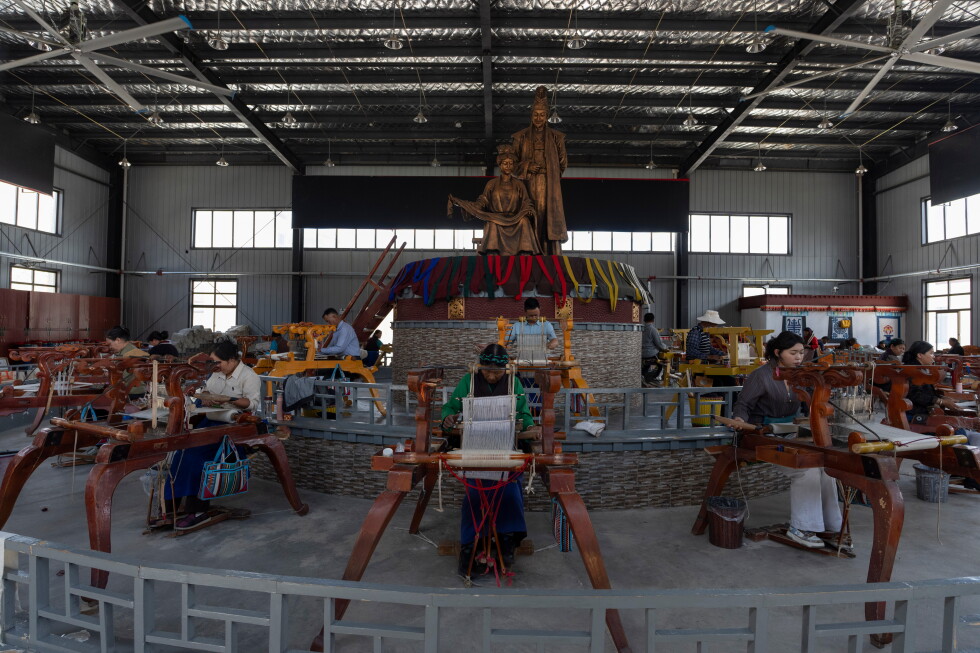
    High on the windswept Tibetan Plateau, 12,100 feet above sea level in Shannan, more than a dozen skilled artisans sit hunched over traditional wooden looms, their hands moving in steady, practiced rhythm. They guide shuttles through tight rows of locally sourced wool yarn, pulling each thread into place with careful precision—a repetitive motion that has kept a centuries-old Tibetan cultural tradition alive against the odds. This is the art of weaving Pulu, the thick, durable wool fabric that has clothed plateau communities for hundreds of years, and at the Ethnic Huaji Handwoven Cooperative, this craft is getting a new lease on life.

    Founded in 2008 by third-generation Tibetan artisan Pasang, the cooperative does more than just produce handwoven textiles: it is on a dual mission to safeguard one of Tibet’s oldest endangered weaving traditions and create stable, inclusive employment for local residents. Today, the workshop employs more than 100 people from surrounding communities, including artisans living with disabilities, while passing down rare skills to younger generations of Tibetans who might otherwise never learn the craft. For Pasang, the work is personal—when he was learning the trade from his parents decades ago, fewer than 10 people across the region still knew how to produce Zeter, the cooperative’s specialty and the rarest, most refined variant of Pulu.

    Unlike ordinary Pulu, Zeter is spun from the exceptionally soft wool harvested from the necks and backs of local Shannan sheep. This finer material makes the spinning and weaving process far more technically demanding than standard Pulu production, but the result is a textile that is lighter, softer, and far more delicate than its everyday counterpart. According to historical records preserved by Pasang and local communities, Zeter was so highly prized that during China’s Ming Dynasty, it was sent as a tribute from Tibetan leaders to the imperial court in central China. Today, the craft holds even greater significance: it has been formally recognized as part of China’s national intangible cultural heritage, a designation that has helped bring new attention to Pasang’s work to keep it alive.

    The history of the craft is woven into the very space of the cooperative. At the center of the workshop, two statues stand framed by rows of wooden looms: one of 7th-century Tibetan King Songtsen Gampo, and the other of his Chinese bride Princess Wencheng. Local tradition holds that Princess Wencheng introduced advanced weaving techniques to Tibet after her marriage to the king, merging cultural practices from across the region into the craft still practiced today. In official Chinese historical narrative, the royal union symbolizes deep, long-standing cultural and historical ties between Tibet and the rest of China, a connection Pasang says is reflected in the blended cultural heritage of Pulu weaving. “It integrated Tibetan and Chinese cultures,” he explained of the fabric’s centuries-long history.

    All wool used in the cooperative’s workshop is sourced locally from sheep herds that graze the high-altitude grasslands surrounding Shannan, keeping supply chains local and supporting regional herding communities. Finished products—including soft scarves, warm shawls, tailored jackets, handwoven bags and other textiles—are displayed in a small showroom adjacent to the workshop, with most sales going to customers across Tibet, followed by buyers from other regions of China.

    For the artisans who work at the cooperative, the craft is far more than a job—it is a connection to their cultural identity and a lifeline to stable income. Eighty-year-old Tsering Yangchen, who has woven at the workshop for seven years after relocating to Shannan from another county, says she struggled to find steady work before joining the cooperative. Instructors at the workshop taught her the craft from scratch, and today she calls Pulu far more than just a product to sell. “We usually wear them,” she said of the handwoven textiles. “They are made from pure wool.”

    This report comes from an Associated Press reporter who participated in a government-organized reporting trip to Lhasa and Shannan last month, which included access to the cooperative, cultural heritage sites, Buddhist temples, tourist destinations, a local eldercare center, and other regional businesses. Associated Press video producer Olivia Zhang contributed to this reporting.

  • What it’s like to chase solar eclipses around the world

    What it’s like to chase solar eclipses around the world

    On Wednesday, a rare total solar eclipse will cut a path across Europe, turning broad daylight into temporary twilight as the moon aligns perfectly between the Earth and sun, casting a sweeping shadow across the continent. For casual observers, this event will be a once-in-a-lifetime memory. For a growing community of passionate sky-chasers, however, it is the most anticipated celestial prize of a generation — and many have traveled thousands of miles, planned for years, and sacrificed comfort to claim a front-row seat.

    Among them is Mark Griffiths, an astronomy hobbyist from Cheshire in the UK, who completed a grueling two-day cross-border drive to Galicia, northern Spain — widely regarded as one of the best viewing locations for the 2026 eclipse. Griffiths arrived loaded with professional-grade gear: two high-resolution cameras, a specialized solar telescope, and a drone to capture aerial footage of the eclipse’s shadow as it moves across the landscape. His obsession with chasing dramatic sky events began six years ago, with a failed trip to see the northern lights in Shetland, where poor weather left him empty-handed. Far from discouraging him, the disappointment only deepened his passion. “I kept wanting more,” Griffiths explained in an interview on the day after he finished his drive, which included only brief stops in Bordeaux to snap night sky photos and catch a few hours of sleep. “I’m quite sleep deprived, but it’s worth it. It’s like an addiction now.” This eclipse marks Griffiths’ first total solar eclipse, and for enthusiasts like him, he says, Europe’s first total solar eclipse in more than 25 years is “like what the World Cup is to football.” Since his Shetland trip, Griffiths has become a seasoned sky-chaser: he travels to Iceland once a month to lead northern lights tour groups, and has already photographed dozens of auroras, partial eclipses, and bioluminescent phenomena across the globe.

    The eclipse’s path of totality — the narrow strip of land where observers can see the sun completely blocked by the moon — begins at the edge of Siberia, arcs across the Arctic Ocean, passes through Greenland and Iceland, crosses the northern Atlantic, cuts across northern Spain, and ends in the Mediterranean. Outside this path, most of Europe will only see a partial eclipse, but even that has not stopped dedicated travelers from converging on prime viewing spots across the route. Half a world away from Griffiths, American couple Samantha and Gregory Phillips-Brown have traveled from upstate New York to Iceland, where they rented a camper van to seek out a remote viewing spot in the Westfjords peninsula. This is their second total solar eclipse: the first, which they saw near their home in 2023, left such an impact that they booked flights and a van more than a year in advance for this event. “It was such a phenomenal experience to see the Sun start going dark and hear, suddenly, the birds stop chirping,” Samantha recalled. “It’s just a very strange, otherworldly experience.” Gregory reflected on what the experience would have meant for Iceland’s first Viking settlers more than 1,000 years ago, when solar eclipses were attributed to mythology rather than science: “They really didn’t know what was happening, didn’t know how long it was going to last… it must have been quite terrifying for them, in a way.” In the days leading up to the eclipse, the couple has been hiking and camping across eastern Iceland, and they plan to head to the Westfjords early to avoid expected road closures from overcrowding. Samantha, an avid self-described obsessive planner, has been monitoring eclipse-chaser groups on social media to get real-time updates on conditions, and says she has already seen hundreds of visitors carrying eclipse glasses across the country: “I expect as we move west, we’ll see more and more people gathering for the show.”

    For one British family, the 2026 eclipse is a nostalgic reunion 27 years in the making. Andrew Wills is traveling to the Spanish island of Majorca with his wife and his 90-year-old father, with whom he watched Europe’s last total solar eclipse in 1999 from the top of St Agnes Beacon in Cornwall. That day was cloudy, Wills recalled, so they missed seeing the eclipse’s shadow rush across the Atlantic toward them — but they still got to see the sky dim into an eerie twilight, and the memory stuck with him ever since. “It was still awe-inspiring,” he said. This time around, Wills has booked a villa near the western Majorcan town of Andraitx, right in the path of totality, and has scouted a coastal viewing spot with unobstructed views of the horizon, where the eclipse will be visible as the sun sets. Majorca and neighboring Menorca are the last landmasses where the eclipse will be visible before the shadow disappears into the Mediterranean. Wills has arranged to bring camping chairs so his 90-year-old father can rest while they wait for the celestial event, and he is hopeful for clear skies this time around. For Wills, eclipses are more than just a tourist attraction: they are a humbling reminder of the unique cosmic coincidence that makes total solar eclipses possible on Earth. The sun is 400 times larger than the moon, but also 400 times farther away — creating the perfect alignment that allows the moon to cast a complete shadow on Earth. The experience, he says, reminds him of astronomer Carl Sagan’s reflection on the Pale Blue Dot photograph, which showed Earth as a tiny speck against the vastness of space. “We are tiny little specks in a huge vast area of nothingness,” Wills said. “We’re amazingly lucky to be alive to see something this incredible.”

    Even though the total phase of the eclipse will last just a couple of minutes for observers, that brevity is part of what makes the event so meaningful for the thousands of people who traveled across continents to see it. For this community of sky-chasers, the journey is almost as special as the celestial spectacle they have come to witness.

  • Nigeria’s mass wedding – and how telling lovers from fraudsters is proving tricky

    Nigeria’s mass wedding – and how telling lovers from fraudsters is proving tricky

    For a full week, the northern Nigerian city of Kano has been transformed into a vibrant hub of celebration, as 1,500 low-income couples tied the knot in one of West Africa’s largest annual state-sponsored mass wedding events, turning city streets into a canvas of color and joy for participating families.

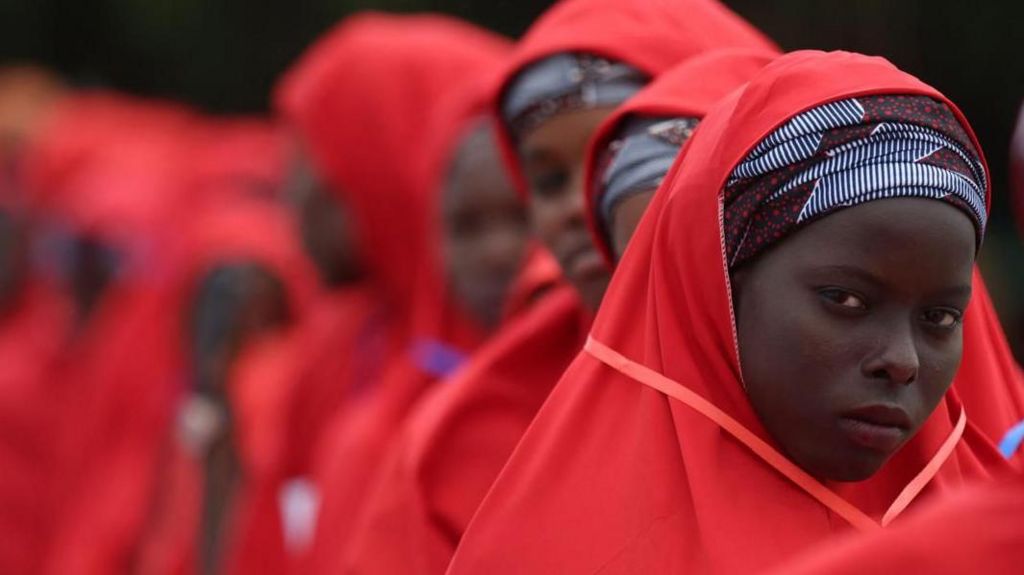
    In the lead-up to the official ceremony, neighborhood gatherings and pre-wedding preparation events filled local communities, with bridal parties and relatives helping couples put together their wedding attire and finalize arrangements. The core formal ceremony took place on Friday, when brides clad in bright red hijabs and grooms in matching red hats and flowing white robes processed to the palace of the Emir of Kano, the city’s highest traditional Muslim leader, to formalize their unions.

    The celebration concluded on Saturday with a ceremonial wedding breakfast hosted by Kano State Governor Abba Kabir Yusuf, who personally offered blessings to all newly joined couples. The entire initiative, which supports financially vulnerable residents who cannot cover the steep upfront costs of marriage in Nigeria’s current strained economy, is fully funded by the Kano state government, with a total allocation of 1.5 billion naira (approximately $1 million USD) for this year’s event. This funding covers every expense for participating couples, from the bride’s statutory dowry to essential furniture and household goods for their new home.

    The annual mass wedding program was first launched in 2012 under the administration of the then-state governor, beginning with just 100 couples – most of whom were widows or divorcees seeking to remarry. Since its founding, successive state administrations have retained and expanded the initiative, growing the number of spots available each year to meet rising demand. The program is also open to men entering polygamous unions, in line with the legal and social norms of Kano, a majority-Muslim state where Sharia law operates alongside Nigeria’s national secular legal framework.

    Demand for the program has surged in recent years amid Nigeria’s ongoing economic crisis. This year alone, more than 5,000 eligible couples submitted applications for just 1,500 spots. To ensure the program reaches only genuinely eligible participants, all vetting and screening is overseen by the Hisbah, Kano’s state-level Islamic police force, a process that deputy commander-general Mujahid Aminudeen says is far from simple.

    “Whenever we find out that there’s something dubious or fishy about a couple, we disqualify them,” Aminudeen told the BBC. He explained that some applicants misrepresent their circumstances solely to access the financial benefits of the program, going to great lengths to pass screening as a genuine engaged couple.

    For weeks leading up to the wedding, Hisbah offices have operated at full capacity to process applications and complete mandatory pre-participation checks. All applicants are required to undergo comprehensive medical screenings, including testing for HIV, hepatitis, genotype compatibility, and pregnancy status. Aminudeen confirmed that multiple couples have been disqualified after attempting to falsify their medical results, including one unusual case where a prospective bride attempted to pass her brother off as her fiancé to claim the program’s benefits.

    Local journalist Yusuf Ali Abdallah, who has covered the Kano mass wedding program for more than a decade, says Nigeria’s prolonged economic struggles have driven a sharp increase in both demand and fraudulent applications this year. “As we all know, marriage involves spending money and the country’s economy is not bright at the moment,” he explained. “This makes some people desperate to get on this list.”

    Abdallah added that even some couples who had already married formally had attempted to reapply as new engaged couples to access the program’s support, before being caught and removed from the participant list. Third-party scammers have also exploited the high demand, targeting vulnerable applicants with false promises of securing a spot in exchange for bribes. One Kano resident, who was not selected for this year’s event and asked to remain anonymous, told reporters he was approached by individuals demanding bribes to add him to the participant list. He later discovered the scammers had no connection to the Hisbah or the program, and says he plans to reapply next year.

    Aminudeen acknowledged the reports of fraudulent bribe solicitations, and emphasized that the entire application and participation process is 100% free for all applicants. “We want to announce to the people of Kano that the whole process is free: from the selection to the medicals and the goods set aside for couples – all are covered by the government,” he said.

    Many successful participants have confirmed that they encountered no improper requests during their application process. Rabiu Yusuf, a 43-year-old clothing trader and one of this year’s grooms, said the entire process went smoothly for him and his new wife Aisha Auwal, who met when she regularly visited his shop to purchase clothing. Yusuf, who already has five children with his first wife, said he was “very happy and can’t wait to start a new life” with his bride.

    Amina Alhassan, a 24-year-old bride who married Nura Abdullahi, 40, shared Yusuf’s positive assessment. The couple’s union was arranged by their families in Dambatta village before they applied for the program, and Alhassan said she faced no barriers to participation. “Everything has been free and I want to commend the Kano government for this scheme because without it, many couldn’t have afforded to marry due to the high cost of living,” she said.

    Breaking down the support package, each participating couple receives approximately 1 million naira ($735 USD) in total support. This includes core household necessities: beds, mattresses, linens, pillows, basic furniture, and food supplies to establish their new home. Each bride receives a 100,000 naira dowry, with an additional 100,000 naira provided as start-up capital for small businesses, designed to help the couples achieve long-term financial independence.

    Following Saturday’s official wedding feast, distribution of the household support packages began immediately. The excitement of the event is expected to linger across Kano for days, as the 1,500 new couples settle into their new lives together with the support of the state’s landmark social program.

  • France shuts mosque over Quran verses and Islamic texts used in Muslim worship

    France shuts mosque over Quran verses and Islamic texts used in Muslim worship

    A French administrative court has given its backing to a six-month shutdown of a suburban Paris mosque, a ruling that has reignited long-simmering debates over the French state’s regulation of Islamic religious practice and worship in the country.

    On Friday, the Montreuil Administrative Court turned down a legal request to suspend a closure order first issued in July for the Chanteloup mosque, located in Aulnay-sous-Bois, a northeastern suburb of the French capital. The site will remain shuttered to worshippers through January of next year.

    Human rights attorney Rafik Chekkat, who is representing the mosque in the legal battle, has raised sharp questions over whether imams across France still retain the basic freedom to recite core Islamic sacred texts in their own places of worship. “In France, can an imam still quote the Quran in the mosque where he preaches?” Chekkat asked in comments to reporters.

    Chekkat explained that a significant portion of the authorities’ case against the mosque centered on the imam’s decision to quote seven passages from the Quran, alongside references to two foundational works of traditional Islamic scholarship: *The Garden of the Righteous* and *The Forty Hadiths*. Both texts are compiled from the work of Imam al-Nawawi, a 13th-century Syrian scholar universally recognized as one of the most influential theological thinkers in the history of the Muslim faith.

    French officials also raised objections to portions of the mosque’s sermons that referenced “hell” and the “punishments of the grave” described as being reserved for “unbelievers” — a notable point of criticism, given that similar eschatological teachings are a standard part of religious preaching in Christian churches and other faith communities across the country.

    In their ruling, the judges determined that Julien Charles, the prefect of Seine-Saint-Denis (the department where Aulnay-sous-Bois is located), had not “committed a serious and manifestly illegal infringement of either the freedom of worship or the freedom of expression”, clearing the way for the closure to stand.

    Speaking to Agence France-Presse after the ruling was released, Chekkat expressed deep disappointment and surprise at the court’s decision, noting that key sections of the judgment run directly counter to fundamental guarantees of religious freedom. “We are very disappointed by the decision and very surprised by its content. We will obviously go before the Council of State,” he said, referring to France’s highest administrative court. Chekkat added that he believes the lower court’s ruling was driven in part by political alignment with the regional prefect, rather than strict legal principle. “I understand that the administrative judge did not want to contradict the prefect of Seine-Saint-Denis, now I think that before the Council of State we will have a little more chance, it will be a little more legal and a little less political,” he explained.

    The Friday ruling comes amid years of steadily growing state pressure on Muslim religious institutions across France. By April 2022, French authorities had already shuttered 22 mosques over an 18-month period, with many of the closures relying on classified intelligence documents whose sources have never been made public.

    Beyond mosque closures, the national government has also moved to dissolve a number of prominent Muslim organizations, including the Collective Against Islamophobia in France, a leading anti-discrimination group, and BarakaCity, a large Islamic charity. These actions have deepened widespread fears among French Muslim communities that the government is leveraging national security legislation to systematically restrict the right to religious belief for the country’s 5 million Muslim residents, the largest Muslim minority population in the European Union.