博客

  • Paris tells e-scooter riders to wear safety gear or face fines

    Paris tells e-scooter riders to wear safety gear or face fines

    Paris has rolled out stringent new safety mandates for riders of privately owned electric scooters and similar micro-mobility devices, launching a targeted crackdown on violations after a worrying spike in deadly and serious accidents across the French capital. Local law enforcement announced the new regulations over the weekend, alongside grim data from France’s national road safety authority that underscores the urgency of the policy shift.

    Last year alone, 79 people lost their lives in e-scooter-related accidents across France, marking a dramatic 75% jump from the 45 fatalities recorded just 12 months earlier. In Paris specifically, 1,100 people sustained injuries in e-scooter crashes in 2025 – a 33% year-over-year increase that has pushed city officials to strengthen safety standards.

    Under the new rules, all riders of private e-scooters, electric unicycles, and hoverboards on public roads are now required to wear an approved safety helmet and a high-visibility vest or attach retro-reflective markers to their vehicles. Violators face steep penalties: riders caught without a compliant helmet will be issued a €135 (£129) fine, while those missing high-visibility gear will receive a €35 (£30) fine.

    The updated regulations build on existing safety restrictions already in place across Paris, which prohibit riders under the age of 14 from operating e-scooters, ban carrying extra passengers, and cap maximum speed at 25km/h (16mph). The policy also follows a 2023 city-wide ban on rental e-scooters, a move approved by 90% of voters in a public referendum – even though just 8% of eligible voters participated in the ballot.

    Despite the elimination of rental services, private e-scooters remain a widely popular commuting option in Paris, where narrow, frequently congested city streets make compact micro-mobility an attractive alternative to cars or public transit. European Union data shows France has the highest rate of private e-scooter ownership in Europe, with roughly 2.5 million units owned by French residents as of 2023, and hundreds of thousands more sold in the time since. A large share of these private scooters are registered and used in Paris, though the city does not track exact ownership numbers.

    The push for mandatory helmet and high-visibility gear is not unique to Paris: several other French regions, including Seine-et-Marne, Alpes-Maritimes, and Vaucluse, already enforce similar requirements. Paris’ policy shift also aligns with a growing trend across major European cities: Madrid implemented a full ban on rental e-scooters in 2024, and Brussels has announced it will introduce its own rental ban this coming June.

  • Turkey says defense pact with Saudi Arabia and Pakistan is not aimed at Iran or any other country

    Turkey says defense pact with Saudi Arabia and Pakistan is not aimed at Iran or any other country

    ANKARA, Turkey – In a public clarification Saturday, Turkish Foreign Minister Hakan Fidan has pushed back against speculation that a newly signed trilateral defense agreement between Saudi Arabia, Pakistan, and Turkey is crafted to target Iran or any other regional nation, framing the pact as a foundational step for strengthening collective security across the Middle East and South Asia.

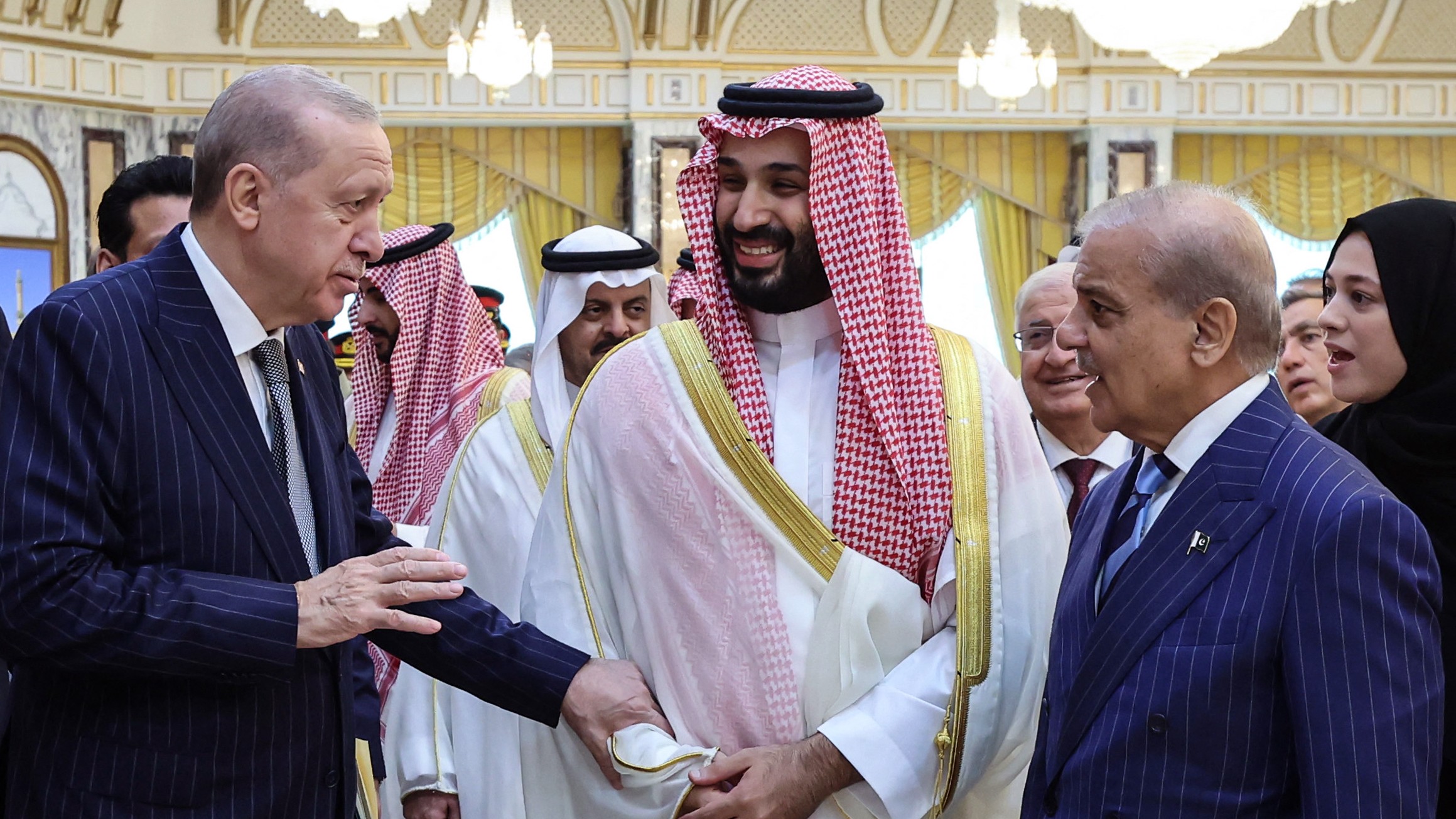
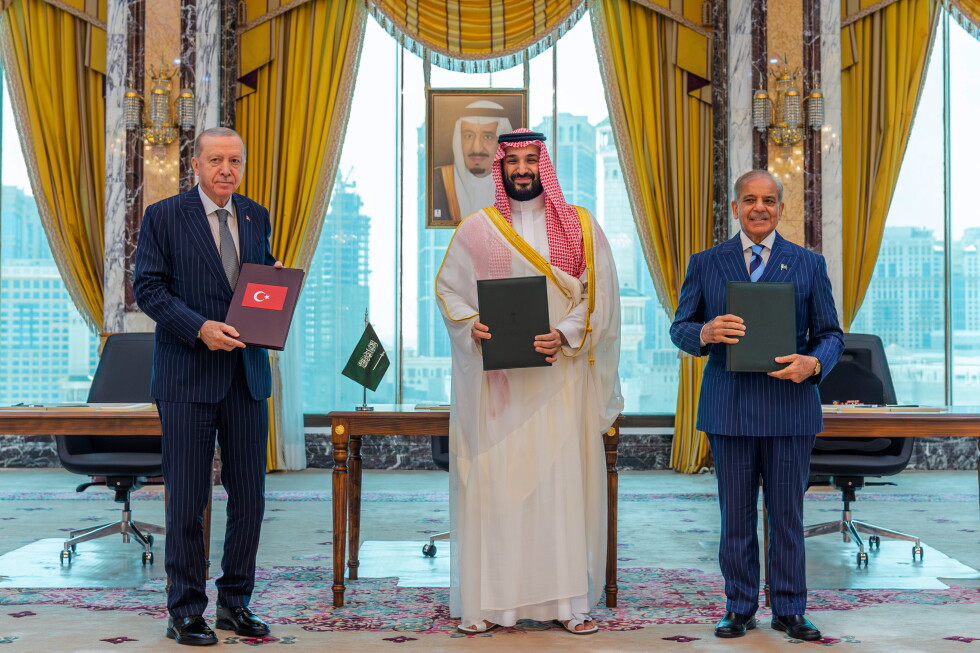
    The landmark “Mecca Joint Defense Agreement” was formally signed Friday by Saudi Crown Prince Mohammed bin Salman, Turkish President Recep Tayyip Erdogan, and Pakistani Prime Minister Shehbaz Sharif during a gathering in Islam’s holiest city, Mecca. Its core mutual defense clause mirrors NATO’s long-standing Article 5 framework, stipulating that any armed aggression against one signatory will be treated as an attack on all three nations.

    The agreement brings together three major regional players with complementary strategic strengths: energy-rich Saudi Arabia, Pakistan—a recognized nuclear weapons state, and Turkey, which boasts NATO’s second-largest standing military and one of the fastest-expanding defense industrial bases in the Eurasian region. The pact comes amid a period of heightened regional volatility, driven in part by escalating tensions linked to ongoing conflict across the broader Middle East.

    Speaking in an interview with Turkey’s state-owned Anadolu Agency, Fidan emphasized that the three signatory states have not pre-designated any country as a shared enemy. Hostile action against the alliance, he clarified, is the only threshold that would trigger the pact’s collective defense provisions.

    “We do not have any codified agreement, nothing we have signed, that identifies a specific common threat,” Fidan stated. “Any country that refrains from attacking us is not a target for our alliance.”

    Fidan further explained that the agreement’s mutual defense clause is operationally aligned with NATO’s Article 5, the cornerstone of the Western alliance’s collective defense posture that has been in place since the organization’s founding.

    When detailing how the alliance’s support mechanism would function in practice, Fidan noted that any affected member state must first submit a formal request for assistance. The nature of support provided by the other two nations would be scaled to match the severity of the threat, ranging from intelligence sharing and logistical backing to the full deployment of combat military forces.

    “These are multi-layered arrangements that adapt to the scale of any potential threat,” Fidan said. “This is the guiding framework we have established for our ongoing cooperation.”

    The foreign minister also revealed that multiple unnamed countries have already expressed interest in joining the new defense agreement. He specifically named Egypt as a “natural partner” for the alliance and stated that he expects Cairo to join the pact during its next expansion phase.

    To institutionalize ongoing cooperation, the agreement outlines regular coordination meetings between the three nations’ foreign ministers, defense ministers, and top military commanders. A permanent administrative secretariat for the alliance will also be established, with its headquarters set to be located in Saudi Arabia, Fidan confirmed.

  • Malaysia seizes container suspected of carrying goods bound for Israel

    Malaysia seizes container suspected of carrying goods bound for Israel

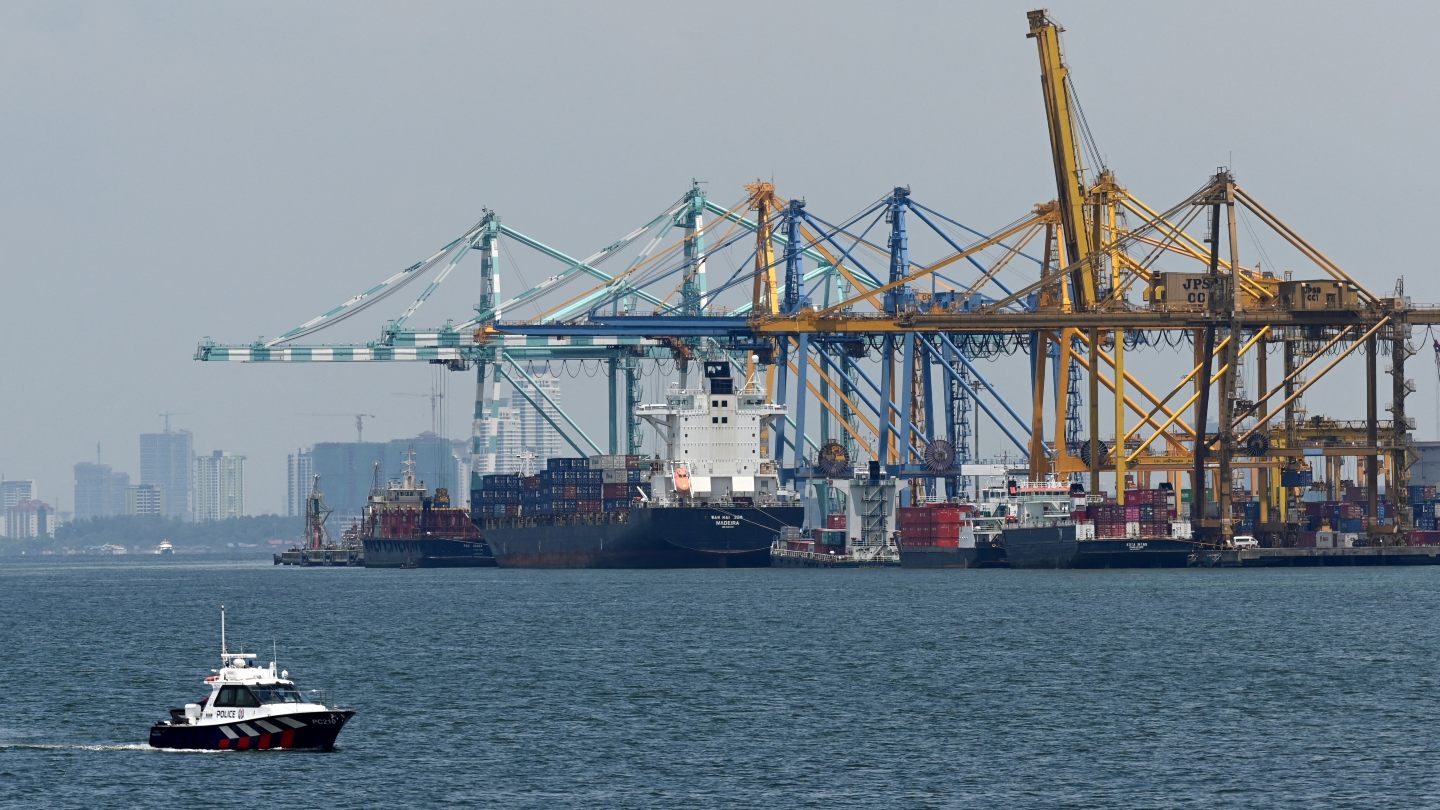
    In a move that underscores Malaysia’s long-held policy opposing trade that supports Israeli actions in Palestinian territories, Malaysian border authorities have seized a container at Johor’s Port of Tanjung Pelepas that was suspected of being ultimately bound for Israel, local media has confirmed.

    The seizure was carried out Friday by the Malaysian Border Control and Protection Agency (AKPS), launched after intelligence sharing prompted officials to order a targeted inspection of the container. According to AKPS’s official statement, quoted by local outlet Berita Harian, initial checks suggest the shipment violates Malaysia’s 2023 Customs (Prohibition on Export) Order, which bans all direct and indirect exports of any goods to Israel, specifically falling afoul of Item No 15 in the order’s Second Schedule.

    AKPS officials confirmed the agency is now conducting a full investigation into the cargo, to clarify the goods’ nature, technical specifications, intended end use and official classification. A key line of inquiry is whether the shipment includes strategic goods that fall under regulation by Malaysia’s Strategic Trade Act. The agency emphasized that any attempt to move goods to Israel, whether through direct or indirect channels in violation of national law and government regulations, will face strict enforcement action.

    Malaysian Prime Minister Anwar Ibrahim publicly praised the operation, framing the seizure as clear proof of the country’s commitment to preventing its territory from being used as a transit hub for trade that benefits Israel. In a public statement shared on the social platform X, Anwar congratulated AKPS for its rapid response to the intelligence and seizure of the suspected cargo.

    “This action demonstrates Malaysia’s firm stance to ensure that our country will never serve as a conduit for trade that could support or contribute to the Israeli regime’s atrocities against the Palestinian people,” Anwar said, adding that the operation aligns with both Malaysia’s commitments as a member of The Hague Group and the trade restrictions the government implemented in December 2023.

    The Hague Group, the international coalition Malaysia helped found, issued its own statement welcoming the seizure, noting the action gives practical, on-the-ground effect to the obligations all United Nations member states hold under international law. The group referenced the International Court of Justice’s July 2024 Advisory Opinion, which was later affirmed by UN General Assembly Resolution ES-10/24, that confirms all states have a legal obligation to not provide aid or assistance that supports Israel’s unlawful occupation of Palestinian territory.

    Varsha Gandikota-Nellutla, Executive Secretary of The Hague Group, highlighted the significance of enforcement at ports rather than just rhetorical commitments. “The defence of humanity is won at ports, courts, and factories, not from the podium. Law that goes unenforced is no law at all. By halting this cargo, Malaysia has upheld the obligations that bind every UN member state under international law. We invite all states to join The Hague Group and do the same,” she said.

    As a founding member of The Hague Group, Malaysia is part of a coalition of nations that have pledged to block transfers of arms, ammunition, military fuel, related military hardware and dual-use items to Israel when there is clear risk these materials could be used to violate international law. The group’s founding founding declaration also requires members to bar vessels transporting restricted Israeli-bound materials from docking at member state ports.

    Friday’s seizure is not an isolated policy move, but follows broader restrictions Malaysia implemented in December 2023, when the government banned Israeli-owned shipping firm Zim from docking at Malaysian ports and barred all Israeli-flagged vessels from entering the country’s territorial waters. At that time, Anwar also announced that any vessel with a final destination of Israel would not be permitted to load cargo at Malaysian ports. The government framed those initial restrictions as a targeted response to Israel’s military campaign in Gaza and a reflection of Malaysia’s longstanding public support for Palestinian sovereignty and human rights.

    What makes this latest seizure notable is that it expands Malaysia’s enforcement beyond just Israeli-owned or flagged vessels, now actively targeting any cargo transiting through Malaysian ports that is suspected of being ultimately destined for Israel, even if it is not carried on an explicitly Israeli-connected vessel.

  • What Pakistan’s defence pact with Saudi Arabia and Turkey means for the Middle East

    What Pakistan’s defence pact with Saudi Arabia and Turkey means for the Middle East

    A historic new collective defence agreement signed last Friday in Mecca is dramatically reshaping the strategic landscape of the broader Middle East, uniting three of the Muslim world’s most powerful and influential nations under a mutual security framework that echoes Nato’s core collective defence principle. Dubbed the Mecca Joint Defence Agreement, the landmark pact includes a binding clause stating that any armed aggression against one signatory will be considered an attack against all three – a provision that immediately elevates the agreement’s geopolitical weight, despite the joint statement leaving specific military commitments intentionally undefined.

    For Pakistan, the world’s only nuclear-armed Muslim-majority nation, the accord marks a sharp break from its longstanding policy of cautious neutrality as a regional diplomatic mediator. By aligning formally with Saudi Crown Prince Mohammed bin Salman and Turkish President Recep Tayyip Erdogan, Islamabad is repositioning its well-trained, combat-proven armed forces as a potential security anchor for an emerging strategic axis stretching across South Asia and the Gulf Cooperation Council region.

    This new pact reflects a far broader shift in regional power dynamics. As the decades-old regional security order anchored by the United States faces mounting strain from ongoing wars, shifting alliances and escalating tensions, major Middle Eastern powers are increasingly moving to take control of their own security futures, with Pakistan’s unique combination of nuclear deterrence and conventional military strength offering a new regional stability pillar.

    The agreement emerges at a moment of unprecedented upheaval for the Middle East’s traditional security architecture. The ongoing US-Israeli confrontation with Iran has remade the regional strategic map, with direct strikes reaching Saudi territory and critical commercial shipping lanes – including the Strait of Hormuz and the Red Sea – suffering widespread, costly disruptions. A senior anonymous Pakistani security official with expertise in regional affairs explained to Middle East Eye that all three signatory nations share overlapping economic and security priorities focused on stopping further regional escalation, a common interest that directly drove the decision to formalize the pact. Disruptions to Hormuz shipping have already hit Saudi energy and fertilizer exports, sending ripples through global markets, while import-reliant economies like Pakistan and Turkey have faced particularly severe economic fallout from these disruptions.

    The strategic calculations behind the agreement run even deeper. Both Saudi Arabia and Turkey have suffered attacks tied to the broader regional conflict, while Pakistan and Turkey both face growing concerns over cross-border instability spilling over from their extensive shared borders with Iran. For Ankara, an additional risk looms: external backing for Iranian Kurdish militias threatens to unravel the years-long fragile peace process with the Kurdistan Workers’ Party (PKK). The wider regional conflict has also emboldened Iran and its Houthi allies in Yemen, who have stepped up direct attacks on Saudi territory.

    For Gulf leadership, the repeated failure of long-standing US security guarantees to deter these attacks has sparked growing doubts over Washington’s reliability as a security partner. The result has been a clear, decisive push by major regional powers to build new defence arrangements that reduce reliance on external security commitments. Former Pakistani ambassador Asif Durrani framed the pact as the “first concrete building block of an emerging regional security architecture”, noting that it signals a clear shift toward greater regional control over security affairs. On X, Durrani added that if this cooperative momentum holds, it could open the door to resolving decades-long conflicts – including the intractable Israeli-Palestinian issue – through a process led and driven by regional actors themselves.

    Regional analysts emphasize the pact is not an out-of-the-blue development, but rather the natural culmination of years of deepening trilateral cooperation between the three nations. Michael Kugelman, senior fellow for South Asia at the Atlantic Council, called the agreement “a logical outgrowth of deepening security ties” between Pakistan, Saudi Arabia and Turkey that has accelerated over recent months. The new pact builds on pre-existing bilateral foundations: Riyadh and Islamabad signed a separate bilateral mutual defence agreement in late 2025, which saw roughly 8,000 Pakistani troops, fighter aircraft and advanced air defence systems deployed to the kingdom, while Turkey has long been a leading defence equipment supplier for both Saudi Arabia and Pakistan. Interestingly, Kugelman notes the pact is likely to be well-received in Washington, which has long pushed for greater security burden-sharing among its key regional allies, given the agreement’s core focus on collective deterrence focused on Iran.

    For Pakistan, however, the pact is about far more than just geopolitics – it is deeply tied to the country’s ongoing economic vulnerabilities, analysts point out. Islamabad spent months positioning itself as a neutral diplomatic bridge between Washington and Tehran, and even helped broker the June Islamabad Memorandum of Understanding to temporarily pause regional hostilities. But subsequent waves of escalation have squeezed the space for Pakistan’s neutral stance. For Pakistan’s ruling government, which is grappling with persistent high inflation and severe fiscal instability, strategic defence policy is now increasingly intertwined with pressing economic needs.

    Historically, Pakistan has leveraged its military strength to secure critical economic support, most notably from the United States and Saudi Arabia. This new collective defence framework formalizes that model, allowing Islamabad to monetize its decades of operational military expertise – from joint training exercises and troop deployments to arms exports – in exchange for much-needed Gulf investment, discounted energy access and diplomatic support. For Riyadh, the partnership grants access to a large, experienced military with decades of counterinsurgency and combat experience, while for Islamabad, closer security ties open the door to transformative investment, financial assistance and deeper economic integration with one of the region’s wealthiest and most powerful states. “In this sense, Pakistan’s military strength is becoming an economic asset as well as a strategic one,” the anonymous Pakistani security official told Middle East Eye.

    The emerging trilateral partnership brings together three complementary forms of national power, as political analyst Sheharyar Khan, senior adviser at Pakistan’s Ministry of Law and Justice, explained. Khan framed the dynamic as a division of complementary strengths: Saudi Arabia contributes the financial capital, Turkey brings cutting-edge defence technological innovation, and Pakistan provides core military capability. “Together, the three countries could form a security partnership whose capabilities extend far beyond traditional troop deployment,” Khan noted. Each nation brings unique, complementary assets to the table: Saudi Arabia, home to Islam’s holiest sites, offers vast capital reserves, outsized influence over global energy markets and significant regional diplomatic clout; Turkey, which commands Nato’s second-largest standing military, boasts a rapidly advancing, increasingly self-sufficient domestic defence industry with world-leading expertise in unmanned aerial systems, electronic warfare and precision-guided munitions that reduces reliance on foreign suppliers; and Pakistan contributes a large, combat-hardened ground force and the Muslim world’s only operational nuclear deterrent.

    Despite these potential benefits, experts warn the agreement carries significant strategic risks for Pakistan. Iran’s response to the pact was swift and sharply critical. Ebrahim Rezaei, a member of Iran’s parliamentary National Security and Foreign Policy Commission, dismissed the arrangement in a post on X, writing “The Saudis should know that a paper agreement with Turkey and Pakistan does not bring them security, just as years of unilateral milking of the Americans did not bring them security.” This reaction underscores Islamabad’s core strategic dilemma: deepening integration into Gulf security architecture risks damaging its delicate, long-cautious relationship with Tehran.

    Analysts also warn of the risk of “entrapment” – the very real danger that Pakistan could be pulled into foreign conflicts that do not align with its own national interests. Historically, Pakistan has intentionally avoided direct entanglement in Middle Eastern power rivalries: in 2015, the country’s parliament famously rejected a request to join the Saudi-led military coalition in Yemen over domestic political and sectarian concerns. Pakistan is also home to a large Shia minority, many of whom look to Iranian clergy for political and religious guidance, meaning the government must avoid having its closer alignment with Riyadh and Ankara perceived as an anti-Iranian stance that could reignite internal sectarian tensions.

    The agreement has already sparked widespread debate over whether it could eventually expand into a broader multi-national security bloc encompassing additional Muslim-majority nations across the globe. Retired senior Pakistani military official Muhammad Saeed has suggested that additional Muslim countries from the Middle East and beyond could eventually join the framework. But Saeed also cautioned that military strength alone will not determine the pact’s long-term success. “For Muslim states, the real and collective strength will not come only through military capabilities but primarily through long-term investments and collaboration in knowledge, innovation, discipline, character, and tolerant interpretation of sectarian sentiment,” he wrote on X.

    The prospect of a more cohesive Muslim-majority security bloc has already drawn sharp attention from Israel. In February, former Israeli Prime Minister Naftali Bennett explicitly warned against Turkey forming what he described as a “hostile axis” leveraging Pakistan’s nuclear capabilities “to surround Israel”. Analysts note, however, that Pakistan’s nuclear status inevitably reshapes the strategic calculations surrounding the entire pact. For Saudi Arabia, closer defence ties with Islamabad add an extra layer of deterrence at a time when the kingdom faces persistent threats from Iran while navigating its fragile normalization process with Israel.

    The pact’s implications stretch far beyond the Middle East. For Pakistan, closer alignment with Saudi Arabia and Turkey creates a new strategic counterweight to neighboring India. While Saudi Arabia maintains extensive economic and trade ties with New Delhi, the new collective defence framework further solidifies Pakistan’s role as a core security partner for key Gulf powers. Though India’s Ministry of External Affairs has responded cautiously, saying only that New Delhi is “closely following developments”, Indian national security analysts are monitoring the shift with growing concern. “While most are obviously seeing this from a Middle East lens, it impacts other theatres as well. Pakistan’s conflict-laden relationship with India [is] at the top of that list,” Kabir Taneja, executive director of the Middle East programme at New Delhi-based think tank Observer Research Foundation, wrote on X. Former Indian Foreign Secretary Kanwal Sibal went further, calling the pact “a very negative development for Indian interests” in an X post, and suggesting India should expand its own strategic partnerships with the United Arab Emirates, Israel, Greece, Cyprus and Afghanistan to counter the shift.

  • Hormuz talks positive, Oman says, as Iran warns deal would not open strait

    Hormuz talks positive, Oman says, as Iran warns deal would not open strait

    Diplomatic discussions between Oman and Iran over a new security agreement for commercial shipping through the strategically critical Strait of Hormuz are moving forward in a positive direction, Omani officials have confirmed, though Iranian leaders have cautioned that no immediate full reopening of the waterway can be expected even if a deal is reached.

    Both nations issued updates on Saturday confirming that negotiations are advancing, but no clear timeline for the finalization of any agreement has been set. Oman’s foreign ministry has issued a urgent warning against shipping attacks that could derail the ongoing diplomatic process.

    Iranian Foreign Minister Abbas Araghchi noted that talks have entered their final stages, but a full resumption of unobstructed transit through the strait remains tied to the fulfillment of additional unspecified conditions. Tehran has maintained an effective blockade of the strait – a chokepoint through which roughly 20% of the world’s daily oil and natural gas supplies transit – since the United States and Israel launched military operations against Iran in February.

    Recent negotiations have centered on a proposed joint Omani-Iranian framework for managing a secured shipping route through the waterway, a plan that backers hope will pave the way for the gradual return of commercial traffic. Araghchi clarified that full reopening depends on Iran receiving compensation from the U.S. for what Tehran frames as violations of the June ceasefire Memorandum of Understanding (MoU) between the two sides. That earlier deal collapsed within days of being signed, with tit-for-tat military hostilities resuming shortly after.

    In a separate comment to semi-official Iranian news outlet Tasnim, Iran’s top security official Mohammad Baqer Zolqadr went further, stating that the Strait of Hormuz will not reopen until the U.S. fundamentally revises its policy toward Iran. He outlined six core Iranian demands, including an end to U.S. threats against Tehran, the lifting of the U.S. naval blockade on Iranian ports, and the release of billions of dollars in frozen Iranian assets.

    The broader Middle East maritime disruption has expanded in recent months: Yemen’s Iran-aligned Houthi movement has imposed a separate blockade on commercial shipping approaching Saudi Arabian ports in the Red Sea since July 20.

    U.S. officials have offered mixed signals on the pace of a potential deal. Earlier this week, former President Donald Trump said an agreement with Iran could come “soon”, but Vice President JD Vance struck a more cautious tone during an appearance on Fox News Saturday. Vance emphasized that negotiations remain far from complete, saying “We’re really in the middle of the game here. This thing is not over.”

    Vance added that the U.S. is deploying a full suite of diplomatic, economic, and military tools to secure an outcome that serves American interests. He also claimed that Gulf oil export volumes have remained unchanged since the launch of U.S. military operations in late February, though he offered no data to support that assertion. “What we’re really working through now is how you can actually set up a traffic scheme so that the ships can pass through safely,” he explained.

    A major point of contention between Washington and Tehran has been reports that Iran plans to impose transit fees on commercial vessels passing through the strait. Reuters previously cited an anonymous Iranian official reporting that Tehran was seeking fees equal to between 5% and 7% of the value of each vessel’s cargo. Vance pushed back on these reports Saturday, saying “The Iranians have told us they have no plans to toll the Strait of Hormuz.”

    Oman’s warning against shipping attacks came on the same day that the United Arab Emirates (UAE) accused Iran of carrying out a hostile missile attack on an oil tanker affiliated with ADNOC, the UAE’s state-owned energy giant, as it transited the region. The UAE foreign ministry said the strike caused no casualties. Later Saturday, the UK Maritime Trade Operations (UKMTO) agency reported that a vessel had been hit by an unknown projectile off the coast of Oman, sparking a fire that was later extinguished with no reported injuries. It remains unconfirmed whether UKMTO was referencing the same ADNOC tanker targeted in the UAE statement.

  • Australia is the planet’s extinction hotspot, but one animal offers a glimmer of hope

    Australia is the planet’s extinction hotspot, but one animal offers a glimmer of hope

    As our four-wheel drive rumbles along the dusty bush tracks of Western Australia’s Dryandra Woodland, a sharp instruction cuts through the quiet: “Eyes peeled.” Every passenger leans forward, scanning the crevices of fallen logs, the edges of low scrub, and gaps between bright wildflower blooms, searching for a flash of distinct stripes or a sudden dart of movement. We are hunting for the numbat – one of Australia’s rarest marsupials, a small, striped creature that looks like a cross between a chipmunk and an anteater.

    Once widespread across the entire southern half of the Australian continent, numbats now cling to survival in just a handful of isolated protected pockets, Dryandra Woodland chief among them. Every spring, a team of volunteer researchers and conservation scientists gathers here to conduct their annual population survey, a painstaking process that maps the species’ trajectory and tracks whether decades of work are paying off. This year, there is good news to celebrate: after being classified as endangered for decades, the numbat has just been removed from the International Union for Conservation of Nature’s Red List of threatened species, reclassified as near-threatened. It is a rare glimmer of hope in a country facing what scientists call an unfolding extinction emergency.

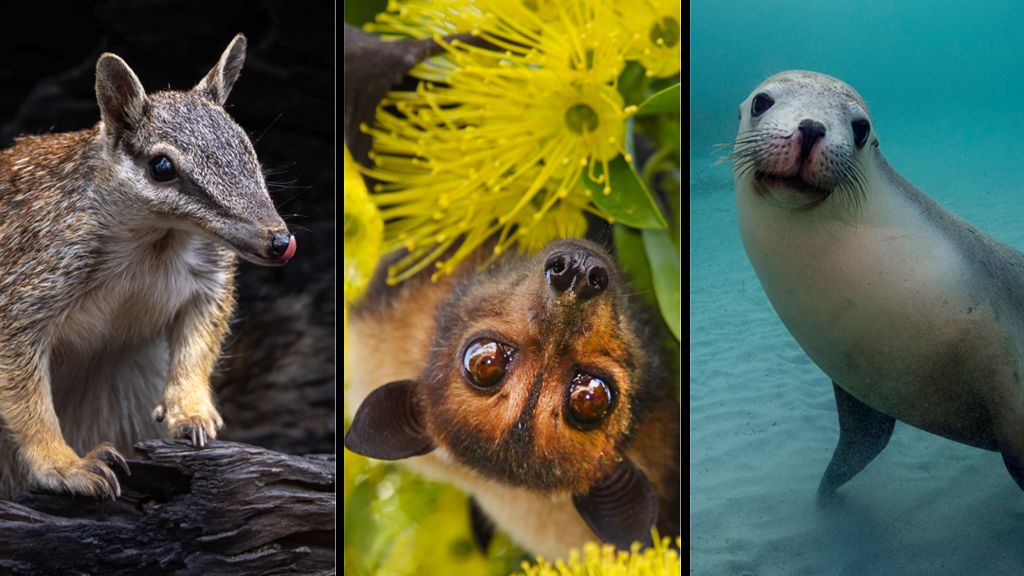
    South-western Australia is the frontline of this crisis. This small region is one of the last remaining refuges for a host of species on the brink of extinction: the endangered Carnaby’s cockatoo, which glides overhead during our survey; the Gilbert’s potoroo, the world’s rarest marsupial, which survives only on a single small island off the coast; and the increasingly rare Australian sea lion, which hunts in the sapphire coastal waters nearby. Australia has long been famous as a global biodiversity hotspot, home to more than 80% of plant and animal species found nowhere else on Earth. But today, it is widely recognized as the global extinction capital, losing an average of four unique species every decade, a rate of decline that is accelerating.

    For decades, underfunded conservationists and dedicated volunteers have fought to slow the tide of threats pushing species toward disappearance. But without urgent systemic change and political courage, experts warn the biodiversity Australia claims to cherish faces catastrophic collapse. “It’s not even a case of imagining it, it’s happening in front of our own eyes,” Professor Euan Ritchie, a leading mammal ecologist, told the BBC.

    Spotting a numbat in the wild is no small feat, explains Dr. Tony Friend, the pioneering conservation biologist who has led numbat recovery efforts at Dryandra since the 1980s. Roughly the size of a squirrel, the numbat is a master of camouflage, blending perfectly into the sun-dappled bush. When Dr. Friend first arrived at Dryandra, the local numbat population numbered fewer than 50 individuals. The threats he documented then – habitat loss, invasive predators, disease, and climate change – remain the same drivers of extinction across Australia today.

    Each spring, when young numbats first venture out of their burrows, the Numbat Taskforce, a volunteer group that makes Dr. Friend’s under-resourced work possible, conducts a daily survey circuit. Teams of spotters position themselves at every window, with one volunteer perched in the open bed of a pickup truck, ducking low to avoid overhanging tree branches. For every numbat spotted, the team logs GPS coordinates, measures distance from the road, and uses a statistical model to estimate population density and overall species health. This year, the team reports, sightings have been unusually frequent.

    On our five-hour cruise through the woodland, we spot brightly colored parrots, grazing wallabies, a large goanna, and a pair of foraging echidnas – but no numbats for hours. Along the route, constant reminders of the threats numbats still face are visible: razed farmland tightly borders the protected woodland, and purpose-built poison bait stations sit along the trails, designed to kill feral cats and foxes – invasive predators that kill an estimated 3 billion native Australian animals every year.

    Across the country, multiple overlapping threats are pushing species toward extinction. Vast swathes of critical native habitat are cleared annually for urban development, farming, mining, and timber production. Invasive species – from fire ants and cane toads to foxes and feral cats – leave a trail of destruction in their wake. Invasive weeds choke native bushland, chlamydia has pushed koalas to the brink of extinction across most of their range, and the skin-eating chytrid fungus has already caused seven native frog extinctions, with more expected to follow.

    Climate change has amplified every existing threat. Extreme heat events kill thousands of native flying foxes, which drop dead from trees when temperatures climb past tolerable limits. For many other species, rising temperatures eliminate critical food sources or destroy habitats. Climate change also increases the frequency and severity of catastrophic natural disasters: the 2019-2020 Black Summer bushfires killed an estimated 3 billion animals, and subsequent years of record-breaking flooding have caused widespread wildlife loss that researchers have not yet been able to fully quantify.

    As threats stack up, once-widespread species are now confined to small, disconnected fragments of habitat, making them far more vulnerable to extinction. But while the overall trend is dire, small, determined recovery efforts are delivering rare wins. At Perth Zoo, a captive breeding program prepares young numbats for release into Dryandra Woodland, boosting the wild population’s genetic diversity. “When you get that feedback: your babies have got babies, it’s very satisfying,” Vicki Power, a senior zoo keeper, says of the program. Captive breeding has helped establish new wild populations for dozens of threatened species, though many cannot survive in unfenced wild areas due to persistent predator threats, and isolated fenced reserves face their own challenges of inbreeding and overpopulation.

    While habitat protection and restoration projects are expanding across the country, they are not keeping pace with ongoing habitat destruction, particularly in the most biodiversity-rich regions. Scientists are also working to combat wildlife disease and preserve genetic material of threatened species for future resurrection efforts, but these efforts are expensive, labor-intensive, and only buy limited time for most at-risk species.

    The world is currently in the midst of the sixth mass extinction event in Earth’s history, the first driven entirely by human activity – and Australia is leading this grim trend. Australia has more mammal extinctions than any other country, and ranks among the highest for species loss across all taxonomic groups. “Despite Australia being one of the wealthiest countries per capita in the world and having more than its fair share of world-leading scientists… we have a truly awful record of conserving species,” Ritchie says. “And things aren’t getting better.”

    The Australian government’s official list of extinct species stands at 67, but independent researchers estimate at least 100 unique Australian plant and animal species have already been lost forever, with the true figure likely far higher, as new extinct species are still being discovered decades after they disappeared. While the rate of extinction has held steady at roughly four per decade, the number of species currently classified as threatened continues to climb rapidly, and the decline of many at-risk populations is accelerating.

    This trajectory carries severe, far-reaching consequences for all Australians, experts warn. Australia’s biodiversity underpins the entire national economy, supporting sectors from agriculture to tourism. Potential scientific breakthroughs in medicine, agriculture, and climate adaptation could be lost forever if species go extinct before they can be studied. For First Nations Australians, biodiversity loss also threatens deeply held cultural traditions and connections to country. “We think of ourselves as custodians of all life on Earth… so there’s a much more personal and social feeling of loss that comes when these things are not doing well or we lose them forever,” says Jack Pascoe, an ecologist and member of the Yuin Aboriginal nation.

    While environmental protection is primarily a state responsibility in Australia, the federal government oversees matters of national biodiversity importance. The center-left Labor government took office in 2022 promising that no new extinctions would occur on its watch, and has positioned environmental protection as a core priority for its term. “It’s well understood that nature is facing many challenges in the world today, both here in Australia, and overseas… we are losing biodiversity at an alarming rate,” Environment Minister Murray Watt told the BBC in a statement.

    The government has significantly increased national emissions reduction targets, scaled up investment in renewable energy, earned some praise for its work to recover critically endangered mammal species, and passed landmark environment law reform last year, hailed as the most significant in a generation. Australia has also committed to an ambitious national target to halt and reverse biodiversity loss by 2030. But many conservation experts remain skeptical that these commitments will translate into meaningful change.

    The new laws only provide the regulatory framework for change. The critical substance – binding national environmental standards and a powerful federal watchdog to enforce them – is still being developed. Many in the conservation sector argue that the core problem is not a lack of regulatory tools, but a lack of political will to use them to protect the environment over economic interests. Robert Hill, Australia’s longest-serving environment minister, who led the last major national environment reforms in 1999 under the conservative Howard government, admits that successive governments over the past 30 years have failed to do enough to protect biodiversity – including his own. “We should have done more too,” he says.

    Many of the challenges Hill faced three decades ago still plague current leaders. Australia’s national wealth has long been built on the extraction of natural resources, a sector that remains a core part of the national economy and a major source of government funding for public services like healthcare and housing. Powerful industry lobbying, overlapping jurisdictional conflicts between state and federal governments, and bureaucratic red tape all create major barriers to meaningful action. Even when federal leaders want to act, these pressures often derail environmental protections, as seen in 2023, when the Albanese government rushed through laws to protect Tasmania’s A$1.4 billion salmon farming industry, ignoring internal departmental warnings about the threat the industry poses to the endangered Maugean Skate, a rare ray found only in Tasmanian waters. “The axe falls on the environmental outcome if there’s the alternative of an economic one,” Hill says. “Even if [the federal government] does want to act, it’s still got to have the political strength to turn its aspirations into reality.”

    Many conservation leaders also argue that greater regulation alone is not enough. Currently, most on-the-ground conservation work relies on donations from philanthropists and unpaid volunteer labor, and dozens of critical projects are stalled due to lack of funding. The federal government currently spends roughly A$700 million annually on nature protection. Conservation experts estimate the country needs to spend A$33 billion – 1% of national GDP – annually to reverse biodiversity loss. A major imbalance in government spending exacerbates this gap: research by conservation analyst Paul Elton estimates that the Australian government still spends more than A$26 billion annually on subsidies for harmful industries including mining, intensive agriculture, and fossil fuels – despite signing global pledges to phase out these harmful subsidies. “For every dollar the government is spending on positive biodiversity conservation action, there’s A$26 being spent on subsidies that are causing harm to nature,” Elton says. “That’s a pretty stark imbalance.”

    Minister Watt did not directly address questions about funding demands from conservation groups, but said: “We remain committed to long-term environmental recovery, in partnership with state and local governments, community and environmental groups.”

    While public support for environmental protection has grown in recent years, experts are skeptical that governments will prioritize biodiversity action over competing political and economic demands until voters demand change. “The community will say to you, we should spend a lot of money on the environment. And then if you say, ‘Well, what are you prepared to sacrifice to ensure that funding base?’, then they’re no longer interested,” Hill says.

    Against this backdrop of systemic challenge and slow progress, conservation advocates say small wins like the numbat’s recovery are what keep them going. Today, there are roughly 3,000 numbats living in the wild across Australia, and the Dryandra population has grown tenfold since Dr. Friend first began his work in the 1980s. After five hours of fruitless scanning on our survey, excited shouts ring out from the driver’s seat and the back of the truck: a numbat stands frozen, alert, at the end of a hollow log. Within the next hour, we spot eight more numbats, including two pairs of curious young pups blinking in the dusky afternoon light. This year’s full population count, Dr. Friend says later, is one of the best on record.

    Even so, Dr. Friend warns the numbat is not yet out of danger. He fears the species’ removal from the endangered list will lead to cuts in critical funding and support needed to cement its recovery. He points to the woylie, a small native marsupial also known as the brush-tailed bettong, which recovered enough to be removed from the threatened list, only to be added back a decade later in a more precarious state. “But I remind people they’re not out of the woods yet,” Dr. Friend says. “We can’t walk away, and say ‘no, they’re fine,’ you know? It’s got to be accepted that continued work is needed to keep that animal on the planet.”

  • A car-bomb attack targets southwest Colombia a day after conservative president takes office

    A car-bomb attack targets southwest Colombia a day after conservative president takes office

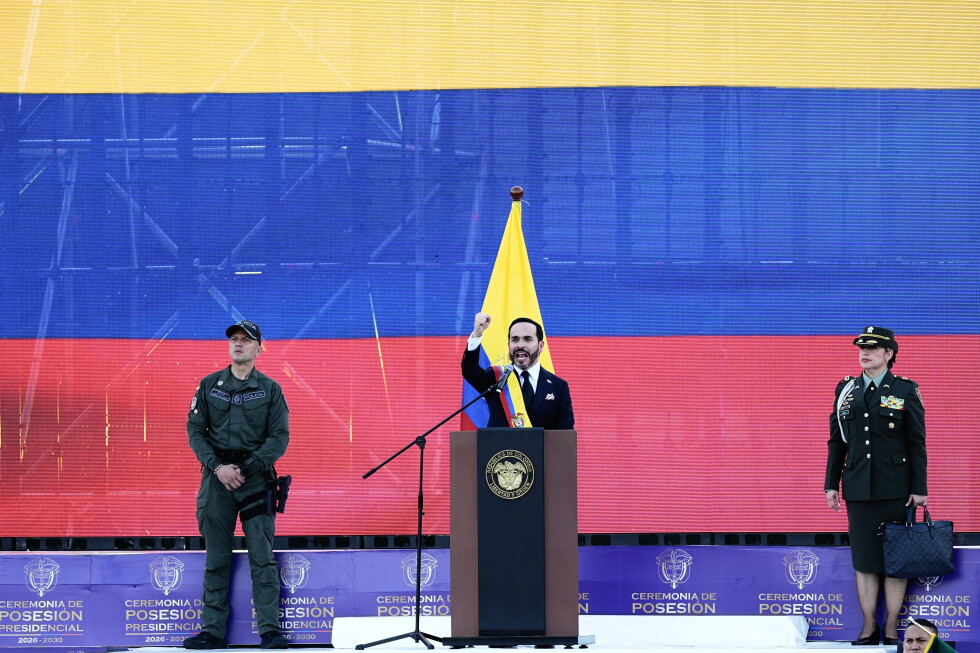
    Just 24 hours after conservative first-time politician Abelardo de la Espriella took office as Colombia’s new president in a swearing-in ceremony held in Cali, a car bomb detonated at a toll plaza on the Pan-American Highway, the nation’s busiest arterial route in southwestern Colombia, the Colombian national military confirmed Saturday.

    The army has formally attributed the attack to two breakaway factions of the former Revolutionary Armed Forces of Colombia (FARC), a guerrilla organization that disarmed under a landmark 2014 peace deal with the Colombian government. These dissident groups rejected the agreement a decade after it was signed, continuing armed and criminal activity across rural and border regions of the country.

    The blast targeted the toll station on the highway connecting the Cauca and Valle del Cauca departments, the latter of which counts Cali as its capital. Initial security assessments confirm only two security guards sustained minor injuries in the explosion. One of the injured guards told investigators the explosive was hidden in a vehicle that was abandoned by its driver, who fled the scene on a motorcycle ahead of the detonation.

    In a statement posted to social media Saturday, the army announced that uniformed personnel had secured the blast perimeter and deployed bomb-sniffing canines to sweep the surrounding area for additional hidden explosive devices. Transportation Minister Elsa Noguera publicly condemned the attack, confirming that work was already underway to clear the site and restore full traffic flow along the critical transit corridor.

    “Colombia will not kneel before violence, nor will it allow the destruction of the infrastructure that connects our regions,” Noguera wrote in her social media statement.

    The attack comes hours after de la Espriella used his inaugural address, delivered in Cali on Friday, to lay out a hardline security agenda against armed non-state groups. He explicitly warned outlawed organizations that they face only two choices: surrender to state authority and abide by the rule of law, or meet a full military confrontation from Colombia’s security forces.

    In a separate major policy shift announced Saturday, aligning with his campaign promises to reverse his predecessor’s outreach to armed groups, de la Espriella ordered the transfer of 117 imprisoned individuals with ties to illegal armed organizations to eight high-security federal prisons. The Colombian corrections agency explained the move is designed to reestablish full, permanent state control over the country’s prison system and eliminate the ability of criminal networks to coordinate illicit activity from behind bars. De la Espriella has repeatedly rejected the peace dialogue strategy with armed groups pursued by former president Gustavo Petro, his progressive predecessor.

    The 48-year-old new head of state, a lawyer and business executive with no prior elected political experience, won office in a narrow June runoff election against Iván Cepeda, a progressive senator and close Petro ally, in what was one of the most polarized electoral campaigns in recent Colombian history. Since the official results were certified by national electoral authorities and validated by international election observers, Petro and his allies have refused to accept de la Espriella’s victory, continuing to unsubstantiated claims of electoral fraud. De la Espriella’s term is already shaping up to be defined by partisan tensions, with a robust opposition bloc led by the former president entrenched in congress.

    This report included contributions from correspondent Molina, who reported from Quito, Ecuador.

  • Fast-moving Canada wildfire doubles in size forcing thousands to flee homes

    Fast-moving Canada wildfire doubles in size forcing thousands to flee homes

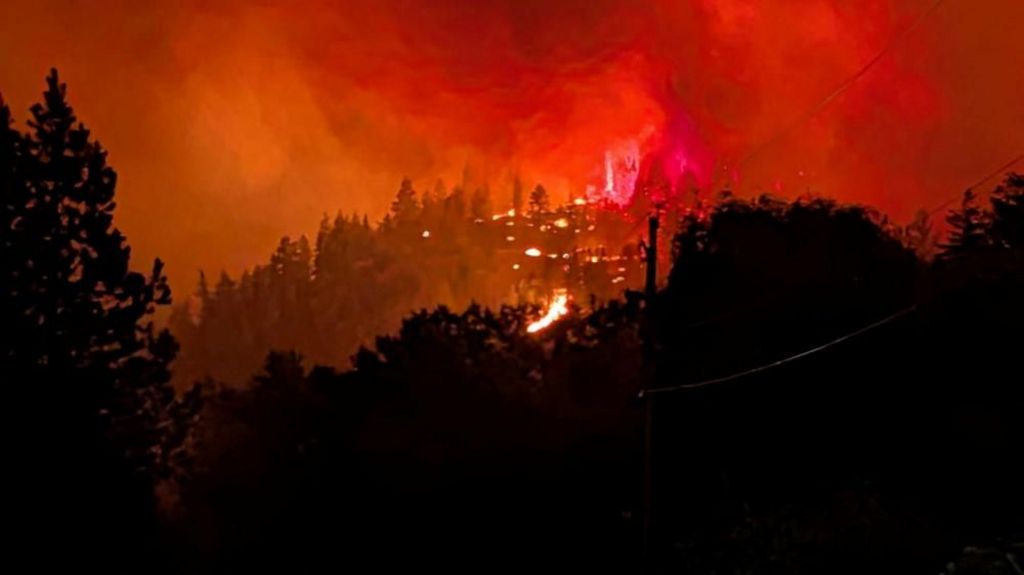
    A ferocious out-of-control wildfire is tearing through remote regions of western Canada’s British Columbia, triggering mandatory evacuation orders for more than 20,000 residents and leaving a trail of uncertainty across the fire-prone Okanagan region.

    The Bald Range fire, first detected just three days ago, has doubled in size since its initial discovery, now sprawling across more than 95 square kilometers of land spanning the Summerland and Okanagan-Similkameen districts, per official data from the BC Wildfire Service. As of Saturday morning, crews had not gained any containment over the blaze, which emergency officials describe as an unprecedentedly fast-moving event even for a region long accustomed to seasonal wildfire activity.

    Erick Thompson, an emergency management official with the Regional District of Okanagan-Similkameen, called the blaze one of the most explosive he has witnessed in his career. “This is one of the quickest-moving, largest fires in such a short time” the region has seen, he noted, in a testament to the fire’s extraordinary pace of spread. The speed of the blaze even forced Thompson himself to evacuate his own family from the danger zone Saturday morning, after he had spent the previous evening updating the public on the fire’s progression from the regional emergency operations center. In a video recorded from his vehicle as he fled south, Thompson confirmed he had left the operations hub to relocate his family to safety.

    Authorities issued mandatory evacuation orders for the entire population of Summerland, a community of roughly 12,000 people, as well as approximately 8,000 additional residents in the neighboring town of Peachland. By early Saturday, Summerland had already been completely cut off from electrical service as the fire advanced on critical infrastructure, city officials confirmed. As of the latest update, officials have not released a full assessment of structural damage, leaving thousands of evacuated residents uncertain about the fate of their homes and properties.

    The crisis has also extended to the region’s large equine population, with many residents unable to arrange transportation to evacuate their horses amid the chaotic, fast-moving evacuation order. Local residents told Canadian public broadcaster CBC that owners who could not rescue their animals have opened pasture gates, in the hope that horses will be able to flee the blaze on their own to reach safer ground. Many owners have also painted identifying marks on their horses to make it easier to reunite with the animals after the fire passes, CBC reported. Eyewitnesses on the ground have described the scene as chaotic, with the large blaze advancing much faster than initial projections had predicted.

  • Ukraine denies targeting Bulgaria as drone explodes near pipeline

    Ukraine denies targeting Bulgaria as drone explodes near pipeline

    A fresh incident of an errant drone has escalated tensions in Eastern Europe, after an unmanned aerial vehicle carrying a substantial payload of explosives detonated close to a critical energy infrastructure site in northeastern Bulgaria, near the country’s border with NATO member Romania. Ukraine has issued a categorical denial that it deliberately targeted Bulgarian territory, in the wake of the blast that has put the spotlight on growing risks of conflict spillover into NATO member states amid Russia’s ongoing full-scale invasion of Ukraine.

    The explosion unfolded around 1 kilometer from a compressor station of the Trans-Balkan gas pipeline, a strategic artery that transports natural gas from Turkey through Bulgaria to Ukraine. The drone ultimately crashed in an unoccupied sunflower field near the Kardam border crossing with Romania, close to the Black Sea coast, Bulgarian Prime Minister Rumen Radev confirmed in an official video address following an emergency security council meeting with his cabinet. While no injuries or fatalities were reported in the incident, Radev emphasized that the amount of explosives on board the drone was “significant”, noting the blast produced a loud shockwave visible as black smoke that was detected by border patrols in both Romania and Bulgaria.

    Notably, neither Bulgarian nor Romanian air surveillance systems detected the drone before it crashed, a gap Radev acknowledged reflects the widespread challenge facing European nations in countering unidentified unmanned aerial threats. Following an initial analysis of the drone debris, Bulgaria’s defense ministry stated the UAV is a model commonly deployed by the Ukrainian military, though officials also confirmed that there is currently no conclusive evidence the incursion was deliberate. In response to the event, Bulgaria’s foreign ministry has summoned Ukraine’s ambassador to Sofia for an emergency meeting scheduled for Monday.

    Ukraine’s foreign ministry has pushed back against any suggestion of intentional targeting. “We can say with certainty that the Ukrainian Armed Forces did not intentionally direct any assets toward Bulgaria,” said ministry spokesman Georgiy Tykhyi. Kyiv added that it is maintaining close communication with Bulgarian authorities to fully clarify the circumstances of the incident, and placed blame for the stray drone incident on the broader context of Russia’s invasion of Ukraine.

    This event marks the latest in a rising string of unauthorized drone incursions into NATO territory, a trend that has stoked concerns about accidental escalation of the Ukraine conflict. For months, neighboring Romania, a NATO member that shares a long border with Ukraine, has faced repeated drone incursions, including multiple crashes on Romanian soil. In late July, Romania expelled a Russian embassy staff member in response to the escalating incursions.

    Bulgaria itself has maintained a nuanced position on the Ukraine conflict: in June, Sofia halted all military aid to Kyiv, with Radev stating the country does not wish to join the coalition of arms-supplying allies and prioritizes diplomatic efforts to end the war. Following Saturday’s drone incident, however, Radev announced immediate security upgrades: Bulgaria will boost border surveillance, redeploy additional troops to its northern and eastern borders, and implement new anti-drone countermeasures to prevent similar events.

    The Black Sea, where both Russian and Ukrainian forces conduct regular drone operations, has become an increasingly volatile flashpoint in recent weeks. Just earlier this week, Turkey reported that a drone attack on two civilian cargo vessels transiting the Black Sea left multiple crew members injured, and Ankara voiced deep concern over the escalating military activity in the international waterway.

    The spillover risks are not limited to Eastern Europe, either. On the same day as the Bulgarian drone incident, German military officials confirmed that unidentified drones were spotted earlier this week over a sensitive army installation in western Germany. The Mechernich base houses an underground weapons depot that stores components for US-made Patriot air defense systems, a weapons system that Ukraine has long requested to defend its cities and infrastructure. The sightings come just days after an explosives-laden drone was discovered near a Ukrainian cargo plane at Leipzig-Halle Airport, a key hub for military cargo shipments for the German military and NATO allies.

  • Infantino denies allegations of affair, favouritism while at UEFA: report

    Infantino denies allegations of affair, favouritism while at UEFA: report

    Global football’s top administrator is facing a new wave of controversy, just weeks after being forced to scrap a divisive private investment plan for the World Cup. FIFA President Gianni Infantino, who is currently campaigning for re-election next March, is now confronting explosive allegations of an improper affair and workplace favoritism stemming from his time as Secretary General of UEFA, European football’s governing body, between 2009 and 2016.

    According to a report published by British newspaper The Telegraph in late Friday, the Italian-Swiss football executive is accused of engaging in an intimate relationship with a female UEFA employee during his tenure. The outlet, which did not name its sources for the story, further claims that Infantino abused his position at the organization to secure a promotion for the woman. The report also alleges that upon her departure from UEFA at an unspecified date, the employee received a six-figure severance payout, in addition to coverage of roughly £45,000 (equivalent to $60,700) in tuition fees for a graduate business program.

    Infantino, who has been married to his spouse since 2001, has issued a full and categorical rejection of all claims made in the report. A FIFA spokesperson told The Telegraph that the allegations are “categorically untrue”, adding that any suggestion of inappropriate conduct or violation of organizational regulations amounts to defamation. The statement further noted that no formal complaint regarding Infantino’s behavior has ever been filed by any staff member at either UEFA or FIFA, because no such improper incident ever occurred.

    When reached for comment by Agence France-Presse (AFP) on Saturday, UEFA confirmed that a departure payment and MBA tuition coverage were indeed provided to the individual in question during Infantino’s tenure. However, the European governing body emphasized that both payments were fully compliant with the staff departure regulations in place at that time, noting that these rules have been tightened significantly since 2016. As of Saturday afternoon, AFP had not received a response from a FIFA spokesperson to its request for additional comment.

    This latest scandal comes amid an ongoing crisis for Infantino, which began when he introduced a controversial plan to open FIFA World Cup tournaments to outside private investment late last month. The proposal drew fierce pushback from multiple global football stakeholders, with UEFA emerging as one of its most outspoken opponents. Even after Infantino was forced to shelve the plan earlier this week, UEFA maintained its hardline stance, confirming Thursday that its threat of a future World Cup boycott remains in place, as the withdrawal of the proposal alone was not enough to address its concerns.