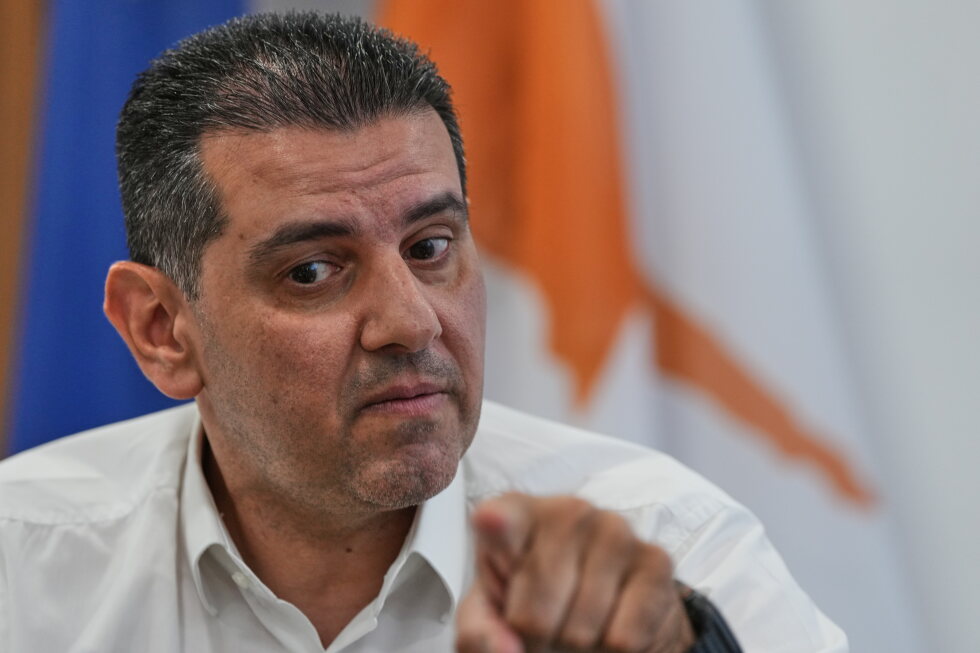
Against a backdrop of widespread European energy market volatility triggered by the Russian-Ukrainian war and escalating Middle East geopolitical unrest, Cyprus has positioned itself as a emerging alternative energy supplier for the continent, with its first undersea natural gas shipment from the Cronos field slated to reach European markets as early as March 2028, the island nation’s Energy Minister Michael Damianos confirmed in an exclusive interview with the Associated Press.
Last month, development partners TotalEnergies (France) and Eni (Italy) formally signed off on a final investment decision to advance the Cronos project, located off Cyprus’ southern coast in the country’s Exclusive Economic Zone. This milestone marks the first time that natural gas extracted from East Mediterranean offshore deposits will be exported directly to European consumer markets, filling a critical gap as the continent works to diversify its supply chains away from traditional sources.
Per the consortium’s official timeline, preliminary construction work on a 105-kilometer pipeline connecting the Cronos field to existing processing infrastructure at Egypt’s massive Zohr natural gas deposit will kick off before the end of 2025, with construction expected to take up to 18 months to complete. Once extracted, raw natural gas from Cronos will be routed through the new pipeline to Egypt’s Damietta liquefaction facility on the country’s northern coast, where it will be converted into liquefied natural gas (LNG) for seaborne transport to European terminals. This route was selected as the most economically viable option for the project, coming in with an estimated total cost of roughly $2 billion (1.73 billion euros) — half the projected cost of developing alternative export infrastructure within Cypriot territorial waters, thanks to access to Egypt’s already operational energy network.
Under the project agreement, nearly all of Cronos’ estimated 3 trillion cubic feet (tcf) of proven natural gas reserves is earmarked for European consumption, though a contractual clause allows up to 20% of output to be diverted to meet Egypt’s growing domestic energy demand if needed. Damianos noted that while Cronos is a relatively modest reserve that will not generate massive state revenue for Cyprus, the project carries far greater strategic significance for the small island nation. “Its importance is not the money, its importance is the commencement of being a producer and having first gas,” he explained.
Cronos is just one of six proven natural gas deposits discovered to date in Cyprus’ offshore Exclusive Economic Zone, with more large-scale developments already in the pipeline. Energy giants ExxonMobil and QatariEnergy hold development licenses for the Glaucus and Pegasus fields, which together hold an estimated 6.9 tcf of natural gas, with first production targeted for 2033. Damianos added that ExxonMobil, which has a track record of delivering projects ahead of schedule, plans to expand its exploration activities off Cyprus and is in line to receive an additional exploration license for new hydrocarbon prospects. The Aphrodite field, Cyprus’ first offshore gas discovery made 15 years ago, holds an estimated 5.6 tcf of reserves. A final investment decision from the Chevron-led development consortium is expected by summer 2027, with a planned direct pipeline connection to Egyptian processing facilities to supply Egypt’s domestic market. A long-running border dispute over a portion of the Aphrodite field that extends into Israeli waters is expected to be resolved via arbitration by next month, Damianos confirmed.
Beyond natural gas development, Cyprus is also advancing a landmark interconnector project to integrate its power grid with the broader European network, and eventually link up with Israel as well. The Great Seas Interconnector, a subsea electricity cable project, has secured backing from French investment firm Meridiam, and forms a core infrastructure building block for the European Union’s IMEC initiative, a planned new energy and trade corridor connecting Europe to the Gulf region and India. The project would end decades of energy isolation for both Cyprus and Israel, but it has recently hit delays over cost overruns that push total spending above the original $2.2 billion estimate. The European Investment Bank is set to release a revised cost assessment in the coming months to clarify the project’s final budget.
Under current agreements, Cypriot residential and commercial energy consumers could be on the hook for up to 63% of construction costs, which would trigger a substantial increase in domestic electricity prices. To mitigate this burden, project organizers are actively courting additional private sector investment and exploring options for increased European Union grant funding. The EU has already committed 760 million euros ($658 million) to the project. “It’s a very important project for Europe because it connects Cyprus which is isolated to the European grid. And the idea is to then proceed and connect to Israel,” Damianos said.