博客

  • Saudi Aramco refinery erupts in flames in Jizan as Houthis claim drone attack

    Saudi Aramco refinery erupts in flames in Jizan as Houthis claim drone attack

    Early on Sunday, a blaze erupted at a facility operated by Saudi Arabian state energy giant Aramco in the Red Sea coastal city of Jizan, located near Saudi Arabia’s southern border with Yemen. Saudi emergency services quickly responded to the incident, and authorities confirmed the fire was fully extinguished with no injuries or fatalities reported in the attack.

    In an official statement posted to the social platform X, Saudi Arabia’s Ministry of Energy confirmed the fire struck an Aramco refinery site in Jizan, adding that competent agencies had finalized initial response protocols. The ministry declined to comment on the potential origin or cause of the blaze when releasing the statement.

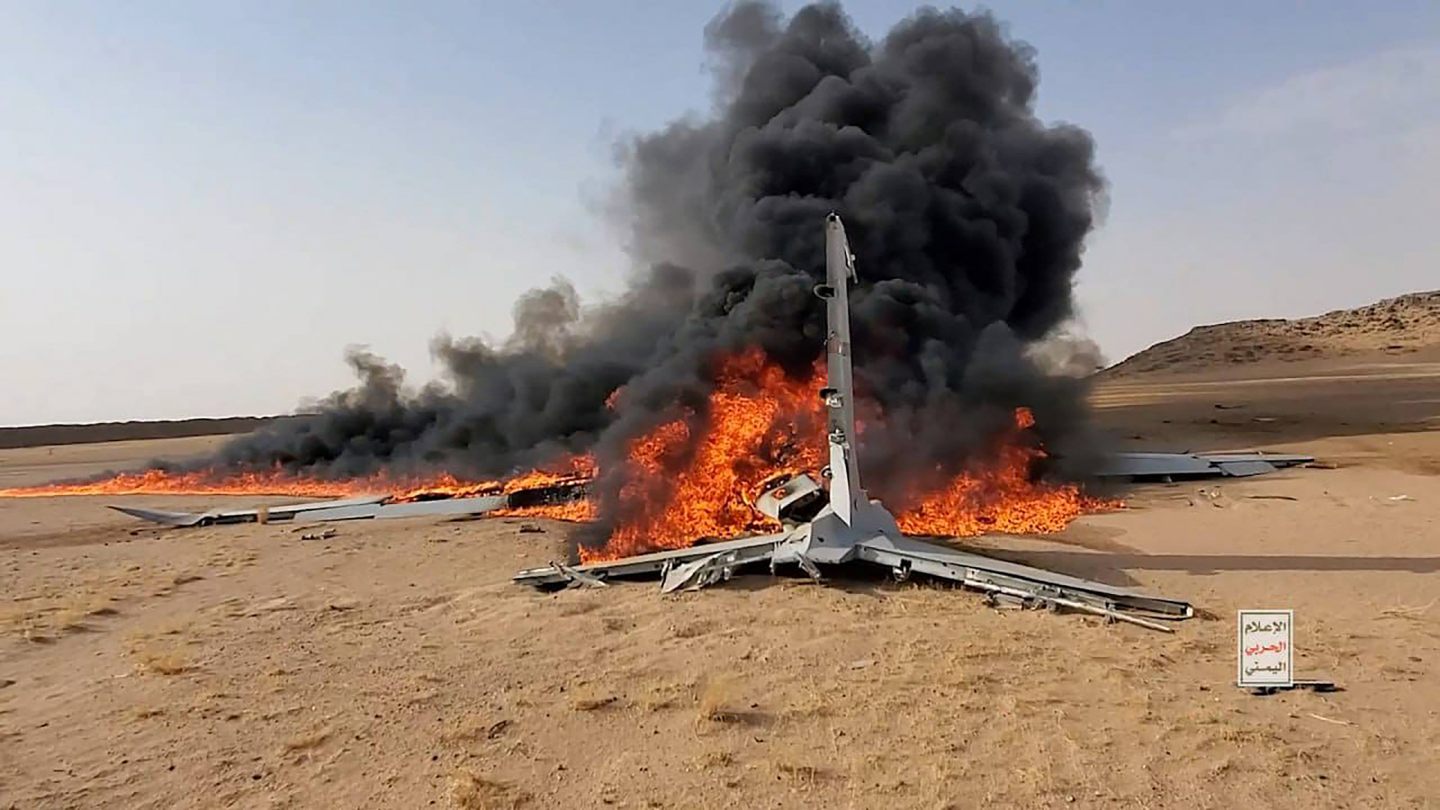
    Shortly after the fire was reported, however, Yahya Saree, military spokesperson for Yemen’s Houthi movement, claimed responsibility for the incident via X. Saree said the Houthi group had launched a precision drone strike against the Jizan Aramco refinery, noting the attack was launched in retaliation for what he described as Saudi Arabia’s violation of Yemeni airspace over the northern provinces of Saada and Hajjah.

    Jizan has been a repeated target of Houthi attacks targeting Saudi energy infrastructure for years, as the border region has remained a flashpoint in the long-running Yemen conflict. Just one month prior, the Houthi movement claimed credit for separate strikes against Aramco facilities in Jizan, as well as attacks on oil infrastructure in Yanbu, another key Saudi Red Sea export terminal. Just last week, Aramco CEO Amin Nasser acknowledged that previous strikes on company assets had caused minor temporary production disruptions, but emphasized that operations were restored rapidly and that the attacks had not resulted in any material operational or financial damage to the firm.

    In addition to the Jizan refinery strike, the Houthis also announced they had launched a large-scale attack using dozens of ballistic missiles and drones against Saudi-backed Yemeni government troops and military equipment positioned in the Yemeni Red Sea port city of Mokha.

    This latest wave of attacks comes as armed conflict has reignited between the Houthi movement and Yemen’s internationally recognized government, which receives extensive military backing from Saudi Arabia. The resumption of fighting ends a two-year period of relative calm that followed a widely observed 2022 ceasefire. Since 2014, the Houthis have controlled Yemen’s capital Sanaa and most of northern Yemen, while the Saudi-backed government holds sway over much of the country’s southern territory. Last month, the Houthi movement also announced a naval blockade targeting Saudi shipping in the Red Sea and issued threats to commercial vessels transiting the strategic Bab el-Mandeb Strait, a critical global chokepoint for maritime energy trade.

    The Jizan fire is being investigated separately from a separate incident reported in the eastern Saudi industrial city of Jubail. Turkey’s state-owned Anadolu Agency reported hearing a massive explosion in the Jubail region, with local Saudi media claiming the blast targeted gas processing facilities at Jubail Industrial City and sparked subsequent fires, though no official confirmation of that attack has been released as of yet.

    These concurrent security incidents coincide with a major diplomatic shift in the region, as Saudi Arabia moves to deepen collective security cooperation with regional partners amid rising cross-border threat risks. Just two days before the Jizan attack, on Friday, Saudi Arabia signed a landmark trilateral defense agreement with Turkey and Pakistan in the holy city of Mecca. The pact includes a mutual defense clause, stating that an armed attack against any one of the three signatories will be considered an attack against all three parties.

    On Saturday, Turkish Foreign Minister Hakan Fidan clarified the terms of the new agreement, stressing that the pact was not targeted at Iran and that the three partners had not formally named any shared adversary. “There is no common threat that we have put in writing,” Fidan told Anadolu Agency. He noted that the agreement’s mutual defense clause is technically comparable to NATO’s Article 5 collective defense framework, but added that any collective response to an attack would be tailored to the specific circumstances of the incident.

    Beyond the mutual defense commitment, the pact is set to cover a wide range of security cooperation, including joint military training exercises, cross-border intelligence sharing, coordinated logistics support, joint threat assessment, and expanded collaboration between the three countries’ defense industries. Fidan also added that Ankara hopes to expand the bloc beyond its three founding members, suggesting that Egypt could be invited to join the partnership in the future.

    This flurry of diplomatic and security activity comes as broader regional uncertainty has spiked sharply in recent months, following escalating tensions across the Middle East tied to the ongoing conflict between Israel and Hamas, with renewed clashes involving armed factions across Iraq, Lebanon, and Yemen disrupting years of relative de-escalation.

  • Five dead in new Russia, Ukraine strikes

    Five dead in new Russia, Ukraine strikes

    Five civilians have been killed and dozens more injured in a fresh wave of reciprocal long-range strikes between Russia and Ukraine over the weekend, marking an escalating escalation of hostilities more than four years after Moscow launched its full-scale invasion.

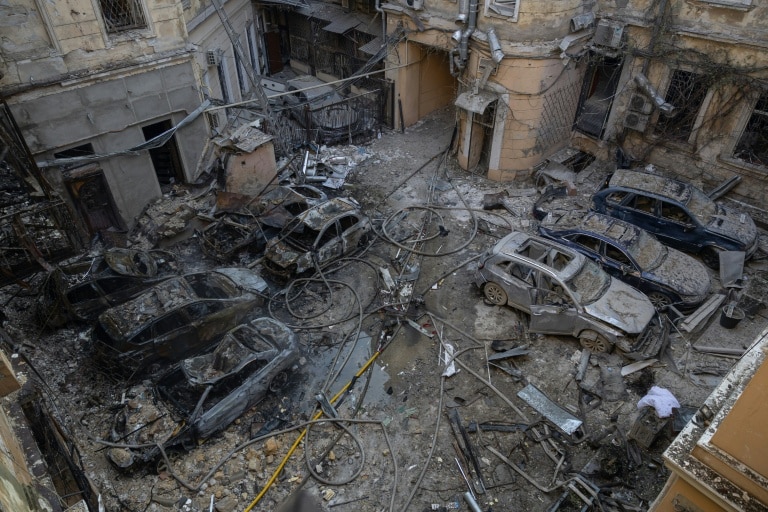
    Overnight strikes carried out by Russian forces left two civilians dead and 23 wounded in Ukraine’s northeastern city of Kharkiv, where a residential building suffered a partial collapse that reduced four of its floors to rubble, Ukrainian officials confirmed. Regional governor Oleg Synegoubov released on-site images showing emergency responders working to clear debris from the gutted structure after the attack.

    Additional Russian strikes targeted infrastructure and residential areas across southern and central Ukraine overnight. Eight people were wounded in the Black Sea port city of Odesa, where the strikes damaged critical port facilities, residential buildings, and local power grids. In Pavlohrad, located in the central Dnipropetrovsk region, nine people including four children were wounded in what Ukrainian President Volodymyr Zelenskyy called an “absolutely brutal” strike on energy infrastructure adjacent to a local shopping center.

    The World Health Organization (WHO) added its voice to international condemnation after one of its supply warehouses in the Ukrainian city of Dnipro, which stored critical medical and humanitarian supplies, was completely destroyed in strikes carried out Friday. WHO Director-General Tedros Adhanom Ghebreyesus reiterated that attacks on healthcare infrastructure are prohibited under international law, saying in a Sunday post on X: “I cannot say loudly enough: attacks on health care MUST STOP. Otherwise, people are deprived of lifesaving healthcare. Even wars have rules. One of those is that health must be protected!”

    Across the border in Russia’s Belgorod region, a Ukrainian drone strike left three civilians dead and 25 wounded, including children aged four and nine, according to acting regional governor Alexander Shuvaev. The attack sparked large fires in two apartment buildings, a private residence, and multiple parked cars, with local media footage showing one residential building engulfed in towering flames as onlookers gathered across the street to watch the blaze.

    Zelenskyy defended Ukraine’s cross-border strikes as legitimate responses to unprovoked Russian attacks on Ukrainian territory. In his Sunday evening address, he noted that Russia has waged a campaign of what he called “ballistic terror” against Ukraine, with 61 missiles of varying ranges fired at Ukrainian targets over the past week. “More pressure, more sanctions against Russia and more air defence for Ukraine are needed,” Zelenskyy wrote in a separate social media post Sunday. He added that Ukraine’s targeted strikes on Russian infrastructure including oil refineries, air defense systems and radar stations are “truly just responses” to Russian aggression, noting that “The Russian war will be increasingly felt at home, in Russia.”

    On the eastern front line in Ukraine’s Donetsk region, the Russian military announced Sunday that it had seized control of two small villages, including Vasiutynske, which sits roughly six miles from Kramatorsk, a key Ukrainian logistics and population hub. The claim has not yet been verified by independent third-party observers.

    The escalating cycle of cross-border strikes and rising civilian casualties has drawn sharp condemnation from the United Nations. Last week, UN Secretary-General António Guterres condemned both Russia and Ukraine for repeated strikes on civilian areas, saying “Attacks against civilians and civilian infrastructure are a clear violation of international humanitarian law, and must stop immediately.”

    Nearly four and a half years after Russia launched its full-scale invasion of Ukraine, peace talks remain effectively stalled, with no signs of a negotiated breakthrough to end the ongoing conflict.

  • Puerto Rico rations water supplies due to intense drought

    Puerto Rico rations water supplies due to intense drought

    A crippling drought, worsened by decades of crumbling infrastructure, has pushed the U.S. Caribbean territory of Puerto Rico into a widespread water crisis, forcing authorities to implement strict rolling water cutoffs that have left hundreds of thousands of residents without consistent access to running water.

    Under the emergency rationing plan, most affected households have been divided into two rotating groups, with each group facing full 48-hour suspensions of their piped water supply. As of this week, 180,000 properties across seven regions that rely on the critically depleted Carraízo Reservoir are covered by the measure, and officials have not yet announced when the restrictions will be lifted. When San Juan’s taps went dark for its scheduled 48-hour shutdown Friday, residents across the capital immediately decried the disruptive policy.

    Data from the U.S. Drought Monitor confirms that 68% of Puerto Rico is currently experiencing drought conditions, ranging from moderate to extreme. July 2026 ranks as the driest July ever recorded on the island, draining Carraízo—one of Puerto Rico’s most important water storage hubs—to critically low levels that are clearly visible in recent drone footage, which shows large swathes of the reservoir’s normally submerged bed now exposed to the air. Governor Jenniffer González has framed the crisis as primarily weather-driven, noting that the rationing decision came after a joint review of current reservoir levels and long-range weather forecasts. “This situation is beyond our control,” González stated in an official press release. “It is the result of the weather conditions we have been facing, which experts had warned about weeks ago.” She added that rain may return to the island once a lingering blanket of Saharan dust that has stalled storm systems moves out of the Caribbean region, and confirmed that more than 1,000 wildfires are currently burning across the territory as dry conditions persist.

    Yet long-standing systemic failures have drastically amplified the impact of the dry spell. According to Puerto Rico’s own water authority, roughly 65% of all treated water produced on the island is lost before reaching customers, largely through unpatched leaks in a network of aged, corroded pipes that have not received full systematic upgrades for decades. Additional contributing factors cited by water management experts include excessive sediment buildup that has reduced the total storage capacity of the island’s key reservoirs.

    As the rationing took effect, hundreds of residents across affected areas lined up at government water distribution trucks to fill large containers for drinking, cooking, and hygiene. Many have voiced frustration and confusion over inconsistent implementation of the rotating schedule and unclear communication about which areas will be affected when. For example, residents in Morcelo, a community south of San Juan, were promised running water for a 48-hour window starting Friday, but reported no water service even after the first 24 hours of the scheduled access period had passed. “People are uncertain because they know we’re in the 48-hour window where we’re supposed to have drinking water,” local community leader Rubén Torres told Puerto Rico’s *El Nuevo Dia* Saturday. “What’s happening? The first 24 hours have already passed and the water hasn’t arrived.” San Juan resident Gloriany Baba summed up the widespread frustration in comments to CBS News, calling the conditions “brutal” and adding “It’s unbelievable to live through this today.”

    This is not the first time Puerto Rico has been forced to implement large-scale water rationing to combat drought: similar harsh measures were deployed in 2015 and 2020, when some 400,000 households only received running water once every three days. Climate scientists note that extreme weather events like this record-breaking drought are growing more frequent and more intense across the Caribbean as a result of human-caused climate change. The island already has a well-documented history of climate-linked extreme weather disasters, most notably Hurricane Maria in 2017, which devastated Puerto Rico’s already fragile electricity grid, killed thousands of residents, and brought extreme rainfall that scientists confirmed was made far more likely by human-induced climate change.

    Governor González stated that the U.S. federal government is providing assistance to address the crisis, though she offered no additional details on the scope or type of support. BBC News has reached out to the U.S. Federal Emergency Management Agency (FEMA) for further comment on the federal response.

  • Car carrying eight teenagers crashes on wrong side of motorway

    Car carrying eight teenagers crashes on wrong side of motorway

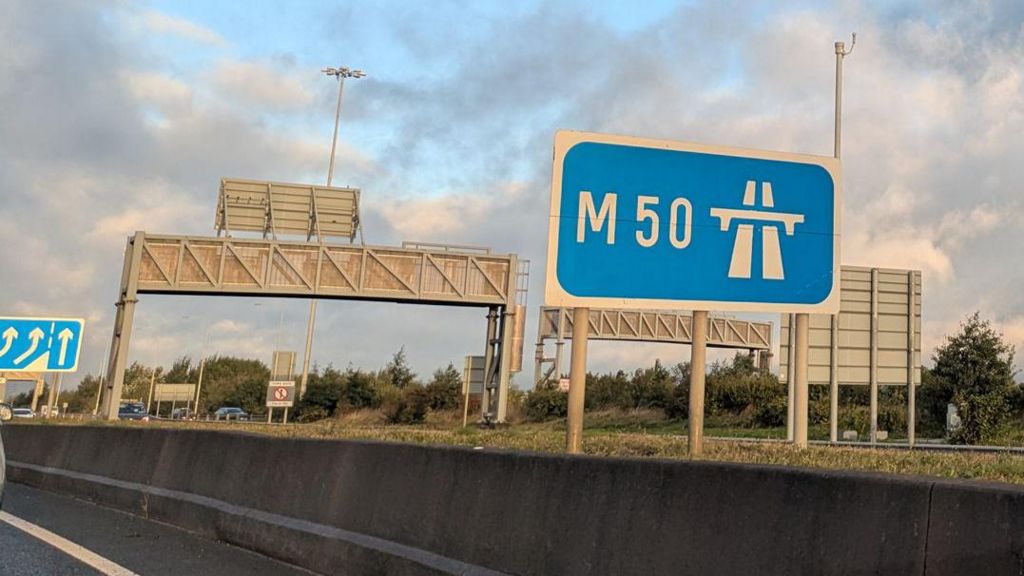
    A serious early-morning wrong-way collision on one of Dublin’s busiest orbital motorways has left nine people injured, with two patients fighting for life in hospital, Irish police have confirmed.

    The crash unfolded at 5:30 a.m. local time on Sunday along the southbound carriage of the M50, near Junction 12 in the Firhouse area of Dublin. Investigators say the first vehicle, carrying eight male juveniles, was traveling the wrong direction down an on-ramp when it slammed head-on into a oncoming privately operated car.

    Emergency services rushed all occupants of both vehicles to nearby hospitals across the region for urgent care. Of the eight young people in the wrong-way vehicle, one remains in critical condition, according to updates from local health authorities. The driver of the second vehicle, a man in his 20s, is also hospitalized with serious injuries, though no further update on his prognosis has been released as of Sunday afternoon.

    In the wake of the collision, Irish national police, known locally as gardaí, have implemented a full closure of the affected southbound stretch of motorway between Junction 12 and Junction 11. Local diversion routes have been put in place to redirect through traffic away from the crash site, where forensic investigators are now conducting a detailed examination of the scene to piece together the cause of the incident.

    Authorities are issuing a public appeal for assistance with their investigation. Any road users who were traveling through the Firhouse area of the M50 between 5:00 a.m. and 5:30 a.m. on Sunday, or anyone who has dashcam footage from the collision site or surrounding approaches, is asked to contact local gardaí to share any information that could advance the investigation.

  • Drones spotted over German base days after Leipzig bomb incident

    Drones spotted over German base days after Leipzig bomb incident

    In a fresh development that has heightened security tensions across Europe, two unidentified drones were detected hovering over a German military installation in the country’s western region this Thursday. The sighting comes just days after an explosive-packed drone was discovered on a service runway at Leipzig/Halle Airport, amplifying alarms over persistent irregular drone activity targeting critical infrastructure linked to Western support for Ukraine.

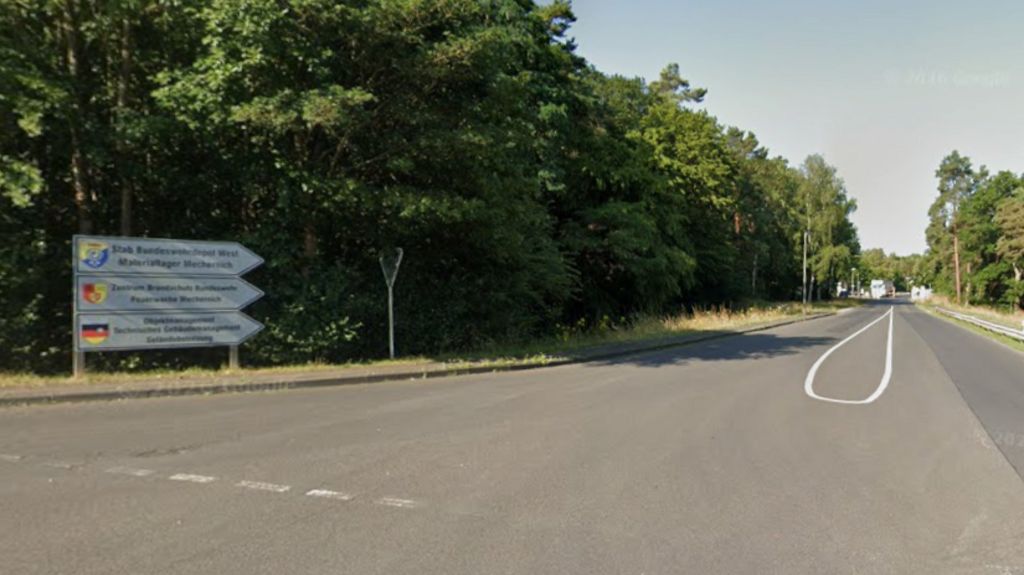
    The German armed forces, known formally as the Bundeswehr, officially confirmed the sighting at the Mechernich base, located approximately 50 kilometers southwest of Bonn. German media reports have established that the facility houses storage and maintenance facilities for spare parts and components for the United States-made Patriot air defense systems, a critical piece of military hardware that Ukraine relies on to fend off Russian missile and drone strikes.

    Following the detection, military police were immediately dispatched to the site to secure the area before jurisdiction of the investigation was transferred to local civilian law enforcement authorities, a spokesperson for the Bundeswehr Joint Force Command confirmed to reporters. Requests for additional detail on the suspected origin of the two drones, made by the BBC over the weekend, were declined by the Bundeswehr, with the force citing the ongoing, sensitive nature of the probe. Local police departments have not yet released an official statement on the incident as of press time.

    This drone sighting marks the latest in a string of similar incidents across European countries that have provided military, political and humanitarian support to Ukraine since Russia launched its full-scale invasion in February 2022. Most officials in affected countries have pointed to Moscow as the likely orchestrator of these incursions, acts widely characterized as hybrid warfare aimed at destabilizing Western nations. The Kremlin has repeatedly and forcefully denied any involvement in these incidents.

    German Interior Minister Alexander Dobrindt, in an interview with the German tabloid *Bild* published Sunday, emphasized the growing threat facing his country. “We’re not at war, but we are the daily target of hybrid warfare,” Dobrindt stated, adding that Germany has become a regular target of deliberate destabilizing attacks.

    Investigators are still working to unpack how the explosive-laden drone was able to penetrate security perimeters and reach an active runway at Leipzig/Halle Airport last week, a site that handles regular operations for NATO, the German military, and serves as a key logistics hub for Ukraine’s Antonov Airlines.

    The Patriot air defense systems stored and maintained at the Mechernich base have become indispensable to Ukraine’s air defense architecture, allowing Ukrainian forces to intercept Russian ballistic missiles, cruise missiles, and attack drones targeting civilian infrastructure and military positions. This week, Ukrainian President Volodymyr Zelensky made a renewed plea to Western allies for additional air defense interceptor missiles, warning that Ukrainian stockpiles are rapidly dwindling amid continuous Russian bombardment campaigns.

    The latest drone incursions come amid a recent diplomatic controversy over Patriot supplies: U.S. President Donald Trump reversed course last week on an earlier reported agreement that would have allowed Ukraine to manufacture Patriot systems domestically, denying that any such arrangement had ever been agreed to after initial reports emerged in early July.

    This incident is not an isolated one. A widespread wave of unexplained drone sightings across European airspace in 2025 pushed the continent to a state of high alert, prompting the European Union to open discussions on rolling out a continent-wide integrated “drone wall” air defense network designed to counter low-altitude irregular drone incursions. European officials have repeatedly blamed Moscow for these previous incursions, claims the Kremlin has dismissed as unfounded and absurd.

  • Ecuador charges ex-minister over presidential candidate assassination case

    Ecuador charges ex-minister over presidential candidate assassination case

    Almost three years after anti-corruption presidential candidate Fernando Villavicencio was gunned down at a campaign rally in Ecuador’s capital Quito, just days ahead of the 2023 general election, national prosecutors have unveiled new charges in the high-profile killing, implicating a former interior minister and six other co-conspirators with deep ties to organized crime.

    Prosecutors formally named José Serrano, Ecuador’s former interior minister, and Wilmer “Pipo” Chavarria, the top leader of the notorious Los Lobos cartel, as key suspects in the coordinated assassination plot. The case has already seen five gang-linked defendants convicted of carrying out the killing in 2024, while Chavarria – who faked his own death to evade authorities – was captured in Spain late last year.

    A former investigative journalist turned high-profile legislator, Villavicencio built his political platform on aggressive anti-graft campaigning, and stood out among 2023 election candidates for his public claims that organized crime syndicates had infiltrated senior levels of the Ecuadorian government. Despite receiving multiple death threats that prompted authorities to assign him a formal security detail, Villavicencio continued to attend open campaign events ahead of the vote, refusing to curtail his public engagement.

    In the aftermath of the assassination, the 2023 election proceeded, and Daniel Noboa – a center-right business leader – claimed victory, subsequently assuming the presidency. Noboa has since taken an uncompromising, military-led hardline approach to crack down on the violent drug cartels that have destabilized the country in recent years.

    In the original investigation into Villavicencio’s death, the alleged trigger puller was shot dead by security forces at the scene of the attack, and six other men initially detained in connection with the killing were later found murdered in a Ecuadorian prison while awaiting trial, a chilling sign of the cartel’s reach into state institutions. Five other co-conspirators were convicted of organizing the hit in 2024.

    Announcing the new charges Saturday, Ecuador’s Attorney General’s Office confirmed that all seven newly accused are alleged to have played indirect, enabling roles in the assassination. The majority of the suspects hold confirmed ties to Los Lobos, also known as “The Wolves,” one of the most powerful and violent criminal gangs operating in Ecuador. Five of the seven charged remain at large as fugitives, authorities confirmed.

    As of the latest update, Serrano and former official Xavier Jordán are believed to be residing in the United States, while ex-assemblyman Ronny Aleaga is located in Venezuela. Chavarria remains in Spanish custody, where Ecuador has submitted a formal extradition request that is still pending. The Attorney General’s Office has already requested Interpol red notices – the international law enforcement community’s highest-level alert for wanted fugitives – to secure the capture and extradition of all suspects at large.

    One of the seven accused, Ángel Esteban Aguilar, a senior Los Lobos figure also known as “Lobo Menor” (“Little Wolf”), was arrested by law enforcement in Mexico City back in March after fleeing Ecuador. He was swiftly returned to Ecuador to face charges following the issuance of an Interpol red notice. Aguilar has a long criminal history: he was originally sentenced to 20 years in prison in 2013 for the murder of Serrano’s brother, but he fled the country after being granted parole. The final named accused is Luis Arboleda, another high-ranking member of the Los Lobos cartel.

    Pre-trial hearings are currently underway in the case, and a judge will review the evidence presented by prosecutors to determine whether there is sufficient basis to move forward with a full public trial.

    The assassination of Villavicencio unfolded against a backdrop of rising gang violence and drug trafficking instability across Ecuador. The country’s geographic position, wedged between Colombia and Peru – the world’s two largest producers of cocaine – has made it a critical transit hub for illicit drug shipments heading to North America and Europe. Transnational cartels including Los Lobos have relied on widespread corruption and brutal violence to seize control of key smuggling routes, and law enforcement investigations confirm the group maintains deep operational ties to the Jalisco New Generation Cartel, one of Mexico’s most powerful criminal organizations.

  • Man arrested after boat capsizes near Statue of Liberty killing woman and infant

    Man arrested after boat capsizes near Statue of Liberty killing woman and infant

    A devastating boating accident off the coast of New York’s Statue of Liberty has left two people dead — a woman and a five-month-old infant — and led to the immediate arrest of the vessel’s operator on reckless endangerment charges, New York Police Department officials confirmed this week.

    The incident unfolded on Saturday night in New York Harbor, triggering an enormous multi-agency search and rescue operation that brought together local law enforcement, fire departments and federal maritime authorities. Shortly after the boat capsized and overturned in the busy harbor, first responders pulled 12 surviving passengers from the chilly water. Aggressive life-saving efforts were not enough to save the two victims, who were pronounced dead at the scene.

    In addition to local criminal charges, U.S. Coast Guard investigators have opened a separate probe into whether the vessel was operating as an illegal charter, a common safety violation in busy recreational boating hubs around New York City. As of Monday, officials have not released the identities of any passengers or a detailed breakdown of what caused the boat to capsize, citing the active investigation.

    The scale of the response underscored the urgency of the incident: two Coast Guard cutters, four New York City Fire Department boats, two NYPD patrol boats, and a police helicopter were all deployed to the accident site to assist with rescue and recovery. Private vessels that were in the area also stopped to help pull survivors from the water before official responders arrived.

    Capt. Doreen McCarthy, commander of the local Coast Guard sector, praised the coordinated response in a statement Monday, highlighting the speed with which agencies mobilized. “We are extremely grateful for the heroic, swift actions of our partner agencies and Good Samaritan vessel who assisted in rescuing survivors from the water,” McCarthy said.

    Local officials confirmed that the investigation remains open and active, with updates expected as investigators piece together the timeline and root causes of the fatal accident.

  • Demi Vollering is defending the race leader’s yellow jersey on final stage of Women’s Tour de France

    Demi Vollering is defending the race leader’s yellow jersey on final stage of Women’s Tour de France

    The 2024 edition of the Tour de France Femmes entered its decisive final chapter on Sunday, with all eyes turning to the sun-drenched French Riviera city of Nice, where Dutch cycling star Demi Vollering began the day clinging to the race leader’s coveted yellow jersey. The 2023 overall champion, already one of the most accomplished riders on the women’s peloton, was chasing back-to-back Tour de France titles, but her path to victory faced a significant late challenge from two hungry competitors.

    Vollering held only an eight-second overall advantage over second-placed Katarzyna Niewiadoma-Phinney, the Polish climbing specialist who had already secured the 2024 general classification crown ahead of the final stage. Sitting third, 1 minute 12 seconds off the lead, was Swiss time trial world champion Marlen Reusser, who was still in striking distance of a podium spot when the stage got underway.

    The history between the top two riders added extra drama to the final day’s racing. Two years prior, Niewiadoma-Phinney claimed her first ever Tour de France title in a heart-stopping final mountain stage, edging out Vollering by a mere four seconds overall to seal one of the most memorable finishes in modern women’s cycling. Off the back of that historic victory, Niewiadoma-Phinney was well positioned to replicate her late-stage magic and climb to the top of the general classification once again.

    Vollering’s credentials heading into the final stage were unmatched. The 29-year-old Dutch rider had already secured victory in all three of women’s cycling Grand Tours, with two overall titles at the Vuelta a España Femenina and a win at the Giro d’Italia Women just months earlier in June. Her consistency across the sport’s biggest races made her the clear favorite to defend her lead, even with such a narrow gap to close out.

    The 9th and final stage covered just under 100 kilometers (62 miles) of winding, hilly terrain around southeastern France. The route featured four full loops through the outskirts of Nice and four punishing ascents of Col d’Èze, a steep climb tucked into hills that overlook the tiny coastal Principality of Monaco. Mid-stage, the racing suffered a setback for Reusser: the Swiss rider crashed on a downhill section after her second climb of Col d’Èze, requiring urgent on-course medical attention before she could remount her bike. The incident effectively ended her chances of climbing onto the overall podium, dealing a major blow to her bid for a top-three finish. The stage concludes with a fast descending run past the picturesque seaside town of Villefranche-sur-Mer before the finish line in central Nice, where this year’s overall champion will be crowned.

  • Israel rejects Trump’s 15-point plan for Gaza, Netanyahu says

    Israel rejects Trump’s 15-point plan for Gaza, Netanyahu says

    A decades-long volatile conflict between Israel and Gaza has hit another major roadblock, after Israeli Prime Minister Benjamin Netanyahu publicly rejected the 15-point Gaza peace framework crafted by former U.S. President Donald Trump’s administration, insisting no Israeli military withdrawal will occur until the armed group Hamas undergoes full, verifiable disarmament.

    Last month, Trump’s specially created Board of Peace announced that a tentative deal had been reached to achieve the full disarmament of Hamas and all other armed factions operating within Gaza. But Hamas quickly clarified that its willingness to surrender heavy weapons is conditional on Israel first ending all military aggression against the territory and pulling all Israeli forces out of Gaza entirely.

    Since agreeing to an initial ceasefire in October 2024, Israel has continued to carry out targeted air and ground strikes across Gaza, keeping tensions high and derailing early hopes of a durable peace. Speaking at a weekly cabinet meeting on Sunday, Netanyahu delivered a clear rejection of the U.S.-backed proposal: “Israel rejects the 15-point document.” He added that the Israeli military will not complete any withdrawal until Hamas is genuinely disarmed, and will continue operations to neutralize threats to both Israeli troops stationed in Gaza and Israeli civilians within the country’s borders.

    A senior Hamas official speaking to the BBC on Sunday pushed back against Israel’s rejection, reaffirming the group’s commitment to the negotiated 15-point framework and stating it is ready to engage in serious, responsible implementation of the agreement. The official also called on international mediators to pressure all parties to uphold their previously agreed commitments.

    Netanyahu’s rejection marks the second major setback for Trump’s Gaza peace initiative, which was first unveiled in September 2024. The original plan outlined the creation of the Board of Peace to oversee implementation, with core provisions including the full disarmament of Hamas, a full withdrawal of Israeli military forces from Gaza, and the launch of large-scale reconstruction projects to rebuild the war-ravaged territory.

    While Netanyahu’s rejection of the plan did not come as a surprise to regional observers, the weeks-long delay before he made his position public reflects the deeply fraught political position the Israeli leader currently occupies. He has made clear he finds the U.S. framework unacceptable, but he is also unwilling to openly alienate Washington, Israel’s closest and most powerful international ally.

    Just over a week before Netanyahu’s cabinet announcement, Trump hailed the tentative disarmament agreement as what he called a “monumental step toward lasting peace and security” — marking the first time Hamas had publicly agreed to give up its weapons, contingent on an Israeli withdrawal. On Sunday, Netanyahu made clear this sequence of events would not proceed during his leadership: disarmament must come first, he insisted, and it must be genuine, verifiable disarmament, not what he called “fictitious disarmament.”

    Independent peace negotiators have long noted that any workable agreement on disarmament and withdrawal would almost certainly require a phased, reciprocal approach from both sides, rather than the unconditional precondition Netanyahu has laid out. Netanyahu confirmed Sunday that his administration is currently in ongoing talks with U.S. officials to hash out a path forward, noting “They have ideas; some of them are acceptable to us and some are not, and we know how to stand our ground on these matters.”

    With just months remaining before Israel’s scheduled national elections, Netanyahu is facing intense pressure from hardline members of his right-wing governing coalition to take an uncompromising stance on Gaza. Far-right coalition members have already demanded a new cabinet vote to scrap the entire peace plan entirely; National Security Minister Itamar Ben Gvir has already publicly dismissed the 15-point draft as “not acceptable.”

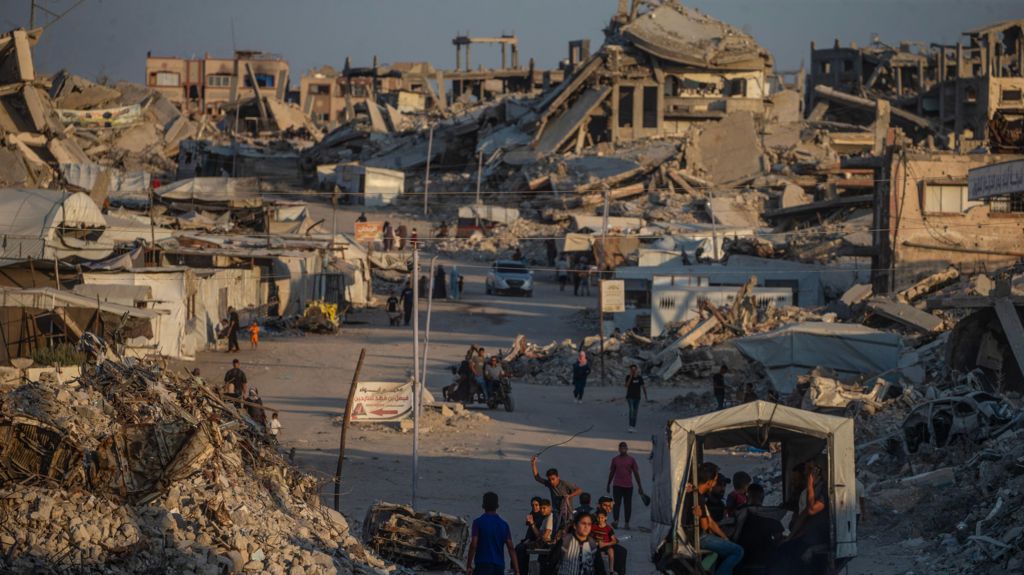
    Against this political deadlock, the human cost of the ongoing conflict continues to mount. Earlier this week, tens of thousands of Gazans gathered in Gaza City for a mass funeral for 112 people, the vast majority of them women and children, who were killed in an Israeli strike on a residential neighborhood in late 2023. According to United Nations figures, roughly 1.9 million Gazans — more than 90% of the territory’s total population — have been displaced from their homes since the current war began.

    The war was sparked by the Hamas-led cross-border attack on southern Israel on October 7, 2023, which killed approximately 1,200 people and took 251 hostages. Israel responded with a full-scale military offensive in Gaza that, as of current figures from Gaza’s Ministry of Health — data the United Nations considers reliable — has killed more than 73,000 people in the territory.

  • Brazilian top-flight club wear name of English fan with MND on shirts

    Brazilian top-flight club wear name of English fan with MND on shirts

    On a Saturday evening Serie A clash against Chapecoense, Brazilian football side Coritiba stepped onto the pitch with a powerful, unexpected twist to their matchday kits. Ditching their standard front-of-shirt sponsor branding, the entire starting lineup and squad wore jerseys emblazoned with the name of Jonny Butcher, a 29-year-old English fan living with motor neurone disease (MND), in a moving gesture to raise global awareness of the incurable neurodegenerative condition.

    Butcher’s connection to the Curitiba-based club is a story of love and coincidence rooted in personal history. A lifelong supporter of England’s Norwich City, he first crossed paths with Ana Clara, a Coritiba supporter and native of the club’s home city, on a Christian dating app back in March 2023. Just a few months after their first meeting, Butcher traveled to Brazil to visit Clara, and quickly fell in love with both the city and its beloved football club. By a striking twist of fate, Norwich City and Coritiba had already established an official strategic partnership back in 2022, making Butcher’s decision to embrace the Brazilian side feel like fate.

    The couple married in 2024, but their new life together was upended when Butcher received a diagnosis of amyotrophic lateral sclerosis (ALS) — the most common form of MND — this past February. MND is a progressive, incurable disorder that attacks the nervous system, gradually breaking down motor neurons in the brain and spinal cord. Over time, the condition causes muscle weakness, atrophy, and eventual loss of function, leaving patients with declining mobility and often severe breathing challenges.

    After his diagnosis, Butcher compiled a bucket list of meaningful experiences he hoped to enjoy while he still retains his physical capacity. At the top of that list was attending a Coritiba match at the club’s iconic Couto Pereira stadium alongside his brother-in-law. Unfortunately, advancing symptoms, including mobility loss and breathing difficulties, have made that trip impossible. But when Coritiba’s leadership learned of Butcher’s story and his unfulfilled dream, they moved quickly to honor him in a way that would bring him and his wife joy from across the Atlantic.

    Beyond printing Butcher’s name across the front of every match jersey, Coritiba added a heartfelt message of solidarity: “Your strength inspires us. We stand as one.” The kit design also integrated a sunflower, the globally recognized symbol of awareness for non-visible disabilities, to further amplify the message of MND advocacy. After the playing of Brazil’s national anthem ahead of kickoff, the entire squad gathered for a group photo holding a large banner signed by hundreds of Coritiba fans, players, and club staff that also bore Butcher’s name.

    Watching the tribute unfold from their home in England, Ana Clara told BBC Sport that the moment left the couple completely overwhelmed. “To see Jonny’s name inside Couto Pereira, surrounded by thousands of people who had never even met him but chose to stand behind him, was incredibly emotional,” she said. “We sat there watching it all from England, completely overwhelmed and honestly struggling to believe that this was really happening.”

    After the match, Coritiba announced that the special game-worn jerseys would be put to use beyond the tribute: some will be shipped directly to Butcher and his family, while others will go to a charitable institution that supports people living with MND and other rare diseases.

    Ana Clara shared that her husband was deeply moved by the gesture, saying: “Last night Jonny said he wishes he could shake every hand and tell each person individually what this meant to him. We may never be able to properly express our gratitude, but we hope they know that this is something we will carry with us for the rest of our lives. Even in the hardest chapter of our lives, there is still so much love and kindness in the world. This will forever be a part of our story.”

    Founded in 1909, Coritiba is one of Brazil’s most decorated traditional clubs, claiming the country’s top-flight national title in 1985 and winning a record 39 Paranaense State championships throughout its history.