On Wednesday, a rare total solar eclipse will cut a path across Europe, turning broad daylight into temporary twilight as the moon aligns perfectly between the Earth and sun, casting a sweeping shadow across the continent. For casual observers, this event will be a once-in-a-lifetime memory. For a growing community of passionate sky-chasers, however, it is the most anticipated celestial prize of a generation — and many have traveled thousands of miles, planned for years, and sacrificed comfort to claim a front-row seat.
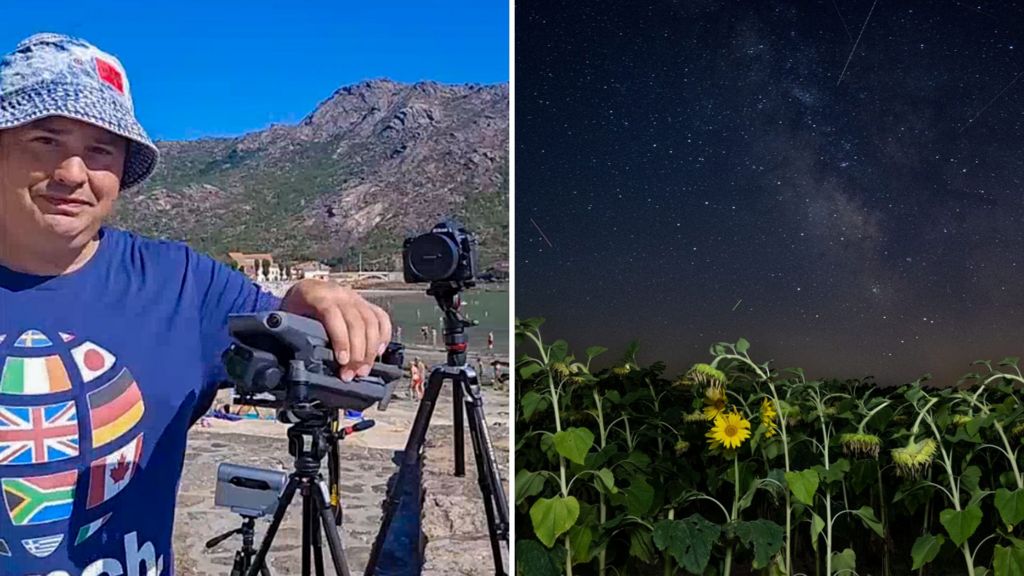
Among them is Mark Griffiths, an astronomy hobbyist from Cheshire in the UK, who completed a grueling two-day cross-border drive to Galicia, northern Spain — widely regarded as one of the best viewing locations for the 2026 eclipse. Griffiths arrived loaded with professional-grade gear: two high-resolution cameras, a specialized solar telescope, and a drone to capture aerial footage of the eclipse’s shadow as it moves across the landscape. His obsession with chasing dramatic sky events began six years ago, with a failed trip to see the northern lights in Shetland, where poor weather left him empty-handed. Far from discouraging him, the disappointment only deepened his passion. “I kept wanting more,” Griffiths explained in an interview on the day after he finished his drive, which included only brief stops in Bordeaux to snap night sky photos and catch a few hours of sleep. “I’m quite sleep deprived, but it’s worth it. It’s like an addiction now.” This eclipse marks Griffiths’ first total solar eclipse, and for enthusiasts like him, he says, Europe’s first total solar eclipse in more than 25 years is “like what the World Cup is to football.” Since his Shetland trip, Griffiths has become a seasoned sky-chaser: he travels to Iceland once a month to lead northern lights tour groups, and has already photographed dozens of auroras, partial eclipses, and bioluminescent phenomena across the globe.
The eclipse’s path of totality — the narrow strip of land where observers can see the sun completely blocked by the moon — begins at the edge of Siberia, arcs across the Arctic Ocean, passes through Greenland and Iceland, crosses the northern Atlantic, cuts across northern Spain, and ends in the Mediterranean. Outside this path, most of Europe will only see a partial eclipse, but even that has not stopped dedicated travelers from converging on prime viewing spots across the route. Half a world away from Griffiths, American couple Samantha and Gregory Phillips-Brown have traveled from upstate New York to Iceland, where they rented a camper van to seek out a remote viewing spot in the Westfjords peninsula. This is their second total solar eclipse: the first, which they saw near their home in 2023, left such an impact that they booked flights and a van more than a year in advance for this event. “It was such a phenomenal experience to see the Sun start going dark and hear, suddenly, the birds stop chirping,” Samantha recalled. “It’s just a very strange, otherworldly experience.” Gregory reflected on what the experience would have meant for Iceland’s first Viking settlers more than 1,000 years ago, when solar eclipses were attributed to mythology rather than science: “They really didn’t know what was happening, didn’t know how long it was going to last… it must have been quite terrifying for them, in a way.” In the days leading up to the eclipse, the couple has been hiking and camping across eastern Iceland, and they plan to head to the Westfjords early to avoid expected road closures from overcrowding. Samantha, an avid self-described obsessive planner, has been monitoring eclipse-chaser groups on social media to get real-time updates on conditions, and says she has already seen hundreds of visitors carrying eclipse glasses across the country: “I expect as we move west, we’ll see more and more people gathering for the show.”
For one British family, the 2026 eclipse is a nostalgic reunion 27 years in the making. Andrew Wills is traveling to the Spanish island of Majorca with his wife and his 90-year-old father, with whom he watched Europe’s last total solar eclipse in 1999 from the top of St Agnes Beacon in Cornwall. That day was cloudy, Wills recalled, so they missed seeing the eclipse’s shadow rush across the Atlantic toward them — but they still got to see the sky dim into an eerie twilight, and the memory stuck with him ever since. “It was still awe-inspiring,” he said. This time around, Wills has booked a villa near the western Majorcan town of Andraitx, right in the path of totality, and has scouted a coastal viewing spot with unobstructed views of the horizon, where the eclipse will be visible as the sun sets. Majorca and neighboring Menorca are the last landmasses where the eclipse will be visible before the shadow disappears into the Mediterranean. Wills has arranged to bring camping chairs so his 90-year-old father can rest while they wait for the celestial event, and he is hopeful for clear skies this time around. For Wills, eclipses are more than just a tourist attraction: they are a humbling reminder of the unique cosmic coincidence that makes total solar eclipses possible on Earth. The sun is 400 times larger than the moon, but also 400 times farther away — creating the perfect alignment that allows the moon to cast a complete shadow on Earth. The experience, he says, reminds him of astronomer Carl Sagan’s reflection on the Pale Blue Dot photograph, which showed Earth as a tiny speck against the vastness of space. “We are tiny little specks in a huge vast area of nothingness,” Wills said. “We’re amazingly lucky to be alive to see something this incredible.”
Even though the total phase of the eclipse will last just a couple of minutes for observers, that brevity is part of what makes the event so meaningful for the thousands of people who traveled across continents to see it. For this community of sky-chasers, the journey is almost as special as the celestial spectacle they have come to witness.