博客

  • Dubai ruler confronted in London over UAE involvement in Sudan war

    Dubai ruler confronted in London over UAE involvement in Sudan war

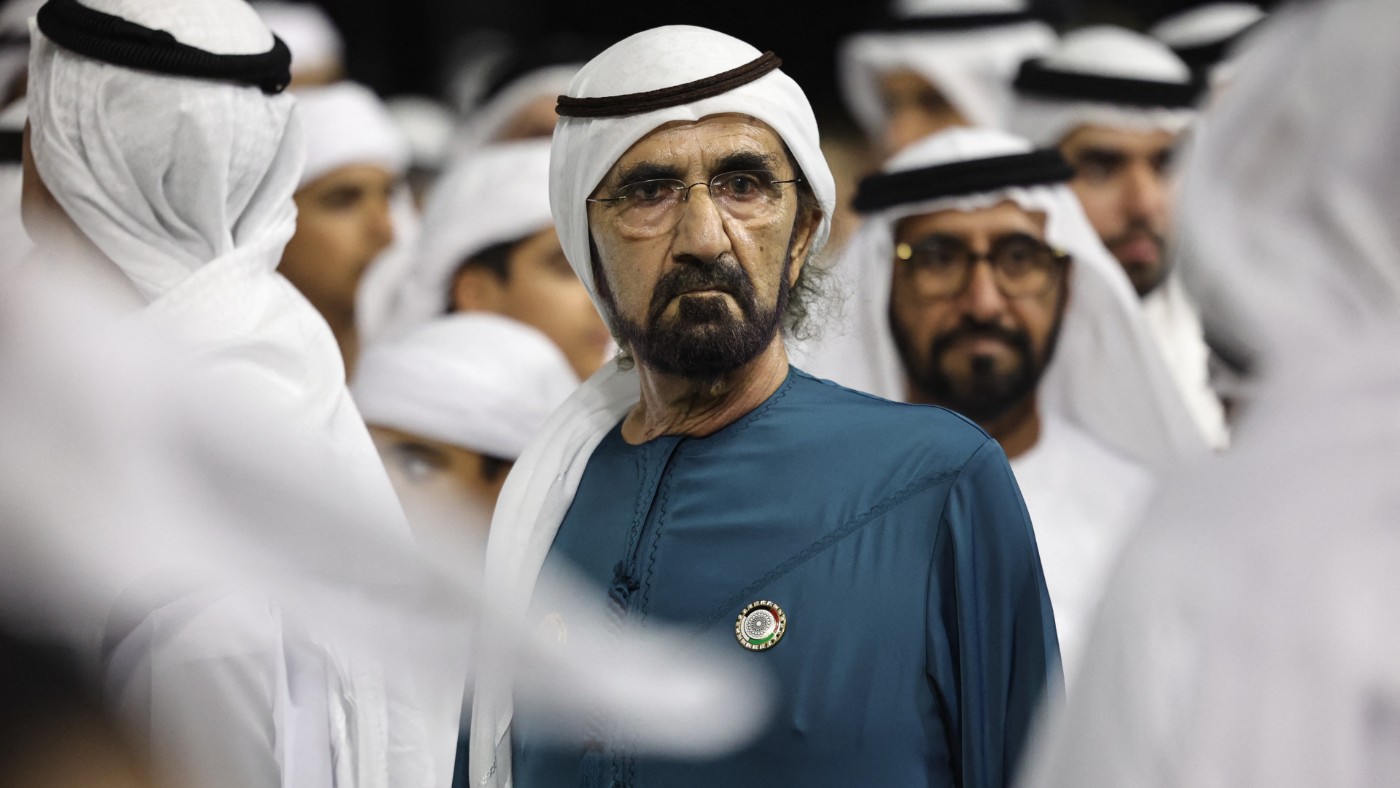
    A tense confrontation has played out on the streets of one of London’s most exclusive neighborhoods, bringing international attention back to the United Arab Emirates’ widely documented but consistently denied involvement in Sudan’s devastating 15-month-long civil war. A video circulated online Sunday captured the moment a Sudanese protester shouted accusations at Sheikh Mohammed bin Rashid Al-Maktoum, ruler of Dubai and UAE prime minister, as he traveled through London’s Knightsbridge district.

    Standing across the street from Al-Maktoum and his security entourage, the protester repeatedly called out: “Emiratis and UAE, they’re killing Sudanese people. UAE is killing people in my country. Stop killing my people.” The confrontation escalated rapidly when a member of Al-Maktoum’s group, who appeared to be Emirati, launched a vicious racist verbal attack against the protester, yelling expletives and calling him a “Black bitch” before moving across the road to confront him directly.

    The protester also named UAE president Sheikh Mohammed bin Zayed Al Nahyan in his accusations, shortly after local Emirati media confirmed that the two top UAE leaders had held a closed-door “fraternal meeting” at London’s Jumeirah Carlton Tower Hotel the previous Thursday. The state-aligned coverage framed the meeting as a demonstration of the “enduring bonds of unity, mutual respect and shared values” that anchor the UAE’s leadership.

    The Sudanese man’s accusations align with a growing body of public evidence that contradicts the UAE’s official denials of backing the Rapid Support Forces, Sudan’s powerful paramilitary faction that the United Nations and United States have formally accused of perpetrating genocide in the ongoing conflict. Since war broke out between the RSF and Sudan’s regular armed forces in April 2023, UN independent experts, international human rights groups, and investigative reporting from Middle East Eye have traced consistent arms flows to the RSF facilitated by smuggling networks operating out of Libya, Chad, and the self-declared independent region of Somaliland. Earlier this year, MEE reporting also exposed the use of an Ethiopian military base to funnel support to the paramilitary.

    Multiple sources close to Emirati leadership and analysts aligned with Abu Dhabi have tacitly acknowledged the longstanding support the UAE has provided to RSF leader Mohamed Hamdan Dagalo, who holds extensive hidden property holdings in Dubai through a network of anonymous shell companies. Defenders of the UAE’s involvement have pushed back against international criticism, pointing out that the RSF’s rival Sudanese Armed Forces receives backing from Egypt and Turkey, arguing that singling out Abu Dhabi for condemnation is hypocritical.

    The human cost of the conflict reached a new peak in recent weeks when RSF fighters seized el-Fasher, the capital of North Darfur, the region where the paramilitary has its roots. Witnesses and UN investigators confirm that RSF fighters carried out mass executions, systematic rape, and widespread looting against civilian populations in the city – a campaign UN officials confirmed bears “all the hallmarks of genocide”. The conflict has already spawned the world’s largest humanitarian catastrophe, with more than half of Sudan’s 48 million people facing acute food insecurity and over 10 million people displaced from their homes.

    The London confrontation is not the first time Al-Maktoum has faced controversy during visits to the UK. British courts have previously ruled that the Dubai ruler ordered the abduction of his two daughters, Latifa and Shamsa, after they attempted to escape his control in the UK – Shamsa in 2000 and Latifa in 2018. A 2021 High Court ruling also found that Al-Maktoum had used NSO Group’s Pegasus spyware to illegally hack the phones of his ex-wife, Jordanian Princess Haya, and her associates, as part of a campaign of intimidation during their divorce proceedings.

    Despite the public confrontation, Al-Maktoum has continued his documented London vacation, posting a message on his official X (formerly Twitter) account Monday that framed family time as the most valuable vacation investment. “Life taught me… that the greatest investment in vacations is not the number of cities we visit… but the number of moments we create with our families,” he wrote alongside a photograph from his trip. “Beautiful memories are happiness and energy that drive us to more work, achievement, and success.”

    Western governments, including the United Kingdom, have faced widespread criticism for their failure to publicly challenge the UAE’s role in the Sudan war, with critics linking the silence to extensive economic ties between Abu Dhabi and Western political and business circles.


  • Canada flight cancelled after child refuses to wear seat belt

    Canada flight cancelled after child refuses to wear seat belt

    A recent incident on a Canadian commercial flight has thrown long-simmering tensions between air safety protocols, family travel accommodations, and public etiquette into the global spotlight, after an entire flight was canceled when a young child refused to remain buckled in their seat ahead of departure.

    On August 6, a Porter Airlines flight scheduled to travel from Victoria to Toronto was already in its final departure preparations when the crew encountered the unsafe situation: the young child, traveling with a parent, repeatedly left their seat and would not comply with seat belt requirements. Crew members and the child’s parent made multiple attempts to resolve the issue, according to the airline’s official statement, but all efforts failed. With takeoff impossible under unsafe conditions, the crew made the decision to return to the terminal and remove the two passengers from the flight.

    The resulting delay pushed the flight’s scheduled departure past the midnight closure of the airport’s runway, forcing all remaining passengers to rebook their travel for the following day. The incident has quickly divided public opinion across social media and mainstream news outlets, with two distinct camps clashing over how airlines should respond to non-compliant child passengers and what responsibilities parents hold during air travel.

    Child aviation safety specialist Lia Tuso emphasized in an interview with the BBC that the Porter Airlines crew’s decision was fully justified by core flight safety principles. Tuso explained that an unrestrained child, just like an unsecured piece of checked or carry-on luggage, becomes a dangerous projectile during unexpected turbulence, a hazard that poses severe risk to the child themselves and all other passengers and crew on board, particularly during the critical phases of takeoff and landing.

    Critics of the airline’s decision, however, have pushed back by noting that young children often act out not out of intentional disruption, but because of fear of air travel. Aryeh Kozuch, a passenger on the canceled flight, told Canadian broadcaster CBC News that the child was not unruly, but visibly anxious. “They just kept hiding under their seat. If they got forced into [being] strapped in, they just kind of slid out underneath,” Kozuch recalled. Many observers have also questioned why the entire flight had to be canceled rather than only removing the non-compliant family, a step that Porter ultimately took but which still resulted in a missed runway closure window.

    This incident is far from unique, and comparisons to similar high-profile cases stretching back more than a decade have only amplified the ongoing debate. In 2018, a father and young daughter were removed from a Southwest Airlines flight traveling from Chicago to Atlanta after the child threw a tantrum over buckling her seat belt. Passenger video of the ejection showed that the child had already calmed down and been seated for more than five minutes before crew ordered the pair off the plane, drawing widespread criticism of the airline’s overreach. A 2012 incident on a JetBlue flight that ended with a traveling family being removed also sparked public outcry, with the family appearing on NBC’s *Today Show* to accuse the airline of lacking compassion. JetBrains defended the captain’s decision at the time, stating that prolonged non-compliance with crew instructions threatened the safety of everyone on board.

    As family travel continues to rebound following global travel restrictions, the Porter Airlines incident has reopened core questions that have yet to be resolved across the aviation industry: how to balance non-negotiable safety standards with empathy for families traveling with young, anxious children, and what protocols best minimize disruption for all passengers when non-compliance occurs.

  • Watch: Moment powerful earthquake shakes Colombia and crumbles buildings

    Watch: Moment powerful earthquake shakes Colombia and crumbles buildings

    A massive 7.4-magnitude earthquake has ripped through western Colombia, leaving a trail of destruction that has claimed the lives of at least 111 people and left dozens more with injuries, local authorities confirmed. Dramatic footage captured the terrifying moment the powerful temblor struck, shaking structures violently and causing multiple buildings to crumble into rubble across the affected region.

    Emergency response teams have been deployed to the hardest-hit areas, working frantically to clear debris and search for any survivors who may be trapped under collapsed infrastructure. Local officials have warned that the death toll could still rise as rescue teams continue to reach remote communities cut off by the disaster. The quake, which struck deep in the country’s western region, sent residents scrambling for safety as buildings swayed and cracked, with many people in populated areas reporting widespread panic during the shaking.

    Colombian national disaster management agencies have activated emergency protocols to coordinate search-and-rescue efforts, deliver medical care to the injured, and provide temporary shelter to hundreds of residents who have been displaced from their damaged or destroyed homes. International aid organizations have also begun monitoring the situation, standing by to offer support if the Colombian government requests additional assistance.

  • Ingebrigtsen delivers masterclass for seventh European athletics gold

    Ingebrigtsen delivers masterclass for seventh European athletics gold

    Norwegian distance running icon Jakob Ingebrigtsen etched his name deeper into European athletics history on Monday, storming to victory in the men’s 5,000m final at Birmingham’s Alexander Stadium to secure his seventh individual continental championship gold medal. The milestone win cements his status as the most decorated male athlete in the history of the European Athletics Championships.

    The 25-year-old crossing the finish line in a tight 13 minutes 15.29 seconds, edging out Germany’s Florian Bremm who took silver just 0.31 seconds behind at 13:15.60. France’s Etienne Daguinos rounded out the podium with a bronze medal in 13:16.09, a result that left the young Frenchman visibly honored to share the stage with Ingebrigtsen.

    This win extends Ingebrigtsen’s extraordinary unbeaten streak at the European championships, a run that stretches all the way back to the 2018 Berlin championships, where a 17-year-old Ingebrigtsen announced his arrival by claiming a historic 1,500m/5,000m double. He repeated that double-double feat at both the 2022 Munich championships and the 2024 Rome edition, building an unmatched legacy of continental dominance.

    Monday’s victory is all the more remarkable given Ingebrigtsen’s turbulent lead-up to the event. He sat out the entire 2025 season prior to Birmingham recovering from an Achilles tendon injury that required surgical intervention. The competition marked his first return to top-level racing after a disappointing 2025 World Athletics Championships in Tokyo, where he was unexpectedly knocked out of the 1,500m heats and could only manage a 10th-place finish in the 5,000m.

    Ahead of the Birmingham championships, Ingebrigtsen chose to only contest the 5,000m to manage his comeback, and he showed no visible signs of rust or ring rust upon stepping onto the track. Sticking to his signature race strategy, he spent the opening laps tucked comfortably at the back of the tight leading pack, letting other runners set a blistering early pace. The field included Tokyo Worlds medalists Jimmy Gressier of France and Isaac Kimeli of Belgium, plus 2024 Rome European champion Dominic Lobalu of Switzerland, who entered the race fresh off an impressive Diamond League win in Monaco.

    As laps ticked down, Lobalu surged to the front, splitting the dense pack into a single line and ratcheting up the speed. With five laps remaining, Gressier moved past Lobalu into the lead, leaving Ingebrigtsen still biding his time at the back of the field. When the pace dipped, the pack bunched up, with runners lining up four wide at multiple points, but Ingebrigtsen glided effortlessly into the top six, even exchanging brief words with Gressier as the race approached its climax.

    With two laps left, Gressier held the lead, with Ingebrigtsen sitting right on his shoulder and Lobalu stalking the group from the outside. The trio pulled away from the rest of the field, with Bremm surprising many by bridging the gap to the front group by the final bell. With just 200 meters remaining, the race was still wide open, with any of the four front-runners in position to claim gold.

    Gressier hit the home straight first, but faded quickly as Bremm powered past him into the lead. Boxed in briefly behind the pair, Ingebrigtsen made a neat, precise step to the right to open up running room, before exploding past Bremm in a perfectly timed final sprint that sealed the win. Speaking after the race, Ingebrigtsen reflected on the emotion of his comeback.

    “I dreamt of this moment two weeks ago when I put my name on the list,” he told reporters. “It was just enough.” He added: “With 600 metres to go I knew I was going to win. I doubted myself every minute leading up to the last lap. Being healthy again, back racing, feeling something like myself… I am happy.”

    When asked about his seven gold medals, Ingebrigtsen made clear he has no plans to slow down any time soon. “Hopefully it’s not halfway,” he said. “I’m still extremely young, so I think I’ll be back in coming years.”

    Other competitors were quick to praise the Norwegian’s legacy after the race. Bronze medalist Daguinos said: “He’s a legend of our sport. We knew if he’s here tonight it was because he is good shape. He’s so strong. He showed that tonight. I am so proud to share a podium with him.”

    Fourth-place finisher Gressier echoed that sentiment, calling Ingebrigtsen “a champion” and “the best runner of all time.” “He has humility, class,” Gressier added. “Everything he has shown in athletics, everything he still continues to show while being maybe even at 75% of his abilities.”

  • Watch: What we know about Tupac murder suspect Duane ‘Keffe D’ Davis

    Watch: What we know about Tupac murder suspect Duane ‘Keffe D’ Davis

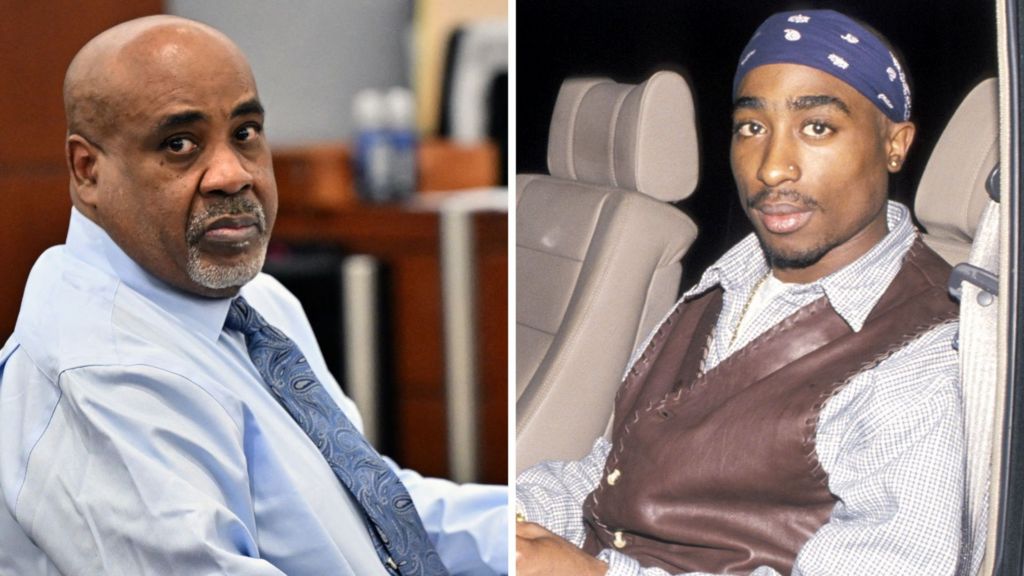
    More than 27 years after the fatal shooting of legendary hip-hop artist Tupac Shakur in Las Vegas, one of the long-awaited trials connected to the iconic musician’s murder has officially begun. The 63-year-old defendant, Duane “Keffe D” Davis, a former street gang leader with documented ties to 1990s Los Angeles-area gang conflicts, appeared in court this Monday to formally face the charges against him.

    Davis is the only suspect to have gone to trial in the high-profile cold case that has captivated true crime enthusiasts and hip-hop fans across the globe for nearly three decades. Following his indictment by a grand jury last year, legal proceedings moved forward this week, marking a major milestone in a case that has long been shrouded in speculation and unconfirmed reporting. When asked to enter his plea to the murder charge, Davis firmly maintained his innocence and entered a formal not guilty plea before the court.

    The killing of Tupac Shakur in September 1996, which occurred after a drive-by shooting following a Mike Tyson boxing match at the MGM Grand Garden Arena, has remained one of the most high-profile unsolved murders in American entertainment history. For years, law enforcement investigations faced roadblocks from witness reluctance and conflicting evidence, leaving the case cold for decades. Davis has long been linked to the case in unofficial reports, and his arrest and trial represent the first concrete legal progress to bring a resolution to the case in a generation.

  • Trump signs order to limit childhood vaccines and limit MMR shots

    Trump signs order to limit childhood vaccines and limit MMR shots

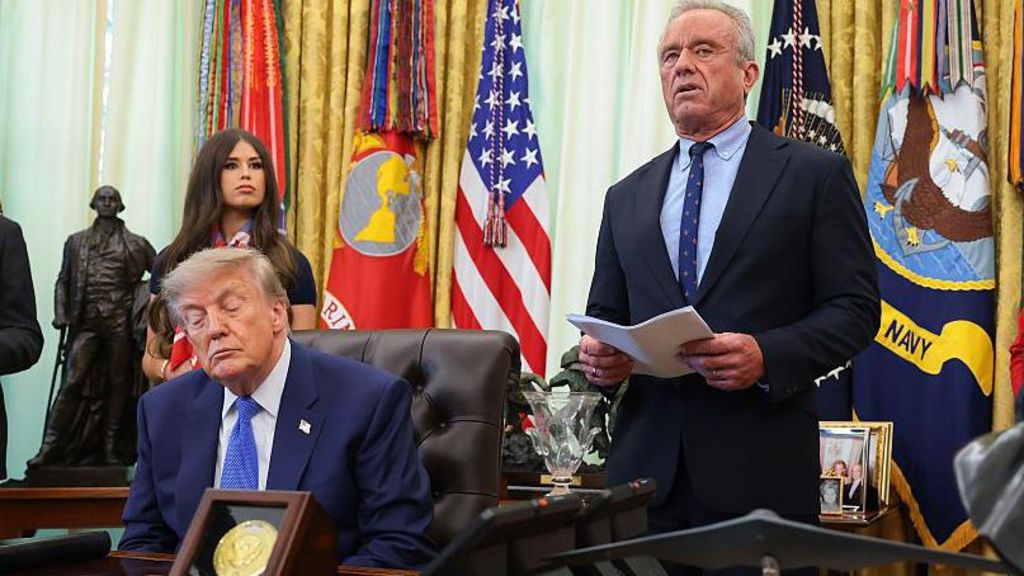
    In a controversial move announced from the Oval Office on Monday, former President Donald Trump signed an executive order that mandates a rollback of recommended childhood vaccines and calls for splitting the combined mumps, measles, and rubella (MMR) vaccine into separate single-disease doses.

    During his remarks, Trump repeated a long-debunked claim that the modern expanded childhood vaccine schedule has driven declining public health and rising autism rates in the United States. “Decades ago, children received only a small fraction of the vaccines required today,” Trump argued. “In those times, people were much healthier and of course the high rates of autism now observed did not exist.”

    The Trump administration has a well-documented history of promoting the discredited conspiracy theory that the MMR vaccine is connected to autism diagnoses. Decades of peer-reviewed, large-scale scientific studies conducted by global public health institutions have consistently found no causal relationship between any childhood vaccine and autism.

    Under the terms of the new order, the administration would set a new “gold standard” recommendation of only 11 core vaccines for the most high-risk infectious diseases: measles, mumps, rubella, diphtheria, tetanus, pertussis, polio, Haemophilus influenzae type B, pneumococcal disease, human papillomavirus, and varicella (chicken pox). Beyond cutting the total number of recommended vaccines, the order also proposes spreading remaining doses across multiple separate doctor visits, rather than combining doses during routine check-ups.

    Critics have quickly pointed out a major legal barrier to the policy’s implementation: the U.S. federal government lacks the authority to set vaccine requirements for school attendance, a power that is exclusively reserved for individual U.S. states. Long-time vaccine skeptic Robert F. Kennedy Jr., who has been closely aligned with Trump on this issue, has been a prominent advocate for rolling back childhood vaccine recommendations in recent years. Public health experts warn that reduced vaccination rates and splits to combined vaccines like the MMR would increase the risk of deadly preventable disease outbreaks across the country.

  • Turkey MPs back historic law on reintegrating Kurdish militants

    Turkey MPs back historic law on reintegrating Kurdish militants

    In a historic legislative vote that marks a turning point for Turkey’s decades-long armed conflict with the Kurdistan Workers’ Party (PKK), Turkish lawmakers on Monday approved a controversial bill that offers a limited legal path for PKK militants to reintegrate into civilian life. The vote, which drew 468 votes in favor, 88 against, and six abstentions, comes 18 months after jailed PKK founder Abdullah Öcalan issued a landmark call for his followers to lay down their arms and pursue Kurdish minority rights through democratic political channels.

    Supported by both President Recep Tayyip Erdoğan’s ruling Justice and Development Party (AKP) and the pro-Kurdish DEM Party, the legislation does not grant a blanket amnesty to PKK members. Instead, it suspends prosecutions and custodial sentences for qualifying offenses for a period of five to 10 years. If beneficiaries avoid criminal activity during this suspension window, all related investigations will be dismissed and their sentences will be considered fully served. Notably, individuals convicted of severe violent crimes such as murder are explicitly excluded from the program’s protections. Lawmakers estimate that approximately 3,500 PKK-linked detainees, roughly one-third of all such prisoners currently held in Turkish correctional facilities, could be released in the program’s initial phase.

    The most striking omission from the new law is any explicit reference to the status of 77-year-old Öcalan, who has been held in solitary confinement on Istanbul’s Imrali Prison Island for 27 years. Öcalan’s 2025 disarmament call laid the groundwork for the current peace process, and he has remained a central figure in negotiations between the PKK and the Turkish state. Last week, Turkish Vice President Cevdet Yılmaz confirmed to CNN Turk that Öcalan’s case does not fall under the scope of the new legislation, though he added that the aging leader would still be able to contribute to ongoing peace efforts without offering additional specifics.

    The legislative debate, broadcast live on public broadcaster TRT, exposed deep divisions within Turkish politics over the peace initiative. For millions of Turkish citizens who lost loved ones to PKK violence over 40 years of conflict, Öcalan is viewed as a violent terrorist responsible for widespread bloodshed. Conversely, many of Turkey’s 15 million-plus Kurdish residents see Öcalan as a heroic champion of Kurdish political and cultural rights, adding a layer of visceral public division to the policy debate.

    Nationalist opposition lawmaker Turhan Çömez of the İyi Party fiercely criticized the legislation during debate, challenging the government: “How can you negotiate with terrorists? … You said they would be laying down their weapons unconditionally.” Despite opposition from nationalist blocs, the bill secured cross-bloc support: Özür Özel, leader of Turkey’s new main opposition force the Republican People’s Party (CHP, referenced in the original text as Yeni Parti), backed the bill, arguing that “only peace, democracy and justice will serve as a remedy” for Turkey’s long-running ethnic conflict.

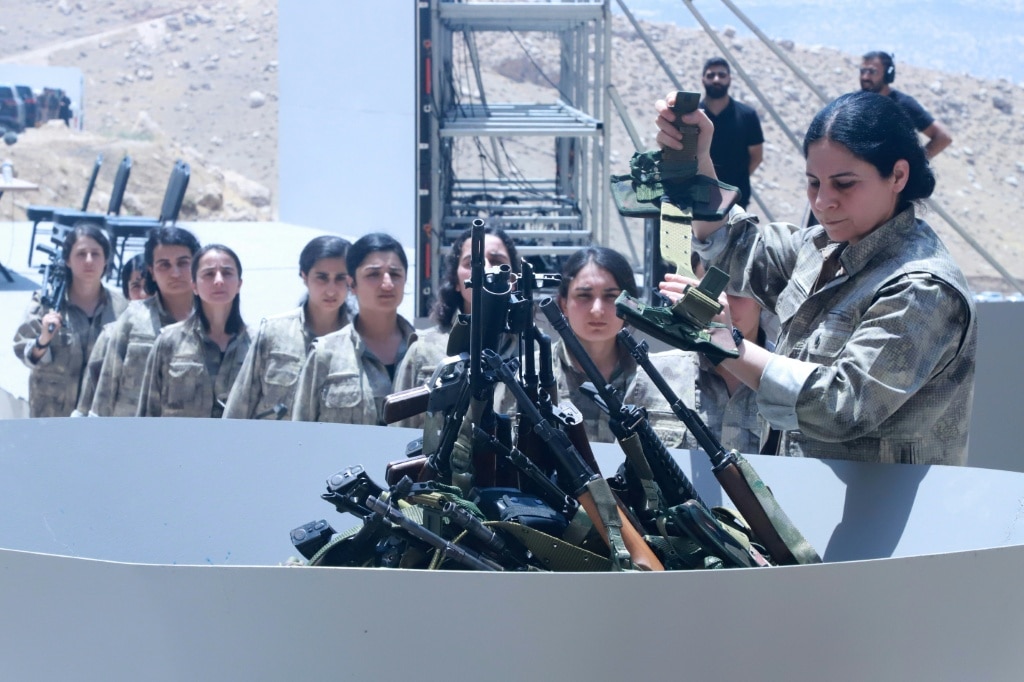
    The DEM Party has been instrumental in backchannel negotiations, shuttling between Öcalan on Imrali Island and Turkey’s ruling political establishment since diplomatic outreach restarted in October 2024, with party delegations making regular trips to the prison to facilitate dialogue. Following Öcalan’s disarmament call earlier this year, the PKK formally announced its dissolution in May, and in July, PKK militants held a public historic disarmament ceremony in the mountains of northern Iraq, where they symbolically destroyed stockpiles of weapons.

    Even with the legislative breakthrough, significant hurdles remain for the peace process. The PKK leadership has repeatedly stated that excluding Öcalan from the reform is a non-negotiable red line. On the eve of the parliamentary vote, the PKK warned that nearly all of the bill’s provisions would remain a “dead letter” if Öcalan is not granted release from his decades-long solitary confinement.

  • Iran says its people are ‘professional chess players’ in dealing with the US

    Iran says its people are ‘professional chess players’ in dealing with the US

    Escalating tensions between the United States and Iran have put global energy security at the center of geopolitical friction, as Tehran insists Washington meet its sweeping preconditions to reopen the strategically critical Strait of Hormuz, the world’s most vital energy shipping chokepoint.

    Since late February, when the United States and Israel launched joint military operations targeting Iran and its regional allies, Iran has effectively blocked most traffic through the strait, a waterway that carries roughly one-fifth of the world’s total oil and liquefied natural gas supplies. Over the weekend, senior Iranian official Mohammad Bagher Zolghadr formally outlined Tehran’s full set of demands, which include an immediate end to all military “war and aggression” against Iran and its partner groups in Lebanon, Palestine, Yemen, and Iraq. Additional conditions, per Iran’s state-run Tasnim News Agency, include the lifting of Washington’s long-running sanctions on Iran, the removal of a U.S. naval counterblockade of Iranian ports, the release of billions of dollars in frozen Iranian assets held overseas, and full compensation for damage Iran has sustained during the current conflict.

    The standoff has been framed on both sides as a high-stakes strategic chess match. U.S. President Donald Trump signaled Sunday that he favors ramping up economic pressure on Iran rather than launching new military strikes, backing away from escalatory options in the wake of Tehran’s demand list. Speaking to Axios, Trump noted he was “low-keying it” with Iranian leadership, explaining that “We are only semi-negotiating with them. We are just watching Iran with its huge inflation and the fact they have no money. It will work out. It always works out. It’s like a chess game.”

    Iran swiftly pushed back on Trump’s framing, with foreign ministry spokesman Esmail Baghaei issuing a pointed response that cast Iran as the more skilled player in the strategic standoff. “Lights out or lights on, Iranians showed they are professional chess players,” Baghaei said Monday. He doubled down on Tehran’s core demand, stressing that “as long as the U.S. naval blockade continues… as long as other violations by the United States continue, the necessary conditions for saying that the Strait of Hormuz has become a safe waterway will not exist.”

    Parallel to its negotiations through intermediaries with the U.S., Iran is in the final stages of finalizing a new shipping agreement with neighboring Oman that would establish revised shipping lanes through the strait once it reopens. Iranian Foreign Minister Abbas Araghchi confirmed that the pact is in its “final stages” but reiterated that the waterway will remain closed until Washington meets all of Tehran’s preconditions. Araghchi added that Iran and the U.S. are not holding direct negotiations, as Tehran refuses to engage in formal talks while Washington continues to violate the terms of the June interim nuclear and security agreement between the two countries. All communications are currently being passed through third-party intermediaries, he said.

    On Monday, the U.S. military confirmed it was continuing to enforce its port blockade against Iran. U.S. Central Command (Centcom), which oversees American military operations in the Middle East, announced in a post on X that it had diverted 55 commercial vessels bound for Iranian ports, disabled two additional vessels, and inspected two more to ensure compliance with U.S. restrictions.

    In a separate development Monday, Baghaei addressed a new regional security pact between Pakistan, Turkey, and Saudi Arabia, saying Tehran sees no evidence the agreement is aimed at countering Iran. Instead, he framed the pact as a sign of shifting regional attitudes toward the United States, with Middle Eastern nations increasingly opting to rely on their own security capabilities rather than outside powers. “Any plan that is based on the geopolitical and historical realities of the region, is comprehensive and inclusive, and correctly identifies the enemy and the threat, has a chance of helping to strengthen security and prevent instability and abuses by the Zionist enemy and its allies,” Baghaei added.

    The current standoff comes amid growing rifts between long-time allies the United States and Israel, as Washington pushes to de-escalate conflict across three active Middle Eastern fronts: Gaza, Lebanon, and Iran. Israel’s Channel 13 reported Monday that Centcom chief Brad Cooper conveyed Washington’s goal of “closing the three fronts” during a recent visit to Israel over the weekend. The report follows Israeli Prime Minister Benjamin Netanyahu’s outright rejection Sunday of Trump’s 15-point peace plan for Gaza, in which he stated Israel would not withdraw its military from Gaza until Hamas is fully disarmed.

    The Trump-led Board of Peace announced a breakthrough on the Gaza plan last month, and Trump has said Hamas has agreed to lay down its weapons under the terms of the proposal. An initial ceasefire between Israel and Hamas was agreed to last October, but the Israeli military has continued to carry out near-daily airstrikes and ground operations in Gaza, repeatedly violating the terms of the truce. “Israel rejects the 15-point document,” Netanyahu confirmed during a Sunday cabinet meeting.

  • Deon Fourie’s stunning comeback: 39-year-old recalled by the Springboks after injury woes

    Deon Fourie’s stunning comeback: 39-year-old recalled by the Springboks after injury woes

    JOHANNESBURG, Aug 12 (Rewritten) — In one of the most remarkable comeback stories in modern rugby, veteran utility forward Deon Fourie has earned a recall to South Africa’s national Springboks squad, three years after earning his last international cap and two years after a devastating ACL injury nearly forced him into permanent retirement.

    Fourie, who will celebrate his 40th birthday next month, was officially called up by South African Rugby officials on Monday, and confirmed that he would join the national camp in Johannesburg on Tuesday to begin preparations for the highly anticipated four-match “Greatest Rivalry” test series against world rugby rivals New Zealand, which kicks off on August 22.

    Springboks director of rugby Rassie Erasmus made the call to bring Fourie back into the fold after a stunning standout performance for the Stormers against the All Blacks in the opening match of New Zealand’s northern tour in Cape Town this past Friday. Making his first appearance after 13 weeks on the sidelines, Fourie didn’t show any signs of his long layoff: he crossed for the Stormers’ opening try, won two critical turnovers, and left Stormers head coach John Dobson stunned with three bone-rattling tackles completed in just 15 seconds of play. Fourie was substituted after 60 minutes with the scores locked at 14-14, and the All Blacks went on to claim a 38-21 victory, but the result did little to dim the impact of Fourie’s performance.

    South African Rugby highlighted in its official statement Monday that Fourie’s unique versatility as a hybrid flanker and hooker brings “invaluable” depth to the Springboks squad ahead of the high-stakes series.

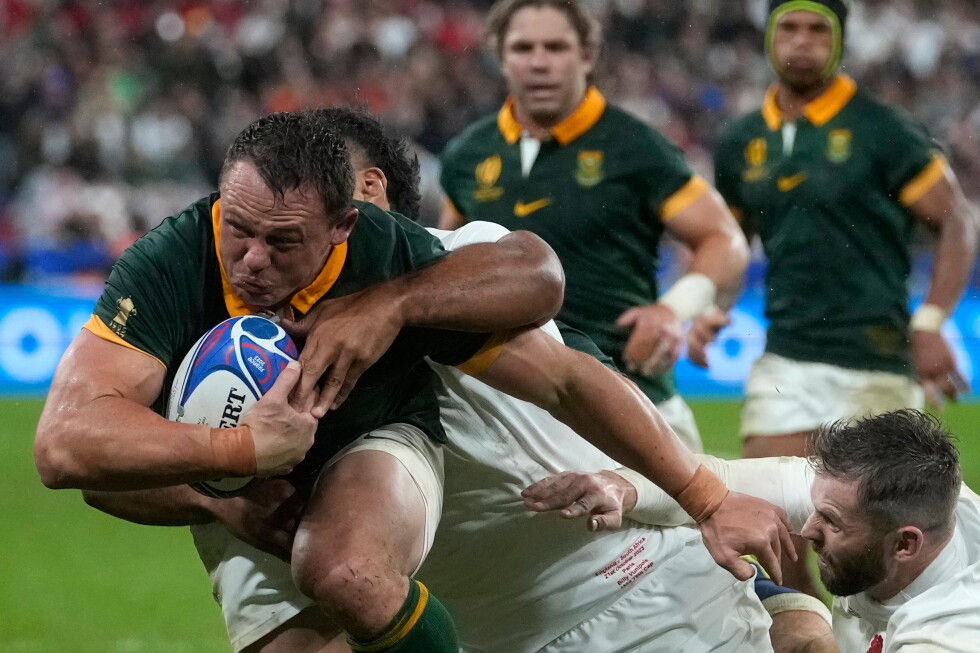
    Fourie already holds a unique place in Springboks history: he became the oldest player to debut for the national side when he earned his first cap at age 35 back in 2022. His 13th and most recent test appearance came in the 2023 Rugby World Cup final against New Zealand in Paris, where he delivered one of the most iconic performances of the tournament. Brought on early to replace injured starting hooker Bongi Mbonambi, Fourie suffered a shoulder injury of his own just minutes into coming on, but refused to leave the field out of fear that leaving the front row short would leave South Africa vulnerable to a New Zealand comeback. The Springboks held on to win the match 12-11, claiming their fourth Webb Ellis Trophy in what remains one of the closest World Cup finals in history.

    Since that triumph, Fourie’s career has been derailed by a string of cruel injury setbacks. He suffered a ruptured ACL in April 2024 that kept him sidelined until December of that year, and an ankle injury followed immediately after his return to training. He missed the entirety of the 2025 club season from October through March with a bicep tear, and only returned to training in April before a bad tackle in May forced him undergo another knee surgery.

    Speaking to reporters ahead of the Stormers match against the All Blacks last week, Fourie acknowledged that he had questioned whether he would ever get another chance to play top-level rugby. “Over the last two years I’ve had terrible luck with injuries, and I didn’t know whether I’d be able to play this year,” he said. Despite the setbacks, he added that he was hungry for the challenge: “I’m definitely raring to go. I’ve been looking forward to this match since it was announced. To represent your club, where I’ve spent almost my entire career, against a test side like the All Blacks is such a big occasion. To face the haka is something every little boy dreams of when they start playing rugby.”

    Now, that dream has expanded: Fourie is all but guaranteed another chance to pull on the green and gold of South Africa, just one month shy of his 40th birthday, as the Springboks prepare to face their oldest rivals in one of the most highly anticipated test series of the year.

  • New train service connects Finland and Sweden for first time in decades

    New train service connects Finland and Sweden for first time in decades

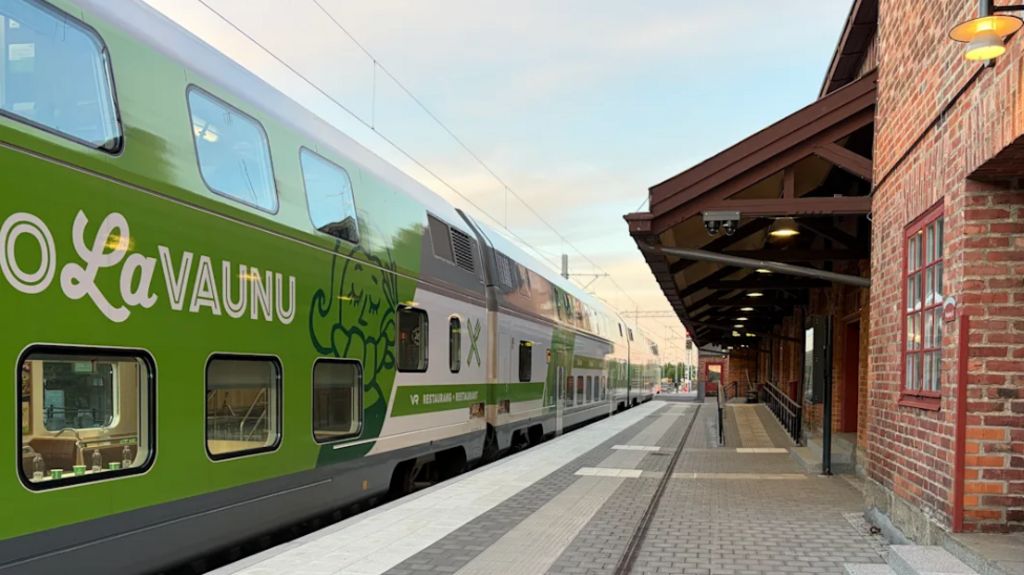
    For nearly four decades, a key rail link connecting northern Finland and Sweden sat idle, severing a critical transport artery between the Nordic region and the rest of continental Europe. That changed on Monday, when an inaugural double-decker passenger train pulled out of Oulu, Finland’s coastal northern city, shortly after 5 a.m. local time, marking the official restart of cross-border service between Oulu and the Swedish border town of Haparanda.

    When the train crossed the Torne River and glided into Haparanda’s station, hundreds of gathered spectators greeted it with cheers and waving Finnish and Swedish flags, celebrating the end of the 40-year hiatus. The original service was discontinued between the late 1980s and early 1990s, dragged down by low ridership and a long-standing infrastructure mismatch between Finland and the rest of Europe.

    This infrastructure difference traces back more than a century: when Finland was part of the Russian Grand Duchy, it adopted Russia’s wider rail gauge, which remains the national standard today. That divergent track width long prevented seamless through-running between Finnish rail networks and the European standard gauge used across most of the continent. Currently, Finland is in a gradual process of upgrading key border and arterial routes to align with the European standard, laying the groundwork for greater cross-continental connectivity.

    The newly launched service will run two round trips daily, with the 100-minute journey from Oulu to Haparanda tracing Finland’s western coast before crossing the border. While passengers heading further south from Haparanda must transfer to a Sweden-based train to continue their trip, the restored link unlocks an unprecedented pan-European rail route: it is now possible to travel approximately 5,000 kilometers entirely by rail from the Algarve region of southern Portugal all the way to Kolari, Finland’s northernmost railway station, a route believed to be the longest contiguous rail journey on the continent. It also cuts travel time between the two Nordic capitals, enabling a 24-hour rail trip between Helsinki and Stockholm.

    Finnish Transport Minister highlighted that the return of this cross-border service is tangible proof of steadily growing cooperation between Finland and Sweden, two neighboring Nordic nations with deep economic and social ties. Elisa Markula, CEO of Finland’s state-owned railway operator VR, which leads the new service, noted that the launch aligns with a continent-wide resurgence in rail travel popularity. “Train travelling in all Europe is having a renaissance. Also in Finland, our passenger numbers are increasing a lot,” Markula told reporters from AFP. She expressed optimism that the new cross-border route will capture growing public demand for sustainable, convenient cross-border travel across the European Union.