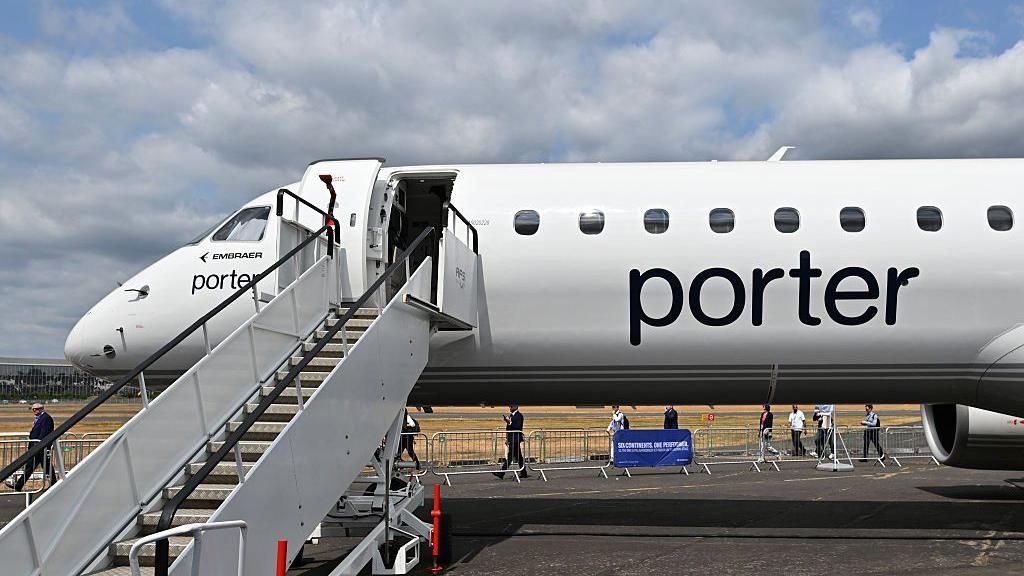
A recent incident on a Canadian commercial flight has thrown long-simmering tensions between air safety protocols, family travel accommodations, and public etiquette into the global spotlight, after an entire flight was canceled when a young child refused to remain buckled in their seat ahead of departure.
On August 6, a Porter Airlines flight scheduled to travel from Victoria to Toronto was already in its final departure preparations when the crew encountered the unsafe situation: the young child, traveling with a parent, repeatedly left their seat and would not comply with seat belt requirements. Crew members and the child’s parent made multiple attempts to resolve the issue, according to the airline’s official statement, but all efforts failed. With takeoff impossible under unsafe conditions, the crew made the decision to return to the terminal and remove the two passengers from the flight.
The resulting delay pushed the flight’s scheduled departure past the midnight closure of the airport’s runway, forcing all remaining passengers to rebook their travel for the following day. The incident has quickly divided public opinion across social media and mainstream news outlets, with two distinct camps clashing over how airlines should respond to non-compliant child passengers and what responsibilities parents hold during air travel.
Child aviation safety specialist Lia Tuso emphasized in an interview with the BBC that the Porter Airlines crew’s decision was fully justified by core flight safety principles. Tuso explained that an unrestrained child, just like an unsecured piece of checked or carry-on luggage, becomes a dangerous projectile during unexpected turbulence, a hazard that poses severe risk to the child themselves and all other passengers and crew on board, particularly during the critical phases of takeoff and landing.
Critics of the airline’s decision, however, have pushed back by noting that young children often act out not out of intentional disruption, but because of fear of air travel. Aryeh Kozuch, a passenger on the canceled flight, told Canadian broadcaster CBC News that the child was not unruly, but visibly anxious. “They just kept hiding under their seat. If they got forced into [being] strapped in, they just kind of slid out underneath,” Kozuch recalled. Many observers have also questioned why the entire flight had to be canceled rather than only removing the non-compliant family, a step that Porter ultimately took but which still resulted in a missed runway closure window.
This incident is far from unique, and comparisons to similar high-profile cases stretching back more than a decade have only amplified the ongoing debate. In 2018, a father and young daughter were removed from a Southwest Airlines flight traveling from Chicago to Atlanta after the child threw a tantrum over buckling her seat belt. Passenger video of the ejection showed that the child had already calmed down and been seated for more than five minutes before crew ordered the pair off the plane, drawing widespread criticism of the airline’s overreach. A 2012 incident on a JetBlue flight that ended with a traveling family being removed also sparked public outcry, with the family appearing on NBC’s *Today Show* to accuse the airline of lacking compassion. JetBrains defended the captain’s decision at the time, stating that prolonged non-compliance with crew instructions threatened the safety of everyone on board.
As family travel continues to rebound following global travel restrictions, the Porter Airlines incident has reopened core questions that have yet to be resolved across the aviation industry: how to balance non-negotiable safety standards with empathy for families traveling with young, anxious children, and what protocols best minimize disruption for all passengers when non-compliance occurs.