博客

  • Top cop offers major condition update on colleague who was stabbed

    Top cop offers major condition update on colleague who was stabbed

    Two weeks after a brutal stabbing attack left a South Australian female police officer with serious neck injuries, state police have confirmed the public servant may face additional surgical procedures in the coming months as her recovery continues. The officer, identified only as Jessie, was rushed to hospital following the July 29 assault in Elizabeth East, a residential suburb located on Adelaide’s northern outskirts. Immediately after the alleged attack, responding officers shot the 27-year-old male suspect, who has since been formally charged in connection to the incident.

    At a Monday press conference focused on monthly state crime statistics, Acting Assistant Commissioner David O’Donovan of South Australia Police (SAPOL) shared the latest update on the officer’s road to recovery. “Jessie is recovering well, she is receiving continued specialist medical treatment but it is too early in her treatment to understand the full effects of the physical injury,” O’Donovan told reporters. “The one thing we can’t rule out is that she will be facing further surgical procedures in the future.”

    O’Donovan also noted that beyond the clear physical harm of the attack, the traumatic experience has left lasting psychological impacts, meaning Jessie faces a long, gradual recovery process. He confirmed that SAPOL has mobilized full support resources for both the officer and her family to help them navigate this challenging period.

    The suspect, who did not appear in person, recently faced the Elizabeth Magistrates Court via a remote phone hearing. He faces multiple serious charges, including attempted murder and aggravated assault, and has been remanded in official custody until his next scheduled court hearing in November.

    O’Donovan’s update on the stabbing came alongside the release of new SAPOL crime data that paints a troubling picture of growing violence against frontline police in the state. The recently updated figures show a 27% year-over-year jump in assaults on officers, rising from 620 reported incidents to 790. These attacks run the gamut from physical assault such as kicking, punching and biting, to the increasingly common act of spitting on officers.

    “Spitting is becoming quite a prevalent and quite a disgusting thing for people to do at police officers, and it is not okay,” O’Donovan emphasized. “This is absolutely not okay to be doing that towards our people. We will respond appropriately and these people will absolutely face the full weight of the law.”

  • Experts warn of no rate relief ahead of the RBA’s meeting

    Experts warn of no rate relief ahead of the RBA’s meeting

    As Australia’s Reserve Bank (RBA) prepares to announce its latest cash rate decision on Tuesday afternoon, financial experts are issuing urgent warnings that mortgage holders across the country should prepare for prolonged financial strain, with little to no relief on the horizon even if the central bank holds rates steady.

    Right now, household budgets across the nation are stretched to their absolute breaking point, according to industry analysis from personal finance comparison platform Finder. Nearly 40% of Australian mortgage borrowers reported struggling to meet their monthly home loan payments as of June, a figure that has stayed elevated amid persistent cost-of-living increases. Taylor Blackburn, Finder’s personal finance and insurance specialist, said the current climate leaves no room for complacency, urging borrowers to “batten down the hatches” for tough times ahead.

    For borrowers able to adjust their loan terms, Blackburn says refinancing to lock in a lower interest rate remains the most effective step to reduce monthly financial pressure. For those already at the end of their financial rope, he encouraged homeowners to reach out directly to their lenders to discuss available hardship support, such as temporary repayment holidays, noting that necessity drives flexible solutions for struggling households. A surprise rate hike this week, he added, would only pour more fuel on an already raging fire: the three rate increases implemented by the RBA in three of its four 2026 meetings have already pushed the cash rate up 75 basis points to the current 4.35%, adding an extra $350 per month to repayments for the average $700,000 mortgage.

    While a majority of economic forecasters predict the RBA will hold the cash rate at 4.35% this week, Finder home loans expert Richard Whitten warned borrowers against interpreting a pause as the end of rate pressures. “Interest rates are as high as they’ve ever been in recent history, and with higher house prices, this makes repayments incredibly expensive,” Whitten explained. Nearly half of the economic panel surveyed by Finder still expect at least one more rate hike before the end of 2026, with 44% of experts forecasting additional tightening before the RBA wraps up its fight against inflation.

    The RBA has been working for months to pull annual inflation back into its target range of 2 to 3%, but official data from the Australian Bureau of Statistics shows inflation rose to 3.6% in the 12 months to June 2026, moving further away from the central bank’s goal. Housing costs have been the single biggest driver of this inflation, jumping 6.8% year-on-year, followed by food and non-alcoholic beverages and recreation and culture, both up 3.3% annually. This dynamic creates a devastating double burden for mortgage holders: high inflation pushes up the cost of everyday essentials at the same time it keeps interest rates – and monthly home loan repayments – elevated.

    Blackburn noted that the RBA has signaled it may adopt a wait-and-see approach this week to give previous rate changes time to work through the economy, and to assess whether ongoing inflation is being driven by factors outside of cash rate policy. Still, for the 38% of homeowners already struggling to make their mortgage payments, any additional rate increase would deliver a cruel new blow at a time when cost-of-living pressures are already hitting every aspect of daily life for Australian households.

  • Jackie, the famous California bald eagle, dies after weeks of intensive care

    Jackie, the famous California bald eagle, dies after weeks of intensive care

    Jackie, the beloved bald eagle that won the hearts of hundreds of thousands of wildlife fans across the globe, has passed away on Monday following multiple weeks of intensive veterinary care at California’s Ojai Raptor Center, a leading wildlife rehabilitation nonprofit.

    The iconic raptor was brought to the center after sustaining injuries from a violent attack by other eagles. Clinicians soon discovered pre-existing underlying health conditions that had already triggered progressive anaemia and unhealthy weight loss, complicating her recovery process. In an official statement released after Jackie’s passing, representatives from the Ojai Raptor Center confirmed that even with round-the-clock, coordinated care from their in-house veterinary team and outside consulting specialists, the raptor’s health continued to decline steadily over the final days of her life.

    Jackie rose to international fame through the wildly popular Big Bear Eagle Nest Cam, a live streaming project operated by the nonprofit Friends of Big Bear Valley. Located in the scenic Big Bear Valley region of Southern California, the stream has built a massive, loyal global subscriber base that tuned in daily to watch Jackie and her long-time mate Shadow go about their lives. First hatching in the spring of 2012, Jackie established her nest in the valley and became a staple of the stream after she paired with Shadow in 2018.

    Members of the rehabilitation team shared that they are devastated by the loss of the iconic bird, noting that caring for Jackie had been an extraordinary honor for everyone involved. “We know this news will be deeply felt by the many thousands of people around the world who have followed her journey, hoped alongside us, prayed for her, and supported the people caring for her,” the statement read.

    The rehabilitation center is currently working in close partnership with federal and state wildlife agencies, including the U.S. Fish and Wildlife Service and the California Department of Fish and Wildlife, to conduct a full post-mortem review. A more detailed public statement, including full information on all treatment protocols and diagnostic test results, is planned for release in the coming days. Per current protocol, Jackie’s remains have already been transferred to the California Department of Fish and Wildlife for official examination.

  • Wall Street giants hand Nvidia $500bn to fund boom in AI projects

    Wall Street giants hand Nvidia $500bn to fund boom in AI projects

    The global artificial intelligence boom has already reshaped tech industry valuations, and now it is set for an even larger expansion after leading chip designer Nvidia announced a historic partnership with some of Wall Street’s most powerful financial institutions. The California-based firm is working with six major investment and financial groups — Apollo, BlackRock, Blackstone, Brookfield, Goldman Sachs, and KKR — to raise a massive $500 billion capital pool dedicated exclusively to building out global AI infrastructure.

    A core innovation of this new initiative is that it formally classifies AI computing hardware and supporting infrastructure, commonly shortened to “compute” in tech circles, as a standalone, investable asset class for the first time. This shift marks a major turning point for how global capital markets engage with the fast-growing AI sector, as major long-term investors increasingly recognize the sustained economic value of AI infrastructure.

    “In AI, compute is revenue,” Jensen Huang, Nvidia’s co-founder and chief executive officer, said in an official statement. “We are bringing the world’s leading long-term capital providers together to independently underwrite AI infrastructure.”

    The pooled capital will support two key categories of projects: large-scale AI infrastructure initiatives led by Nvidia itself, and similar projects being developed by the chipmaker’s extensive network of global industry partners. Most planned investments will go toward the construction of new, purpose-built data centers, which are required to house, power, and cool the dense stacks of GPU chips that process AI workloads and power generative AI tools. A portion of the funding will also go toward building new manufacturing facilities to increase production of Nvidia’s high-demand AI chips, addressing ongoing supply shortages that have plagued the sector for years.

    Industry leaders across finance and technology have echoed Huang’s outlook on the critical role of AI infrastructure. “Compute has become a critical infrastructure asset,” Joe Bae and Scott Nuttall, co-chief executives of global investment firm KKR, noted in a joint statement. “As we’ve scaled our approach to digital infrastructure, we’ve learned that delivery, not ambition, is the hard part.”

    Nvidia currently holds a near-dominant position in the global market for high-performance AI chips. Virtually every major technology and AI developer, from Google and Meta to Amazon, Microsoft, OpenAI, and Anthropic, relies on Nvidia’s graphics processing units (GPUs) to power their AI platforms, cloud services, and consumer chatbots. This unmet demand has already driven exponential growth for Nvidia: over the past three years, industry-wide spending on AI projects and infrastructure has surpassed $1 trillion, and Nvidia’s own market capitalization has grown fivefold over the same period as companies rush to secure access to its chips.

    Huang framed the new capital initiative as the next major step in Nvidia’s evolution beyond its core origins as a chip manufacturer. “Today, we are helping create a new class of productive, investable infrastructure: AI factories,” he said.

    For the companies developing AI tools, this new funding framework will open up new avenues to finance rapid expansion, keeping pace with exploding consumer and enterprise demand for AI services. Jim Zelter, president of Apollo — a global alternative asset manager that oversees more than $1 trillion in total assets — noted that AI computing has moved far beyond a niche tech trend to become a core global resource. “Modern compute has emerged as a scarce, mission-critical asset class,” he said, adding that the sector is “positioned to drive significant long-term economic growth and productivity gains.”

    The new partnership builds on a wave of recent independent moves by major financial firms to invest directly in AI infrastructure. Just last month, BlackRock reached a separate deal with Meta to finance a Texas data center, taking a majority ownership stake in the facility. AI startup Anthropic, the developer of the popular Claude chatbot, recently secured a customized infrastructure investment deal with Macquarie Asset Management and Singapore’s sovereign wealth fund GIC, after demand for its AI service grew so quickly that it required massive new computing capacity. While the company did not disclose the full size of that deal, Anthropic made clear that widespread adoption of its platform has left it needing far more capital to expand capacity.

    Market analysts expect the $500 billion initiative to accelerate global AI development by closing the gap between high demand for computing capacity and the limited supply of infrastructure that can support growing AI workloads. As the AI sector continues to mature, the formal recognition of compute as an investable asset class is likely to unlock trillions more in long-term institutional investment in coming years.

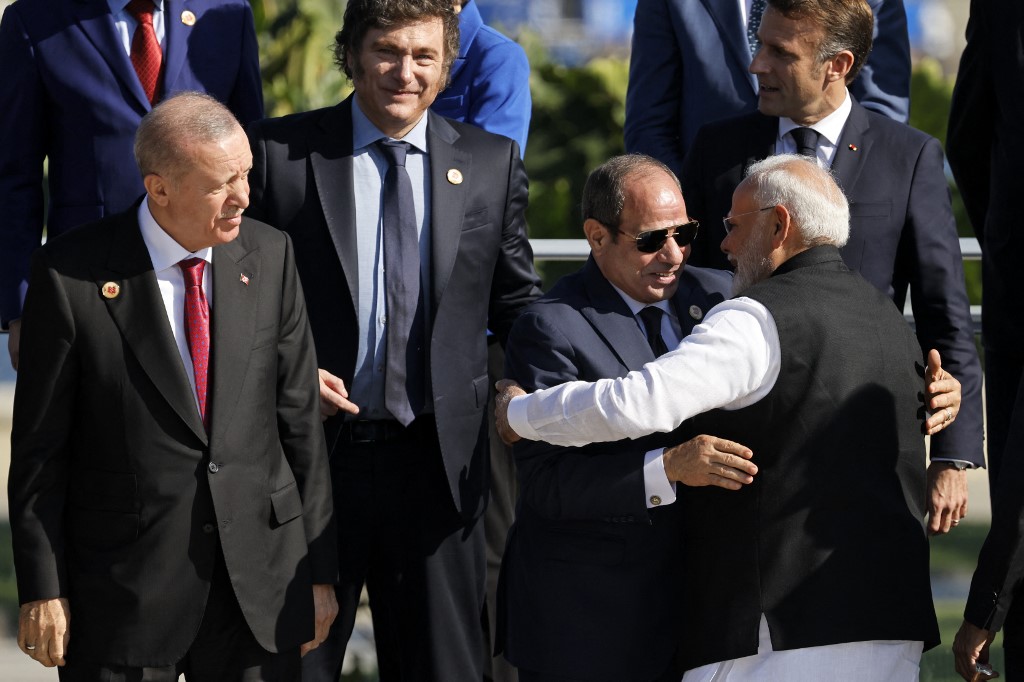
  • Why Egypt held back from joining Turkey, Saudi Arabia and Pakistan’s defence pact

    Why Egypt held back from joining Turkey, Saudi Arabia and Pakistan’s defence pact

    In an unannounced, off-schedule gathering in Mecca on Friday, Turkish President Recep Tayyip Erdogan joined leaders from Pakistan and Saudi Arabia to sign a landmark regional security agreement, a deal that took two years of delicate diplomatic negotiations to bring to fruition. The last-minute decision to hold the signing ceremony, arranged abruptly just three days prior on Tuesday, was kept out of Erdogan’s official public itinerary amid specific security concerns.

    Senior Turkish officials chose to conceal details of the trip over fears that提前 publicizing Erdogan’s travel plans would open the door for hostile actors to attempt to disrupt the signing, multiple anonymous sources familiar with the internal planning confirmed to Middle East Eye. Turkish Foreign Minister Hakan Fidan clarified in a Saturday interview that Ankara had invested two full years of diplomatic work to coordinate with all negotiating parties to finalize the pact.

    While the agreement leaves concrete, binding military commitments undefined, it includes a core collective defense clause modeled after NATO’s Article 5, which frames an armed attack on any one member state as an attack against all three signatories.

    This security framework grows out of months of regular high-level consultations among Turkey, Pakistan, Egypt, and Saudi Arabia, a diplomatic forum dubbed the “Regional Four.” The bloc’s efforts have already sparked sharp backlash from Israel, with former Israeli Prime Minister Naftali Bennett publicly accusing Turkey in February of orchestrating a “hostile Sunni axis” with nuclear-armed Pakistan to turn Saudi Arabia against Israeli interests.

    In recent months, both Saudi Arabia and Egypt had grown noticeably hesitant about committing to a formal closer security partnership with Turkey, internal Turkish sources based in Ankara confirmed. Earlier this year, one frustrated Turkish official told Middle East Eye: “We are working to hold Egyptians and Saudis to this platform, even as Israeli officials constantly pressure and bully them to walk away.”

    Initially, Turkish negotiators had only planned for a three-party treaty, but as diplomatic talks progressed, Egypt emerged as a logical candidate for inclusion. Boasting one of the largest and most capable militaries in the Middle East and North Africa, Egypt has increasingly aligned its positions with Turkey, Qatar, and Saudi Arabia on a wide range of pressing regional issues – from ceasefire negotiations to end the war in Gaza to shifting geopolitical developments across the African continent.

    Ankara devoted significant diplomatic capital to bringing Egypt into the pact and formally extended an invitation for Cairo to join the agreement. But when it became clear that Egyptian leadership was not prepared to move forward with membership at this time, the three remaining negotiating parties opted to proceed with the signing without Cairo.

    Fidan sought to frame Egypt’s decision as a temporary delay rather than a permanent exit in his Saturday interview. “I am confident that in the next phase, Egypt will also become part of this alliance,” he said. “We already operate in practice as if Egypt is a member; that is the current state of our relationship with all these countries. There are only a small number of outstanding technical issues to resolve. Once those are addressed, there is no reason Egypt will not join us.”

    A second Ankara-based source with direct knowledge of the negotiations explained that Egypt’s choice to step back is rooted primarily in its uniquely complex diplomatic relationship with Israel. As a key U.S. ally, a direct neighbor of Israel, and an Arab state that maintains full formal diplomatic relations with Tel Aviv, Cairo must balance carefully between competing regional interests. Joining the security pact would open Egypt to intense diplomatic and political pressure from Israel, a burden Cairo is not currently willing to take on.

    Egyptian independent outlet Madamasr echoed this reporting on Sunday, confirming via its own internal sources that Cairo had formally declined the invitation to join at this stage.

    Regional diplomatic sources who spoke to Middle East Eye noted that Egypt has additional, independent motivations for its decision to stay out for the moment. Amid growing geopolitical tensions between Saudi Arabia and the United Arab Emirates, Cairo finds itself caught between competing blocs, and remaining outside the alliance allows the Egyptian government to maintain strategic flexibility and avoid forced alignment. Egypt already holds a standing defense treaty with the UAE, and deployed military assets including Rafale fighter jets in response to Iranian strikes on Emirati territory in May. Egypt is also unwilling to cut off deepening commercial ties with India, while relying on critical financial assistance from the UAE, and has no immediate interest in aligning against the bloc that includes Israel, the UAE, and India.

    This perceived unwillingness to commit has also led Saudi leadership to question Egypt’s reliability as a security partner, the second source added. Even so, Turkish officials remain optimistic that once the new alliance solidifies and establishes itself as a credible deterrent to regional aggression, Cairo will be more open to joining the framework in the future.

  • ‘False sense of security’: Finals come early for the Bulldogs and Bunnies in epic clash on Friday night

    ‘False sense of security’: Finals come early for the Bulldogs and Bunnies in epic clash on Friday night

    With just four weeks remaining in the regular NRL season, the race for the top eight has reached a fever pitch, as two of Sydney’s most storied clubs, the Canterbury-Bankstown Bulldogs and South Sydney Rabbitohs, prepare for a do-or-die showdown that will largely shape their post-season fates on Friday night. Though the finals series itself is still a month out, the stakes of this Accor Stadium clash could not be higher: with a slim two-point gap separating the two 2014 grand finalists on the competition ladder, the loser will face an uphill battle to secure a spot in the finals, thanks to punishing remaining fixture lists for both sides.

    South Sydney currently holds the narrow advantage over the Bulldogs, having held on for a hard-fought win against the Parramatta Eels last week. In contrast, Canterbury suffered a gut-wrenching late loss to the Sydney Roosters, surrendering a 10-point lead in the final 10 minutes of play after the Roosters crossed for two late tries to steal the victory. Reflecting on the defeat, Bulldogs prop Max King opened up about the mixed emotions running through the club this week.

    “There are two sides to how we’re all feeling right now,” King explained. “Obviously, there’s a lot of disappointment. We didn’t put out our best performance — we had too many dropped passes, too many unforced errors that threw our rhythm off. To be up 10 points with just 10 minutes left to play and walk away with a loss is incredibly frustrating. That’s two competition points we absolutely should have had. But even with that loss, there’s confidence too: we went toe-to-toe with one of the best sides in the league, fresh off their 82-point rout of the North Queensland Cowboys. We know we can match it with any team in the competition when we play our best footy.”

    The blockbuster has been framed as a virtual elimination final by both camps, given the difficult run home each side faces after Friday’s clash. Canterbury still has fixtures against the in-form St George Illawarra Dragons, ladder-leading Penrith Panthers, and defending premiers Brisbane Broncos left to close out the season. For South Sydney, their remaining schedule is equally challenging: they face a red-hot New Zealand Warriors side fresh off an upset win over Penrith, followed by a match against Gold Coast Titans, before closing out the regular season with a grudge match against their cross-city rivals the Roosters.

    Bulldogs utility Kurt Mann noted that every remaining match for his side carries the same pressure as a finals fixture, with the club sitting on the cusp of the top eight. “It kind of already felt like a finals game last weekend, so there’s no secret about how high the stakes are this week,” Mann said. “We need a strong month over these next four weeks, every single game is going to have that finals-level intensity for us. We know we’ve got a tough run home, and we need to get results if we want to make the eight.”

    While a tough closing fixture list would rattle most sides, Mann argued that challenging matches against top competition is the best preparation for a deep finals run, rather than easy games that create a false sense of security. The Bulldogs have already proven they can beat the league’s best this season, notching wins against both the Panthers and Warriors already this year.

    “You don’t want easy games leading into finals, because that gives you a false sense of how tough the post-season is going to be,” Mann explained. “If you earn your spot by beating top-four side after top-four side, you know exactly what it takes to get it done when it matters. We’ve already shown we can beat any team in the competition when we’re at our best. We were pretty unlucky to lose to the Roosters last week — I thought we’d done enough to get the win, it just slipped away at the end. But on our day, when we play to our potential, we can beat anyone.”

  • The lonely Chinese men being conned by fake brides

    The lonely Chinese men being conned by fake brides

    Decades of skewed population dynamics in China have created a fertile ground for a new type of predatory fraud: the “flash marriage” scam, which preys on tens of millions of single men who face a massive shortage of potential female partners. For 37-year-old Wang Zhuang, the glossy advertisements from Guizhou-based matchmaking agencies felt like the last chance he had to build a family. After years of facing steep requirements for marriage — including demands for owned property, a car, and a high bride price in his home region of Hebei — he had nearly abandoned hope of finding a spouse.

    The agencies promised exactly what Wang craved: demure, family-oriented women from low-income backgrounds who would settle down permanently after marriage, with no need for years of slow courtship. Lured by these guarantees, Wang traveled more than a thousand kilometers to Guiyang, the capital of southwestern China’s Guizhou province, where the unregulated flash marriage industry has exploded in recent years.

    Wang was quickly matched with a woman who fit every description he had given. Agency staff enforced strict rules: clients were banned from exchanging private contact information during the short, supervised meetings, with steep fines for violations. After just four or five 10-minute meetings, Wang agreed to marry, paying more than 300,000 yuan ($44,000) in bride price, plus additional costs for the wedding that pushed his total spending to nearly 500,000 yuan. It was only months after the wedding that the deception unraveled: debt collectors began contacting Wang about his new wife’s hidden outstanding loans, and an investigation of her personal documents revealed a long list of lies. She was a former karaoke hostess who had been married three times already, had three children, lied about her age, and lived with a serious sexually transmitted disease. When confronted, she immediately offered a divorce but refused to return any of the bride price. By the time Wang returned to the matchmaking agency to demand answers, it had vanished without a trace.

    Today, more than a year after the wedding, Wang’s life remains in tatters. He rents a small apartment across from the former agency district in Guiyang, where he has turned his home into a informal refuge for other victims of flash marriage scams. His parents blame him for the financial ruin, he struggles with chronic insomnia and anxiety that have left him unable to hold steady work, and he remains trapped in a lengthy divorce process that shows no sign of ending quickly. “My whole family has been thrown into chaos,” Wang says. He now posts warning videos on Chinese social media and travels across the country to push authorities for stronger action against the scammers.

    Wang’s tragedy is not an isolated case. It is a direct outcome of a demographic crisis decades in the making. Following decades of China’s one-child policy, paired with a long-standing cultural preference for sons, the country now faces a gap of 30 million more men than women — a number larger than the entire population of Australia. For men in rural areas, smaller cities, and those entering their late 30s and older, the shortage of available partners has left few options. Traditional bride prices have skyrocketed in regions with severe gender imbalance, putting marriage out of reach for many working-class men. This context has made the quick, one-stop “flash marriage” model offered by unregulated Guizhou agencies extremely appealing to vulnerable singles.

    As the scam has grown, it has drawn the attention of national Chinese authorities. Between January 2024 and March 2025, Chinese prosecutors processed cases involving 1,546 individuals linked to illegal activity in the matchmaking industry. This month, five national government departments jointly launched a nationwide crackdown on the sector, responding to widespread public outcry over the fraud. In one high-profile prosecuted case, a Guizhou-based agency used employed karaoke waitresses as fake potential brides to defraud 128 men out of more than 2.5 million yuan ($371,000).

    One agency manager who agreed to speak with reporters on condition of partial anonymity defended the industry, claiming that less than 10% of agencies engage in fraud, and that local matchmakers rely on personal village knowledge to vet potential brides instead of formal background checks. He claimed that the sector merely connects women from Guizhou, where local families often had multiple children including daughters despite the one-child policy, to wealthier men from central and northern provinces that face far more severe gender gaps. “Three days with the right introduction can beat three years of dating,” reads one typical advertisement for the service.

    But for victims like 59-year-old Xu Rulin from Jiangxi province, who spent nearly 500,000 yuan to arrange a flash marriage for his son, the industry is nothing but organized fraud. Xu’s son married his bride just seven days after their first meeting, but she ran away less than two weeks after the wedding, after extracting an additional 140,000 yuan for a business, an iPhone, and wedding jewelry. While the bride and agency owners have been arrested, Xu remains in Guiyang months later, still fighting to recover his lost life savings.

    Legal experts note that prosecuting these cases remains extremely difficult under current Chinese law, which lacks a specific criminal statute for this type of marriage fraud. To win criminal charges, victims must prove that the bride and conspirators never intended to enter a genuine marriage, a high bar that is hard to meet, because suspects often argue that they entered the marriage in good faith but later realized they were incompatible. “In situations like that, the line becomes blurred. Relationship issues are difficult to disprove,” explains Fan Binghe, a lawyer with the Nanjing Office of Beijing Jingshi Law Firm who specializes in these cases. Many sham agencies also shut down immediately after scamming victims, leaving little to no trace to pursue for financial recovery.

    For Wang and the dozens of other victims staying in his Guiyang refuge, there is no clear end in sight. Most have lost their entire life savings, and many remain trapped in unresolved divorce proceedings that prevent them from moving forward with their lives. “After going through something like this, I don’t even know if I can still get married. It was already hard for me to find someone. And now I’ve spent so much money. I won’t consider it now,” Wang says. Staring at piles of legal documents, he adds, “I don’t know when this will be resolved, so I can restart a normal life. It feels endless.”


  • Man dies in Cavan crash involving car and van

    Man dies in Cavan crash involving car and van

    A serious road traffic incident in the Republic of Ireland has claimed the life of a man in his 60s, after a head-on collision between a car and a commercial van on a major regional route on Monday afternoon.

    The crash unfolded on the N3 highway at Drummallaght, a stretch of road connecting the towns of Virginia and Cavan, according to initial official reports. Irish national public service broadcaster RTÉ has confirmed that the fatality was the driver of the passenger car involved in the incident.

    A second person in the car, a woman also in her 60s who was travelling as a passenger, sustained life-threatening critical injuries in the impact. Emergency responders activated a major medical response, airlifting her to a nearby major trauma hospital for urgent treatment. The operator of the van, a 50-year-old man, escaped the collision with only minor physical harm and was transported to a local medical facility for observation and routine care.

    In the wake of the crash, local law enforcement has launched a formal investigation into the exact cause and circumstances of the collision. Investigators are now issuing a public appeal for any members of the public who witnessed the incident to come forward to share information. Specifically, police are asking any motorists who were travelling through the Drummallaght area of the N3 between 1:00 PM and 2:00 PM local time on Monday, and who have dashcam footage that captures the stretch of road where the crash occurred, to submit their recordings to assist with the investigation.

  • No evidence of data breach after Chinese-made component found in Navy drones, MoD says

    No evidence of data breach after Chinese-made component found in Navy drones, MoD says

    A recent discovery of Chinese-manufactured parts in the United Kingdom Royal Navy’s newly acquired K3 Scout surveillance drones has sparked security scrutiny, though government investigators have found no proof of unauthorized data or system compromise, the UK Ministry of Defence (MoD) has confirmed.

    The issue came to light during a standard cyber vulnerability review of the 20 newly delivered unmanned sea vessels, purchased to expand the Royal Navy’s remote surveillance and operational capabilities. During the assessment, teams detected that on-board cameras built into the drones were transmitting periodic “squark” or heartbeat signals to an internet protocol address registered in China. These routine communications, designed to confirm a system is active and functioning correctly, can also embed location data, raising immediate concerns about potential espionage risks.

    Following a full, comprehensive investigation, an MoD spokesperson stated that no evidence showed MoD-held data or internal military systems had been accessed, corrupted, or improperly sent to external parties. “Our proactive assurance and testing frameworks are built to spot and resolve potential weaknesses early,” the spokesperson added, noting that routine security audits remain ongoing across all of the UK’s military equipment and digital infrastructure.

    For the MoD, the find is an uncomfortable embarrassment: like nearly all NATO member states, the UK has formal restrictions barring the integration of Chinese-built components into sensitive military hardware, a policy rooted in longstanding concerns about potential state-backed spying and data theft.

    The K3 Scout sea drones are designed to operate remotely for a wide array of military missions. According to their primary manufacturer, Canada-based maritime technology firm Kraken, the systems support everything from maritime domain awareness and force protection to logistics support and precision targeting for strike operations. Kraken confirmed that it had received formal security assurances for the components used in the drones supplied to the Royal Navy, but a third-party supplier of the on-board camera system ultimately incorporated the Chinese-made part that triggered the alert.

    Kraken has also stated it has no evidence that any sensitive operational information has been improperly shared via the component, echoing the MoD’s conclusions. The issue was first broken by UK newspaper The Telegraph, and the identified security gap has already been remediated, according to official accounts.

    Beyond the immediate security scare, the incident serves as a stark reminder of the overwhelming global dependence on Chinese manufacturing and supply chains. Even the defense sector, which has implemented strict rules and targeted measures to cut out Chinese-sourced parts to mitigate espionage risks, continues to face major challenges when sourcing alternative components that are both free of Chinese involvement and cost-competitive for large-scale military procurement.

  • Sensational Ingebrigtsen back with more European gold

    Sensational Ingebrigtsen back with more European gold

    BIRMINGHAM, UK – The 2024 European Athletics Championships delivered one of the most dramatic comeback stories in modern track and field on Monday, as Norway’s Jakob Ingebrigtsen capped a 324-day layoff following Achilles tendon surgery with a sensational gold medal in the men’s 5000m, extending his record to seven career European Championship titles.

    The 25-year-old Norwegian delivered his signature devastating final sprint to cross the finish line in 13 minutes 15.29 seconds, securing his status as the most decorated male athlete in the history of the European Athletics Championships. Ingebrigtsen has remained undefeated at the continental event since his breakout 1500m/5000m double as a teenager at the 2018 Berlin Championships, a streak that looked seriously in doubt after he underwent surgery following a disappointing 10th-place finish in the 10000m at the 2023 World Athletics Championships in Tokyo.

    Monday’s race marked Ingebrigtsen’s first competitive outing since that 2023 race, and even the athlete himself admitted he never expected to return to the top step of the podium so quickly. “Coming from the lowest of lows to be European champion again means the world to me. Not even I believed it could happen coming here,” Ingebrigtsen told reporters after the race. “I doubted myself every day coming in to this and every minute leading up to the last lap today, but I’m always hoping to do my best.”

    Germany’s Florian Bremm took silver, while France’s Etienne Daguinos claimed bronze. Daguinos paid tribute to Ingebrigtsen’s legacy, calling him “a legend of our sport. We knew if he’s here tonight it was because he is good shape.”

    Ingebrigtsen’s fairy tale comeback headlined a day of standout results at Birmingham’s Alexander Stadium, which also saw home-crowd favorite Amy Hunt claim gold in the women’s 100m. Hunt clocked 11.00 seconds to secure victory, holding off Poland’s Ewa Swoboda (silver) and Belgium’s Delphine Nkansa (bronze). Defending champion Dina Asher-Smith of Great Britain finished out of the medals in fifth place.

    Dutch shot put star Jessica Schilder made history of her own, securing a third consecutive European women’s shot put title with a winning throw of 20.73m on her final attempt. Schilder’s win made her the first woman to win three European titles in the event since Soviet Union icon Nadezhda Chizhova claimed four straight golds between 1966 and 1974. Teammate Jorinde van Klinken took silver with a personal best 19.64m, while Germany’s Olympic champion Yemisi Ogunleye (now Yemisi Mabry) rounded out the podium with 19.50m.

    “This was the easiest (of the three European titles). There was quite a gap with the other competitors,” Schilder said after the win, adding “I will never get tired of this feeling, I will never get bored of winning these medals.”

    Italy matched the Netherlands’ one-two finish in the men’s shot put, where defending champion Leonardo Fabbri successfully retained his title with a throw of 22.31m. Zane Weir took silver for Italy, while Sweden’s Wictor Petterson claimed bronze.

    Norway closed out the day with another gold, as three-time 400m hurdles champion Karsten Warholm anchored the Norwegian mixed 4x400m relay quartet to victory. Amalie Iuel, Andreas Ofstad Kulseng and Henriette Jaeger joined Warholm to clock a new championship record of 3:09.62, finishing ahead of Great Britain and the Netherlands.