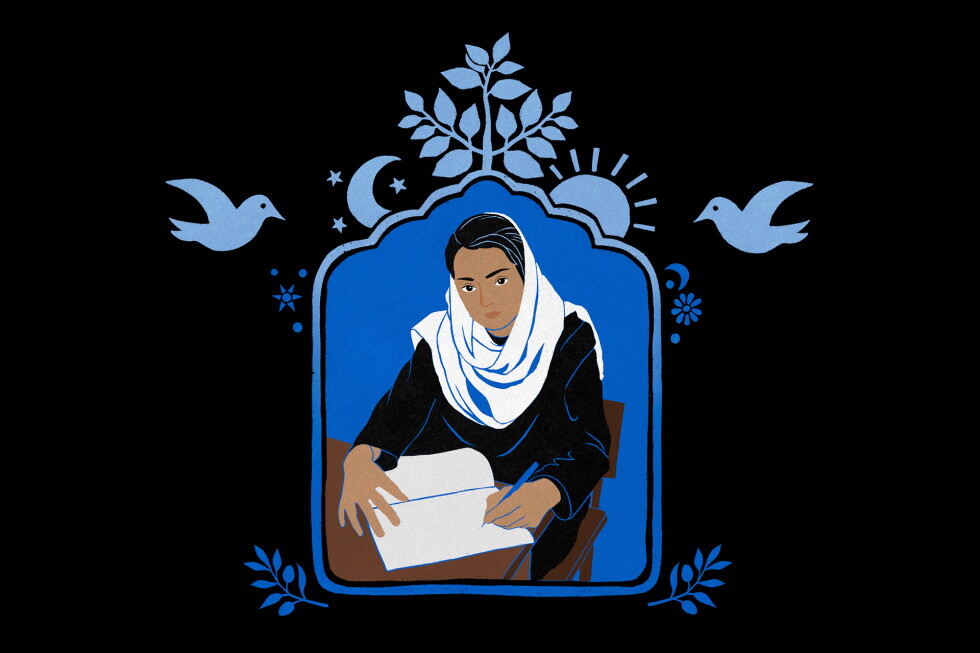
Five years have passed since the Taliban retook control of Afghanistan, and a shocking 2.4 million Afghan adolescent girls are still barred from accessing secondary education, the United Nations Educational, Scientific and Cultural Organization (UNESCO) confirmed in an announcement Tuesday from Ankara, Turkey. The UN agency has reiterated its urgent call for the immediate reversal of the ban that shuts women and girls out of formal education at the secondary and post-secondary levels.
As the only country globally with a formal, nationwide ban on secondary and higher education for female learners, Afghanistan’s policy represents a severe breach of basic human rights, according to Hoda Jaberian, UNESCO’s program coordinator for education in emergency contexts. Speaking via video link at a press briefing, Jaberian emphasized that a five-year exclusion from schooling is far more than a temporary disruption to a young person’s life: it effectively erases an entire secondary school cycle for millions of girls.
“UNESCO continues to call for the immediate and unconditional restoration of girls and women’s right to secondary and higher education. It is not negotiable. It’s a basic human right and we reiterate that there is no substitute for this,” Jaberian stated.
The Taliban first seized national power on August 15, 2021, coinciding with the full withdrawal of U.S. and NATO military forces after 20 years of conflict in the country. Within weeks of taking control, the group implemented a ban on girls’ attendance at secondary schools, and later expanded restrictions to bar women from higher education, most formal employment, and multiple other sectors of public life, effectively sidelining half of Afghanistan’s population from public society.
Despite repeated appeals from the United Nations, global humanitarian organizations, human rights defenders, and even multiple majority-Islamic nations, the Taliban government has refused to lift the ban, framing the policy as an internal Afghan matter that is not subject to international pressure.
Jaberian noted that the current restrictions have completely undone nearly two decades of incremental progress in expanding female access to education across Afghanistan. When the Taliban was first ousted from power in 2001, access to schooling for girls was extremely limited across most of the country. By 2021, just before the group’s return to power, nearly 1 million Afghan girls were enrolled in secondary education, marking major gains for gender equity in learning. Today, that progress has been almost entirely erased.
“But unfortunately, much of that progress now has been completely reversed,” Jaberian added.
In response to the formal ban, UNESCO has shifted to supporting alternative learning pathways for Afghan learners through community-based education programs, literacy classes, and vocational skills development initiatives. These programs operate out of informal community spaces—most often in the private homes of trained literacy facilitators—with the tacit approval of Taliban authorities. Currently, more than 1,000 local facilitators, most trained by UNESCO and its local partner organizations, run these community learning programs across the country.
“While the restriction remains, we cannot abandon Afghan learners,” Jaberian said. “UNESCO work with communities and our partners from the communities to preserve every possible pathway to learning.”