博客

  • Messi’s most iconic moments as he ponders retirement

    Messi’s most iconic moments as he ponders retirement

    Global football icon Lionel Messi is confronting an uncertain future in the sport he has dominated for nearly three decades, opening the door to potential retirement following the passing of his father and long-time support system, Jorge Messi.

    The 39-year-old Argentina captain, currently contracted to Major League Soccer side Inter Miami through 2028, shared his grief and uncertainty in an emotional public tribute to his late father. “I don’t know how to carry on,” Messi said. “I used to just play football, and now I’m really not sure if I’ll carry on doing it for much longer.” Across his 20-plus-year senior career, Messi has amassed a historic 921 goals across stints with Barcelona, Paris Saint-Germain, Inter Miami and the Argentina men’s national team, a tally that places him among the greatest players to ever step onto a pitch.

    As the football world waits for Messi’s final decision on his next steps, BBC Sport has recounted the most memorable, career-defining moments that turned a young Argentine prospect into a global sporting legend.

    Messi’s rise to household name status began in 2007, when 19-year-old him delivered a stunning performance in one of football’s most heated rivalries: El Clasico between Barcelona and Real Madrid. On March 10 that year, the teen scored all three of Barcelona’s goals to secure a 3-3 draw at Camp Nou, capped by a blistering last-minute finish that came after he dribbled past multiple Real Madrid defenders. This match remains widely cited as the moment that announced Messi’s arrival as a generational talent.

    Just over a month later, Messi scored what many analysts still call the best goal of his entire career, during a Copa del Rey semi-final first leg against Getafe on April 18, 2007. Starting the play with the ball in his own half, Messi wove past roughly five opposing defenders, rounded the onrushing goalkeeper, and slotted the ball into the empty net — a run of play that drew immediate comparisons to Diego Maradona’s iconic 1986 World Cup goal against England. Barcelona went on to win the match 5-2.

    Two years later, Messi silenced the doubters who claimed he could not perform against elite English opposition in the Champions League. Ahead of the 2009 Champions League final against Manchester United, the striker had failed to score in 10 previous European appearances against Premier League clubs. That narrative ended when he rose above United’s defense to head home a cross from Xavi, securing a win in the first Champions League final widely billed as a head-to-head between Messi and Cristiano Ronaldo. He would go on to score in another Champions League final victory over Manchester United two years later, claiming the third of his four Champions League titles.

    Messi’s knack for record-breaking and explosive multiple-goal displays first became clear in the 2010 Champions League quarter-finals, when he scored four goals in a 4-1 home win over Arsenal, marking the first time he hit that mark in his senior career. The pick of the four was a deft chip over Arsenal goalkeeper Manuel Almunia to complete his hat-trick. Two years later, he upped the ante with a five-goal haul in a 7-1 round of 16 win over Bayer Leverkusen. To date, Messi ranks second on the all-time Champions League scoring charts with 129 goals, trailing only Ronaldo.

    At just 24 years old, Messi became Barcelona’s all-time leading top scorer, breaking a 60-year-old record held by Cesar Rodriguez. In a 5-3 win over Granada on March 20, 2012, he equalled Rodriguez’s 232-goal record with his first strike of the game, broke the record with his second, and extended his new mark with a third. By the time he left Barcelona in 2021, he had pushed the club’s all-time scoring record to 672 goals — a mark 446 goals clear of the next closest player in the club’s history.

    The same year, Messi delivered a calendar-year scoring performance that earned him a place in the Guinness Book of World Records. By December 22, 2012, he had hit 91 goals across 69 matches for club and country: 79 for Barcelona and 12 for Argentina. That unprecedented haul earned him an unmatched fourth consecutive Ballon d’Or, cementing his status as the world’s best player.

    Two years later, Messi broke another long-standing Spanish record, becoming La Liga’s all-time top scorer with a hat-trick in a 5-1 win over Sevilla on November 22, 2014. He equalled Telmo Zarra’s 251-goal record (set in 1955) with a free kick, before breaking it and extending the mark with a third goal. He ended his La Liga career with 474 goals, 163 clear of Ronaldo’s 311 for Real Madrid.

    One of the most iconic moments of Messi’s El Clasico legacy came in April 2017, when he scored a last-minute winner against Real Madrid at the Santiago Bernabeu to secure a 3-2 Barcelona win. The goal marked his 500th for Barcelona, pushed Barcelona to the top of the La Liga table, and spawned one of the most famous celebrations in football history: Messi pulled off his Barcelona shirt and held it aloft for the home Real Madrid crowd to see.

    In 2021, one of football’s longest unbroken partnerships ended when financial restrictions tied to La Liga’s salary cap forced Barcelona to let Messi leave on a free transfer, after 21 years, 672 goals and 35 club trophies. A tearful Messi told reporters at his exit press conference: “My family and I were convinced we were going to stay here, at home. I don’t want to leave this club – it’s a club I love and this is a moment I didn’t expect.” After widespread speculation of a move to Manchester City, he signed with Paris Saint-Germain.

    The second act of Messi’s career brought the international success that completed his legacy. In July 2021, at 34 years old, he won his first senior international trophy when Argentina beat Brazil 1-0 in the Copa America final at Rio de Janeiro’s Maracana stadium. He was named player of the tournament after scoring four goals, and would go on to win a second Copa America three years later.

    Two years after that first international title, Messi claimed the trophy that had eluded him throughout his career: the FIFA World Cup. In what is widely called the greatest World Cup final in history, Argentina drew 3-3 with France before winning on penalties, with Messi scoring two goals and converting his spot kick in the shootout. He was named player of the tournament after scoring seven goals, becoming the first player to score in every knockout round of a World Cup. The victory closed the debate over his status as the greatest of all time, and is widely cited as the crowning moment of his career.

    Messi has extended his record for the most Ballon d’Or awards to eight, picking up two more after leaving Barcelona: one during his time at PSG and another after joining Inter Miami, with the 2023 award coming off the back of his World Cup triumph and a Leagues Cup title with MLS side. “I couldn’t imagine having the career I’ve had and everything I’ve achieved, the fortune I’ve had to be part of the best teams in history,” he said after winning his eighth award. “All of them are special for different reasons.”

    Most recently, at the 2026 World Cup, Messi added another entry to his World Cup goal record, pushing his all-time tally to 21 to become the tournament’s leading scorer before France’s Kylian Mbappe surpassed the mark in the bronze medal match against England. Though Argentina ended the tournament with a runner-up finish after losing to Spain in the final, Messi’s individual performance at 39 years old added another chapter to his legacy on the sport’s biggest stage.
  • Marc Anthony, Chayanne and more to play benefit concert for Venezuela and Colombia earthquake relief

    Marc Anthony, Chayanne and more to play benefit concert for Venezuela and Colombia earthquake relief

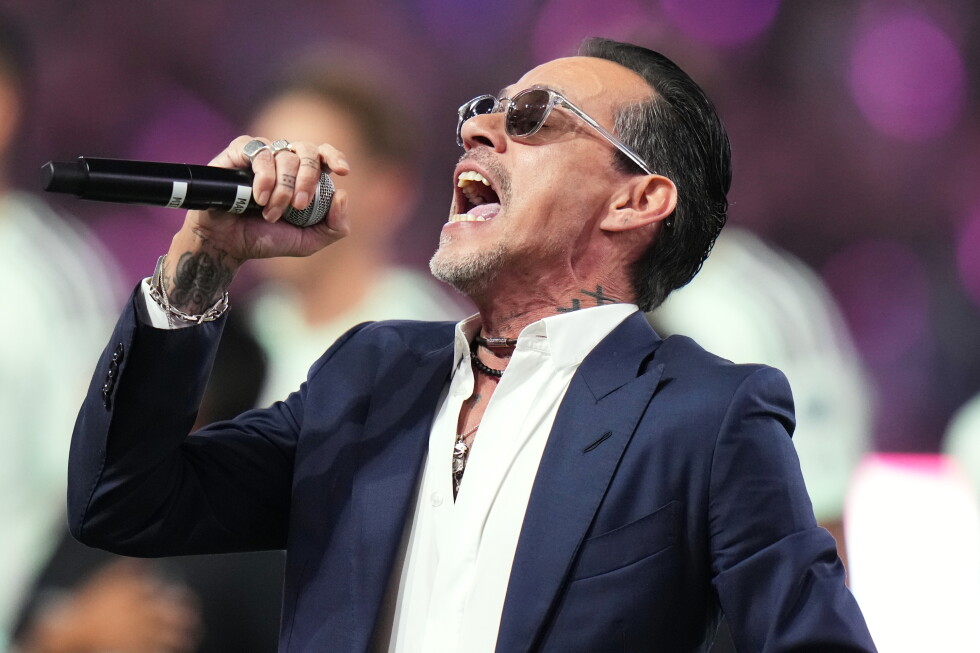
    A star-studded roster of Latin music’s biggest names will gather in Miami next month for a global benefit livestream aimed at lifting up communities shattered by back-to-back devastating earthquakes across Venezuela and Colombia. Scheduled for August 16 at the Kaseya Center, the “Unidos por Los Nuestros” (United for Our Own) concert will bring together performers spanning multiple genres and nationalities, with all proceeds directed to both immediate humanitarian relief and long-term recovery projects.

    What began as a relief effort focused solely on Venezuela expanded rapidly after a second major disaster struck neighboring Colombia in late July. The initiative was first launched in response to twin 7.2 and 7.5 magnitude earthquakes that hit northern Venezuela just 39 seconds apart on June 24, which killed at least 6,300 people. Just six weeks later, a 7.4-magnitude quake rocked western Colombia, leaving at least 181 people dead, more than 2,500 injured, and widespread destruction across hard-hit regions including the iconic salsa hub Cali. Organizers quickly moved to add Colombian survivors to the concert’s beneficiary list, uniting two affected nations under a single fundraising mission.

    All funds raised through ticket sales and online donations will support a range of recovery priorities, from rebuilding destroyed homes and repairing damaged schools and community gathering spaces to providing dedicated support for children and access to critical mental health services. Five respected international nonprofits — All Hands and Hearts, CARE, Global Empowerment Mission, Techo, and World Central Kitchen — will manage on-the-ground implementation of the programs. Marc Anthony, the multi-Grammy Award-winning artist whose Maestro Cares Foundation co-administers the concert funds alongside the Univision Foundation, emphasized that collective action to support people facing crisis is a shared global responsibility. Anthony, who previously led fundraising efforts after Hurricane Maria devastated Puerto Rico in 2017, noted, “The need is immense.”

    For Venezuela, the benefit concert arrives at a critical juncture, as global public and media attention has already started to fade from a humanitarian crisis that experts warn will last for years. Rodner Figueroa, co-founder and vice president of the I Love Venezuela Foundation, a partner of Global Empowerment Mission, explained that sustaining awareness and funding remains the biggest ongoing challenge. “The need in Venezuela continues to be at a scale that is unbelievable,” Figueroa said, adding that six weeks after the quakes, tens of thousands of displaced survivors still lack adequate housing, clean drinking water, sanitation infrastructure, and ongoing medical care, with many searching for missing loved ones without any official government support.

    The concert lineup features dozens of prominent artists drawn from across Latin America, including Marc Anthony, Luis Fonsi, Chayanne, Feid, Jay Wheeler, Piso 21, Gente de Zona, Elena Rose, Gilberto Santa Rosa, Ricardo Montaner, Mau y Ricky, and Olga Tañón. The roster spans iconic salsa, reggaeton, and pop acts, with performers hailing from Venezuela, Colombia, Argentina, Cuba, and Puerto Rico. Medellín-born urbano artist Feid, who committed to the fundraiser before the Colombian earthquake struck, has already mobilized his more than 14 million Instagram followers to back relief efforts for his home country. A host of prominent Latin television personalities, journalists, and public figures will co-host the event, including legendary “Sábado Gigante” host Don Francisco and former Miss Universe Dayanara Torres.

    The 6 p.m. ET show will be broadcast live globally across multiple platforms, including Univision, ViX, WAPA, TelevisaUnivision radio stations, iHeartLatino, and Venevision Play for audiences in Venezuela. Viewers can make direct donations during the broadcast by scanning an on-screen QR code, texting the code UNIDOS to 707070, or visiting the official Univision donation website.

    “Unidos por Los Nuestros” is not the only major benefit event planned for earthquake recovery. A separate high-profile benefit concert led by renowned Venezuelan conductor Gustavo Dudamel is scheduled for August 23 at the Hollywood Bowl in Los Angeles, marking Dudamel’s final performance with the Los Angeles Philharmonic before he takes up leadership of the New York Philharmonic. That event, titled “A Concert for Venezuela,” will feature guest artists including Beck, Natalia Lafourcade, and Carlos Vives, with proceeds going to recovery funds managed by the United Nations Development Programme and the CAF Development Bank of Latin America and the Caribbean. Additional independent relief efforts have already launched across the global music community: Venezuelan band Rawayana founded Fundación El After to support affected young people shortly after the Venezuela quake, Colombian superstars including Shakira, Karol G, Ryan Castro, and J. Balvin mobilized massive social media support for Colombian relief immediately after their country’s quake, and Metallica’s charitable foundation donated $100,000 to Venezuelan relief efforts through humanitarian organization Direct Relief.

  • Trump says White House press secretary Karoline Leavitt to leave post

    Trump says White House press secretary Karoline Leavitt to leave post

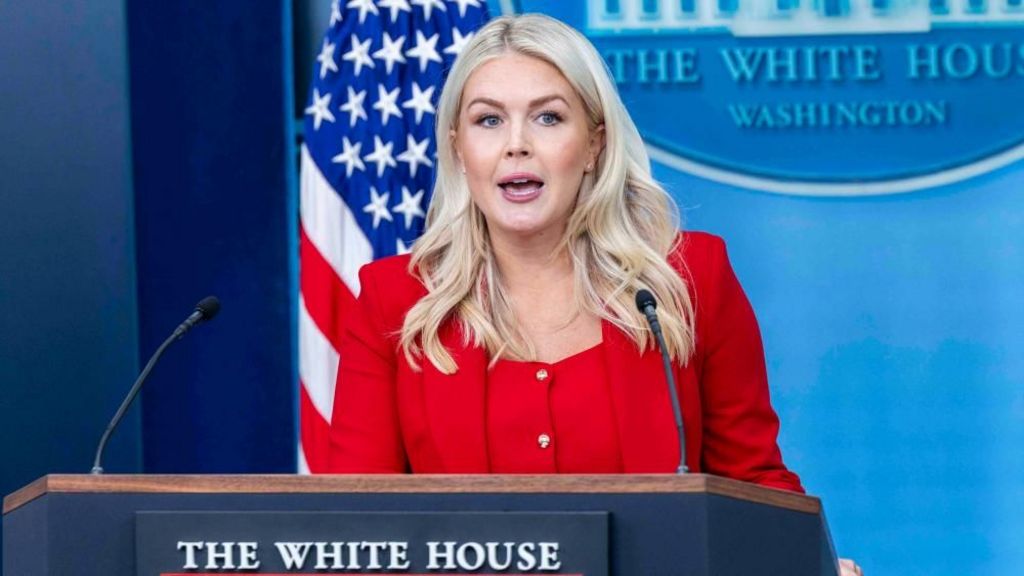
    In a surprise announcement shared via social media, former and current U.S. President Donald Trump has confirmed that White House Press Secretary Karoline Leavitt will leave her administration post at the end of this month, ending a tenure that made history as the youngest person to ever hold the high-profile communications role.
    Leavitt, 28, who welcomed her second child, a daughter, back in May and just returned to work from maternity leave last month, made the decision to step down to prioritize raising her two young children alongside her husband Nicholas Riccio. Trump described Leavitt as one of his most trusted long-term aides, noting he fully understands and respects her choice to shift focus to family life. Following her departure from the White House communications team, Leavitt will take on a new position as one of Trump’s top outside advisors, and will remain an influential voice within the national Republican Party, the president added.
    In a public post on X shared after Trump’s announcement, Leavitt called her time as White House Press Secretary “the honor and adventure of a lifetime.” She acknowledged that balancing the demands of one of the most high-pressure roles in U.S. politics with new motherhood has been a rewarding but extremely challenging chapter of her life. “Since returning to the White House after the birth of my daughter, I have felt in my heart that I cannot be the best mom my two young children deserve while devoting the constant time, energy, and attention required of the White House Press Secretary,” she wrote, framing her departure as a bittersweet but necessary choice to start a new life chapter.
    Leavitt’s professional history has long been tied to Trump and the Republican Party. She got her start in Trump’s first presidential term, working first as an assistant press secretary and speechwriter before moving on to serve as communications director for top House Republican Elise Stefanik of New York. In 2022, she ran for a congressional seat in New Hampshire, winning a competitive Republican primary but ultimately falling to incumbent Democratic Congressman Chris Pappas in the general election. After her unsuccessful congressional bid, Leavitt took on a role as a spokesperson for MAGA Inc., a prominent pro-Trump fundraising organization, before stepping in as national press secretary for Trump’s successful 2024 presidential campaign. She assumed the role of White House Press Secretary one year ago, making history as the youngest person to ever hold the position.
    As of the announcement, no candidate has been publicly named to replace Leavitt as White House Press Secretary, and the administration has not yet shared a timeline for naming her successor.

  • ‘This isn’t the Britain I grew up in’: The elderly activists raided by police over Palestine Action videos

    ‘This isn’t the Britain I grew up in’: The elderly activists raided by police over Palestine Action videos

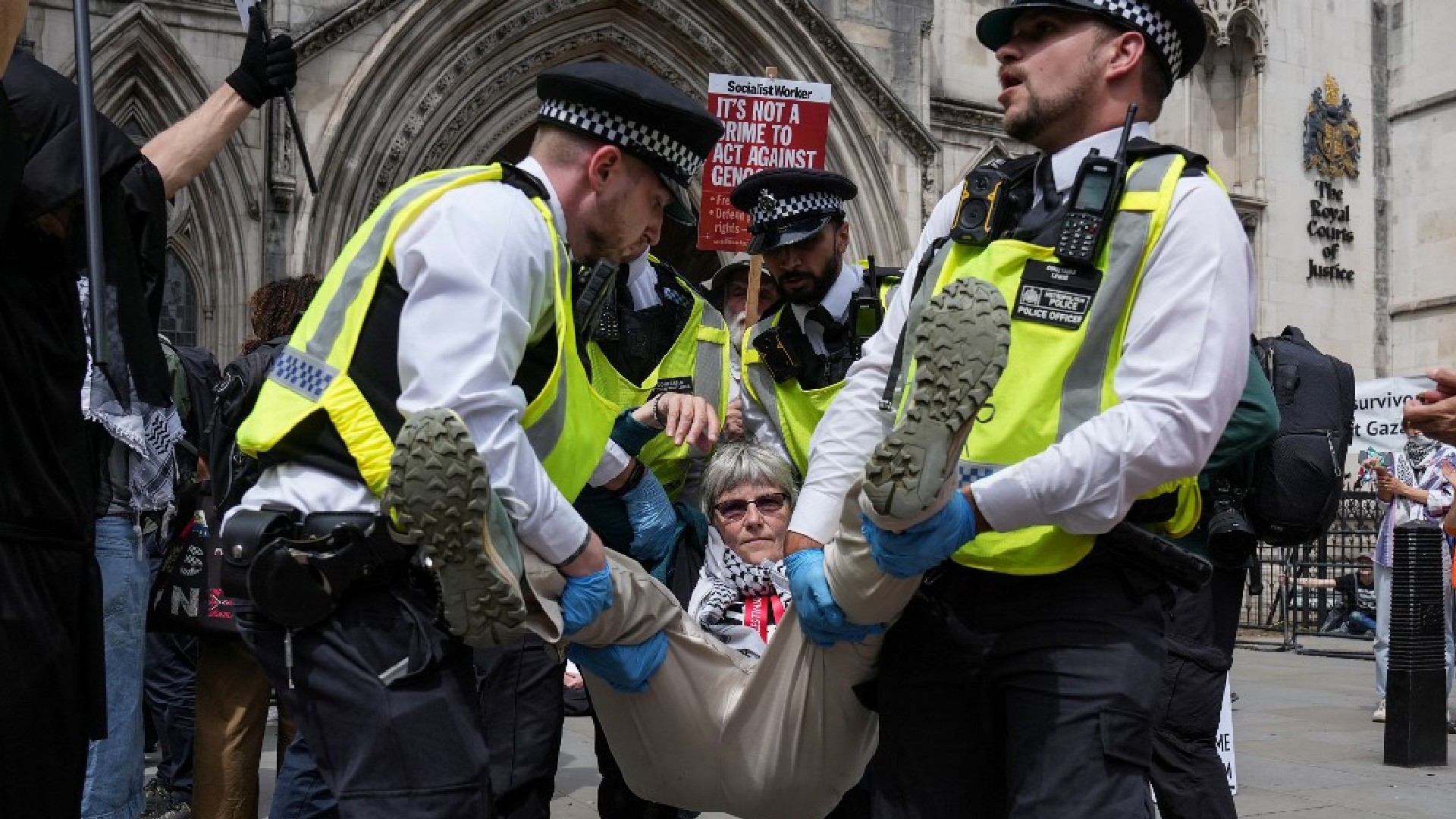
    For 70-year-old grandmother Marji Mansfield, every pre-dawn hour between 5 and 7 a.m. brings a wave of crippling fear. Like dozens of other pro-Palestine activists across the United Kingdom, she waits for the knock that British counterterrorism police could leave on her door at any moment, a routine dawn raid that has already upended the lives of nearly 20 peers, many of them elderly.

    “It’s been really, really quite scary not knowing when there’s going to be the knock at the door,” Mansfield told independent outlet Middle East Eye in an interview. “This isn’t the Britain that I thought I grew up in at all. We’ve been scared enough to go and sleep elsewhere.” That anxiety spikes whenever her seven grandchildren stay overnight, turning the usually quiet early morning hours into a period of relentless dread.

    Mansfield’s ordeal is rooted in a crackdown on Palestine Action, a direct action advocacy group that the UK government formally banned as a proscribed terrorist organization in July 2025. In the months following the proscription, more than 3,000 people have been arrested under the UK Terrorism Act simply for participating in silent vigils held in solidarity with the group. In June of that same year, the Court of Appeal upheld the legality of the ban, overturning an earlier High Court ruling that had questioned the proscription.

    Following that ruling, Defend Our Juries (DOJ), the grassroots organization leading the campaign to reverse the ban, called for an escalation of peaceful protest action. The new action encouraged activists to explicitly invite others to support Palestine Action, rather than only voicing personal backing for the group. Under Section 12 of the UK Terrorism Act, this act of invitation can carry a maximum 14-year prison sentence, a far harsher penalty than the Section 13 charge most prior arrestees have faced.

    Mansfield was one of roughly 100 activists who answered DOJ’s call, uploading a public video to social media that declared: “Saving lives is not terrorism, I support Palestine Action, and I think you should too.” In the weeks since, 19 of those video uploaders have already been targeted by counterterrorism dawn raids spanning the entire country, from London and the West Midlands to Wales, Scotland, Cornwall and Somerset. Many of those raided are retired seniors.

    Activists who have endured the raids describe invasive searches that go far beyond legitimate counterterrorism work. Officers confiscate all personal digital devices, any items bearing Palestinian symbols, and even rifled through private personal diaries. Two activists were handcuffed during their raids, despite official police policy that only permits restraints when officers have objective reason to believe a suspect will attempt escape or cause harm to themselves or others.

    For those who have not yet been raided, like Mansfield, the uncertainty of waiting has devastated daily life. Many report persistent insomnia, and activists with ill partners say they avoid leaving their homes out of fear police will raid while they are away. “It really impacts people’s lives. It causes great fear and anxiety,” Mansfield said. Middle East Eye requested comment from UK Counter Terrorism Police ahead of publication, but received no response.

    One of those who experienced a raid firsthand is 53-year-old Asghar Ahmad, a former UK government IT worker from Telford, Shropshire. On a late July morning just after 7:30 a.m., he opened his front door to find roughly a dozen officers, one police van, and four police cars parked outside his home.

    “I wasn’t challenging anything because I knew what they were going to do. They were going to go through the whole house,” Ahmad recalled. When he asked to put on clothes beyond the shorts he was wearing, an officer followed him upstairs and stayed with him the entire time before he was handcuffed and transported to the local police station. While he was in custody, remaining officers searched every room of his home, seizing all digital devices, old notebooks, and every item connected to Palestine, from flags to wristbands. He was interviewed with his solicitor present and released by 5 p.m. without any charges filed.

    Now retired and doing community volunteer work, Ahmad said he spent 38 years focused on his career and building his family, and only felt free to speak out on political issues once he left government service. “I’ve got nothing to hide,” he said. “If they want to put pensioners in prison, it will not go down well.”

    Sixty-four-year-old Paul Gravesbrown, a semi-retired archaeologist living in Powys, described a similarly invasive experience that left him deeply disturbed. Some 20 officers searched his home for six and a half hours, even going through his wife’s teenage diary, leaving it out on top of her belongings to make clear they had read its private contents. “They left the diary on the top, highlighting the fact that they’ve been looking through a teenage girl’s diary, which is a bit creepy,” he said.

    Gravesbrown was held for eight hours at a local police station and released without charge. The trauma of the raid has lingered, he said, echoing the violation people feel after a home burglary — an experience he and his wife already endured just before the COVID-19 lockdown. “Being raided is quite traumatic, it’s one of those things which hangs around in your mind,” he said. “Our house was burgled just before the first lockdown, so it’s a similar sort of experience – total strangers wandering around your house.”

    Even younger activists face deep lasting harm from the crackdown. Thirty-year-old Staffordshire bartender Allie, who spoke to MEE under a pseudonym for privacy, was arrested shortly after returning home from a late work shift. She was woken at 1 a.m. by loud banging on her front door. “I opened the door and I think the first thing I said was, ‘Oh my God, you actually came,’” she recalled.

    Both Allie and Ahmad said officers demanded their device passcodes to unlock their personal electronics, a request that requires formal written notice under Section 49 of the UK Investigatory Powers Act. As she was handcuffed, Allie remarked that the response was excessive for her alleged offense, and officers asked her to sign a formal statement noting her comment. She was held for eight to nine hours at a Birmingham-area police station before being released without charges.

    For Allie, the harm of the raid extends far beyond the day of arrest. “I think the worst thing for me is that it really shatters any sense of personal safety,” she said. “You go through life with a belief in the systems that are there to protect you. This is such a heinous overreach and abuse of those systems. I don’t think that I’ll ever be able to fully reconcile myself with it. It’s like having to reconstruct a new reality.”

  • Under strain, Australia’s world-leading disability support faces major restructure

    Under strain, Australia’s world-leading disability support faces major restructure

    Eight goals in a single season, a spot on the Panthers hockey team, and an unshakable love for the sport: for 13-year-old Western Australian Year 8 student Annabelle Shaw, hockey is more than just a hobby—it is a gateway to independent, community-embedded life. Annabelle, who has Down Syndrome, has built that life thanks to funding from Australia’s National Disability Insurance Scheme (NDIS), a landmark social program that has transformed disability support across the country. But now, proposed federal government cuts to rein in the scheme’s ballooning budget could force her to give up the sport she loves.

    Annabelle’s story is far from unique. She is one of more than 700,000 Australians relying on NDIS funding, a figure that has already far outpaced initial projections when the scheme launched under the Gillard government in 2012. Designed as a revolutionary alternative to Australia’s patchwork, underfunded pre-NDIS disability support system, the program was built around a core principle: putting disabled people and their families in control of their own care by providing individualised funding that they could allocate to their own needs. The goal was simple: to boost independence and improve quality of life for people living with severe, permanent disabilities.

    When the NDIS was first rolled out, planners projected it would reach 475,000 participants and cost around $22 billion annually by 2020. This financial year, the scheme is set to hit $54 billion in spending serving 700,000 participants, with growth projected to continue. To address this unsustainable trajectory, the federal government introduced amendments earlier this year that would implement tighter budget controls, stricter compliance rules, revised assessment processes, and cuts to funding for social participation—slashes that could reach 50 percent for some participants.

    The NDIS Amendment Bill passed the House of Representatives in early July, but has since been delayed by an extended Senate inquiry, with the inquiry’s final report due August 14 and a final Senate vote expected shortly after. As the legislation nears a final vote, disabled participants, their families, and experts are sounding the alarm over the far-reaching harm the cuts could cause.

    For Annabelle specifically, NDIS funding covers the cost of a dedicated support worker who accompanies her to hockey training, where up to 50 girls often train at once. Her mother, Gillian Croft, explains that the on-field support is critical: Annabelle can struggle to keep up with fast-paced instructions and disengage when she can’t follow what’s being asked of her. Without the support worker paid for through NDIS social participation funding, she would have to step away from the team.

    Croft adds that the benefits of Annabelle’s participation in mainstream hockey stretch far beyond the pitch. Years of training and playing alongside her peers builds the independence and social skills she will need to join the workforce after graduation—an outcome that will ultimately reduce long-term costs for the government, not increase them. “This is independence training for her,” Croft says.

    Debate over the reforms has split experts and advocates, even as many acknowledge the need for changes to secure the scheme’s long-term future. Hannah Orban, senior associate at the Grattan Institute and co-author of a report on NDIS sustainability, agrees that rapid, unregulated growth has left the program on an unsustainable path, and that thoughtful reforms are needed to ensure it survives for future generations. But even Orban argues that cutting core social participation funding runs counter to the NDIS’s core mission. “It is a core goal of the NDIS to help people with disability participate in society and their communities,” she says. “So it really doesn’t make sense to be attacking this part of the scheme.”

    Bill Shorten, who was instrumental in designing and launching the NDIS as a junior Labor minister, and now serves as Minister for the NDIS, acknowledges that structural issues have driven the scheme’s rapid growth. After the NDIS launched, other mainstream systems—including hospitals, schools, and community health services—pulled back on disability support, leaving the NDIS to cover gaps it was never intended to fill. He also admits that some unethical providers have gamed the scheme: the NDIS’s integrity commissioner estimates that $3.7 billion in funding was distributed inappropriately in 2025 through a combination of fraud and misuse. But Orban notes that cracking down on fraud would generate only a tiny fraction of the savings the government is targeting through its broader reforms.

    Critics of the cuts argue the proposed changes miss the mark entirely on the value the NDIS generates for the Australian economy. Darryl Steff, CEO of Down Syndrome Australia, points out that every dollar spent on the NDIS generates more than two dollars in activity for the broader national economy, through direct job creation in the disability and health sectors and increased economic participation by disabled people.

    Disability advocate Hannah Diviney, an actor and author with cerebral palsy, told a parliamentary inquiry in June that the proposed cuts show a fundamental misunderstanding of disabled people’s daily lives. For Diviney, NDIS funding covers the support she needs to leave her home, build her career, and participate in community life—opportunities non-disabled people take for granted. “Freedom, ambition, career, a social life—all of the things other people in this room take as a given, or as a right—has a price tag for someone like me,” she said. “This amendment is reckless, ill thought-out and entirely devoid of any shred of understanding of what living a disabled life is actually like.”

    As the Senate prepares to vote on the changes, Annabelle and thousands of other disabled Australians are waiting to see if their access to the community life the NDIS promised will remain within reach.

  • US immigration officers to be equipped with gloves that deliver electric shocks

    US immigration officers to be equipped with gloves that deliver electric shocks

    U.S. Immigration and Customs Enforcement (ICE) is moving forward with a plan to acquire specialized electric shock gloves for frontline personnel, a procurement that has triggered sharp criticism from civil rights advocates over concerns about increased use of force and reduced accountability. According to a public notice filed by the Department of Homeland Security (DHS) earlier this week, the agency is prepared to spend up to $20 million to procure the Generated Low Output Voltage Emitter, more commonly known as the GLOVE device, produced by private manufacturer Compliant Technologies LLC.

    Each glove is capable of delivering a maximum electric shock of 380 volts — around three times the voltage carried by a standard residential power outlet in the U.S. The device is activated via a simple push-button trigger that can deliver up to 30 electric pulses per second, and includes an integrated microchip that logs every time the glove is activated. Manufacturer documentation confirms the device requires direct or near-direct contact with a subject’s skin to operate, though it remains functional through thin layers of clothing when wet.

    In its official guidance for the product, Compliant Technologies explicitly recommends against using the GLOVE on vulnerable groups including the elderly, young children, pregnant people, and individuals with severe disabilities. The manual also requires that a second officer be present to assist with restraining a subject during device use, mandates that all users complete formal training and recertification every two years, and emphasizes that the device is designed only to supplement, not replace, existing law enforcement weapons and tactical tools.

    DHS officials confirmed in a statement that the shock gloves will be distributed to two core ICE divisions: Homeland Security Investigations (HSI), which focuses on disrupting transnational criminal networks, and Enforcement and Removal Operations (ERO), the unit responsible for arresting, detaining, and deporting individuals found to be in violation of U.S. immigration law. While a small number of other domestic law enforcement agencies have already adopted the GLOVE device, industry observers note that ICE’s planned procurement would be the single largest order the manufacturer has received to date. A no-bid contract for the purchase could be finalized and published as early as this Friday, per DHS timelines. Compliant Technologies has declined to comment on the pending sale when contacted by media outlets.

    In a statement defending the procurement, DHS emphasized that ICE regularly evaluates the operational needs of frontline officers to ensure personnel have access to the tools required to safely carry out enforcement actions against unauthorized immigrants with criminal histories. All new technologies adopted by the agency, the statement added, undergo rigorous review to ensure compliance with all existing law enforcement policies and national use-of-force standards.

    But civil rights organizations, including the American Civil Liberties Union (ACLU), have raised urgent alarms over the new equipment, arguing that it expands ICE’s already controversial use of force at a time when the agency is facing intense scrutiny over a series of fatal incidents during immigration operations. Recent high-profile deaths include the fatal shooting of Mexican national Lorenzo Salgado Araujo during a Texas enforcement action, and the killing of Colombian national Johan Sebastián Durán Guerrero in Maine during a separate operation. ICE has also faced ongoing pressure to meet aggressive daily arrest targets set as part of the Trump administration’s broader immigration deportation agenda.

    Jenn Rolnick Borchetta, deputy director for policing policy at the ACLU, warned that the small, concealable design of the gloves creates a dangerous lack of transparency. By allowing officers to deliver painful electric shocks via a discrete handheld trigger that can go unseen by bystanders or observers, Borchetta argued the device creates conditions for increased harm to both citizens and noncitizens, while eroding mechanisms to hold officers accountable for excessive force. “Giving immigration agents a concealed means of delivering terrible pain is a recipe for more harm to the public and less accountability,” she said.

  • Chawinga sisters fire Malawi into Wafcon final

    Chawinga sisters fire Malawi into Wafcon final

    The 2026 Women’s Africa Cup of Nations (Wafcon) has produced one of the most remarkable underdog stories in recent women’s football history, as tournament debutants Malawi, ranked 153rd in the world and the lowest-ranked side at the Moroccan-hosted event, booked their spot in the competition’s final with a dramatic 3-1 semi-final win over Algeria in Rabat. Spearheaded by the in-form Chawinga sisters, who combined for three of the Scorchers’ three goals on the day, Malawi has added Algeria to an already impressive list of fallen heavyweights, having knocked out regional powerhouses Nigeria and Ghana in earlier rounds of the expanded 16-team tournament.

    The match was anything but a calm, one-sided affair, despite the final scoreline. A frantic, end-to-end 90 minutes was defined by two first-half red cards, both issued after extended Video Assistant Referee (VAR) reviews, and a string of clear goal-scoring chances squandered by both sides. Algeria defender Morgane Belkhiter was the first player sent off, after being judged to have denied Malawi captain Tabitha Chawinga a clear goal-scoring opportunity midway through the first half. While the call was considered harsh by many observers, with a fellow Algerian defender getting a touch on the ball during the overlapping challenge, replays confirmed Belkhiter had caught Chawinga on the back of the heel.

    Undeterred by the chaotic buildup of play, the OL Lyonnes striker broke the deadlock in the 33rd minute with what will go down as one of the most iconic goals in Wafcon history. With her back to goal inside the 18-yard box, Tabitha Chawinga twisted to meet a headed clearance from Asimenye Simwaka – a dual-sport athlete who competed in 200m and 400m semi-finals at the Commonwealth Games in Glasgow just two weeks prior – and executed an acrobatic left-footed overhead kick. The effort beat Algeria goalkeeper Chloe N’Gazi but cannoned off the crossbar, with heavy backspin carrying the bouncing ball over the goal line before any player could react, putting the debutants 1-0 up.

    Tabitha’s younger sister Temwa Chawinga, who plays for NWSL side Kansas City Current, doubled Malawi’s lead in the first minute of first-half stoppage time, rounding N’Gazi before slotting home to take advantage of the numerical disadvantage Algeria was now playing under. But the 10-player balance was restored before halftime, when Malawi midfielder Rose Kadzere was also sent off after a VAR check for a reckless studs-up challenge on Algeria’s Marine Dafeur inside the penalty area, opening the door for a North African comeback in the second half.

    Even with both sides down to 10 players, the frantic pace continued into the second period, with both teams wasting clear chances to add to the scoreline early on. Algeria finally capitalized on the extra space in the 60th minute, when Ikram Adjabi volleyed home a misplayed deep free-kick to cut the deficit to 2-1, giving Les Fennecs fresh hope of a late turnaround. But as both sides began to tire amid the intense pace of the match, Tabitha Chawinga put the result beyond doubt, driving unchallenged into the penalty area before slotting home her second of the game from just outside the six-yard box to seal the 3-1 win.

    Malawi’s run to the Wafcon final is already historic: excluding the inaugural 1998 edition, the Scorchers are the first debutant side to ever reach the tournament’s final match. They have already secured qualification for the 2027 FIFA Women’s World Cup in Brazil courtesy of their semi-final spot, and now stand one win away from lifting the trophy as the tournament’s unlikeliest champions. Their historic success is already shifting perceptions of women’s football on the continent, proving that the sport’s growth extends far beyond the traditional African powerhouses.

    Much of Malawi’s stunning run has been fueled by the Chawinga sisters, who have lived up to massive pre-tournament hype. Tabitha helped OL Lyonnes claim another French top-flight title last season, while Temwa earned her second NWSL golden boot and MVP award with Kansas City Current. Between them, the pair have scored eight of Malawi’s 12 total goals at the tournament – five for Temwa and three for Tabitha – combining blistering pace, raw power and elite positional awareness that opposition defenses have been completely unable to handle. Now, the Scorchers will face the winner of the second semi-final between hosts Morocco and Cameroon in Sunday’s final (19:00 GMT), and with the Chawinga sisters in red-hot form, few would count the unfancied debutants out against any opponent.

  • Exclusive: UK to announce raft of new policies on Israel including settlement goods ban

    Exclusive: UK to announce raft of new policies on Israel including settlement goods ban

    When Andy Burnham took office as United Kingdom Prime Minister, political observers immediately anticipated a shift in the nation’s approach to Middle East foreign policy. For weeks, that shift has only been visible in subtle shifts in ministerial rhetoric, with no concrete policy changes laid out for the public. That veil of secrecy is set to lift, however, when UK Parliament returns from its summer recess, multiple senior sources across Whitehall and British civil society have confirmed to independent outlet Middle East Eye.

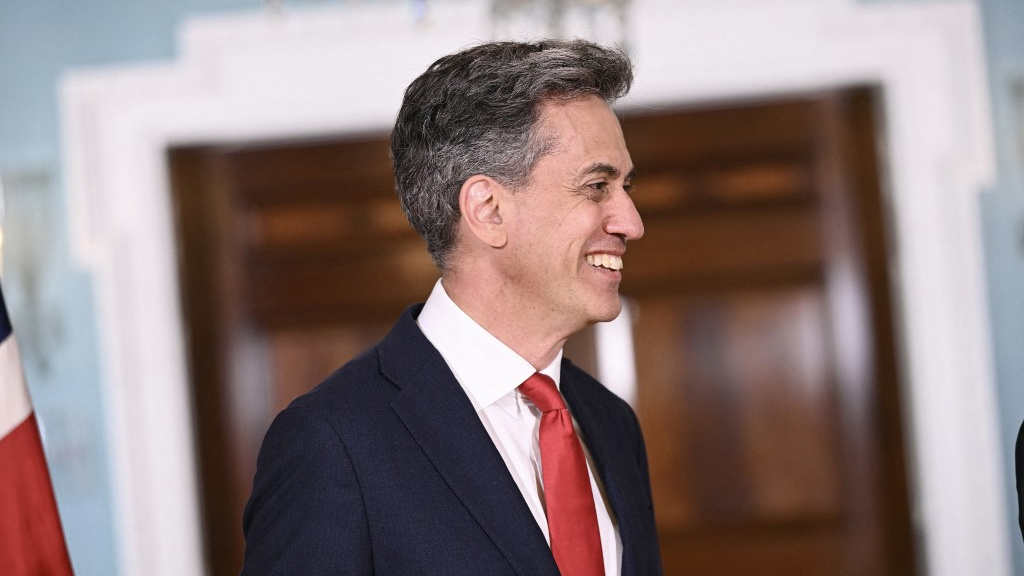
    At the top of the slate of proposed policy changes is a long-debated ban on goods imported from illegal Israeli settlements in the occupied Palestinian territories. According to reporting from MEE, Foreign Secretary Ed Miliband has emerged as a leading advocate for stricter measures against settlements, holding ongoing consultations with a broad cross-section of civil society organizations to refine the proposal. Senior Foreign Office discussions are currently weighing whether to extend the measures to include legal penalties for UK companies and organizations that maintain business or operational ties to settlements in the occupied territories.

    The push for new regulations comes as the Charity Commission, the UK’s independent charity regulator, is already investigating multiple British charities accused of funneling funds to Israeli settlements. Former Prime Minister Keir Starmer stated publicly in June that no UK charity should provide support to settlements, but he refused to commit the government to an official ban on charitable donations to the entities. The Burnham administration, by contrast, is actively exploring a full ban on such donations, insiders confirm.

    Beyond trade and charity regulations, the Foreign Office is also evaluating new targeted sanctions against individuals and organizations tied to the aggressive Israeli settler movement in the occupied West Bank. The UK previously imposed sanctions on far-right Israeli cabinet ministers Itamar Ben Gvir and Bezalel Smotrich last year, and internal discussions are now centered on expanding that sanctions list to include additional Israeli political figures.

    Another high-stakes policy under review is the UK’s controversial arms sales regime to Israel. In September 2024, shortly after taking office, the Starmer government suspended approximately 30 direct export licenses for UK-made military hardware, after an official assessment found a “clear risk” the equipment could be used in Gaza to commit serious violations of international humanitarian law. That suspension included direct exports of UK-manufactured components for F-35 fighter jets, but the Starmer administration carved out a critical exemption for components sent to the global F-35 spare parts pool, even though those parts can ultimately end up in Israeli aircraft. UK-made components account for 15% of every F-35, a advanced fighter jet Israel has deployed heavily throughout its military campaign in Gaza, as well as in strikes on Lebanon and Iran.

    The Starmer government defended the exemption, arguing that a full unilateral halt on UK component exports would disrupt the entire global F-35 fleet and threaten broader international security. Starmer also approved $169 million in new military exports to Israel during his tenure, including more than 8,600 separate munitions shipments categorized as “bombs, grenades, torpedoes, mines, missiles and other similar munitions.” Senior sources confirm that a full ban on these military exports is now active under discussion within the Burnham government, though no final decision has been reached.

    In a statement provided to Middle East Eye on Wednesday, a Foreign Office spokesperson reaffirmed the UK’s long-standing legal position: “Settlements are illegal under international law, undermine the viability of a two-state solution and fuel insecurity for both Palestinians and Israelis. We have given clear advice to UK businesses that they should not engage in economic activity in illegal settlements and warn them of the reputational and potentially legal consequences of any such activities.”

    Months before he assumed the premiership in July, Burnham set the stage for this policy shift by issuing a public apology for the Starmer-led Labour Party’s early support for Israel’s military campaign in Gaza and its refusal to back an immediate ceasefire in 2023 and early 2024. Since taking office, he has faced mounting pressure from Labour Party backbenchers to follow through on campaign-adjacent promises by banning trade with illegal settlements and adopting a firmer stance on Middle East issues.

    MEE first reported in November last year that senior Foreign Office ministers had already privately concluded a ban on settlement goods was a desirable policy. Initial discussions on how to implement such a ban actually began in the final months of Starmer’s premiership, and in early July, then-Middle East Minister Hamish Falconer publicly confirmed that UK officials were working through the technical challenges of implementing a ban and coordinating with European Union allies on the issue. Several EU member states, including the Netherlands and Spain, have already implemented their own national bans on settlement goods, with Ireland currently in the process of rolling out its own restrictions.

    Insiders note that Burnham has intentionally prioritized rolling out domestic policy initiatives during his first weeks in Downing Street, but last month he publicly confirmed his government is evaluating “further measures to deter unacceptable violence” in the occupied West Bank.

    The push for new restrictions has faced pushback from within the Labour Party itself. Labour Friends of Israel (LFI), a prominent pro-Israel parliamentary lobby group that counts more than 70 sitting MPs as members, published a report earlier this month that pushed back against a full ban, arguing that some illegal settlement activity is justified and urging the government to abandon the proposal. The LFI report claimed a full trade boycott of all settlements is “practically and politically impossible” and would harm all Israeli businesses operating in major settlement blocs, as well as areas of East Jerusalem and the Old City.

    This position stands in stark contrast to the Labour Party’s own stance when it was in opposition. Back in June 2020, then-shadow Foreign Secretary Lisa Nandy publicly called for a ban on settlement goods imports, saying the move required “courage that so far ministers have not been willing to show.” The pressure for action also reflects overwhelming grassroots support within the party: polling conducted earlier this year found that 87% of rank-and-file Labour members support a ban on trade with Israeli settlements, with only 6% opposing the measure.

  • England scraps midnight curfew on men’s cricket team under new captain Joe Root

    England scraps midnight curfew on men’s cricket team under new captain Joe Root

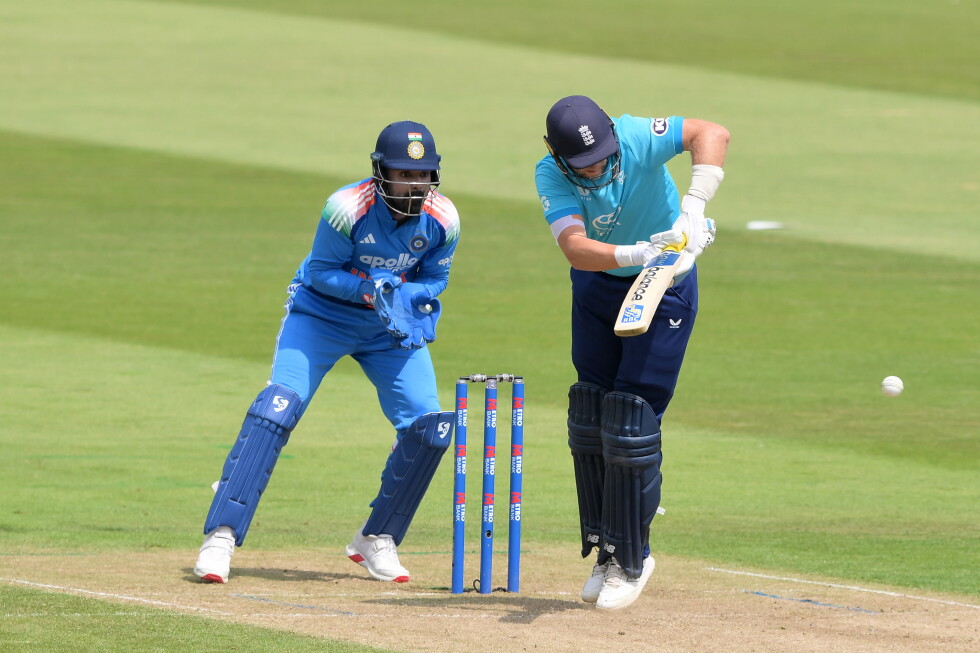
    LONDON — In a striking shift of team culture following a series of off-field controversies that reshaped English test cricket leadership, newly reinstated men’s test captain Joe Root has abolished the strict midnight curfew that was brought in just months prior.

    The hardline curfew was first introduced by England Cricket managing director Rob Key after a string of disruptive late-night incidents during the national side’s winter tours of New Zealand and Australia. The rule ultimately led to major upheaval in the team’s hierarchy: former test captain Ben Stokes was found breaking the curfew after a June match against New Zealand, triggering his temporary suspension and a shock early retirement from the longest format of the sport. This sudden departure opened the door for Root to return for a second tenure as England’s test skipper.

    As English cricket prepares to launch its new era under Root next week, kicking off with a three-match test series against Pakistan, Root laid out his philosophical approach to team management in an interview with the Sky Sports Cricket Podcast. “There’s not going to be a curfew,” Root confirmed. “I don’t think this needs to be a big deal, to be honest. My view on curfews is I don’t think they work, and if you want guys to take responsibility on the field they’ve got to be able to feel they can be grown adults off it and make good strong decisions off it.”

    Root emphasized that individual and collective accountability, rather than top-down restrictive rules, will form the foundation of his leadership. “That’s for us as a team to manage well, and self-police well, for me and head coach Stephen Fleming to manage well in many ways,” he explained. “But ultimately you’re grown adults, you know what it takes to play for England, you know what your responsibilities are off the field and we need to make sure we don’t find ourselves with any little situations off the field.”

    The returning captain outlined his vision for a balanced team culture that allows for relaxation while maintaining professional standards. Root said he wants the squad to “create a good strong culture when you know when the right time is to celebrate and enjoy a win or to have a sensible beer or whatever, but remember you’re playing for England.”

    The upcoming home series against Pakistan will serve as the first real test of this new self-governance model, with cricket fans and analysts watching closely to see whether Root’s trust-based approach avoids repeating the controversies that forced the curfew’s introduction in the first place.

  • Trump’s ‘energy emergency’ could fast-track massive expansion of Plaquemines LNG export terminal

    Trump’s ‘energy emergency’ could fast-track massive expansion of Plaquemines LNG export terminal

    Just 24 months after launching operations, a major liquefied natural gas export terminal outside New Orleans is pushing forward with a multibillion-dollar expansion, leveraging a controversial Trump administration emergency permitting framework that cuts short environmental oversight and threatens fragile coastal ecosystems in one of America’s most vulnerable land-loss regions.

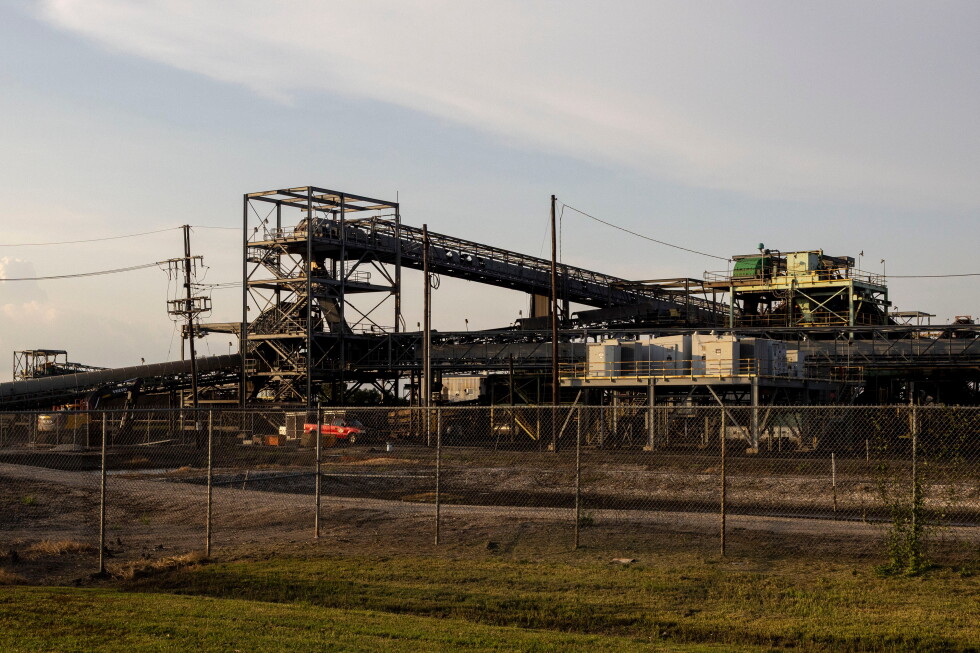
    Located along the Mississippi River between the Louisiana communities of Myrtle Grove and Port Sulphur, Plaquemines LNG has qualified for expedited approval from the U.S. Army Corps of Engineers under the national energy emergency declared by former President Trump in 2024. Under the accelerated process, the public comment window has been slashed from the standard 30 days to just 10 days, closing on July 2, and Corps officials are on track to greenlight the project rapidly.

    If approved, the expansion would more than double the terminal’s footprint, growing it from just under 590 acres to roughly 1,220 acres. According to the facility’s owner, Virginia-based developer Venture Global, the expansion would cement Plaquemines LNG’s status as the largest LNG export terminal in North America. The total price tag for the buildout is estimated at $18 billion.

    But environmental advocates are sounding the alarm, warning that the truncated review process eliminates critical scrutiny of the dredging, in-water construction, and marshland filling required for the expansion. Corps projections confirm the project could damage or destroy up to 470 acres of sensitive wetlands and water bottoms in central Plaquemines Parish, a region already grappling with catastrophic coastal land loss just 25 miles south of New Orleans.

    “Louisiana is already in the middle of an unprecedented coastal crisis,” explained Matt Rota, senior policy director for New Orleans-based environmental nonprofit Healthy Gulf. “Destroying another 400 acres of wetland in Plaquemines Parish is indefensible. Remaining land in the parish is already incredibly scarce, and this project would erase a huge chunk of what’s left.”

    Data bears out Rota’s warning: Over the past 60 years, Plaquemines Parish alone has lost more than 250 square miles of coastal land to a combination of geological subsidence, human-caused sea level rise, and chronic erosion. The Louisiana Coastal Protection and Restoration Authority projects that an additional 300 square miles — roughly half of the parish’s remaining land mass — could disappear within the next 50 years. The crisis extends across the entire Louisiana coast: Since the early 1900s, the state has lost nearly 2,000 square miles of coastal land, an area roughly equivalent to the entire state of Delaware.

    Neither the U.S. Army Corps of Engineers nor Venture Global responded to repeated requests for comment on the project and associated environmental risks.

    The Plaquemines expansion is far from an isolated case. The 2024 national energy emergency declaration opened the door for hundreds of other energy projects across the country to skip rigorous standard environmental reviews required under the Clean Water Act. Last year, the Army Corps identified more than 600 energy projects eligible for the expedited permitting process. Trump justified the emergency order as a necessary step to protect energy security for the U.S. military and domestic economy, framing the action as critical to maintaining a “reliable, diversified, and affordable supply of energy.”

    The streamlined regulatory process is expected to supercharge the already rapidly growing U.S. LNG export industry. Currently, more than 30 new or expanded LNG export terminals are in the proposal or construction phase across the country. Plaquemines LNG is the newest of four operating LNG terminals in Louisiana, which is now a national hub for LNG exports; Venture Global also owns the Calcasieu Pass LNG terminal in the state, alongside existing facilities at Sabine Pass and Cameron LNG.

    LNG is natural gas cooled into liquid form to enable low-cost shipment to overseas markets, where global demand has surged since 2022 as European nations sought alternatives to Russian piped gas and economies shifted away from higher-emission coal. But critics point out that exporting massive volumes of LNG directly contradicts the Trump administration’s stated rationale for the emergency declaration, which was framed as a way to shore up domestic U.S. energy supplies and improve national energy independence.

    “It’s impossible to argue that expanding an LNG export terminal boosts domestic energy reliability or independence,” noted Griffin Bird, research analyst with the Environmental Integrity Project. Rota went further, arguing: “This has nothing to do with energy security. It’s just sacrificing the Louisiana coast to line the pockets of corporate billionaires.”

    U.S. Energy Information Administration data backs up the export-focused nature of Plaquemines’ operations: Of the 833 billion cubic feet of LNG exported from the terminal in 2024, the vast majority was shipped to Europe, with Germany taking the largest single share at 19 percent.

    Today, Plaquemines LNG ranks among Louisiana’s largest industrial facilities, with 1.3 miles of Mississippi River frontage, three deep-water ship berths, two on-site gas-fired power plants, and nearly 30 miles of connecting natural gas pipelines. It is also one of the state’s largest sources of industrial greenhouse gas pollution. Company permitting records show the facility is legally allowed to emit roughly 8.1 million tons of carbon dioxide and other climate-warming gases each year — an amount equal to the annual emissions from 1.7 million gasoline-powered passenger vehicles.

    Only one industrial facility in Louisiana posts higher annual emissions: CF Industries, an ammonia production plant in Donaldsonville that reported 10.4 million tons of greenhouse gas emissions in 2023, the most recent year included in U.S. Environmental Protection Agency public emissions data.

    Advocates emphasize that these emissions, combined with the additional carbon released when imported LNG is burned for energy overseas, accelerate the climate change that is already driving sea level rise and more intense storm systems that worsen Plaquemines Parish’s land loss crisis. “Burning more natural gas from this expansion means we lose Plaquemines Parish even faster,” Rota said.

    If the expansion moves forward, the terminal’s total annual export capacity will jump from roughly 1.4 trillion cubic feet to 2.3 trillion cubic feet. While the exact impact on overall emissions is still undisclosed, federal regulatory filings indicate the expanded facility could emit at least 9 million tons of greenhouse gases annually. Venture Global has stated it plans to deploy carbon capture and sequestration technology to inject a portion of the terminal’s emissions into underground geologic formations, though details on the scope and efficacy of the system have not been released publicly.

    The project has earned support from many Louisiana political leaders, who frame the expansion as a major economic boost that will create high-wage jobs for local workers. U.S. House Majority Leader Steve Scalise, a Republican from Jefferson Parish, publicly praised the rapid development of the Plaquemines LNG site during an April 2025 tour of the facility.

    “Four or five years ago, this was nothing but cow pasture,” Scalise told reporters during the visit. “Today it’s the most modern, most efficient LNG export facility in the world, and they’re building another identical facility right next door.”

    This report was originally produced by Verite News and distributed via a partnership with The Associated Press.