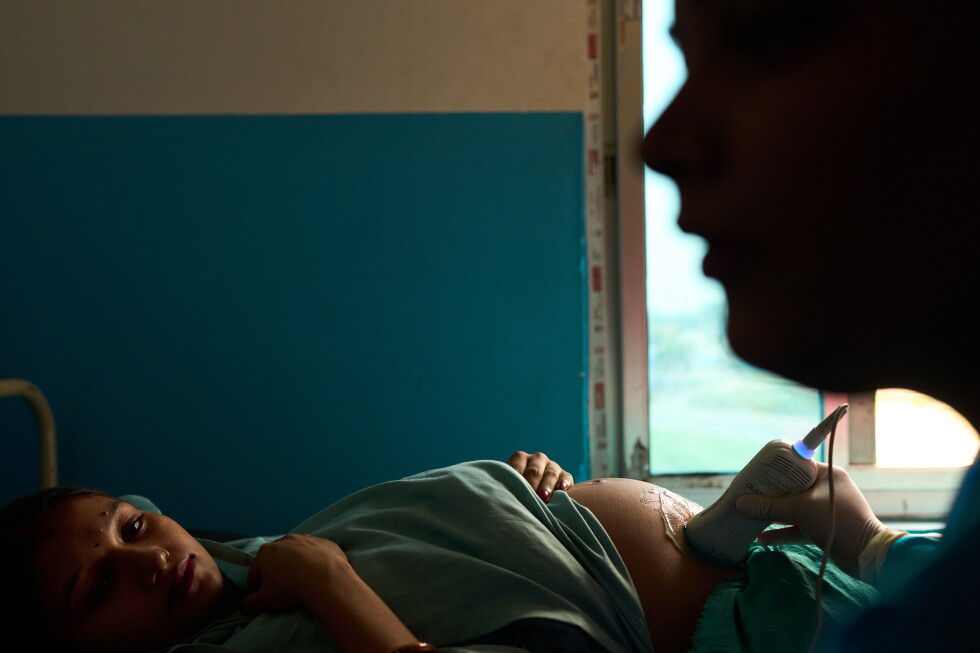
Grounded in on-the-ground reporting from Nepal, an Associated Press investigation has drawn a direct line between sweeping cuts to United States foreign aid enacted by the former Donald Trump administration and a sharp rise in preventable deaths of pregnant women and newborns across the South Asian nation. The 2023 decision to dissolve the United States Agency for International Development (USAID) — long the world’s largest single provider of humanitarian global health assistance — gutted community-focused maternal and child health initiatives that had spent years reducing mortality rates in some of Nepal’s most impoverished regions.
While the U.S. State Department maintains that Washington continues to back maternal and child health programming in Nepal, interviews with local health workers, government officials, aid leaders, and affected families tell a far grimmer story: the loss of funding shuttered life-saving outreach and nutrition services, leaving vulnerable communities without the support they relied on to address pregnancy complications and infant care needs.
The collapse of U.S. funding triggered a domino effect across Nepal’s community health ecosystem. According to World Health Organization data, 60% of local women’s health organizations have been forced to scale back critical services after the U.S. cuts were followed by matching reductions in foreign aid from other donor nations. Before the cuts, USAID and partner aid groups like CARE ran a multi-year initiative that reached 100,000 pregnant women and girls across Nepal. The program provided free nutrient supplements and food to low-income expectant mothers, supplied life-saving equipment and medication to rural birthing centers, and trained a network of local nurses, midwives, and community outreach workers.
These trained workers made regular home visits to identify risk factors for complications, explain warning signs that required immediate medical care, and often escorted women who lacked transportation or health literacy to prenatal and delivery appointments. Since the program shut down, that on-the-ground support has vanished entirely.
Global health leaders warn the cuts will have devastating global consequences, not just in Nepal. The Bill & Melinda Gates Foundation projects that 2025 will mark the first year this century that annual child mortality rates will rise globally, a shift driven in large part by widespread foreign aid cuts to maternal and child health programs.
In Nepal, the impact is already visible in mortality data that does exist — though many deaths will likely never be counted, as the funding cuts also eliminated jobs for local workers tasked with tracking maternal and newborn mortality across rural regions. Mona Sherpa, country director for CARE Nepal, which lost more than half of its operating budget due to the U.S. cuts, called the surge in deaths catastrophic. “The number of deaths of young mothers during delivery has really increased,” Sherpa said. “The expected number within a year is happening within four to six months.”
Newborn deaths have followed the same upward trend. In the village of Prempur Gonahi in Nepal’s Rautahat district, local administrative officer Sadho Baitha documented a remarkable public health win after CARE’s program launched in December 2022: prior to the initiative, the village recorded 10 to 15 neonatal deaths per year, a figure that dropped to zero by 2024. But just 10 months after the U.S. funding was cut and the program shut down, newborn deaths have returned: the first post-cut death was recorded in December 2023, with four more following by March 2024.
The majority of women affected by the program closures live in extreme poverty, have little formal education, and are geographically isolated from major medical facilities. For many, the outreach workers served as more than just health educators — they were translators and advocates who helped women navigate a confusing, often inaccessible public health system.
That gap had fatal consequences for 20-year-old Kabita Mukhiya, an uneducated woman from a poor village near the Nepal-India border. During her pregnancy, Mukhiya developed severe symptoms: excruciating abdominal pain, extreme swelling, and delirium, worsened by severe malnutrition after the nutrition supplements she had received during her first pregnancy were cut. No outreach workers visited her home to identify her red flags, as they had done before the program shut down.
Unaware that her symptoms signaled a life-threatening emergency, Mukhiya suffered at home for weeks before her family finally arranged transport to a hospital. By that point, it was too late: both Mukhiya and her unborn child died. Health workers confirmed her death was caused by untreated eclampsia complicated by severe anemia — two conditions that are almost always manageable if caught early through routine prenatal care.
Rajkumari Patel, a former outreach worker who was laid off when the CARE program shut down, said Mukhiya’s death is exactly the kind of preventable tragedy the program was designed to stop. “I would have asked her, ‘Is the baby kicking? When did you last feel movement?’ I would have checked for swelling in her hands and face. I would have looked at her eyes for signs of anemia,” Patel said. “These are the signs I would have noticed in Kabita and said, ‘This woman needs a hospital today — not tomorrow.’ Maybe we could have saved her life.”