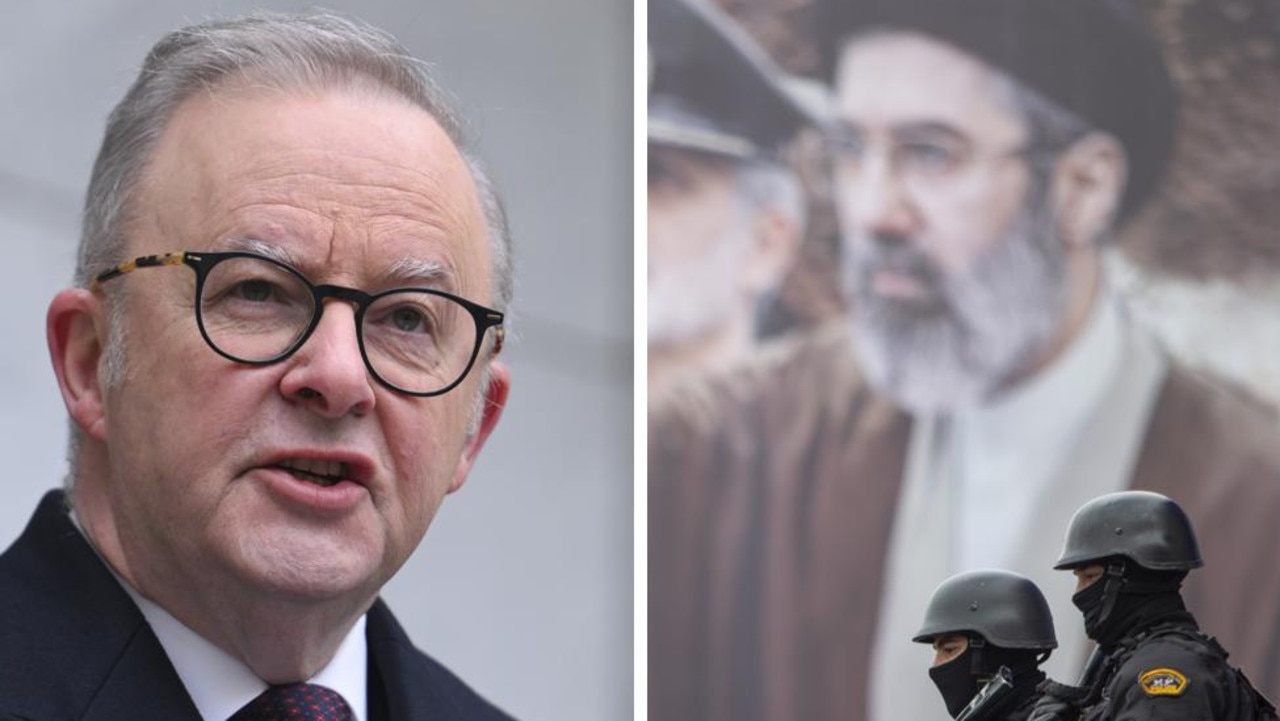
In a high-stakes bilateral call held early Friday, Australian Prime Minister Anthony Albanese received a classified, extensive briefing from U.S. President Donald Trump on the ongoing and widely destabilizing conflict between the United States, Israel and Iran, as Australian motorists face another round of spiking pump prices that are rippling through household budgets nationwide. The conversation spanned a range of critical bilateral and global security topics, including the AUKUS trilateral security partnership, U.S. trade tariffs on Australian goods, and Australia’s developing domestic drone technology program.
When pressed by reporters on whether he had pushed the U.S. president to pursue a negotiated end to the conflict, Albanese stopped short of disclosing sensitive details of the closed-door discussion, confirming only that portions of the briefing remain classified. “What I received was an extensive update, and I appreciated his perspective,” Albanese told reporters. “Some of that briefing is classified, so I won’t be going into that level of detail. It is up to the President to outline the United States’ strategy when it comes to this conflict.”
Albanese made clear that he had explicitly laid out the Australian government’s formal position: the nation seeks an urgent end to the hostilities that have roiled global energy markets and heightened regional security risks. Repeating Australia’s longstanding non-proliferation stance, he added that the international community cannot permit Iran to develop nuclear weapons, a outcome that would pose catastrophic risk to the entire Middle East. He also called out Iranian military actions during the conflict, noting that Tehran has not only exchanged fire with U.S. and Israeli forces but has also launched offensive strikes against multiple other nations across the region, including the United Arab Emirates.
The prime minister also updated Trump on Australia’s existing contribution to the international response to the conflict: the deployment of an E-7A Wedgetail reconnaissance aircraft to the UAE, a commitment that comes as Trump has repeatedly called on U.S. allies to contribute more direct support to the conflict effort. Albanese acknowledged the tangible downstream costs of the war for Australia and the global economy, a impact most visible in the recent run-up in domestic fuel prices. “It is having an impact on Australia and indeed on the entire global economy,” he said, adding that Trump expressed confidence in the U.S. military’s trajectory moving forward.
The conflict erupted on February 28, when U.S. and Israeli forces launched a coordinated surprise military strike on targets across Iran. In response, Iran effectively shut down commercial shipping traffic through the Strait of Hormuz, the strategic chokepoint through which roughly one-fifth of the world’s daily crude oil supplies pass during periods of peace. The closure of the strait sent global oil prices soaring immediately, with ripple effects reaching Australian fuel markets.
Compounding domestic price pressures, the Albanese government declined to renew a temporary fuel excise relief program earlier this month. While current pump prices have not retraced the record highs hit immediately after the war began, they remain elevated: the New South Wales-based NRMA reports average fuel prices in Sydney currently sit at 201.9 cents per litre, with forecasts predicting only a modest dip to the mid-190 cent range in coming weeks.
Donald Trump gives Anthony Albanese ‘confidential’ update on Iran war