博客

  • North Korea threatens to exercise self-defense as it slams US-South Korea military drills

    North Korea threatens to exercise self-defense as it slams US-South Korea military drills

    Diplomatic tensions on the Korean Peninsula are flaring once again, as North Korea has issued a sharp warning ahead of the upcoming Ulchi Freedom Shield military exercises between the United States and South Korea, scheduled to kick off Monday. In a formal statement released Friday through its official state media, North Korea’s Foreign Ministry labeled the joint drills a provocative rehearsal for aggressive war, claiming the 2024 exercises carry greater risk and destabilizing impact than those held in previous years.

    Washington and Seoul have pushed back against this characterization, emphasizing that the annual large-scale drills are strictly defensive in purpose. The allied militaries confirmed the scope of this year’s training aligns with previous iterations, noting the exercises are designed to boost combined combat readiness to counter evolving security threats from North Korea. North Korea’s statement rejects this framing, arguing the drills have pushed regional security to a new, unsteady threshold. In line with Pyongyang’s long-stated security doctrine of responding to heightened threats with strengthened deterrence, the ministry warned the country would exercise its right to legitimate self-defense in a decisive, responsible manner to counter what it calls the enemies’ threats and challenges.

    The latest verbal escalation aligns with a pattern of recent provocative actions from Pyongyang. Over the past week, South Korean defense monitoring systems detected two separate ballistic missile launches off North Korea’s eastern coast. Pyongyang has not officially acknowledged the tests, but independent defense analysts widely assess the launches were either a show of protest against the upcoming drills or part of ongoing efforts to upgrade the country’s missile and weapons systems.

    Many regional security experts point out that North Korea has a long history of using joint U.S.-South Korea military exercises as a justification to expand its weapons testing program. Since the 2019 collapse of the nuclear summitry between North Korean leader Kim Jong Un and then-U.S. President Donald Trump, Kim has rejected repeated offers of diplomatic dialogue from Washington and Seoul, instead prioritizing rapid expansion of the country’s nuclear and ballistic missile arsenals. Analysts widely believe Kim’s end goal is to use his advancing nuclear program to force the U.S. to grant major concessions, most notably significant relief from the strict international economic sanctions imposed on Pyongyang over its weapons programs. Weapons tests also serve a domestic political purpose, helping rally public support for Kim’s authoritarian rule.

    In recent years, Kim has significantly deepened diplomatic and economic ties with key geopolitical allies, most notably Russia and China. Multiple Western intelligence assessments have concluded North Korea has been supplying Moscow with ammunition and troop support to aid Russia’s full-scale invasion of Ukraine, in exchange for much-needed economic aid and military technology assistance. Kim has also made recent high-profile moves to strengthen trade and security cooperation with China, North Korea’s largest single trading partner and longstanding diplomatic backer.

    The current standoff has left regional observers on high alert, with many predicting Pyongyang will carry out additional weapons tests in the coming days to back up its verbal warning. The unfolding situation underscores the persistent fragility of security on the Korean Peninsula, and the ongoing challenge of reviving meaningful diplomatic talks to curb North Korea’s nuclear ambitions.
  • Trump announces tariffs of up to 100% on imported drones

    Trump announces tariffs of up to 100% on imported drones

    In a sharp new escalation of trade and tech tensions between Washington and Beijing, former President Donald Trump announced Thursday sweeping new tariffs of up to 100 percent on imported unmanned aircraft systems (UAS, the formal name for drones) and their core components. The move is explicitly designed to cut U.S. reliance on Chinese-dominated global drone supply chains, the White House confirmed in an official statement.

    Under the new tariff structure, drones with a takeoff weight exceeding 25 kilograms that are equipped with sensitive capabilities deemed relevant to national security—including thermal imaging cameras and specialized docking systems—will face the full 100 percent import duty. Smaller, lighter drones, by contrast, will be subject to a lower 25 percent tariff. The statement argues the new duties will create incentives for expanded domestic U.S. production of drones and their parts, reducing American dependence on foreign manufacturing networks for the strategically critical technology.

    Most of the new tariffs are scheduled to enter into force on September 3. According to Clayton Swope, a senior fellow at the Center for Strategic and Analysis, the tariffs are primarily targeted at commercial and industrial-grade drones, with far less impact on small recreational drones used by hobbyists.

    The policy builds on national security concerns that U.S. regulators have raised for months. Back in December 2025, the U.S. Federal Communications Commission (FCC), the body responsible for overseeing domestic telecommunications, argued that expanding domestic drone manufacturing would lower the risk of enemy drone attacks, service disruptions, unauthorized surveillance, unauthorized transfer of sensitive data off U.S. soil, and other UAS-related threats to American homeland security.

    The FCC also highlighted that drones have inherent dual-use properties: they function as everyday commercial platforms, but can easily be repurposed as military or paramilitary sensors and weapons. Foreign-manufactured drones and components, the agency warned, could enable hostile actors to conduct long-term surveillance, steal data, and carry out destructive attacks across U.S. territory. The ongoing war in Ukraine has further underscored this risk, showing how readily available commercial and even consumer drones can be modified for offensive frontline operations.

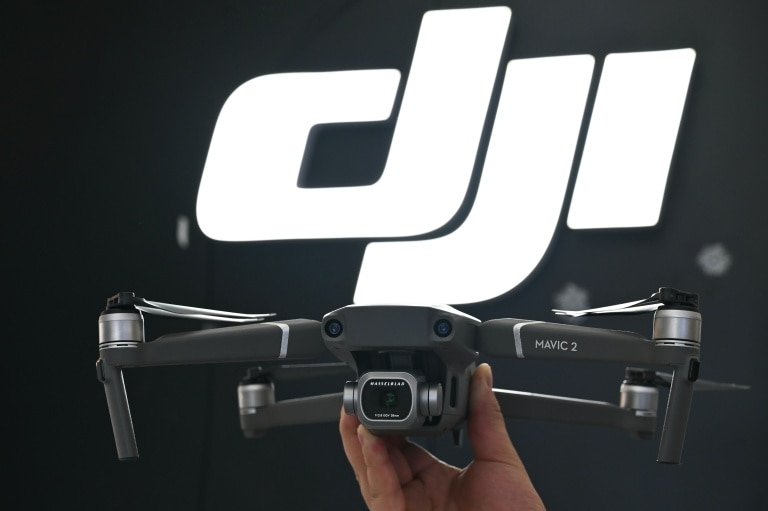
    For years, the Chinese drone manufacturing giant DJI has dominated the global market, holding more than two-thirds of global market share in recent years, according to multiple independent industry studies. The company has also been a top target of U.S. regulatory and political scrutiny for years. U.S. officials have repeatedly accused DJI of supplying equipment used to surveil ethnic minority groups in China, most notably the Uyghur population in Xinjiang.

    Since 2022, DJI has been included on a U.S. government list of Chinese companies tied to the People’s Liberation Army, a designation that bars the firm from accessing sensitive American technology. In 2024, DJI launched a legal challenge to its placement on the list, repeatedly stating that it is not owned or controlled by any Chinese military body.

    Joshua Steinman, a supply chain policy expert who previously served on the Trump administration’s own National Security Council, told Agence France-Presse that developing fully domestic U.S. drone manufacturing capacity, independent of Chinese parts or even raw materials, is a critical national priority.

    The new U.S. tariff announcement comes in direct response to recent Chinese trade moves. Just last week, Beijing implemented its own restrictions on drone exports to the United States and blacklisted six U.S. companies, a retaliatory measure against earlier U.S. trade sanctions tied to forced labor and national security claims. That Chinese action followed just days after Washington imposed a new round of broad tariffs on goods from China and 59 other countries.

    Tensions around strategically important advanced robotics and unmanned technology have been building rapidly in recent months. In late July 2026, the U.S. government added humanoid and quadruped robots to its import blacklist, barring entry of these products from targeted Chinese firms over what it called critical national security risks. Like the commercial drone sector, advanced robotics manufacturing is also dominated by Chinese industry, setting the stage for further escalation in the ongoing tech and trade standoff between the two global powers.

  • Thousands of Mercedes-Benz cars recalled due to electrical fault

    Thousands of Mercedes-Benz cars recalled due to electrical fault

    German luxury automotive manufacturer Mercedes-Benz has issued a large-scale safety recall affecting nearly 59,000 passenger vehicles built between 2018 and 2026, after confirming a widespread electrical manufacturing defect that could increase the likelihood of traffic accidents and serious harm to drivers and pedestrians.

    The root of the issue lies in a tiny door-lock microswitch, a component critical to the vehicle’s safety and parking systems. According to the official recall notification published by the automaker, the microswitch can suffer permanent failure when exposed to water damage. When this failure occurs, the vehicle’s on-board systems cannot properly detect when a car door is not fully closed, which in turn disables the automatic parking feature designed to keep the vehicle stationary when parked.

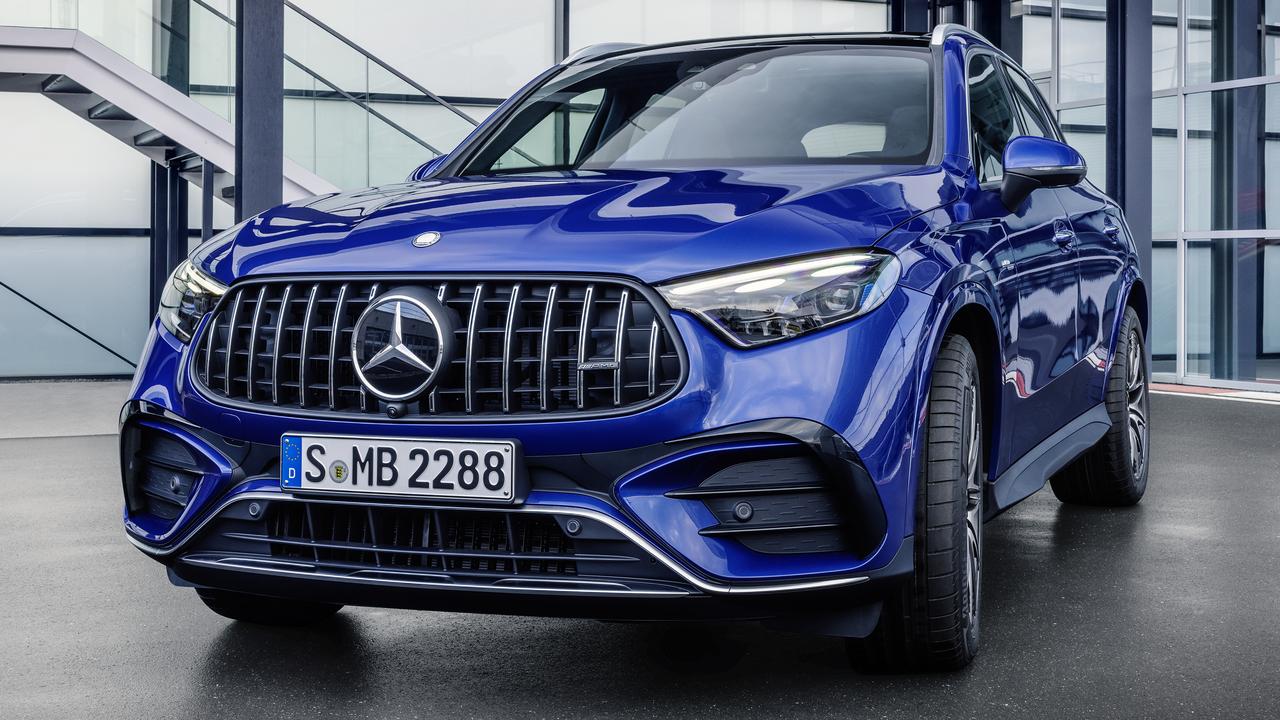
    Without a functioning automatic parking system, the vehicle is at risk of unexpected unintended movement even after the driver has exited. This flaw creates a significant danger: it can lead to collisions that cause serious injury or even death for vehicle occupants, pedestrians, and other road users, the notice warns. The affected model range covers a wide cross-section of Mercedes-Benz’s popular lineup, including entry-level luxury compact models like the A 180 and B 180, plug-in hybrid options, all-electric EQA variants, and high-performance AMG models, some of which carry retail prices as high as $190,000. Specifically named affected vehicles include the Mercedes-AMG GLC 43 4MATIC SUV and the Mercedes-Benz CLA 250 4MATIC, alongside dozens of other trim and configuration combinations.

    To mitigate the risk ahead of repairs, Mercedes-Benz has issued immediate guidance for owners of potentially affected vehicles: before exiting the car, drivers must manually select the park position on the gear selector and fully engage the handbrake to secure the vehicle. The automaker is contacting registered owners of affected vehicles, and all repairs will be completed free of charge. Owners are encouraged to reach out to local Mercedes-Benz service centers in writing to schedule a repair appointment as soon as possible.

  • UK vote count under way in Farage, Binface showdown

    UK vote count under way in Farage, Binface showdown

    Early Friday morning, vote counting kicked off for one of the most unusual by-elections in recent UK political history, pitting high-profile hard-right Reform UK leader Nigel Farage against Count Binface, a novelty candidate best known for wearing a waste bin as a helmet.

    The snap poll was triggered last month when Farage abruptly resigned his newly won Clacton parliamentary seat, stepping down amid ongoing official scrutiny into undeclared political donations. Mainstream UK political parties all opted to skip the contest, dismissing the vote as a calculated stunt by Farage to deflect attention from the investigations into his finances. That decision left Farage to face off against Binface — the comedic alter ego of comedian Jon Harvey — alongside a record 32 other fringe candidates on the ballot paper. Counting was expected to continue overnight, with official results projected to be released by roughly 7 a.m. UK time Friday.

    Before counting concluded, Farage took the step of declaring an early victory, telling UK broadcaster GB News just after midnight that he had won “fairly convincingly” during an election night event in Essex. Framing the contest as a battle between ordinary Clacton voters and the national political “establishment”, Farage claimed the result amounted to an overwhelming public endorsement. “I’ve managed to beat the establishment candidate,” he said. “This is an overwhelming endorsement of me. I have had enough of being judged by mainstream media, being called a criminal.”

    But the contest has drawn widespread mockery, even among political observers, as the novelty candidate Binface has emerged as a surprisingly strong contender. Analysts predict Farage will ultimately hold the seat he first won during the 2024 general election, when he secured 46% of the vote to win a parliamentary seat on his eighth attempt at public office. However, experts also project Binface could capture an unprecedented 20% of the vote, a result that would mark a major embarrassment for Farage.

    Political experts say Farage’s gambit to regain momentum has already backfired. “His ‘spoof’ contender was making him ‘look rather silly’,” Stijn van Kessel, a politics professor at Queen Mary University of London, told the Agence France-Presse news agency.

    Even some local residents shared that sentiment. Twenty-three-year-old Michael, who was visiting Clacton-on-Sea on polling day, told reporters he was rooting for the joke candidate. “I think it’ll be a close one between Binface and Nigel. I would love to see Binface win,” he said.

    Binface, who bills himself as an “intergalactic space warrior” from the fictional planet Sigma IX, leaned into the absurdity of the contest, posting on social media: “Bin day cometh.”

    The by-election was triggered after Farage announced his surprise resignation on July 1, as parliamentary officials launched a probe into allegations that Farage and Reform UK deputy leader Richard Tice failed to properly declare large financial gifts. Both men deny any wrongdoing. The investigation centers on a 5 million pound ($6.7 million) donation from cryptocurrency billionaire Christopher Harborne. Separately, London’s Metropolitan Police confirmed it launched an investigation last year into unreported donations to Reform UK ahead of the 2024 general election. UK media reports have linked that probe to non-declared support from George Cottrell, a convicted fraudster and longtime Farage ally, and Cottrell’s mother.

    The financial controversies have come as Reform UK’s standing in national opinion polls has slipped, after the party led national polling for 18 consecutive months. Farage has long been one of the most divisive figures in British politics, with roughly equal shares of the public holding strong positive and negative views of him.

    Local voters have expressed widespread frustration with the by-election, with many dismissing it as a political farce. Many residents have criticized mainstream parties for skipping the contest, saying the decision disenfranchises local voters. “It’s a farce,” Paul, a local voter in his 50s, told AFP. He accused mainstream parties of “disrespecting the people of Clacton” by refusing to field candidates.

    Even some local Reform UK supporters acknowledged the contest felt ridiculous, due to the long list of fringe candidates. “It’s a bit ridiculous,” local party campaigner Jane Embelton told AFP. “I think it’s all to make Nigel Farage look like an idiot, basically. But he doesn’t look like an idiot to me or his supporters.”

    Turnout is projected to be significantly lower than the 59% turnout the constituency saw during the 2024 general election, when 80,000 registered voters went to the polls. Political analysts have downplayed the long-term national impact of the result, noting Clacton was one of the UK’s most pro-Brexit constituencies a decade ago, making it a stronghold for Farage’s brand of right-wing populism. Still, the unusual contest has drawn international attention and widespread amusement from political observers around the world.

    If Farage wins the by-election as predicted, the parliamentary investigation into his finances will resume. If the probe finds he violated parliamentary rules and issues a suspension, it would trigger yet another by-election in the constituency.

  • Kennedy Center board votes to restore Trump name: reports

    Kennedy Center board votes to restore Trump name: reports

    Nearly six months after a federal judge blocked former President Donald Trump’s plan to add his name to the iconic Kennedy Center for the Performing Arts in Washington D.C., the venue’s board of trustees – heavily populated with political allies appointed by Trump – has approved a controversial workaround to keep his branding on the building, multiple major U.S. media outlets reported Friday.

    The vote, held Thursday, would add the inscription “Restored and Renovated by President Donald J. Trump” directly beneath the Kennedy Center’s main entrance signage, The New York Times and The Washington Post reported, citing anonymous sources familiar with the closed-door proceedings. It remains unclear how the new plan will comply with a May court ruling that only Congress holds the legal authority to alter the venue’s official facade naming, a decision that forced the full removal of Trump’s original signage in mid-June.

    The incident follows a pattern of aggressive legacy branding from Trump since he returned to the White House in January 2025, which has broken longstanding political norms by attaching his name and image to dozens of federal institutions and public assets across the country. In December 2024, the Kennedy Center board initially voted to rename the entire venue “The Donald J. Trump and John F. Kennedy Memorial Center for the Performing Arts,” adding large lettering of Trump’s name above John F. Kennedy’s on the main facade. The move sparked widespread backlash, leading to mass performance cancellations and a sharp nosedive in ticket sales for remaining scheduled events.

    After the signage removal order in June, Kennedy Center Executive Director Matt Floca confirmed in a public statement that all physical branding containing Trump’s name had been taken down from the building and surrounding grounds. However, a large protective tarp and scaffolding have remained draped over the facade ever since, fueling persistent speculation that the board planned to find a way to reinsert Trump’s name.

    Alongside the naming vote Thursday, the board also gave formal approval to restart a two-year major renovation project for the Kennedy Center’s main building, which will upgrade outdated heating and cooling systems, electrical infrastructure, and fire safety networks, with completion targeted for summer 2028. That project was also previously blocked by the same federal judge, who ruled the board had failed to complete required public review processes before approving the plan, but left open the possibility of reconsidering the project after additional scrutiny. The Kennedy Center has not yet responded to requests for comment from Agence France-Presse on the outcome of Thursday’s board meeting.

    Trump’s post-January 2025 push to brand federal public spaces extends far beyond the Kennedy Center. The shuttered U.S. Institute of Peace was renamed in Trump’s honor earlier this year, and large banners bearing his portrait have been hung outside the U.S. Justice Department and Department of Agriculture headquarters in Washington. His image also appears on a new limited-edition U.S. passport, and the major international airport serving West Palm Beach, Florida, near Trump’s Mar-a-Lago resort, has been officially renamed after him.

  • ‘If you can, move!’ say Rome’s viral dancing seniors

    ‘If you can, move!’ say Rome’s viral dancing seniors

    Against the backdrop of a sweltering summer heatwave in the Italian capital, an unexpected pair of elderly performers has captured the hearts of millions online, turning a casual street dance session into a global viral moment that carries a powerful message for aging communities across the continent.

    Seventy-year-old Pasquale Iannotta, a retired dance instructor, and his 79-year-old partner Elisa Fava — a former student of Iannotta’s — have become overnight sensations after a tour operator shared footage of their open-air routine in Rome’s historic Testaccio district last week. Bouncing and spinning through classic hits from Michael Jackson and Elvis Presley, the duo’s infectious energy has resonated deeply with audiences across Italy, a nation grappling with the title of the European Union’s oldest population.

    Speaking to Agence France-Presse during a return trip to Testaccio square for another performance Wednesday, Fava admitted the pair never expected their street dancing to draw such massive attention online. “No one ever thought we could go viral like this,” she said, as the pair prepared to launch into another routine for onlookers.

    The original Instagram clip, posted by travel company The Tour Guy, has racked up more than 370,000 likes and thousands of public comments. Even Rome Mayor Roberto Gualtieri joined in praise of the duo, calling the pair “excellent dancers” and noting that “There’s so much beauty in this simple video.”

    In the wake of their viral success, Iannotta and Fava have been invited to showcase their skills on national television, including Rai Uno’s flagship morning program and multiple other national broadcasts. The pair first crossed paths at a local dance class, where Fava enrolled as a student of Iannotta’s, and have spent years doing regular outdoor summer performances. As Iannotta puts it, the pair shares one core belief: they both “hate sitting around at home.”

    Now, the duo says they hope their unexpected popularity will push other older adults to trade couch time for activity, and encourage more seniors to take up movement like dancing. After the pair performed to Elvis Presley’s iconic Jailhouse Rock, Iannotta — dressed in a summer floral short-sleeve shirt and dark sunglasses — pointed to a common pattern he sees among retired people. “I have many friends who, unfortunately, when they retire, like many others end up sitting on the sofa watching television. I’d like to see them get a bit more active,” he said.

    Italy’s demographic landscape makes the duo’s message particularly urgent. Data from the European Union’s official statistics agency shows the country has a median age of 49.1, the highest in the bloc. National demographic data adds that births dropped by nearly 4% last year, pushing the national fertility rate to an 80-year record low. As the population skews older, the country faces growing strain on social care and public services, and medical professionals emphasize that consistent physical activity is non-negotiable for healthy aging — with proven benefits for cognitive function and cardiovascular health, among other outcomes.

    Fava, who recently became a great-grandmother, shared a straightforward, impassioned message for fellow seniors: “Don’t be idle: if you can, move. Particularly dancing is good for you.”

  • Europe swelters under fresh wave of extreme heat

    Europe swelters under fresh wave of extreme heat

    A punishing new wave of extreme heat has swept across Western and Southern Europe this Thursday, pushing temperatures into dangerous territory for hundreds of millions of residents and compounding ongoing risks of wildfires, heat-related illness, and systemic strain. The major affected regions span France, Italy, Spain and the United Kingdom, where official weather data has already confirmed record-matching heat that has drawn urgent warnings from frontline healthcare workers and climate scientists alike.

    According to an analysis from Agence France-Presse (AFP), built on forecasting data from Germany’s national meteorological service Deutscher Wetterdienst (DWD) and 2025 population projections from the European Commission’s Joint Research Centre, nearly 340 million people across Europe (excluding Turkey) are expected to see temperatures climb above 30°C. Of that group, more than 135 million will face sweltering conditions exceeding 35°C, with peak temperatures in some areas pushing past 42°C. These findings align with data from Austrian non-profit climate monitoring group Klimadashboard, which maintains a public tracking tool for heat events across the continent. Experts from both organizations note that the official counts likely underestimate the true scale of impact, as the forecasting model’s 6.5-kilometer resolution does not capture the full intensity of urban heat island effects that make dense cities significantly hotter than surrounding rural areas.

    In the United Kingdom, the Met Office confirmed temperatures reached 38.1°C at London’s Kew Gardens, marking the fifth-hottest day recorded in the nation’s history. With 40 separate locations across central and southern England hitting 36°C or higher, the country is on track to log its hottest summer ever recorded, according to Met Office projections released earlier this week. Bailey Williamson, a 20-year-old pharmacist working for the UK’s National Health Service (NHS), described unbearable conditions that are putting vulnerable hospital patients at acute risk. “People in beds are really, really sick, and they can’t even breathe because of the heat problem — so it’s really bad,” he told reporters. Williamson added that hospitals have already seen a sharp spike in heat stroke cases, and the overstretched NHS is struggling to meet the increased demand for care. Echoing the concern of many climate scientists, he called the recurring heatwaves a clear warning sign of how severe human-caused climate change has become. Visiting tourist Tim Wallace, who traveled to the UK from Australia, called the unprecedented heat worrying, noting that recurring hot summers would permanently alter local landscapes as climate change continues to drive global temperature rises.

    Across the English Channel, France recorded even more extreme highs on Thursday. National weather service Meteo-France logged a peak temperature of 42.5°C in the central French town of Chateaumeillant, the highest reading in the country that day. The capital Paris hit 38°C, and most of the nation remains under active heatwave alerts. In Italy, forecasters project similar dangerous conditions will impact 29 million people, with the worst heat concentrated along the west coast, in the Po Valley, across southern Italy, and on the country’s major islands. Neighboring Spain on the Iberian Peninsula is also facing widespread sweltering conditions, with roughly 25 million residents affected. Spanish national weather agency Aemet recorded temperatures hitting 37°C across central regions of the country on Thursday.

    Beyond heat-related illness and systemic strain, the record-breaking heat has exacerbated wildfire risk across the continent, which is already facing a summer of historically severe blazes fueled by overlapping heatwaves and persistent drought. In northern Greece, hundreds of tourists were evacuated by boat this week after an out-of-control forest fire advanced on two popular coastal resorts. In the UK’s West Midlands region, firefighting crews worked around the clock to contain blazes that damaged residential properties amid ongoing dry, drought conditions.

    Climate scientists have long warned that Europe is the fastest-warming continent on Earth, and many regions remain critically underprepared to handle the increasing frequency and intensity of extreme heat events. Multiple studies have linked the growing severity of heatwaves to anthropogenic climate change, driven by greenhouse gas emissions from fossil fuel use and deforestation. This summer’s recurring heat and drought have already contributed to thousands of heat-related deaths across the continent, alongside hundreds of thousands of hectares of land burned by wildfires.

  • Hunt bags Euro sprint double, Ceh keeps discus title

    Hunt bags Euro sprint double, Ceh keeps discus title

    On a thrilling night of competition at the 2024 European Athletics Championships in Birmingham, young British sprinter Amy Hunt delivered a standout performance to claim a historic European sprint double, capping off a day that saw Slovenia’s Kristjan Ceh retain his discus title and the German team surge to five total medals including two golds.

    Hunt, 24, held her composure through the final turn of the women’s 200m before unleashing a blistering last 50 meters to cross the finish line first in 22.19 seconds. Ireland’s Rhasidat Adeleke took silver with a time of 22.28 seconds, while Great Britain’s Dina Asher-Smith — the last sprinter to claim a European 100m-200m double back in 2018 — secured bronze. The result tied Asher-Smith for the all-time record of seven career European Athletics Championship medals.

    With two individual golds already secured, Hunt now turns her attention to the women’s and mixed 4x100m relays, with an eye to completing an unprecedented four championship gold haul. “Two out of four, baby!” Hunt told reporters after the race. “No celebrations and no champagne until Sunday night. We have got to come out here and make sure we show them who the best sprinting nation is in Europe.”

    Over in the men’s discus competition, Kristjan Ceh of Slovenia put on a masterclass to defend his European title, breaking the championship record twice on his way to a winning best throw of 72.51 meters. World record holder Mykolas Alekna of Lithuania took silver with a throw of 69.89 meters, while Germany’s Henrik Janssen clinched bronze at 69.53 meters, edging out three-time reigning world champion Daniel Stahl of Sweden by 31 centimeters. Ceh called the 2024 field the highest quality discus competition in the history of the European Championships. “When you throw alongside these guys it is like another boost,” he added.

    Janssen’s bronze was just one part of a historic night for Team Germany. World champion Leo Neugebauer pulled off a dramatic narrow victory in the men’s decathlon, beating teammate and defending Olympic champion Niklas Kaul by just 38 points to claim gold. A personal best 54.31m discus throw put Neugebauer in position to win heading into the final 1500m event, where he held a 154-point lead over Kaul. Kaul mounted a stunning comeback after throwing a massive 73.54m javelin to overtake Norway’s Sander Skotheim for second, and needed just a 22-second win over Neugebauer to take gold. In a dramatic finish, Neugebauer cramped badly in the final 30 meters of the race and collapsed across the finish line in 4:38.36, holding on for the narrow win in front of a stunned 20,000-strong crowd at Alexander Stadium. Skotheim rounded out the podium with bronze.

    Germany’s second gold of the night came from 34-year-old steeplechaser Gesa Felicitas Krause, who outpaced defending champion Alice Finot of France to win the women’s 3000m steeplechase in 9:12.69. The win marked Krause’s third European title, adding to her legacy as one of the sport’s most decorated steeplechasers, and teammate Olivia Guerth added another bronze to Germany’s tally for the event.

    The night also saw Ireland earn its first ever men’s gold medal at the European Athletics Championships, courtesy of Mark English in the 800m. Fresh off setting a new championship record in the semi-finals, the medical doctor and two-time previous bronze medallist delivered a perfectly timed final sprint to cross the line first in 1:45.26. “I have been trying for a lifetime to get a title,” English said after the race. “Relief in 2014 when I got my first medal and relief today as well. It is just amazing.” Croatia’s Marino Bloudek took silver, holding off Spain’s Mohamed Attaoui.

    In other Thursday night results, Swiss pole vaulter Angelica Moser successfully defended her European title with a best clearance of 4.80m, with Finland’s Wilma Heltela taking silver and France’s Marie-Julie Bonnin claiming bronze. Italy’s Dariya Derkach won the women’s triple jump with a best leap of 14.60m, beating Belgium’s Saliyya Guisse (14.46m) for gold.

    As attention turns to Friday’s schedule, Great Britain will look to add another sprint gold to its tally when Zharnel Hughes, the 2022 100m champion, lines up in the men’s 200m final. Hughes won his semi-final in 20.05 seconds, while Germany’s 100m bronze medalist Owen Ansah clocked the fastest qualifying time of 20.04 seconds.

  • ‘Dream come true’: Owners reunite with pets in quake-hit Colombia

    ‘Dream come true’: Owners reunite with pets in quake-hit Colombia

    In the shadow of collapsed homes and widespread destruction that has left Colombia reeling from one of its deadliest seismic events in recent years, small moments of joy are cutting through the grief: beloved pets pulled from rubble are being reunited with their heartbroken owners, offering glimmers of hope when all feels lost.

    On Monday, a 7.4-magnitude earthquake ripped through western Colombia, battering Cali — the country’s third-largest city — and large stretches of the nation’s renowned coffee-growing region and Pacific coastline. Official death tolls have climbed to at least 273, with thousands more injured, and more than 12,000 homes reduced to rubble. The disaster has left countless families displaced and destitute, with hundreds of people still unaccounted for days after the tremor struck.

    Rescue teams have worked around the clock, digging through concrete and twisted debris in a race against time to find surviving victims. By Thursday, the critical 72-hour window for finding trapped people alive had closed, but for a handful of Colombians, the search yielded an unexpected gift: the safe return of their furry family members.

    Standing outside her crumpled home in Cali, 56-year-old lawyer Vickye Giraldo beams as she clutches her rescued kitten Polux tight to her chest, pressing a gentle kiss to the cat’s head. Giraldo shared her damaged apartment building — which now tilts dangerously to one side — with two dogs and two cats. One dog escaped alive, the other perished in the collapse, and her second cat remains missing. After days of fear that she would never see Polux again, the reunion has felt nothing short of miraculous.

    “These have been very hard days, thinking we might not be able to rescue them, but in the end it’s a dream come true. It really is,” Giraldo told Agence France-Presse, her voice thick with tears as she held her cat close. “It’s an indescribable moment.”

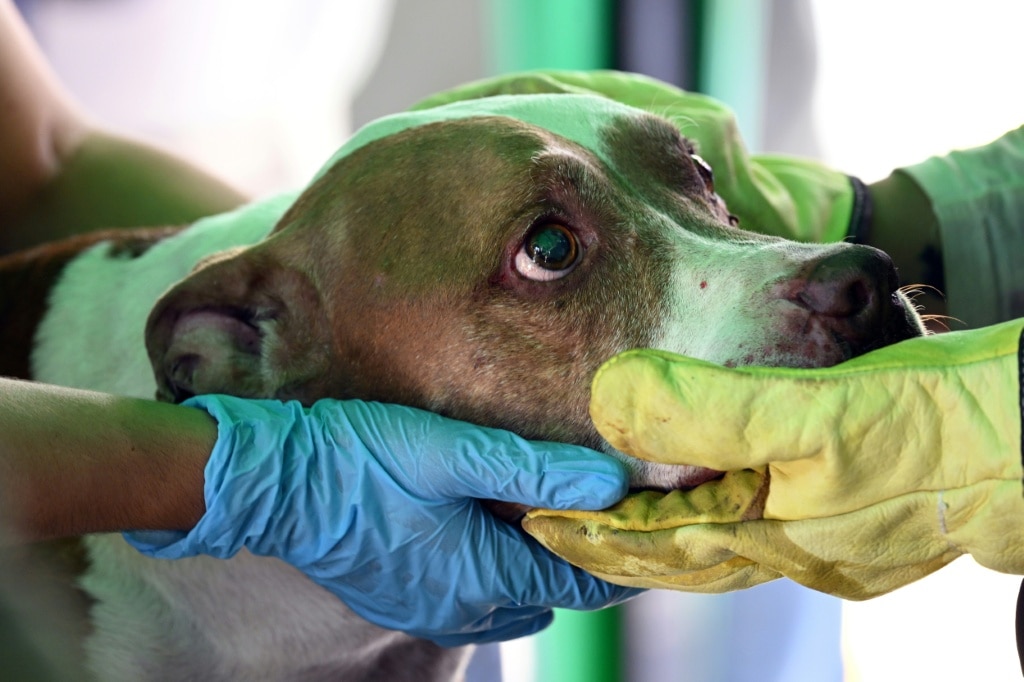
    She is not alone in finding small hope amid overwhelming loss. When a team of rescuers pulled a weak, trapped dog from a second collapsed structure on Thursday, onlookers erupted in applause. A team of veterinarians immediately rushed to the animal’s side, offering water before carrying the creature away on a stretcher for further care.

    For many Colombians affected by the quake, pets are not just animals — they are family. That is the belief driving volunteer rescuers like Nelson Vidales, who has joined the effort to locate trapped pets even as the bulk of search efforts focus on missing humans.

    “Pets are like children. I insist on that,” Vidales told AFP. “I know there are a lot of people thinking about humans, but the time must come when pets are looked for too. That’s what I’m here for.”

    Even as many families still wait for good news — Andrea Paredes, another Cali resident, has not given up hope of finding her missing dog and cats, after her husband only managed to escape with one small dog during the quake — the small reunions have reminded a shaken nation of the bonds that persist even in disaster.

  • Collingwood champion Steele Sidebottom on his 2026 AFL retirement

    Collingwood champion Steele Sidebottom on his 2026 AFL retirement

    One of the Australian Football League’s most decorated Collingwood Magpies veterans, Steele Sidebottom, has opened up about the internal reasoning that led him to announce his retirement, the lifestyle shifts that shaped his 15-year professional career, and the highlight moment that stands out above all others across 373 senior games.

    Sidebottom, a two-time premiership winner with the club, revealed he made the final call to end his playing tenure on the cusp of this year’s iconic Anzac Day clash – a fixture where he twice earned best-on-ground honours. Contrary to widespread speculation that the high-profile match would be his fairytale send-off, the 34-year-old explained that no single game or sentimental trigger pushed him toward retirement. Instead, the mental weight of planning for life after football had started to overshadow the joy he once felt competing in front of Collingwood’s legions of adoring fans.

    “I guess when it came down to it, there was no specific big event behind the decision,” Sidebottom explained. “I realized I wasn’t enjoying my footy anymore because I was constantly distracted by the inevitable decision I’d have to make about retiring at some point. It wasn’t Anzac Day itself – I love playing that match more than any other – it just wasn’t any one specific reason that pushed me over the line.”

    Sidebottom made his senior AFL debut for Collingwood back in 2009, and just 12 months later, he claimed his first premiership medallion as a young up-and-comer. Looking back on the early years of his career, he reflected that he fell into the typical party culture of young footballers, shaped by an upbringing with four older brothers that left him drawn to casual drinking sessions with friends. That all changed when he met his now-wife Alisha, who arrived at exactly the right moment to help him refocus and adjust his off-field priorities.

    “I probably struggled to find the right balance early on,” Sidebottom admitted. “I always put everything I had into my training and match play, but there were definitely habits off the field that I needed to change. When I met Alisha, she was exactly the person I needed to meet at that point in my life, so I knew I had to adjust. I was a professional footballer, not a part-time one – but back then, I was just doing the minimum required, I wasn’t going above and beyond to get the most out of my ability.

    “In my early 20s, there’s so many distractions. My friends weren’t in professional sport, they lived totally different lives, and I often got pulled into going home for beers with them after training. But I don’t regret a minute of it – I’ve had the kind of career most players can only dream of, and I’m really proud of everything I’ve achieved.”

    Across his 15 seasons, Sidebottom played 373 senior games, but the highlight he calls unbeatable is the Magpies’ 2023 premiership – a title that came 13 long years after his first top-flight success. He explained that as a young player in 2010, he was too inexperienced to fully grasp what a premiership meant to the club and its fanbase, but after more than a decade of falling short of grand final success, he was able to savor every moment of the 2023 win.

    “2023 is definitely my favourite memory,” he said. “In 2010 I was so young, I didn’t really understand what that premiership meant to so many people, to be honest. I kind of took it for granted. Then, when you go years without getting to play in a grand final, you realize how rare that success is. Waiting 13 years for another chance made me really appreciate 2023, and I made sure I enjoyed every second of it.”

    Looking ahead to life after football, Sidebottom said he has no immediate plans and is approaching his post-playing future as a blank canvas – but he ruled out one popular next step for retired stars: coaching. “Probably not, no. I think coaches are a totally different breed,” he said with a laugh. “You have to be all-in to be a coach, and right now I’m just not ready for that commitment. It wouldn’t be fair to the club or the players if I went into coaching half-hearted. I’m just going to take some time to reflect on my career, and enjoy what life after footy has to offer.”