博客

  • The West studies China’s power — but not its civilization

    The West studies China’s power — but not its civilization

    Against the backdrop of rising geopolitical tension between China and the United States, a pivotal 2026 Beijing summit exchange between the two nations’ leaders crystallized the core strategic question of the era: whether a rising power and an established hegemon can avoid the violent conflict that defines the Thucydides Trap. In that conversation, Chinese President Xi Jinping also issued a clear warning: mismanagement of the Taiwan issue could plunge both countries into open confrontation. This high-stakes exchange underscores a growing, dangerous imbalance in how the world engages with China today.

    Over the past decades, China’s rise has reshaped the global order, visible in its expanding manufacturing base, growing patent output, cutting-edge artificial intelligence development, growing maritime capabilities, sprawling global infrastructure initiatives, and massive cross-border trade volumes. Governments across the Global North study China’s industrial strategy, advanced automated manufacturing systems, and technological leadership to unpack the mechanisms behind its success, while developing nations across the Global South actively adapt useful Chinese models for their own development. Yet one critical area has failed to keep pace with China’s growing global influence: deep, widespread study of China’s language, history, philosophy, and core cultural traditions.

    Today, the world has learned a great deal about how China produces goods, finances projects, and competes in global markets. But it has not invested comparable effort in understanding the historical and cultural frameworks through which Chinese society debates core concepts: national order, historical humiliation, social obligation, political authority, and the project of national renewal. This gap is already visible in higher education: data from the U.S. Modern Language Association’s 2021 enrollment survey shows that undergraduate enrollments in Chinese language programs at American colleges and universities fell 14.3% between 2016 and 2021, while graduate program enrollments dropped from 1,266 to just 892. Sustained academic exchange has also contracted sharply, as rising geopolitical friction, broad security concerns, lingering travel restrictions, and increasing political barriers have made long-term cross-border engagement far more difficult. At the exact moment when deep China expertise is most critical to global stability, the pipelines that produce that expertise are rapidly narrowing.

    What does meaningful cultural literacy about China actually entail? It does not require unconditional acceptance of the Chinese government’s policy positions. Instead, it demands recognition that all Chinese policies and public statements are interpreted through distinct historical memories and unique moral vocabularies that differ sharply from dominant frameworks in the West. Traditional American political discourse centers on individual rights and constrained government power, while Chinese political discussion more often prioritizes social cohesion, collective welfare, and reciprocal social obligations. Neither society presents a monolithic uniform perspective, but these core differences help explain recurring disagreements over issues ranging from human rights to governance models to social stability. In diplomatic and business settings, Chinese interlocutors also often prioritize personal relationships, indirect communication, and the preservation of mutual “face” far more than American counterparts, who are typically socialized to engage in open, explicit disagreement.

    Historical memory plays an equally critical role in shaping differing perspectives. Western and Japanese imperial expansion inflicted profound suffering on China during the 19th and early 20th centuries, a narrative that is central to Chinese education and official public memory. Yet many Western members of the public remain largely unfamiliar with the Opium Wars, the unequal treaties forced on China, or the scale of Japanese invasion during the 20th century. Where one side sees a discrete contemporary policy choice, the other may interpret the action through the long lens of historical national vulnerability and repeated foreign intrusion.

    At the same time, Chinese cultural memory also stretches back centuries to a period when China was one of the world’s most advanced and sophisticated civilizations. It developed a resilient, effective bureaucratic tradition, and during the Song dynasty, achieved groundbreaking advances in commerce, mass education, printing technology, applied science, philosophy, and the arts. This history does not inherently justify modern territorial claims or specific government policies, but it helps explain why many Chinese people frame national rejuvenation not as the emergence of an entirely new expansionist power, but as a recovery from a century of external interference and internal disruption that interrupted China’s long historical trajectory.

    Former U.S. Secretary of State Henry Kissinger once drew a clear contrast between American and Chinese conceptions of national exceptionalism: each nation carries a foundational story about its unique place in world history. When diplomacy is conducted without understanding these foundational narratives, it is far too easy to misread symbolism as substantive threat, defensive action as aggressive ambition, or compromise as national humiliation.

    A core principle of meaningful understanding is that China cannot be reduced to the actions or identity of its current state. Just as American civilization cannot be reduced to the platform of any single political party, Chinese society and civilization cannot be reduced only to the rule of the Communist Party of China, nor can Chinese civilization be reduced to the single tradition of Confucianism. China’s modern identity has been shaped by overlapping, competing traditions: Confucianism, Daoism, Buddhism, and Legalism, alongside popular folk religion, Marxism, nationalism, global capitalism, and the forces of global modernity.

    The evolving discourse around New Confucianism offers a revealing example of this internal contestation. The movement emerged in the early 20th century as Chinese thinkers responded to the rise of Western power and modern institutional models. Philosophers including Mou Zongsan, Tang Junyi, and Xu Fuguan defended the Confucian tradition against critics who blamed it for China’s 19th century weakness, while also grappling with how Confucian thought could adapt to modern demands for science, democracy, and individual freedom. After 1949, this line of scholarship continued primarily in Hong Kong and Taiwan, while Confucianism was officially disavowed and, during the Cultural Revolution, violently suppressed on the Chinese mainland.

    New Confucian thinkers drew a clear line between technical expertise and existential wisdom. They argued that science and reason could unpack and transform the natural world, but could not on their own answer core questions of meaning, moral cultivation, or the proper purpose of state power. Their arguments remain deeply relevant today, for all global societies that possess extraordinary technical capabilities but lack consensus on what ends those capabilities should serve. In recent decades, some mainland Chinese thinkers have promoted nationalist, authoritarian, or patriarchal interpretations of Confucianism, while other thinkers across mainland China, Taiwan, South Korea, and North America have explored the tradition’s compatibility with democracy, meritocratic governance, reciprocal respect, and universal human dignity. This makes clear that Confucianism is not a fixed, monolithic political doctrine: it is a living, contested tradition that continues to evolve.

    Scholar Tu Weiming has done more than most contemporary thinkers to bring this living tradition into global intellectual conversation. His concept of “cultural China” extends far beyond the boundaries of the Chinese state, encompassing all people connected to Chinese civilization through language, collective memory, and intellectual engagement. Tu criticizes the political weaponization of Confucianism to enforce state obedience, but argues that the tradition’s emphasis on individual self-cultivation, interpersonal reciprocity, and the unity of humanity and nature can make a valuable contribution to a shared global ethic. Tu’s work matters not because Confucianism offers a simple master key to all Chinese behavior, but because it demonstrates how much deeper understanding becomes when China is approached as a complex civilization, rather than merely a strategic threat or problem to be managed.

    Philosophy is just one entry point to this deeper understanding. Chinese literature, cinema, and visual art reveal dimensions of Chinese experience that official statements and economic statistics can never capture. Early 20th century writer Lu Xun exposed the deep moral and social crises of a China undergoing rapid upheaval. Nobel Prize-winning author Mo Yan reframes modern rural Chinese history through sharp satire and magical realism. Science fiction author Liu Cixin projects Chinese anxieties and global ambitions onto a vast cosmic stage. Filmmaker Zhang Yimou has explored themes of power, collective memory, family, and social upheaval through a visual language that resonates with audiences worldwide. These works collectively challenge the simplistic narrative that frames Chinese society as a uniform, monolithic mass. In reality, China is home to vibrant debate between nationalists and cosmopolitans, liberals and conservatives, feminists, religious believers, environmentalists, workers, entrepreneurs, and young people navigating widespread uncertainty about the future.

    While government restrictions have narrowed the space for open public debate in China, pushing much intellectual discussion into private seminars, independent bookstores, informal reading groups, and carefully curated digital spaces, this does not make understanding China less necessary—it only makes it more urgent.

    Western academic and media institutions bear a share of the responsibility for this current gap in understanding. Chinese philosophy is still often ghettoized in area studies departments, rather than integrated into the broader global study of philosophy as a shared intellectual inheritance. News coverage naturally prioritizes reporting on the Chinese party-state, security competition, and economic friction, but this overemphasis often leads to the misperception that official China is the whole of China. Rising nationalist politics on both sides of the bilateral relationship has further eroded the open curiosity that is the foundation of meaningful cultural knowledge.

    Closing this critical gap requires more than rhetorical support for cultural exchange in principle. Universities must maintain funding for advanced Chinese language instruction, and integrate Chinese history, philosophy, and literature into curricula across departments, not just confine these topics to area studies programs. Independent publishers and philanthropic foundations must support skilled translators who can make contemporary Chinese intellectual debate accessible to global English-speaking audiences. News organizations must invest in journalists with the language skills and time to report on Chinese society, not only the Chinese state. Governments must protect legitimate national security interests without framing all academic and cultural exchange as an inherent threat.

    This work must also be reciprocal. Chinese authorities have made independent understanding of Chinese society more difficult by imposing new restrictions on international research, journalism, and open public debate. A genuine dialogue between civilizations cannot be created through empty slogans or tightly state-controlled cultural diplomacy. It requires open access, room for legitimate disagreement, and the freedom to engage with Chinese society in all its messy complexity.

    Meaningful cultural literacy will not eliminate strategic competition between China and the West, nor does it require uncritical admiration for the Chinese government’s policy choices. Instead, it is a form of practical strategic realism. No nation can negotiate successfully with an imaginary China, deter a China it fundamentally misunderstands, or coexist peacefully with a civilization it only knows through sensational headlines and threat assessments. Escaping the Thucydides Trap therefore requires far more than military restraint and crisis communication hotlines. It requires both Chinese and Western societies to understand the historical narratives through which the other interprets power, global order, and national purpose. The West has already invested enormous resources into measuring what China can do. It is past time to invest equal effort into understanding what China believes it is doing, and why.


  • Morale on US aircraft carrier enforcing Iran blockade plummets, as sailor jumps overboard: Report

    Morale on US aircraft carrier enforcing Iran blockade plummets, as sailor jumps overboard: Report

    After months of an extended, port-call-free deployment enforcing a US-led blockade of Iran that sparked a widespread mental health and morale crisis among crew members, the United States has announced it will replace the USS Abraham Lincoln aircraft carrier with the USS George Washington in the Middle East theater of operations.

    The USS Abraham Lincoln has remained on station for more than 250 consecutive days without a single stop at a foreign or regional port for rest and resupply, an unorthodox stretch that has triggered serious alarms among US lawmakers and military family members over the well-being of the carrier’s crew. Multiple media outlets have documented serious incidents tied to deteriorating crew conditions: earlier this month, one sailor jumped overboard the vessel during a mental health episode, and was rescued and evacuated for medical treatment within an hour, according to CNN reporting. A second incident followed, where crew members had to intervene to stop another sailor from jumping overboard, according to US military-affiliated publications Stars and Stripes and Navy Times.

    The depth of the crisis has been laid bare in testimonies to military leadership. During a public town hall with Acting Secretary of the Navy Hung Cao, one military spouse told officials her husband serving aboard the Lincoln had said he “hopes he doesn’t wake up tomorrow”, reflecting the widespread exhaustion and despair across the ship. One unnamed crew member told Stars and Stripes that the deployment had been nonstop operational pressure with no end in sight, noting “We’ve just been turning and burning the whole time we’ve deployed. Nothing to really look forward to at this point. All we want is a date home.”

    The rotation plan was first reported by The Wall Street Journal on Thursday, and comes as top US defense officials have insisted the blockade of Iran can continue indefinitely through regular ship rotations. “Indefinitely the United States Navy can maintain a blockade like that because we’ll rotate ships in and out, as we have, and we’ll continue to,” US Secretary of Defense Pete Hegseth told reporters Thursday. While nine-month carrier deployments are not unprecedented during active conflict, standard military protocol calls for monthly port calls to rest crews and replenish essential supplies, a precaution that has been skipped entirely during the Lincoln’s deployment.

    The carrier’s deployment comes amid months of escalating tensions between the US and Iran over control of the Strait of Hormuz, a critical global chokepoint for oil and petroleum shipments, with no ceasefire agreement on the horizon to de-escalate hostilities. Iran has targeted commercial vessels linked to Gulf states carrying oil outside the waterway, while the US has interdicted and targeted vessels it says are linked to Iranian trade violations of the blockade. Just this Tuesday, the US launched two Hellfire missiles against a Panama-flagged cargo ship that attempted to break the American blockade of Iranian ports, The Wall Street Journal reported.

    US lawmakers have already raised formal concerns about the physical and mental toll of the extended deployment on the Lincoln’s crew, and the rotation is expected to address the mounting crisis while allowing the US to maintain its blockade posture in the region.

  • BBC seeks to subpoena Trump’s family members in Panorama lawsuit

    BBC seeks to subpoena Trump’s family members in Panorama lawsuit

    A high-stakes legal battle between former U.S. President Donald Trump and the British Broadcasting Corporation has taken a dramatic new turn, as the public broadcaster moves to compel testimony and document disclosure from three of Trump’s closest family members as part of its defense against a $10 billion defamation claim.

    Court records made public reveal that the BBC’s legal team first attempted to serve legal subpoenas in May to Donald Trump Jr., Ivanka Trump, and Jared Kushner, Trump’s son-in-law and former senior White House advisor. The lawsuit stems from a 2024 episode of the BBC’s long-running investigative documentary series Panorama, which edited together two separate segments of a speech Trump delivered ahead of the January 6, 2021 riot at the U.S. Capitol.

    Trump launched the defamation suit against the BBC last December, filing the claim in a Florida court. He alleges the broadcaster intentionally and maliciously altered his speech to falsely imply he directly called for violent action on January 6, arguing the edit caused severe harm to his business and personal reputation. While the BBC has issued a public apology for the editing error that created the misleading impression of Trump advocating violence, it has repeatedly denied the error meets the legal standard for defamation and is pushing to have the entire case dismissed. The network has also noted the documentary was never made available to audiences on its U.S.-facing platforms.

    In its latest court filing, the BBC’s legal team argues that the three Trump family members hold unique, firsthand knowledge of the former president’s intentions when he delivered the January 6 speech, making their testimony and relevant documents critical to the defense against the defamation claim. Drawing on evidence previously compiled by the U.S. House committee that investigated the Capitol riot, the filing notes that Donald Trump Jr. and Ivanka Trump were present while their father revised and delivered the speech. It adds that Jared Kushner personally drafted a proposed version of the speech that included explicit language condemning political violence, a detail that could undermine Trump’s current claims about the content and intent of his final remarks.

    The filing also details repeated failed attempts by the BBC’s legal representatives to serve the subpoenas in person, prompting the network to ask the court for permission to serve the documents via email and certified mail. When a process server attempted to deliver subpoenas for Ivanka Trump and Jared Kushner at their Florida residence, they were denied access at a police checkpoint and later informed by the U.S. Secret Service that the agency could not accept the legal documents on the couple’s behalf. Separate attempts to serve Donald Trump Jr. at Trump Tower in New York also stalled: on the first attempt, building staff said the employee responsible for accepting legal documents was out at lunch, and on a second visit two days later, the server was told the entire legal department was off-site that day.

    Recent weeks have already seen major shifts in the case. Last month, Trump’s legal team was forced to concede that they had no evidence to back their original claim that the Panorama episode was available to U.S. audiences on the BBC’s BritBox streaming service, BBC.com, BBC Select, or through any U.S. broadcast partners. Shortly after that, Trump agreed to remove BBC Studios, the corporation’s commercial production arm, from the lawsuit after the BBC argued the unit played no role in creating or distributing the documentary. Earlier this month, the judge overseeing the case granted Trump’s request to delay turning over financial records to the BBC, which has requested the documents to challenge Trump’s claim that the edit caused substantial damage to his business interests. Trump’s legal team has argued that disclosing the records would cause irreversible harm to the former president. If the case proceeds through pre-trial proceedings, a trial is scheduled to begin in February 2027.

    As of this reporting, no response has been issued by Trump’s legal team to the BBC’s latest subpoena request, and the BBC’s press office has declined to comment on ongoing litigation.

  • Air India pilot’s reported cannabis test: What it can and can’t tell investigators

    Air India pilot’s reported cannabis test: What it can and can’t tell investigators

    On August 4, a routine commercial flight from Phuket to New Delhi operated by Air India took an unexpected turn when the Airbus A320 suddenly dropped around 300 feet (91 meters) in altitude mid-flight. The sudden plunge left 13 passengers and four crew members injured, though the aircraft ultimately landed safely at its destination with all 137 passengers and eight crew members on board. What began as a standard incident investigation quickly erupted into a national discussion across India about aviation safety protocols and the complexities of drug testing for pilots, after unconfirmed media reports claimed the flight’s captain tested positive for cannabis in a follow-up laboratory analysis.

    India’s aviation ministry confirmed that both pilots on board completed mandatory post-incident screening for psychoactive substances following the landing. The initial test result for the captain triggered the need for additional confirmatory testing, and both pilots have been suspended from active flight duties pending the outcome of the full investigation. Multiple outlets have cited anonymous sources claiming the confirmatory test returned a positive result for marijuana, but neither Air India nor Indian aviation regulators have issued an official confirmation of this finding to date.

    Most critically, no official link has been drawn between the alleged positive test result and the sudden altitude loss that sparked the incident. Investigators are conducting a broad review of all contributing factors, including technical aircraft performance, operational protocols, medical conditions and human performance variables, leaving the root cause of the plunge undetermined.

    While the public has focused immediately on whether cannabis use caused the incident, aviation researchers and toxicology experts point to a much more nuanced question that does not have a clear answer: what can a positive cannabis test actually reveal about a pilot’s level of impairment at the time the incident occurred, hours before the test was administered?

    Decades of small-scale research on cannabis and pilot performance has established that the drug can interfere with the core skills required for safe flight. In a 1976 simulator study, 10 pilots who consumed a moderate dose of cannabis showed measurable performance declines in altitude control, heading maintenance and radio navigation, with impairment lasting at least two hours and fading within four to six hours. Follow-up research conducted in the 1980s and 1990s found even more concerning results: pilots tested on flight simulators 24 hours after cannabis consumption still showed significant performance declines in critical functions including aircraft control, landing accuracy and approach deviation. Most alarmingly, the vast majority of participating pilots had no awareness that their performance had been compromised.

    A 2000s review conducted by aviation medicine specialist David Newman for Australia’s Transport Safety Bureau echoed these conclusions, noting that cannabis affects cognition, behavior and psychomotor function in a dose-dependent relationship, with complex, high-concentration tasks such as commercial flight particularly vulnerable to impairment. The review also confirmed evidence of residual performance effects that can last up to 24 hours after consumption.

    But as cannabis use has become more widespread globally and product potency has increased significantly in recent decades, the science linking test results to real-time impairment has grown far more complicated. A 2022 randomized clinical trial led by researcher Thomas Marcotte at the University of California San Diego tested 191 regular cannabis users on simulated driving tasks. The study found that while users who smoked THC showed initial performance declines, impairment could not be predicted by the THC content of the product, the user’s prior experience with cannabis, or even blood THC concentration. By roughly four and a half hours after consumption, performance for most test participants was comparable to that of participants who did not receive active THC.

    This finding upends simplistic assumptions about positive cannabis tests, experts say. A positive test only confirms that THC or its metabolites are present in the body, not when the cannabis was consumed or whether the person was impaired at the time of the incident. The relationship between test results and impairment varies widely based on dose, method of consumption, frequency of use and individual biological differences, creating a challenge that regulators do not face with alcohol.

    “Unlike with alcohol where there’s a more robust relationship between alcohol concentrations in blood and impairment, the association is much more complex with THC. THC rapidly leaves the bloodstream after smoking, and there is limited to no correlation between blood THC concentrations and impairment,” Marcotte explained. “In people who use at least occasionally, THC can be detectable in blood for days and sometimes weeks after last use, particularly in more frequent users. This is long after any acute impairment has subsided.”

    Impairment timelines also vary by consumption method: after smoking cannabis, acute impairment typically lasts between three and five hours, while impairment from edible cannabis products lasts longer, generally between six and eight hours. For edible consumption, the metabolite 11-OH-THC is often more closely tied to cognitive impairment than THC itself, which may be present at low detectable concentrations.

    To date, no widely accepted standardized test exists that can definitively confirm whether a person is currently impaired by cannabis to the point that they are unfit to fly. Regulators have responded to this uncertainty with a range of policy approaches. Canada, which legalized recreational cannabis in 2018, implemented a strict rule requiring all flight crew and air traffic controllers to abstain from cannabis for a minimum of 28 days before beginning duty, with individual airlines permitted to enact even stricter rules. The policy is explicitly designed to account for the ongoing uncertainties around impairment detection.

    A 2026 study from the U.S. National Transportation Safety Board (NTSB) underscores the risk of overinterpreting positive tests. The NTSB analyzed pilots killed in U.S. civil aviation accidents between 2018 and 2022, finding that 52.8% had at least one drug detected in their system, with THC driving most of the increase in positive illicit drug results. However, the NTSB emphasized that the study only measured drug presence, not impairment at the time of the crash.

    Past accident investigations have reflected this nuance. In a 2011 small plane crash in Canada, investigators concluded that 50.1 ng/ml of THC in the pilot’s blood was sufficient to cause cognitive impairment that contributed to the crash. By contrast, after a 2017 helicopter crash in New Zealand, THC was detected in the pilot’s blood from consumption two days prior, but forensic experts ruled he was almost certainly not impaired at the time of the accident, and investigators concluded cannabis did not contribute to the crash.

    The core takeaway from these cases is that a positive cannabis test does not inherently prove the drug caused an incident, nor is it meaningless. Its significance depends on concentration, timing of consumption, context of use and supporting evidence, experts say.

    In the Air India case, this means investigators need to answer far more than whether the captain’s confirmatory test was positive. They will need to confirm what type of sample was tested, whether the test detected THC itself or a breakdown metabolite, what concentration of the substance was present, and what that reveals about when the cannabis was consumed.

    In response to the public controversy sparked by the reports, Air India has announced it will immediately implement mandatory drug testing for all of its pilots, expanding on existing regulations that only require random testing of at least 10% of pilots annually. Toxicology experts note that even with expanded testing, common testing methods using urine, blood or saliva can only confirm exposure to THC, not reliably pin down the timing of use or confirm impairment at the time of the flight hours earlier. While saliva testing is more closely linked to recent use, it can still detect THC up to a day or more after consumption.

    For investigators, the question is not a simple yes or no on whether the pilot used cannabis. Three distinct questions need to be answered: was cannabis consumed, was the pilot impaired during the flight, and did that impairment contribute to the sudden altitude drop? While the first question may be answered soon, the second and third will require far more rigorous analysis to resolve.

  • Union raises alarm over safety issues plaguing airport

    Union raises alarm over safety issues plaguing airport

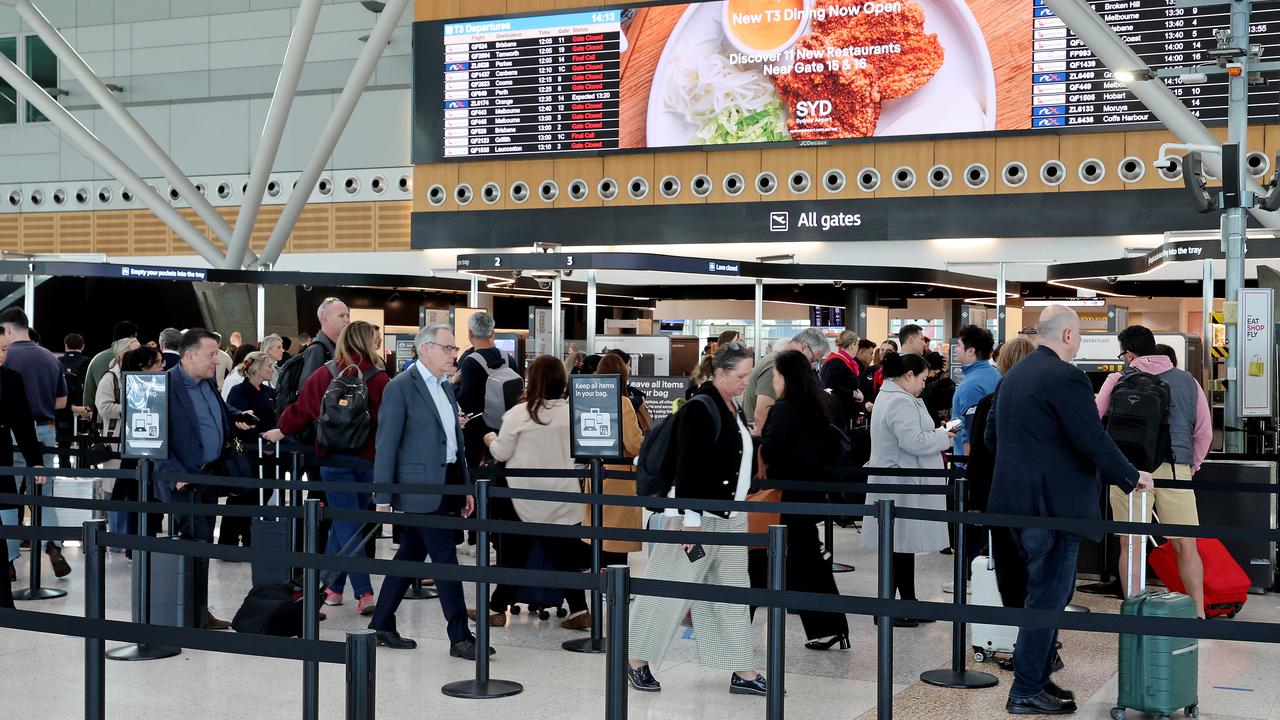
    A bitter public dispute over safety standards has broken out at Sydney Airport, Australia’s busiest and largest air travel hub, after two back-to-back near-miss incidents on the tarmac sparked urgent crisis talks between federal regulators and government leaders this week.

    The Sydney Airport Union, which represents airport workers, has issued a stark public warning that the facility is unsafe for passengers and employees alike, blaming aggressive cost-cutting by airport management and its contracted security providers for creating dangerous conditions that put the traveling public at risk. Union secretary Robert Car told reporters that the recent close calls are just the most visible symptom of a systemic failure, driven by a corporate push to slash expenses at the expense of safety protocols.

    Car specifically called out Certis Security, the airport’s contracted security firm, alleging that deep staff cuts implemented to boost profit margins have led to the complete abandonment of mandatory checks for Aviation Security Identification Cards (ASIC), the key credentials required to access restricted secure areas of the airport. “Any member of the public could pick up a lost ASIC card dropped in a public zone and walk straight into areas that are supposed to be tightly secured,” Car said. He added that working conditions at Certis have become so dire that employees are not even granted access to official safe operating procedure documents, a violation of basic industry safety standards.

    “The pattern of cost-cutting here is deliberate, and it will only lead to more near-misses and potentially catastrophic incidents down the line,” Car said. “Sydney Airport and its contractors do not prioritize the safety of passengers or our members. The only path forward is for workers to organize to push for meaningful change.”

    Airport management has forcefully rejected the union’s allegations, issuing a statement pushing back on all claims of systemic safety failures. A Sydney Airport spokesperson emphasized that the facility takes all safety and security obligations extremely seriously, operating under strict national aviation security regulations and constant regulatory oversight. “These claims are false and do not reflect the robust security measures, operational procedures and regulatory oversight in place across the airport,” the spokesperson said.

    Certis Security has not yet issued a public response to the allegations, with the company confirming it had been contacted for comment but has not released an official statement as of press time.

    The conflict comes as three separate near-miss incidents at the airport over the past month are already under formal investigation. The most recent close call, which took place last Sunday, involved a Jetstar A320 passenger jet and a Qatar Airways 777 being towed on the tarmac; two air traffic control staff were stood down pending the outcome of the investigation. Earlier this week, details emerged of an unreported aborted takeoff incident involving a Qantas aircraft, where a crossing plane was a substantial distance away but the incident was never logged with regulators. Just two weeks prior, on July 27, a QantasLink flight and a mainline Qantas flight were involved in another near collision on the ground.

    Airservices Australia, the government body responsible for air traffic control at the airport, confirmed this week that it is working alongside the Australian Transport Safety Bureau (ATSB) to probe all recent ground incidents. Rob Sharp, chief executive of Airservices Australia, told reporters that safety remains the organization’s absolute top priority. “I can assure the public that we absolutely look at all of these incidents for any learnings and continue to improve our procedures,” he said.

    Sharp has faced growing pressure over persistent staffing shortages at the Sydney control tower, which have forced remaining controllers to work frequent overtime shifts to cover gaps. New South Wales Transport Minister John Graham has already called Sharp in to receive formal assurances that operational stability will be improved at the airport over the coming month, amid widespread public anger over repeated flight delays and cancellations this travel season.

    Federal Transport Minister Catherine King confirmed this week that the federal government had held crisis talks with Airservices leadership following the weekend’s near-miss and ongoing unacceptable service disruptions. King said the ATSB’s investigation will specifically examine whether staffing shortfalls contributed to the recent close calls, and that Airservices has committed to full cooperation with the probe.

    “Incidents do occur at airports across the country from time to time, but that does not mean we take them lightly,” King said. “We need to allow the ATSB to complete its independent investigation without interference to get clear answers about what went wrong and what changes need to be made.”

  • The Polygamist’s creator says women see themselves reflected in her Netflix hit

    The Polygamist’s creator says women see themselves reflected in her Netflix hit

    For many casual observers, Sue Nyathi’s sudden global fame looks like a classic case of overnight success. But the award-winning Zimbabwean author is quick to push back on that narrative: every bit of her current acclaim, she says, is the product of decades of unseen work, personal sacrifice, and relentless passion for storytelling. Nyathi’s journey from part-time evening writer writing after a full day in finance to a globally celebrated creator whose work tops Netflix charts across 60+ countries is a testament to how underrepresented voices can break through systemic barriers to find worldwide resonance.

    Nyathi’s breakthrough story began long before her adaptation hit streaming screens. When she first sent her debut novel *The Polygamist* to traditional publishing houses, editors uniformly rejected it, claiming there was no viable commercial market for a story centered on a polygamous Zimbabwean man and the women whose lives he upends. Refusing to abandon her project, Nyathi took the self-publishing route: she sourced her own editor, typesetter, and cover artist, and printed just 500 copies of the book in 2012. The novel defied every industry expectation, quickly becoming a word-of-mouth hit that found an eager audience across southern Africa.

    Decades later, that self-published debut has been adapted into a Netflix original series that currently ranks in the streamer’s global top 10 most-watched shows, reaching the number two spot in the U.S. market. Even A-list Hollywood star Taraji P. Henson publicly shared that the drama had her gripped, admitting she binged all 22 episodes in a single sitting.

    Contrary to common assumptions about the story, Nyathi emphasizes that her work is not a simple critique of traditional consensual polygamy – a practice deeply woven into her own family history. Growing up, her mother’s side of the family had practiced polygamy for generations: her grandfather, who died in 1979, had five wives, and her great-grandfather had 11. Her great-grandmother, the senior wife (or Unlengkulu in local culture), served as matriarch of the family farm where all wives lived together, and even helped select new spouses for her husband. Nyathi recalls that in this traditional structure, there was no infighting: roles were clear, all labor – physical and emotional – was shared, and everything operated out in the open. “Everybody knows who’s who in the zoo,” she jokes of the open traditional model.

    The story instead shines a light on what Nyathi calls the “modern, perverted version” of polygamy: a pattern of deception that preys on women’s lack of autonomy in patriarchal societies. As a young professional working in Harare in 2001, Nyathi observed that many men who publicly claimed to be monogamous were secretly maintaining multiple households and partners, lying to every woman involved. This is the core conflict of her novel.

    In the story, protagonist Joyce enters what she believes is a monogamous marriage to wealthy self-made businessman Jonasi, only to slowly discover he has secretly married three other women, each with their own separate home. Even though Joyce helped Jonasi build his business empire, she remains financially dependent on him, as do his other secret wives. This power imbalance leaves all the women vulnerable, exacerbates risks like HIV transmission, and strips them of agency to negotiate their own relationships. Nyathi makes her position clear: “I’m not against polygamy. What I’m against is the lack of agency. It’s wrong for the goalposts to be shifted once you’re inside.”

    The Netflix adaptation shifts the story’s setting to South Africa and films it primarily in Zulu with subtitles, a choice Nyathi says preserves cultural nuance that could never be captured in English. Unlike the novel, which is narrated entirely from the perspectives of Jonasi’s wives, the series expands the narrative scope slightly, but the core focus on women’s lived experiences remains. Nyathi says her goal was always to center women’s voices, letting each character explain the circumstances that led her to the relationship – and the response from audiences around the world has confirmed how universal these themes are. Women regularly reach out to her to say they see their own lives reflected in the characters, with many sharing they are currently married to a “Jonasi” and want to leave. Following the series’ release, Amnesty International South Africa even published official guidance for women experiencing narcissistic abuse, noting the urgent conversations the drama has sparked. “For some people, this is not just a series,” Nyathi says. “It’s their lived reality. It holds up a mirror to society.”

    Not everyone has embraced the unflinching reflection the story provides. A Kenyan civil servant has publicly called for the series to be banned in Kenya, arguing it unfairly conflates traditional polygamy with deception, cheating and abuse. But Nyathi stands firmly by her work, noting that cultural practices evolve over time, and documenting the corruption of traditional norms is a valid, necessary perspective. She also points out that by centering affluent Black African protagonists, the story challenges harmful global stereotypes that consistently frame African life through the lens of poverty. She notes that one European reader told her he had never even conceptualized that wealthy Black Africans existed – a gap the series helps close.

    Beyond the story itself, Nyathi’s journey as a writer highlights the deep structural barriers that face many African writers, particularly women who lack outside financial support. Nyathi dreamed of writing from childhood, but her parents pushed her toward a stable corporate career, and she spent nearly 20 years working as an investment analyst. She wrote *The Polygamist* in the evenings after work, only leaving her corporate job at age 40, several years after the book’s initial self-published release, to write full-time. Now 48, she says the label of “overnight success” erases the decades of sacrifice that got her here. “The recognition is overnight, but the work has been put in over many years, and I’ve made a lot of sacrifices,” she explains.

    She notes that for most emerging writers on the continent, making a living solely from book sales is nearly impossible. Many successful African writers rely on grants, literary residencies, or spousal financial support – options that were never available to Nyathi, a single mother who juggled multiple jobs to put her son through school while keeping her writing dream alive. “Writing is a luxury that most people can’t afford,” she says, adding that this barrier means countless important African women’s voices never get heard. She also points to a persistent imbalance in global publishing: it is far easier for African writers to gain traction if they are published overseas, while domestic African work struggles to break into global markets.

    The “Netflix effect” has changed that for Nyathi, finally giving her the global visibility that eluded her across four published novels and 12 years of writing on politically and socially urgent topics. She is currently putting the final touches on the first draft of a new historical novel, which she says will carry forward the same focus on resonant, human-centered themes.

    For aspiring women writers who lack financial resources, Nyathi has one simple piece of advice: start where you are, and write for the love of the story. “Everything starts with a story,” she says. “If you think you have a book in you and you don’t have money, start with a pen and paper, and do it for love. Money should never be the motivation. The love is what will fuel you when it gets hard.”

  • Many Canadians are boycotting the US, so this is where they’re travelling instead

    Many Canadians are boycotting the US, so this is where they’re travelling instead

    More than 12 months after Donald Trump returned to the White House, thousands of Canadian travelers are continuing a deliberate boycott of leisure travel to the United States, a response driven by controversial trade policies and inflammatory rhetoric about Canada’s sovereignty that has already cost the U.S. tourism sector billions in lost revenue.

    For many Canadian households, the shift in travel plans did not happen overnight. Kent Truscott, a resident of London, Ontario, had made multiple recreational trips to the U.S. over the years, visiting destinations from California to New York as recently as 2023. But within months of Trump’s 2024 re-election, Truscott and his family made a permanent decision to avoid American travel. That meant scrapping a long-planned spring trip to Texas, where he and his brother had intended to spend thousands of dollars watching the SpaceX Starship launch. Instead, Truscott redirected that travel budget to exploring Canada’s own Atlantic provinces of Nova Scotia and Prince Edward Island.

    Far from regretting the change of plans, Truscott said the domestic trip exceeded his expectations. He and his wife rented a car, hiked the iconic, cliffside Cabot Trail, and stayed at a women-owned coastal resort, where he ate what he described as the best halibut dinner of his life, caught fresh that same morning in the Atlantic bay. But the decision to boycott runs deeper than a change of scenery: Truscott cited Trump’s imposition of new tariffs on Canadian goods, repeated comments suggesting Canada should become the U.S.’s 51st state, and controversial domestic policies including anti-immigration raids as core reasons for his stance. Even if Trump leaves office in the future, Truscott noted that more than 70 million Americans voted for his agenda, leaving a fundamental rift in cross-border relations that will not quickly heal.

    Truscott is far from alone in this choice. Official national travel data shows that even with a small uptick in Canadian road trips to the U.S. in April of this year, total trips were still 800,000 lower than the same month in 2024, before Trump won re-election. The economic impact has been substantial: the boycott stripped an estimated C$3.3 billion ($2.35 billion) from U.S. tourism revenue last year alone, with that money instead flowing to Canadian domestic businesses and international destinations outside the U.S. Many U.S. cities and states that rely heavily on Canadian tourism have already scrambled to reverse the trend, rolling out targeted promotions and deep discounts to lure visitors back. In July, New York City’s tourism board announced a 30% discount on Broadway show tickets and hotel rooms exclusively for Canadian travelers.

    For Lynda Rousseau, a retired dual U.S.-Canadian citizen now living in Ottawa, the boycott came hand-in-hand with an early move back to her home country. Rousseau and her husband Joe had lived in Texas for 19 years, with a planned return to Canada scheduled for summer 2025. But they pushed their relocation up to February that year, immediately after Trump’s election win, saying they could not stomach living in the U.S. under his leadership. After Trump began publicly referring to Canada as the “51st state” and mocking former Canadian Prime Minister Justin Trudeau as a “governor,” the couple decided to boycott all U.S. travel entirely.

    They canceled a summer cruise scheduled to depart from New York City and travel through the Panama Canal, rebooking the same cruise line for a Mediterranean itinerary that took them to Rome and Barcelona, where they explored ancient Roman ruins and sampled local cuisine. The couple also scrapped their long-held plan to become “snowbirds” — Canadian retirees who spend cold winter months in warm U.S. states like Florida and Arizona. Today, they only cross the border occasionally to pick up mail, and never spend money on goods or services during their brief trips. While Rousseau says she misses the convenience and affordability of nearby U.S. travel, the boycott has brought an unexpected benefit: a renewed sense of national pride in Canada.

    Vancouver retiree Nick Smith has avoided U.S. travel on and off for years, having first boycotted after Trump’s initial 2016 election win, only resuming cross-border trips when Joe Biden took office. Now, he is back to avoiding the U.S. entirely, encouraged by the widespread boycott among his fellow Canadians. Smith even avoids connecting flights through U.S. airports, opting for more expensive direct flights to international destinations to avoid stepping on U.S. soil. Earlier this year, he and his wife Sylvia traveled to Morocco for the first time, where they experienced Ramadan firsthand, an experience he called deeply eye-opening and unlike anything they could have had in Canada. For Smith, a change in U.S. administration would not be enough to bring him back; he says he needs to see tangible action to repair cross-border relations before he would consider visiting again.

    For Christie Mitchell, a 50-year-old mother of two from Powell River, British Columbia, the boycott has been a particularly emotional shift. Mitchell has traveled to the U.S. countless times over her life: she has hiked American national parks, attended NFL games, and driven an RV across multiple states down to Florida. She even grew up in an era when Canadians did not need a passport to cross the border, and once thought of Canada and the U.S. as one shared, open country. But that warm sense of closeness has faded under the current U.S. administration, and she does not want to support it with her travel spending. “It breaks my heart, because I love Americans and I love America,” she said.

    Instead of taking a planned cheap birthday trip to Las Vegas to celebrate her 50th birthday this year, Mitchell fulfilled a lifelong dream by hiking the 490-mile Camino Francés pilgrimage route in Spain. The trip exceeded her expectations, she said, as she got to meet travelers from across the globe and have deep, meaningful conversations with people from all walks of life. Mitchell says she would be open to returning to the U.S. if a new administration takes office and cross-border relations are fully repaired.

    While political tensions are the primary driver of the boycott, some Canadians also cite economic factors: the declining value of the Canadian dollar has made U.S. travel significantly less affordable for many households, pushing more travelers to seek domestic or alternative international destinations instead. For most of those surveyed, however, the core issue remains the strained relationship between the two neighboring countries, a rift that many say will take years to mend, even if political leadership changes.

  • How is parkour helping these seniors avoid injuries?

    How is parkour helping these seniors avoid injuries?

    Japan, long recognized as one of the world’s most rapidly aging nations, is constantly grappling with the growing public health challenge of keeping its senior population active, independent, and free of debilitating falls and injuries. In recent years, an unconventional approach has emerged to address this crisis: older adults across the country are turning to parkour, the high-energy urban movement sport once associated with young thrill-seekers, to build strength, improve balance, and reduce their risk of injury.

    Unlike popular assumptions that parkour is exclusively for young, physically fit people, the adapted senior-focused programs modify the sport’s signature moves to match individual mobility levels. Participants practice low-height vaults, controlled landing techniques, precise step coordination, and gentle obstacle navigation that trains core stability, spatial awareness, and reactive muscle strength—all key factors in preventing falls, the leading cause of injury-related hospitalization and disability among adults over 65.

    What started as a small community experiment has grown in popularity as seniors report tangible improvements: many participants say they feel more confident navigating everyday obstacles like curbs, uneven sidewalks, and stairs, reducing their constant fear of falling that often leads to reduced activity and accelerated physical decline. Beyond physical benefits, the group-based classes also foster social connection, addressing the widespread issue of social isolation among older adults. As populations around the globe age, this creative approach to senior health offers a promising model for other nations grappling with similar public health goals.

  • Japan’s Defense Minister Koizumi prays at shrine seen by neighbors as symbol of Japanese militarism

    Japan’s Defense Minister Koizumi prays at shrine seen by neighbors as symbol of Japanese militarism

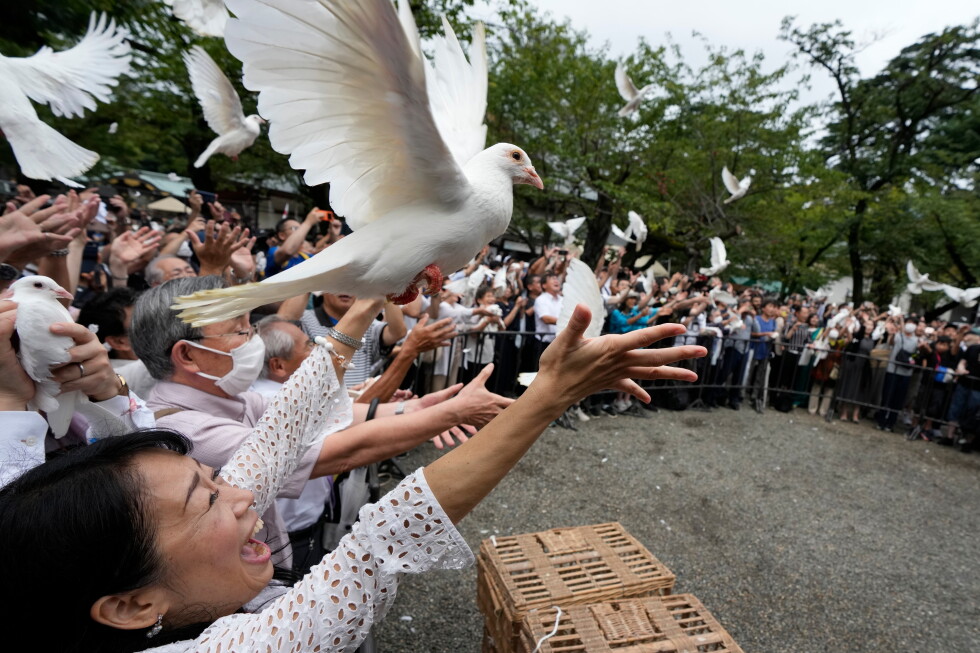
    TOKYO – In a move that has reignited long-simmering diplomatic friction across East Asia, Japanese Defense Minister Shinjiro Koizumi carried out a prayer visit to Tokyo’s divisive Yasukuni Shrine on Saturday. The Shinto shrine has long been viewed by Japan’s neighboring countries China and South Korea as a painful symbol of Tokyo’s 20th-century imperial militarism, a reputation amplified by its enshrinement of convicted World War II class-A war criminals alongside Japan’s war dead.

    This latest visit marks far from an isolated occurrence for Koizumi, who has built a pattern of repeated trips to the controversial religious site. The defense minister has routinely traveled to Yasukuni for key anniversaries, including Japan’s annual August 15 marking of the end of World War II, as well as other scheduled occasions over the years.

    The contrast between Koizumi’s visit and the plans of another senior Japanese political leader highlights the delicate balancing act Tokyo is navigating between domestic political currents and diplomatic priorities. Prime Minister Sanae Takaichi, who is also a regular visitor to the shrine, has announced she will refrain from a trip this cycle, choosing to prioritize stabilizing critical diplomatic ties with China and South Korea instead.

    For decades, official political visits to Yasukuni Shrine have been a flashpoint for regional tensions. China and South Korea, both of which suffered widespread atrocities under Japanese imperial occupation during the first half of the 20th century, uniformly condemn such visits as evidence that Japanese political leaders have failed to offer full, sincere remorse for wartime harms inflicted across the region.

  • Magnitude 7.7 earthquake strikes off Indonesia’s coast, toppling buildings and killing at least 2

    Magnitude 7.7 earthquake strikes off Indonesia’s coast, toppling buildings and killing at least 2

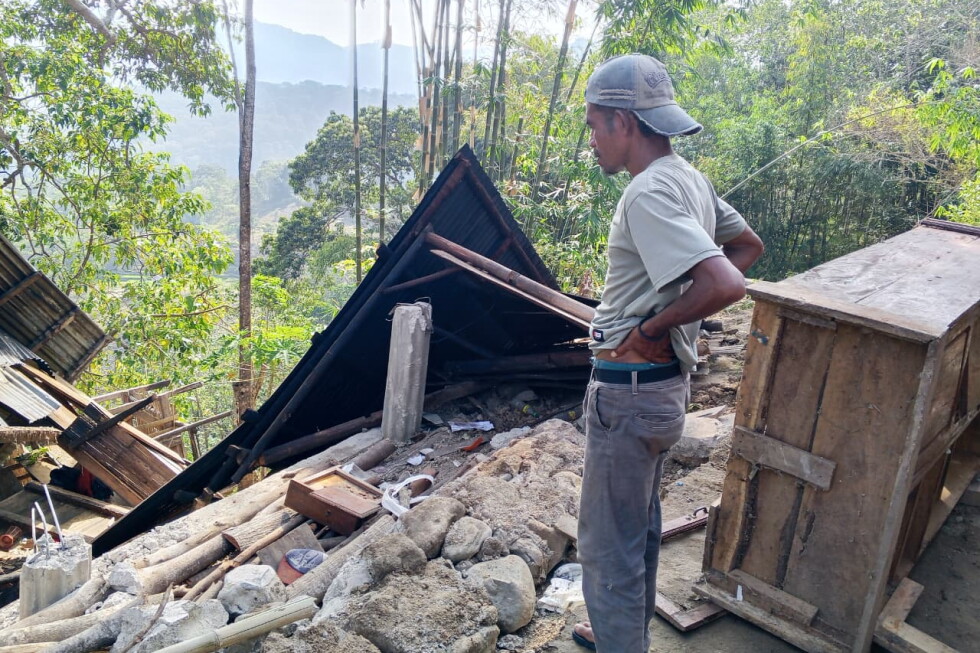
    Early Saturday morning, a powerful 7.7-magnitude undersea earthquake shook coastal regions of Indonesia’s Flores island, leaving at least two people dead, two others injured, and a swath of collapsed infrastructure across the seismically active archipelago. As of the latest official updates, emergency response teams are still conducting preliminary damage assessments across the most hard-hit areas.

    The U.S. Geological Survey recorded the quake striking at 5:58 a.m. local time, with a relatively shallow depth of just 10 kilometers. Its epicenter was placed roughly 68 kilometers (42 miles) north-northwest of Ende, a major city in Indonesia’s East Nusa Tenggara province. The initial seismic event was followed by multiple smaller aftershocks that complicated immediate response efforts.

    Immediately after the quake was detected, Indonesian disaster authorities issued a broad tsunami warning covering coastal areas of four provinces: East Nusa Tenggara, West Nusa Tenggara, South Sulawesi, and Southeast Sulawesi. The warning urged all coastal residents to evacuate to higher ground and avoid low-lying areas including beaches and riverbanks. However, the Meteorology, Climatology and Geophysics Agency later canceled the alert after continuous monitoring confirmed no significant sea level shifts that would threaten coastal communities, easing widespread public panic.

    Local eyewitness accounts paint a picture of chaotic panic as the quake hit. Yohanna Embu, a resident of Sikka regency in East Nusa Tenggara, told reporters that strong shaking damaged dozens of structures across the area, including a total collapse of the waiting room at Maumere’s port terminal. Panicked residents flooded roads heading for higher ground immediately after the shaking began.

    At St. Peter Major Seminary, locally known as Ritapiret Seminary, dozens of students were gathered for morning Mass when the roof of the campus assembly hall caved in. Rev. Guidelbertus Tanga, the seminary’s rector, said students and on-site nuns fled the collapsing structure in immediate panic. At least one priest suffered a broken leg after jumping from the second floor of a damaged campus building to escape.

    As a safety precaution, multiple hospitals across the affected region evacuated all patients from their main buildings. Local television footage showed medical staff moving critical equipment including patient beds, IV stands and oxygen cylinders outside, where they set up temporary triage and treatment areas to continue care amid the risk of aftershocks damaging weakened structures.

    Indonesia’s position along the Pacific Basin’s “Ring of Fire” – a vast network of active volcanoes and tectonic fault lines – leaves the 17,000-island archipelago chronically prone to major seismic and volcanic events. This region of Flores is no exception: a devastating 1992 earthquake in the same area triggered a tsunami that killed an estimated 2,500 people, leaving a lasting memory of seismic risk among local communities.

    Associated Press journalists Niniek Karmini and Edna Tarigan contributed reporting from Jakarta for this story.