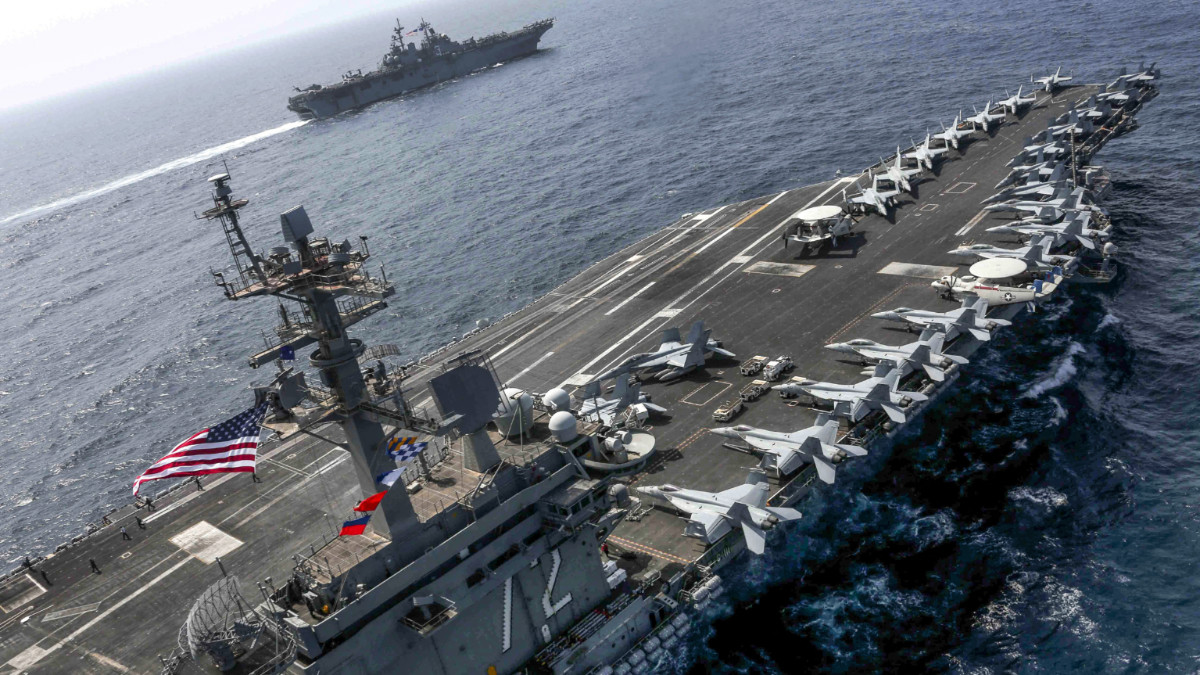
After months of an extended, port-call-free deployment enforcing a US-led blockade of Iran that sparked a widespread mental health and morale crisis among crew members, the United States has announced it will replace the USS Abraham Lincoln aircraft carrier with the USS George Washington in the Middle East theater of operations.
The USS Abraham Lincoln has remained on station for more than 250 consecutive days without a single stop at a foreign or regional port for rest and resupply, an unorthodox stretch that has triggered serious alarms among US lawmakers and military family members over the well-being of the carrier’s crew. Multiple media outlets have documented serious incidents tied to deteriorating crew conditions: earlier this month, one sailor jumped overboard the vessel during a mental health episode, and was rescued and evacuated for medical treatment within an hour, according to CNN reporting. A second incident followed, where crew members had to intervene to stop another sailor from jumping overboard, according to US military-affiliated publications Stars and Stripes and Navy Times.
The depth of the crisis has been laid bare in testimonies to military leadership. During a public town hall with Acting Secretary of the Navy Hung Cao, one military spouse told officials her husband serving aboard the Lincoln had said he “hopes he doesn’t wake up tomorrow”, reflecting the widespread exhaustion and despair across the ship. One unnamed crew member told Stars and Stripes that the deployment had been nonstop operational pressure with no end in sight, noting “We’ve just been turning and burning the whole time we’ve deployed. Nothing to really look forward to at this point. All we want is a date home.”
The rotation plan was first reported by The Wall Street Journal on Thursday, and comes as top US defense officials have insisted the blockade of Iran can continue indefinitely through regular ship rotations. “Indefinitely the United States Navy can maintain a blockade like that because we’ll rotate ships in and out, as we have, and we’ll continue to,” US Secretary of Defense Pete Hegseth told reporters Thursday. While nine-month carrier deployments are not unprecedented during active conflict, standard military protocol calls for monthly port calls to rest crews and replenish essential supplies, a precaution that has been skipped entirely during the Lincoln’s deployment.
The carrier’s deployment comes amid months of escalating tensions between the US and Iran over control of the Strait of Hormuz, a critical global chokepoint for oil and petroleum shipments, with no ceasefire agreement on the horizon to de-escalate hostilities. Iran has targeted commercial vessels linked to Gulf states carrying oil outside the waterway, while the US has interdicted and targeted vessels it says are linked to Iranian trade violations of the blockade. Just this Tuesday, the US launched two Hellfire missiles against a Panama-flagged cargo ship that attempted to break the American blockade of Iranian ports, The Wall Street Journal reported.
US lawmakers have already raised formal concerns about the physical and mental toll of the extended deployment on the Lincoln’s crew, and the rotation is expected to address the mounting crisis while allowing the US to maintain its blockade posture in the region.