博客

  • ‘Complete takeover’:Key detail locked in as massive week planned for State of Origin match in Auckland

    ‘Complete takeover’:Key detail locked in as massive week planned for State of Origin match in Auckland

    Rugby league fans across Australia and New Zealand now have a confirmed date to mark on their calendars, as the Australian Rugby League Commission (ARLC) has officially locked in details for the historic first State of Origin game to be hosted outside of Australia. Game two of the 2026 State of Origin series will be played at Auckland’s iconic Eden Park on Wednesday, June 16, marking the first time in the tournament’s long history that a fixture will be held across the Tasman Sea in New Zealand.

    The confirmation, announced publicly by the ARLC on Tuesday morning, paves the way for fans to book travel and hospitality packages for the groundbreaking event. Organizers have also planned a full week of rugby league-focused celebrations leading up to the main Origin fixture, kicking off with a National Rugby League (NRL) match hosted by the New Zealand Warriors at the same Eden Park venue on the Sunday three days before the Origin clash.

    This historic cross-Tasman move continues a growing trend in recent years of expanding State of Origin hosting beyond the traditional strongholds of Sydney and Brisbane. Over the past decade, Adelaide, Perth and Melbourne have all stepped in to host Origin fixtures, spreading the sport’s most high-profile rivalry to new audiences across the region.

    ARLC Chair Peter V’landys emphasized that the move to Auckland is a natural next step for the iconic tournament, which has carved out an unmatched reputation in Australian sport. “State of Origin is truly one of a kind,” V’landys said. “It delivers an atmosphere you cannot find anywhere else in Australian sport – brutal but respectful rivalry, unfiltered passion, and an intensity that you have to experience in person to understand. This is a bucket-list event for any rugby league fan.”

    He added that the week-long festival of rugby league will not only build excitement for the main match but also showcase the sport to New Zealand audiences and traveling international fans. “It’s going to be a complete takeover of Auckland, putting the very best of rugby league on display for everyone,” he said.

    Current State of Origin champions the New South Wales Blues will head into the fixture looking to extend their recent run of success, with organizers projecting that around 50,000 fans will pack into Eden Park for the historic clash. Growing interest in the match has been fueled by the surging popularity of rugby league across New Zealand, where the Warriors have consistently drawn record crowds at every home match in recent seasons. This strong fan base has also sparked growing speculation that New Zealand could be the home of the NRL’s 20th franchise in coming years.

    Auckland Mayor Wayne Brown called the first-ever Origin match to the city a major win for the region, noting the tournament’s status as one of the biggest sporting events in the Australasian region. “One of the biggest events in Australasian sport is coming to our city, and we can’t wait to put on an incredible experience for fans who live here and those traveling over from Australia,” Brown said. “Now that the date is locked in, fans can start planning their trips. We encourage everyone to stay for more than just the 80 minutes of play – make a full week of it, and experience our city’s take on State of Origin both inside the stadium and across Auckland.”


  • BBC breaks down Trump’s latest shift on North and South Korea

    BBC breaks down Trump’s latest shift on North and South Korea

    In a surprising policy shift that has drawn widespread international attention, former US President Donald Trump has revealed plans to substantially scale back joint military exercises between the United States and South Korea. The announcement, which was recently broken down and analyzed by BBC, marks another notable turn in Washington’s approach to the Korean Peninsula amid shifting diplomatic dynamics.

    Trump framed the decision around his personal diplomatic approach, telling audiences that his own ‘very good relationship’ with North Korean leader Kim Jong Un is the key factor behind the move. The planned drawdown of joint drills, which have long been a source of tension between Pyongyang and the US-South Korea alliance, signals a deliberate effort to de-escalate tensions on the peninsula following years of rising rhetoric and military posturing.

    Diplomatic observers note that this shift represents a break from decades of consistent US military posture on the Korean Peninsula. Since the armistice that halted the Korean War in the 1950s, the US and South Korea have regularly conducted large-scale joint military exercises to maintain combat readiness and deter potential aggression from North Korea. For North Korea, these drills have consistently been viewed as provocative preparations for an invasion, a stance that has repeatedly derailed diplomatic efforts in the past.

    Trump’s decision opens a new chapter in US engagement with the Korean Peninsula, prioritizing personal diplomacy over long-standing military preparedness protocols. While the move has been praised by supporters as a bold step toward peace, critics have raised concerns about the impact on alliance credibility and regional security. As the situation develops, regional powers and global stakeholders are closely watching how North Korea responds, and whether this shift will pave the way for renewed denuclearization talks.

  • The goat is now a celebrity – how this graduation gift went viral

    The goat is now a celebrity – how this graduation gift went viral

    For most university students walking out of their final degree exams, graduation day brings familiar joyful traditions: cheering friends, celebratory music, and handwritten messages scrawled all over one another’s white shirts to mark the end of a shared academic journey. But for 23-year-old pharmaceutical technology student Promise Okoro, a recent graduate of Nigeria’s Federal Polytechnic Nekede in Imo state, this already exciting day became a once-in-a-lifetime memory thanks to an unforgettable surprise from his mother.

    As Promise emerged from the exam hall to the noise of his friends’ celebrations, he first assumed the excited screams cutting through the crowd meant someone was about to stage a public marriage proposal. Instead, he spotted his mother Chinyere leading a full-grown goat through the gathered crowd toward him, turning a happy afternoon into an emotional moment he says he will never forget. Far from feeling embarrassed by the unexpected public gesture, Promise says he was overcome with joy, and his classmates joined in loud cheers for the unique graduation gift.

    The candid footage of the surprise quickly spread across social media platforms, where it has garnered thousands of warm reactions from audiences around the world. While a live goat might seem an unusual graduation present to outsiders unfamiliar with southeast Nigerian culture, the gift holds deep cultural meaning among the Igbo people. Goats are considered valuable, meaningful gifts used to express respect, sincere appreciation, and goodwill, and they are a traditional centerpiece of important life events from traditional weddings to family celebrations and ceremonies honoring beloved community members.

    Chinyere, a small-scale consumer goods trader based in the family’s rural farming community of Ubaha-Eze, had originally dreamed of gifting her son a brand new Mercedes-Benz 4Matic SUV to mark his achievement. But strained business conditions put the expensive car far out of her budget. Instead, she stuck to a promise she made to Promise when he first enrolled in university: if he stayed clear of violent gangs and negative influences, and completed his degree, she would reward him for his hard work. She traveled more than an hour with the goat, which she purchased for 120,000 naira (equivalent to roughly $88 USD), to surprise him on graduation day.

    “I did not have money for a 4matic Jeep – I love that car – so I said let me buy this little gift,” Chinyere explained in an interview. “People love my son, I wanted to prove that he is loved. As I walked in and met loud celebrating and shouting, it gladdened my heart knowing that my son will rejoice together with us all when he comes out.”

    For Promise, the goat is far more than a graduation centerpiece: it is now his beloved pet, and he says he has no intention of slaughtering it for meat, as some online commentators have wondered. The young graduate even has future plans: he intends to adopt a female goat to breed with his new companion. For now, the animal roams freely in Promise’s student accommodation, and has already developed an unexpected fondness for a human favorite: fried rice. Promise says the goat devours his leftover fried rice with surprising enthusiasm.

    The goat has even become a minor local celebrity. It has joined Promise on car rides to nearby shopping malls, where crowds of fans have rushed to take photos with the animal, and joins Promise for evening walks around his neighborhood. “It got on a car ride with me from my hostel to the mall… it was calm [even though] it’s now a celebrity – more popular than me,” Promise laughed.

    Beyond the viral moment, the gift reflects the close bond between Promise and his mother, who he says he can talk to about anything, and often turns to for guidance. For Promise, completing his university degree is a major milestone far beyond earning a certificate: Nigeria’s tertiary education completion rate sits at just 11.3 per 100 people, a figure slightly above the sub-Saharan African average of 10.5 but well below the 17.6 average for lower middle-income countries globally.

    As a pharmaceutical technology graduate, Promise says he plans to stay in Nigeria to work to improve the country’s strained healthcare system, even as many local health professionals choose to leave for better opportunities abroad. He is confident in his exam performance, expecting to place among the top 50 students in his cohort when results are released. Now, after his mother’s heartfelt surprise, Promise says he is determined to reciprocate her love and support with a meaningful gift of his own down the line. What that gift will be, it will almost certainly struggle to top the simple, heartfelt gesture of a goat brought from the village with a mother’s pride and love – a moment that has won over thousands of people online across the world.

  • Lula calls oil near the Amazon River a passport to Brazil’s future after Petrobras strikes new find

    Lula calls oil near the Amazon River a passport to Brazil’s future after Petrobras strikes new find

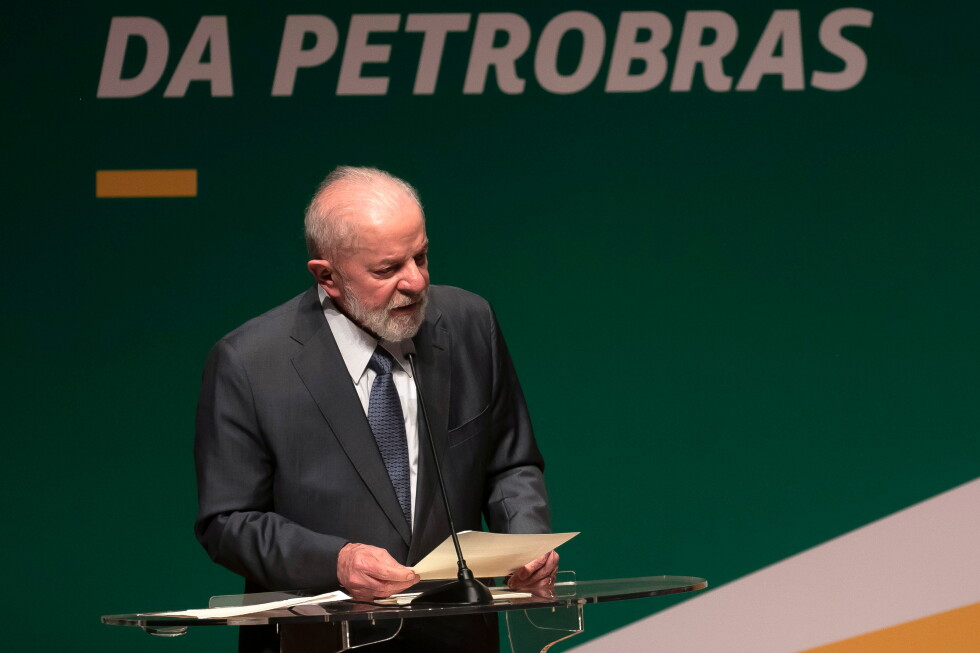
    RIO DE JANEIRO — Standing on the soil of Amapa state, northern Brazil, Brazilian President Luiz Inácio Lula da Silva made a bold case for expanded offshore oil exploration along the country’s fragile Equatorial Margin on Monday, framing a recently confirmed hydrocarbon find near the mouth of the Amazon River as a transformative opportunity for the nation’s development, just weeks before he stands for re-election in a tightly contested presidential race.

    The discovery, announced by majority state-owned energy giant Petrobras last Friday, came after months of exploratory drilling that wrapped up earlier this year. The find is located roughly 180 kilometers off Amapa’s coastline, within the Equatorial Margin — a vast, under-explored offshore basin that geologists estimate could hold as much as 10 billion barrels of recoverable oil and natural gas, with a projected market value of roughly $720 billion.

    Lula’s remarks came shortly after he toured Petrobras’ offshore drilling rig that carried out the exploration work. In his address to local officials and supporters in Oiapoque, Amapa’s northernmost municipality, Lula pushed back against critics who frame the project as a contradiction to Brazil’s global commitments to fossil fuel phase-out. The president emphasized that his support for new drilling does not weaken Brazil’s position as a global leader in renewable energy innovation.

    “When I call this a passport to the country’s future, I am not backing away from my commitment to a day when we no longer depend on fossil fuels,” Lula said. “Brazil will remain the global leader in biofuel innovation and a major player in the renewable energy sector for decades to come.”

    Under Lula’s current administration, Brazil has positioned itself as a key negotiator for global climate action, most prominently during the United Nations Climate Change Conference (COP30) that the country hosted in 2024. The government has repeatedly backed international agreements to phase out coal, oil and gas production to limit global temperature rise. At the same time, Lula’s administration has moved aggressively to open new offshore areas for drilling, approving hundreds of millions in new exploration investments to boost government revenue and domestic energy production.

    Petrobras CEO Magda Chambriard accompanied Lula during Monday’s event, confirming that the recent hydrocarbon discovery validates years of geological research into the Equatorial Margin’s potential. “All of our preliminary studies pointed to substantial reserve potential in this basin, and this discovery confirms those findings,” Chambriard said. “We will continue exploration work to fully map the extent of the resources here.” She added that the company still needs years of additional testing to confirm the total volume of commercially viable oil in the area.

    Energy analysts note that full commercial production remains far off. Shigueo Watanabe Jr., an energy expert with Brazilian climate nonprofit ClimaInfo, explained that extensive feasibility and environmental testing would be required before extraction can begin, a process that could take as long as 10 years to complete.

    The exploration project has faced fierce pushback from environmental advocacy groups and Indigenous communities, who argue that drilling in the sensitive Amazon mouth region poses unacceptable ecological and climate risks. Groups have already filed lawsuits against the Brazilian federal government and Petrobras, arguing the licensing process failed to meet legal requirements to consult with traditional Indigenous communities that depend on the region’s marine ecosystems. They also warn that the government’s environmental impact assessment underestimated the risk of catastrophic oil spills, and failed to properly account for the climate harm of developing new fossil fuel reserves. Petrobras has repeatedly defended its safety record, noting the company has never experienced a major spill in its decades of offshore drilling operations in Brazil.

    Political analysts say Lula’s high-profile announcement of the discovery is closely tied to his 2026 re-election campaign, which officially kicked off on Sunday in Sao Paulo — the city where Lula first rose to political prominence as a metalworkers’ union leader during Brazil’s 1964-1985 military dictatorship. The leftist incumbent is locked in a tight race against Sen. Flávio Bolsonaro, son of former far-right President Jair Bolsonaro, with national opinion polls showing the race is essentially tied heading into the October election.

    During Monday’s event, Lula — wearing a standard orange oil worker uniform — held up a small glass vial of crude oil from the new find, calling the sample “blessed” and saying he would keep it as a memento. He noted that developing the Equatorial Margin reserves would also bring long-overdue economic development to Amapa, a poor northern state that currently relies heavily on exports of agricultural commodities like acai berries and freshwater tucunare fish. Behind him, a large photo showed Lula holding up his oil-stained hands after his tour of the drilling rig — a deliberate echo of a iconic photo from 2008, when Lula announced the discovery of massive pre-salt oil reserves off Brazil’s southeastern coast, during his second term in office when he enjoyed record-high approval ratings.

    Today, Lula is a deeply polarizing figure in Brazilian politics, with polls showing roughly half of Brazilians approve of his presidency, while an equal share disapprove. He has faced particularly low approval in northern Brazil, including Amazonian states like Amapa, where his environmental policies have drawn criticism from both development advocates and conservation groups.
    Breno Rodrigues de Messias Leite, a political science professor at the Federal University of Amazonas, said Lula’s high-profile trip to Amapa is a calculated move to win over northern voters ahead of the election. “For the Amazon region, the possibility of accessing some of the world’s largest untapped oil reserves completely changes the political equation,” Leite explained. “Lula wants to win re-election, and he needs voters in northern states, especially Amapa, to support him.”

  • BHP posts largest dividend in four years on copper boom

    BHP posts largest dividend in four years on copper boom

    Global mining giant BHP has capped off a strong fiscal year on Tuesday, buoyed by a sharp uptick in global copper prices and strong production performance across key segments to post robust full-year financial results that deliver shareholders the company’s highest dividend payout in four years.

    The company reported a net annual profit of $9.8 billion USD, representing a 9% rise compared to the previous fiscal year. Along with this profit growth, total annual dividends jumped 57% year-over-year to reach $8.7 billion USD, equal to $12.24 billion AUD. Dividends per share total $1.72 USD for the full year, with a final payout of $0.99 USD per share scheduled to reach shareholders next month.

    In addition to expanding returns for investors, BHP also increased its capital expenditure and exploration budget by 5% to $10.3 billion USD for the coming fiscal cycle, enabling further investment in high-growth segments.

    Newly installed chief executive Brandon Craig highlighted that copper has become the core growth engine for the global mining firm, marking the first time the commodity has contributed more than half of the company’s underlying earnings before interest, taxes, depreciation, and amortization (EBITDA). “Copper is the engine that is driving BHP’s growth. For the first time, Copper contributed more than half our underlying EBITDA and generated significant free cash flow, which means our copper growth is self-funding,” Craig said in a statement accompanying the earnings release.

    Alongside the copper boom, the firm also delivered strong performance across other core asset portfolios, logging record iron ore production and shipment volumes at its Western Australia Iron Ore (WAIO) operation, maintained annual copper output of roughly 2 million tonnes for the second consecutive year, and posted an improved operating result in its coal segment. Craig added that the company met or exceeded performance guidance across most of its business lines and holds industry-leading cost positions across its operations.

    Looking ahead, BHP executives point to growing global demand for key mined commodities as a long-term tailwind for growth. The firm projects that global copper demand alone will surge from the current 34 million tonnes per annum to more than 50 million tonnes annually by 2050, driven by industrial and infrastructure investment across major global economies.

    “We expect China to continue producing around 1 billion tonnes of steel annually through this decade while it also invests heavily in its power grid, the United States is investing in copper-intensive technology, and India is importing more of the raw materials it needs as the fastest growing major economy,” Craig explained, outlining the divergent demand drivers across key markets.

    Market analysts note that BHP’s strong results stand out amid a recent stretch of underwhelming earnings releases from other large global firms. Tony Sycamore, an analyst with online trading platform IG, highlighted that the company achieved a 35% rise in realized copper prices while cutting unit production costs by 6% even amid broad global inflationary pressures.

    “After a tough run of earnings misses over the past week or so, BHP has stepped up and delivered a solid, if not perfect, set of numbers that should steady the ship,” Sycamore said. “Tight cost control, copper now contributing more than half of group earnings, and total shareholder returns hitting a four-year high are the standout features – and should be enough to see the Big Australian retest its mid-June record high of $65.98 in the sessions ahead.”

    Early trading on the Australian Securities Exchange (ASX) reflected positive investor sentiment, with BHP shares trading up 3.6% to $64.45 AUD shortly after the market open on Tuesday.

  • Former Israeli soldier held captive in Gaza asks Ben Gvir to let him execute Palestinian prisoners

    Former Israeli soldier held captive in Gaza asks Ben Gvir to let him execute Palestinian prisoners

    A shocking exchange between a former Israeli soldier held captive in Gaza and far-right Israeli National Security Minister Itamar Ben Gvir has drawn renewed international scrutiny over the far-right official’s extreme anti-Palestinian policies, coming amid ongoing deadly violations of a fragile 2025 ceasefire in Gaza.

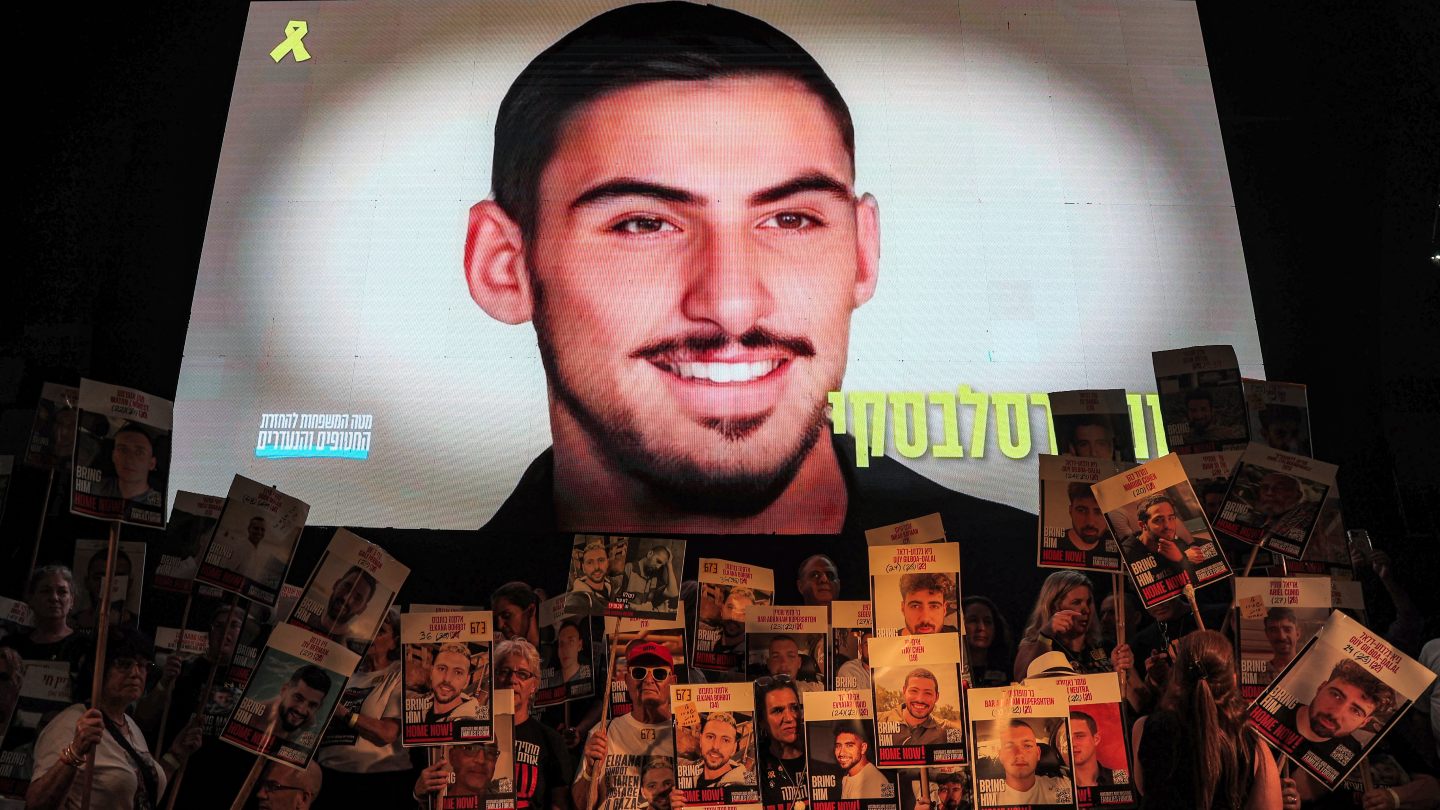
    The conversation unfolded in the debut episode of former captive Rom Braslavski’s new podcast titled *October 8*, which was first reported by Israeli media outlets over the weekend. Braslavski, who was released from Gaza captivity in October 2025, shared a brutal personal request for Ben Gvir during the discussion: that the minister, whose portfolio includes oversight of the Israeli Prison Service, grant him permission to carry out the execution of Palestinian prisoners held in Israeli detention facilities.

    “I have a personal request,” Braslavski told Ben Gvir. “Let me be the one who hangs them. I don’t want a rope — with my own hands I will execute every terrorist in the State of Israel.” Ben Gvir responded immediately with enthusiastic support, saying he would “try and turn the world upside down” to fulfill the request. The far-right minister added that watching released captives execute Palestinian detainees is “one of my dreams,” and described Braslavski as “the right person in the right place […] to hang and execute them one by one.” He added bluntly that Palestinian prisoners “don’t deserve to live.”

    This inflammatory exchange comes as Ben Gvir has spent months advancing a sweeping agenda to escalate abuse against Palestinian detainees held in Israeli custody. Inmates have repeatedly reported widespread torture and sexual assault under the harsh policies Ben Gvir has imposed. Just this month, an Israeli court blocked one of the minister’s more extreme proposals: introducing crocodiles into moats surrounding detention facilities holding Palestinian prisoners. In May, the Israeli Knesset approved a bill sponsored by Ben Gvir’s far-right Otzma Yehudit party that establishes public trials and allows the death penalty for Palestinian detainees accused of involvement in the October 7, 2023 attacks that killed 1,200 people and took 251 captives, including Braslavski.

    Braslavski was working as a security guard at the Nova music festival in southern Israel while on leave from the Israeli military when the 2023 attack took place. As of June 2026, rights groups estimate more than 9,000 Palestinians are held in Israeli detention facilities, with at least 104 Palestinian inmates dying in custody since the October 2023 attacks. During the podcast interview, Ben Gvir openly acknowledged that Palestinian detainees are enduring harsh conditions — and expressed satisfaction with their suffering. “They are suffering, it’s hard for them, it’s bad for them, and I’m glad it’s bad for them,” he said.

    The conversation soon shifted to the situation in Gaza, where Ben Gvir called for a dramatic escalation of Israeli military attacks, saying the country should kill dozens of Palestinian civilians and fighters every night before ultimately permanently expelling the entire Palestinian population from the enclave. “I think we should carry out targeted assassinations in Gaza, taking down 30 to 40 every night,” Ben Gvir said, clarifying that the targets would “not just those who pose an immediate threat.” He added dehumanizing language: “There are people there who are not worthy of life. They shouldn’t live. They’re not even people.”

    Ben Gvir also publicly split with Israeli Prime Minister Benjamin Netanyahu over pressure from the United States to limit Israeli attacks in the devastated Gaza Strip, saying he firmly rejects any limits on military operations. He doubled down on his long-standing calls for ethnic cleansing of Gaza, reiterating that the entire enclave should be annexed by Israel and cleared of Palestinians to make way for Israeli settlements. “I see all of Gaza as ours,” he said, adding he wants to see “settlements not just in Gush Katif but throughout Gaza.” He further called for encouraging mass emigration of Palestinians from occupied territories, clarifying that for “terrorists, no emigration, nothing, just to kill them one by one.”

    The inflammatory comments have reignited debate over Ben Gvir’s outsized influence within Netanyahu’s far-right governing coalition. Once a fringe political figure, Ben Gvir has risen to become one of the most powerful voices in Israeli politics in recent years, with his extremist views gaining growing traction among Israeli Jewish citizens. A recent poll from Israeli think tank the Jewish People Policy Institute found that 22 percent of Israeli Jewish citizens support expelling Palestinians from the occupied West Bank, while 38 percent support full annexation of the territory. Most respondents also echoed Ben Gvir’s skepticism over implementing U.S. President Donald Trump’s 15-point Gaza plan.

    Ben Gvir has long faced international consequences for his anti-Palestinian policies: earlier this year, Middle East Eye reported that the International Criminal Court is moving forward with an investigation into Ben Gvir’s alleged crimes against the Palestinian people, and is considering issuing an arrest warrant. He and fellow far-right cabinet member Finance Minister Bezalel Smotrich have already been targeted by an international sanctions campaign over their public calls for the extermination and ethnic cleansing of Palestinians.

    The comments come amid ongoing violence in Gaza, just months after a fragile ceasefire between Israel and Hamas took effect in October 2025. Gaza’s Ministry of Health reported last week that 1,258 Palestinians have been killed in Israeli attacks since the ceasefire was signed, with another 4,295 wounded, hundreds of them women and children. Palestinian officials in Gaza have documented thousands of Israeli violations of the ceasefire agreement since it went into effect.

  • Israel formally allows Jewish prayer at Al-Aqsa Mosque in violation of status quo

    Israel formally allows Jewish prayer at Al-Aqsa Mosque in violation of status quo

    In a groundbreaking and deeply controversial shift that upends a long-standing global consensus on one of the Middle East’s most sensitive holy sites, Israeli authorities have for the first time formally permitted Jewish prayer inside the Al-Aqsa Mosque compound in occupied East Jerusalem. This step marks the most significant breach yet of the decades-old internationally recognized status quo that has governed access to and administration of the site for generations.

    According to an anonymous Palestinian source familiar with site management from the Jerusalem Islamic Waqf — the religious endowment that oversees the mosque under the status quo agreement — Israeli police allowed Israeli settlers entering the compound on Sunday to bring Jewish prayer books (known as siddurim) and conduct organized group prayer. While unapproved individual Jewish prayer has been quietly tolerated during regular settler incursions in recent years, this marks the first time the practice has received explicit official backing.

    The decades-old status quo framework, which has been accepted by the international community for decades, designates the entire 14.4-hectare Al-Aqsa compound as an exclusively Islamic holy site, with full authority for access, worship arrangements, maintenance and archaeological work falling exclusively to the Jerusalem Islamic Waqf. Since Israel occupied East Jerusalem in 1967, however, the agreement has faced incremental erosion, and the formal permission for Jewish prayer represents the most consequential breaking of that arrangement to date.

    Explaining the gravity of the shift, the anonymous Palestinian source emphasized a critical line between visiting the site as a guest under existing rules and imposing new, unapproved practices. “There is an important distinction between coming to visit the site and coming to pray there,” the source said. “When I come to your place as a visitor, you impose your rules on me. But today, they come with their own rules. When the police officially allow that, it means, in one way or another, that you are allowing them to establish their own rules in the space. This is an official breach of the status quo.”

    The source added that the decision has transformed what were once isolated, quiet individual acts of Jewish prayer into an organized, institutionalized group practice. “Jewish prayer at Al-Aqsa Mosque is becoming an organised practice, rather than merely an isolated individual act,” they said. The development is part of a rapidly accelerating campaign of restrictions on Palestinian access to the compound and the Waqf’s administrative control that has picked up dramatic pace since October 2023, the source added. “The pace of developments at Al-Aqsa Mosque since 7 October is staggering. Things are changing at an incredible speed, almost daily. We have essentially lost control.”

    Israeli newspaper Haaretz has confirmed that the push to allow Jewish worshippers to bring prayer materials into Al-Aqsa launched in early 2024, and Israeli police have already permitted prayer, singing and dancing in the mosque’s open courtyard. The paper added that Israeli police confirm their enforcement policies at the site are set “in accordance with directives from the political leadership.”

    Just last month, a mass incursion of ultranationalist Israelis led by far-right Israeli cabinet ministers and lawmakers saw more than 3,500 settlers enter the compound. Leading the raid was Itamar Ben Gvir, Israel’s far-right National Security Minister — who has direct oversight over Israeli police, and is a prominent settler who has long demanded the imposition of full “Israeli sovereignty” over the Al-Aqsa compound. During the July raid, Ben Gvir publicly declared: “Look at what is happening here – Jews praying, feeling like they are the owners here.”

    Mustafa Abu Sway, a senior member of the Jerusalem Islamic Waqf Council, told Middle East Eye that the repeated violations are not isolated incidents, but a deliberate government strategy backed by Israeli Prime Minister Benjamin Netanyahu. “This desecration, including the introduction of prayer books inside the mosque, forms part of the systematic dismantling of what remains of the historic status quo at the blessed Al-Aqsa Mosque, with Itamar Ben Gvir determining what happens on the ground, with the approval of Prime Minister Benjamin Netanyahu,” Abu Sway said.

    Abu Sway added that alongside the expansion of organized Jewish access and worship at the site, the Israeli government continues to enforce harsh, arbitrary restrictions on Muslim worshippers seeking to enter the compound and limit the Waqf’s ability to carry out its administrative duties. “Muslim worshippers are prevented from entering in a manner that appears arbitrary on the surface but in fact reflects a systematic policy,” he added.

  • Norway’s king admitted to hospital and put on sick leave

    Norway’s king admitted to hospital and put on sick leave

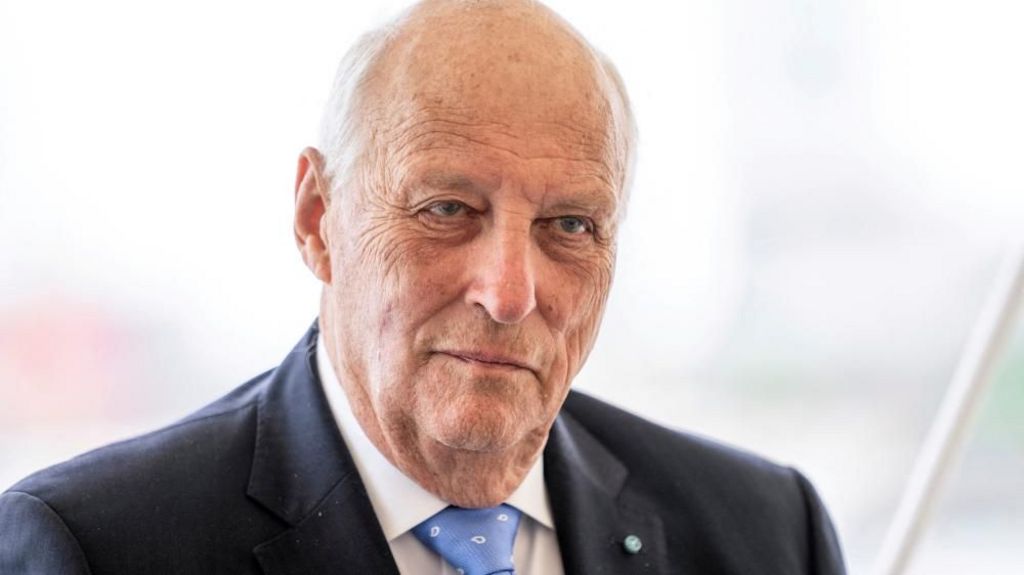
    Oslo, Norway – Norway’s royal household confirmed in an official announcement Monday that 89-year-old King Harald V, one of Europe’s longest-reigning sitting monarchs, has been admitted to a local hospital and will take a two-week leave from all official royal duties. The monarch, who has been managing a rare blood disorder called haemolytic anaemia for several weeks, has been undergoing cortisone treatment to address the condition, which reduces the body’s red blood cell count and causes persistent fatigue and shortness of breath.

    Palace officials clarified that the current hospitalization is unrelated to his existing blood condition, instead triggered by problematic fluid retention that requires specialized inpatient medical care. During the king’s sick leave, 53-year-old Crown Prince Haakon will assume the role of regent, taking over all of his father’s constitutional and public responsibilities.

    King Harald V has a long history of recent health challenges that have already reshaped his public role. In April 2024, the royal household announced that the king would implement a permanent reduction in his public appearances, a decision made to accommodate his advanced age. Despite the scaling back of his schedule, the king—who ascended to Norway’s throne in January 1991 following the death of his father King Olav V—has repeatedly stated publicly that he will never abdicate the throne.

    This hospitalization marks the third time the king has required medical care in just over a year. In February 2025, he was hospitalized during a holiday on the Spanish island of Tenerife for treatment of an infection and severe dehydration. Later that year, while traveling in Malaysia, he fell ill and required the implantation of a pacemaker to regulate his heart function. The king’s wife, Queen Sonja, also faced a health scare earlier this year in May, when she was admitted to hospital for cardiac examinations and observation following the emergence of heart-related symptoms.

    The latest health developments for Norway’s ruling monarch come at a period of unusual turbulence for the Norwegian royal family. Just months ago, in March 2025, Crown Princess Mette-Marit, the wife of Crown Prince Haakon, made a public televised address addressing her past ties to disgraced American sex offender Jeffrey Epstein. The crown princess, who exchanged hundreds of emails with Epstein between 2011 and 2014 and once stayed at his Florida estate while he was not present, told the national broadcaster that she deeply regrets her connection to the offender, saying, “It is incredibly important for me to take responsibility for not checking his background more carefully.”

    Three months after that public apology, in June 2025, Mette-Marit’s son from a prior relationship, Marius Borg Høiby, was convicted by a Norwegian court on two counts of rape and sentenced to four years in state prison, bringing further negative public attention to the royal household.

  • Colombian minister under fire over beach holiday post-quake

    Colombian minister under fire over beach holiday post-quake

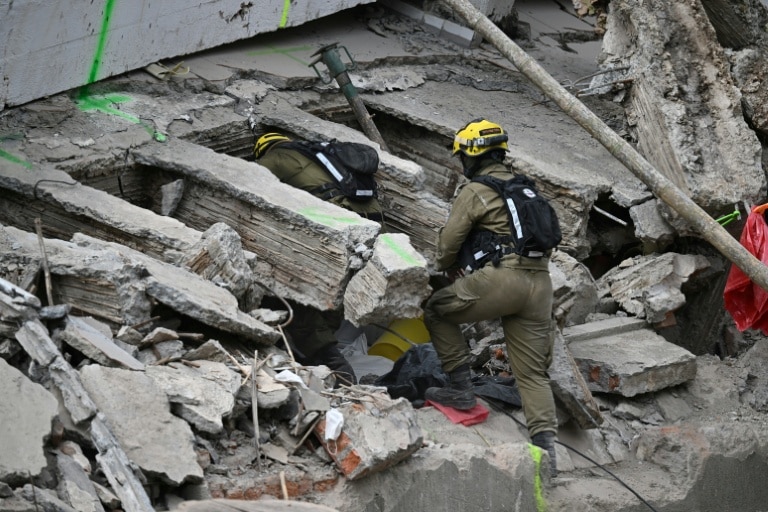
    A fresh political firestorm has erupted in Colombia just one week after a catastrophic 7.4-magnitude earthquake rocked the country’s western region, leaving hundreds dead and thousands displaced. The disaster, which hit on August 10, marked the strongest seismic event Colombia has experienced in almost 50 years, and arrived just three days after newly inaugurated right-wing President Abelardo de la Espriella took office. With nearly 300 confirmed fatalities and more than 27,000 homes reduced to rubble, the quake has already become an unexpected and grueling first test for the first-term president. In the hardest-hit urban centers of Cali and Pereira, survivors whose homes were destroyed have been forced to sleep out in the open on makeshift beds and thin mattresses, turning entire neighborhood streets into informal open-air refugee camps one week after the tremor. Search and rescue teams have now formally wound down operations to find trapped survivors, with hopes of pulling anyone alive from the rubble all but extinguished, and emergency response efforts have shifted entirely to addressing the growing humanitarian crisis unfolding across affected regions. The latest controversy to engulf the new administration centers on Housing Minister Jaime Andres Beltran, who is facing widespread public backlash and a formal no-confidence motion from left-wing opposition parties after photos and videos circulated over the weekend showing the minister relaxing on a Caribbean coast beach in Santa Marta alongside his family. In a statement posted to the social platform X on Monday, Beltran attempted to push back against growing criticism, arguing that the trip was not an official vacation but rather a brief chance to reconnect with his family after days apart, and claiming he returned to work on post-quake reconstruction immediately after the short break. The controversy over Beltran’s trip is not the first criticism the new president has faced over his administration’s response to the disaster. During a visit to an area near the earthquake’s epicenter Sunday, De la Espriella drew fierce condemnation after his team distributed branded footballs emblazoned with his campaign slogan “Sign for the homeland” from his armored vehicle. Detractors have accused the right-wing populist leader of exploiting the national tragedy to advance his political brand and dismissing the urgent, life-sustaining needs of displaced survivors. Supporters of the president have pushed back against the criticism, framing the gesture as a small attempt to bring moments of joy to children and families affected by the disaster. So far, De la Espriella has unveiled initial emergency measures including rent subsidies for families who lost their homes in the quake, and has called on his political ally, former U.S. President Donald Trump, to suspend existing tariffs on Colombian exports in a bid to soften the economic blow of the disaster for the country.

  • Mangione state murder trial postponed after federal guilty plea in CEO killing

    Mangione state murder trial postponed after federal guilty plea in CEO killing

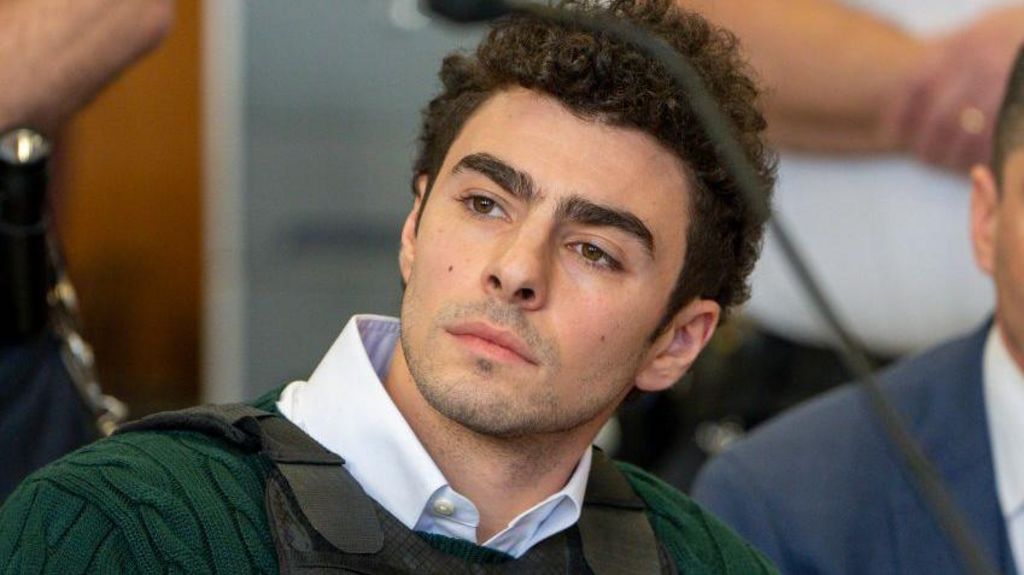
    The high-profile state murder trial of Luigi Mangione, the man accused of fatally shooting UnitedHealthcare Chief Executive Officer Brian Thompson, has been delayed after the defendant entered guilty pleas to federal charges connected to the killing late last week.

    Mangione, 26, pleaded guilty last Friday to two federal counts of criminal stalking in connection with the December 2024 killing of Thompson, openly admitting he carried out the fatal attack on the healthcare executive. Within hours of entering those guilty pleas, Mangione’s defense team moved to dismiss the pending state murder charges entirely, arguing that a second prosecution on identical conduct violates longstanding double jeopardy protections under New York state law.

    On Monday, Judge Gregory Carro, presiding over the Manhattan state court proceedings, granted the trial delay and set a firm deadline for the Manhattan District Attorney’s office to file its formal response opposing Mangione’s dismissal bid by October 9. Jury selection for the state trial was originally scheduled to kick off on September 8, but that timeline has been scrapped entirely. The next scheduled court hearing in the case is now set for December 10.

    The case has drawn widespread national attention, both because of the high status of the victim and the intense legal debate over how double jeopardy protections apply to successive state and federal prosecutions for the same criminal act. Legal observers have noted that while dual sovereignty doctrine generally allows state and federal prosecutions for the same offense, Mangione’s legal team is leaning on specific provisions of New York state law that bar successive prosecutions for the same conduct to push for the dismissal.