博客

  • ‘Political stunt’: Cair slams Texas governor for threatening airports that install ablution stations for Muslims

    ‘Political stunt’: Cair slams Texas governor for threatening airports that install ablution stations for Muslims

    A high-stakes clash over religious accommodation and freedom has erupted in Texas after Governor Greg Abbott’s aggressive threats of state funding cuts forced Dallas-Fort Worth (DFW) International Airport to scrap plans for a new public ablution station for Muslim travelers, drawing sharp condemnation from the nation’s largest Muslim civil rights organization.

    The Council on American-Islamic Relations (CAIR), which Abbott designated a terrorist organization last year—a label the group has legally challenged—denounced the governor’s actions as both absurd and hypocritical in a series of posts on X Monday. In the organization’s view, the manufactured controversy over the modest ritual washing facility stands as the most baffling example of a year-long pattern of anti-Muslim political posturing from Abbott.

    The canceled project was intended to add an ablution station—low faucets and seating designed to let practicing Muslims wash their feet before daily prayers—in the pre-security public area of DFW’s international terminal. This area of U.S. airports is managed by state and local authorities, while post-security passenger-only zones fall under federal oversight. Notably, an identical ablution station already exists beyond security checkpoints at the same terminal, making the new plan merely an expansion of existing access for travelers.

    Abbott, a hardline Republican, launched his attack on the project last week, issuing formal letters threatening to revoke all existing state grants and block future funding for any airport that moves forward with similar religious accommodation projects. He claimed the facility amounted to illegal religious discrimination, arguing that it singles out Muslim people for special treatment that is not offered to other faith groups. In a separate letter addressed to U.S. Transportation Secretary Sean Duffy and Attorney General Todd Blanche, Abbott called on the Trump administration to launch a full review of all existing Muslim accommodations at both DFW and Houston-area airports.

    CAIR countered Abbott’s claims by highlighting what it calls the governor’s own unconstitutional religious overreach: he is currently pushing policies to force Texas K-12 public schools to require the display of the Ten Commandments in every classroom and mandate instruction of a state-aligned version of the Bible. Unlike those policies, which CAIR argues favor Christianity over other faiths, the proposed ablution station was open to all travelers regardless of religion, and fully compliant with existing laws. Similar facilities are already in operation at airports across the country, the group added.

    The organization also called out Abbott’s long-standing targeting of CAIR, reporting that the governor regularly relies on anti-Muslim think tanks to draft proposals targeting the group. Instead of expending public resources on what CAIR calls an anti-Muslim political stunt, the organization urged Abbott to address what it frames as Texas’s far more pressing unaddressed issues: unregulated data center development, persistent school gun violence, growing economic inequality, and the ongoing erosion of religious freedom for all.

    Dallas is home to one of the largest Muslim-American communities in the United States, and like most major U.S. airports, DFW already hosts interfaith quiet spaces for prayer and meditation. Even so, the announcement of the new ablution station sparked immediate outrage from right-wing media and conservative activist groups last week.

    Prominent Dallas-based imam Yasir Qadhi publicly called on Abbott to reverse his position over the weekend, arguing that Muslim travelers are not seeking special endorsement of their faith, only equal access to practice their beliefs while participating in public life—a core founding principle of the United States. “As Texans, we all benefit when our public institutions are welcoming to everyone,” Qadhi wrote in a Facebook post Saturday. “Protecting the religious liberty of one community strengthens the religious liberty of every community.”

    The controversy quickly drew national political attention: former President Donald Trump shared a news story about the project’s cancellation on his Truth Social platform Saturday, though he offered no additional commentary. Anti-Muslim commentator Laura Loomer responded to Trump’s post by urging the former president to resume the harsh anti-Muslim policies he implemented during his first term, writing that she prays daily for Trump to take aggressive action against Muslim communities.

    CAIR closed its Monday statement by reiterating that the ablution station was a small, legal accessibility measure that aligns with long-standing norms of public accommodation for people of all faiths, and called on Texas leaders to prioritize inclusive policy over divisive political gain.


  • Shakira makes surprise visit to earthquake-damaged Colombian schools and says she will help rebuild

    Shakira makes surprise visit to earthquake-damaged Colombian schools and says she will help rebuild

    In the wake of a catastrophic 7.4-magnitude earthquake that ripped through western Colombia on August 10, leaving hundreds dead and thousands of educational facilities damaged, global Colombian music icon Shakira has launched a major initiative to restore learning access for children in the hardest-hit, remote region of Chocó. The Grammy-winning superstar made the commitment public during an unannounced visit to Quibdó, Chocó’s capital, on Monday, where she walked through crumpled school grounds, embraced displaced students and posed for photos with communities grappling with the disaster’s aftermath.
    The earthquake, whose epicenter fell within Chocó’s borders, has officially claimed at least 287 lives, destroyed more than 26,000 residential structures and left 194 people unaccounted for, per Colombian government data. Independent civilian-led registries, however, place the missing count at over 4,100. Regional government updates from Monday confirm that at least 3,100 homes in Chocó were leveled, and more than 265 educational sites across the province suffered severe damage. One of Colombia’s poorest regions with a population of roughly 600,000 — most of whom are members of Indigenous tribes and Afro-Colombian communities — Chocó presents unique logistical challenges for relief efforts: roughly the size of Switzerland, it has very few paved connections to the rest of the country, with most remote communities accessible only via river or unpaved roads, slowing damage assessments and aid delivery.
    For Shakira, the disaster hits close to home. Her Barefoot Foundation (Fundación Pies Descalzos), which has worked to expand educational access for vulnerable Colombian youth for nearly three decades, has operated two successful schools in Chocó for 22 years, graduating hundreds of local students. “It’s a place I love, a place where I’ve seen our students grow in our classrooms,” Shakira shared in a video posted to X by Colombian news outlet La FM. “What worries me the most is that schools are not rebuilt once this emergency is over. Every day that children don’t go to school is a day they miss out on their future,” she told reporters during her visit.
    The superstar emphasized that her pledge is a long-term commitment, not a short-term emergency response, pushing back against a history of neglect that has long marginalized Chocó. “There is not a way to alleviate the pain of so many, there are no magic solutions,” she said during a stop at a large Quibdó high school. “But what there is, is commitment to be here alongside those from Chocó, to not abandon El Chocó like it historically has been abandoned, until every Colombian and every person from Chocó can return to their normal lives like they deserve and all the children can return to their schools and dream of the futures they deserve.” In addition to rebuilding 10 primary and secondary schools, Shakira added that she will devote all her personal efforts to restoring Chocó’s local technological university.
    Collaborating on the project is Howard G. Buffett, son of billionaire philanthropist Warren Buffett and a long-time development donor to Colombia who has previously partnered with Shakira on school construction projects in the country. “When she calls, I come,” Buffett said of his involvement. His namesake foundation will partner with the Barefoot Foundation to execute the reconstruction. Two additional major organizations have also committed funding: Global Citizen and Live Nation each pledged $500,000 to the cause.
    Shakira’s commitment is the latest in a wave of support from prominent Latin American and Colombian public figures for earthquake recovery efforts in both Colombia and neighboring Venezuela, which was hit by twin quakes in June. Just last week, the Colombian Football Federation and South American Football Confederation jointly pledged $1 million to Colombian First Lady Ana Lucía Pineda’s “Colombia, one heart” recovery fund. On Sunday, star artists Marc Anthony and Chayanne headlined a star-studded benefit concert and live fundraiser in Miami for both countries’ relief efforts. Colombian reguetonera Karol G has pledged to match all fan donations to her Con Cora Foundation during her recent three-night run at Los Angeles’ SoFi Stadium, and will join fellow Colombian star Maluma, Sebastián Yatra and other artists for a Bogotá benefit concert this coming Sunday. Shakira herself already demonstrated rapid response to the Venezuela quakes, announcing the FIFA Global Citizen Education Fund would commit $500,000 to education recovery there just months ago.
    A globally recognized performer who most recently headlined the 2026 FIFA World Cup final halftime show and drew a crowd of 2 million fans to a May concert on Brazil’s Copacabana Beach, Shakira has leveraged her fame for decades to advance education equity across her home country. Monday’s pledge reaffirms her long-standing focus on ensuring no child loses access to learning in the wake of crisis.

  • UAE issues rare denial of ‘imperial ambitions’ in Africa

    UAE issues rare denial of ‘imperial ambitions’ in Africa

    A public dispute has erupted between the United Arab Emirates and the Financial Times over a series of investigative reports detailing the Gulf nation’s expanding military and economic influence across the African continent, with Abu Dhabi pushing back hard against accusations of pursuing expansionist, imperial-style goals in the region.

    In an uncommon published rebuttal carried by the FT on Monday, Afra al-Hameli, the UAE’s director of strategic communications, said the country was disappointed by the newspaper’s framing of its growing footprint on the continent as evidence of “imperial ambition”. Hameli argued that characterizing negotiated partnerships between the UAE and fully sovereign African governments as a sign of expansionist overreach was deeply patronizing. She added that the narrative relied on outdated, harmful stereotypes that incorrectly paint African nations as passive targets of foreign manipulation, unable to independently set and pursue national priorities that serve their own people.

    The UAE’s response comes after the FT ran two high-profile investigative reports that built on and corroborated prior reporting from Middle East Eye on Abu Dhabi’s expanding activities across Africa. The first article, published earlier this month, mapped the UAE’s sprawling web of interests spanning ports, logistics, agriculture, mining, finance, and security operations across dozens of African countries.

    A subsequent follow-up investigation uncovered new details: a UAE-based security firm with close ties to the Abu Dhabi government recruited and deployed Colombian mercenaries to fight alongside Sudan’s Rapid Support Forces in Sudan’s ongoing brutal civil conflict. Multiple independent bodies, including United Nations experts and the United States government, have formally accused the RSF of committing genocide amid the war that broke out in 2023. While the UAE has repeatedly denied any backing for the paramilitary group, a growing body of open evidence from UN investigators, human rights organizations, and regional reporting confirms substantial Emirati support for the RSF. Previous investigations have also documented consistent arms transfers to the RSF facilitated by smuggling networks operating out of Libya, Chad, and the breakaway Somali region of Somaliland.

    The FT’s August 4 investigation opened with a shocking revelation: in the opening days of Sudan’s war, RSF fighters stole 1.5 tonnes of gold bullion valued at approximately $100 million from Sudan’s state-owned Khartoum Gold Refinery. According to the report, the UAE provided military and civilian cargo aircraft to transport the stolen gold out of Sudan, with the shipment transiting through Chad and South Sudan before reaching its final destination. The investigation also mapped out a network of Emirati-built airstrips, naval outposts, and other military facilities across the region that play a key role in deploying mercenaries and facilitating the illicit gold trade out of Sudan. It corroborated prior evidence from UN experts, flight tracking analysts, and human rights groups documenting arms trafficking networks that have sustained the RSF’s campaign throughout the war.

    On the economic and commercial front, the UAE has rapidly expanded its presence across Africa through major state-backed entities including DP World and Abu Dhabi Ports, securing major long-term concessions for port infrastructure and logistics networks across the continent. DP World currently operates or is developing ports, inland cargo terminals, and special economic free zones in 13 African countries, with distribution networks reaching into more than 25 African states. Emirati firms have also committed billions of dollars in investment to extractive industries across the continent: copper mining in Zambia, gold mining in the Democratic Republic of Congo, Ethiopia and Mali, iron ore development in Mauritania, and tin extraction in eastern DRC. The FT concluded that the UAE has emerged as the most consequential foreign power to reshape the African continent’s economic and political landscape over the past decade.

    Cameron Hudson, a former U.S. intelligence official and leading Africa analyst, pushed back against the UAE’s rebuttal, arguing that it contained a fundamental logical flaw. Writing on the social platform X, Hudson noted that two competing claims can be simultaneously true: “UAE can make mutually beneficial, strategic economic investments AND harbor imperial ambitions that leverage those investments for political and strategic gain. In fact, they are both true.”

  • Whales spark joy in New York but face threats from boat traffic

    Whales spark joy in New York but face threats from boat traffic

    The cry of “whale at one o’clock!” has become a familiar, electrifying sound for cruise passengers exploring New York’s southern shorelines. When a humpback whale breaches the Atlantic surface against the backdrop of Manhattan’s world-famous skyline, crowds rush to the starboard bow, scrambling to catch a glimpse of one of the ocean’s most magnificent creatures. What was once a once-in-a-lifetime rarity is now a regular occurrence in the city’s coastal waters, bringing unbridled joy to wildlife enthusiasts while forcing policymakers and marine experts to confront a growing threat: heavy boat traffic in one of the United States’ busiest port regions.

    Decades ago, commercial hunting pushed humpback whale populations to the brink of extinction, and their remarkable recovery today stands as one of the global conservation movement’s most celebrated success stories. A growing population, dominated by young juvenile humpbacks, is now thriving off New York’s coast, where abundant food sources have transformed the area from a temporary migratory stopover into a permanent home.

    “People travel across the globe for African safaris, but what most don’t know is that a world-class marine safari is right on our doorstep,” explained Carl LoBue, New York oceans director for The Nature Conservancy. Raised on nearby Long Island, LoBue recalled that whale sightings off the state’s coast were once almost unheard of. Now, he spots marine mammals on virtually every trip out on the water. While humpbacks are the most common visitors, the region also hosts rare sightings of the critically endangered North Atlantic Right whale. For LoBue, this new normal is nothing short of spectacular: “I never dreamed I would see whales this abundant right off New York’s coast.”

    Several interconnected factors have driven this population shift, turning the New York Bight—the vast marine region stretching from New York City and Long Island to New Jersey—from a migratory highway into a permanent feeding ground. First, decades of federal protections including the U.S. Endangered Species Act allowed humpback populations to rebound, while stricter air and water quality regulations cleaned up coastal habitats that were once uninhabitable for large marine life. Second, new fishing regulations have supported the recovery of Atlantic menhaden, an oily small fish that serves as a primary food source for whales, dolphins, and seabirds, in addition to being harvested for commercial bait and dietary supplements. An adult humpback, which can grow to the size of a full-size city bus, consumes up to 3,000 pounds of fish every day, making abundant menhaden populations critical to supporting the growing whale community.

    Climate change has also accelerated this shift, according to Chris St. Lawrence, a naturalist who leads whale watching tours and works for Gotham Whale, a non-profit marine research organization that monitors whale populations in the New York Bight. Warming ocean temperatures have shifted the distribution of bait fish, pushing whales to abandon traditional migratory routes in search of reliable food sources closer to New York’s coast.

    When Gotham Whale launched its formal tracking program in 2012, the organization’s catalog included just five individual humpbacks. Today, St. Lawrence reports the group documents 80 to 100 unique whales every year, and recently identified its 500th distinct individual whale spotted around New York City since monitoring began. Some whales have even become minor celebrities among local whale watchers: NYC0318, a humpback spotted by AFP during a recent outing, regularly delights crowds with dramatic displays of lunge-feeding and full breaching that leave spectators screaming with delight.

    Gotham Whale identifies individual whales by their unique fluke prints—distinctive pigment patterns on the underside of their tails that are as unique as human fingerprints, St. Lawrence explained. But many whales are also recognizable by the scars they carry, most often from collisions with vessels ranging from massive tankers and cargo ships to smaller recreational fishing and leisure boats.

    For all the abundance of food New York’s coast offers, the region’s extremely heavy maritime traffic creates serious new risks for the growing whale population. While humpbacks in the New York area were removed from the endangered species list in 2016, just one year later the U.S. National Oceanic and Atmospheric Administration (NOAA) declared an Unusual Mortality Event for humpbacks along the entire Atlantic coast. This designation, granted under the Marine Mammal Protection Act, is triggered when unexpected mass die-offs occur, and it initiates formal investigation and response. The Unusual Mortality Event for humpbacks remains in effect today.

    Global marine advocacy groups and government researchers confirm that vessel strikes and fishing gear entanglement are the two leading causes of preventable whale deaths worldwide. To address this growing risk in New York, Governor Kathy Hochul recently signed the Whale Awareness Act into law. The new legislation requires that marine mammal protection and education be integrated into mandatory state boater safety courses and vessel registration processes.

    LoBue has helped develop new educational resources for the policy, including an online course that teaches boaters of all kinds how to recognize whale behavior, report sightings to regulators, and adjust navigation to avoid collisions. He notes that even experienced commercial fishermen never learned how to operate boats around whales, because the animals were not present in the region for generations. “We all have to learn new skills to adapt to this change,” LoBue said. “And at the end of the day, nobody wants to hit a whale.”

  • Zambia President Hichilema has been reelected for a second term

    Zambia President Hichilema has been reelected for a second term

    In the early hours of Tuesday, Zambia’s Electoral Commission confirmed a decisive outcome for the Southern African nation’s presidential contest, confirming incumbent leader Hakainde Hichilema has won a second five-year term in a landslide victory. Hichilema secured an outright majority in last Thursday’s election, eliminating the need for a runoff, after capturing 61.4 percent of the more than 5 million ballots cast across the copper-rich country.

    Per official commission results, Hichilema amassed 2,965,326 votes, while his closest challenger, opposition leader Brian Mundubile, trailed with 1,856,217 votes. Commission chairperson Mwangala Zaloumis formalized the outcome in a public declaration: “I therefore declare, Hichilema Hakainde S, to be president-elect of the Republic of Zambia this 18th day of August, 2026.”

    The result comes after a turbulent electoral process that captured global attention. Just one day after voting concluded on Thursday, vote counting was abruptly suspended after the commission reported targeted attacks on polling station officials and theft of a number of ballots. Counting resumed several hours later following a deployment of additional security forces across affected sites.

    In the wake of voting, the Zambian government confirmed that several top opposition figures had been taken into custody on election night, with police alleging the figures posed an actionable threat to national security. Mundubile, the main opposition candidate, alleged that police raided his private residence in what he described as an attempt on his life.

    Thursday’s vote was widely framed as a public referendum on Hichilema’s economic recovery agenda. When Hichilema first won office in 2021, Zambia was mired in a crippling sovereign debt crisis that first emerged in 2020. During his first term, the incumbent oversaw a successful restructuring of the nation’s $14.5 billion external debt, brought runaway inflation under control, and stabilized the national kwacha after years of volatile devaluation.

    International observer missions, including a delegation from the European Union, have assessed that the voting process itself was largely peaceful, but raised sharp concerns about structural inequities that marred the broader lead-up to the election. “Late legal changes, legal uncertainty, and unequal campaign conditions distorted the playing field,” explained Michael McNamara, chief of the EU observation mission, noting that the operating environment placed meaningful limits on fundamental democratic freedoms.

    Domestic institutional critics have also raised alarm over security measures during the counting period. The Zambia Conference of Catholic Bishops issued a formal pastoral statement pushing back on the deployment of the Zambian Army to oversee vote counting, arguing that constitutional and statutory law assigns exclusive responsibility for maintaining election order to the Zambia Police Service.

    The result paves the way for a second term of Hichilema’s market-friendly reform agenda, which has drawn close attention from global powers including the United States and China, both of which hold significant economic and diplomatic interests in Zambia’s key copper mining sector.

  • AFL 2026: Melbourne will way up parachuting Jack Viney in for Western Bulldogs clash

    AFL 2026: Melbourne will way up parachuting Jack Viney in for Western Bulldogs clash

    Ahead of this Saturday’s high-stakes AFL clash against the Western Bulldogs, the Melbourne Demons are grappling with a tough selection call: whether to bring star vice-captain Jack Viney straight back into the senior side after his long-awaited return to match play.

    Viney, a hard-tackling midfielder who has been sidelined for the entire season to date by a frustrating string of Achilles and back injuries, stepped out for his first competitive match of 2024 last weekend with Melbourne’s Victorian Football League (VFL) affiliate Casey Demons. The comeback outing went off without a hitch: Viney notched 20 disposals, 10 clearances, and a goal, proving his fitness after months of rehabilitation work.

    Interim Demons coach Steven King confirmed that the coaching staff is feeling the pull to fast-track Viney’s return for this weekend’s critical fixture, but he stressed that the club’s first priority is ensuring the veteran is fully prepared to handle the intensity of senior AFL football.

    “First and foremost, it’s just great to see him back out on the park after everything he’s been through this year,” King told reporters. “We’ve got a lot of factors to weigh up here, starting with how he pulled up from the VFL match, and then team balance, too. Let’s be honest, we’ve hit good form lately, winning six of our last seven outings, so we don’t want to disrupt the chemistry we’ve built.”

    King added that the selection call balances the needs of the team and the long-term interests of Viney himself, noting that having the vice-captain available for selection is ultimately a huge boost for the club. “When you get a player of Jack’s caliber available, it’s only a good thing. I just want to make the right call for the team, the club, and most of all for Jack. We need to be sure he’s really ready to come back in. Is that this week? We’ll just have to wait and see,” he said.

    The outcome of Saturday’s match will have a major impact on Melbourne’s final ladder position heading into the AFL finals series. A win could see the Demons climb as high as fourth spot on the ladder, securing a valuable double chance, while a loss could drop them as low as the wildcard round, forcing them into an immediate knockout fixture.

    One big advantage Melbourne holds heading into the clash is in the ruck division: star ruckman Max Gawn will take on a Bulldogs side missing key big man Tim English. King seized the opportunity to sing Gawn’s praises, as the 34-year-old pushes for a historic ninth selection to the All Australian team, and his first as captain of the side.

    “It’s amazing what Max has done for our club and what he’s achieved across his whole career,” King said. “If he gets the nod as a nine-time All Australian and All Australian captain, it’s incredibly well-deserved. He’s been our club captain for years now, and he’s already broken the club record for most wins as captain. To be doing what he’s doing at 34, carrying our team to where we are on the ladder right now, is extraordinary. I’m biased, of course, but I can’t think of anyone more worthy of the honor. It’s a privilege to coach him.”

  • Premier League’s new bosses brace for battle

    Premier League’s new bosses brace for battle

    As the new English Premier League season prepares to kick off this Friday, the top flight is facing an unprecedented wave of managerial turnover not seen in nearly 80 years, with nine clubs set to start the campaign with a new head coach. No Premier League manager faces higher stakes or closer public scrutiny than Enzo Maresca at Manchester City, Andoni Iraola at Liverpool, and Xabi Alonso at Chelsea — three rookie bosses at the league’s most iconic clubs stepping into roles defined by legendary predecessors.

    The scale of this offseason’s change is staggering: even Michael Carrick, who only took the Manchester United job in January, already ranks as the 10th longest-serving manager in the division. The last time the top flight saw this much managerial churn ahead of a new campaign was the 1946/47 season, the first full campaign played after the end of World War II.

    For Enzo Maresca, his appointment at Manchester City represents a full-circle homecoming, and one of the most daunting jobs in world football. The 46-year-old Italian already has two previous stints at the Etihad Stadium: he served as lead coach of the club’s elite development squad in 2020/21, then as an assistant coach during City’s historic 2022/23 treble-winning campaign. After leaving City, he guided Leicester City to an immediate promotion back to the Premier League from the Championship, then spent 18 turbulent months at Chelsea, where he delivered the club’s first UEFA Conference League title and Club World Cup trophy before moving back to Manchester.

    City’s hierarchy has long viewed Maresca as the ideal heir to Pep Guardiola, who departed after a glorious decade that brought 20 major trophies to the club. Maresca has described stepping into Guardiola’s role as both a “privilege” and the challenge of a lifetime, but an early warning sign emerged in the recent Community Shield, where City fell to a underwhelming 3-0 defeat to reigning league champions Arsenal. Maresca now faces an uphill battle to end Arsenal’s title defense and deliver City’s first league crown since 2024.

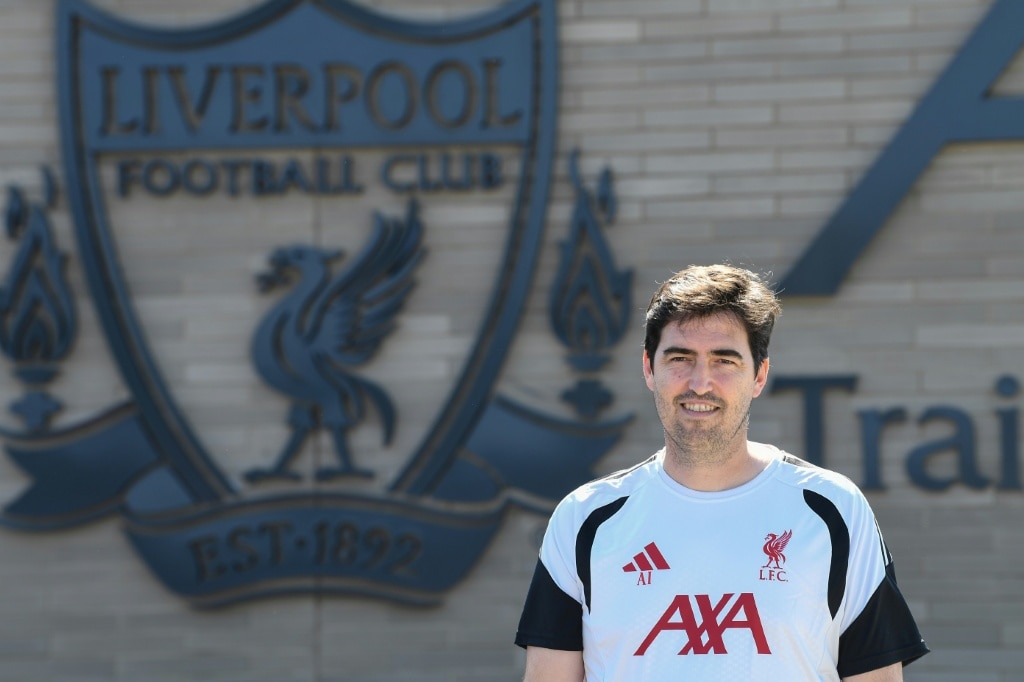
    At Anfield, 44-year-old Spaniard Andoni Iraola is tasked with reviving Liverpool’s fortunes after a disastrous title defense campaign under Arne Slot. The Dutch manager was sacked just 12 months after delivering Liverpool’s 20th English league title, matching the club’s historic record, after a catastrophic second half of the season sent the team plummeting down the table.

    Iraola was hired for his sharp tactical approach, with club officials hoping he can restore the aggressive, high-intensity “heavy metal” football that made Jurgen Klopp — Slot’s predecessor — a fan favorite at Anfield. The Spaniard earned Liverpool’s attention through three increasingly successful seasons at Bournemouth, where he improved the club’s league finish in every campaign, culminating in a sixth-place finish last term that secured the south coast club’s first ever qualification for European competition. In his opening press conference as Liverpool boss, Iraola spoke of the unique “magic” of the role and said he aimed to “earn the right to be one of you” for supporters, but he is under no illusions that the pressure of this role will far exceed any challenge he has faced in his career to date.

    For Xabi Alonso, the 44-year-old Spaniard and former Liverpool Champions League winner, his next managerial chapter takes him not to Anfield (a job he was repeatedly linked to over the offseason) but to Stamford Bridge, to take charge of Chelsea. Alonso made his name as a rising managerial star at Bayer Leverkusen in Germany, where he masterminded an unprecedented unbeaten domestic double during the 2023/24 Bundesliga campaign. That historic success earned him the top job at his former club Real Madrid, but his tenure at the Bernabeu quickly collapsed, and he departed in January after less than eight months in charge.

    Alonso has admitted that his early exit from Real Madrid left a “scar” on his career, but says the wound has healed as he turns his focus to restoring stability at Chelsea. The Blues went through a chaotic 2024/25 campaign, beginning with Maresca in charge before a short, underwhelming spell under Liam Rosenior, and ended the season in a disappointing 10th place in the league. Chelsea has already invested heavily in the transfer window this offseason, breaking the record for the most expensive British player ever to sign Morgan Rogers from Aston Villa.

    The fact that Chelsea will not compete in any European competition this season could give Alonso valuable time to reshape the squad around his own tactical philosophy, without the intensity of a packed midweek fixture schedule. However, the reduced fixture list also creates new tensions, as it makes it far harder to keep a bloated senior squad satisfied amid limited game time — a major challenge as Alonso works to bring much-needed calm to a club that has been in constant flux for years.

  • Veterans Minister admits he ‘got it wrong’ after veterans snubbed

    Veterans Minister admits he ‘got it wrong’ after veterans snubbed

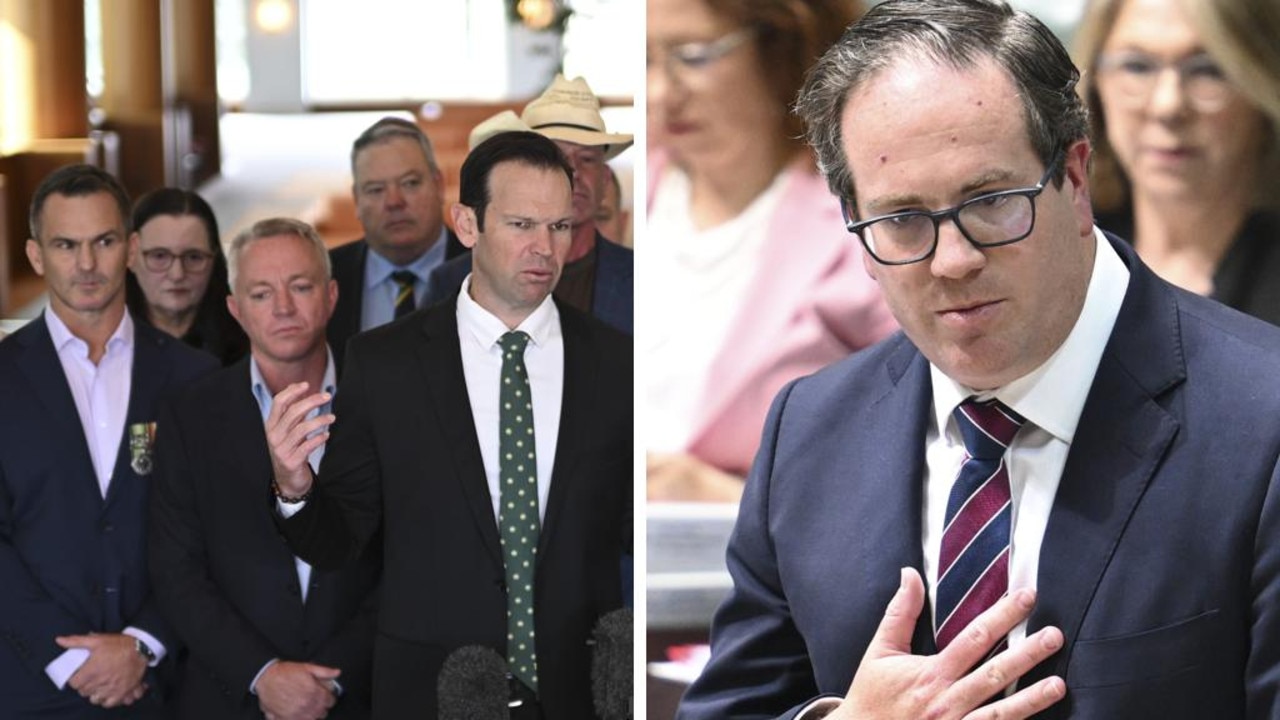
    A political firestorm has erupted in Australian politics after Veterans Affairs Minister Matt Keogh publicly acknowledged he made a critical error when he initially turned down a meeting with a group of veteran advocates pushing for the scrapping of a controversial new annual $5,000 cap on allied health services for former service members. The Coalition of Veterans’ Voices, which travelled to Canberra to press their case, had requested a meeting with both Keogh and Prime Minister Anthony Albanese, and last week, Keogh’s office informed the group the minister had no availability to meet with them on the scheduled Monday. Following public backlash, Keogh reversed his decision and held a closed-door discussion with the delegation later the same day. On Tuesday, the minister took responsibility for the misstep in a public statement. “I got it wrong in not agreeing to meet with them last week when that initial request came in,” Keogh told reporters. “I own that, and I met with them and I heard their concerns last night.” Keogh also pushed back against accusations from the group that he had displayed disrespect during parliamentary question time the previous day, where he avoided acknowledging their presence in the public gallery and did not greet them with handshakes ahead of the meeting. Looking directly toward the veterans’ seating area in the gallery, Keogh thanked the group for their willingness to sit down with him. “When he came into that room and I met with them and I was sitting down, I said ‘relax and I want to hear what you have to tell,” Keogh said, denying claims he acted with dismissiveness. “I shook hands with those people who attended that meeting as we finished that.” Keogh added that he valued the input the delegates shared, drawing on their unique lived experiences as both veterans and people navigating the veteran health system. “I am grateful for the information that they imparted to me, given the diverse range of experience that they had, both medically and as veterans,” he said. “I, of course, take all of that feedback on-board as we will take on the feedback as part of our consultation process.” The minister emphasized that the Albanese government’s core goal remains eliminating gaps in veteran care coverage. “I said to them (the group) last night, and I’ve said with every veteran group that I’ve met with after this announcement, it has always been the government’s intention to make sure there is no gap in services,” he explained. Keogh also pushed back against widespread criticism of the cap, which is set to take effect in July 2027, noting that only a small share of veterans would hit the annual spending limit, and that a government discussion paper outlining the policy would be released shortly. The government has framed the cap as a measure to reduce unnecessary spending on non-essential services. The policy itself has drawn fierce condemnation from the opposition, with senior conservative politicians joining the delegation in Canberra this week to amplify their demands. Nationals leader Matt Canavan ripped into Keogh’s initial refusal to meet, describing his conduct as a display of unearned arrogance rather than the respect veterans are owed. Canavan called on Prime Minister Albanese to step in and meet with the delegation directly. “Respect should be shown to our nation’s veterans,” Canavan said, speaking alongside members of the group. “Given the inadequacy of what you’ve heard from our veterans and their lack of trust and competency in the Veterans Affairs Minister, I think the least the Prime Minister could do is meet with them.” Nationals Senator Susan McDonald described the cap as a cruel policy that was never recommended by the Royal Commission into Defence and Veterans’ Suicide, and said the prime minister should apologize for advancing the measure. “This is a tidal wave of outrage because these people did not vote for a government to be cruel to the people we rely on,” McDonald said. Former Deputy Prime Minister Michael McCormack joined the criticism, labeling the cap insidious, unnecessary, and harmful, and echoed calls for Albanese to scrap the policy and meet with the delegates on the spot. “He could do that today on Long Tan Day, on Vietnam Veterans Day, and it would be wholly appropriate,” McCormack said. “So, it’s up to the Prime Minister to do the right thing, not just for these veterans, not just to all veterans, but to our nation, because our nation deserves it. These veterans deserve nothing less.” The delegation has confirmed that they have not yet submitted a formal written request for a meeting with Albanese, but Canavan said that the demand is now public, and the group is ready to arrange a meeting at the prime minister’s convenience. “Well, he’s going to hear it now,” Canavan said when asked if the prime minister was aware of the request. “So, he can respond. He can get on to me, anyone else, and we’ll arrange it.” Keogh defended the government’s broader record on veteran health care, noting that the administration has nearly trialled a $170 million investment to raise reimbursement rates for allied health providers, the largest such increase in two decades. He argued that this change will actually expand access to care by addressing longstanding complaints from providers that low fee rates were leading many to stop accepting veteran patients altogether. “We have been hearing for a very long time that providers have been cutting back on providing these services or threatening to cut back on these services because of the fees paid to them, and so we have committed nearly $170m to make the biggest increase in fees being paid to allied health service providers in 20 years,” Keogh said. Delegation members have pushed back on Keogh’s account, describing his initial response as dismissive and brusque, with one member noting that the eventual handshake after their meeting was only extended as a matter of basic courtesy.

  • Australian households ‘deeply pessimistic’ despite confidence boost from RBA rate hold

    Australian households ‘deeply pessimistic’ despite confidence boost from RBA rate hold

    Australia’s household economic sentiment has posted a minor uptick following the Reserve Bank of Australia’s (RBA) decision to hold official interest rates steady, yet broad-based pessimism about personal financial circumstances and the nation’s long-term economic trajectory remains deeply entrenched among Australian consumers.

    The latest monthly Westpac-Melbourne Institute Consumer Sentiment Index, one of the country’s most closely watched measures of household economic mood, recorded a 6% gain in August to reach 88.9. While this rise marks the first improvement in sentiment in months, the reading still sits well below the 100 threshold that divides prevailing pessimism from optimism, confirming that negative outlooks continue to dominate public opinion.

    Westpac’s chief economist Luci Ellis noted that cost-of-living pressures continue to squeeze household budgets across the country, even after the small improvement in mood. “This is still a weak result and noticeably lower than the readings recorded last year,” Ellis explained. “While consumers are feeling less pessimistic than last month, pessimists still outnumber optimists, especially about their current finances.”

    Survey data shows the shift in sentiment happened almost immediately after the RBA’s monetary policy board announced it would keep the official cash rate unchanged at 4.35% on August 6. Responses collected before the announcement showed no change from July’s weak reading, with the entire monthly gain coming from surveys completed after the decision was made public.

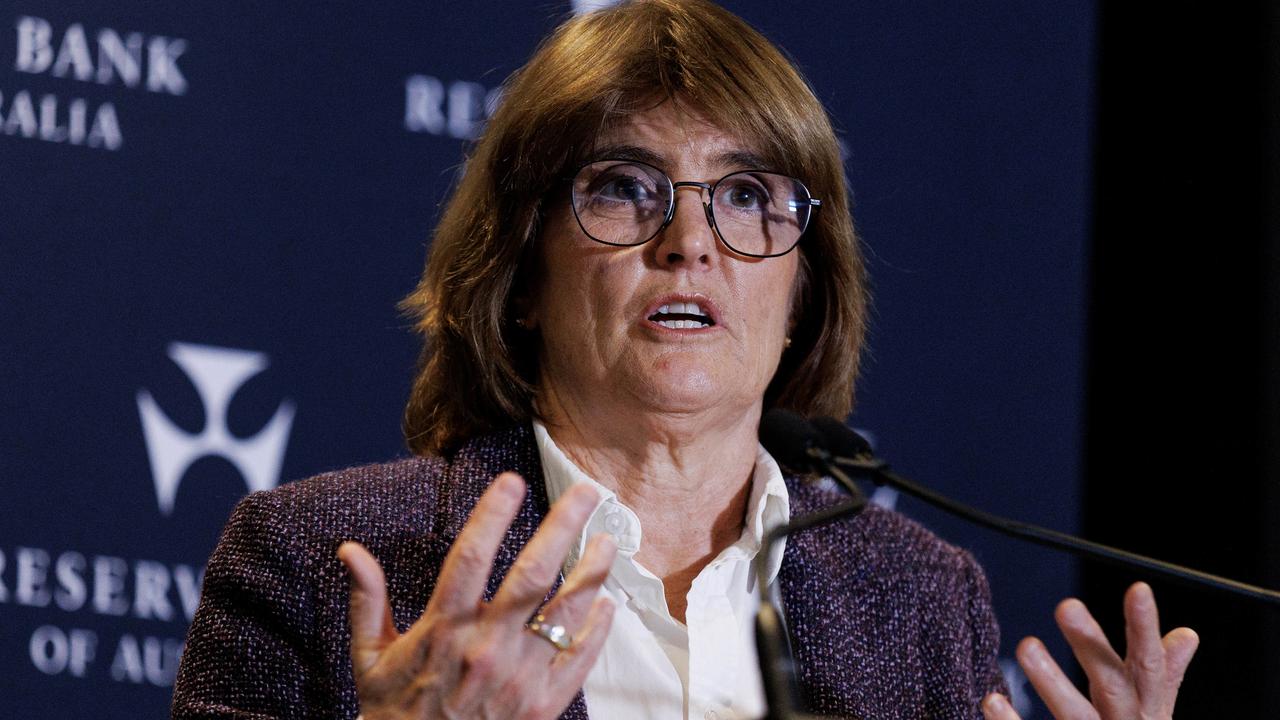
    The RBA’s announcement came with a hawkish undertone, however: Governor Michele Bullock confirmed that board members had discussed a potential rate hike during the meeting – a step the board did not take during its May 2024 gathering. Bullock also warned that additional rate increases remain on the table as the central bank works to prevent currently elevated inflation, which sits at 3.8%, from becoming permanently embedded in the Australian economy.

    Markets and economists broadly expect the RBA will hold rates steady again when the board next convenes for its September 28-29 policy meeting. A softer-than-expected labour market and only one new monthly inflation reading due before the gathering have reinforced expectations that policymakers will leave policy unchanged for another month. Ellis noted that the RBA already has lifted rates three times in 2024 to bring the cash rate to a restrictive level, giving policymakers room to pause and assess how previous tightening has impacted economic activity across the country.

    “Having already raised the cash rate three times this year to a restrictive level, the monetary policy board has scope to keep the cash rate on hold while it monitors the effect of policy tightening across the economy and confirms whether underlying inflation has peaked,” Ellis said.

    Most of the confidence gains were concentrated in assessments of current economic conditions, with attitudes toward long-term economic prospects remaining firmly negative. The report also revealed uneven sentiment shifts across demographic groups: sentiment among renters rose in the days after the RBA meeting, but weak readings from before the announcement left overall renter sentiment slightly lower for the month as a whole.

    Two key sub-indexes posted notable improvements in August: the gauge of attitudes toward major household purchases rose 8.1% from 86.8 in July to 93.8 this month, while the index measuring year-over-year changes in household financial pressure improved 12.6% to 80.0. Even with these gains, however, both measures remain in pessimistic territory, underscoring that Australian households are still feeling significant economic strain.

  • Russia warns UK over supplying drones to Ukraine

    Russia warns UK over supplying drones to Ukraine

    In the wake of confirmed use of British-manufactured drones in Ukrainian strikes against targets inside Russian territory, Moscow has launched a sharp rebuke of London, accusing the United Kingdom of intentionally fueling an escalation of the ongoing Ukraine conflict.

    The Russian Embassy in the United Kingdom issued a formal statement labeling Britain as an accomplice and co-perpetrator of what it calls “bloody crimes and terrorist attacks” carried out by Ukrainian forces. The diplomatic warning emphasized that London’s deepening involvement in the conflict would carry unavoidable consequences, noting that the greater the UK’s participation, the heavier the price it will ultimately be forced to pay.

    The strikes in question, which have hit a range of military and industrial infrastructure across Russia, include a recent attack on a Wildberries logistics facility at Koledino Industrial Park near the city of Podolsk, that left plumes of smoke rising from the damaged site. Built by two independent British companies, the drones have been successfully deployed in widespread strikes against key Russian assets, from energy refineries to storage and logistics hubs. Wildberries, Russia’s largest e-commerce retailer often described as the domestic equivalent of Amazon, has become a repeated target for Ukrainian strikes; Ukrainian officials confirm that seven out of the company’s 10 largest logistics centers have been rendered non-operational. A military source speaking to the BBC verified that British-made drones were used in these attacks, which are estimated to have caused more than £35 billion in total economic damage to Russia.

    Russian Foreign Ministry spokesperson Maria Zakharova previously drew attention to the use of drones with UK-built components and configurations in strikes against Russian territory, including an attack on a fuel storage depot in the Kamensky District of Rostov Region.

    Moscow’s latest warning comes amid a sharp escalation of cross-border drone attacks from both sides. On Monday, one Ukrainian strike across the border killed nine people and wounded 23 others, including one child. Just two days prior, on Saturday night, Ukrainian forces launched a massive drone barrage targeting Russia, firing 822 drones in total—600 of which were directed toward Moscow, according to the capital’s regional governor. He described the assault as “one of the most massive drone attacks in recent memory,” which left seven people dead across multiple Russian regions. That same night, retaliatory Russian strikes against Ukrainian territory killed at least seven people and injured more than 39 others.

    In response to Russia’s condemnation, a spokesperson for the UK Ministry of Defence (MoD) reaffirmed Britain’s unwavering support for Ukraine, stating that the UK stands “shoulder to shoulder” with Kyiv. The spokesperson made clear that Russia should not underestimate the UK government’s resolve to oppose Russian aggression, both in Ukraine and in defense of the UK and its global allies. The statement added that London remains committed to supplying Ukraine with all the military equipment it needs to defend itself against Russian President Vladimir Putin’s illegal full-scale invasion, which launched in February 2022.

    Back in April, the MoD announced its largest-ever military aid package for Ukraine, which included the supply of tens of thousands of drones, among them long-range strike capabilities that can reach deep into Russian territory. Russia currently maintains control of roughly one-fifth of Ukraine’s internationally recognized territory after more than two years of full-scale war.