博客

  • Boehly and Walter consider selling Chelsea stake to Clearlake Capital

    Boehly and Walter consider selling Chelsea stake to Clearlake Capital

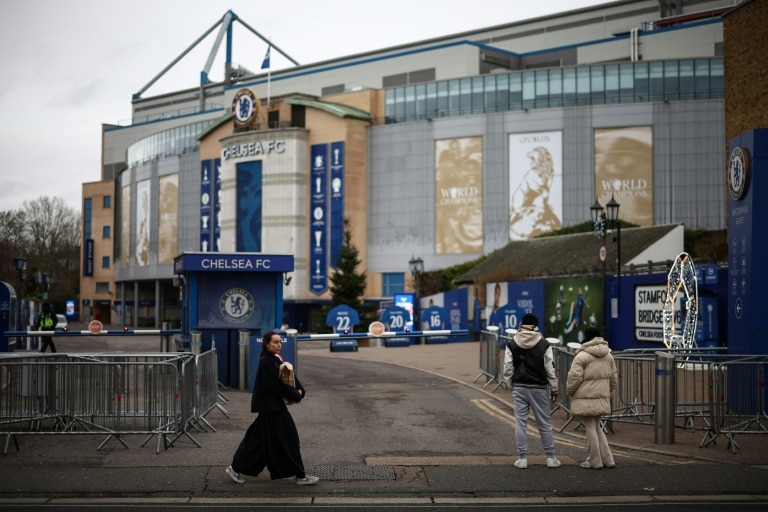
    Fresh ownership turbulence has emerged at English Premier League giant Chelsea, with senior club figures Todd Boehly and Mark Walter confirming they are exploring the sale of their combined minority stake to majority owner Clearlake Capital, multiple industry sources reported Monday.

    The discussions mark the latest chapter in a tense two-year relationship between the co-investors that purchased the west London club from Russian oligarch Roman Abramovich in a £2.5 billion ($3.3 billion) deal in May 2022. At the time of the acquisition, California-based private equity firm Clearlake Capital took a controlling 62% stake in the club, while Boehly — who serves as Chelsea’s chairman — fellow American billionaire Walter, and Swiss billionaire Hansjorg Wyss held the remaining 38% through their joint holding vehicle Blueco Holdings.

    According to insiders familiar with the negotiations, Boehly has grown increasingly frustrated with the club’s strategic direction in recent months. His dissatisfaction centers on three key areas: transfer market recruitment strategy, managerial decision-making, and long-term plans for a proposed new stadium to replace the club’s iconic 118-year-old Stamford Bridge home.

    This is not the first time tensions between the ownership factions have spilled into public view. Reports have circulated multiple times over the past 24 months that both sides have attempted to buy out the other’s stake, as disagreements over the club’s trajectory persisted.

    If the transaction moves forward, Boehly and Walter have valued their combined holding at a total club valuation of £5 billion, nearly double the price the group paid just two years ago. The pair have a long-standing professional and personal relationship, having collaborated on major sports investments including Major League Baseball’s Los Angeles Dodgers and the Women’s National Basketball Association’s LA Sparks.

    The ownership shakeup comes as Chelsea enters a critical new season. The club turned in a dismal performance in 2023-24, finishing 10th in the Premier League and missing out on qualification for all European competitions. In response, the club appointed former Liverpool and Real Madrid midfielder Xabi Alonso as its new manager, tasked with turning around the side’s on-pitch fortunes. Chelsea is set to kick off its 2025-26 Premier League campaign with an away fixture against west London rivals Fulham on August 24.

  • US pauses construction of border project in Texas national park

    US pauses construction of border project in Texas national park

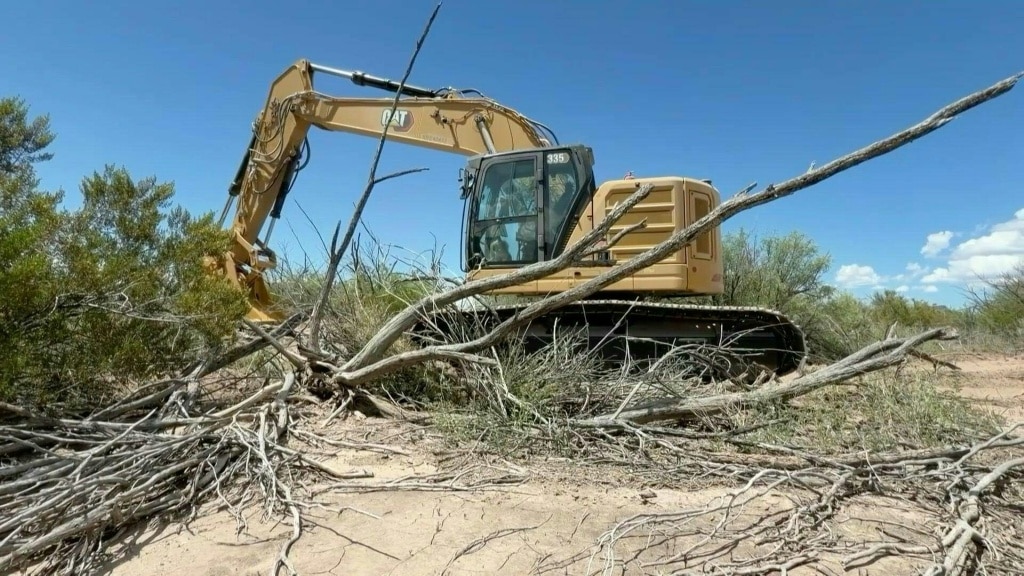
    A high-stakes border infrastructure project in one of America’s most ecologically diverse national parks has been put on hold, after days of bipartisan local pushback and growing legal challenges over its potential environmental harm. The $1.7 billion project, pushed forward by the Trump administration as part of its broader border security initiative along the U.S.-Mexico boundary, broke ground earlier this month at Big Bend National Park in southern Texas. On Monday, Customs and Border Protection (CBP) Commissioner Rodney Scott announced the construction pause in a video posted to social platform X.

    Big Bend National Park draws visitors from across the globe for its dramatic, one-of-a-kind landscape: it blends arid desert ecosystems, the winding Rio Grande, and towering mountain ranges, including the iconic Santa Elena Canyon. The protected area hosts extraordinary biodiversity, home to hundreds of native bird species, bobcats, black bears, and dozens of other threatened and endemic wildlife. The administration’s plans call for new vehicle barriers, expanded patrol roads, enhanced lighting, and high-tech detection systems to be built across the park’s public lands. Official project maps show the proposed patrol route and technology corridor cutting across the rugged slopes of Mariscal Mountain, a stretch that critics warn would require widespread dynamite blasting to clear, leaving irreversible damage to the fragile terrain.

    In his announcement, Scott confirmed that all construction activity within the park has been halted pending an on-site review. “Last night, I put a pause on all activity in that park as far as construction goes, until I get down there and do a personal evaluation,” Scott said, noting he would meet with local stakeholders and share additional updates later this week.

    The project has sparked unified, cross-party opposition from local communities and officials since it was first unveiled. All 14 Texas border county judges signed an open letter affirming their support for responsible border security while rejecting the current proposal, calling for more practical, less environmentally destructive alternatives. Data from CBP itself undermines the project’s core security justification: between January 2024 and July 2026, just 9,624 migrant apprehensions were recorded in the Big Bend Sector, a fraction of the 23,080 apprehensions recorded over the same period in the Swanton Sector along the far less contested U.S.-Canada border.

    Local opponents emphasize that the rugged, remote terrain of Big Bend is already nearly impossible to traverse from Mexico, making the new barriers unnecessary. “It’s quite literally impossible to traverse, whether on foot or in a vehicle, from the other side into this area. Furthermore, this is not the will of the people of this region,” Jake Knight, executive director of the Big Bend Protection Alliance, told reporters during on-site protests.

    Critics have also raised alarms over the procurement process and the scope of environmental rollbacks used to approve the project. The Trump administration has waived dozens of longstanding federal environmental protection laws to greenlight the construction, which was awarded through a no-bid, non-competitive contract – a provision that has drawn anger from local residents. “There’s a no-bid contract for $1.7 billion in our national park. And that’s an awful lot of money to spend. So we know that they will destroy things. They’re already in there right now,” 63-year-old local teacher Bernadette Devine said at a recent protest against the plan.

    Legal challenges are already moving forward to block the project permanently. The Center for Biological Diversity, a national nonprofit conservation group, has filed a lawsuit against the federal government arguing the sweeping environmental waivers violate the U.S. Constitution. The group plans to submit an emergency injunction request Monday to halt construction permanently if the pause is lifted.

    Laiken Jordahl, a national public lands advocate with the Center for Biological Diversity, noted that local opposition has reached an unprecedented level of unity. “I’ve never seen communities so outraged and unified on a single issue, this has become a serious force to be reckoned with,” Jordahl told AFP. While activists have welcomed the temporary halt to construction, they have cautioned that the fight to protect the park is far from over. “And while it’s certainly welcome news that the bulldozers aren’t carving in the national park today, it is very likely that the pause will be lifted, we’re not considering this a victory yet,” Jordahl added.

  • Discord suspends livestreams in Brazil after teen’s suicide

    Discord suspends livestreams in Brazil after teen’s suicide

    Less than three weeks after Brazil’s national data regulator ordered the US-based messaging platform Discord to restrict live broadcasting functions over systemic failures to protect minors, the company has confirmed it has fully complied with the government mandate, cutting off Brazilian users’ access to livestreaming, screen sharing and video calling as of Monday. The regulatory action was triggered by the horrific suicide of a 13-year-old girl in a small central-western Brazilian town, where a group of users allegedly goaded the teen into ending her own life during a live broadcast.

    According to Brazilian law enforcement details, the coordinated abuse unfolded over 45 minutes: the group first pressured the girl to harm an animal, and when she refused to complete the act, they turned their coercion toward convincing her to die by suicide. In the aftermath of her death, Brazilian authorities have arrested six people linked to the incident—five teenagers, including one just 14 years old, and one adult. A senior law enforcement official described the incident as a “real-life horror show”, laying bare the severe dangers of unmoderated harmful content on social and messaging platforms.

    Brazil’s National Data Protection Agency (ANPD) issued the suspension order on August 12, arguing that Discord had repeatedly failed to implement adequate safeguards to prevent minors from being targeted with violence, harassment, and incitement to self-harm and suicide on its platform. The regulator gave the company until Monday night to implement the restrictions, and Discord co-founder Stanislav Vishnevskiy confirmed compliance in an official blog post. “We’re complying with the order and working with the ANPD in good faith, which means that screen sharing and video calls will be unavailable for Brazilian users starting now,” Vishnevskiy wrote.

    In his statement, Vishnevskiy pushed back on the claim that Discord was solely responsible for the tragedy, noting that the “coordinated sadistic harm campaign…was carried out across multiple platforms.” He added that the company has already removed the private invitation-only group at the center of the case and is actively working to reverse the restrictions as quickly as possible while updating platform safety measures for teen users. “We are working hard to restore access to these important features as quickly as possible,” he wrote, adding that the company is committed “to make Discord safer for teens.” Brazilian users will retain access to core platform functions including direct messaging and audio calls while the suspension is in place.

    The incident has reignited fierce public and political debate over online platform regulation in Brazil, where authorities have ramped up efforts to protect children and crack down on harmful digital content in recent months. Rosangela da Silva, wife of Brazilian President Luiz Inacio Lula da Silva, called for a full permanent shutdown of the platform, urging “the judiciary to remove this horrible network from the Internet.” Meanwhile, many Brazilian users have expressed anger over the broad suspension of services, framing the action as an overreach by regulators. “Here in Brazil they allow mobile phones in prisons. This Discord case is a big joke,” one user wrote on social media in response to the restriction.

    Prior to this incident, Brazil had already passed new regulations requiring digital platforms to link the accounts of all users under 16 to parental accounts and implement mandatory age verification to protect minors online. The country’s Supreme Court has also led high-profile efforts to crack down on disinformation and harmful content, a campaign that has drawn fierce criticism from right-wing groups both in Brazil and abroad. Discord, which counts more than 150 million active monthly users and over 90 million active daily users globally, has previously said it was disappointed by ANPD’s order and rejects the regulator’s characterization of its platform’s safety record.

  • Elderly far more at risk from rising heat than thought: study

    Elderly far more at risk from rising heat than thought: study

    As the Northern Hemisphere grapples with a record-breaking summer of deadly extreme heat, a new modeling study from United States researchers has delivered a stark warning: the public health risk that rising global temperatures pose to elderly communities has been drastically underestimated for decades.

    Published in the journal *Lancet Planetary Health* and led by a team from Stanford University, the research addresses a critical gap in earlier climate and heat-related health studies. For years, researchers have relied on wet-bulb temperature — a metric that combines air temperature and humidity to measure how much heat the human body can tolerate before experiencing fatal heat stress. But the foundational data for this metric was collected exclusively from trials on young, healthy adults, failing to account for the biological vulnerabilities that come with age.

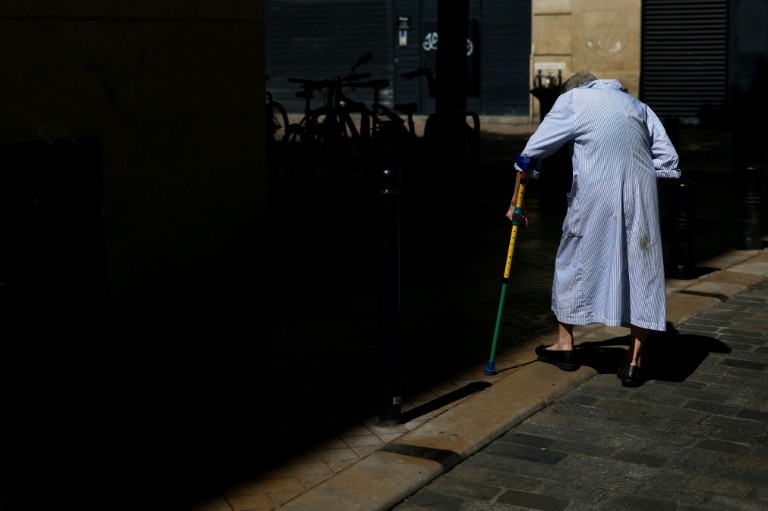
    Older adults over the age of 60 naturally sweat less than younger people, often live with pre-existing chronic health conditions, and frequently have weakened cardiovascular systems that make it far harder to regulate body temperature during heatwaves. To correct for this gap, the Stanford-led team used updated data from recent wet-bulb experiments that specifically tested heat and humidity tolerance among adults over 60. The researchers then integrated global population aging trends to model heat exposure risks for three separate age groups by the end of the 21st century, under multiple different global warming scenarios.

    The study’s core conclusion upends previous projections: “Intolerable heat will be experienced at much larger scales and for longer durations, affecting far more people than previously estimated.”

    Breaking down the projected risks, the team found that if the world limits average global warming to 1.5°C above pre-industrial levels — the more ambitious target set by the Paris Climate Agreement — 22 percent of all people over 60 globally will be exposed to unsafe levels of heat for at least one month every year. For every additional 1°C of warming above this threshold, roughly an extra one billion older people will face at least one additional month of heat and humidity that exceeds their body’s ability to cope.

    In a worst-case scenario where global average temperatures rise by 3°C by 2100, elderly populations in the hardest-hit regions — including South Asia and the Arabian Gulf — could face round-the-clock dangerous heat for three consecutive months each year. The nations at greatest overall risk are those with high poverty rates and limited access to affordable cooling technology: India, Pakistan, Bangladesh, Myanmar, and Niger top the list of most vulnerable countries.

    Beyond the immediate public health death toll, the study warns that widespread unmanageable heat could trigger a new wave of global displacement. “These results suggest that uncompensable heat could increasingly drive internal displacement and transboundary climate migration, raising new policy and humanitarian challenges,” the authors noted.

    To avoid these grim outcomes, the research team issued two key calls to action. First, nations must accelerate deep cuts to greenhouse gas emissions to slow the pace of global warming. Second, local and national heat action plans must explicitly prioritize vulnerable older populations, particularly since the majority of heat-related deaths occur indoors. Expanding access to affordable air conditioning and other cooling solutions for low-income and elderly households is a critical public health intervention, the team emphasized.

    The findings come as the world already sees the deadly impacts of extreme heat: this summer, a record-breaking heatwave across the Northern Hemisphere has already contributed to tens of thousands of deaths, with Europe — the world’s fastest-warming continent — facing devastating concurrent wildfires, drought, and sustained high temperatures that are on track to make this the hottest summer the continent has ever recorded. Climate scientists project that 2025 will be even hotter than 2024, as rising greenhouse gas concentrations continue to push global average temperatures higher.

  • Signings tracker: Kelma Tuilagi heading to the Storm in 2027 as the Warriors re-sign star half

    Signings tracker: Kelma Tuilagi heading to the Storm in 2027 as the Warriors re-sign star half

    The NRL 2027 off-season player market is already picking up steam, with two major roster announcements shaking up the competition this week. The Melbourne Storm have continued their strategic squad building for upcoming campaigns, securing the return of Victorian-developed forward Kelma Tuilagi from the Parramatta Eels on a deal starting in the 2027 season.

    Tuilagi’s rugby league journey has deep roots with the Storm. Born in Samoa and raised in New Zealand, he moved to Melbourne at a young age and rose through the club’s famous youth development pathways. Though he did not take the field for the Storm in 2020, he was a member of the club’s premiership-winning squad that year, and stayed with the entire team throughout their pandemic relocation to Queensland.

    After leaving the Storm’s development system, Tuilagi made his senior NRL debut with the Wests Tigers in 2021, before moving to the Parramatta Eels three seasons ago. At the Eels, he cemented himself as a consistent regular starter on the right edge of the forward pack, earning a reputation as a physical and reliable contributor.

    The signing makes solid strategic sense for Melbourne, which is set to lose starting edge forward Shawn Blore to the Brisbane Broncos ahead of next season. With the club currently grappling with a long-term absence of key forward Eli Katoa this year, mid-season recruit Oryn Keeley has already stepped up to fill the gap, and Tuilagi’s arrival will further boost back-row depth for the coming years.

    Melbourne Storm’s director of football Frank Ponissi expressed clear enthusiasm about the homecoming signing in a statement this week. “We’re delighted to have Kelma returning to Melbourne Storm and Victoria in 2027,” Ponissi said. “Kelma has a strong connection to our club. He was part of our 2020 premiership-winning squad and came through the Victorian rugby league system, so it’s fantastic to bring him back after he’s established himself as a regular NRL player. He’s a powerful, athletic forward who has continued to develop over the past few seasons. He’ll add experience and physicality to our forward pack, and we’re excited to see him back in a Storm jersey.”

    In a separate announcement from across the Tasman, the New Zealand Warriors have locked in one of their star playmakers for the long haul, extending Chanel Harris-Tavita’s contract through to the end of the 2029 NRL season. The new extension comes just months after Harris-Tavita originally signed a one-year renewal that would have kept him at the club through 2027.

    Andrew McFadden, the Warriors’ general manager of recruitment, pathways and development, said the club jumped at the chance to secure the halfback for a longer tenure. “Initially Chanel renewed for just the one season but we couldn’t be happier to have him with us for a longer term,” McFadden said. “It secures his future and ensures he will continue to be a critical part of our plans for at least the next three seasons. He has worked so hard at improving his game and has become one of the game’s most accomplished halves.”

    The dual announcements round out an early flurry of off-season moves across the NRL, as clubs look to shore up their rosters long before the 2026 campaign gets underway.

  • Trump’s slight of South Korea in favor of the North raises broader US security concerns

    Trump’s slight of South Korea in favor of the North raises broader US security concerns

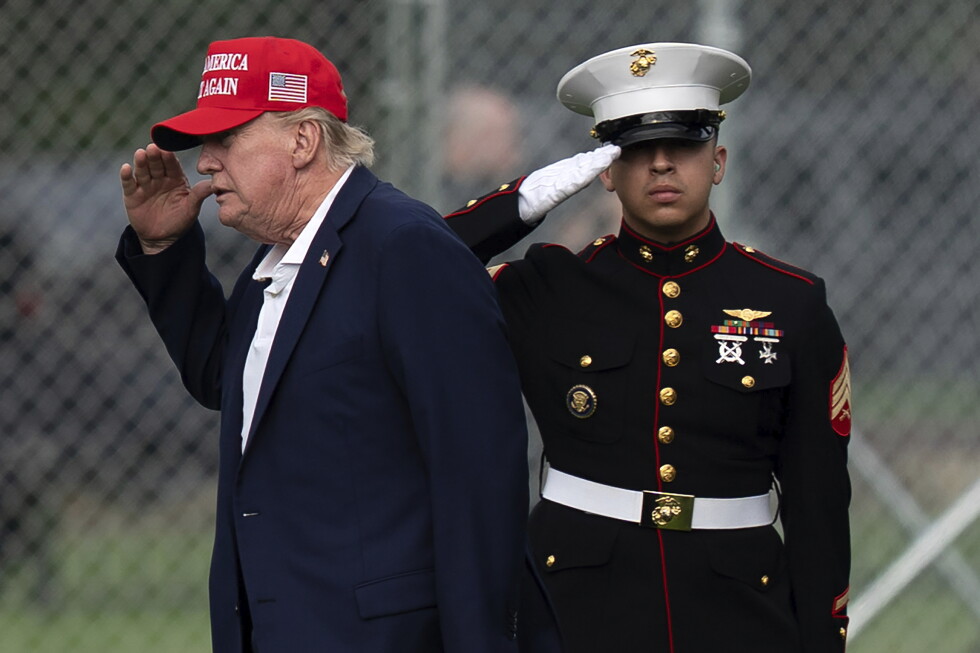
    In a move that has sent shockwaves through Washington and diplomatic circles across the Indo-Pacific, U.S. President Donald Trump has ordered a reduction in the scope of the annual Ulchi Freedom Shield joint military exercises with South Korea, a longstanding core security cooperation initiative designed to deter North Korean aggression. The decision, announced days before the 11-day drills were set to kick off as scheduled Monday, has not only strained ties with a key regional ally but also opened up a new debate about the future of American security commitments across Asia and beyond.

    Trump justified the pullback by pointing to two specific factors: South Korea’s refusal to back the U.S. in potential military conflict against Iran, and his claimed positive personal rapport with North Korean leader Kim Jong Un, who has long opposed the joint exercises. The approach underscores the transactional, personality-driven foreign policy that has defined Trump’s presidency, where personal relationships often take priority over longstanding alliance frameworks.

    The move has drawn fierce condemnation from foreign policy experts across both Republican and Democratic administrations, who warn it carries far-reaching negative consequences for U.S. regional interests. Dan Fried, a former assistant secretary of state for European affairs under George W. Bush and currently a fellow at the Atlantic Council, argued the decision serves no identifiable American strategic goal. “On all levels it makes no sense,” Fried said. “It undermines the South Koreans, undermines the Japanese, frightens the Taiwanese, unnerves NATO and emboldens the Chinese, not to mention the North Koreans.”

    Danny Russel, who served as assistant secretary of state for East Asia and the Pacific during the Obama administration and now works as a scholar at the Asia Society Policy Institute in New York, called the choice to align with North Korea’s demands one of the most damaging possible moves for U.S. interests. “It is tragically upside-down. Trump is punishing an ally while encouraging an adversary,” Russel explained. “He is protecting Kim Jong Un’s sensitive feelings from an unfriendly signal at the expense of U.S.-South Korean security.”

    Details of which components of the exercise will be cut remain undisclosed, but the announcement has already left South Korean leadership and security analysts confused. For decades, South Korea has counted on the U.S. security alliance as its primary bulwark against North Korea’s advancing nuclear and ballistic missile program, making national security cooperation a non-negotiable priority for Seoul. The decision also drew immediate pushback from leading congressional Democrats, with House Foreign Affairs Committee top member Rep. Greg Meeks of New York saying, “Treating one of America’s closest allies like an adversary weakens our alliances and benefits China and North Korea.”

    Trump doubled down on his decision the following Monday, taking to social media to post a photo of Kim Jong Un with the playful caption: “HEY DONALD … WE COOL, RIGHT?”

    Retired U.S. Ambassador Robert Wood, who has served across multiple Republican and Democratic administrations, emphasized that the regular joint drills are a critical deterrent against North Korea, which has refused to engage in nuclear denuclearization talks and has ramped up weapons testing in recent months. Beyond deterrence, Wood warned the cutback could push Seoul toward pursuing an independent nuclear capability: “We also don’t want South Korea to draw the conclusion that a nuclear weapons capability is the only guarantee it has to ensure its security.”

    That concern is echoed by Matthew Kroenig, a former defense and intelligence official who now works at the Atlantic Council. Kroenig noted that public opinion polling in South Korea already shows growing support for the country developing its own nuclear arsenal. For decades, the U.S. has worked to reassure South Korea that it is fully protected under the American nuclear umbrella, and scaling back the exercises “potentially undermines that message,” Kroenig said.

    Notably, Trump’s reversal of course on the drills comes even after South Korea’s new President Lee Jae Myung made extensive efforts to court the American leader to advance bilateral trade and defense priorities. During a 2024 Oval Office meeting, Lee openly flattered Trump, echoing the U.S. president’s claim that Kim Jong Un would not have pursued nuclear expansion if Trump had won a second term in 2020, and even floated the possibility of a future Trump Tower development in North Korea. The shift also came just hours after Trump appeared to express sympathy for Lee’s ousted predecessor Yoon Suk Yeol, who was removed from office after imposing martial law in December 2024.

    Charles Kupchan, a senior fellow at the Council on Foreign Relations who previously served on the National Security Council under Bill Clinton and Barack Obama, said the decision is likely to prompt long-time U.S. allies to begin planning for a future without consistent American security backing. “They are hoping that the American umbrella is there for the future, but they have to at least contemplate the idea that Uncle Sam won’t be there for them,” Kupchan explained.

    Kupchan acknowledged that Trump is not wrong to push allies like South Korea and European NATO members to take on greater responsibility for their own defense spending, but argued the president’s erratic, confrontational approach erodes the core solidarity that underpins the post-WWII alliance system “because he ends up insulting allies.”

    Fried echoed that critique, noting that Trump has already successfully pressured NATO members and Asian allies to increase their defense budgets, yet appears unwilling to accept that win. “NATO is building up, South Korea is building up, Japan is building up. Trump has a problem with taking the win,” Fried said. “It’s like he wants to burn it all down.”

    John Herbst, a former U.S. ambassador to Ukraine under George W. Bush and another Atlantic Council fellow, said the decision highlights the deep inconsistency of the Trump administration’s foreign policy messaging. Still, he noted that the U.S. has not yet moved to fully dismantle the alliance framework that has served American interests since World War II. “If these things grow in frequency and in importance, obviously we will be in the process of taking apart the alliance system, which has served us so well since the end of World War II,” Herbst said. “But despite some statements which seem to head in that direction, we have not headed there in a consistent, strong way.”

    Kupchan agreed, noting that while Trump’s rhetoric has sounded like a break from longstanding commitments, “the reality is that, at least as of today, Trump has left intact America’s forward bases and its core alliance relationships.”

    It remains unclear whether the scaling back of exercises will mark a permanent shift in U.S. policy toward South Korea and the region, or merely a fleeting, impulsive social media-driven announcement. “He’s an unpredictable president,” Kroenig said. “If we move on and the exercises go as planned and we never hear anything about this again, I wouldn’t be surprised.”

    This report included contributions from Associated Press journalists Collin Binkley, Jesse Bedayn, Lisa Mascaro, Seung Min Kim based in Washington and Farnoush Amiri based in New York.
  • ‘Not the right thing for me’: Cameron Smith rules himself out of contention for Maroons job as new favourites emerge

    ‘Not the right thing for me’: Cameron Smith rules himself out of contention for Maroons job as new favourites emerge

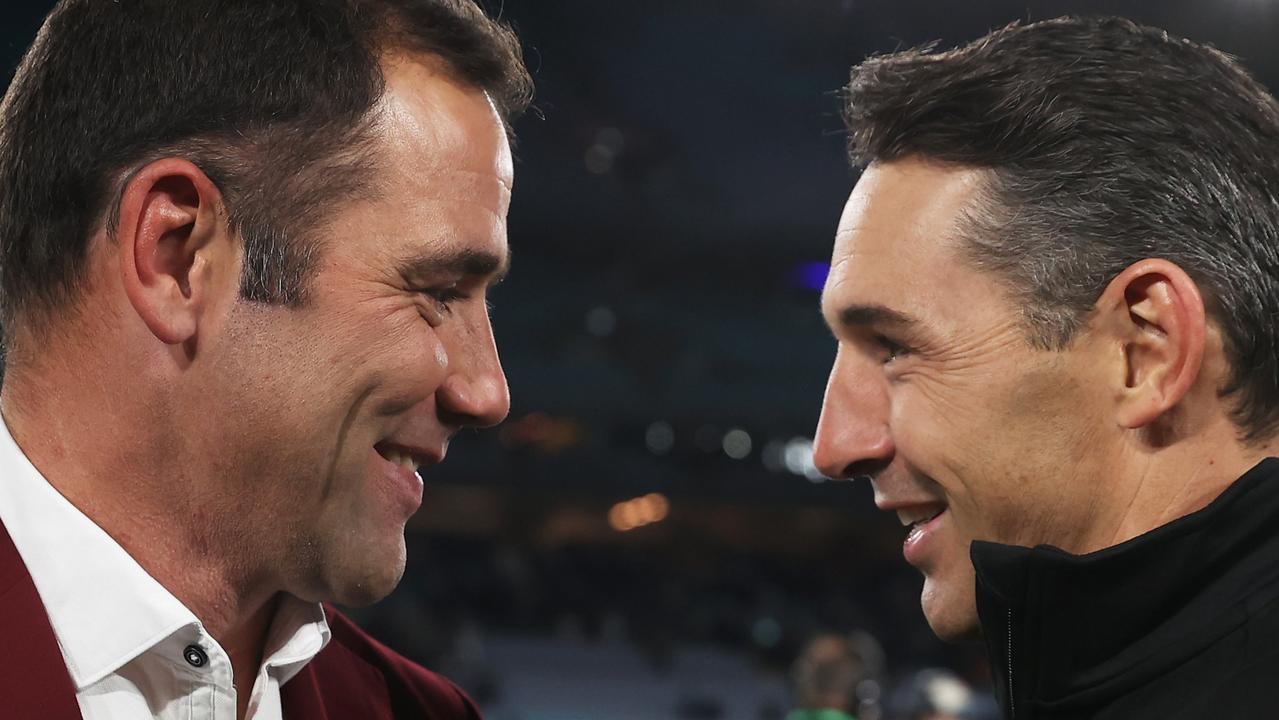
    Queensland Rugby League’s search for a new State of Origin head coach to replace the outgoing Billy Slater has suffered a major setback, after the early favorite for the position, rugby league legend Cameron Smith, confirmed he will not put his name forward for the role.

    Smith, who holds the record for the most State of Origin appearances with 42 caps for the Maroons, had received high-profile public backing for the job from Queensland’s most successful Origin coach, Wayne Bennett. The 42-game veteran had previously served as an assistant coach alongside Slater in 2022 and 2023, making him a widely tipped successor to his former Melbourne Storm teammate. But in an appearance on the Fox League program 100% Footy, Smith shut down speculation of a promotion to the top job.

    Smith explained that his personal commitments still prevent him from dedicating the full time required for a senior coaching role, a reason that prompted him to step away from his assistant position at the end of 2023. “I’ve heard comments from Wayne Bennett endorsing me and I really appreciate the sentiments, but it’s not the role for me at this current time,” Smith said. “I couldn’t fully commit to the role when I was assistant coach, and nothing in my life has changed since then. At this point in my life, it’s not the right thing for me and my family.”

    He also added that the rugby league community was caught off guard by Slater’s decision to step down after five consecutive series in charge of the Maroons. “We were all fairly surprised Billy made the decision to stand down. I thought he would have gone around another 12 months and I said as much to him,” he noted.

    Smith’s withdrawal follows a similar announcement from incumbent Australian Kangaroos head coach Kevin Walters, who also ruled himself out of the running earlier after the Queensland Rugby League confirmed Slater’s departure on Friday. Queensland assistant coach and another Maroons legend Johnathan Thurston has also distanced himself from the vacancy, leaving the QRL with a drastically shortened list of plausible candidates.

    Smith pointed to two remaining candidates who fit the mold of continuing the program Slater built over the past half-decade: current Brisbane Broncos assistant coach Matt Ballin and former Maroons forward Ben Te’o. Smith argues that promoting from within the existing Origin support staff is the most logical path forward for the QRL. “Logic would suggest taking guys from within that have been there with Billy to continue that path that he’s built over the last five years,” Smith said.

    For Ballin, taking the job would require stepping away from his current senior role with the Broncos, a precedent set by incoming New South Wales Blues coach Matt King, who will leave his position at the Sydney Roosters at the end of the year to take over the State of Origin role. Te’o, who has also worked within the current Maroons setup, remains another viable in-house option, while Thurston confirmed he cannot commit to the full-time demands of the head coaching post.

    Walters’ situation, Smith added, is also non-viable because of the conflicting time demands of the Kangaroos head coach and Queensland State of Origin roles in the modern calendar. “You can’t be Kangaroos coach and Queensland coach in this day and age,” he said. “The two that stand out are Ben Te’o and Matty Ballin.”

  • US-Canada trade talks ‘intense’ as new tariff deadline looms

    US-Canada trade talks ‘intense’ as new tariff deadline looms

    With less than 48 hours remaining before a new wave of US tariffs targeting Canadian goods takes effect, high-stakes trade negotiations between Canadian and American negotiators are entering a final, frantic stretch in Washington. Canadian bargaining teams have been stationed in the US capital for a full week, racing to lock in a breakthrough agreement that can block the planned 50% tariffs on roughly $20 billion in Canadian imports scheduled to go into force this Wednesday.

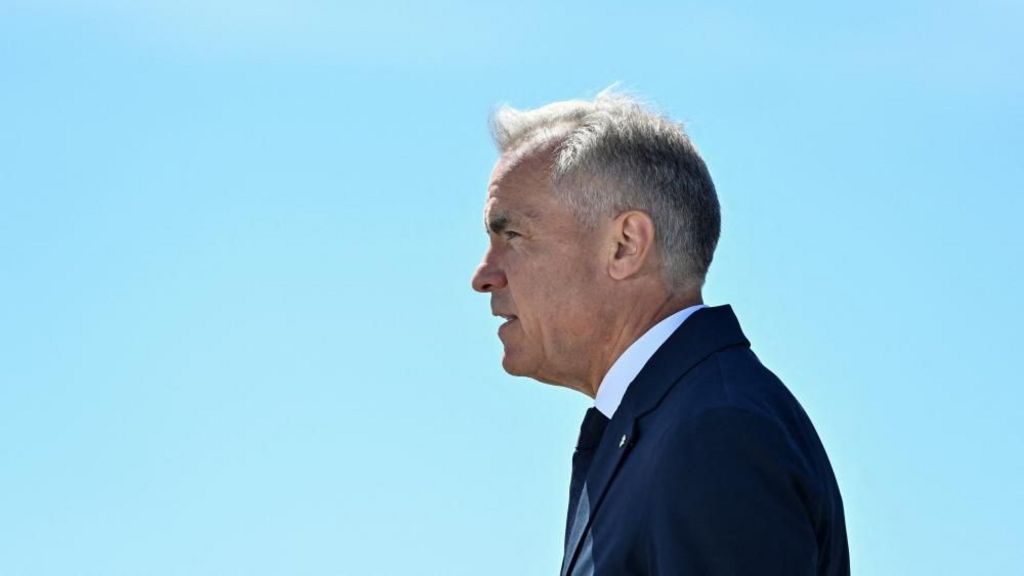
    Facing relentless questions from reporters on Monday, Canadian Prime Minister Mark Carney refused to disclose any details of the closed-door discussions, noting that the currently “very delicate and intense” negotiations leave no room for public bargaining. While Carney emphasized that Canada enters the talks from a position of strength, the stakes could not be higher for his government: the new tariffs would cover approximately 5% of all Canadian imports, delivering a fresh blow to already strained cross-border commerce.

    In spite of a packed schedule of meetings between Canadian negotiators and US Trade Representative Jamieson Greer over recent days, the two sides have so far failed to reach a final consensus. Leaving Greer’s office on Monday, Canadian Minister of US-Canada Trade Dominic LeBlanc acknowledged plainly that “Our job is not yet done.” Both sides have openly acknowledged the difficult nature of the talks. Former US President Donald Trump, whose administration is driving the new tariff push, has publicly labeled Canada “nasty” on trade — a description Carney did not fully reject, and Trump has already warned he will escalate trade pressure if no deal is reached by the deadline.

    Even if negotiators do hammer out a last-minute agreement, Carney faces significant domestic headwinds to sell any compromises to a Canadian public already frustrated and deeply skeptical of US trade policy. He will also need formal approval from Canada’s provincial governments for any deal that touches on areas under provincial jurisdiction.

    The United States has tabled a list of key demands for Canada, including the full removal of Canada’s remaining retaliatory tariffs on American automobiles, adjustments to Canada’s dairy import quota system, and the elimination of provincial bans on US alcohol sales. Those bans were implemented by most Canadian provinces early last year in direct retaliation for Trump’s earlier steel and aluminum tariffs, and authority over alcohol policy rests entirely with provincial governments, meaning any change requires provincial buy-in.

    Ontario Premier Doug Ford, who has long positioned himself as a hardliner on US trade, confirmed last week that any agreement to roll back the alcohol ban would be conditional on the US delivering meaningful concessions for Canadian key sectors. “If we get a fair deal that will protect our steel sector, our auto sector, our forestry sector, our agriculture sector, our manufacturing sector, then we’d be happy to bring booze back on the shelves,” Ford said.

    Canada, for its part, is seeking a deal that would see the US eliminate or roll back existing tariffs on Canadian steel, aluminum, automobiles and lumber — duties that have already caused significant damage to Canada’s national economy. Carney also faces major domestic pushback on any dairy concessions, particularly in Quebec, where Premier Christine Fréchette has reaffirmed that Canada’s supply management system for dairy is non-negotiable. Trump has repeatedly attacked the system, which sets production quotas, fixed domestic pricing, and import limits for dairy, eggs and poultry, arguing it is unfair to American farmers seeking greater access to the Canadian market.

    Public opinion in Canada leans heavily against offering major concessions to the US, even as most Canadians acknowledge a desire for greater trade stability. A recent poll from Abacus Data found that 74% of Canadian respondents say the ongoing trade dispute has impacted their household finances. Thirty-six percent support Canada responding to new US tariffs with new counter-tariffs, even if that brings additional domestic economic pain, while just 18% back concessions such as lifting the provincial alcohol ban to secure tariff reductions.

    Canadian media reports have also indicated that Canada’s chief negotiator Janice Charette has formally warned US counterparts that enacting the new tariffs this Wednesday would put future broader trade negotiations at serious risk. Carney has repeatedly stated he will not sign any deal that is not clearly beneficial to Canada, though he has declined to outline specific parameters for what qualifies as a good deal. On Monday, he only noted that “We’ll have opportunities over the next 48 hours to discuss in more detail as the negotiations go forward,” confirming he plans to speak directly with Trump before the Wednesday deadline and that his government has “plans for any situation that may arise” if talks collapse.

    Opposition Conservative trade critic Shuvaloy Majumdar released a statement Monday calling for an end to ongoing economic uncertainty for Canadian households. “We have grown tired of seeing our country used as a punching bag,” he said, adding that “Yet we share a common hope that Prime Minister Carney will deliver a genuine win at the negotiating table.”

  • ‘Complete takeover’:Key detail locked in as massive week planned for State of Origin match in Auckland

    ‘Complete takeover’:Key detail locked in as massive week planned for State of Origin match in Auckland

    Rugby league fans across Australia and New Zealand now have a confirmed date to mark on their calendars, as the Australian Rugby League Commission (ARLC) has officially locked in details for the historic first State of Origin game to be hosted outside of Australia. Game two of the 2026 State of Origin series will be played at Auckland’s iconic Eden Park on Wednesday, June 16, marking the first time in the tournament’s long history that a fixture will be held across the Tasman Sea in New Zealand.

    The confirmation, announced publicly by the ARLC on Tuesday morning, paves the way for fans to book travel and hospitality packages for the groundbreaking event. Organizers have also planned a full week of rugby league-focused celebrations leading up to the main Origin fixture, kicking off with a National Rugby League (NRL) match hosted by the New Zealand Warriors at the same Eden Park venue on the Sunday three days before the Origin clash.

    This historic cross-Tasman move continues a growing trend in recent years of expanding State of Origin hosting beyond the traditional strongholds of Sydney and Brisbane. Over the past decade, Adelaide, Perth and Melbourne have all stepped in to host Origin fixtures, spreading the sport’s most high-profile rivalry to new audiences across the region.

    ARLC Chair Peter V’landys emphasized that the move to Auckland is a natural next step for the iconic tournament, which has carved out an unmatched reputation in Australian sport. “State of Origin is truly one of a kind,” V’landys said. “It delivers an atmosphere you cannot find anywhere else in Australian sport – brutal but respectful rivalry, unfiltered passion, and an intensity that you have to experience in person to understand. This is a bucket-list event for any rugby league fan.”

    He added that the week-long festival of rugby league will not only build excitement for the main match but also showcase the sport to New Zealand audiences and traveling international fans. “It’s going to be a complete takeover of Auckland, putting the very best of rugby league on display for everyone,” he said.

    Current State of Origin champions the New South Wales Blues will head into the fixture looking to extend their recent run of success, with organizers projecting that around 50,000 fans will pack into Eden Park for the historic clash. Growing interest in the match has been fueled by the surging popularity of rugby league across New Zealand, where the Warriors have consistently drawn record crowds at every home match in recent seasons. This strong fan base has also sparked growing speculation that New Zealand could be the home of the NRL’s 20th franchise in coming years.

    Auckland Mayor Wayne Brown called the first-ever Origin match to the city a major win for the region, noting the tournament’s status as one of the biggest sporting events in the Australasian region. “One of the biggest events in Australasian sport is coming to our city, and we can’t wait to put on an incredible experience for fans who live here and those traveling over from Australia,” Brown said. “Now that the date is locked in, fans can start planning their trips. We encourage everyone to stay for more than just the 80 minutes of play – make a full week of it, and experience our city’s take on State of Origin both inside the stadium and across Auckland.”

  • BBC breaks down Trump’s latest shift on North and South Korea

    BBC breaks down Trump’s latest shift on North and South Korea

    In a surprising policy shift that has drawn widespread international attention, former US President Donald Trump has revealed plans to substantially scale back joint military exercises between the United States and South Korea. The announcement, which was recently broken down and analyzed by BBC, marks another notable turn in Washington’s approach to the Korean Peninsula amid shifting diplomatic dynamics.

    Trump framed the decision around his personal diplomatic approach, telling audiences that his own ‘very good relationship’ with North Korean leader Kim Jong Un is the key factor behind the move. The planned drawdown of joint drills, which have long been a source of tension between Pyongyang and the US-South Korea alliance, signals a deliberate effort to de-escalate tensions on the peninsula following years of rising rhetoric and military posturing.

    Diplomatic observers note that this shift represents a break from decades of consistent US military posture on the Korean Peninsula. Since the armistice that halted the Korean War in the 1950s, the US and South Korea have regularly conducted large-scale joint military exercises to maintain combat readiness and deter potential aggression from North Korea. For North Korea, these drills have consistently been viewed as provocative preparations for an invasion, a stance that has repeatedly derailed diplomatic efforts in the past.

    Trump’s decision opens a new chapter in US engagement with the Korean Peninsula, prioritizing personal diplomacy over long-standing military preparedness protocols. While the move has been praised by supporters as a bold step toward peace, critics have raised concerns about the impact on alliance credibility and regional security. As the situation develops, regional powers and global stakeholders are closely watching how North Korea responds, and whether this shift will pave the way for renewed denuclearization talks.