博客

  • Asian allies stress ‘critical cooperation’ as Trump slashes Korea drills

    Asian allies stress ‘critical cooperation’ as Trump slashes Korea drills

    A sudden policy shift from US President Donald Trump to scale back joint military exercises with South Korea has sent ripples across Northeast Asia, prompting key Asian allies to emphasize the urgent need for strengthened trilateral security cooperation this week.

    Trump made the unexpected announcement Sunday, ordering the Pentagon to reduce the scope of what he called “inappropriate and hostile” drills with Seoul. The following day, he defended the move during Oval Office remarks, arguing that his personal diplomatic ties with North Korean leader Kim Jong Un have made the entire region far safer. The two leaders met three times during Trump’s first presidential term, though no in-person encounter has occurred since Trump returned to the White House. When pressed on whether Kim has responded to recent outreach from him, Trump confirmed Kim had replied and described ongoing talks as “very positive,” but offered no additional details about the content of the exchanges. He doubled down on his positive assessment of his relationship with the North Korean leader, noting “Kim Jong Un has always treated me with great respect. I understand him. He understands me.”
    Alongside his outreach to Pyongyang, Trump issued a sharp rebuke to South Korea, a longstanding core US ally, for refusing to join Washington’s campaign against Iran — a conflict Trump frames as an effort to block Tehran from developing a nuclear weapon. “Wait a minute. We have 39,000 soldiers over there, guarding you from Kim Jong Un, your next-door neighbour, and you’re not going to help us on a very easy military operation in Iran. That’s strange,” Trump told reporters. “We can’t go around and protect all of these countries, especially when they’re not there to help us.”

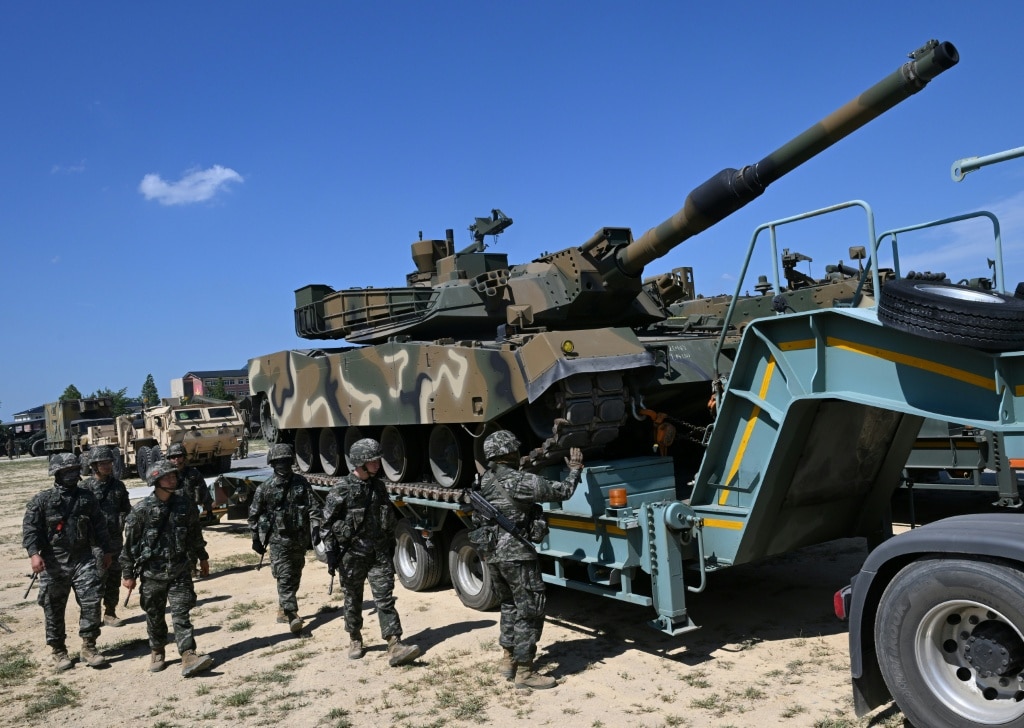
    The exercises in question, the 11-day Ulchi Freedom Shield drills, are designed to prepare South Korean and US forces for a potential conflict with North Korea, which has long decried the annual drills as invasion rehearsals. Even as Trump moved to scale back the drills, South Korean officials confirmed the exercises had already launched as scheduled, and expressed hope that the positive personal rapport between Trump and Kim would pave the way for a resumption of denuclearization talks. In a statement Tuesday, Seoul’s presidential office stressed the drills carry “no intention to attack North Korea or escalate tensions on the Korean peninsula.” However, South Korea’s unification ministry, which manages cross-border relations, said it could not independently confirm whether the reported communications between Kim and Trump actually took place. “While communication channels between the two sides exist, we cannot verify the specific content of the exchanges,” a ministry spokesperson said.

    During a working visit to Australia this week, Japanese Defence Minister Shinjiro Koizumi made clear Tokyo’s stance on the value of closer cooperation between the three key Indo-Pacific security partners. “As Japan faces the most severe and complicated security environment in the post-war era, the cooperation among Japan, the United States and South Korea is critical to the peace and stability of the region,” Koizumi told reporters. His Australian counterpart Richard Marles added that Canberra remains deeply worried about Pyongyang’s nuclear and ballistic missile programs, a longstanding position the Australian government has consistently upheld. North Korea has not issued any public response to Trump’s latest announcement or the reported diplomatic exchanges, though the country has repeatedly condemned all joint US-South Korea military drills in the past.

    Trump’s latest move is part of a pattern of repeated criticism of long-standing US alliances that has cast growing uncertainty over Washington’s security commitments across East Asia. The US currently stations roughly 28,500 troops in South Korea, a post-war arrangement dating back to the 1950-1953 Korean War, which ended in an armistice rather than a formal peace treaty. The announcement of scaled-back drills comes at a time of shifting US military deployments in the Indo-Pacific: the USS George Washington, the only US aircraft carrier currently operating in the Pacific, is being redeployed to the Middle East to relieve the USS Lincoln, which has faced well-documented crew mental health and supply challenges after an extended deployment.

    Trump’s administration has also ramped up pressure on regional US partners to increase their own defense spending. Among those partners is Taiwan, a self-governing democracy that Beijing claims as part of its sovereign territory and has repeatedly threatened to seize by force. On Monday, Taiwanese President Lai Ching-te announced a pledge to reach a record high defense budget by 2027, with his administration committing to boosting defense spending to 5 percent of gross domestic product by 2030 to meet growing US defense contribution expectations.
  • Doctors remove 3.1kg stone from man’s bladder and claim record

    Doctors remove 3.1kg stone from man’s bladder and claim record

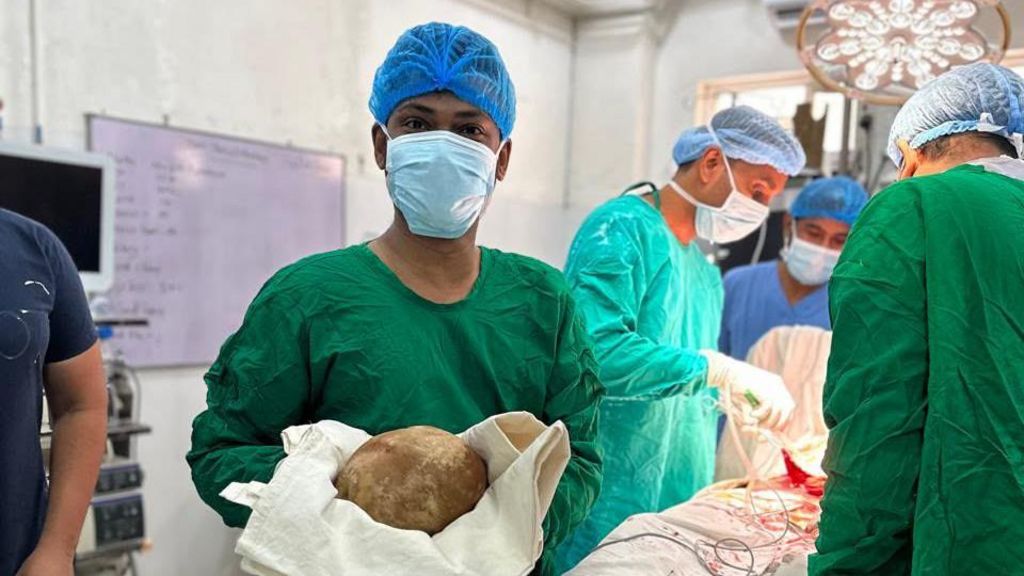
    A medical team at Sri Lanka’s Trincomalee General Hospital has made global medical history after successfully extracting an extraordinarily large bladder stone weighing 3.1 kilograms (6.8 pounds) — a mass roughly equal to the weight of a full-term newborn baby and matching the dimensions of an ostrich egg.

    The unprecedented procedure was performed last week on a 55-year-old male patient who had initially been admitted to the eastern Sri Lankan hospital for care following a stroke. While managing his post-stroke treatment, clinicians noticed the patient was experiencing persistent difficulty urinating, which prompted further diagnostic testing. That evaluation uncovered the massive solid mineral mass growing in his urinary bladder.

    Speaking to BBC Sinhala following the successful surgery, lead surgeon Dr Prahalahan Balakrishnan confirmed that based on all available global medical documentation, this is the largest surgically removed bladder stone ever recorded. Measuring approximately 17 centimeters wide, the mass is only slightly shorter than the previous record-holding bladder stone removed in Brazil in 2003, which was recognized by Guinness World Records at 17.9 centimeters long but weighed just 1.9 kilograms — more than a kilogram less than the specimen extracted in Sri Lanka.

    Dr Balakrishnan added that the newly removed stone had likely been developing gradually in the patient’s bladder for anywhere between five and 10 years before its detection. Despite the stone’s extraordinary size, the surgeon confirmed the patient is now in very good health following the procedure. He remains hospitalized to continue receiving ongoing care for the stroke that led to his initial admission.

    Bladder stones form when concentrated minerals in urine crystallize and clump together into solid masses. They most often develop when the bladder does not fully empty during urination, leaving behind stagnant, concentrated urine that promotes crystal formation. Small bladder stones, often no larger than grains of sand, can pass out of the body without medical intervention, but any stone larger than 1 centimeter can block urinary flow and require surgical removal. Any mass larger than 4 centimeters is already classified as a giant bladder stone, making the 17-centimeter Sri Lankan specimen far outside the range of typical cases.

  • South Korea president stresses US alliance as many baffled by Trump order to cut exercises

    South Korea president stresses US alliance as many baffled by Trump order to cut exercises

    In the wake of an unexpected, uncoordinated announcement from former U.S. President Donald Trump ordering substantial cuts to the annual U.S.-South Korea Ulchi Freedom Shield military exercises, South Korea finds itself grappling with growing public anxiety and deepening questions about the long-term reliability of its decades-long security alliance with Washington.

    The drama unfolded just hours before the 11-day drills — a routine defense training event designed to boost combined readiness against evolving North Korean threats — were set to kick off Monday. In a social media post that caught South Korean officials completely off guard, Trump justified his order by pointing to what he claimed was a positive personal relationship with North Korean leader Kim Jong Un, and retaliated against South Korea for its refusal to join the U.S. in military action against Iran. Trump added that he viewed the exercises as unnecessarily costly and argued they sent a needlessly hostile message to Pyongyang, which he claimed had remained respectful and non-threatening during his tenure.

    This abrupt move, which bypassed all prior consultations with South Korean leadership, has reignited long-simmering doubts about U.S. commitment to the alliance, a partnership first forged amid the chaos of the 1950-1953 Korean War. For many South Koreans, this latest development compounds a steady erosion of trust that has already been fueled by Trump-era trade tariffs and a 2023 immigration raid in Georgia that detained hundreds of South Korean workers. A recent joint survey from South Korea’s JoongAng Ilbo newspaper and the Seoul-based East Asia Institute underscores this shifting sentiment: for the first time since polling began in 2017, more South Korean respondents (46.4%) labeled the U.S. an untrustworthy partner than a trustworthy one (45.4%).

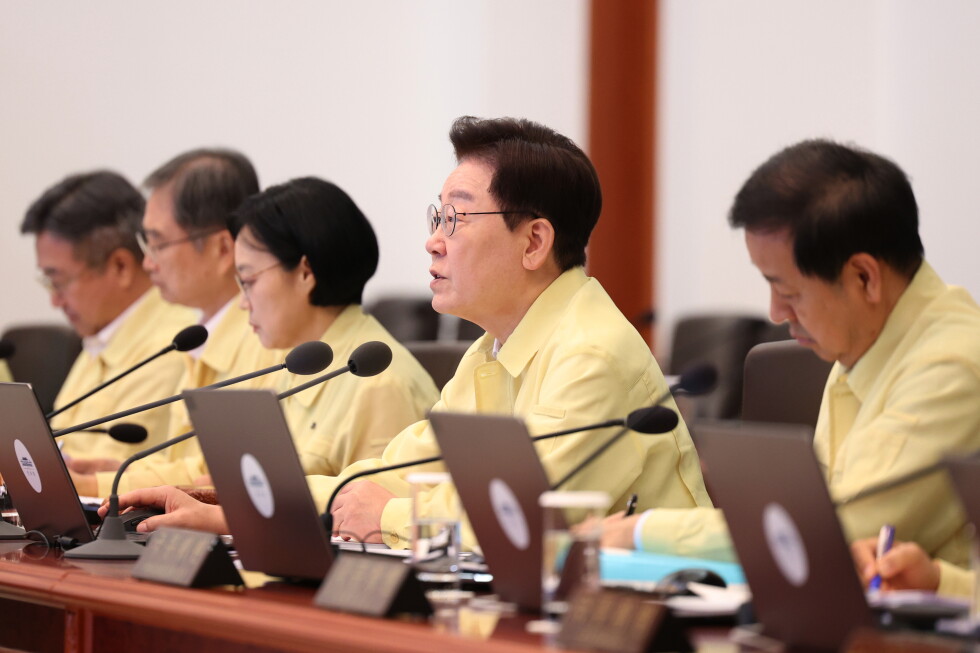
    On Tuesday, South Korean President Lee Jae Myung addressed the growing unrest during a regular Cabinet meeting, emphasizing that a robust alliance with the U.S. remains the core foundation of the country’s national security. Lee, a liberal leader who has long pushed for greater South Korean self-reliance in defense, noted that “national security will be further strengthened when the alliance is solid,” adding that building South Korea’s own independent military capabilities will only boost its value and standing as a U.S. ally.

    Prior to Trump’s announcement, both South Korean and U.S. military officials had confirmed the 2025 drills would match the scale of previous years, incorporating tactical lessons from modern conflicts — including North Korea’s battlefield deployments alongside Russia in the Ukraine war — and reiterated that the exercises are strictly defensive in nature. Even after Trump’s order, it remains unclear which segments of the 11-day training will be scaled back.

    North Korea has already responded sharply to the drills, with its Foreign Ministry accusing Seoul and Washington of planning more aggressive provocative actions and vowing to counter the exercises with a new, upgraded level of nuclear deterrent.

    For its part, the Lee administration has sought a cautious path forward. On Monday, Lee’s presidential office expressed hope that the friendly rapport between Trump and Kim would open the door to meaningful denuclearization dialogue and lasting peace on the Korean Peninsula. This stance, however, has drawn fierce backlash from South Korea’s main conservative opposition party, the People Power Party. Party spokesperson Park Chung-kwon argued that the country’s entire security framework is being shaken to its core, noting that South Korea relies on the U.S. nuclear umbrella to defend itself against nuclear-armed North Korea, hosting roughly 28,500 U.S. troops on its territory to uphold that security commitment.

    Experts note that Kim Jong Un has shown little inclination to return to nuclear talks with the U.S. after high-profile 2019 negotiations collapsed. In the years since the talks fell apart, Kim has expanded North Korea’s nuclear arsenal, deepened his diplomatic and military alignment with Russia amid its war in Ukraine, and has shown no interest in reengaging without major U.S. concessions.

    Analysts like Leif-Eric Easley, a professor of international studies at Seoul’s Ewha University, frame Trump’s approach to alliances as transactional: “Trump thinks of an alliance as an investment that should pay regular dividends, or a rainy-day fund he can withdraw from when another project isn’t going well.” Easley added that South Korean leaders have come to expect constant renegotiation of ties with the Trump administration that links economic and security issues, forcing Seoul to respond cautiously to the unexpected shift.

    Leading South Korean media have echoed public anxiety, with major daily Hankook Ilbo noting in a Tuesday editorial that Trump’s order “reveals the stark reality of a faltering Korea-U.S. alliance, fueling public anxiety.” The paper added, “It’s absurd that the U.S. appears to treat North Korea more respectfully than its ally South Korea.”

    In a clarification following Trump’s announcement, Lee’s office confirmed that South Korea and the U.S. are currently in close discussions over Seoul’s practical and military contributions to upholding freedom of navigation in the Strait of Hormuz, a key global energy chokepoint, a topic that ties back to Trump’s reference to Iran.

  • NRL team lists: Major Bunnies boost as Latrell Mitchell named on extended bench

    NRL team lists: Major Bunnies boost as Latrell Mitchell named on extended bench

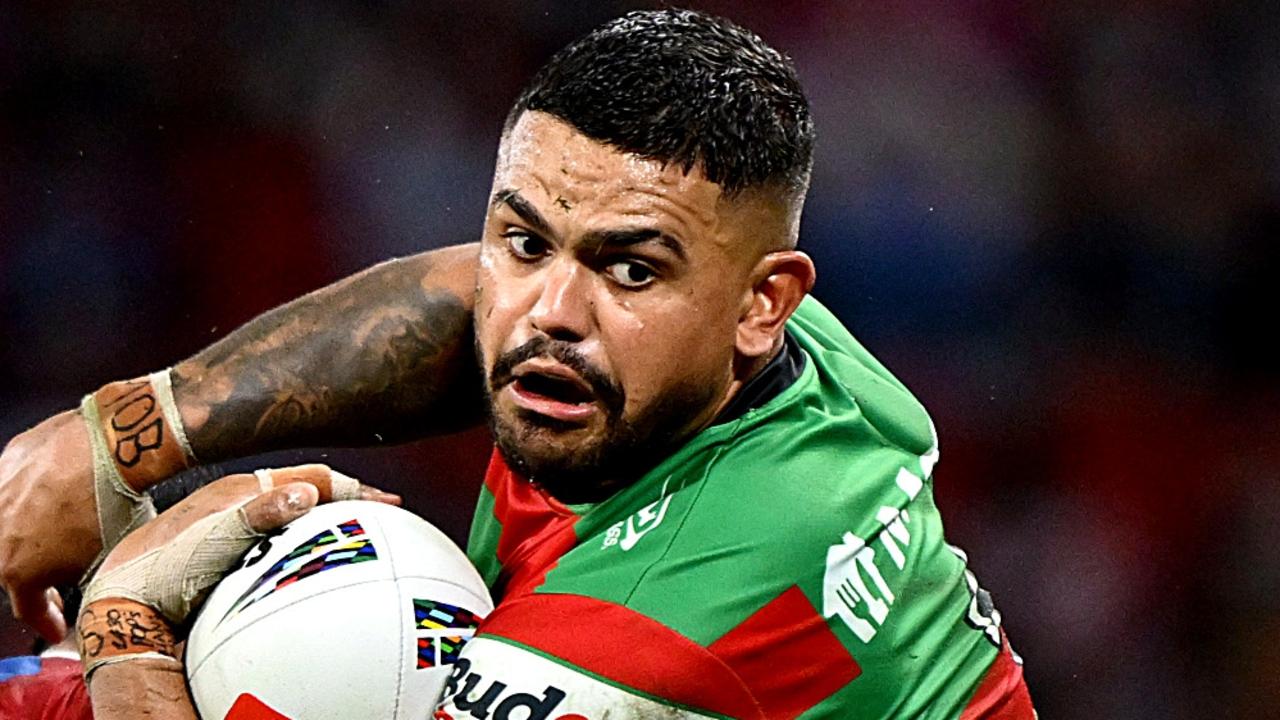
    With the NRL regular season winding down and finals football just weeks away, a flurry of last-minute team announcements has shaken up premiership odds, headlined by long-injured South Sydney Rabbitohs superstar Latrell Mitchell’s surprise inclusion in Saturday’s clash against the New Zealand Warriors.

    Mitchell has not taken the field since South Sydney’s 15 May defeat to the Dolphins, sidelined for almost three months by a complicated injury set that began with a back issue, triggered a nerve complaint, and ultimately developed into a secondary calf problem. The representative star was forced to miss the entire 2024 State of Origin series, but his naming in the 22 on South Sydney’s extended bench has reignited the club’s premiership aspirations, which were flagging during his extended absence.

    The star completed light running drills at Rabbitohs training earlier this week, leaving coach Wayne Bennett with two strategic options if Mitchell receives final medical clearance to return. The veteran coach could opt to slowly reintroduce the playmaker from the interchange bench, or throw him straight into a starting spot at left centre as the club chokes a vital win to shore up its finals position.

    For the Warriors, the match-up brings its own selection shifts. The club opted not to hand young playmaker Jett Cleary his NRL debut this week, also naming him to the extended bench. Luke Hanson will step into the starting halves pair alongside Chanel Harris-Tavita, after Luke Metcalf became the latest Warriors playmaker to fall victim to a hamstring injury. The Warriors will also be without suspended centre Charnze Nicoll-Klokstad, who was banned after a tackle that ended Brisbane Broncos star Reece Walsh’s season prematurely.

    Elsewhere across the league, the Manly Warringah Sea Eagles have received a much-needed boost with star fullback Tom Trbojevic cleared to return from his latest hamstring injury, a massive lift for a side desperate to force its way into finals contention. However, the club suffered a devastating counter-blow: young halfback Joey Walsh has been ruled out indefinitely after sustaining a hairline jaw fracture during last round’s loss to the Dolphins. Clayton Faulalo will step into Walsh’s spot in the halves for Manly’s clash against the Newcastle Knights.

    Newcastle, for their part, will be without experienced centre Dane Gagai but welcome back starting centre Bradman Best from his own injury layoff. Another elite fullback is also set to return this weekend: Sydney Roosters captain James Tedesco has been named in the squad for his side’s match-up against his former club, the Wests Tigers.

    For the Wests Tigers, the 2024 season of struggle continues to worsen. The club confirmed this week that halfback Adam Doueihi will miss the rest of the season after undergoing season-ending shoulder reconstruction surgery. “New scans on Adam’s shoulder have showed the time has come to have his reconstruction done. This gives him enough time to be ready for the start of the 2027 season,” explained Wests Tigers head of high performance Peter Moussa. The Tigers have also lost young playmaker Latu Fainu to a new hamstring injury, leading to Jock Madden being named to partner Jarome Luai in the starting halves for the round.

    Melbourne Storm have added hooker Harry Grant, one of the league’s top dummy halves, back to their starting line-up for Thursday night’s match against the Penrith Panthers, after Grant missed several weeks with a hamstring injury. Star halfback Jahrome Hughes remains sidelined for the Storm, so Trent Toelau will get the starting spot at halfback. Penrith, the reigning premiers, will welcome young gun Casey McLean back to the starting centre spot, replacing the injured Paul Alamoti who is out with a hamstring injury.

    The Cronulla Sharks, fighting to hold onto a top-four finish, have turned to playmaker Niwhai Puru to fill the void left by Braydon Trindall, the team’s try-assist leader who dislocated his shoulder in last week’s round. The Dolphins will name Max Plath on the edge for their upcoming match, with regular starter Connelly Lemuelu unavailable.

    In Canberra, Raiders legend Josh Papalii will make his final starting appearance at the club’s home ground, in front of a home crowd before his impending retirement from the NRL. The Raiders face the struggling Brisbane Broncos, who have recalled experienced halfback Ben Hunt to the starting line-up, with Hayze Perham stepping into the line-up to replace the injured Reece Walsh.

  • Zambia’s president wins second term with 60% of the vote

    Zambia’s president wins second term with 60% of the vote

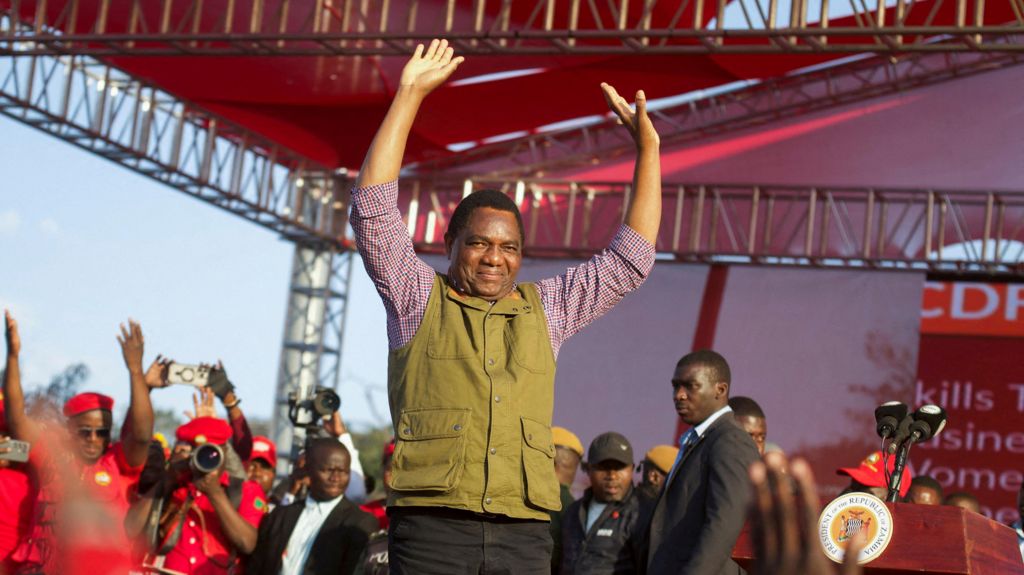
    Zambia’s incumbent President Hakainde Hichilema has won a second consecutive five-year term in office, the country’s electoral commission officially announced Friday, after the 64-year-old incumbent captured an absolute majority of valid ballots cast in the nation’s general election. Final results put Hichilema’s vote share at 60%, a comfortable lead that secured him an outright first-round victory under Zambia’s electoral rules, which require candidates to win more than 50% of the vote to avoid a runoff. His closest competitor, opposition leader Brian Mundubile, finished with 38% of the vote, while the 12 other minor candidates on the ballot failed to gain any meaningful traction, trailing far behind the two front-runners. The outcome was widely predicted by pre-election and exit polling, but it capped off a bitterly contested campaign marred by pre- and post-voting tensions. Even before official results were released, 55-year-old Mundubile prematurely claimed victory and leveled unsubstantiated allegations of widespread voting irregularities, claiming discrepancies between local polling station tallies and the final official results, and alleging improper military influence at national vote-counting centers. In response to the opposition’s claims, the Zambian government accused Mundubile of plotting an armed insurrection, charges the opposition candidate has dismissed as a politically motivated fabrication. The fallout from the accusations led to the arrest of 11 people, including multiple senior opposition figures, deepening divides ahead of the result announcement. A day after polls closed, the electoral commission temporarily suspended vote counting and result publication, citing verified reports of violence targeting election workers and the theft of marked ballots in scattered constituencies across the country. The suspension was lifted within hours the same day, but international observers flagged the move as a threat to the process’ credibility. In his first public address after being officially declared the winner, Hichilema struck a unifying tone, acknowledging the widespread public trust that delivered his victory and highlighting Zambia’s longstanding commitment to democratic governance. “We are truly humbled by the trust you have placed in our hands,” he said, emphasizing that the election reaffirmed Zambia’s identity as a peaceful, rule-of-law democracy that resolves political differences at the ballot box rather than through extraconstitutional means. “To those citizens who preferred the ideas presented by our opponents, we hear you, and we will continue to work for you,” he added. Within minutes of the result being made public, hundreds of jubilant Hichilema supporters, clad in the signature red of his United Party for National Development (UPND), poured into the streets of Lusaka, Zambia’s capital, to celebrate the incumbent’s win. Zambia has a long and notable track record of peaceful democratic transitions dating back to the country’s return to multiparty democracy in 1991, with all presidential handovers over the past three decades occurring through legally certified electoral processes. As of the official result announcement, it remains unclear whether Mundubile and the opposition will formally challenge the outcome in court or through other political channels. Regional and international observer missions that monitored the vote largely praised election day as a mostly peaceful and orderly process, and called on all political actors to accept the official outcome and maintain calm. However, observer groups raised a series of concerns about structural flaws in the lead-up to the vote. Delegations flagged incomplete late electoral reforms, uneven media access that favored the incumbent, and ongoing threats to independent media freedom that skewed the playing field. The European Union’s election observation mission warned over the weekend that systemic restrictions on opposition campaigning throughout the pre-election period created an uneven electoral contest that undermined fairness, while the brief suspension of vote counting was singled out as a move that risked eroding public voter confidence in the integrity of the final results.

  • Fear grips children after deadly earthquake in eastern Indonesia leaves thousands displaced

    Fear grips children after deadly earthquake in eastern Indonesia leaves thousands displaced

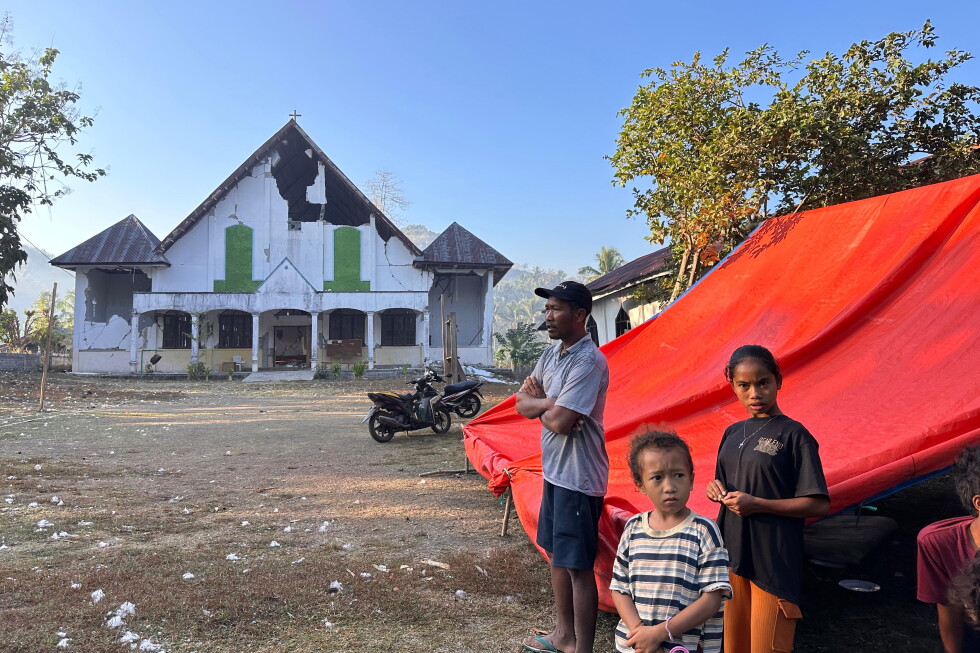
    Three days after a powerful seismic event struck the Indonesian island of Flores, thousands of residents remain displaced, with dozens confirmed dead and hundreds injured as recovery efforts begin across the disaster zone. The early Saturday morning quake, which originated off the island’s coast, has left a trail of widespread destruction that extends far beyond crumbled infrastructure, with young survivors grappling with persistent fear and psychological trauma.

    Data from Indonesia’s National Disaster Management Agency shows the disaster has claimed at least 68 lives and left 213 people injured. More than 19,000 residents are now taking shelter in a patchwork of tents, government evacuation centers and makeshift informal camps, after at least 4,500 residential properties were damaged or destroyed. The destruction has also decimated critical public infrastructure: 122 health facilities, 252 schools and 84 houses of worship across the island have sustained damage that will require extensive repairs.

    According to the U.S. Geological Survey, the earthquake registered a shallow depth of 10 kilometers (6 miles) and struck shortly before 6 a.m. local time. Chaos erupted in the immediate aftermath as authorities issued a tsunami warning that sent panicked residents fleeing for higher ground; the alert was later lifted without a destructive wave forming. By Tuesday, officials had recorded more than 2,100 aftershocks following the initial major quake, though only 70 of these secondary tremors were strong enough to be felt by local communities.

    For survivors in hard-hit regions like Lamba Leda, one of the worst-affected villages in East Manggarai regency, the threat of aftershocks remains a constant source of terror. During an on-site interview Tuesday, a fresh aftershock prompted local resident Vincentius Rano and his wife to instinctively duck and cover their heads, while their 5-year-old daughter burst into tears nearby — a visible reminder of the psychological toll that lingers for survivors.

    Rano recalled the harrowing moments the initial quake struck, just moments after he and his wife had woken for the day. “Suddenly, we felt a tremor that kept getting stronger,” he said. The couple rushed to pull their sleeping daughter from her bed, but before they could escape their home, a section of the structure collapsed, leaving Rano with injuries to his back and shoulder. His home, a modest timber-built structure rather than a reinforced concrete dwelling, was left completely flattened. “We didn’t have time to get outside. Everything happened so fast. The roof collapsed on us, and all I could do was shield my wife and child with my back,” Rano explained, gesturing to the pile of rubble that was once his home.

    In evacuation camps spread across Flores, aid workers and local authorities have begun rolling out support that addresses both the physical and psychological needs of survivors. Alongside distributing critical supplies including food and medical care, teams are providing psychosocial support for survivors, with a specific focus on children, who have been disproportionately impacted by the disaster.

    “For many survivors, especially children, the psychological impact has lingered long after the shaking stopped,” said Yudhi Franata, a local police chief who has organized trauma-healing programming for displaced children in Ende regency. In the Ende village of Lokoboko, 17 young survivors have already joined trauma counseling sessions led by police counselors, where they participate in games, guided educational activities and group discussions designed to help them process their fear and anxiety.

    Parents at the Lokoboko evacuation centers report many children remain too afraid to return to enclosed indoor spaces, and wake up terrified every time aftershocks rattle the island. “Children are among the groups that need special attention after experiencing a disaster,” Franata noted.

    Located along the geologically active Pacific Ring of Fire, Indonesia is an archipelago made up of more than 17,000 islands, making the nation inherently prone to frequent earthquakes and volcanic eruptions. Flores has a history of deadly seismic disasters: in 1992, a major earthquake and subsequent tsunami killed an estimated 2,500 people on the island, marking one of the deadliest natural disasters in Indonesia’s modern history.

  • Gold Coast-based eyewear brand worn by celebrities collapses into liquidation, brand facing $600k fire sale

    Gold Coast-based eyewear brand worn by celebrities collapses into liquidation, brand facing $600k fire sale

    Valley Eyewear, the Australian-founded sunglasses brand that counted A-list celebrities including Chris Hemsworth, Margot Robbie, and Kanye West among its high-profile wearers, has been placed into liquidation following a Federal Court order, launching an urgent fire sale of more than AU$600,000 in inventory and business assets.

    Established in 2011 on Australia’s Gold Coast by ex-Quiksilver marketing executive Michael Crawley, his wife Tenielle Crawley, and their long-time friend Matthew Grippo, the brand grew from a local startup to a globally recognized label, with distribution across more than 20 countries. It built a reputation for edgy, stylish designs that resonated with both consumers and famous figures, cementing its status as a popular accessories label both at home in Australia and abroad.

    But behind its public growth, tensions between the three co-founders escalated into a public court battle, ultimately leading to the court order for urgent liquidation and sale of the company. The liquidation order also extends to House of Valley, a sister entity registered earlier this year to open a new brick-and-mortar retail store and on-site optometry clinic in Burleigh Heads, which has now collapsed alongside the original brand.

    Federal Court appointed James Robba and Jason Bettles from insolvency firm Worrells to oversee the liquidation process. The full asset package up for sale includes not only the brand’s large inventory of new sunglasses and optical equipment, but also motor vehicles owned by the business, general plant and equipment, all intellectual property rights, existing customer databases, and the brand’s established digital and social media presence.

    Robba confirmed that the business will continue normal day-to-day operations while the urgent sale campaign progresses, noting that the insolvency team is working closely with company directors, employees, and other key stakeholders to facilitate a smooth process. “Our objective is to give interested parties the opportunity to acquire the business of the companies, while seeking to maximise the outcome for all stakeholders,” Robba told local outlet The Courier Mail.

    In a surprising development just two days before the liquidation order was issued, Tenielle Crawley registered a new entity named Valley Eyewear Group, with herself and Robert Fullagar listed as co-directors. On the same day, the Crawleys launched a second new firm, Crawley Family Holdings, which now holds a majority stake in the newly registered Valley Eyewear Group. Details on the future plans for the new entity have not been released to the public.

    While the full internal circumstances leading to the brand’s collapse have not been made public, this is not the first time the company has faced significant controversy. In 2018, Valley Eyewear drew widespread global backlash after it used the Spomenik Holocaust memorial in Croatia, a site honoring 70,000 people executed during World War II, as a backdrop for an advertising campaign for its “Black Zero” sunglasses collection. The brand quickly issued a public apology, removed all campaign content, and claimed it had been completely unaware of the historical sensitivity of the location at the time of shooting.

  • What it’s like to be on a warship like the USS Abraham Lincoln

    What it’s like to be on a warship like the USS Abraham Lincoln

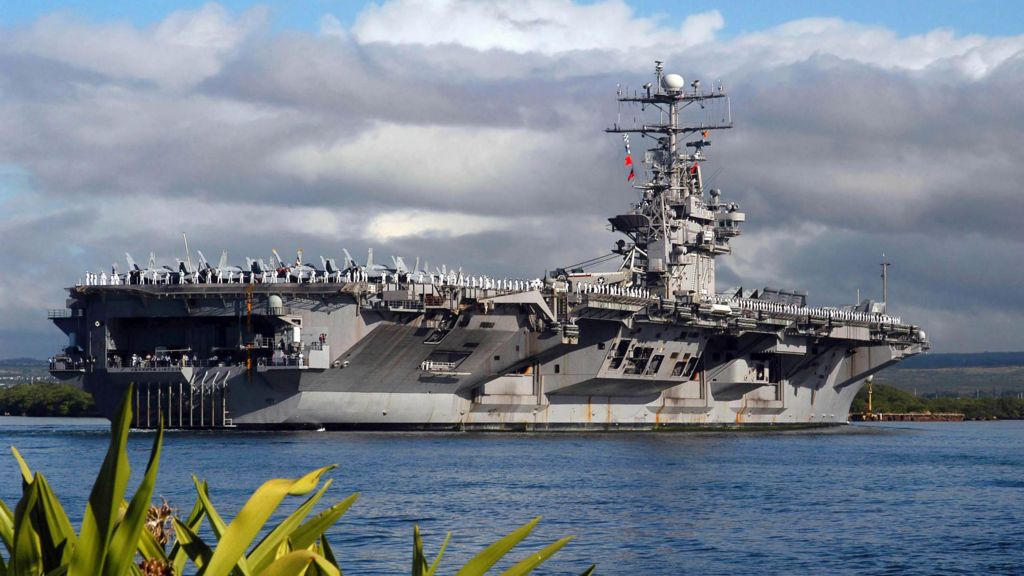
    For over eight months, the USS Abraham Lincoln, a nuclear-powered American aircraft carrier, has been deployed to the Middle East as part of ongoing United States military operations against Iran. What was supposed to be a standard rotational tour has stretched to more than twice the length of the 111-day deployment former Navy photographer Jonny Burnell completed aboard the USS Carl Vinson during the 2001 invasion of Afghanistan, sparking fierce debate over the crew’s living and mental health conditions.

    Burnell, who had unique access across every section of his ship due to his documentation role, remembers watching crew morale deteriorate steadily over his three-and-a-half month tour. What began as eager enthusiasm faded into a pervasive, visible low mood that he still describes as the hardest part of his service. “There was one point where there was a visible kind of deadness in the shipmates’ eyes,” he recalled to the BBC. “I still think the hardest part of my job was watching the sadness in people’s faces every frickin’ day.” Today, watching the reports of the Lincoln’s extended deployment leaves him on the verge of tears, he says.

    Recent reporting from two leading American military publications, Military Times and Stars & Stripes, has painted a grim picture of conditions aboard the Lincoln: crew members are contending with food shortages, failing plumbing systems, and extreme physical and mental exhaustion. Family members of deployed sailors have gone public with fears over rapid mental health decline, with reports that multiple crew members have even attempted to jump overboard to escape the conditions.

    These accounts have been fiercely disputed by military officials and some veteran advocacy leaders. Retired Navy Lt Commander Steve Rogers, director of the non-profit Association of the United States Navy (AUSN), which supports active-duty service members, claims the media reports are “99% hype” and largely inaccurate. In his outreach to family members of Lincoln sailors, Rogers notes that familial anxiety during wartime deployment is normal, and says the crew is fully prepared for the challenges of their mission. He frames reported talks of suicide attempts as nothing more than offhand “locker room talk,” comparing it to casual complaints he heard during his own service.

    Not all accounts align with Rogers’ dismissal, however. One anonymous relative of a Lincoln sailor told the BBC their family member has lost 29 kilograms (65 pounds) due to persistent exhaustion caused by constant noise and vibration from the ship’s operations.

    When asked about the growing controversy during a press availability Friday, former President Donald Trump shrugged off the concerns, saying the Lincoln’s deployment was “not nearly long enough.” Two days later, Admiral Brad Cooper, head of U.S. Central Command, which oversees Middle East operations, released a more nuanced statement. He noted that of the 11 active aircraft carriers in the U.S. Navy fleet, the Lincoln currently reports one of the lowest rates of documented mental health incidents. Still, Cooper acknowledged that long-term sea duty is inherently challenging: “This doesn’t mean all is perfect. Service at sea for long periods isn’t for everyone. It is uniquely challenging and tough. Mental health is another aspect of individual health and requires our attention just like physical health and spiritual health.”

    A three-day onboard visit by CNN reporters last month found no evidence of widespread catastrophic issues. While the outlet noted that several sailors reported food rationing and unintended weight loss over their months-long deployment, CNN reported food was plentiful at the time of their visit and hot showers were available, though minor issues including mold were observed.

    From his own experience decades ago, Burnell says even shorter deployments bring brutal living conditions that are often hidden from the public. Many crew members assigned to below-deck duties go weeks or months without stepping onto the top deck to see the sky, he says. His own sleeping berth, nicknamed a “coffin rack” by troops, was too small to turn around in, and positioned directly against a wall through which aircraft arresting cables ran, leaving him exposed to non-stop noise from flight operations. He described the USS Carl Vinson as a “floating prison,” recalling one colleague who went to extreme lengths including drug dealing and organizing an underground rave to get removed from the ship.

    The U.S. Navy has announced the USS George Washington will rotate in to relieve the Lincoln, with the replacement carrier expected to arrive in the Middle East within a week. But the George Washington carries its own well-documented history of mental health crises. In 2022, a series of suicides aboard the ship while it was docked in Virginia prompted a formal inspector general investigation. The 2023 investigative report concluded that the deaths stemmed from a combination of interconnected problems tied to poor living conditions, and found that senior Navy leadership had “let our standards slip — and in doing so we let our people down.”

    Mental health experts who study military service say the conditions reported aboard the Lincoln align with decades of research showing prolonged sea deployment creates unique, severe stressors. Dr. Harold Kudler, former head of mental health policy for the U.S. Department of Veterans Affairs (VA), explains that the combination of social isolation, long stretches of unrelenting boredom punctuated by sudden periods of extreme alert, and uncertainty over mission goals and return timelines amplifies mental health struggles for all crew, regardless of rank.

    “Especially in this kind of asynchronistic war that we’re seeing,” Kudler said. “You’re isolated. You don’t know exactly what’s going to happen. You’re not even sure what the mission is anymore. And you don’t know when you’re going to come home.”

    This is not a new discovery: Kudler notes that U.S. military researchers identified these stressors as early as World War II, when officials produced a training film highlighting the “combat irritability” experienced by below-deck crew who never saw the enemy but still operated under constant stress. Years of VA research have confirmed that active-duty troops and veterans face a 50% higher risk of suicide than the general American population.

    To address these challenges, Kudler says the military must work to make every crew member feel connected to the broader mission while also validating the monotony and stress of their daily work. While some ships organize recreational activities like singing contests and top-deck picnics to combat isolation, Kudler supports ongoing calls from congressional Democrats for a formal investigation into the Lincoln’s deployment to get to the bottom of the reported issues.

    “The ship can only perform as well as its crew,” he noted. “Those 5,000 people comprise a community. Not just men and women under stress. It’s a community under stress. The capabilities of the ship fall off as the crew falls off. So if the reports that are being shared are true, one really has to worry.”

    Rogers, for his part, argues that military media coverage has blown minor common issues out of proportion, damaging troop and family morale for no reason. He notes that all Navy ships deploy with chaplains and mental health counselors, and that service members are trained to cope with the normal stresses of long sea tours. “We’re all human beings. We all go through difficult times,” he said.

  • Bendigo Bank hit with new conditions over ‘longstanding’ management weaknesses

    Bendigo Bank hit with new conditions over ‘longstanding’ management weaknesses

    Australia’s top banking regulator has taken stiff enforcement action against one of the country’s major regional lenders, forcing it to commit an additional $70 million to fix widespread, long-standing failures in anti-money laundering (AML) and counter-terrorism financing (CTF) controls that slipped through years of internal remediation work.

    The Australian Prudential Regulation Authority (APRA) announced the new binding licence conditions for Bendigo and Adelaide Bank on Tuesday, capping off a 12-month industry probe that was triggered after the bank itself commissioned global consulting firm Deloitte to investigate suspicious activity at a single branch in late 2025. What investigators initially expected to be an isolated issue quickly expanded into a company-wide audit that uncovered systemic gaps in how the bank manages financial crime risk, spanning every core layer of its AML/CTF framework.

    Deloitte’s final root-cause analysis confirmed widespread failures across multiple critical functions: the bank’s approach to AML/CTF risk mapping, enhanced customer due diligence protocols, enterprise-wide risk oversight, automated transaction monitoring systems, and customer risk rating processes all fell short of regulatory requirements. The review also confirmed that the gaps left the bank vulnerable to potential compliance breaches between August 1, 2019 and August 1, 2025.

    APRA’s formal order lays out four distinct categories of material weaknesses that prompted the new regulatory action. First, deficiencies in non-financial risk management are embedded across the entire organization, not limited to a single division or branch. Second, the bank lacks a clear, comprehensive and accurate understanding of its own regulatory obligations, material risk exposures, and key internal controls. Third, there are significant gaps in governance structures, accountability frameworks, compliance management systems, and overall risk management capacity across the bank. Finally, these core weaknesses have persisted for years, even as the bank carried out a multi-year enterprise-wide risk transformation initiative known as BEN+.

    To address these failures, Bendigo and Adelaide Bank will invest $70 million over the next three years to overhaul its risk management systems, with the full cost already allocated to the bank’s 2026 financial year results. APRA is also retaining an existing $50 million financial penalty that it imposed on the bank in a previous enforcement action related to the same issues, bringing the total cost of the failures to $120 million for the lender.

    Therese McCarthy Hockey, APRA’s Deputy Chair, emphasized in a statement that the new licence conditions reflect the severity of the unaddressed risk gaps uncovered by the probe. “The weaknesses identified by the root cause analysis are significant, longstanding and require decisive action,” she said. McCarthy Hockey added that the regulator acknowledges the cooperative approach the bank has taken so far, and that APRA is encouraged by the board’s public commitment to resolving all identified concerns fully, promptly and effectively. She also confirmed that despite the risk management failures, the bank remains financially sound with no threat to its current operations or customer deposits.

    Richard Fennell, Bendigo and Adelaide Bank’s Chief Executive, acknowledged the severity of the gaps in an official response on Tuesday. “Our current non-financial risk management capabilities are clearly not where they need to be, and our risk rectification plan will be designed to drive a fundamental shift in our management of non-financial risk,” Fennell said. He added that the three-year remediation plan will deliver wholesale improvements to the bank’s risk governance and compliance infrastructure to bring the bank back into full alignment with Australian regulatory requirements.

  • WA Police apologise for failings in investigation into Aussie mum’s 2014 death, initially treated as suicide

    WA Police apologise for failings in investigation into Aussie mum’s 2014 death, initially treated as suicide

    It has been more than 10 years since 24-year-old mother Amy Wensley was found dead from a gunshot wound to the head at her home in Serpentine, southern Perth, Australia. What has been a source of unrelenting heartache for her family is that from the earliest hours of the case, the investigation was derailed by critical missteps that left the circumstances of her death a permanent unanswered question.

    In June 2014, when Wensley’s death was first discovered, investigating detectives made an immediate, premature call that the incident was a suicide. That hasty conclusion set the course for a deeply flawed investigation: key forensic opportunities were missed, critical evidence was never properly collected, and alternative lines of inquiry were never explored. Years later, a formal coronial inquest into the case confirmed that gaps from the initial probe left insufficient evidence to officially rule on how Wensley died.

    Following the inquest’s findings, the case was referred to Western Australia’s Department of Public Prosecutions and the state police Cold Case Unit for formal review. Over the past two years, a team of dedicated investigators has been re-examining every scrap of available evidence and witness testimony related to Wensley’s death.

    In January 2024, WA Police Commissioner Col Blanche took the unprecedented step of meeting face-to-face with Wensley’s mother Nancy Kirk and other members of her family. During that meeting, the state’s top police official publicly acknowledged the significant shortcomings of the initial investigation and issued a formal apology to the grieving family.

    “Amy’s death has had a profound impact on those who loved her, and questions surrounding the circumstances of her death have remained unanswered for more than a decade,” a WA Police Force spokesperson shared in a formal statement.

    Wensley, a young mother of two small daughters at the time of her death, has been the focus of her family’s relentless fight for answers for more than a decade. In a major shift to advance the stalled investigation, WA Police have now offered a $1 million reward for any information that leads to the identification and conviction of any person or persons responsible for Wensley’s death.

    The reward marks a clear signal of law enforcement’s renewed commitment to closing the case. “The reward reflects the WA Police Force’s ongoing commitment to resolving the unanswered circumstances surrounding Amy’s death,” the spokesperson said. “Investigators believe there may be people who hold information about Amy’s death who have not yet come forward, or who may now be prepared to speak with police. Even information that may appear insignificant could assist the investigation.”

    Acknowledging the extraordinary persistence Wensley’s family has shown in their decade-long search for justice, the spokesperson reiterated that the force remains committed to exhausting every possible investigative avenue to get answers. Anyone with any details related to the 2014 death is urged to contact Crime Stoppers to share information.