博客

  • An 81-year-old admits to 1994 killing of American tourist as trial opens in Germany

    An 81-year-old admits to 1994 killing of American tourist as trial opens in Germany

    COLOGNE, Germany — Three decades after a young American tourist was found brutally killed in a German tourist landmark, a stunning admission has opened one of the country’s most long-dormant cold case trials. On Tuesday, 81-year-old defendant — whose identity is being withheld under strict German privacy regulations — publicly acknowledged he sexually assaulted and murdered 24-year-old Amy Lopez during her 1994 trip to the western city of Koblenz, Germany’s national news agency dpa confirmed.

    According to case details laid out by prosecutors, the fatal attack unfolded on September 26, 1994. At the time of the crime, the suspect was 49 years old. Prosecutors allege he lured Lopez under false pretenses into an isolated, off-limits room within Koblenz’s iconic Ehrenbreitstein Fortress, a popular sightseeing destination for international visitors. Once inside the secluded space, he restrained Lopez with handcuffs before carrying out the sexual assault. When Lopez fought back and screamed for help, the suspect struck her left temple with a rock and strangled her with a belt, before inflicting nine stab wounds to her chest that ultimately ended her life, per the prosecution’s account.

    Shortly after the attack, a group of children playing in the area near the fortress stumbled on Lopez’s body. Despite immediate investigative efforts by local law enforcement, the case went cold, remaining unresolved for nearly 30 years. It was not until recent years that investigators revisited the case, applying modern DNA analysis techniques to preserved forensic evidence. That new approach delivered the long-awaited break in the investigation: DNA samples recovered from Lopez’s waistband and thigh matched the genetic profile of the 81-year-old suspect, according to dpa’s reporting.

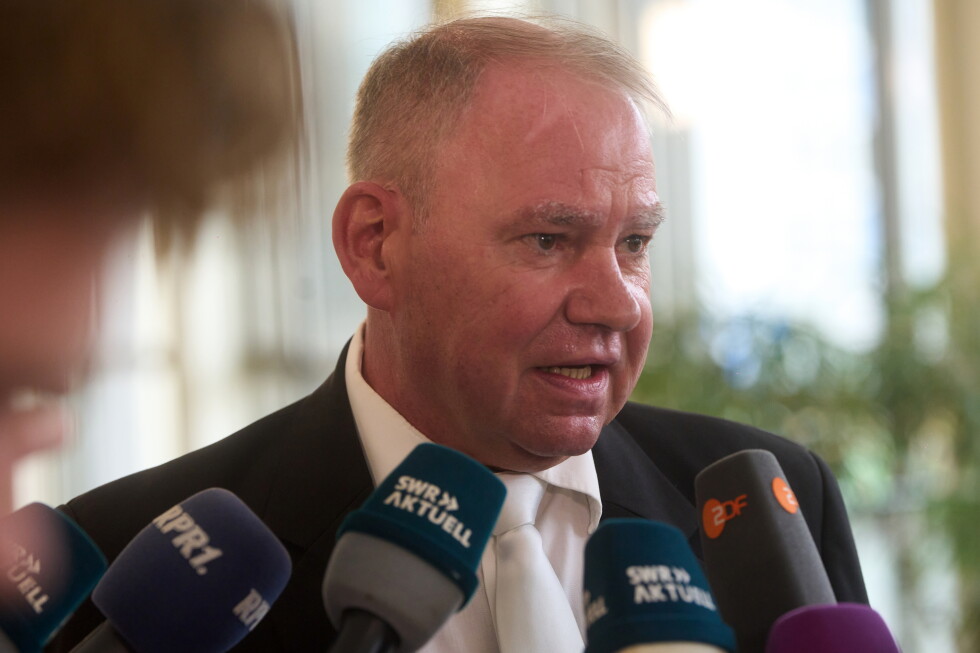
    Authorities took the suspect into custody in late February at a nursing home in the Koblenz region, and he has remained in pre-trial detention ever since his arrest. During the opening session of his trial at Koblenz District Court Tuesday, defense attorney Volker Klein told the court that his client accepted full responsibility for the 1994 killing. When presiding judge Rupert Stehlin directly asked the defendant to confirm the admission, the 81-year-old responded verbally with “yes” after nodding in agreement.

    Prosecutors have formally charged the defendant with treacherous murder committed for base motives, specifically noting the crime was carried out to satisfy his sexual urges. Court officials have scheduled eight total days for the trial proceedings, with a final verdict anticipated to be delivered by September.

  • West Bank siege exposes Israel army inaction on settler violence

    West Bank siege exposes Israel army inaction on settler violence

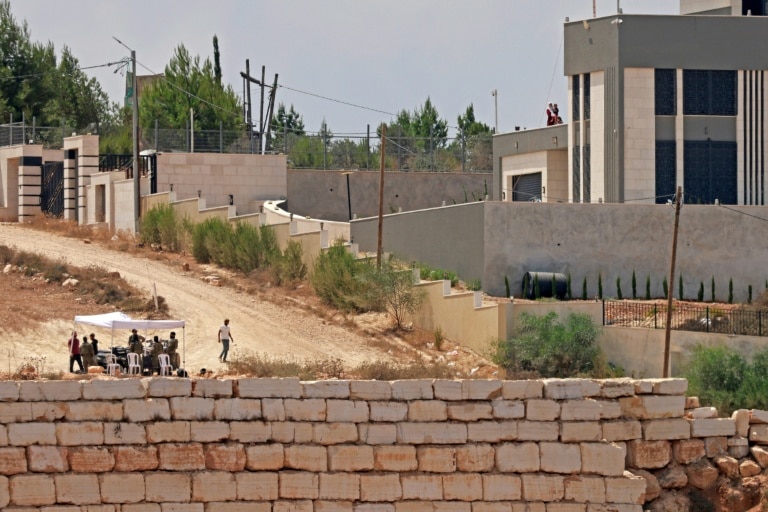
    Widely regarded as the most formidable military force in the Middle East, capable of launching precision strikes deep into hostile territory, the Israeli military has found itself unable to dislodge a small group of extremist settlers from a occupied site in the West Bank village of Qusra for more than a week. The ongoing stalemate has thrown into sharp relief long-documented patterns of inertia when it comes to reining in settler violence against Palestinian residents, a failure experts trace directly to the current Israeli government’s ideological and political backing for illegal settlement expansion, alongside growing settler influence within military ranks.

    The standoff began over a week ago, when a small cohort of settlers established a presence outside Qusra, near the northern West Bank city of Nablus, and blockaded Palestinian residents inside their homes, cutting off access to food, water and other essential supplies. The siege drew widespread condemnation from both the international community and domestic Israeli observers, with the United States calling for urgent action after it emerged one of the trapped Palestinians holds American citizenship.

    Despite multiple deployments of Israeli troops to the site, tangible action to remove the settlers has been minimal. Beyond public statements of condemnation, the detention of a single settler, and the dismantling of temporary settler tents, no force has been used to end the blockade. Footage from the scene even showed some of the first arriving soldiers praying alongside the extremist settlers, prompting the military to promise disciplinary action that has yet to materialize. Videos obtained by AFP from a besieged Palestinian resident show settlers returning to the site by Monday, riding quadbikes and casually chatting and shaking hands with deployed Israeli forces.

    Analysts and former Israeli officials say this paralysis is not an anomaly, but the direct result of government policy that puts the military in an untenable position. “The government’s support for extremist settlers puts the military in an impossible situation,” explained Nimrod Novik, a senior advisor and former special envoy to late Israeli prime minister Shimon Peres. Novik noted that the military is forced to choose between upholding its professional mandate to crack down on violent settler activity, or aligning with a government agenda that provides ideological and material backing to extremist settlers. “The result is paralysis with rare exceptions due either to the severity of the crimes or US intervention,” he added.

    Since seizing control of the West Bank in the 1967 Six-Day War, Israel has allowed more than 500,000 Israeli settlers to move into the territory, where settlements are widely recognized as illegal under international law. The territory remains home to roughly 3 million Palestinians, who are denied the full citizenship rights granted to settlers. Under the current right-wing government led by Prime Minister Benjamin Netanyahu, settlement construction has reached all-time highs, with multiple cabinet members publicly supporting the establishment of outposts that are even illegal under Israeli domestic law, and openly calling for the full annexation of the West Bank.

    Settler violence against Palestinians has been a persistent issue for decades, with the vast majority of perpetrators never facing legal consequences. But experts say attacks have spiked dramatically in recent months, driven by the government’s pro-settler agenda and shifting dynamics within the military. Nadav Weiman, a former Israeli sniper who now leads Breaking the Silence, an advocacy organization made up of Israeli military veterans, says the entire infrastructure of occupation is structured to prioritize settlers over Palestinian residents. “The infrastructure of the occupation is built in a way that for a soldier, for us, it’s almost impossible to enforce the law on violent settlers and very easy to do whatever we want on Palestinians,” Weiman told AFP.

    Weiman explained that rules of engagement for handling violent settlers are almost never clearly outlined to rank-and-file troops, who are typically told to refer civilian settler incidents to police rather than intervening directly. “In 22 years of collecting testimonies from soldiers in the West Bank, I can tell you that in the majority of the units, nothing is being told to the soldier on what they can do with settlers,” he added.

    Beyond unclear guidance, lines between the military and the settler movement have become increasingly blurred in recent years. A growing share of military officers are drawn from the settler community, many of whom attend hardline ideological pre-military academies that promote expansionist settlement goals. The current commander of Israeli forces in the West Bank, Major General Avi Bluth, is himself an alumnus of the Bnei David pre-military academy based in the illegal Eli settlement.

    That blurring of boundaries accelerated dramatically after the October 7, 2023 attack by Hamas on southern Israel. With the bulk of active duty Israeli troops deployed to the Gaza war and northern front against Lebanon, the military drafted thousands of settler reservists into local regional defense units tasked with securing West Bank settlements. Israeli rights group Yesh Din estimates that roughly 7,000 armed settlers were mobilized into these units in the first months of the war. Research from the group shows these settler reservists are far less likely to intervene to stop attacks on Palestinian communities, and often participate in the violence themselves. While most have now been released from active reserve duty, the military has allowed them to retain their issued firearms and uniforms, enabling a wave of unchecked violence by settlers operating with the veneer of official military authority.

    When contacted by AFP for comment, an Israeli military spokesperson stated that police are the primary body responsible for enforcing the law against Israeli citizens in the West Bank, and that soldiers are only instructed to intervene to stop ongoing violence and detain suspects until police arrive. The spokesperson added that any failure to follow military orders is reviewed thoroughly, with disciplinary action taken when appropriate. But critics say this division of responsibility is just a convenient excuse for inaction, given police rarely pursue charges against settlers.

    In the wake of the Qusra siege, Israeli Defense Minister Israel Katz has called for police to take over full responsibility for law enforcement related to settler activity in the West Bank, arguing it is not the military’s job to “chase” violent settlers. While observers say the policy is unlikely to be implemented in the near term, they note it would mark a major step toward Israel’s formal annexation of the occupied territory. Ahead of Israeli national elections scheduled for October 27, observers are skeptical that there is any political will within the current government to crack down on extremist settler violence, despite growing international pressure. But they warn the unchecked escalation of attacks poses severe risks for regional stability. “Should settler violence continue, it will be astonishing if a major bloody conflagration doesn’t ensue,” Novik warned.
  • Kariba ferry death toll rises to 93, making it Zimbabwe’s deadliest transport disaster

    Kariba ferry death toll rises to 93, making it Zimbabwe’s deadliest transport disaster

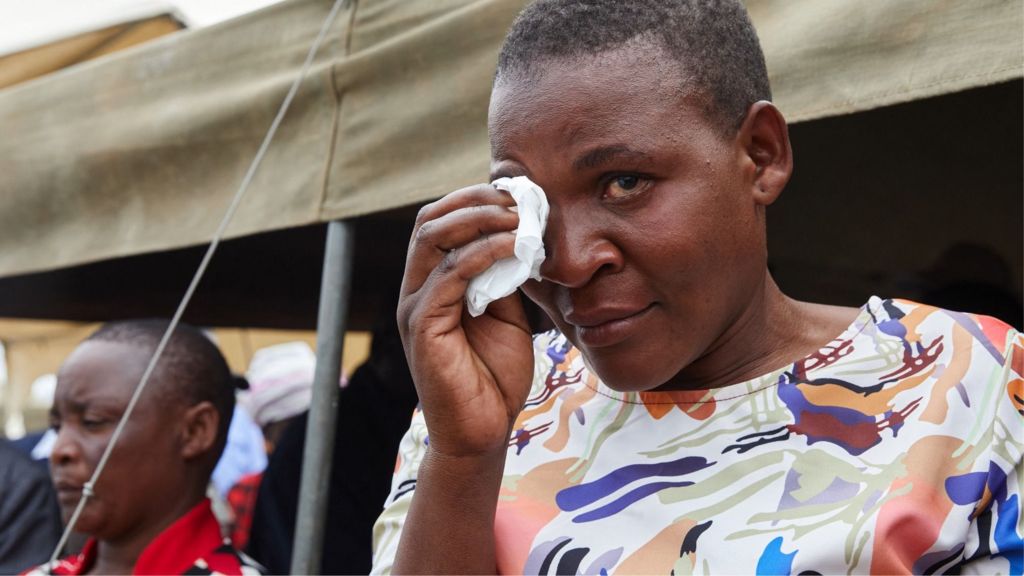
    One week after a devastating ferry overturn on Zimbabwe’s Lake Kariba, the country’s deadliest transport accident on record, the confirmed death toll has climbed to 93, according to Zimbabwe’s state-run *Herald* newspaper.

    The vessel was officially certified to carry just 90 passengers, but preliminary estimates indicate at least 168 people were crowded on board when a powerful storm wave capsized the craft. Police updated the casualty count Tuesday, confirming that nine additional bodies were recovered by search divers in the days following an earlier count of 84 over the weekend. Recovery teams are now retrieving remains farther from the original sinking site, with many bodies drifting across the border into Zambian waters, per the *Herald*.

    Straddling the Zimbabwe-Zambia border, Lake Kariba ranks among the largest man-made reservoirs on Earth, serving as a critical multi-purpose resource for both nations: it supports commercial and artisanal fishing, regional transport links, and generates hydroelectric power that supplies millions of households across the region. For rural Zimbabwean communities, ferries are an affordable and essential transport option, and the ill-fated vessel was carrying a mix of traders and parents returning children to their homes for the start of school holidays. To date, 67 passengers have been pulled alive from the lake, provincial affairs minister Marian Chombo confirmed.

    In the wake of the tragedy, President Emmerson Mnangagwa declared a national state of disaster, and professional divers have continued round-the-clock search and recovery operations. A memorial service for the victims was held last week at a local stadium in Kariba to honor those lost.

    Identification of recovered remains has emerged as a major challenge for authorities. As of Tuesday, 83 of the 93 recovered bodies have been formally identified, 39 of which are children. For many remains, family members have only been able to confirm identities through clothing and personal belongings, leading officials to warn that DNA testing will soon be required to match unrecognized remains. “We are running out of time and DNA may now be needed to assist in the identification process,” Chombo told the *Herald*.

    Survivor accounts have painted a grim picture of unsafe conditions on the ferry before the capsizing. Itayi Marumisa, a 40-something trader from Mola village who survived the accident, told Agence France-Presse that the vessel was heavily overloaded not just with people, but with cargo, and that passengers had already raised alarms about rough lake conditions before the wave hit. “The life jackets were buried under the luggage, and not more than 30 people managed to get them,” Marumisa said. “Children were screaming and most of the passengers were vomiting, but the captain did not seem to care.”

    Local communities are reeling from the scale of the loss, with multiple families facing total wipeouts of their loved ones. Tight Bhusumani, a local councillor for Mola who lost his own child in the disaster, told the *Herald* that the tragedy has left deep scars across the region. “We have distressing cases where a child lost both parents and other siblings, leaving them as the only surviving member of the family,” he said. Dozens of families are still waiting for confirmation of whether their missing relatives, who were believed to be on board the ferry, are alive or dead, he added.

  • Russia summons Japanese envoy following Putin’s visit to disputed islands

    Russia summons Japanese envoy following Putin’s visit to disputed islands

    The long-running territorial standoff between Russia and Japan reignited this week, after Moscow delivered a formal diplomatic protest to Tokyo over harsh Japanese condemnation of President Vladimir Putin’s historic visit to the disputed Pacific Kuril Islands chain.

    The flashpoint of the conflict centers on four southern Kuril Islands, which Moscow controls and Japan claims as its Northern Territories. The Soviet Union seized the archipelago from Japan in the closing days of World War II, and the unresolved dispute has prevented the two nations from signing a formal peace treaty to end World War II hostilities for nearly 80 years.

    Last week, Putin made his first ever visit to Iturup – one of the four contested southern islands, which Japan refers to as Etorofu. The trip immediately triggered sharp pushback from Japan’s top leadership. Prime Minister Sanae Takaichi called the visit “absolutely unacceptable” and said it directly contradicted Japan’s long-held territorial claims. Takaichi added that the trip would further fray already strained bilateral relations, which have been soured by Russia’s full-scale invasion of Ukraine, and warned Moscow must face the consequences of its actions.

    Japanese Foreign Minister Toshimitsu Motegi echoed the prime minister’s stance, issuing a “strong protest” and asserting that the entire Northern Territories, including Etorofu, are Japan’s inherent territory under both historical precedent and international law.

    In response to the Japanese criticism, Russia’s Foreign Ministry summoned Japanese Ambassador Akira Muto on Tuesday, where Deputy Foreign Minister Mikhail Galuzin delivered Moscow’s formal counter-protest against what it called the “anti-Russia statements” from Takaichi and Motegi.

    According to an official statement from the Russian Foreign Ministry, Galuzin made clear to Muto that Russia’s sovereignty and jurisdiction over the southern Kuril Islands is “absolutely unshakable.” The ministry emphasized that the territories were granted to the Soviet Union as a legal outcome of World War II, a status enshrined in Allied wartime agreements and the Charter of the United Nations. “Any attempts by the Japanese side to directly or indirectly call this obvious reality into question are absolutely unacceptable and unlawful,” the statement read.

    Galuzin also noted that Tokyo has aligned itself with Western-led sanctions against Russia over the Ukraine conflict, and confirmed that “Moscow reserves the right to take appropriate countermeasures” in response to Japan’s recent actions.

    For decades, sustained diplomatic efforts to reach a mutually acceptable settlement to the territorial dispute have failed to produce tangible progress. Over the years, Moscow has significantly strengthened its military deployment across the Kuril Islands, a move widely seen as a reinforcement of its uncompromising claim to the archipelago.

    Speaking during his visit last week, aboard a Russian warship participating in Pacific military drills, Putin reflected on the shifting state of bilateral ties. He noted that Russia had previously built constructive working relationships with multiple former Japanese leaders, including the late former Prime Minister Shinzo Abe, who invested significant political capital in advancing closer ties and narrowing differences between the two nations. However, Putin said that dynamic shifted after Japan imposed sweeping sanctions on Russia following the February 2022 invasion of Ukraine, when Tokyo officially designated Russia as “a source of primary threats” to Japanese national security.

    Despite the recent escalation, Putin reaffirmed that Moscow remains open to diplomatic engagement. “Russia remains ready to cooperate with all its neighbors, including Japan and other states in the region,” he said.

  • Pakistan’s top court orders imprisoned former PM Imran Khan taken to hospital, allows family visits

    Pakistan’s top court orders imprisoned former PM Imran Khan taken to hospital, allows family visits

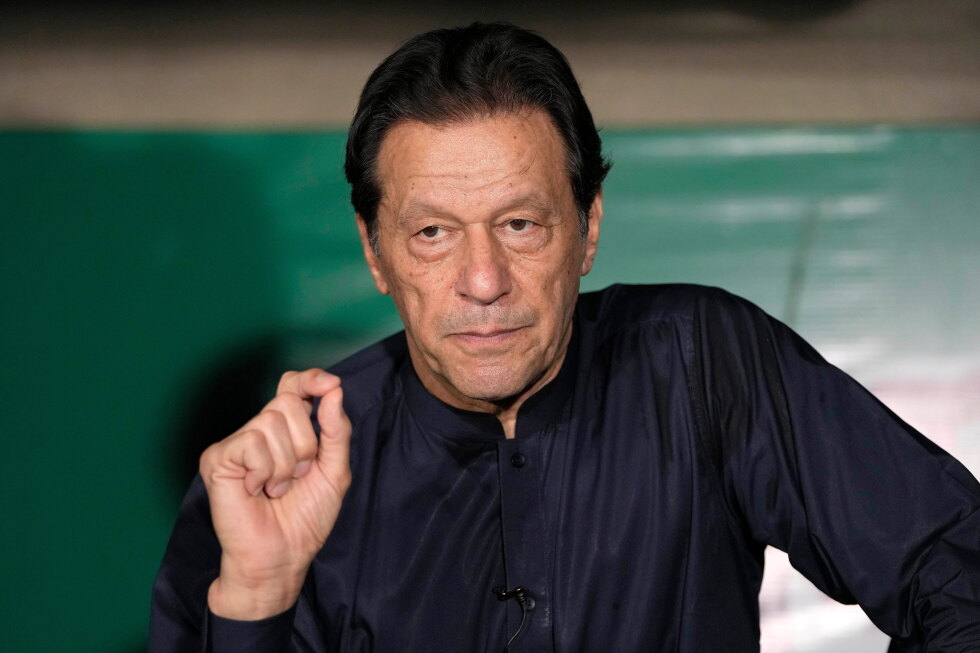
    ISLAMABAD, Pakistan – In a landmark ruling that has reignited debate over legal rights and political justice in the South Asian nation, Pakistan’s Supreme Court issued a binding order Tuesday directing state authorities to transfer imprisoned former Prime Minister Imran Khan to a private Islamabad hospital for a comprehensive independent medical assessment. The ruling comes after months of sustained outcry from Khan’s family, personal medical team and political allies over alleged inadequate care and restricted access to treatment for the incarcerated ex-leader.

    A three-judge constitutional bench handed down the order, stipulating that Khan must be moved to Islamabad’s prominent Shifa International Hospital in the coming days. The assessment will be conducted by an independent medical board that includes independent specialists as well as Faisal Sultan, one of Khan’s own personal physicians, a provision designed to address longstanding claims that Khan has been blocked from receiving care from doctors of his own choosing. Beyond the medical order, the court also ruled that prison officials must grant Khan weekly in-person visits with family members and regular telephone access to his two sons, a reversal of strict access limits imposed earlier this year.

    Within hours of the Supreme Court’s ruling, authorities permitted one of Khan’s sisters to visit him at his current place of detainment, a high-security prison in the nearby garrison city of Rawalpindi. The harsh access restrictions put in place earlier this year were officially justified by government officials citing intelligence warnings of a potential security attack on the prison facility.

    The court’s decision is the outcome of a petition filed by Khan months ago, in which he requested transfer from the Rawalpindi prison to a formal medical facility and expanded access to his personal doctors, legal team and immediate family. According to Khan’s lead counsel Salman Akram Raja, the court explicitly grounded its order in constitutional protections: the right to adequate medical care is enshrined in Pakistan’s constitution, and the court ruled that Khan’s current health status left no room for delay.

    In a precautionary statement, Raja urged Khan’s massive base of supporters to refrain from gathering outside Shifa International Hospital when the ex-prime minister is transported for treatment, to avoid disrupting care for other patients at the facility.

    Khan, a former international cricket star who pivoted to politics and won the prime ministership in 2018, has remained in prison since 2023 following a conviction on corruption charges that he and his supporters deny as politically motivated. He was removed from office in April 2022 through a parliamentary no-confidence vote, a move he has repeatedly claimed was orchestrated by a U.S.-backed conspiracy involving his domestic political rivals and former Pakistani army chief Qamar Javed Bajwa. All parties named – Washington, the Pakistani military and his political opponents – have flatly denied the allegations.

    Earlier this year, Khan was transported multiple times to a public government hospital for treatment of a progressive eye condition. Concerns over his health reached a fever pitch in late January, when his family announced he had lost roughly 85% of the vision in his right eye – a claim that federal officials immediately disputed. Authorities later walked back the dispute partially, stating that Khan had recovered roughly 70% of his vision and that his condition was stabilizing.

    Khan’s political party, Pakistan Tehreek-e-Insaf (PTI), issued a statement welcoming the Supreme Court’s ruling, calling it a long-overdue response to months of legitimate concerns about the former leader’s health and access to care, and urging the government to implement the court’s order without any delay.

    Notably, the federal government has announced it will challenge the ruling. In televised remarks to the press, Law Minister Azam Nazeer Tarar stated that the cabinet had reviewed the medical provisions of the order and would file a formal application requesting the Supreme Court review its own decision. Tarar questioned the scope of the ruling, arguing that if it set a precedent for private medical care for prisoners, it would raise equity concerns: thousands of incarcerated Pakistanis live with chronic medical conditions, and almost all receive treatment exclusively in public government facilities, he noted.

    Despite more than two years of sustained legal and political pressure and his current imprisonment, Khan remains one of the most influential and polarizing figures in Pakistani politics, and retains a large, loyal popular following across the country.

  • Beleaguered FIFA chief Infantino rids himself of critic Lamour

    Beleaguered FIFA chief Infantino rids himself of critic Lamour

    FIFA, the global governing body of football, is facing deep internal turmoil after embattled president Gianni Infantino oversaw the departure of Kevin Lamour, one of his most prominent critics within the organization. Lamour, a French executive who held the chief operating officer role for less than two years, broke ranks with senior leadership last month to publicly denounce Infantino’s poorly executed proposal to bring private investment into flagship FIFA competitions, including the men’s World Cup.

    According to reporting from The New York Times, Lamour refused to endorse the plan just ahead of last month’s World Cup final, when five senior FIFA directors were first briefed on the proposal. Lamour publicly dismissed the initiative as “the project of one person”, a direct rebuke of Infantino’s centralized, untransparent approach to pushing the policy through. The French executive’s open criticism quickly isolated him from top leadership; he was notably absent from an emergency leadership meeting held in Morocco two weeks ago, where the rest of the senior directors present publicly reaffirmed their “full support” for Infantino.

    Lamour’s exit is the latest in a string of high-profile resignations tied to the controversial investment proposal. Carlos Cordeiro, Infantino’s special advisor and a former investment banker with close ties to former U.S. President Donald Trump, also stepped down in protest, calling the plan “a bad deal for FIFA’s member associations, a bad deal for football, and a bad deal for the long-term future of the game.” Two other senior FIFA executives also joined the opposition, forcing the initiative — which was first launched on July 28 — to be scrapped just four days later.

    Internal communications from FIFA leadership have attempted to frame the upheaval as a minor disruption to the organization’s core mission. In an internal email to staff, FIFA Secretary General Mattias Grafstrom downplayed the controversy, saying, “Individuals, unstable moments and unfortunate episodes come and go. The institution, its mission and its responsibility towards world football continue.” Arsene Wenger, FIFA’s head of global football development, also supported scrapping the plan, calling it “absolutely necessary”. Despite both leaders claiming they had no advance knowledge of the private investment proposal, both are named in a letter from UEFA’s U.S. legal counsel that bars them from destroying any documents related to the plan. UEFA, European football’s governing body, has already publicly called for Infantino to step down.

    Infantino’s handling of the investment proposal has created sharp rifts across football’s six continental confederations, just months ahead of the FIFA presidential election scheduled for next March in Rabat. Last week, the presidents of UEFA, the Asian Football Confederation (AFC), and CONCACAF (the governing body for North, Central America and the Caribbean) released an unfiltered joint statement attacking the proposal as a “shabby, back room, opaque deal” and criticizing Infantino’s leadership. “Leadership in football is not a possession. It is not about holding — or demanding — power to be held. When an individual places himself above the collective that entrusted him with authority, that duty has been abandoned,” the statement read.

    CONCACAF chief Victor Montagliani, who signed the statement, is widely regarded as the leading challenger to Infantino’s bid for a fourth and final term as FIFA president. The unified opposition front, however, has already fractured along regional lines. Mexico, one of the co-hosts of this year’s 2026 World Cup, broke ranks with CONCACAF despite not launching an open attack on the confederation’s stance. In Asia, Qatar — host of the 2022 World Cup — has publicly blasted the AFC for failing to consult its member associations before releasing the joint statement.

    Qatar Football Association president Hamad bin Khalifa al-Thani has publicly demanded an explanation for the lack of consultation, questioning the AFC’s authority to speak on behalf of all 47 of its member associations, including Qatar. Qatar is not alone in backing Infantino; Kuwait, Lebanon, Sri Lanka and the Philippines have also issued public statements of support for the Swiss incumbent. AFC president Sheikh Salman bin Ebrahim al-Khalifa, who lost the 2016 FIFA presidential election to Infantino, pushed back against the criticism on Tuesday, telling AFP, “I categorically reject any suggestion that my participation in the joint statement exceeded my authority or that the AFC erred in participating in it.”

    Support for Infantino remains solid in the African Football Confederation (CAF) and South America’s CONMEBOL. The Oceania Football Confederation (OFC) has refused to join calls for Infantino’s departure, but New Zealand, one of OFC’s member associations, has broken ranks and withdrawn its support for his re-election bid. As the March election approaches, the departure of Lamour has only deepened uncertainty about the future of FIFA’s leadership and the future of governance in global football.

  • Sonia Gandhi’s memoir to revisit love, loss and her decision to decline India’s top job

    Sonia Gandhi’s memoir to revisit love, loss and her decision to decline India’s top job

    NEW YORK — One of the most consequential figures in modern Indian politics, Sonia Gandhi, is preparing to open a deeply personal window into her life and decades of history with the iconic Nehru-Gandhi political dynasty, with her firsthand memoir scheduled for release this November via publisher Alfred A. Knopf. The 79-year-old former Indian National Congress president, who grew up in a small Italian town before her fateful meeting with Rajiv Gandhi at the University of Cambridge, pulls back the curtain on a life defined by love, extraordinary loss, and unexpected political destiny in the upcoming book, titled *Belonging: A Journey of Love*.

    Gandhi’s life story is inextricably tied to one of the most famous political families in the world. When she married Rajiv Gandhi, she joined a dynasty that had shaped India since its independence: Rajiv was the grandson of Jawaharlal Nehru, India’s founding prime minister, and the son of Indira Gandhi, the nation’s first female prime minister. What began as a quiet private life was shattered by two devastating national tragedies, as Gandhi recounts in the memoir. First, in 1984, Indira Gandhi was assassinated, thrusting Rajiv into the role of prime minister. Just seven years later, Rajiv Gandhi was also killed in an assassination, turning personal grief into an unplanned entry into public life for Sonia Gandhi.

    Unlike many existing accounts of the Nehru-Gandhi family, which have often focused on their public legacy rather than their private humanity, Gandhi says her book offers an unvarnished look at the people behind the political names. In a statement released Tuesday by Knopf to announce the publication date, Gandhi noted that countless works have been written about her famous family, but few have captured the core truth of their motivations, their choices, and their very human shortcomings. This memoir, she explains, is ultimately a tribute to their humanity, while also offering readers an intimate, on-the-ground perspective on six decades of social and political transformation in India, the nation she now calls home.

    For Gandhi, entering politics was never a planned ambition. “It was heartbreak and loss that threw me into the public world of politics. Up till then I had guarded my privacy fiercely,” she said in her statement. She would go on to make history as the longest-serving president of the Indian National Congress, and in a move that shocked many observers, she declined the party’s invitation to take the office of prime minister. In 2014, the Congress party lost national power to Narendra Modi’s Bharatiya Janata Party, a Hindu nationalist party that has held office ever since.

    Gandhi acknowledged that putting her life story to paper was not an easy process. Opening up about private moments and experiences she had long kept hidden required vulnerability, she said. But as she stepped back from active political life in recent years and reflected on her journey, she began to see the throughline that connects every chapter of her story: from her quiet childhood in rural Italy to the turbulent, complex years she spent in India as Rajiv’s wife and Indira’s daughter-in-law, a thread of love and loyalty has shaped every step of her path.

    Today, the Nehru-Gandhi dynasty remains a core force in Indian opposition politics. Both of Sonia Gandhi’s children, Rahul Gandhi — the current leader of the Congress party — and Priyanka Gandhi Vadra, hold seats in India’s lower house of parliament as members of the Congress party.

  • Kanye West announces tour dates in Russia

    Kanye West announces tour dates in Russia

    Rapper Ye, formerly known as Kanye West, is set to take the stage for two back-to-back concerts this October at St. Petersburg’s 70,000-seat Gazprom Arena, marking the highest-profile performance by a Western artist in Russia since the full-scale invasion of Ukraine four years ago. Tickets for the hotly anticipated shows sold out within just hours of their Monday announcement, with prices spanning from 9,000 Russian roubles (approximately £78) all the way up to 160,000 roubles (around £1,394).

    These upcoming Russian concerts arrive as Ye works to rebuild his public image, which has been badly tarnished by years of widely condemned antisemitic and pro-Nazi statements. In January of this year, the rapper issued a public apology, attributing his inflammatory remarks to a past brain injury and his bipolar disorder diagnosis.

    Despite this public attempt at reconciliation, Ye’s planned 2026 European summer tour has been severely disrupted, with multiple dates scrapped amid widespread public backlash over the artist’s long-documented extreme views. In the United Kingdom, the major annual Wireless Festival was called off entirely after Home Office officials denied Ye entry into the country, ruling that his presence would not be “conducive to the public good” after he was booked to headline all three nights of the event. Scheduled performances in France, Poland, Italy and the Czech Republic were also scrapped by organizers, though shows in Spain, Portugal, the Netherlands, Turkey and Albania ultimately moved forward as planned.

    At Ye’s recent concert in Madrid, Spain’s national public broadcaster RTVE reported that as much as 60% of ticket holders were international fans who had been unable to attend a show by the artist in their home countries. RTVE reviewer Javier Villuendas praised the performance’s “spectacular” staging, which features Ye performing atop a massive illuminated dome, and called his hit-packed setlist “to put it simply, a fire emoji.” He also noted that “we didn’t see any Nazis in the audience, by the way.” Music outlet Mondo Sonoro’s critic Daniel Caballero added that the electrifying set left the crowd “practically speechless,” observing that Ye appeared focused, fully committed to the performance, and “determined to regain his sanity and his passion.”

    Rumors of a planned Russian performance by Ye have circulated for years. The rapper first visited the country in 2024 to attend the birthday of Russian fashion designer Gosha Rubchinskiy, a frequent collaborator, when plans for a show were first floated.

    Not everyone has welcomed Ye’s upcoming St. Petersburg shows, however. Prominent conservative Russian lawmaker Vitaly Milonov, known for his hardline anti-Western stances, has publicly suggested that Ye replace his planned original setlist with traditional Russian folk songs to align with nationalist views. “Maybe after this he’ll stop his disgusting antics and become a normal person,” Milonov added in a public video statement.

    Before Russia’s 2022 invasion of Ukraine, regular performances by major Western musical acts were common across the country, with A-list artists including Red Hot Chili Peppers, Lana Del Rey, Muse and System of a Down all touring in Russian cities. But after the invasion began, the vast majority of major international record labels suspended all operations in Russia, leaving only a small number of Western artists willing to stage performances in the country. Most of those who have performed have been lower-profile B-list acts including Tyga, DaBaby, Akon and pro-Trump rapper Lil Pump, with American pop star Jason Derulo the most notable exception, having staged shows in St. Petersburg and Moscow last year and telling fans he planned to return as part of his 2026 world tour.

    Ye’s string of antisemitic controversies first began in 2022, when a series of offensive posts on social media led to his accounts being removed from major platforms and the termination of his high-profile partnerships with major fashion brands including Adidas and Balenciaga. The backlash intensified after he openly declared himself “a Nazi”, released a track titled Heil Hitler and sold merchandise emblazoned with the swastika, a symbol associated with Nazi Germany.

    In January 2026, Ye issued a formal apology via a full-page print advertisement in *The Wall Street Journal*, writing: “I am not a Nazi or an antisemite.” He reflected on a “four-month-long manic episode of psychotic, paranoid and impulsive behaviour”, saying he was “deeply mortified” by his past actions, and explained that his bipolar disorder means “you’re manic [and] you don’t think you’re sick”.

    Critics have nevertheless questioned the timing of Ye’s apology, which coincided with the release of his new studio album *Bully* and the official launch of his 2026 world tour, leading many to suggest the statement was a calculated PR move rather than a genuine change of heart.

  • Ukraine aims a drone blitz at Moscow while Russian missiles kill 10 in a Ukrainian village

    Ukraine aims a drone blitz at Moscow while Russian missiles kill 10 in a Ukrainian village

    In the latest escalation of the ongoing Russia-Ukraine conflict now in its fifth year, Ukrainian forces have carried out one of the largest drone barrages against Russian territory since the full-scale invasion began, launching nearly 800 unmanned aerial vehicles just 48 hours after a similarly large-scale attack, Ukrainian officials confirmed Tuesday. The surge in long-range aerial attacks comes as frontline combat across the 1,250-kilometer eastern and southern front lines remains largely constrained by the widespread deployment of drones and ground-based robotic systems that deter large-scale infantry and armored movements, military analysts note.

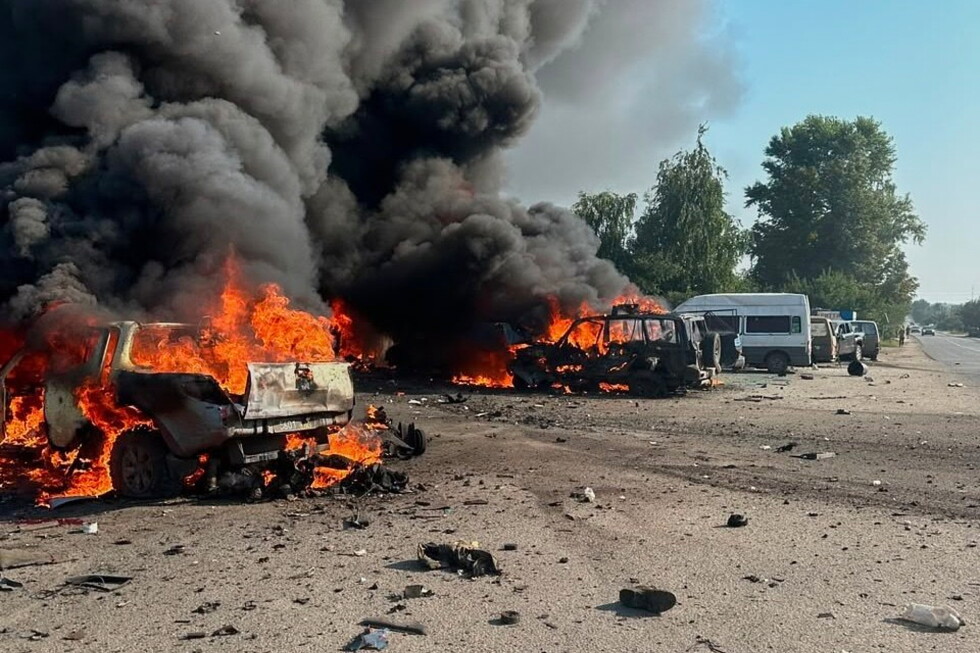
    Simultaneously, a Russian ballistic missile strike on the village of Pechenihy in Ukraine’s northeastern Kharkiv region left at least 10 civilians dead and 17 others wounded, leveling multiple residential properties and damaging local infrastructure, regional military officials reported. The attack marks one of the deadliest Russian strikes on Ukrainian civilian targets in recent weeks, compounding a rising toll of non-combatant casualties across the country.

    Over the past 12 months, Ukraine has ramped up production and deployment of domestically manufactured long-range drones, designed to strike targets deep inside Russian territory. This domestic drone development program has drawn international attention, with governments and defense manufacturers across the globe noting the innovative effectiveness of Ukraine’s technology. Kyiv’s strategic goal with these sustained deep strikes is to bring the tangible consequences of the war to the Russian general public, building domestic pressure on Russian President Vladimir Putin to enter good-faith peace negotiations. To date, however, Putin has shown no public indication of willingness to end the invasion or negotiate a ceasefire on terms acceptable to Ukraine.

    “Putin continues to drag out the war instead of accepting Ukraine’s realistic ceasefire proposals and ending the bloodshed,” Ukrainian Foreign Minister Andrii Sybiha wrote in a social media post on platform X Tuesday.

    Russia’s Ministry of Defense reported that its air defense systems intercepted all 791 Ukrainian drones launched overnight, across multiple Russian regions, the Moscow-annexed Crimean Peninsula, and the Black and Azov Seas. An Associated Press tally ranks the attack as the second-largest Ukrainian drone strike on Russian territory since January 2025. More than 600 of the drones were directed toward the wider Moscow region, where 180 were shot down, Moscow Mayor Sergei Sobyanin confirmed, offering no additional details on damage or casualties. No deaths or major infrastructure damage were reported within the city of Moscow itself, while three civilians suffered injuries in the surrounding Moscow Oblast, regional governor Andrei Vorobyov confirmed.

    The overnight drone strike sparked a fire at an industrial warehouse operated by Wildberries, Russia’s largest e-commerce retailer. Ukrainian officials have repeatedly targeted the company’s storage facilities across Russia, arguing that the depots provide logistical support to Russian military operations. Wildberries issued a statement downplaying the impact, saying the facility only sustained minor damage.

    Ukrainian President Volodymyr Zelenskyy condemned the Russian missile attack on Pechenihy as a deliberate “brutal attack” on civilians. In addition to the 10 fatalities, the strike damaged 10 private homes, a neighborhood cafe, a local post office, a retail store, and at least seven civilian vehicles, Kharkiv regional military head Oleh Syniehubov told reporters. “We will definitely respond to this Russian strike,” Zelenskyy said in a social media statement.

    Separately, Ukraine’s National Police reported Tuesday that three additional civilians were killed and three more wounded in 24 hours of Russian attacks across the northern Sumy region, which included drone strikes and an improvised explosive device detonation. The continuing cycle of attacks underscores the ongoing breakdown of any potential diplomatic path to de-escalation, as both sides ramp up long-range strikes to force concessions on the battlefield.

    Reporting contributions were provided by Hatton from Lisbon, Portugal. Additional coverage of the Russia-Ukraine conflict is available via the Associated Press’ dedicated hub.

  • British couple killed in helicopter crash on Greek island, local media report

    British couple killed in helicopter crash on Greek island, local media report

    A devastating helicopter crash on the popular Greek holiday island of Sifnos has claimed three lives, including a British couple who had only just married and were on their honeymoon, and a Greek pilot, local media outlets have confirmed. The private aircraft went down mere meters from a designated landing pad on Monday, triggering a immediate emergency response that would recover all three victims by the end of the day.

    According to Greek daily newspaper Kathimerini, the couple departed Markopoulo, a village located just outside of Athens, for the short flight to Sifnos, a Cycladic island known for its quiet beaches and traditional Cycladic architecture that draws thousands of international tourists each year. Greek fire service officials confirmed that search and recovery teams retrieved three bodies from the crash site on Monday afternoon, though authorities have not yet publicly released the identities of the deceased.

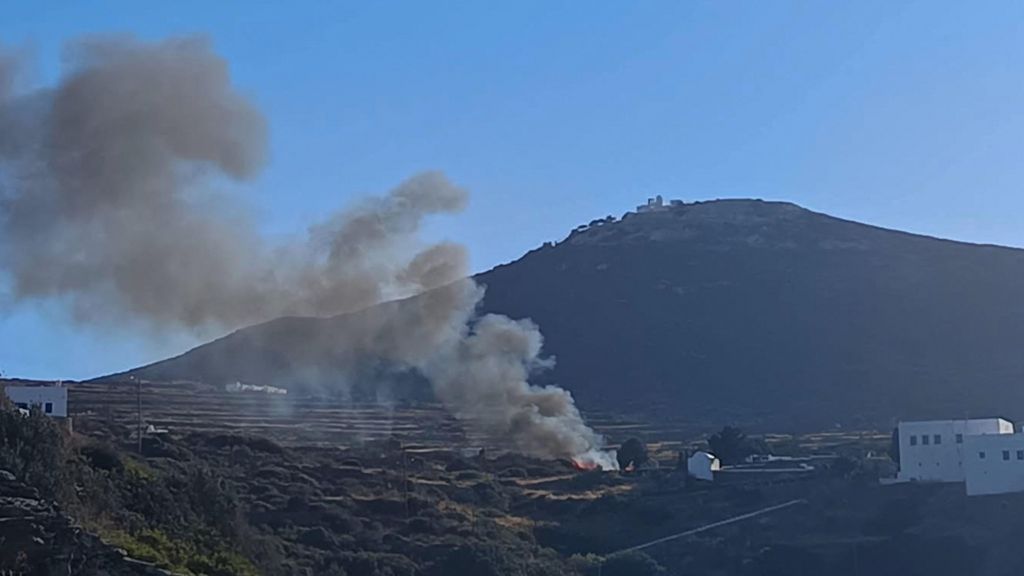
    Images from the crash site shared via Reuters show emergency responders and local residents working to extinguish a thick plume of black smoke that billowed from the burning wreckage after impact. By Monday evening, firefighters had fully put out the post-crash blaze, clearing the site for official investigators to begin their work.

    Speaking to local Greek news outlet Newsit shortly after arriving at the scene, Sifnos’ deputy mayor described the extent of the destruction, noting that almost “nothing left” of the private helicopter after the impact and subsequent fire. He also shared details on the recovery effort: two of the victims were found trapped within the twisted wreckage, while the third was located a short distance from the main crash site.

    Officials have launched a full formal investigation to pinpoint the exact cause of the crash, with investigators yet to release any preliminary findings on mechanical failure, weather conditions, or pilot error as potential contributing factors. The BBC has reached out to three key stakeholders for additional comment on the incident: the UK Foreign Office, which supports British citizens affected by tragedies abroad, Greek national civil aviation authorities, and the company that operated the helicopter. As of Tuesday morning, no parties have issued a formal public response to the tragedy.